Key takeaways
- Promptwatch starts at $99/mo with a free trial; BrightEdge runs $1,500-$3,000+/mo with no self-serve option -- a 15-30x price difference that matters a lot for smaller teams
- Promptwatch tracks 10 AI models (ChatGPT, Perplexity, Claude, Gemini, Grok, DeepSeek, Copilot, Meta AI, Mistral, Google AI Mode); BrightEdge covers AI Overviews and some AI search but is fundamentally a traditional SEO platform
- Promptwatch's Answer Gap Analysis and Content Agents close the loop from "where am I invisible?" to "here's the content that fixes it" -- BrightEdge has content recommendations but nothing equivalent for AI-specific gaps
- BrightEdge wins on traditional SEO depth: technical audits, backlink data, rank tracking, and enterprise workflow integrations that Promptwatch doesn't attempt to replicate
- Promptwatch includes AI crawler logs showing exactly when ChatGPT, Claude, and Perplexity crawl your pages; BrightEdge has no equivalent feature
- If your team's primary question is "how do we show up in AI search?" Promptwatch is the more direct answer; if it's "how do we manage a large-scale SEO program across a global enterprise?" BrightEdge has more infrastructure for that
Overview
Promptwatch
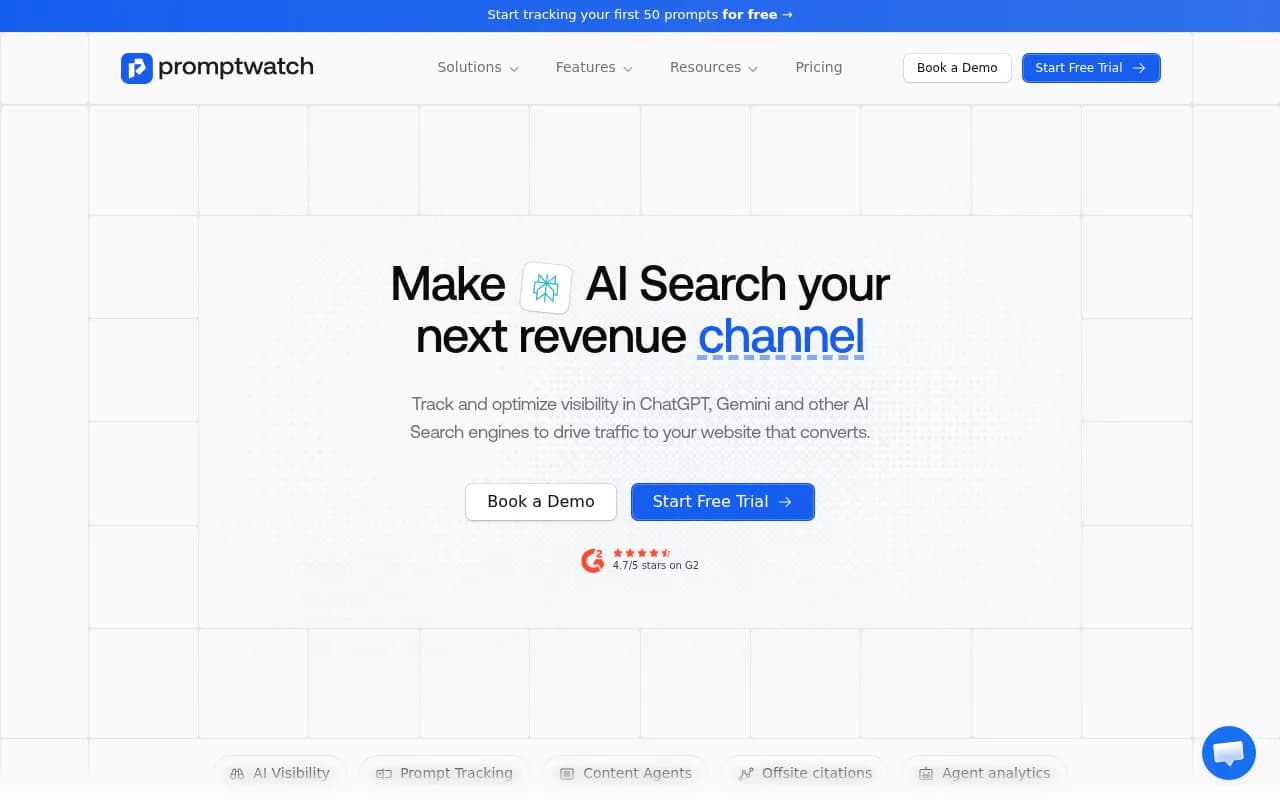
Promptwatch is an end-to-end AI search visibility and GEO (Generative Engine Optimization) platform. It was built from the ground up to answer one question: how does your brand appear when people ask AI engines questions? It tracks citations, monitors brand mentions, analyzes competitor visibility, generates content to fill gaps, and logs the AI crawlers hitting your site. Over 1,480 brands and agencies use it, including Booking.com, Duolingo, Typeform, and Yelp. It holds a 4.7/5 rating on G2.
The core loop is: find where you're invisible in AI search, generate content that fills those gaps, then track whether AI models start citing you. That cycle -- monitor, create, measure -- is what separates it from tools that only do the first step.
BrightEdge
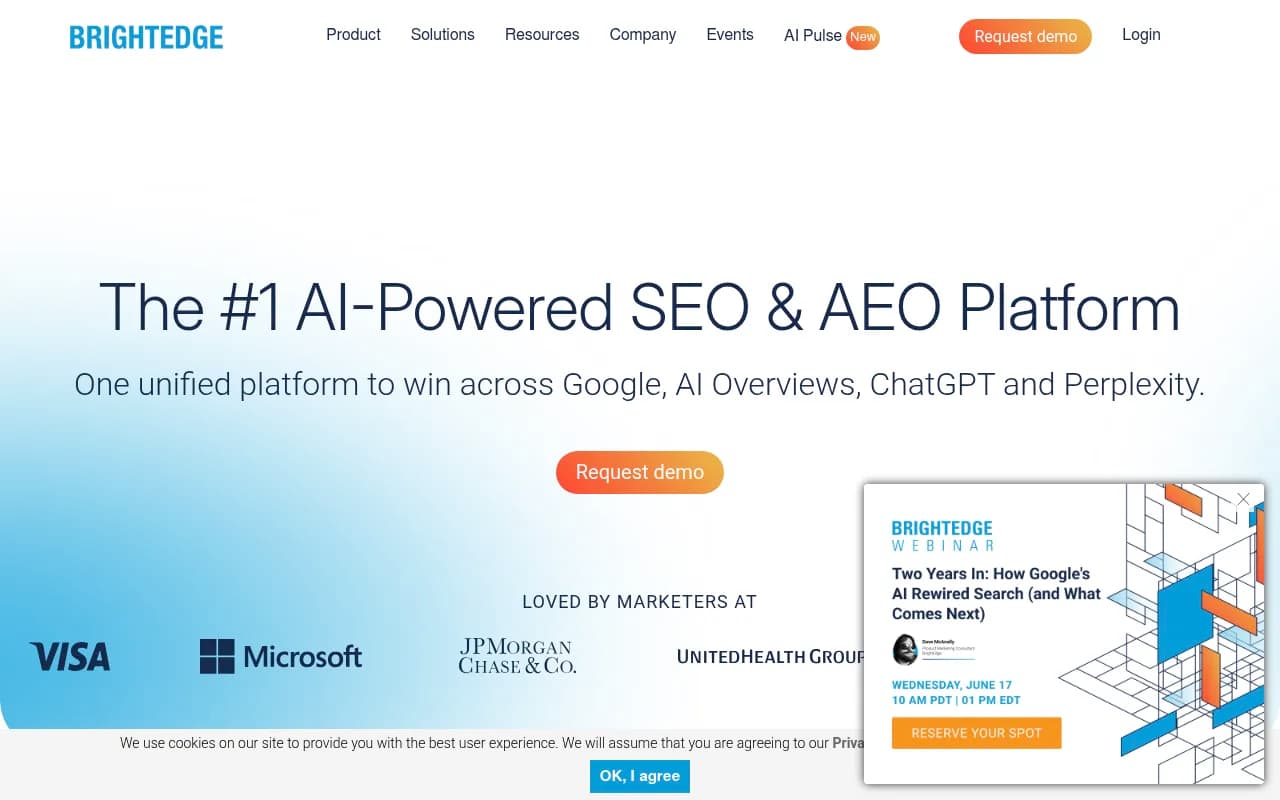
BrightEdge is a long-established enterprise SEO platform that has been adding AI search features as the market has shifted. It positions itself as a unified platform for winning across Google, AI Overviews, ChatGPT, and Perplexity. Its customer base skews toward large enterprises with dedicated SEO teams, and it's strong on the traditional SEO side: rank tracking, technical audits, content performance, and reporting infrastructure built for big organizations.
The AI search capabilities are real but feel like an extension of an SEO platform rather than a native AI visibility product. BrightEdge is a solid choice if you need a single platform to manage both traditional and AI search at enterprise scale -- but you'll pay enterprise prices for it.
Side-by-side comparison
| Feature | Promptwatch | BrightEdge |
|---|---|---|
| Starting price | $99/mo | ~$1,500-$3,000+/mo (custom) |
| Free trial | Yes (50 prompts free) | No |
| Self-serve signup | Yes | No (demo required) |
| AI models tracked | 10 (ChatGPT, Perplexity, Claude, Gemini, Grok, DeepSeek, Copilot, Meta AI, Mistral, Google AI Mode) | AI Overviews, ChatGPT, Perplexity (limited) |
| Traditional SEO (rank tracking, backlinks) | No | Yes (core strength) |
| Answer Gap Analysis | Yes | No |
| AI content generation | Yes (Content Agents) | Recommendations only |
| AI crawler logs | Yes | No |
| Prompt volume & difficulty scoring | Yes | No |
| Reddit & YouTube tracking | Yes | No |
| ChatGPT Shopping tracking | Yes | No |
| Offsite citation analysis | Yes | Limited |
| Multi-language/region | Yes | Yes |
| Agency/multi-site management | Yes | Yes |
| Looker Studio / API | Yes | Yes |
| G2 rating | 4.7/5 | 4.3/5 |
Head-to-head feature deep-dive
AI search coverage
This is where the two tools diverge most sharply.
Promptwatch monitors 10 AI models and tracks how they behave in real user interfaces, not just through API calls. That distinction matters because user-facing answers, citations, and shopping recommendations can differ from what you'd see hitting an API directly. You get visibility scores per model, per prompt, per competitor -- and you can see exactly which pages AI engines are citing.
BrightEdge covers Google AI Overviews well (which makes sense given its Google-first heritage) and has added some ChatGPT and Perplexity tracking. But the depth isn't comparable. There's no prompt-level intelligence, no difficulty scoring, no query fan-out analysis showing how one prompt branches into sub-queries.
Verdict: Promptwatch wins clearly on AI search depth and breadth.
Content optimization and generation
| Capability | Promptwatch | BrightEdge |
|---|---|---|
| Content gap analysis (vs AI responses) | Yes -- Answer Gap Analysis | Limited |
| AI-generated articles/listicles | Yes -- Content Agents | No |
| Content briefs with prompt data | Yes | SEO-focused briefs |
| Brand guidance integration | Yes | Yes |
| Grounded in real citation data | Yes | No |
BrightEdge has solid content recommendations for traditional SEO -- it can tell you which keywords to target, how to structure pages, and what competitors rank for. But it doesn't generate content, and its gap analysis is built around search rankings rather than AI citations.
Promptwatch's Content Agents generate full articles, comparison pages, and listicles grounded in real prompt data, citation gaps, competitor analysis, and even uploaded knowledge-base files. The output is meant to answer the specific questions AI models are already surfacing but can't find answers to on your site.
Verdict: Promptwatch wins on AI-specific content creation. BrightEdge wins on traditional SEO content optimization.
AI crawler logs and technical visibility
This is a feature BrightEdge simply doesn't have. Promptwatch logs every time an AI crawler (ChatGPT's GPTBot, Claude's ClaudeBot, Perplexity's PerplexityBot, etc.) hits your website. You can see which pages they read, errors they encounter, how often they return, and the timeline from crawl to citation.
For teams trying to understand why certain pages aren't being cited despite good content, this is genuinely useful diagnostic data. You can connect through Cloudflare, Fastly, Vercel, server logs, Google Search Console, or a tracking snippet.
Verdict: Promptwatch wins outright. BrightEdge has no equivalent.
Traditional SEO capabilities
This is where BrightEdge has a real, meaningful advantage. It's been doing enterprise SEO for over a decade and has deep infrastructure for:
- Keyword rank tracking at scale
- Technical site audits
- Backlink analysis
- Page-level performance reporting
- Enterprise workflow integrations (CMS connectors, Slack, Jira, etc.)
- Historical data going back years
Promptwatch doesn't try to compete here. It's not a rank tracker or a technical SEO tool. If your team needs a platform to manage a 500,000-page website's traditional search performance, Promptwatch isn't the right fit.
Verdict: BrightEdge wins on traditional SEO. It's not close.
Prompt intelligence and competitor analysis
Promptwatch's Answer Gap Analysis shows you the specific prompts where competitors are visible but you're not. Each prompt comes with volume estimates and difficulty scores so you can prioritize the gaps worth closing first. Query fan-outs show how one prompt branches into sub-queries, which helps you understand the full content surface area you need to cover.
BrightEdge has competitive tracking for traditional search -- you can see which competitors rank for which keywords. But there's no equivalent for AI search prompts. You can't see "Competitor X is cited in 40% of responses to this prompt and you're cited in 0%."
Verdict: Promptwatch wins on AI-specific competitor intelligence.
Pricing and accessibility
This comparison is stark. Promptwatch has transparent, self-serve pricing with a free tier. BrightEdge requires a sales conversation and commits you to enterprise contracts.
Pricing comparison
| Plan | Promptwatch | BrightEdge |
|---|---|---|
| Free / trial | Yes (50 prompts, 5 articles) | No |
| Entry-level | $99/mo (Essential: 1 site, 50 prompts) | Not available |
| Mid-tier | $249/mo (Professional: 2 sites, 150 prompts, crawler logs) | Not available |
| Growth | $579/mo (Business: 5 sites, 350 prompts, 30 articles) | Not available |
| Enterprise | Custom | ~$1,500-$3,000+/mo (custom, contact sales) |
| Annual discount | Yes | Typically yes |
| Contract required | No (monthly available) | Yes (annual contracts typical) |
The pricing gap is real. A mid-market company on Promptwatch's Business plan at $579/mo would pay roughly 3-5x less than BrightEdge's entry enterprise tier. For teams that only need AI search visibility (not full traditional SEO), paying BrightEdge prices for features you won't use doesn't make much sense.
Pros and cons
Promptwatch
Pros:
- Purpose-built for AI search visibility -- not an afterthought feature
- Tracks 10 AI models including newer ones like Grok, DeepSeek, and Mistral
- Content Agents close the loop from gap identification to content creation
- AI crawler logs give you technical diagnostic data no competitor offers
- Transparent pricing with a free trial and monthly billing options
- Reddit and YouTube tracking surfaces off-site influence on AI recommendations
- ChatGPT Shopping and entity tracking for e-commerce and brand monitoring
- 4.7/5 on G2 from real users
Cons:
- No traditional SEO capabilities (rank tracking, backlinks, technical audits)
- Newer platform -- less historical data than BrightEdge
- Prompt volume estimates are estimates, not exact figures
- Smaller enterprise workflow integrations compared to BrightEdge
BrightEdge
Pros:
- Deep traditional SEO infrastructure built over a decade
- Strong Google AI Overviews tracking
- Enterprise-grade workflow integrations and CMS connectors
- Proven at scale for large, complex websites
- Dedicated customer success teams for enterprise accounts
- Historical ranking data going back years
Cons:
- Expensive -- $1,500-$3,000+/mo puts it out of reach for most SMBs and mid-market teams
- No self-serve trial; requires a sales demo to even evaluate it
- AI search coverage is limited compared to a purpose-built GEO platform
- No AI crawler logs or agent analytics
- No content generation for AI-specific gaps
- No prompt volume/difficulty scoring or query fan-out analysis
- No Reddit or YouTube tracking
Who should pick which tool
Choose Promptwatch if:
- Your primary goal is understanding and improving how your brand appears in AI search engines
- You want to track visibility across ChatGPT, Perplexity, Claude, Gemini, and other LLMs in one place
- You need content generation tools grounded in real AI prompt data, not just SEO signals
- You're an agency managing multiple client brands in AI search
- Budget matters -- you want real AI visibility features without a $2,000+/mo commitment
- You want to understand which AI crawlers are hitting your site and when
Choose BrightEdge if:
- You're a large enterprise with an established SEO program that needs a single platform for both traditional and AI search
- Traditional search (Google rankings, technical audits, backlinks) is still your primary channel and AI search is a secondary concern
- You have the budget for enterprise contracts and a dedicated team to manage the platform
- You need deep CMS and workflow integrations that a larger organization requires
- You already have a GEO tool and just need BrightEdge for its core SEO strengths
Consider using both if:
Some enterprise teams use BrightEdge for traditional SEO operations and Promptwatch specifically for AI search visibility. The two tools don't overlap much in practice -- BrightEdge handles Google rankings and technical health, Promptwatch handles the AI search layer. It's not a cheap combination, but for large brands where both channels matter, it's a reasonable split.
Final verdict
These two tools are solving different problems, and the comparison is less "which is better" and more "which problem are you trying to solve?"
If AI search visibility is your focus -- tracking citations, finding content gaps, generating content that ranks in LLMs, understanding how AI crawlers interact with your site -- Promptwatch is the more direct, more affordable, and more capable tool for that specific job. BrightEdge has added AI features, but it's still a traditional SEO platform at heart, and you'll pay enterprise prices for a product whose core strengths may not be what you need.
If you're running a large-scale enterprise SEO program and AI search is one of several channels you need to cover in a single platform, BrightEdge makes more sense -- especially if you already have the budget and the team to support it.
For most marketing and SEO teams in 2026 who are trying to figure out AI search visibility without committing to a six-figure annual contract, Promptwatch is the practical choice.