Key takeaways
- "Unlimited prompts" is rare in this category. Most tools, including Rankability, actually offer unlimited clients and seats while metering prompt volume through credits. Only a handful of enterprise tiers truly uncap prompts.
- Rankability's own pricing page has changed its structure at least four times in a single month in 2026 (credits, then websites, then a flat rate, then daily prompts), so any published price should be treated as a snapshot, not a guarantee.
- Peec AI, Otterly.AI, Scrunch AI, and Profound each have agency-specific plans that compete directly with Rankability on price, and each handles credits and engine coverage differently.
- Because ChatGPT fans a single prompt out into multiple sub-queries, agencies get more value from broad prompt coverage than from chasing a literal "unlimited" label.
- If you want a platform built around fixing visibility gaps rather than just tracking them, tools like Promptwatch are worth a look alongside pure trackers.
Why agencies keep searching for Rankability alternatives
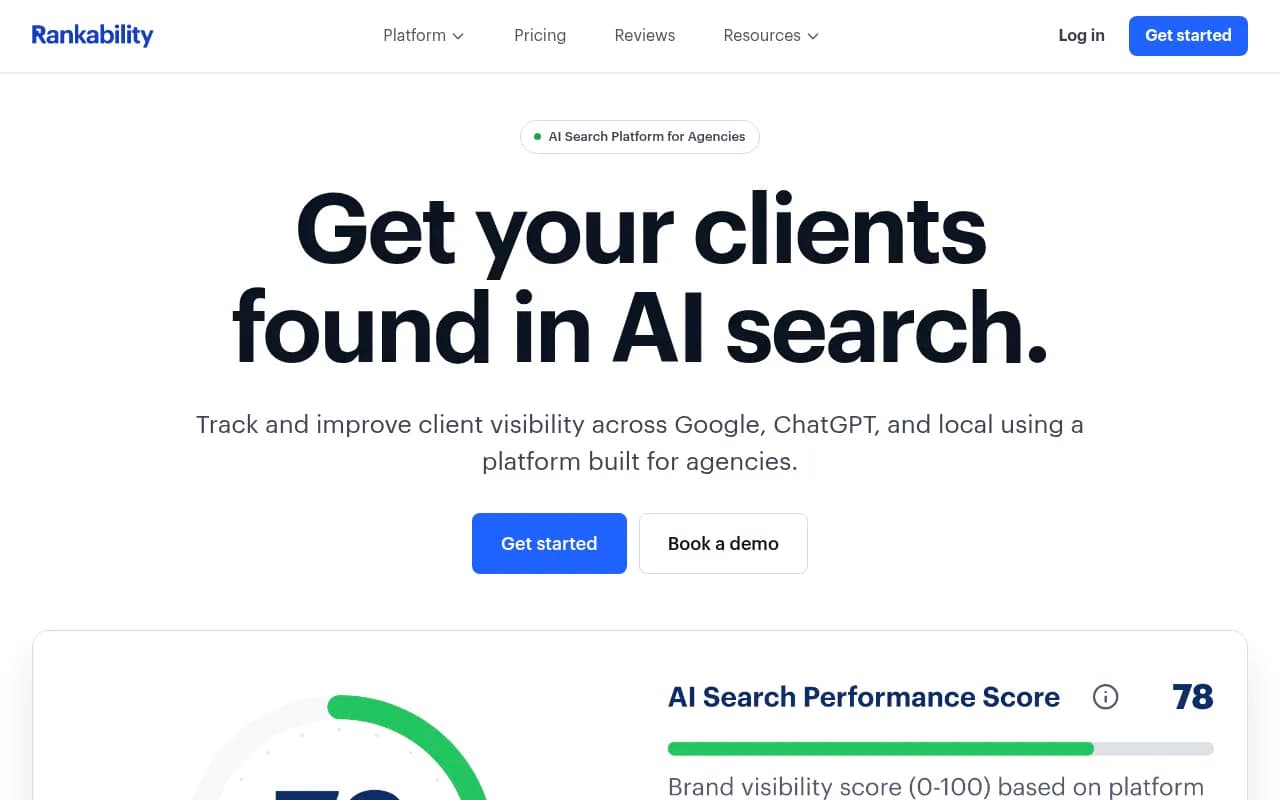
Rankability built its reputation on a simple pitch: unlimited clients and users on every plan, an entry price around $99/mo, and a credit system that scales with usage instead of forcing you into a per-seat tax. For agencies juggling a dozen client accounts, that pitch is genuinely attractive compared to tools that charge per brand or per workspace.
But dig into independent reviews published this year and a messier picture shows up. One tracking site found Rankability's pricing page changed structure four times in twenty days in August 2026, moving from credit tiers, to website-based tiers, to a brief flat $99 rate, to a daily-prompt model with 75, 150, or 250 prompts per day depending on plan. Another review, updated August 31, documents a completely different ladder (Core $99, Scale $299, Advanced $799) with per-engine credit costs that range from 10 credits for a Google AI Overview check up to 75 credits for a single Gemini check. A third source, G2's pricing page, lists yet another structure with no free trial at all.
None of this means Rankability is a bad tool. It means the price you see today might not be the price you sign up for next week, and the credit-to-action conversion rate is genuinely hard to predict before you commit. That opacity is the single most common complaint across review sites in this category, and it's the main reason agencies go shopping for alternatives.
What "unlimited prompts" actually means (and doesn't)
Here's the catch almost every buyer misses: when a vendor advertises "unlimited," read the fine print to see what noun follows it. Rankability, MaxAEO, Peec AI, and Otterly.AI all advertise unlimited seats or unlimited clients on their paid plans. None of them advertise unlimited prompts on a self-serve tier. KIME's Enterprise plan and MaxAEO's Enterprise plan are among the very few that explicitly promise uncapped prompt volume, and both require you to talk to sales for custom pricing.
This matters more than it sounds like on paper. ChatGPT doesn't just answer the exact prompt you type. It fans a single query out into multiple sub-searches behind the scenes. Promptwatch's data on ChatGPT query fanouts shows the average number of searches per response has swung from around 2.15 in December down to close to 1.0 by April 2026 after a data gap, with query length shrinking from roughly 117 characters to about 53. In practice this means the exact long-tail phrase a client cares about ("best CRM for real estate agents under $50") often gets rewritten into something shorter and more generic before the model retrieves sources. Agencies that only track a handful of hero prompts miss most of the actual retrieval activity happening around their client's brand.
On top of that, the number of citation slots per response varies wildly by engine. Promptwatch's research on average sources per response found ChatGPT typically cites around five sources per web-search answer, Google AI Overviews cites roughly double that at ten, and Perplexity sits close to ten with very little day-to-day movement. Microsoft Copilot is the outlier, swinging from under two sources to nearly seventeen within weeks. If your tracking tool only monitors one or two engines, you're extrapolating from a small, inconsistent sample.
The practical takeaway: prioritize prompt breadth (comparisons, pricing pages, "alternatives to X" queries, how-to phrasing) over chasing a literal unlimited label that mostly applies to enterprise contracts anyway.
Comparison: Rankability vs the main agency-friendly alternatives
| Tool | Entry price (verify live) | Agency-specific tier | Engines tracked | Unlimited seats/clients | Notes |
|---|---|---|---|---|---|
| Rankability | Reported $79-$199/mo depending on date checked | Agency tier up to $799/mo | ChatGPT, Gemini, Claude, Perplexity, Copilot, Google AIO/AI Mode | Yes, on every paid plan | Pricing structure changed 4x in one month in Aug 2026; credit costs per engine aren't published upfront |
| Peec AI | $95/mo (Starter, 50 prompts) | Separate agency pricing page | ChatGPT, Perplexity, AI Overviews, plus paid add-ons | Yes, unlimited users on all tiers | Advanced tier ($495/mo) adds multi-country tracking and Looker Studio |
| Otterly.AI | $29/mo (Lite, 15 prompts, 4 engines) | Enterprise custom, ~$1,000/mo+ | ChatGPT, AI Overviews, Perplexity, Copilot base; Claude/Gemini/AI Mode as add-ons | Yes, unlimited team members | Extra prompt packs cost a $99 add-on past plan limits |
| Scrunch AI | $250/mo (Core, 125 prompts, 4 LLMs) | Agency Core $500/mo, Agency Enterprise custom | ChatGPT, Perplexity, Google AIO, Copilot on Core; 9 engines on Enterprise | 5 seats on Core | No API or Looker Studio access below Enterprise |
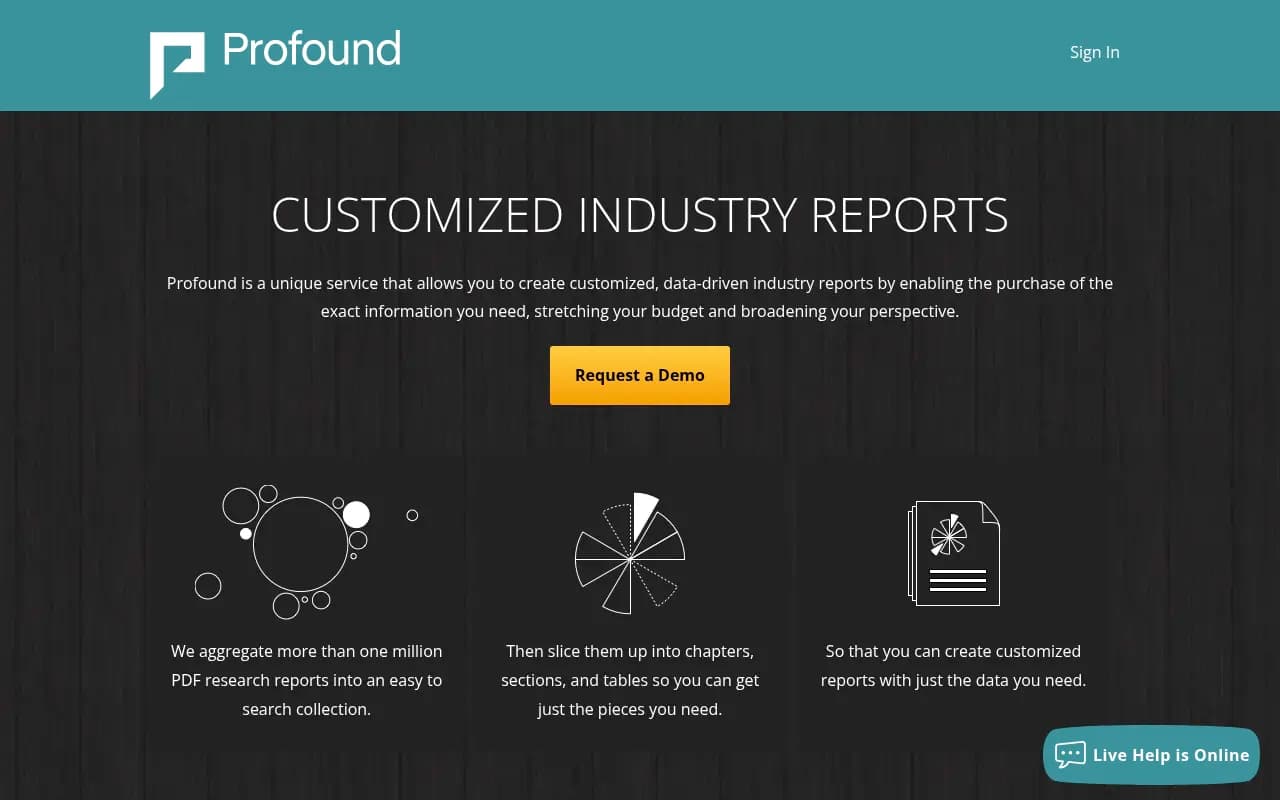
| Profound | $99/mo (agency pitch tier, limited workspaces) | Agency Growth $99/mo + $399/mo per client workspace | ChatGPT, Perplexity, Google AIO on entry tiers | 5 team seats on Agency Growth | Entry tier is really a prospecting tool; full client workspaces cost extra |
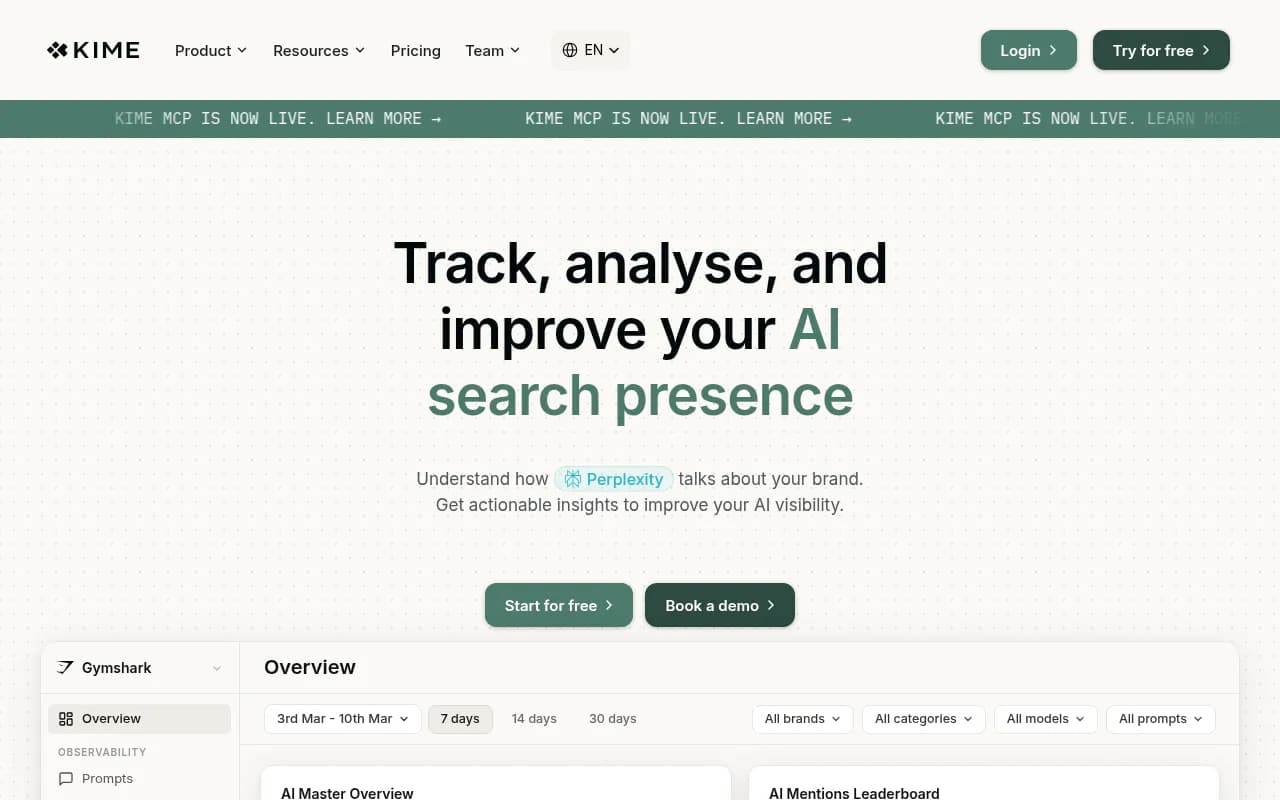
| KIME | 99 euro/mo (Explorer, 50 prompts, 2 engines) | Enterprise custom | Up to full engine list on Enterprise | Enterprise only | One of the few vendors that literally offers uncapped prompts, gated behind custom pricing |
| Ranked AI | $99/mo, bundles fulfillment | Same entry price, managed service model | Varies by plan | Free white-label platform included | Not a self-serve tracker; you're paying for a team to publish content and fixes for you |
Pricing in this space moves fast enough that a table like this is a starting point, not a final answer. Screenshot the live pricing page on the day you sign a contract.

Where each alternative actually fits
Peec AI: best for daily cross-engine dashboards
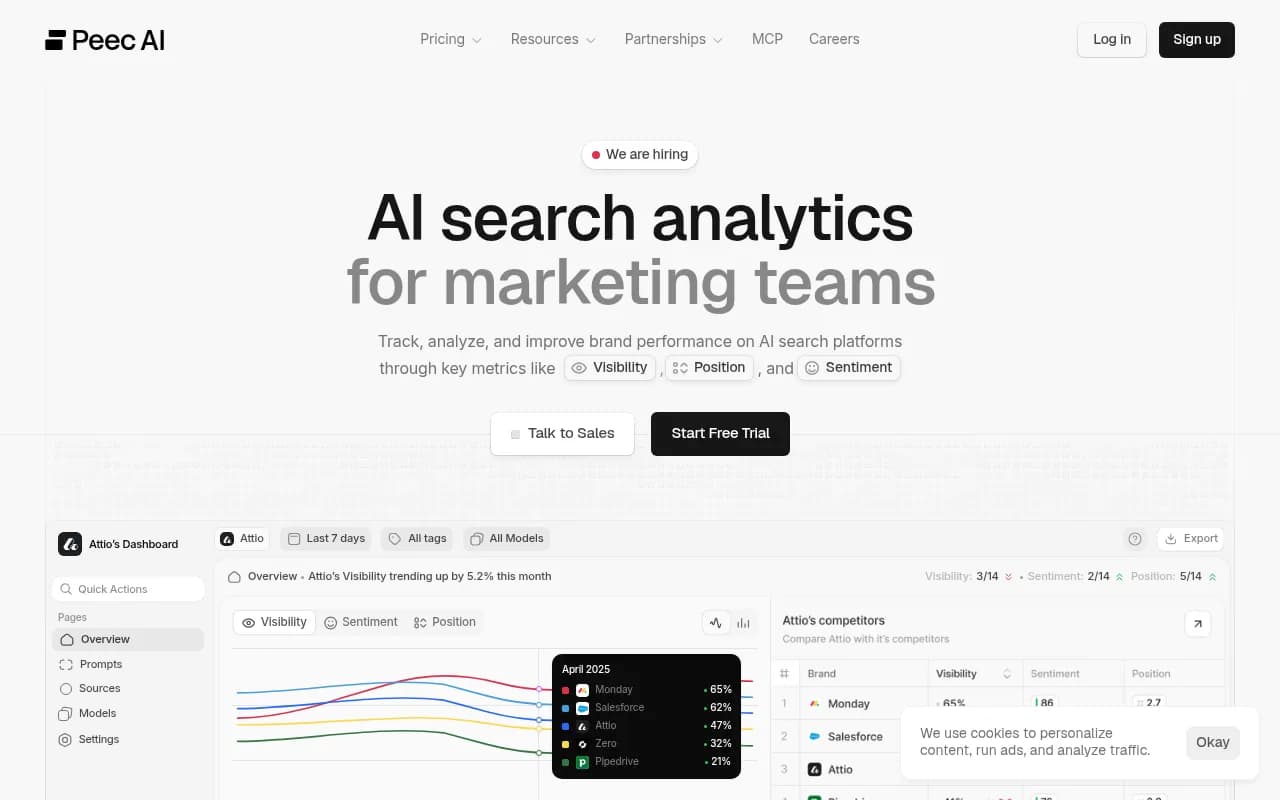
Peec AI's separate agency pricing page and unlimited-user policy on every tier make it a straightforward swap if your main frustration with Rankability is the opaque credit system. Its Starter plan gives you 50 prompts across three chosen models for under $100/mo, which is enough for a single mid-size client but tight if you're running several accounts on one plan.
Otterly.AI: cheapest entry point, but engine coverage costs extra
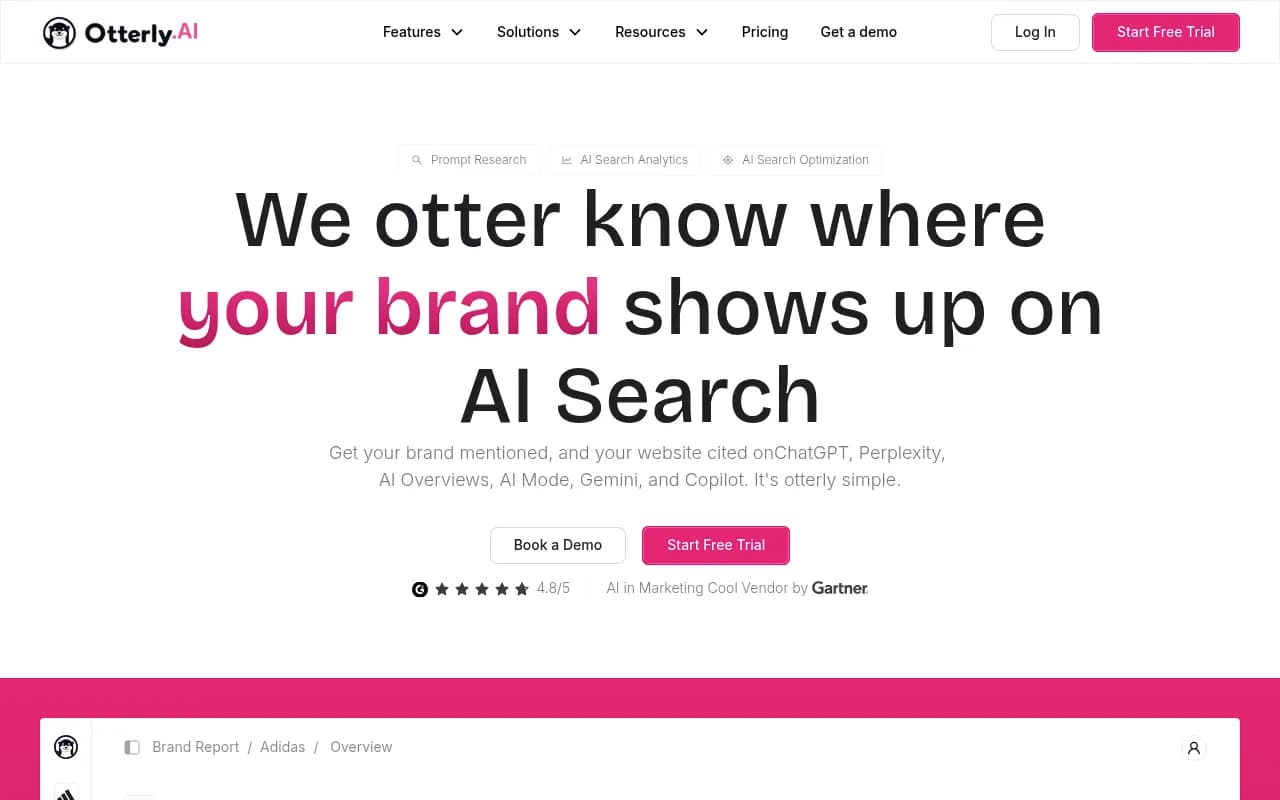
At $29/mo, Otterly.AI is the cheapest tool on this list, and it does track four major engines out of the box. The catch is that Claude, Gemini, and Google AI Mode are paid add-ons, so the real cost for full coverage lands closer to the Standard plan at $189/mo. Fine for agencies onboarding smaller clients who don't need every engine tracked from day one.
Scrunch AI and Profound: enterprise-grade, priced like it
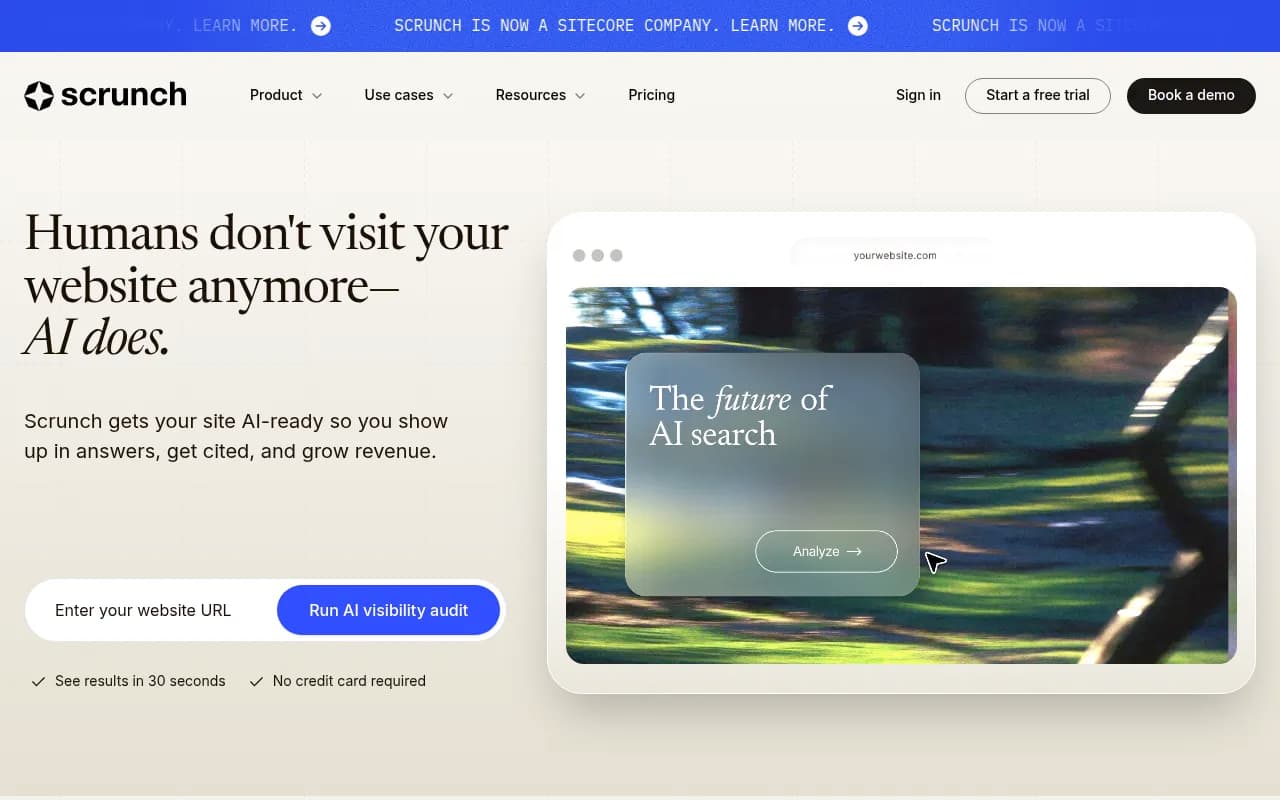
Both tools skew toward larger retainers. Scrunch's Agency Core starts at $500/mo, and Profound's cheap-looking $99/mo agency tier is really a prospecting tool for pitching new clients, not a full monitoring plan. Once you add real client workspaces at $399/mo each, the total adds up quickly. Choose these if your agency serves enterprise clients who expect audits, personas, and SSO.
KIME: the rare literal "unlimited prompts" option
If uncapped prompt volume is a hard requirement, KIME's Enterprise tier is one of the few in the market that promises it explicitly, alongside unlimited engines and a dedicated account manager. Expect custom pricing conversations rather than a self-serve checkout button.
Ranked AI: skip the tool, buy the labor
Ranked AI matches Rankability's $99 entry price but sells something different: a managed service with weekly human-edited content, implemented fixes, link outreach, and AI indexing, plus a free white-label platform. Good fit for agencies that want fulfillment rather than another dashboard to log into.
MaxAEO: for in-house teams more than multi-client agencies
MaxAEO's ladder ($19 Starter, $149 Growth, $399 Pro) undercuts Rankability on price and covers eight AI surfaces including Grok and Google AI Mode, tracing the actual URLs cited behind AI answers. It's built more for a single brand or small portfolio than for agencies managing dozens of clients, but its Growth tier is worth testing if you're a lean in-house team rather than a full-service shop.
Where Promptwatch fits if you want fixes, not just a scoreboard
Everything above answers "was my client mentioned, and how much will it cost to check again tomorrow." That's monitoring. If what you actually need is a platform that explains why a client isn't showing up and then does something about it, that's a different category, and it's worth putting Promptwatch on your shortlist alongside the pure trackers.
Promptwatch tracks prompt volumes and difficulty, citation trends, and AI crawler logs (ChatGPTBot, ClaudeBot, PerplexityBot, and 400+ others) so you can see exactly when AI systems visit a client's pages and whether they hit errors. It also tracks Reddit and YouTube citations, which most competitors ignore entirely, and runs Content Agents that plan, write, and publish GEO-optimized content straight to a client's CMS. For an agency managing many accounts, the difference between a monitoring subscription and an execution platform shows up fast in retention conversations with clients who want to see movement, not just a chart.
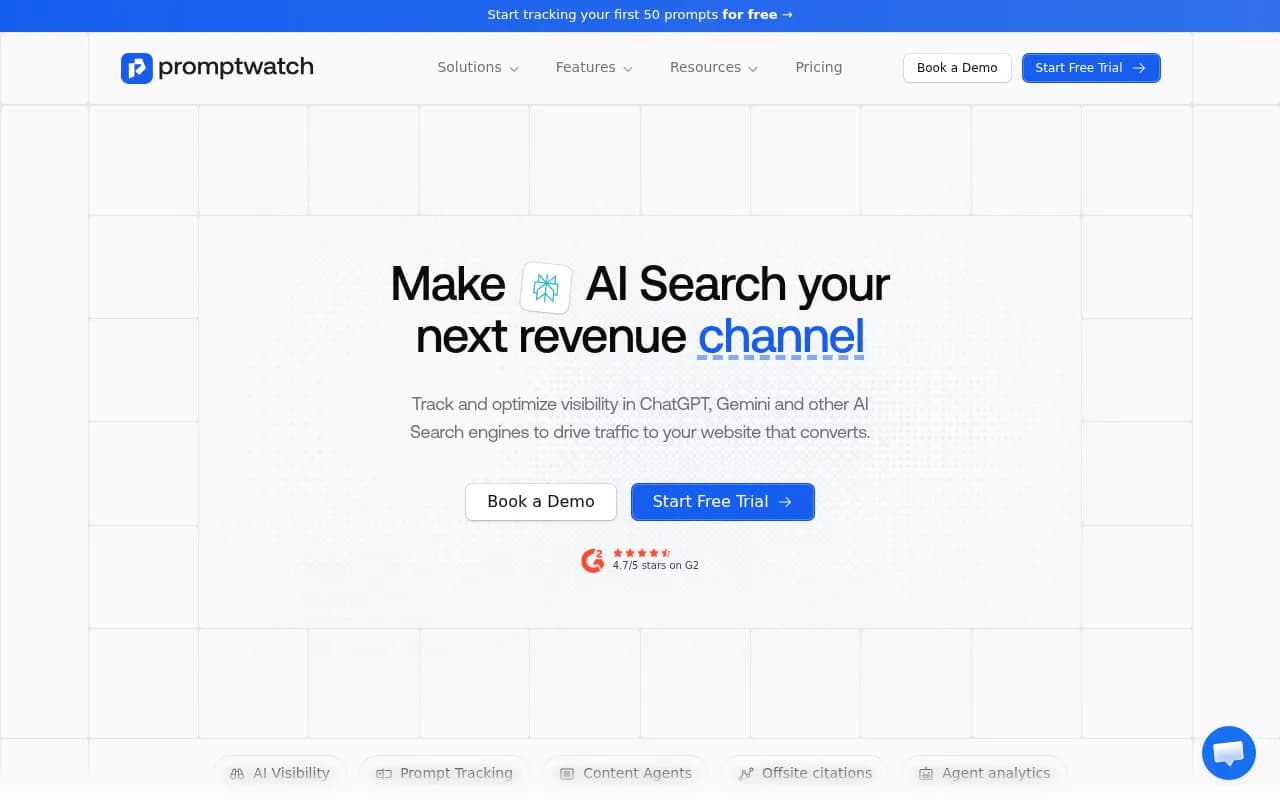
Pricing runs from a free Explore tier up through Essential at $95/mo, Professional at $245/mo, and Business at $579/mo, with dedicated agency plans starting at $199/mo (Kick-off) and scaling to $799/mo (Scale), all with unlimited projects and prompts and 10 seats. That last point is worth repeating given everything above about how rare true unlimited-prompt pricing actually is in this market.
A note on why these prices keep moving
AI search itself changes fast enough that pricing instability across the category isn't entirely a coincidence. Promptwatch's research on ChatGPT citation share in June 2026 found Reddit topped citations at 3.71%, down about 40% from May, with no single domain holding more than 4% of total citations. That's a far less winner-take-all environment than classic Google rankings, and it means the value proposition of any tracker (how many engines, how many prompts, how fresh the data) shifts month to month as the underlying platforms change their retrieval behavior. Vendors adjusting their pricing structures every few weeks is, in a strange way, a symptom of the same volatility that makes tracking tools necessary in the first place.
How to actually choose
- List every engine your clients care about, not just ChatGPT. If Perplexity or Google AI Mode matters to a client's industry, confirm the plan you're pricing out actually includes it by default rather than as a paid add-on.
- Ask for the credit-to-check conversion rate in writing before you buy. If a vendor can't tell you how many credits a single Gemini or Perplexity check costs, budget for surprises.
- Decide whether you need a tracker or an execution platform. If your clients want to see visibility improve, not just measured, weigh tools with a content or fix-it layer against pure dashboards.
- Re-check pricing pages the day you sign. Given how often Rankability's and several competitors' pricing pages have changed in 2026, treat every comparison table, including this one, as a starting point for your own live check.
If you want to browse the wider category before committing, the GEO software directory at bestgeosoftware.com and the rank-tracking listings at ai-rank-tools.com are useful places to keep tabs on new entrants as pricing in this space keeps shifting.