BrightEdge Review 2026
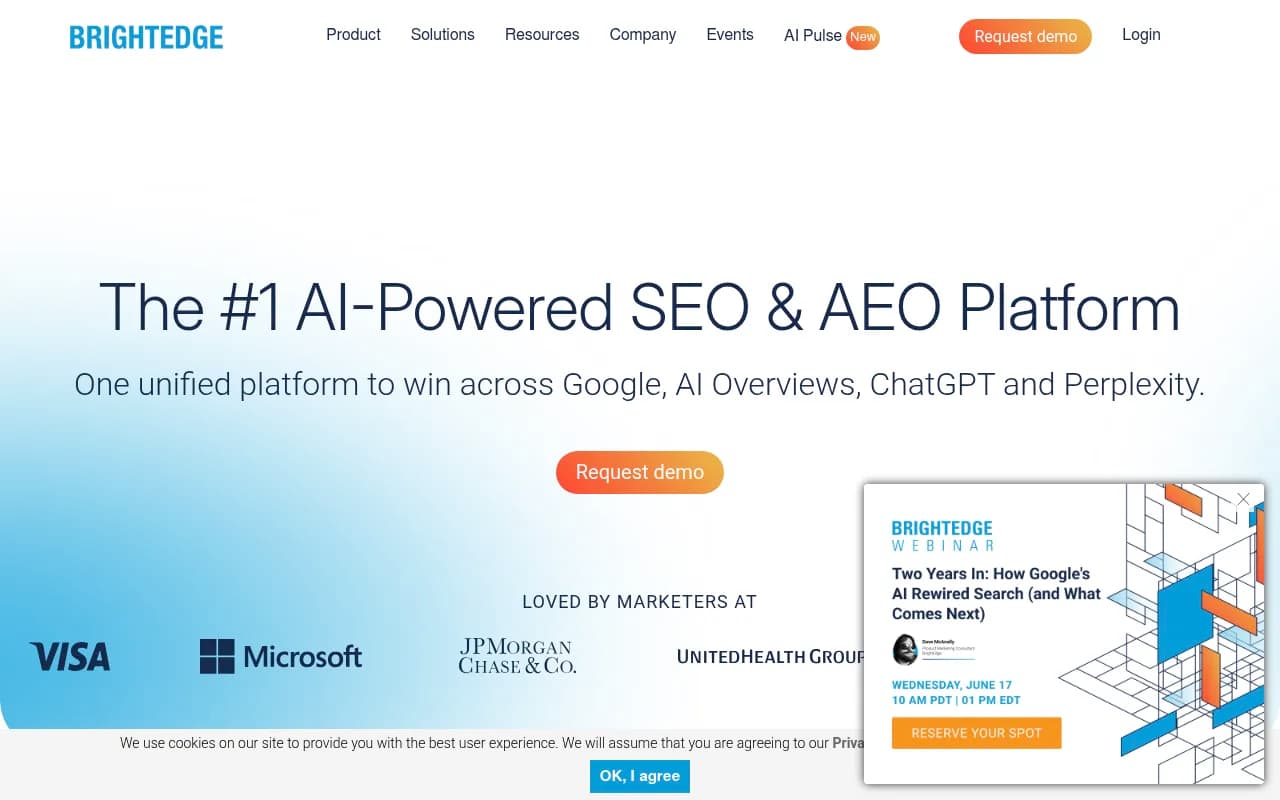
Enterprise SEO platform with AI search visibility capabilities, helping large organizations track content performance across both traditional and AI-powered search experiences.
Key takeaways
- BrightEdge is a mature, enterprise-grade SEO platform that has added AI search monitoring capabilities through its AI Hyper Cube and AI Catalyst products
- Strong traditional SEO foundation: Data Cube X covers 4+ billion data points with 10 years of historical context, making it one of the deepest keyword research databases available
- AI search monitoring covers ChatGPT and Google AI Overviews, but coverage of other AI models (Claude, Perplexity, Grok, DeepSeek, Gemini, Meta AI) appears limited compared to dedicated GEO platforms
- Lacks key GEO capabilities that Promptwatch provides: no AI crawler logs, no Reddit/YouTube citation tracking, no prompt volume/difficulty scoring, no query fan-outs, and no dedicated content gap analysis tied to AI prompt data
- Pricing is enterprise-only with no public tiers -- expect significant investment, which makes it a poor fit for SMBs or agencies without large budgets
- Best suited for large in-house SEO teams at Fortune 1000 companies who need a single platform for traditional SEO and want basic AI search visibility layered on top
BrightEdge has been around since 2007, which makes it one of the oldest names in enterprise SEO. Founded in San Mateo, California, the company built its reputation on Data Cube, a proprietary keyword and competitive intelligence database that became a reference point for large-scale SEO programs. IBM, major retailers, and global brands have been customers for years. The platform has always targeted the upper end of the market -- think Fortune 500 in-house teams, not freelancers or small agencies.
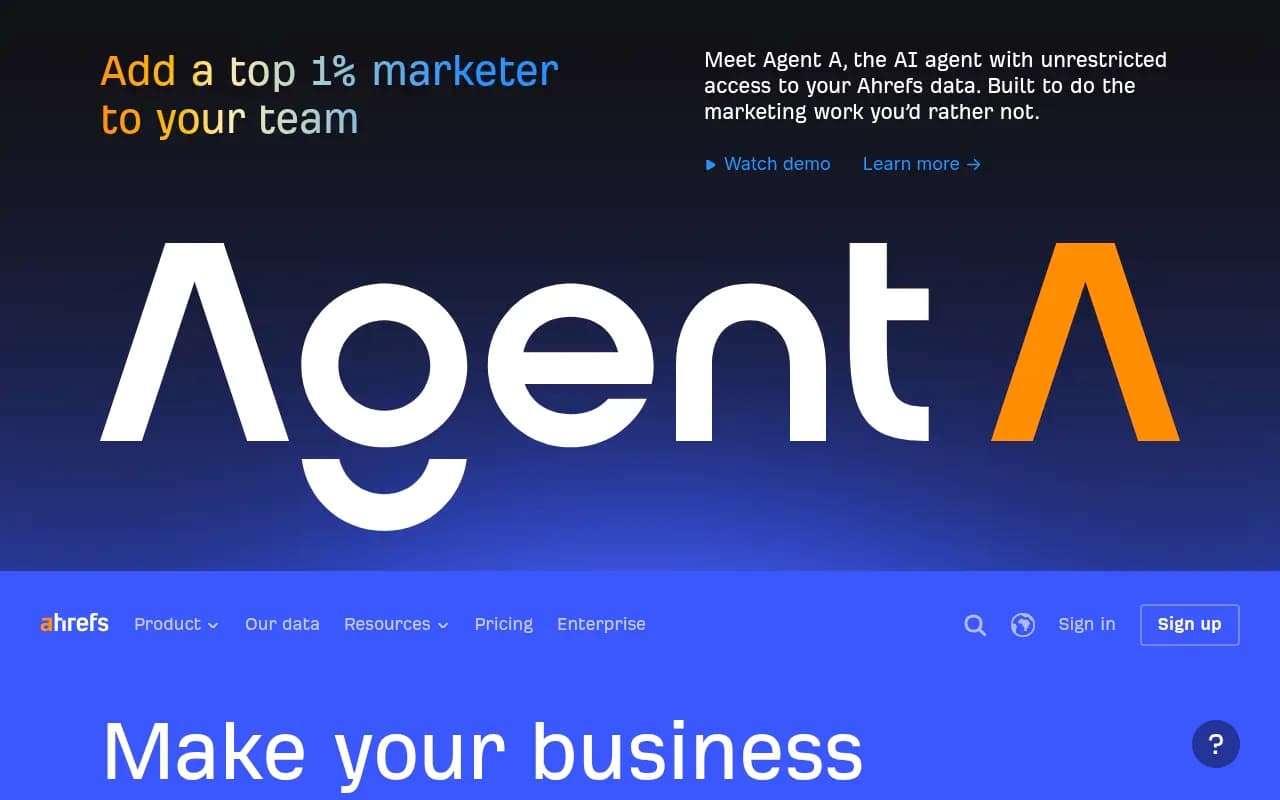
The more recent story is BrightEdge's push into AI search. With the rise of ChatGPT, Google AI Overviews, and Perplexity reshaping how people find information, BrightEdge has added products like AI Hyper Cube and AI Catalyst to track brand visibility in AI-generated answers. This is a logical extension of what they already do, and the company has moved faster than traditional SEO tools like Semrush or Ahrefs in building dedicated AI search features. Whether those features are deep enough to satisfy teams that need serious GEO capabilities is a different question.
The target audience is large organizations with dedicated SEO teams -- enterprise marketing departments, global brands managing multi-market search programs, and e-commerce companies with complex product catalogs. BrightEdge is not trying to compete with Ahrefs on price or with newer GEO-only tools on AI depth. It's positioning itself as the one platform that covers both traditional and AI search for teams that don't want to manage multiple vendors.
Key features
Data Cube X -- keyword research and competitive intelligence
This is BrightEdge's crown jewel and the reason many enterprise teams stay on the platform. Data Cube X claims over 4 billion data points and 10 years of historical ranking data. In practice, this means you can look at how a keyword's competitive landscape has shifted over years, not just months. The depth of domain-level data is genuinely impressive -- you can see which pages on a competitor's site are driving the most organic traffic, how their keyword portfolio has evolved, and where gaps exist. For enterprise teams doing large-scale content audits or competitive gap analysis, this historical context is hard to find elsewhere.
AI Hyper Cube -- AI search demand and brand visibility
AI Hyper Cube is BrightEdge's answer to the GEO monitoring question. It tracks how brands appear in ChatGPT and Google AI Overviews, showing which brands are mentioned or cited in AI-generated responses, the sentiment around those responses, and where opportunities exist. The "hidden AI conversations" framing is accurate -- it's trying to surface what people are asking AI engines that traditional keyword tools miss. Coverage is currently focused on ChatGPT and Google AI Overviews, which are the two highest-traffic AI search surfaces, but this leaves out Perplexity, Claude, Gemini, Grok, and others that dedicated GEO platforms track.
AI Catalyst -- generative parser and AI search optimization
AI Catalyst is described as BrightEdge's proprietary generative parser, designed to help brands win in Google AI, ChatGPT, and emerging AI search engines. The idea is to analyze how AI models construct their answers and identify what content signals drive citations. This is the most forward-looking part of the platform, though details on exactly how the generative parser works and what actionable outputs it produces are not fully transparent from public documentation.
Copilot and Autopilot -- AI-assisted and automated optimization
BrightEdge splits its AI assistance into two modes. Copilot provides recommendations and insights that a human reviews before acting -- think suggested optimizations, content gaps, and priority recommendations. Autopilot goes further, handling fully automated on-site optimizations without requiring manual approval for each change. Autopilot is a genuinely differentiated feature for enterprise teams that manage thousands of pages and can't manually implement every recommendation. The risk, of course, is that automated changes at scale require careful governance, and BrightEdge does emphasize enterprise-grade security and governance controls.
Content optimization workflow
BrightEdge has a content module that covers creation, revision, and optimization. It uses AI to accelerate content production and ensures pages target the right audience segments. The workflow is integrated with the keyword and competitive data, so content recommendations are grounded in actual search demand rather than generic suggestions. This is more mature than what most standalone AI writing tools offer, but it's worth noting that the content generation here is oriented toward traditional SEO content rather than content specifically engineered to appear in AI search citations.
E-commerce and Amazon rankings
One genuinely unique capability: BrightEdge tracks Amazon rankings alongside Google, which the company claims makes it the only platform offering this combination. For retail and e-commerce brands that care about both organic search and Amazon marketplace visibility, this is a real differentiator. Competitor keyword data on Amazon, combined with Google organic tracking, gives a more complete picture of search demand for product categories.
Local SEO
The local module covers physical store presence, Google Business Profile management, and review monitoring. For multi-location retailers or franchise brands, this integrates local SEO into the same platform as national and global SEO programs. The workflow management for local is designed to handle the operational complexity of managing hundreds or thousands of locations.
Site auditing and technical SEO (WebDev)
Full-scale website audits monitor for technical errors, crawlability issues, and performance problems. The WebDev module is designed for teams that need to surface issues across large sites and track resolution over time. Integration with the broader platform means technical issues can be connected to ranking and traffic impact, not just flagged in isolation.
Reporting and executive dashboards
BrightEdge has invested heavily in making complex data accessible to non-technical stakeholders. Executive-ready reporting, guided workflows, and clear recommendations are a consistent theme in customer reviews. For enterprise teams that need to justify SEO investment to leadership, the reporting layer is a practical strength.
Who is it for
BrightEdge is built for large in-house SEO teams at enterprise companies -- think a 5-15 person SEO team at a Fortune 500 retailer, a global financial services brand managing search across 20+ markets, or an e-commerce company with a catalog of 100,000+ SKUs. The platform's depth in keyword research, competitive intelligence, and historical data makes it genuinely valuable for teams doing serious SEO at scale. IBM is a reference customer, which tells you something about the typical buyer profile.
Global multi-market teams get specific value from BrightEdge's international capabilities. Managing SEO programs across multiple languages, regions, and search engine behaviors is operationally complex, and having a single platform with consistent data and reporting across markets reduces the coordination overhead significantly. The local SEO module extends this to brands with physical footprints -- a national retailer managing 500 store locations alongside a national SEO program is a natural fit.
Who should not use BrightEdge: SMBs, freelancers, and small agencies will find the pricing inaccessible and the feature set over-engineered for their needs. Ahrefs or Semrush are better fits at lower price points. Teams that are primarily focused on AI search visibility and GEO -- rather than traditional SEO -- will also find BrightEdge's AI monitoring capabilities limited compared to dedicated platforms. BrightEdge monitors ChatGPT and Google AI Overviews, but if you need to track Claude, Perplexity, Grok, DeepSeek, Gemini, and Meta AI with prompt-level granularity, you'll need a more specialized tool.
Integrations and ecosystem
BrightEdge integrates with Google Search Console and Google Analytics, which are table stakes for any SEO platform. Adobe Analytics integration is available, which matters for enterprise teams on the Adobe stack. The platform also connects with content management systems and has API access for custom data workflows.
The reporting layer supports integration with business intelligence tools, and BrightEdge has historically worked with enterprise data teams that want to pull SEO data into broader marketing dashboards. There's no public Zapier integration listed, which reflects the enterprise focus -- BrightEdge customers typically have IT resources to build custom integrations rather than relying on no-code connectors.
There's no browser extension in the traditional sense, though the platform is web-based and designed for desktop use by professional teams. Mobile access exists but the platform is clearly optimized for desktop workflows given the data density involved.
Pricing and value
BrightEdge does not publish pricing. The contact page explicitly states pricing is discussed directly with the sales team, and the platform is positioned for "companies of all sizes, from corporate to global enterprises." In practice, BrightEdge is known as one of the more expensive SEO platforms on the market -- industry estimates and user reports suggest contracts typically start in the range of $1,500-$3,000+ per month, with enterprise contracts running significantly higher depending on the number of keywords tracked, users, and features enabled.
There is no free trial and no freemium tier. You request a demo, talk to sales, and get a custom quote. This is standard for enterprise software but means BrightEdge is effectively inaccessible to anyone without a substantial SEO budget and a procurement process.
Compared to Semrush (which starts at $139/month) or Ahrefs (starting around $129/month), BrightEdge is in a different pricing category entirely. The comparison isn't really fair -- BrightEdge is selling to teams that have already outgrown those tools. The more relevant comparison is against other enterprise platforms like Conductor or seoClarity, where BrightEdge competes on data depth and the addition of AI search features.
For teams that need both traditional enterprise SEO and some AI search monitoring in one contract, BrightEdge's pricing can make sense as a consolidation play. For teams that primarily need GEO and AI visibility, the cost-to-capability ratio is less favorable.
Strengths and limitations
What BrightEdge does well:
- Data Cube X depth: The 10-year historical keyword database is genuinely hard to replicate. For competitive intelligence and trend analysis, this is one of the best datasets available in any SEO tool.
- Autopilot automation: Automated on-site optimization at enterprise scale is a real differentiator. Most SEO tools give you recommendations; BrightEdge can implement them.
- Amazon + Google combined tracking: No other major SEO platform tracks Amazon rankings alongside Google organic, which is valuable for e-commerce brands.
- Executive reporting: The platform's ability to translate complex SEO data into clear, stakeholder-ready reporting is consistently praised in customer reviews.
- Customer success model: BrightEdge provides dedicated account management and strategic support, which enterprise buyers often value as much as the software itself.
Limitations and honest gaps:
- AI search coverage is narrow: AI Hyper Cube focuses on ChatGPT and Google AI Overviews. Platforms like Promptwatch monitor 10+ AI models including Claude, Perplexity, Grok, DeepSeek, Gemini, Meta AI, Copilot, and Mistral. For brands that need comprehensive AI search visibility, BrightEdge's coverage is incomplete.
- No AI crawler logs or traffic attribution: BrightEdge doesn't appear to offer real-time logs of AI crawlers visiting your site, page-level citation tracking, or traffic attribution connecting AI visibility to actual revenue. These capabilities -- which Promptwatch provides -- are increasingly important for understanding how AI engines discover and cite your content.
- No Reddit, YouTube, or offsite citation tracking: AI models heavily cite Reddit threads, YouTube videos, and third-party listicles. BrightEdge doesn't surface these offsite citation sources, which means you're missing a significant part of the AI visibility picture.
- No prompt volume/difficulty scoring or query fan-outs: Dedicated GEO platforms provide prompt-level intelligence -- how often a specific prompt is asked, how hard it is to rank for, and how it branches into sub-queries. BrightEdge doesn't appear to offer this level of prompt-level granularity.
- Price accessibility: The lack of transparent pricing and the enterprise-only positioning means smaller teams and agencies can't evaluate or access the platform without going through a sales process.
Bottom line
BrightEdge is the right choice for large enterprise SEO teams that need a mature, deeply integrated platform for traditional search -- keyword research, competitive intelligence, technical auditing, local SEO, and Amazon tracking -- with AI search monitoring layered on top. If your primary job is running a sophisticated SEO program at scale and you want AI search visibility as an additional signal rather than your core focus, BrightEdge makes sense.
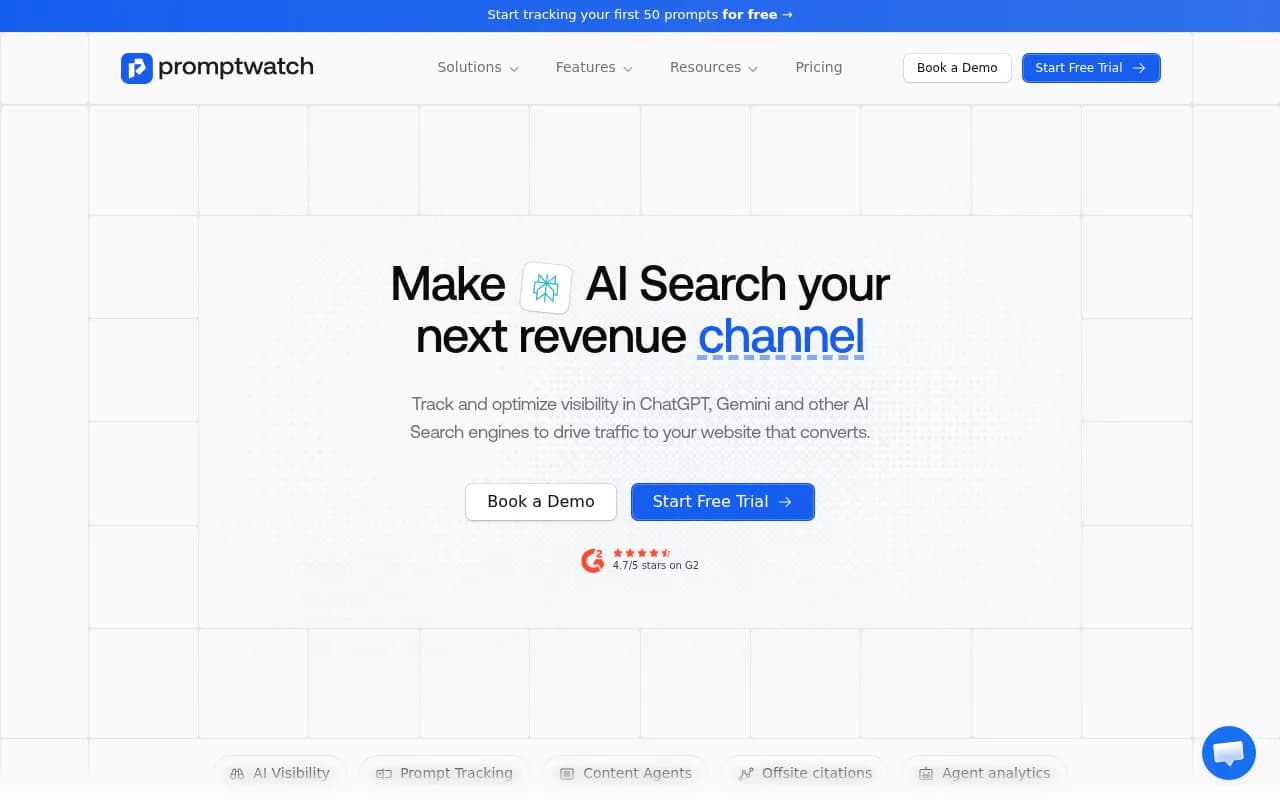
If AI search visibility is your primary concern -- if you need to track how your brand appears across 10+ AI models, understand which prompts are driving citations, analyze AI crawler behavior on your site, or generate content specifically engineered to rank in AI answers -- BrightEdge's current AI capabilities fall short. For that use case, a dedicated GEO platform like Promptwatch covers more models, provides deeper prompt intelligence, and offers the content optimization tools needed to actually improve AI visibility rather than just monitor it.
Best for: Fortune 500 in-house SEO teams that need enterprise-grade traditional SEO with basic AI search monitoring in a single platform.
Tags:
Frequently asked questions
What is BrightEdge?
How much does BrightEdge cost?
Is BrightEdge good for AI search visibility (GEO)?
Who is BrightEdge best suited for?
Does BrightEdge offer a free trial?
How does BrightEdge compare to Semrush or Ahrefs?
Similar and alternative tools to BrightEdge