Key takeaways
- Promptwatch is a specialist AI visibility platform; Search Atlas is a generalist SEO suite that includes AI visibility as one module. If AI search is your primary concern, Promptwatch goes much deeper.
- Both start at $99/mo, but they cover very different ground at that price point -- Promptwatch gives you 50 AI prompts tracked and 5 AI-generated articles; Search Atlas gives you traditional SEO tools plus basic AI visibility.
- Promptwatch monitors 10 AI models in real user interfaces (not just API calls), logs AI crawler activity on your website, and tracks ChatGPT Shopping and Reddit/YouTube citations. Search Atlas doesn't match this depth on the AI side.
- Search Atlas wins on traditional SEO breadth: rank tracking, site audits, backlink analysis, Google Ads management, and an agentic OTTO SEO tool that automates fixes. Promptwatch doesn't touch any of that.
- For teams that need both traditional SEO and AI visibility, Search Atlas is a reasonable one-stop shop -- but you'll likely want to supplement it with a dedicated GEO tool as AI search matures.
- Promptwatch's content generation is purpose-built for AI search gaps; Search Atlas's AI content tools are more general-purpose SEO writing assistants.
Overview
Promptwatch
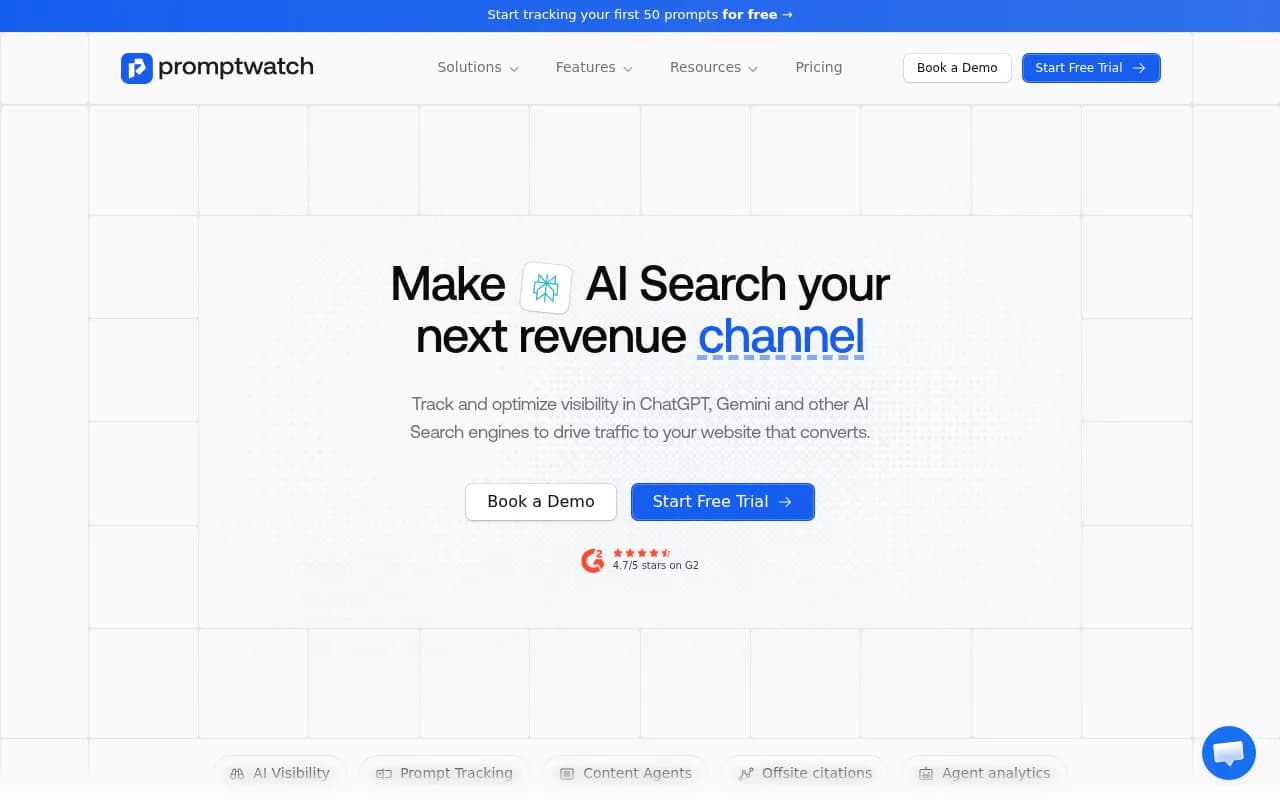
Promptwatch is a dedicated GEO (Generative Engine Optimization) and AI search visibility platform. The core idea is simple: most brands have no idea whether ChatGPT, Perplexity, or Gemini is recommending them -- or their competitors. Promptwatch tracks that, then helps you do something about it. It monitors citations across 10+ AI models, logs when AI crawlers visit your site, surfaces content gaps, and generates articles specifically designed to close those gaps. It's used by 1,480+ brands including Booking.com, Duolingo, and Typeform, and holds a 4.7/5 rating on G2.
The platform's strength is the full loop: find gaps, create content, track results. That's different from tools that just show you a dashboard and leave you to figure out what to do next.
Search Atlas
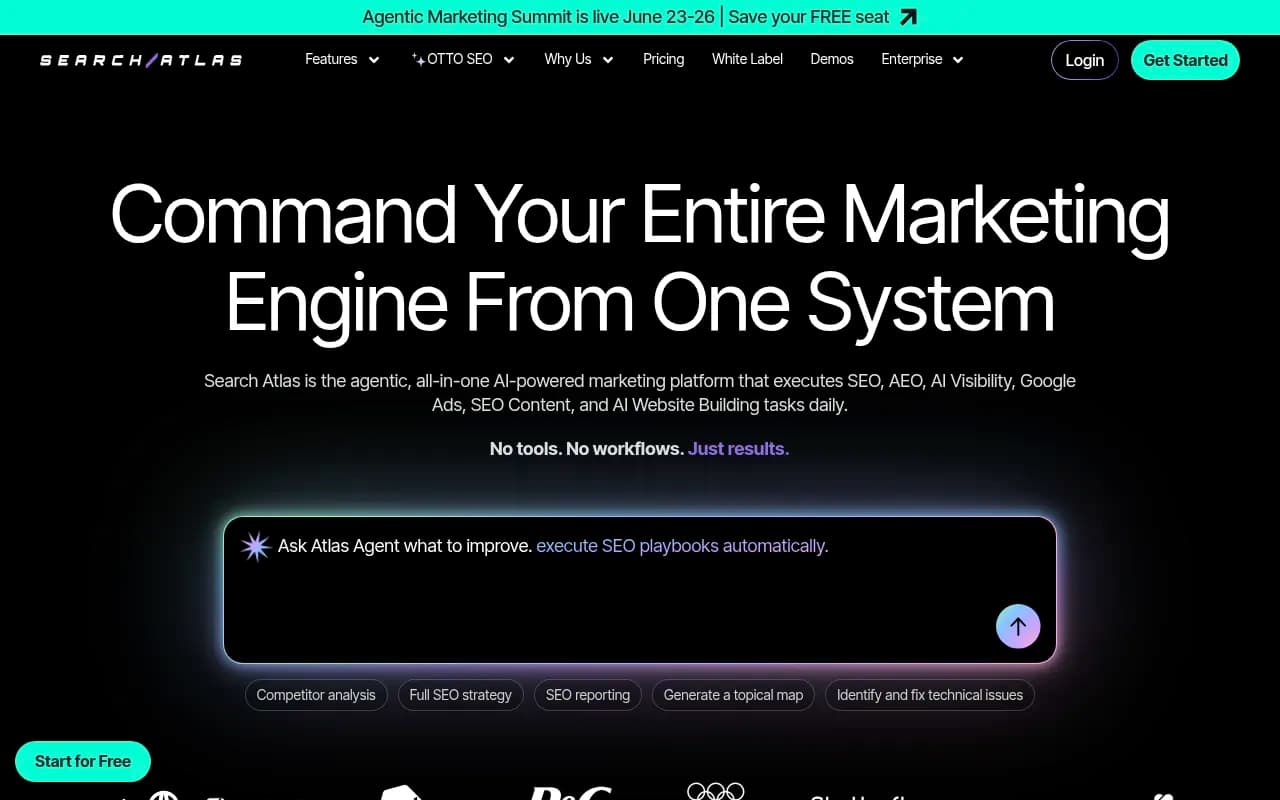
Search Atlas positions itself as an all-in-one AI-powered marketing platform. It covers the full traditional SEO stack -- keyword research, rank tracking, site audits, backlink analysis, content optimization -- and has added AI visibility monitoring and an agentic AI layer called OTTO SEO that can automate tasks like deploying schema, fixing technical issues, and publishing content. It's aimed at agencies and brands that want a single platform to manage their entire organic and paid search presence.
The pitch is "marketing that executes itself" -- OTTO SEO can take insights and turn them into actions without manual intervention. That's genuinely useful for teams stretched thin across multiple clients or projects.
Side-by-side comparison
| Feature | Promptwatch | Search Atlas |
|---|---|---|
| Primary focus | AI search visibility / GEO | All-in-one SEO + AI visibility |
| AI models tracked | 10+ (ChatGPT, Perplexity, Gemini, Claude, Grok, DeepSeek, Copilot, Meta AI, Mistral, Google AI Overviews) | AI visibility module (specific models not fully disclosed) |
| Traditional SEO tools | None | Full suite (rank tracking, audits, backlinks, keyword research) |
| Content generation | AI Content Agents trained on prompt/citation data | AI writing tools + OTTO SEO content automation |
| AI crawler logs | Yes -- real-time logs per page | Not available |
| ChatGPT Shopping tracking | Yes | No |
| Reddit/YouTube citation tracking | Yes | No |
| Prompt volume & difficulty scores | Yes | No |
| Answer gap analysis | Yes | Limited |
| Site audit | No | Yes |
| Backlink analysis | No | Yes |
| Google Ads management | No | Yes |
| White-label reporting | Agency/Enterprise tier | Yes |
| Free trial | Yes | 7-day free trial |
| Starting price | $99/mo | $99/mo |
| G2 rating | 4.7/5 | Available on G2 |
| Best for | AI search visibility, GEO, brand citation tracking | Full-service SEO agencies, teams wanting one platform |
Head-to-head feature deep-dive
AI search visibility
This is where the gap between the two tools is most obvious.
Promptwatch was built from the ground up for AI visibility. It tracks how 10 AI models respond to real user prompts -- not just API calls, but actual user-facing interfaces where answers, citations, and shopping recommendations can differ. That distinction matters: what ChatGPT says in its consumer interface isn't always what the API returns.
The platform gives you:
- Citation tracking per AI model, per prompt
- Prompt volume estimates and difficulty scores so you can prioritize
- Query fan-outs showing how one prompt branches into sub-queries
- Competitor heatmaps comparing your visibility vs rivals across each LLM
- ChatGPT Shopping tracking for product recommendations
- Offsite citation analysis covering Reddit threads, YouTube videos, and third-party pages
Search Atlas has an AI visibility module, but it's one feature set within a much larger platform. It tracks AI search presence and includes AEO (Answer Engine Optimization) tools, but it doesn't go as deep on the data side -- no prompt volume scores, no AI crawler logs, no ChatGPT Shopping tracking, no Reddit/YouTube citation analysis.
Verdict: Promptwatch wins clearly on AI visibility depth.
Traditional SEO tools
Search Atlas has a comprehensive traditional SEO toolkit that Promptwatch simply doesn't offer:
- Keyword research with search volume and difficulty data
- Rank tracking for Google and Bing
- Site audits with technical issue detection
- Backlink analysis and link building tools
- Google Ads campaign management
- Competitor analysis across organic search
Promptwatch doesn't do any of this. It's not trying to. If you need a platform to manage your Google rankings alongside AI visibility, you'll need Search Atlas (or Ahrefs/Semrush) for that side of things.
Verdict: Search Atlas wins on traditional SEO, no contest.
Content generation
Both tools generate content, but with different goals.
Promptwatch's Content Agents generate articles, listicles, comparisons, and briefs grounded in real prompt data. The content is engineered to answer the specific gaps AI models are exposing -- topics and questions where competitors are getting cited but you're not. Each article is informed by citation data, prompt volumes, persona targeting, competitor analysis, and brand guidance. The output is designed to get cited by AI models, not just rank on Google.
Search Atlas's AI content tools are more general-purpose. OTTO SEO can automate content publishing, and the platform has AI writing features for creating SEO-optimized pages. It's useful for scaling content production, but it's not specifically trained on AI citation gaps.
Verdict: Promptwatch wins for AI-targeted content; Search Atlas wins for general SEO content at scale.
AI crawler logs and technical AI insights
Promptwatch has a feature most competitors lack entirely: real-time logs of AI crawlers (ChatGPT, Claude, Perplexity, etc.) visiting your website. You can see which pages they read, errors they encounter, how often they return, and when a page moves from being crawled to being cited. This is genuinely useful for diagnosing why certain pages aren't getting picked up by AI models.
Search Atlas has no equivalent. Its technical tools focus on traditional crawl errors, Core Web Vitals, and schema markup -- all valuable for Google SEO, but not for understanding AI crawler behavior.
Verdict: Promptwatch wins, and it's not close.
Agentic automation
Search Atlas's OTTO SEO is its standout differentiator. It's an AI agent that can take a list of SEO recommendations and execute them -- deploying schema markup, fixing technical issues, updating meta tags, publishing content -- without you having to do it manually. For agencies managing dozens of client sites, this kind of automation is a real time-saver.
Promptwatch's Content Agents automate content creation based on gap analysis, but the platform doesn't have the same "execute fixes automatically" capability for technical SEO tasks.
Verdict: Search Atlas wins on agentic task execution.
Integrations and data connections
Promptwatch connects to your website through Cloudflare, Fastly, Vercel, server logs, Google Search Console, or a tracking snippet. It also integrates with Looker Studio and has an API for custom workflows. The integrations are focused on getting accurate crawler and traffic data.
Search Atlas integrates with Google Search Console, Google Analytics, and various SEO data providers. It's built to be the central hub for an agency's SEO workflow.
Verdict: Tie -- both have solid integrations for their respective use cases.
Pricing and value
Both platforms start at $99/mo, but you're buying very different things.
Pricing comparison
| Plan | Promptwatch | Search Atlas |
|---|---|---|
| Entry | Essential: $99/mo | Starter: $99/mo |
| Mid-tier | Professional: $249/mo | Growth: $199/mo |
| Upper tier | Business: $579/mo | Pro: $399/mo |
| Enterprise/Agency | Custom pricing | Custom pricing |
| Free trial | Yes (50 prompts free) | 7-day free trial |
| Annual discount | Yes | Yes |
What you get at $99/mo:
Promptwatch Essential: 1 site, 50 prompts tracked, 5 AI-generated articles per month, citation monitoring across 10 AI models.
Search Atlas Starter: Traditional SEO tools (rank tracking, site audit, keyword research), AI visibility module, OTTO SEO access.
The value calculation depends entirely on what you need. If AI visibility is your primary goal, Promptwatch's $99 plan gives you more relevant data. If you need a full SEO platform and AI visibility is a nice-to-have, Search Atlas's $99 plan covers more ground.
At the Professional/Growth tier, Search Atlas ($199/mo) is cheaper than Promptwatch ($249/mo) while covering more total features -- but Promptwatch's Professional plan adds AI crawler logs and state/city tracking that Search Atlas doesn't offer at any price.
Pros and cons
Promptwatch
Pros:
- Deepest AI visibility data available -- 10 models, real user interfaces, not just APIs
- AI crawler logs show exactly how AI engines discover and cite your content
- Content Agents generate articles specifically engineered to close AI citation gaps
- ChatGPT Shopping tracking and Reddit/YouTube citation analysis
- Prompt volume and difficulty scores help prioritize effort
- 4.7/5 on G2, trusted by recognizable brands
Cons:
- No traditional SEO tools -- you'll need a separate platform for Google rank tracking, site audits, and backlinks
- Relatively new category, so some features are still maturing
- Higher price at the Business tier ($579/mo) for larger prompt volumes
- No Google Ads management
Search Atlas
Pros:
- Genuinely comprehensive SEO platform -- covers keyword research, rank tracking, audits, backlinks, and Google Ads in one place
- OTTO SEO agent automates technical fixes and content publishing
- Competitive pricing at the Growth tier ($199/mo) for what you get
- Strong agency features including white-label reporting
- AI visibility is included, not a separate purchase
Cons:
- AI visibility is a module, not the core product -- depth is limited compared to specialists
- No AI crawler logs or real-time AI crawl monitoring
- No ChatGPT Shopping tracking
- No Reddit/YouTube citation analysis
- Prompt volume and difficulty scoring not available
- Content generation is general-purpose, not AI-citation-optimized
Who should pick which tool
Pick Promptwatch if:
- AI search visibility is your primary concern in 2026
- You want to know exactly which AI models are citing your competitors but not you
- You need to understand how AI crawlers interact with your site
- You're building a GEO strategy and need content that actually gets cited by LLMs
- You're an agency or brand selling AI visibility services
- You already have a traditional SEO tool (Ahrefs, Semrush, Search Atlas) and want to add AI visibility on top
Pick Search Atlas if:
- You need a single platform for traditional SEO and want AI visibility included
- You're an agency managing multiple clients across organic and paid search
- OTTO SEO's agentic automation would save your team significant time
- You want rank tracking, site audits, and backlink analysis alongside AI monitoring
- Budget is a constraint and you'd rather pay one subscription than two
Use both if:
- You're serious about both traditional SEO and AI search visibility
- You have the budget for two platforms
- Your team is large enough to get value from the full feature set of each
Final verdict
These tools aren't really competing for the same buyer. Search Atlas is a traditional SEO platform that has added AI visibility features. Promptwatch is an AI visibility platform, full stop.
If AI search is your focus -- and in 2026, it should be a serious part of any digital marketing strategy -- Promptwatch gives you data and tools that Search Atlas simply can't match: real-time AI crawler logs, ChatGPT Shopping tracking, Reddit/YouTube citation analysis, prompt volume scoring, and content generation trained on actual citation gaps. The action loop (find gaps, create content, track results) is what separates it from monitoring-only tools.
If you need a single platform to manage your entire SEO operation and AI visibility is one piece of a larger puzzle, Search Atlas is a reasonable choice -- especially at the Growth tier where you get a lot for $199/mo.
The honest answer for most teams: use Search Atlas for traditional SEO, and add Promptwatch when AI search visibility becomes a priority. They complement each other well.
Worth noting: if you're evaluating either tool specifically for AI search visibility, Promptwatch is the more purpose-built option -- it's the only platform in this space rated as a "Leader" across all GEO categories in a 2026 comparison of 12 platforms.