Key takeaways
- Perplexity Pro is now a meaningful citation source for brands, and tracking it requires purpose-built AI visibility tooling -- not traditional SEO rank trackers.
- Promptwatch is the only platform in this comparison that combines Perplexity citation tracking with content gap analysis and AI-powered content generation, closing the loop from "you're invisible" to "here's what to publish."
- Profound offers the deepest enterprise-grade analytics but starts at $499/month and lacks content generation.
- Peec AI is a solid mid-market option with clean dashboards, but its monitoring-only approach means you still have to figure out what to do with the data yourself.
- Otterly.AI is the most affordable entry point, but its feature set is limited for teams that need to act on what they find.
Why Perplexity Pro citations actually matter now
Perplexity crossed 100 million monthly active users in early 2026, and its Pro tier -- which uses more capable models and delivers richer, more source-heavy answers -- has become a real referral channel for brands. Unlike ChatGPT, which often synthesizes answers without surfacing sources, Perplexity Pro consistently cites specific pages. That makes it trackable, and more importantly, it makes it winnable.
The problem is that most brands still have no idea whether they're being cited in Perplexity at all. They're not checking. And the tools they might reach for -- traditional rank trackers, Google Search Console, even Semrush -- don't capture any of this.
That's where dedicated AI search visibility platforms come in. This guide compares four of the most-discussed options in 2026: Promptwatch, Profound, Peec AI, and Otterly.AI. The goal isn't to declare a single winner for everyone -- it's to help you figure out which one fits your team's actual workflow.
What to look for in a Perplexity citation tracker
Before getting into the platforms, it's worth being clear about what "tracking Perplexity citations" actually involves. There are a few distinct capabilities:
- Prompt monitoring: Running queries through Perplexity and recording whether your brand or pages appear in the response.
- Citation-level tracking: Identifying which specific URLs are cited, not just whether your brand name appears.
- Frequency and trend data: How often you're cited over time, and whether that's improving.
- Competitor benchmarking: Seeing which competitors are cited for the same prompts.
- Gap analysis: Identifying prompts where competitors are cited but you're not.
- Content optimization: Actually doing something about the gaps -- generating content, updating pages, fixing crawl issues.
Most platforms in this space handle the first three reasonably well. The gap analysis and content optimization layers are where they diverge sharply.
Platform-by-platform breakdown
Promptwatch
Promptwatch tracks AI responses across 10 models -- including Perplexity, ChatGPT, Claude, Gemini, Grok, DeepSeek, and Google AI Overviews -- and captures citation data at the URL level. So you don't just see "Perplexity mentioned your brand"; you see which specific pages are being cited, how often, and in response to which prompts.
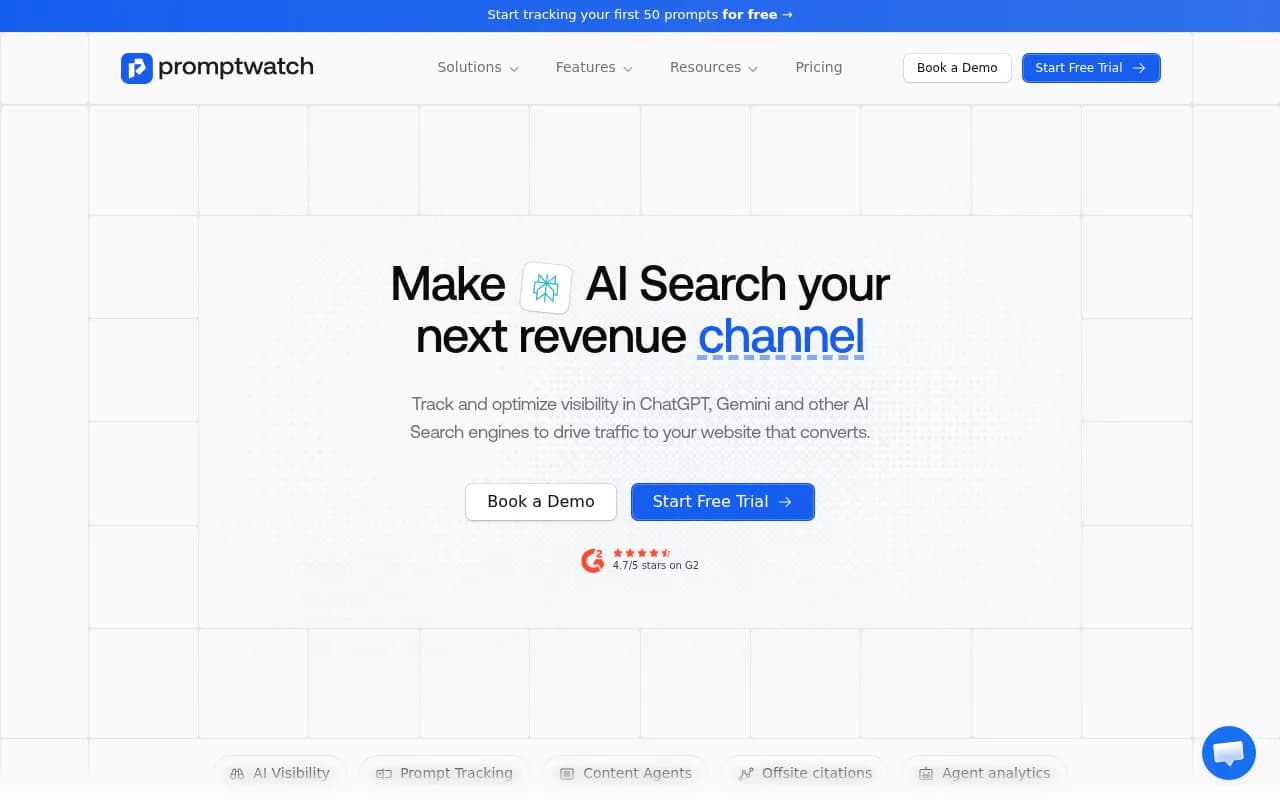
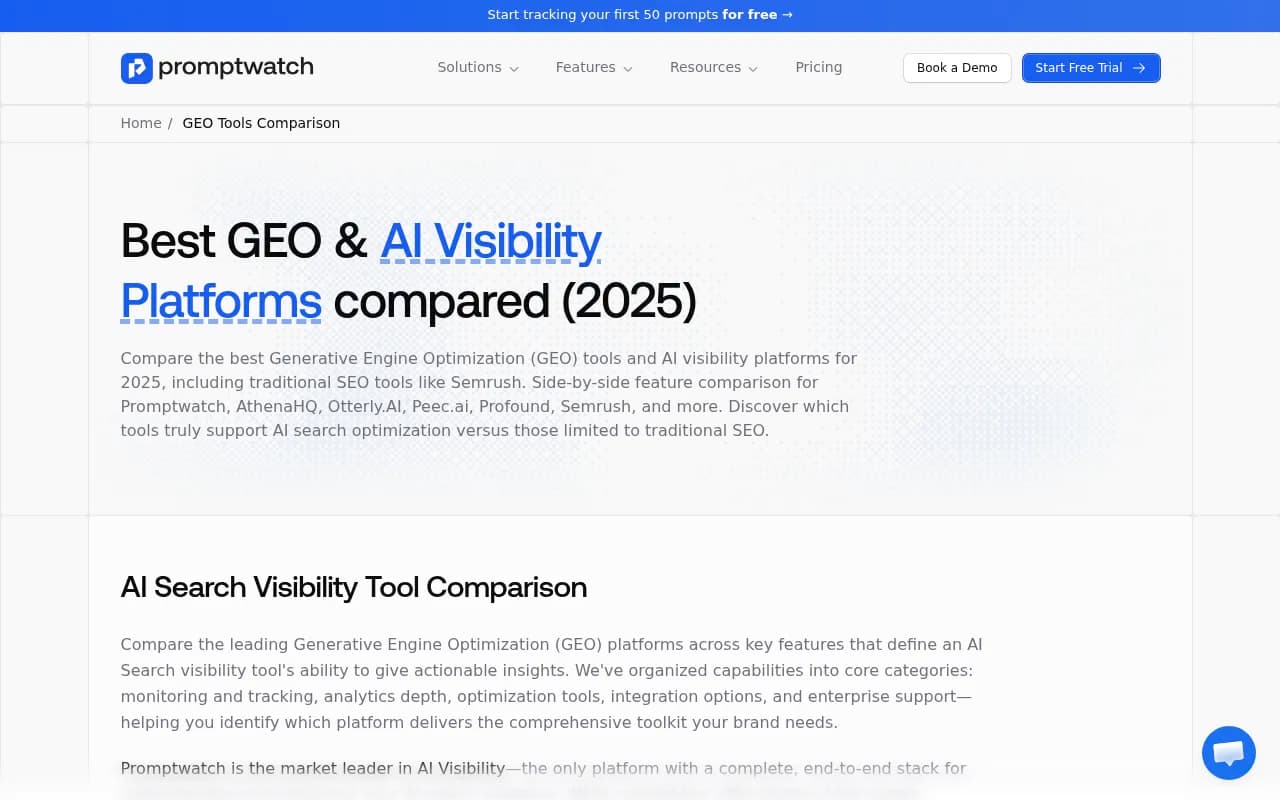
What separates Promptwatch from the other three platforms in this comparison is the action loop. Most tools stop at monitoring. Promptwatch has an Answer Gap Analysis feature that shows you the exact prompts where competitors are being cited and you're not. From there, Content Agents can generate articles, listicles, and briefs grounded in that gap data -- not generic SEO content, but content specifically engineered to answer what Perplexity (and other AI models) are already looking for.
The AI Crawler Logs feature is also worth calling out. It shows real-time logs of AI crawlers hitting your site -- which pages they're reading, how often they return, and when a crawled page moves to a cited page. This is genuinely useful for diagnosing why Perplexity isn't citing you even after you've published new content.
Pricing starts at $99/month (Essential: 1 site, 50 prompts, 5 articles), $249/month (Professional: 2 sites, 150 prompts, 15 articles, crawler logs), and $579/month (Business: 5 sites, 350 prompts, 30 articles). A free trial is available.
Profound
Profound is the enterprise option in this group. It's built for larger organizations that need deep reporting, stakeholder-ready dashboards, and broad AI engine coverage. The analytics are thorough -- you get visibility scores, share-of-voice comparisons, and detailed breakdowns by model and prompt category.

The trade-off is price and scope. Profound starts at $499/month, which puts it out of reach for most SMBs and even many mid-market teams. And while the data is rich, Profound is fundamentally a monitoring and analytics platform. There's no content generation, no content briefs, and no built-in workflow for turning gap data into published pages. You get excellent visibility into the problem; you're on your own to fix it.
For enterprise teams with dedicated content operations and the budget to match, Profound is a serious option. For everyone else, the price-to-action ratio is hard to justify when platforms like Promptwatch exist at a lower price point with more built-in optimization capability.
Peec AI
Peec AI sits in the mid-market. It tracks AI visibility across multiple models (including Perplexity), runs prompts on a daily cadence, and surfaces citation and mention data in a clean dashboard. The interface is well-designed and the onboarding is relatively fast.
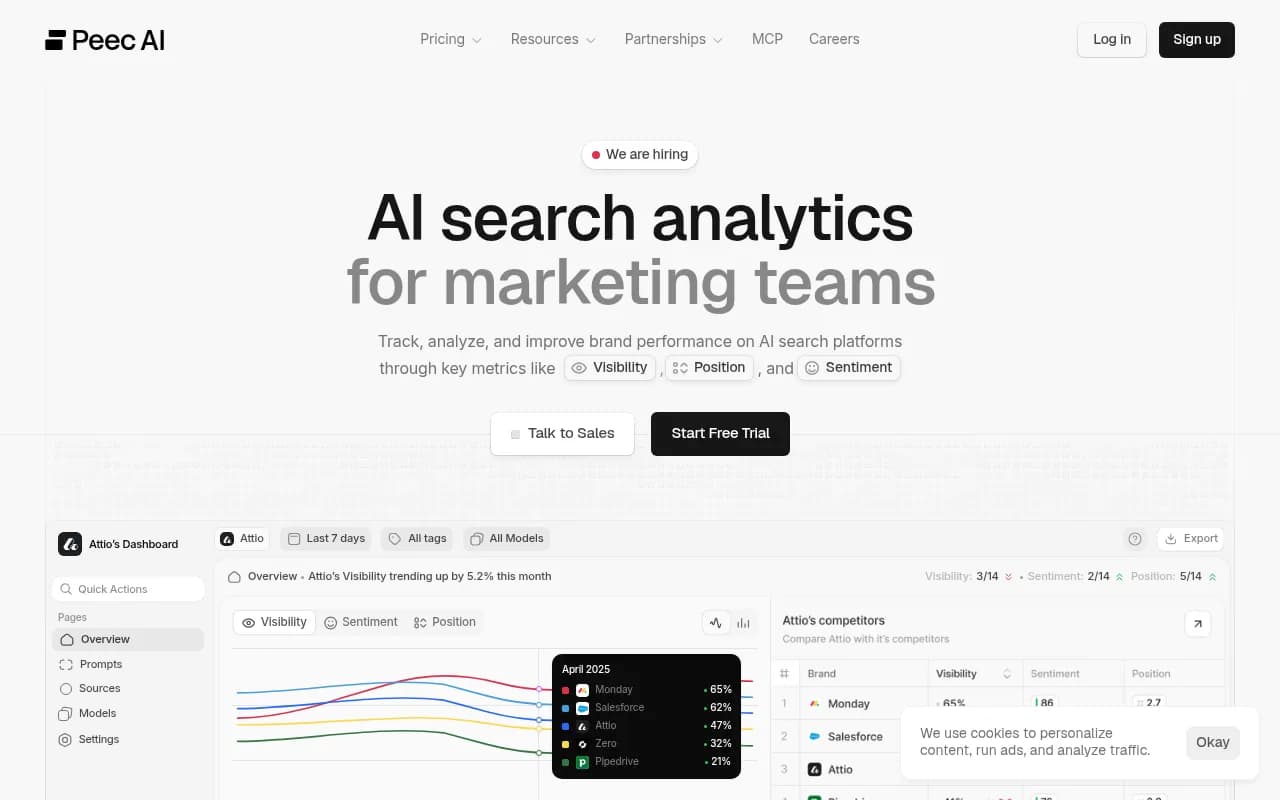
Pricing runs from $95/month (Starter: 3 models, 50 prompts) to $495/month (Advanced: multi-country, 350 prompts, GSC/GA/Looker integrations). The Advanced tier's integrations are a genuine differentiator -- being able to pull Peec data into Looker Studio alongside Google Search Console data is useful for teams that want a unified reporting view.
The limitation is the same one that affects most monitoring-only tools: Peec AI shows you where you stand, but it doesn't help you improve. There's no content gap analysis, no content generation, and no crawler log data. For a team that already has strong content operations and just needs reliable citation data piped into their existing workflow, Peec AI works well. For a team that needs the full loop, it's half a solution.
Otterly.AI
Otterly.AI is the most accessible option in this group, both in terms of price and simplicity. It tracks brand mentions and citations across AI models including Perplexity, and it's genuinely easy to set up and use.
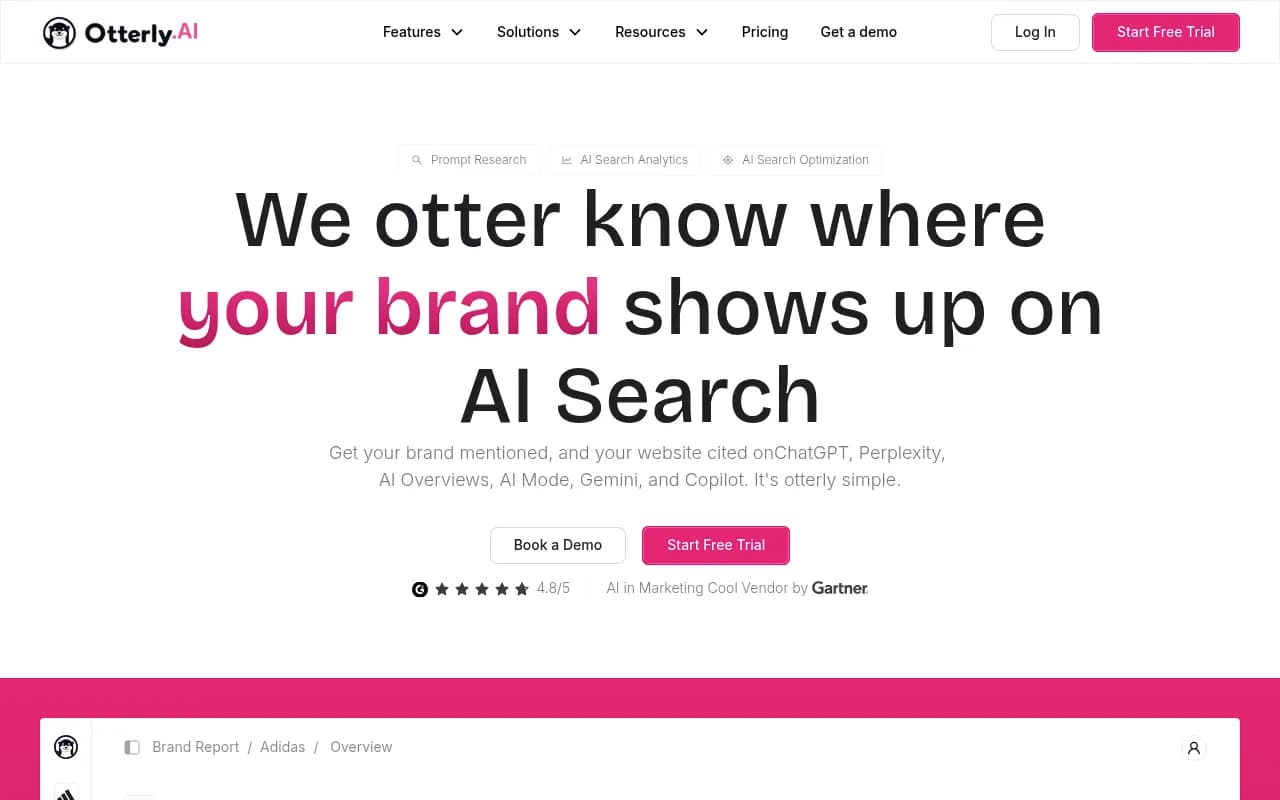
The honest assessment: Otterly.AI is a good starting point for teams that are just beginning to think about AI visibility and want to understand the basics without a big commitment. But it's a monitoring dashboard, and a fairly basic one. There's no prompt volume data, no difficulty scoring, no crawler logs, no content generation, and limited competitor benchmarking depth. Teams that outgrow it tend to do so quickly.
Feature comparison
| Feature | Promptwatch | Profound | Peec AI | Otterly.AI |
|---|---|---|---|---|
| Perplexity citation tracking | Yes | Yes | Yes | Yes |
| URL-level citation data | Yes | Yes | Partial | Limited |
| Competitor benchmarking | Yes | Yes | Yes | Basic |
| Answer gap analysis | Yes | No | No | No |
| AI content generation | Yes | No | No | No |
| AI crawler logs | Yes | No | No | No |
| Prompt volume & difficulty | Yes | No | No | No |
| Reddit & YouTube tracking | Yes | No | No | No |
| ChatGPT Shopping tracking | Yes | No | No | No |
| Multi-language / multi-region | Yes | Yes | Yes (Advanced+) | Limited |
| GSC / GA integrations | Yes | Yes | Yes (Advanced+) | No |
| Starting price | $99/mo | $499/mo | $95/mo | ~$49/mo |
| Free trial | Yes | No | Yes | Yes |
| Content gap analysis | Yes | No | No | No |
How these platforms handle Perplexity specifically
Perplexity has a few quirks that make it different to track compared to, say, ChatGPT. Its responses are heavily citation-driven, which is good for brands -- but it also means the citation logic is more sensitive to content quality and freshness. Perplexity Pro in particular tends to pull from recently updated, well-structured pages.
All four platforms can run prompts through Perplexity and record what comes back. The differences show up in:
How they capture citations: Promptwatch and Profound capture URL-level citation data reliably. Peec AI captures citations but with some limitations at lower tiers. Otterly.AI focuses more on brand mention detection than precise URL attribution.
Whether they track the real user interface: Promptwatch explicitly tracks how AI models behave in real user interfaces, not just through API calls. This matters because Perplexity Pro's user-facing answers can differ from what the API returns -- different sources, different formatting, sometimes different conclusions.
What they do with the data: Only Promptwatch connects citation gaps to a content creation workflow. If Perplexity is citing three competitors for "best project management software for remote teams" but not you, Promptwatch shows you that gap and can generate a brief or full article targeting it. The others surface the gap and leave the rest to you.
Which platform fits which team
The honest answer is that these four tools are targeting different buyers, and the right choice depends more on your team's situation than on any single feature.
If you're a marketing or SEO team that wants to both track and improve AI visibility, Promptwatch is the clearest fit. The monitoring is solid, the gap analysis is genuinely useful, and the content generation means you can act on what you find without spinning up a separate workflow. The $249/month Professional plan is where most teams will land.
If you're an enterprise with a dedicated analytics function and existing content operations, Profound's depth might justify the price. You're paying for reporting quality and stakeholder-ready dashboards, not for optimization tooling.
If you have a tight budget and mostly need citation data piped into an existing reporting stack, Peec AI's Advanced plan (with Looker Studio integration) is a reasonable choice. Just know you're buying monitoring, not optimization.
If you're just starting out and want to understand AI visibility basics before committing, Otterly.AI's low price point makes it a reasonable first step. Expect to outgrow it.
A note on prompt tracking methodology
One thing worth checking with any platform you evaluate: how are they running prompts? There are two approaches.
The first is API-based: the platform queries the AI model's API and records the response. This is fast and scalable, but API responses don't always match what users see in the actual product. Perplexity Pro, in particular, can behave differently in its web interface versus its API.
The second is interface-level tracking: the platform simulates or monitors real user interactions. This is slower and more resource-intensive, but the data is more representative of what your actual customers experience.
Promptwatch explicitly tracks real user-interface behavior, not just API outputs. For Perplexity Pro specifically -- where the Pro tier's enhanced responses are a key selling point -- this distinction matters.
The gap most platforms leave open
There's a pattern worth naming directly. Most AI visibility platforms were built to answer one question: "Are we being cited?" That's a useful question. But it's not the most useful question.
The more useful question is: "What would it take to get cited more?" And that requires knowing not just your current citation rate, but which prompts you're losing, why you're losing them, what content would close the gap, and whether AI crawlers can actually find and read your pages.
Profound, Peec AI, and Otterly.AI all answer the first question reasonably well. None of them answer the second. Promptwatch is built around the second question -- the find-gaps, create-content, track-results loop that turns monitoring data into actual visibility improvements.
That's not a knock on the other platforms. Monitoring-only tools have a place. But if your goal is to improve your Perplexity citation rate over the next quarter, not just measure it, the platform you choose needs to support the full workflow.
Bottom line
Tracking Perplexity Pro citations in 2026 is no longer optional for brands that care about AI search traffic. The question is whether you want a platform that shows you the data or one that helps you act on it.
For most teams, Promptwatch covers both sides of that equation at a price point that makes sense. Profound is the right call for enterprise teams that need deep analytics and have separate content operations. Peec AI works if you need clean monitoring data with good integration options. Otterly.AI is where to start if you're not ready to commit to a full platform yet.
Whichever direction you go, start by running your most important prompts through Perplexity Pro manually. See who's being cited. That gap -- between where you are and where your competitors are -- is exactly what these platforms are built to close.