Key Takeaways
- Scrunch was acquired by Sitecore on June 3, 2026 in a deal Bloomberg valued at $225 million. Scrunch operates as a standalone platform, but enterprise buyers should expect Sitecore's commercial norms (quote-based contracts, multi-year terms) to shape the deal.
- There is no self-serve enterprise path. Entry is exclusively through "Book a demo," and the 7-day free trial is capped at the $250/month Core plan.
- Expect a full enterprise procurement pass: SOC 2 Type II review, SSO/SAML, RBAC, and possibly an AI governance board, before legal will engage.
- Implementation is unusually fast for enterprise software: Scrunch says large customers can be deployed and collecting data within a day.
- Competitors like Profound and Peec AI run the full range of the market, from $499/month to six-figure annual contracts, so benchmark hard before signing.
First, the thing that changed everything: Scrunch is now a Sitecore company
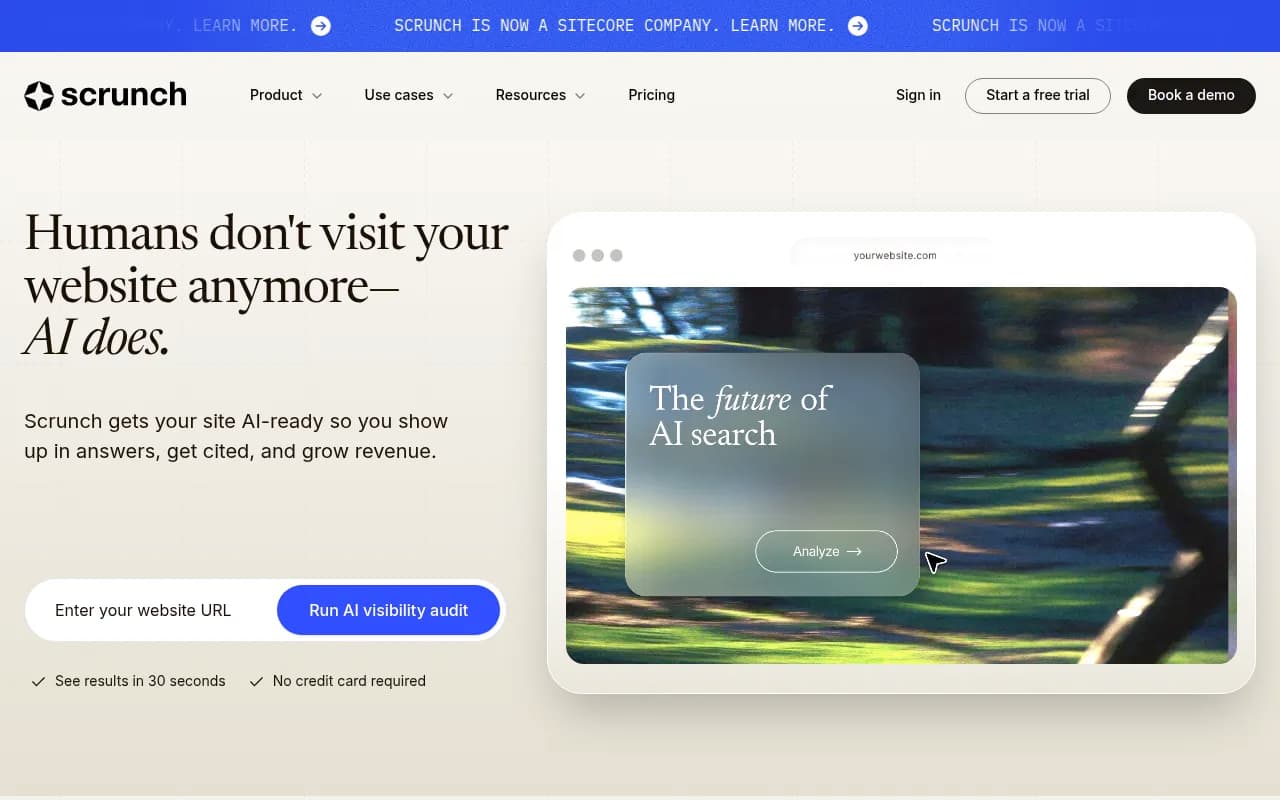
If you started a Scrunch AI evaluation any time before mid-2026, throw out your old notes. On June 3, 2026, Sitecore announced it had acquired Scrunch, with Bloomberg pegging the deal at $225 million. Scrunch's CEO Chris Andrew now carries the title "CEO of Scrunch, a Sitecore company," and Scrunch's own FAQ confirms it operates as a standalone platform rather than being absorbed into Sitecore's product suite.
For buyers, this cuts both ways.
On the plus side: Sitecore has raised $1.23 billion and passed $500 million in ARR, which answers the "will this vendor still exist in three years" question that procurement always asks about a company that had raised $26 million. The strategic rationale also means Scrunch's Agent Experience Platform (AXP) is likely to get deeper integration with SitecoreAI's content and DAM stack over time, which could be a real benefit if you're already a Sitecore customer.
On the watch-out side: anyone entering a Scrunch enterprise deal in late 2026 is now implicitly in Sitecore's commercial orbit. Sitecore's enterprise pricing is quote-based, negotiated on headcount, usage, and term, and third-party spend data from Vendr and Spendhound notes that 3-year deals unlock better pricing. Expect bundling conversations and cross-sell pressure into SitecoreAI modules during late-stage negotiations. The joint announcement even quoted a Perficient CMO who is a customer of both companies, which tells you the cross-sell motion is already part of the playbook.
What the sales motion actually looks like
Scrunch's go-to-market has a hard split: self-serve for small teams, sales-led for everyone else.
The Core plan ($250/month) gets a 7-day free trial, credit card checkout, and self-serve onboarding. The Enterprise plan has no published price, no trial, and a single entry point: "Talk to us" or "Book a demo" at scrunch.com/book. Their own FAQ states plainly that trials are capped at Core functionality and enterprise prospects should contact sales for a "custom evaluation" instead.
So what does that evaluation look like? Based on how enterprise AI-visibility deals generally run in 2026, and what Scrunch has said publicly, here's the arc:
Stage 1: The demo call
Come prepared, because Scrunch's founders have been vocal about what they think enterprise buyers should focus on. Co-founder Robert MacCloy has argued that the standard enterprise checklist (SOC 2, SSO, RBAC, audit logs, GDPR, SLAs) is "table stakes" that every vendor will eventually have, and that the real differentiators are flexibility (custom APIs, bespoke workflows, multi-brand/multi-region support) and velocity. Expect the Scrunch team to steer the conversation toward those areas rather than a compliance checkbox tour.
One thing worth knowing before your first call: Scrunch claims to be "the only AI-native platform that pairs multi-LLM monitoring and analytics with auditing, optimization, and AI content delivery," citing a 4.6/5 G2 rating. That claim is the basis of their "observe, understand, act, and deliver" framework, and they'll position it against Profound ("stops before content delivery") and Peec AI ("focuses primarily on monitoring"). Take it as positioning, not gospel, but it tells you where the demo will go.
Stage 2: The custom evaluation
This is where Scrunch differentiates itself from the slow-moving enterprise stereotype. Their FAQ claims that many customers, including large enterprises, are "deployed and collecting data within one day." The self-serve flow is: enter your website URL, the platform auto-generates competitors, personas, and topics; import your prompts via copy-paste or CSV; data collection starts automatically, with analyzable data in 20–60 minutes for smaller organizations and 1–12 hours for larger ones.
For enterprise deals specifically, there's a pre-launch configuration phase where you work with the Scrunch team on custom data collection parameters, API integrations, and workflows. This is where their "forward deployed engineer" offer matters most: enterprise customers get someone who helps configure the workspace, build workflows, and tailor the platform, rather than a generic onboarding webinar.
Stage 3: Procurement, security, and the AI review board
Here's where the deal slows down, and where you should prepare documentation before it's requested. Scrunch has done the work: SOC 2 Type II audited by an independent third party (verifiable via their public Trust Center), GDPR and CCPA compliance, SAML/OIDC-based SSO with Okta and Azure AD support, and role-based access control.
But the bigger 2026 trend is the AI review board. Enterprise AI governance bodies have popped up over the last two years as the internal gatekeepers for model risk, data security, and compliance, and any GEO/AI visibility tool that touches your website data and generates content will likely land on their desk. If your organization has one, loop them in early rather than getting surprised in week ten.

For context on timelines: enterprise deals over $500K ACV average 270 days to close per focus-digital.co's 2026 benchmarking, and each additional decision-maker extends the cycle by an estimated 8 to 15 days. A GEO tool deal is unlikely to hit those ACVs, but the pattern holds in miniature. A buying committee that includes your SEO lead, an executive sponsor, IT/security, and now possibly an AI governance reviewer will simply take longer than one with two people.
What enterprise actually gets you (and what it costs)
The gap between Core and Enterprise is wide. Here's what's documented on Scrunch's pricing and enterprise pages:
| Feature | Core ($250/mo) | Enterprise (custom) |
|---|---|---|
| LLMs tracked | 4 (ChatGPT, Perplexity, Google AIO, Copilot) | 9 (adds Claude, Gemini, Meta AI, Google AI Mode, Grok) |
| Prompts | 125 unique | Custom volume |
| Countries / personas / languages | 1 country, 3 personas, 2 languages | Unlimited countries, custom everything |
| AXP (Agent Experience Platform) | No | Yes |
| API / Query API / MCP / CLI | No | Yes |
| SSO (SAML/OIDC) | No | Yes |
| Support | Email-only | Dedicated account team, Slack, on-call support |
| Onboarding | Self-serve | Forward deployed engineer |
Annual contracts get roughly two months free versus monthly billing, per third-party review coverage. Beyond that, the number is a black box. No bundled Sitecore-Scrunch pricing sheet exists publicly, and as of the research for this guide, Scrunch's standalone pricing page hadn't been updated to reflect the acquisition.
For rough benchmarking, the wider market gives you a bracket: Peec AI's enterprise tier starts at a transparent $499/month, while Profound's enterprise contracts are estimated at $30,000 to $100,000+ per year. Where Scrunch lands between those poles will depend on your prompt volume, number of sites, and multi-region needs. Their enterprise page says Lenovo, ADP, and Akamai monitor "millions of prompts and hundreds of thousands of pages," which gives you a sense of the scale they're selling into.
Why enterprises are paying this at all
Worth asking, before you sign: what's the actual business case? The honest answer in 2026 is citation scarcity. Promptwatch's data across 26 billion-plus analyzed citations shows ChatGPT cites around 5 sources per web-search response, Google AI Overviews around 10, and Perplexity consistently around 10. As that report puts it, "pretty relevant" content misses the cut when only five slots exist. Enterprises are paying five and six figures a year to fight for a handful of citation slots, and that's the whole reason this category exists.
The Akamai case study is the proof point Scrunch will show you: AXP-enabled pages saw a 364% increase in brand presence for non-branded prompts and a 218% increase in citations versus non-AXP pages over a comparison window from December 2025 to January 2026. Runpod, meanwhile, reported a 400% increase in paying customers from its AI search work. These are vendor-published numbers from a vendor's own case studies, so discount accordingly, but they're directionally consistent with what the category delivers.
Akamai's evaluation process is also a useful template. Their team, a senior director and a VP, evaluated multiple vendors and chose Scrunch for "the product capabilities" and "the passion of the team," noting that "other platforms had parts of what we needed, but not everything." Notice what that quote implies: they ran a bake-off, and the deciding factors were completeness and people, not price.
How to run a Scrunch evaluation without getting burned
Some practical advice from people who've been through enterprise AI deals in 2026:
Design the pilot around a decision, not a demo. The Madrona team, writing about enterprise AI sales, argues that most deals don't fall apart in procurement; they quietly fade because the product never became essential. Their suggested test: a 45-day mutual success plan with agreed metrics and a pre-negotiated path to production, not an open-ended sandbox. Scrunch's fast deployment makes this easy to set up, and their willingness to put an engineer on it means you can hold them to it.
Map the whole buying ecosystem, not just the champion. Champion, executive sponsor, power users, and increasingly an AI review board with its own criteria. If you're only working one leg of that stool, you'll get surprised late.
Ask the renewal question now. If the product got turned off tomorrow, would your team be inconvenienced or blocked? In AI tools, the verdict on that question gets decided in the first 90 days of production, so instrument for value early and broadcast internal wins to adjacent teams.
Pressure-test the Sitecore question. Ask directly: what happens to standalone pricing, roadmap, and support now that you're inside a $500M ARR parent? Get the answer in writing. Acquisitions that promise operational independence don't always deliver it, and you want a paper trail if the enterprise support model changes 18 months in.
Benchmark against the field before you negotiate. Scrunch's competitor Profound publicly argues that Scrunch's Core plan (4 LLMs, 1 country, 125 prompts) is thin for true enterprise AEO programs, while Profound itself offers up to 10 answer engines, 30+ languages, and HIPAA compliance. That's a rival talking, but it's a rival with $155 million raised and a $1 billion valuation, and it tells you exactly what to ask Scrunch about multi-region coverage and language support.
Alternatives worth a look
Scrunch is a strong option for mid-to-large enterprises with complex product catalogs and the engineering capacity to deploy a content delivery layer, but it's not the only game. A few others to benchmark against:
- Profound is the most enterprise-scaled alternative, with a big raise and enterprise contracts in the five-to-six figure range. Strong monitoring depth, though no Reddit or YouTube-specific tracking and no agentic content execution.
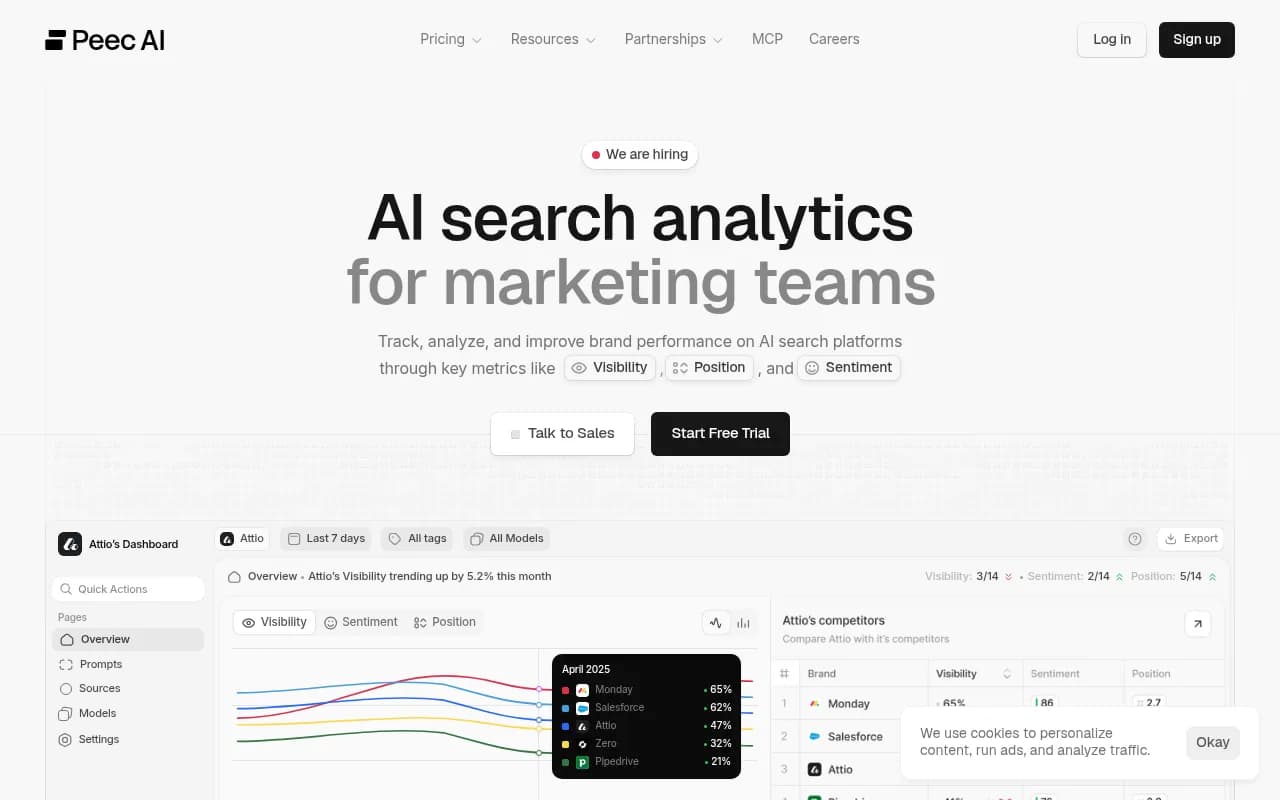
- Peec AI is the value play: transparent pricing from roughly $75 to $499/month, which matters if you're a budget-constrained team that finds Scrunch's $250 Core entry point steep.
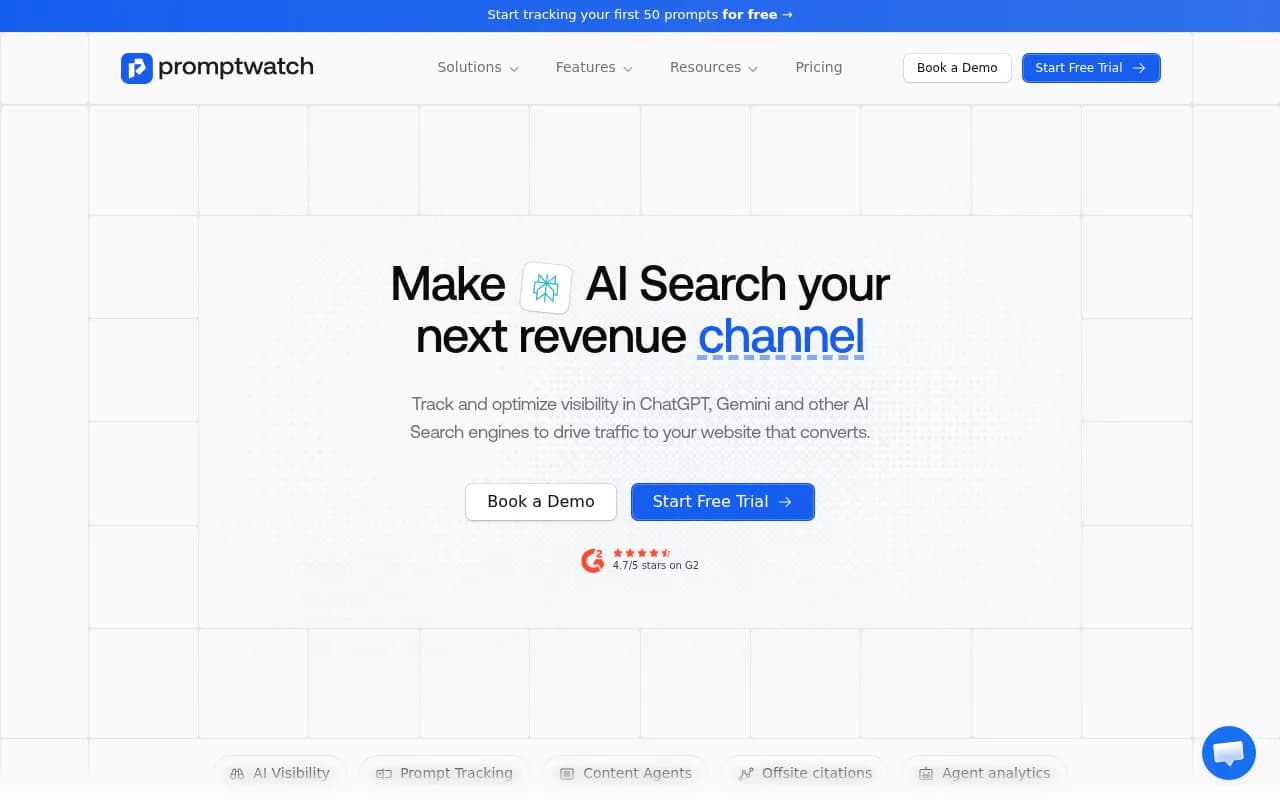
- Promptwatch goes where most of these stop: its agents don't just monitor, they plan, write, publish, and prioritize optimization work for you, with crawler logs that show why you're visible (or not) and Content Agents that publish GEO-optimized content straight to your CMS. It's used by 1,840+ brands and agencies including Duolingo, Yelp, and Typeform, at prices from $95/month.
- Bluefish positions for Fortune 500 brand protection with custom pricing, if Scrunch's mid-market roots feel like a mismatch for a global brand.

If you want the full lay of the land, the GEO software directory at bestgeosoftware.com has a broader set of options, and ai-rank-tools.com covers the rank-tracking side of the category.
| Vendor | Entry price | Enterprise approach | Standout | Best for |
|---|---|---|---|---|
| Scrunch AI (Sitecore) | $250/mo | Custom quote, forward deployed engineer | AXP content delivery layer | Mid-to-large enterprises, complex catalogs |
| Profound | $99/mo Starter | $30K–$100K+/yr contracts | Enterprise scale, 10 answer engines | Large brands with big budgets |
| Peec AI | ~$75/mo | $499/mo, transparent | Price-to-features ratio | Budget-conscious teams, agencies |
| Promptwatch | $95/mo (free tier available) | Agency and custom tiers | Agentic execution, crawler logs | Teams that want action, not just monitoring |
| Bluefish | Custom | Custom | F500 brand protection | Global enterprise brands |
The bottom line
Scrunch's enterprise sales process in 2026 is what you'd expect from a recently acquired, well-funded category leader: sales-led entry, custom quotes, real compliance documentation, and a fast deployment that undercuts the usual enterprise-grind stereotype. The acquisition cuts the vendor-risk question down significantly while adding a new variable (Sitecore's commercial agenda) that no one buying in 2025 had to think about.
Go in with a structured pilot, a mapped buying committee that includes whoever governs AI at your company, and benchmark numbers from at least two competitors. The category is young enough that pricing is negotiable and roadmaps are malleable, and the vendors know it. Use that while it lasts.