Key takeaways
- Sitecore acquired Scrunch AI in June 2026, folding it into their enterprise DXP stack -- agencies on standalone plans are now evaluating alternatives
- The core frustration with Scrunch wasn't the data quality; it was that the platform showed you problems without helping you solve them
- The best alternatives in 2026 close the loop: they track AI visibility AND help you act on what they find
- Agencies specifically need prompt volume data, competitor gap analysis, and content optimization -- not just a share-of-voice dashboard
- Promptwatch is the only platform in this comparison rated as a "Leader" across all categories in a 2026 review of 12 GEO platforms
What actually happened with Scrunch AI
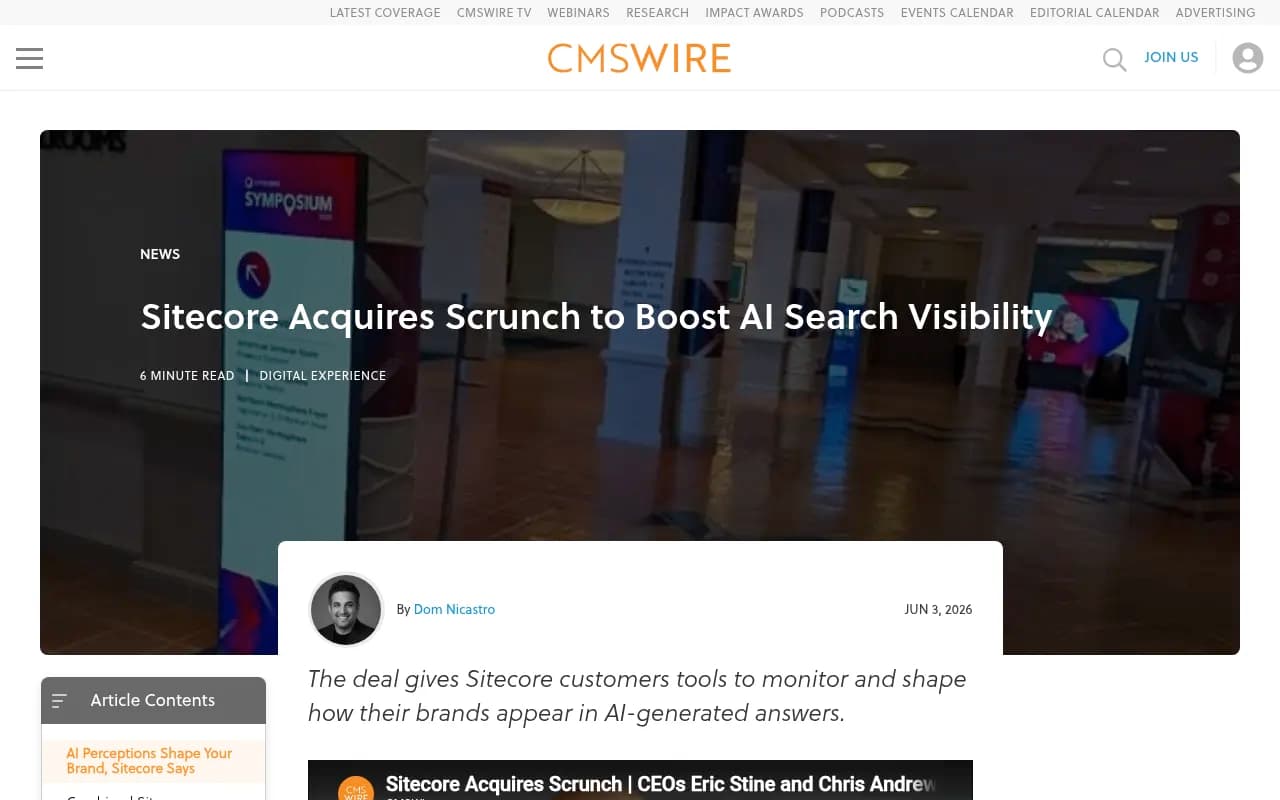
On June 3, 2026, CMSWire reported that Sitecore acquired Scrunch AI to boost AI search visibility capabilities for its enterprise DXP customers. The deal makes sense for Sitecore -- they get a ready-built AI monitoring layer to bolt onto their existing content management stack.
For agencies, though, the math is different. Scrunch AI was a standalone tool that agencies could deploy across multiple client accounts. Now it's being absorbed into a platform that costs significantly more and is aimed at enterprise buyers with Sitecore already in their stack. If you're running a 10-client agency on a Scrunch plan, you're not the target customer anymore.
That's the practical reason most agencies are looking for alternatives right now. But there's a deeper reason too.
Why Scrunch was already frustrating agencies before the acquisition
Even before Sitecore entered the picture, Scrunch had a well-documented gap. The platform tracked brand mentions across AI engines -- ChatGPT, Perplexity, Google AI Overviews, and others -- and gave you a share-of-voice score. What it didn't give you was a clear answer to the question every agency account manager eventually has to answer: "So what do we do about it?"
One practitioner noted on r/SEO that "Scrunch provides prompt and citation tracking but doesn't share prompt volume data -- and its prompt trend feature is too basic to be actionable." That's a real problem for agencies. You can't build a content sprint around a declining visibility score. You need to know which prompts matter, how competitive they are, and what specific content gaps are costing you citations.
Scrunch also had a pricing structure that penalized team use. At $25 per additional user, a five-person agency team was looking at meaningful cost creep on top of the base plan. That math gets worse when you're managing multiple client accounts.
So agencies were already looking. The Sitecore deal just accelerated the timeline.
What to look for in a Scrunch alternative (agency checklist)
Before getting into specific tools, here's what actually matters for agency use cases:
- Prompt volume data so you can prioritize which topics are worth targeting
- Competitor gap analysis that shows which prompts your clients are losing to specific rivals
- Content optimization or generation features -- not just tracking
- Multi-site or multi-client management without punishing per-seat pricing
- Coverage across the AI engines your clients' customers actually use (ChatGPT, Perplexity, Google AI Overviews at minimum)
- White-label or client reporting capabilities
With that in mind, here are the five alternatives worth your time.
The 5 best Scrunch AI alternatives for agencies in 2026
1. Promptwatch
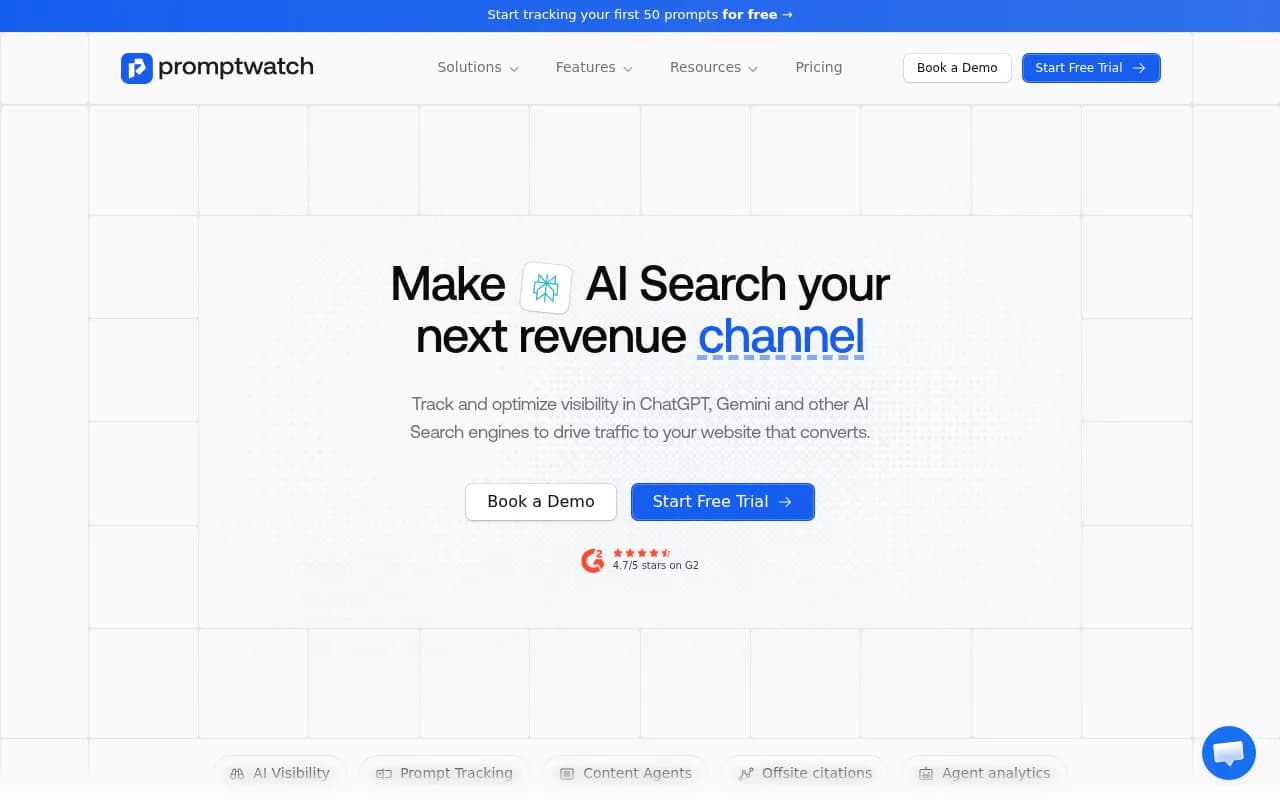
Promptwatch is the most complete option on this list, and the one most directly built around the problem Scrunch left unsolved. Where Scrunch showed you a visibility score and stopped, Promptwatch is structured around a three-step loop: find the gaps, create content to fill them, then track whether that content moved the needle.
The Answer Gap Analysis feature is particularly useful for agencies. It shows you exactly which prompts your competitors are appearing for that your client isn't -- not just the fact that a gap exists, but the specific topics and questions AI models want answered that your client's site doesn't address. You can hand that list directly to a content team.
From there, Promptwatch's Content Agents generate articles, comparisons, and briefs grounded in real prompt data. This isn't generic content -- it's built around the specific gaps the platform identified, with competitor analysis and brand guidance baked in.
For tracking, page-level attribution shows which specific pages are being cited, by which AI models, and how often. The crawler logs (available on Professional and above) show when AI agents like ChatGPT and Perplexity actually visit your pages, what errors they hit, and how long it takes a new page to go from crawl to citation. That timeline data is genuinely useful when you're reporting to a client on why a content push is or isn't working yet.
Pricing runs from $99/month (Essential, 1 site, 50 prompts) to $579/month (Business, 5 sites, 350 prompts, 30 articles). Agency and enterprise pricing is available on request. The per-site model is more agency-friendly than per-seat pricing, and the Business tier covers enough client accounts for a mid-size agency without requiring a custom contract.
Coverage spans 10 AI models: ChatGPT, Perplexity, Google AI Overviews, Google AI Mode, Claude, Gemini, Meta/Llama, DeepSeek, Grok, and Mistral.
The one honest caveat: if you only need basic monitoring and have no interest in content optimization, Promptwatch's pricing reflects the full platform. You're paying for capabilities you might not use immediately.
2. Profound
Profound is the other enterprise-grade option that comes up consistently in agency comparisons. It has strong analytics, solid competitor tracking, and covers the major AI engines. The platform is well-regarded for the depth of its citation data and its ability to track brand mentions at a granular level.
Where Profound falls short for most agencies is price and scope. It's positioned at the higher end of the market, with plans that can run into the thousands per month for full feature access. That's defensible for a large brand managing its own AI visibility, but it's harder to justify when you're billing it across multiple client accounts.
Profound also lacks Reddit and YouTube tracking, which matters more than it sounds. A significant portion of AI citations in consumer-facing categories come from Reddit threads and YouTube content. If your client is in a category where community content influences AI answers, missing that layer means missing part of the picture.
Still, for agencies with enterprise clients who have the budget, Profound is a serious option.
3. AthenaHQ
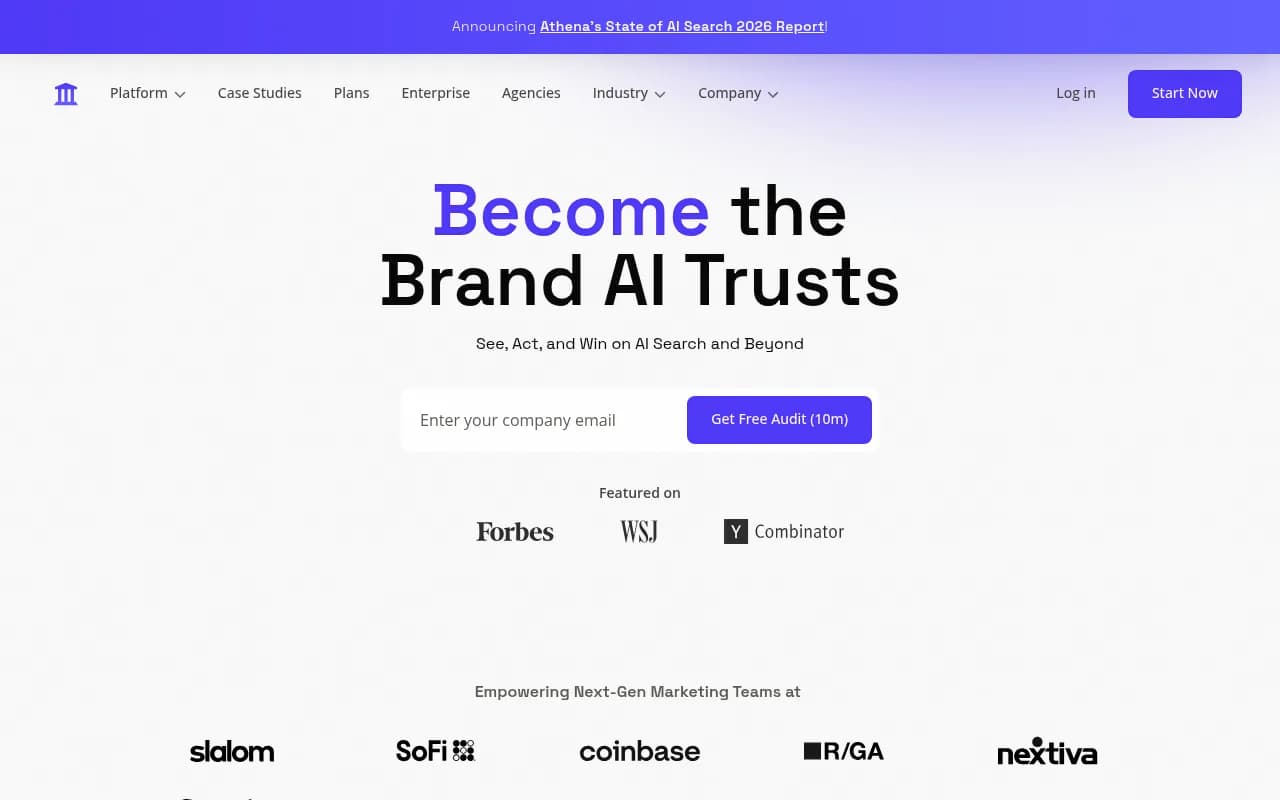
AthenaHQ is a monitoring-focused platform that does the core job well. It tracks brand mentions across AI engines, gives you share-of-voice data, and lets you compare performance against competitors. The interface is clean and the data is reliable.
The limitation is the same one that made Scrunch frustrating: AthenaHQ is primarily a monitoring tool. It tells you what's happening but doesn't have the content optimization or generation layer to help you change it. For agencies that already have strong content teams and just need better data to brief them, that's fine. For agencies that want the platform to do more of the heavy lifting, it's not enough.
AthenaHQ is worth considering if your agency's workflow is: platform provides data, humans do the strategy and content work. If you want the platform to be more of a partner in the optimization process, look elsewhere.
4. Peec AI
Peec AI targets mid-market teams and agencies that want solid AI visibility tracking without enterprise-level complexity or pricing. It covers the major AI engines, gives you brand mention tracking, and includes some basic optimization suggestions.
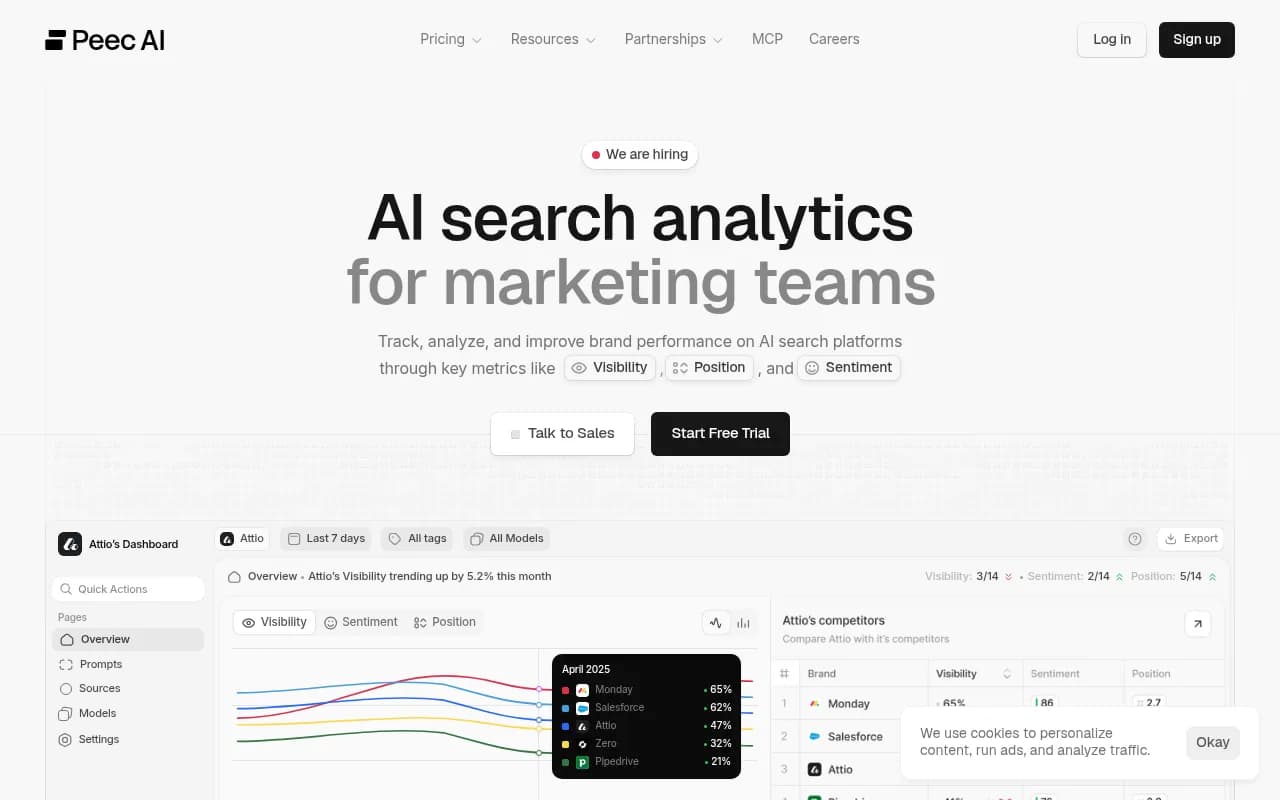
The "smart suggestions" feature is the differentiator Peec AI markets most heavily -- it surfaces recommendations based on what the platform detects in AI responses. In practice, these suggestions are useful as a starting point but tend to be fairly general. They'll tell you that a topic is underrepresented in your content, but not necessarily give you the specific angle or format that would actually get cited.
For smaller agencies or those just getting started with AI visibility tracking, Peec AI is a reasonable entry point. The pricing is accessible and the learning curve is low. As your clients' needs get more sophisticated, you may find yourself wanting more depth.
5. Otterly.AI
Otterly.AI is the most affordable option on this list and the most honest about what it is: a lightweight monitoring tool for teams that need basic AI visibility data without a lot of complexity.
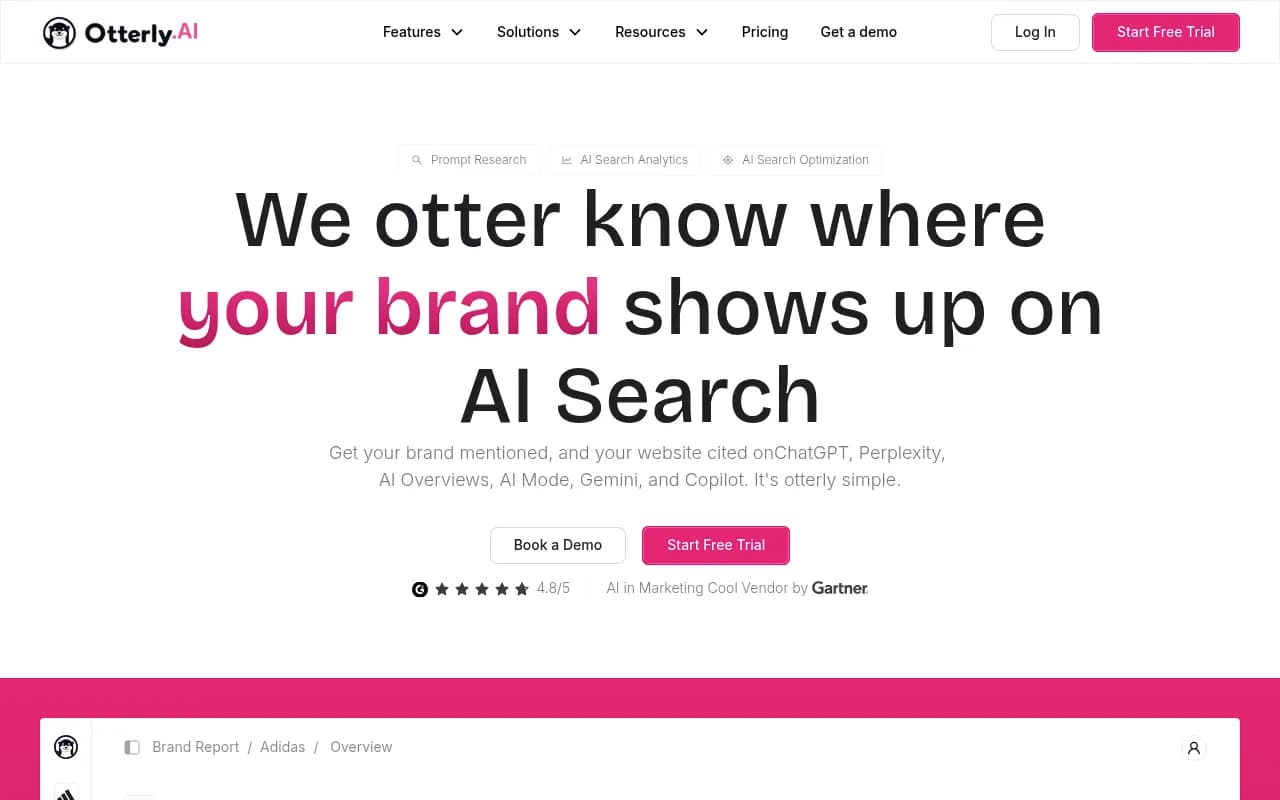
It tracks brand mentions, gives you share-of-voice metrics, and lets you monitor a handful of competitors. There's no content generation, no crawler logs, no prompt volume data. What you get is a clean dashboard that tells you where you stand.
For agencies with clients who are just starting to think about AI visibility and need something to show them the baseline, Otterly.AI works. It's also useful as a secondary tool -- something you run alongside a more capable platform to cross-check data or monitor specific competitors without paying for a full additional seat on a premium tool.
Don't expect it to replace Scrunch's full feature set. But if your main use case is "I need to show a client their AI visibility score and track it over time," Otterly.AI does that job at a price that's easy to justify.
Side-by-side comparison
| Tool | Best for | Content generation | Crawler logs | Prompt volume data | Reddit/YouTube tracking | Starting price |
|---|---|---|---|---|---|---|
| Promptwatch | Agencies wanting full optimization loop | Yes | Yes | Yes | Yes | $99/mo |
| Profound | Enterprise brands with large budgets | No | No | Partial | No | $99-$5,000+/mo |
| AthenaHQ | Monitoring-focused teams | No | No | No | No | Custom |
| Peec AI | Mid-market, entry-level agency use | Basic suggestions | No | No | No | Lower tier |
| Otterly.AI | Lightweight monitoring, small budgets | No | No | No | No | Affordable |
Which one should your agency actually use?
If you're replacing Scrunch because the Sitecore acquisition cut off your access and you want a straight swap -- same monitoring capabilities, similar price -- Peec AI or Otterly.AI will cover the basics.
If you were already frustrated with Scrunch's lack of actionable guidance and you're using the acquisition as a reason to upgrade, Promptwatch is the honest answer. It's the only tool on this list that closes the full loop from "here's where you're invisible" to "here's the content that will fix it" to "here's proof it worked." For agencies that need to show clients a return on their AI visibility investment, that loop matters.
Profound is worth a look if you have enterprise clients with the budget for it and don't need content generation. AthenaHQ fits if your team does its own strategy work and just needs better data.
The Sitecore deal is ultimately a forcing function. Scrunch was already showing its limits as a monitoring-only tool in a market that's moved toward optimization. The agencies that come out ahead will be the ones that use this transition to pick a platform that actually helps them move the needle -- not just measure it.