Key takeaways
- Most AI visibility platforms still don't track Mistral, making it a blind spot for brands targeting European AI search audiences.
- Promptwatch is the only platform in this comparison that covers Mistral alongside 10 other AI models AND helps you act on what you find -- through content gap analysis and AI content generation.
- Profound is the strongest pure-monitoring option for enterprise teams, but it's expensive and stops at the data.
- Peec AI and LLMrefs are useful entry points, but both have significant gaps when it comes to Mistral specifically and content optimization generally.
- If you're serious about Mistral visibility in 2026, you need a platform that tracks real user-facing responses, not just API outputs.
Mistral doesn't get enough attention in the AI search conversation. Most brands are laser-focused on ChatGPT and Perplexity, which makes sense -- those platforms have the biggest audiences. But Mistral is growing fast, particularly in Europe, where data sovereignty concerns are pushing businesses and governments toward EU-based AI providers. If your brand has any European exposure, ignoring Mistral citations is a real gap.
The problem is that most AI visibility platforms were built when ChatGPT was the only game in town. Mistral support got bolted on later -- if it was added at all. So before you commit to a platform, it's worth asking: does this tool actually track Mistral, or is it just listed on the features page?
This guide compares four platforms -- Promptwatch, Profound, Peec AI, and LLMrefs -- specifically through the lens of Mistral citation tracking, then broadens out to overall AI visibility capabilities so you can make a complete decision.
Why Mistral matters for AI search visibility in 2026
Mistral AI, the French startup, has positioned itself as the serious alternative to American AI models for European enterprises. Le Chat, Mistral's consumer-facing product, crossed 10 million users in early 2026. More importantly, Mistral's models are being embedded into European enterprise software, government portals, and B2B tools at a pace that's easy to underestimate if you're only watching US tech news.
For brands in finance, healthcare, legal, or any sector with heavy European regulatory exposure, Mistral is increasingly where buying decisions get influenced. A procurement manager in Frankfurt asking an AI assistant for software recommendations is quite possibly using Mistral or a Mistral-powered interface. If your brand isn't being cited there, you're invisible to that person.
That's the core argument for tracking Mistral citations. It's not the biggest model by user count, but for specific audiences and geographies, it punches above its weight.
The four platforms compared
Promptwatch
Promptwatch is the most complete platform in this comparison. It tracks 10 AI models including Mistral, and unlike the others, it's built around an action loop rather than just a monitoring dashboard.
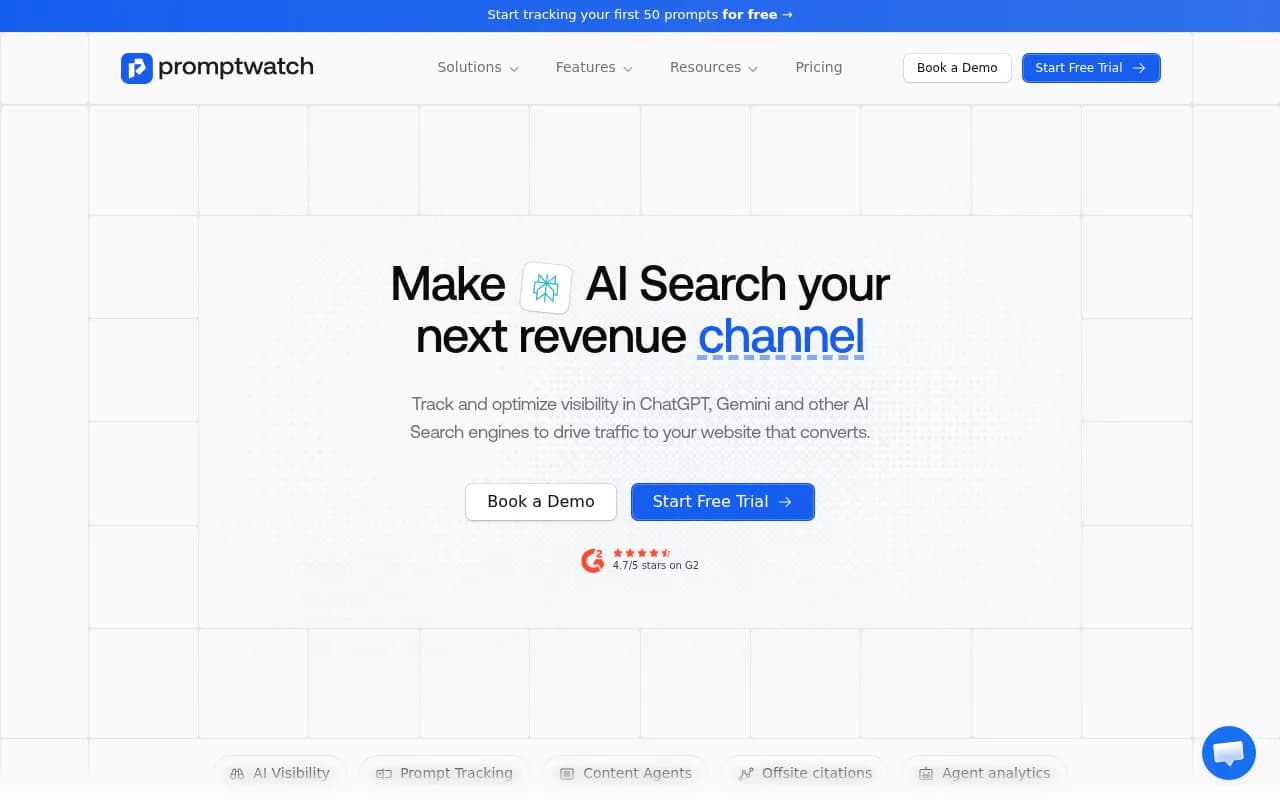
The workflow goes like this: you find which prompts competitors are being cited for but you aren't (Answer Gap Analysis), then you generate content specifically designed to close those gaps (Content Agents), then you track whether your new content starts getting cited. That cycle -- find gaps, create content, track results -- is what separates Promptwatch from the other three tools here.
For Mistral specifically, Promptwatch tracks real user-facing responses rather than just API outputs. This matters because what Mistral's Le Chat shows a real user can differ from what the API returns. If you're only querying the API, you might be measuring the wrong thing.
Other capabilities worth knowing about: AI crawler logs that show when Mistral's crawlers visit your site, page-level citation tracking that tells you exactly which of your pages Mistral is citing, and prompt volume estimates that help you prioritize which Mistral queries are actually worth targeting.
Pricing starts at $99/month for the Essential plan (1 site, 50 prompts, 5 articles). The Professional plan at $249/month adds crawler logs, more prompts, and multi-location tracking. For teams that want to go beyond monitoring and actually improve their Mistral visibility, this is the strongest option.
Profound
Profound is the go-to for enterprise teams that want deep, reliable monitoring data and have the budget for it.

It covers a solid range of AI models and produces detailed reports that enterprise stakeholders tend to find credible. The dashboards are polished, the data is thorough, and it integrates reasonably well into larger analytics workflows.
The limitation is that Profound is fundamentally a monitoring tool. It tells you where you stand. It doesn't help you change where you stand. There's no content generation, no gap analysis that connects to an action, no crawler logs showing you how AI engines are actually interacting with your site. You get the data, and then you're on your own to figure out what to do with it.
For Mistral specifically, Profound does include it in its model coverage, but the depth of Mistral-specific insights is less granular than what Promptwatch provides. If your primary use case is executive reporting and you have a separate content team to act on findings, Profound works. If you need the full loop, it falls short.
Pricing is at the higher end of the market -- typically enterprise-tier, with custom quotes for most plans.
Peec AI
Peec AI is a purpose-built AI visibility monitoring platform that covers ChatGPT, Perplexity, Google AI Overviews, and several other models.
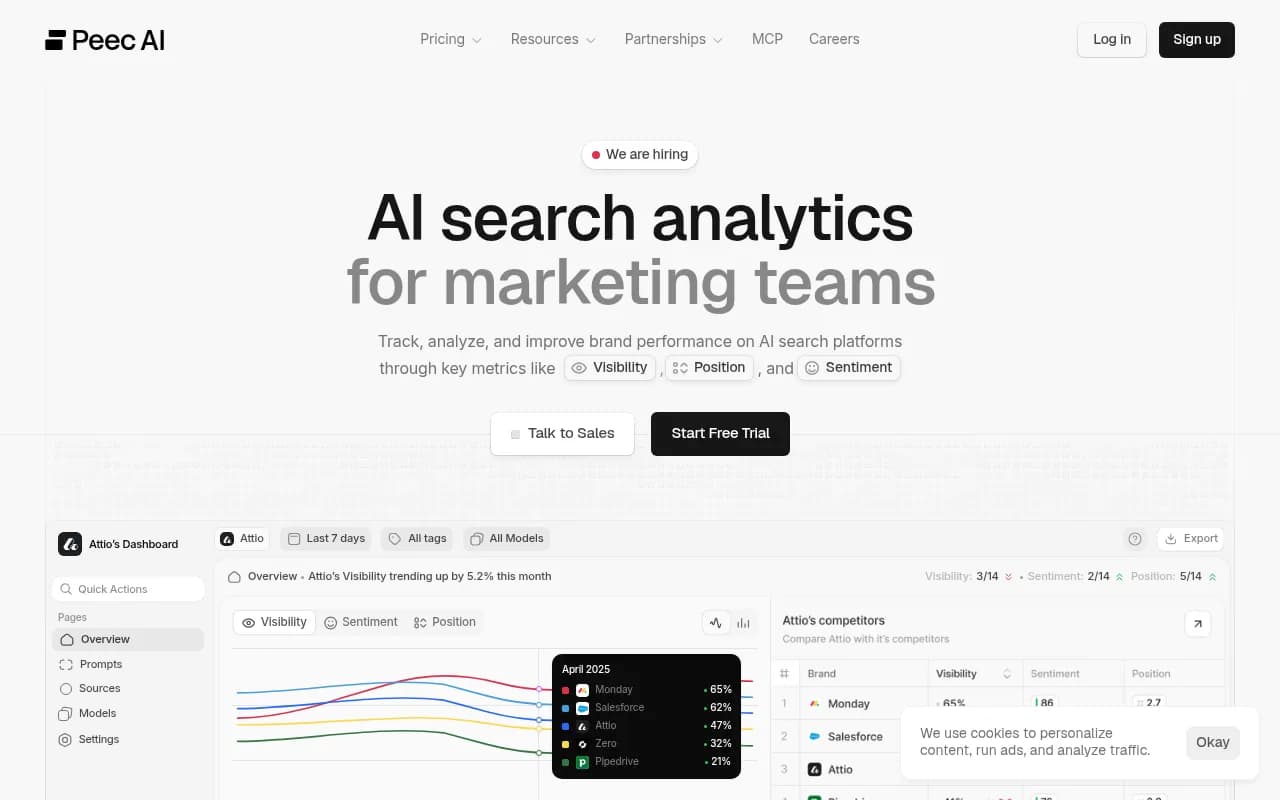
It's genuinely useful for multi-engine monitoring and has a cleaner interface than some older tools in this space. The prompt tracking is solid, and it gives you a reasonable view of where your brand appears across AI responses.
The Mistral question is where things get murky. Peec AI's Mistral coverage is limited compared to its coverage of the major US-based models. For teams primarily focused on ChatGPT and Perplexity, this might not matter. For teams with European audiences where Mistral is relevant, it's a real gap.
The bigger structural issue with Peec AI is the same one that affects most monitoring-only tools: it shows you the data but leaves you to figure out what to do with it. There's no built-in content optimization, no content generation, no crawler log analysis. It's a good tracker, not an optimization platform.
Pricing is more accessible than Profound, which makes it reasonable for smaller teams that just need basic monitoring across the main AI engines.
LLMrefs
LLMrefs takes a different angle. It's primarily a query intelligence and citation research tool -- useful for understanding which sources AI models tend to cite for specific topics, and for identifying content gaps at a conceptual level.
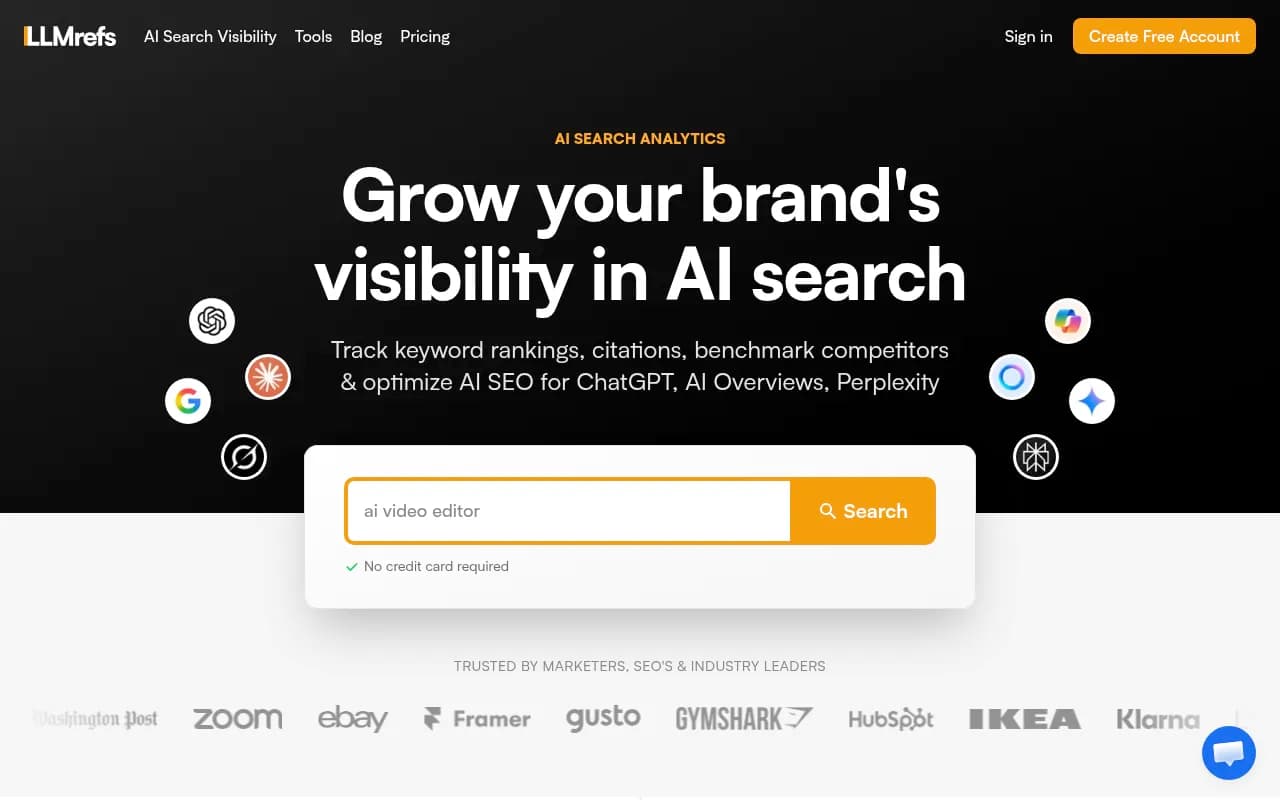
For Mistral citation research specifically, LLMrefs can surface useful data about what kinds of content Mistral tends to reference. It's a good research companion, particularly if you're trying to understand the citation landscape before building a content strategy.
Where it falls short is in ongoing monitoring. LLMrefs isn't built for daily or weekly tracking of your brand's citation performance across AI engines. It's more of a research and discovery tool than a persistent monitoring platform. You'd likely use it alongside one of the other tools here rather than instead of them.
It's also worth noting that LLMrefs maintains one of the more comprehensive directories of AI SEO tools (200+ platforms catalogued), which makes it a useful reference point for the broader space even if its own monitoring capabilities are limited.
Feature comparison
Here's how the four platforms stack up across the dimensions that matter most for Mistral citation tracking:
| Feature | Promptwatch | Profound | Peec AI | LLMrefs |
|---|---|---|---|---|
| Mistral tracking | Yes (real UI) | Yes (limited depth) | Partial | Research only |
| Number of AI models | 10 | ~6-8 | ~5-6 | N/A (research tool) |
| Daily monitoring | Yes | Yes | Yes | No |
| Content gap analysis | Yes | No | No | Partial |
| AI content generation | Yes | No | No | No |
| Crawler logs | Yes | No | No | No |
| Page-level citation tracking | Yes | Limited | No | No |
| Prompt volume estimates | Yes | No | Limited | Yes |
| Competitor heatmaps | Yes | Yes | Limited | No |
| Reddit/YouTube insights | Yes | No | No | No |
| ChatGPT Shopping tracking | Yes | No | No | No |
| Starting price | $99/mo | Enterprise | ~$49/mo | Free/paid tiers |
| Best for | Full GEO optimization | Enterprise reporting | Basic monitoring | Citation research |
How to think about Mistral tracking specifically
There's a practical question worth addressing: how do these platforms actually query Mistral?
The honest answer is that this varies, and it matters more than most vendors admit. Mistral's API and its consumer-facing Le Chat product don't always return identical responses. A platform that only queries the API might miss citations that appear in real user interactions. Promptwatch's approach of tracking real user-facing responses rather than just API outputs addresses this directly -- it's one of the reasons its Mistral data tends to be more representative of what actual users see.
For Profound and Peec AI, the methodology is less transparent. Both likely rely primarily on API queries, which is fine for most use cases but can create blind spots for Mistral specifically, since Le Chat has some distinct behaviors compared to the raw API.
LLMrefs, as a research tool rather than a live monitor, sidesteps this question -- it's analyzing citation patterns historically rather than running live queries.
Which platform should you choose?
The answer depends almost entirely on what you want to do with the data.
If you want to track Mistral citations AND actually improve them, Promptwatch is the clear choice. The content gap analysis and Content Agents mean you can go from "Mistral isn't citing us for this prompt" to "we've published content designed to close that gap" within the same platform. No other tool here offers that.
If you're at an enterprise that needs polished reporting for stakeholders and has a separate team to handle content strategy, Profound is worth evaluating. It's expensive, but the data quality and reporting depth are strong.
If you're a smaller team that primarily cares about ChatGPT and Perplexity, and Mistral is a secondary concern, Peec AI is a reasonable starting point. It's accessible, it covers the main engines, and it won't overwhelm you with complexity.
If you're doing research to understand the citation landscape before building a strategy -- or you want a comprehensive directory of AI SEO tools to evaluate your options -- LLMrefs is genuinely useful as a companion resource.
For most marketing teams in 2026, the monitoring-only approach is starting to feel insufficient. Knowing you're invisible in Mistral is useful. Knowing what to do about it, and having tools to act on that knowledge, is what actually moves the needle.
The broader context: why Mistral visibility is getting harder to ignore
The AI search landscape in 2026 is genuinely fragmented. ChatGPT, Perplexity, Google AI Overviews, Claude, Gemini, Mistral, Grok, DeepSeek -- each has its own citation logic, its own preferred source types, and its own user base. A brand that's well-cited in ChatGPT might be nearly invisible in Mistral, and vice versa.
This fragmentation is actually an opportunity. Most brands are still focused almost exclusively on ChatGPT and Google AI Overviews. Mistral is underserved from a content optimization perspective, which means the competition for citations there is lower. A targeted effort to improve Mistral visibility -- publishing content that answers the specific questions Mistral users ask, in the formats Mistral tends to cite -- can yield disproportionate results compared to the same effort spent on more crowded models.
The catch is that you need the right tooling to identify those opportunities. You can't optimize for Mistral citations if you don't know which prompts Mistral is answering in your category, which competitors it's citing, and which of your pages (if any) it's already referencing.
That's the core case for investing in a platform that covers Mistral properly -- not just as a checkbox on a features list, but with the depth needed to actually build a strategy around it.
Final thoughts
Mistral citation tracking is still a niche concern for most marketing teams, but that's changing. As Mistral's user base grows in Europe and its models get embedded in more enterprise software, the brands that built visibility there early will have a real advantage.
Of the four platforms compared here, Promptwatch is the only one that combines genuine Mistral coverage with the tools to act on what you find. Profound is a solid enterprise monitor if you just need the data. Peec AI works for basic multi-engine monitoring. LLMrefs is a useful research tool rather than a persistent tracker.
If Mistral visibility matters to your business -- and for European-facing brands in 2026, it increasingly does -- the platform you choose should do more than show you a number. It should help you change it.