LLMrefs Review 2026
Focuses on actionable query-level insights to help brands understand which prompts and topics drive citations in AI-generated search results.
Key takeaways
- LLMrefs tracks brand visibility across 11 AI search engines using a keyword-first approach -- you enter keywords, it auto-generates the prompts, which lowers the barrier to entry for SEO teams already used to traditional rank tracking
- Lacks content generation, AI crawler logs, traffic attribution, and ChatGPT Shopping tracking that Promptwatch offers -- LLMrefs is primarily a monitoring and ranking tool, not an optimization platform
- Priced at $79/month for a single "All in One" plan with 500 prompts, unlimited projects, and unlimited seats -- one of the more affordable options in the GEO space
- Strong fit for agencies managing multiple clients and SEO teams transitioning from traditional keyword tracking to AI search visibility
- Monitoring-only by design: you'll see where you rank and what sources are cited, but the platform doesn't help you close the gaps it surfaces
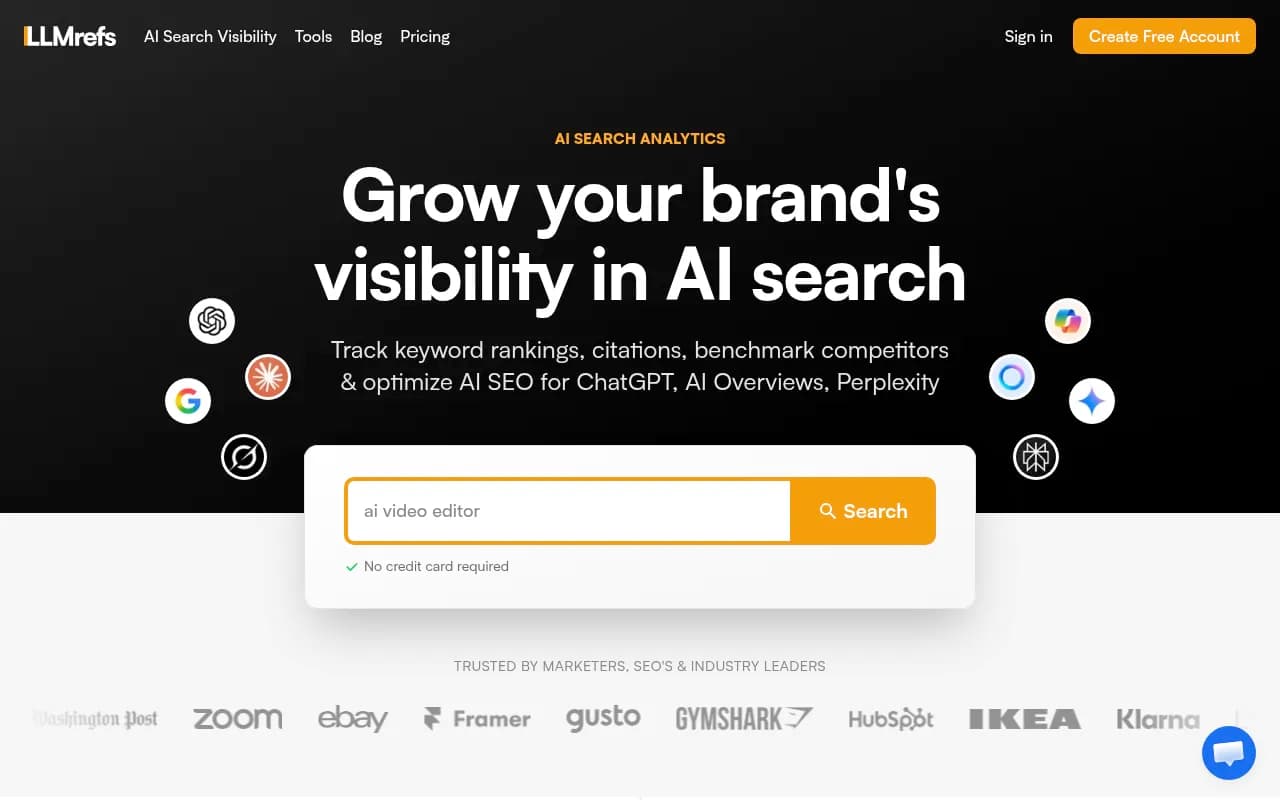
LLMrefs is an AI search analytics tool built for brands, SEO professionals, and digital agencies who want to understand how they appear in AI-generated search results. Founded by James Berry, the platform takes a deliberately keyword-centric approach to a problem that most competitors tackle with prompt-based tracking. The idea is simple: instead of asking users to manually write dozens of prompts, LLMrefs accepts standard SEO keywords and automatically generates the fan-out prompts that real users are asking AI chatbots. That's a meaningful UX decision -- it makes the tool immediately familiar to anyone who's spent time in Ahrefs or Semrush.
The platform covers 11 AI search engines: ChatGPT, ChatGPT Search, Google AI Overviews, Google AI Mode, Google Gemini, Perplexity, Claude, Grok, Microsoft Copilot, Meta AI, and DeepSeek. It claims over 10,000 marketers use it, with logos from eBay, Gymshark, HubSpot, IKEA, Klarna, NVIDIA, Shopify, and The Washington Post displayed on the homepage. A published case study with Rise at Seven shows Revolution Beauty achieving 73% share of voice in LLMs for beauty dupe category keywords -- which is a concrete, verifiable outcome rather than a vague success story.
LLMrefs sits in a growing category of GEO (Generative Engine Optimization) tools that emerged as AI search engines began eating into traditional search traffic. It launched as one of the earlier entrants in this space and has positioned itself on affordability and simplicity, with a single flat-rate plan rather than the tiered structures most competitors use.
Key features
Keyword-based tracking with auto-generated prompts
This is the core differentiator. Most GEO tools ask you to manually write prompts -- which is tedious and requires you to anticipate how users phrase questions. LLMrefs flips this: you enter a keyword (say, "best project management software"), and the platform generates 25+ fan-out prompts based on real conversations users are having with AI chatbots. The dashboard shows you rankings, share of voice, and citation data aggregated across all those prompts, so you're seeing statistically significant results rather than the output of a single query. This approach is genuinely useful for SEO teams who already have keyword lists and don't want to rebuild their workflow from scratch.
Share of voice and position metrics
Rather than showing raw mention counts, LLMrefs calculates Share of Voice (SoV) and average Position for each brand across tracked keywords. SoV is expressed as a percentage -- if your brand appears in 8 out of 10 prompts for a keyword, your SoV is 80%. Position is the average rank when you do appear. These metrics are aggregated and weighted across all fan-out prompts for a keyword, which the platform says ensures statistical significance. The competitor benchmarking view shows your brand stacked against rivals with trend lines, making it easy to spot if a competitor is gaining ground.
Multi-engine coverage
All 11 AI search engines are included in every plan with no additional fees per engine. You can filter results by individual engine to see, for example, whether you rank well in Perplexity but poorly in Google AI Overviews. Geo-targeting covers 50+ countries and 20+ languages, which is broader than many competitors. This matters for international brands or agencies with clients in multiple markets.
Citation and source tracking
For each keyword, LLMrefs shows the full list of URLs that AI engines cite when answering related prompts. You can see whether Reddit threads, Wikipedia pages, YouTube videos, Forbes articles, or Gartner reports are driving citations in your category. This is useful for identifying where to publish content or pursue outreach -- if Reddit is consistently cited for your target keywords, that's a signal worth acting on. The source list is filterable and exportable.
Competitor benchmarking
You can add competitor domains to any project and see their SoV and position metrics alongside yours. The comparison is keyword-by-keyword, so you can identify specific topics where a competitor is outranking you. There's no heatmap view (unlike some competitors), but the tabular data is clean and exportable.
Weekly automated reports
The platform refreshes data at least weekly per keyword, with continuous real-time checking to maintain statistical significance. Automated weekly reports are sent to your inbox, which is useful for agencies who need to keep clients updated without manually pulling data.
Agency-optimized structure
One subscription covers unlimited projects, unlimited domains, and unlimited team seats. You can organize projects by client, assign keywords to specific projects, and invite your whole team without paying per seat. For agencies managing 10-50 clients, this is a significant cost advantage over tools that charge per domain or per user.
Prompt volume estimates
Monthly AI prompt volume estimates are included for tracked topics. This helps prioritize which keywords are worth tracking -- a keyword with 1 million monthly searches is presumably generating more AI queries than one with 1,000. The volume data comes from LLMrefs' own methodology rather than a third-party SEO data provider, so treat it as directional rather than precise.
Free AI SEO tools
The platform includes a handful of standalone tools: an AI crawlability checker, a Reddit threads finder, and an LLMs.txt generator. These are lightweight utilities rather than deep features, but they're genuinely useful for GEO practitioners. The LLMs.txt generator in particular is relevant as more sites adopt the emerging standard for telling AI crawlers what to index.
CSV export and API access
All plans include CSV export and API access, which is notable given the $79/month price point. Most competitors reserve API access for higher tiers. This makes it feasible to pipe LLMrefs data into a custom dashboard, a client reporting tool, or a data warehouse.
Who is it for
LLMrefs is a good fit for SEO agencies managing multiple client accounts who want a single affordable subscription that covers all their clients. The unlimited projects and seats model means an agency paying $79/month can track AI visibility for 20 clients without any per-client surcharge. The keyword-first interface also means onboarding clients is fast -- import existing keyword lists, set up a project, and you're tracking within minutes. Agencies like Rise at Seven (who published the Revolution Beauty case study) are the clearest use case.
In-house SEO teams at mid-size brands are another natural audience. If you're an SEO manager at a DTC brand or SaaS company tracking 50-200 keywords, LLMrefs gives you a clear picture of AI search visibility without requiring you to learn a new mental model. The share of voice and position metrics translate directly from traditional rank tracking, so there's minimal ramp-up time. The $79/month price is also easy to justify to a marketing director who's skeptical about GEO investment.
Freelance SEO consultants and small agencies will find the pricing particularly attractive. At $79/month with no seat limits, a solo consultant can share access with clients and collaborate without paying extra. The 7-day free trial lets you validate the tool against your actual keywords before committing.
Who should look elsewhere: brands that need to close the gaps LLMrefs surfaces, not just see them. If your goal is to understand why you're not being cited and then create content that fixes it, LLMrefs doesn't offer that. There's no content generation, no content brief creation, no AI crawler log analysis, and no traffic attribution. You'll know you're losing to a competitor in Perplexity for "best CRM software," but the platform won't tell you what content to write or help you write it. For that level of optimization, you need a more complete platform.
Integrations and ecosystem
LLMrefs keeps its integration surface deliberately lean. The main data output options are CSV export and API access, both included in the base plan. The API lets you pull ranking data, citation data, and prompt data into external tools -- useful for agencies building custom client reports in Looker Studio or Google Sheets.
There's no native integration with Google Search Console, no Slack notifications, and no Zapier connector listed on the site. The weekly email reports are the primary automated output. For teams that live in Slack or want real-time alerts when visibility drops, this is a gap.
The standalone tools (AI crawlability checker, Reddit threads finder, LLMs.txt generator) are web-based utilities accessible from the main site. They're not deeply integrated into the main dashboard -- they feel more like marketing tools than core product features.
No mobile app is available. The platform is web-based and appears optimized for desktop use, which is standard for analytics tools in this category.
Pricing and value
LLMrefs uses a single "All in One" plan at $79/month, described as a "limited time" price. The plan includes:
- 500 prompts tracked (across all fan-out queries)
- All 11 AI search engines, no per-engine fees
- Geo-targeting in 50+ countries and 20+ languages
- Unlimited projects, domains, and team seats
- Weekly automated reports
- Citation tracking
- Monthly prompt volume estimates
- CSV export and API access
- Free AI SEO tools (crawlability checker, Reddit finder, LLMs.txt generator)
- Priority support
A 7-day free trial is available with no credit card required. You can add more keywords beyond the base 500 by upgrading, though specific pricing for keyword add-ons isn't published on the main pricing page.
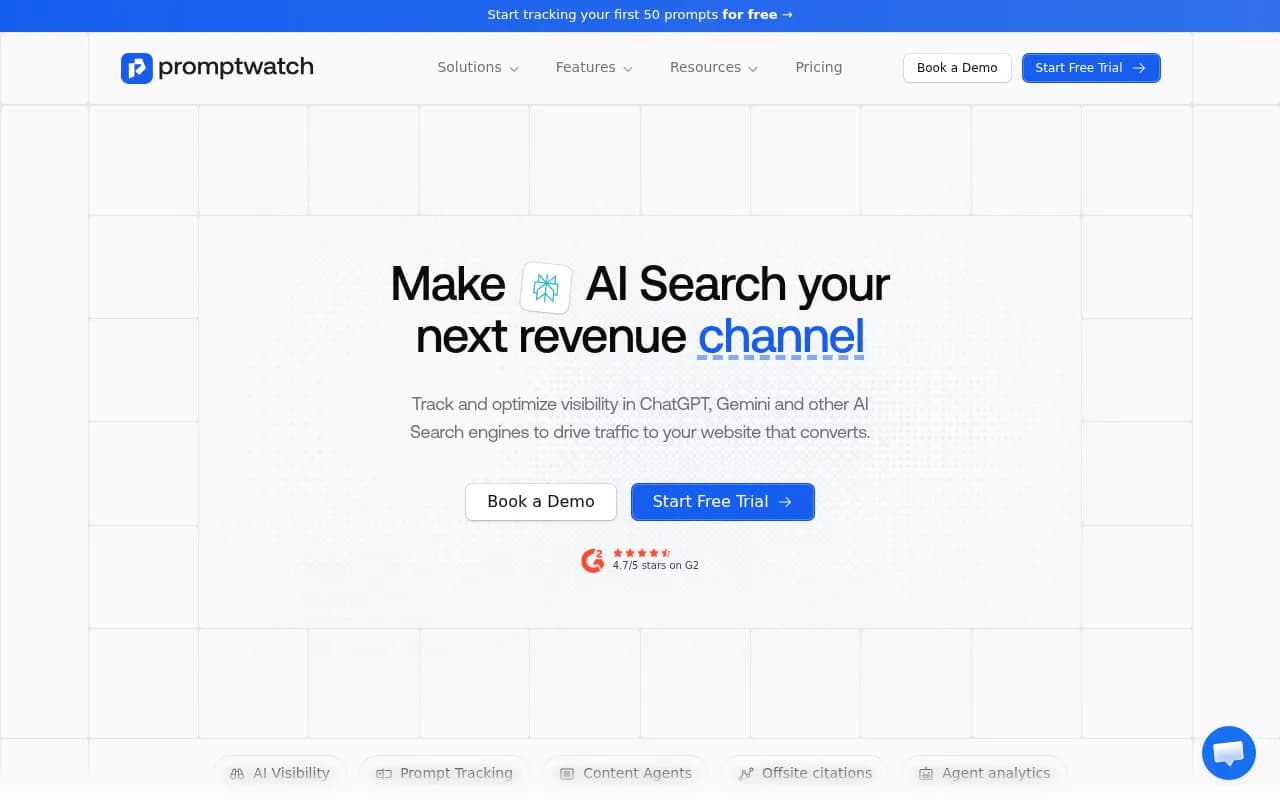
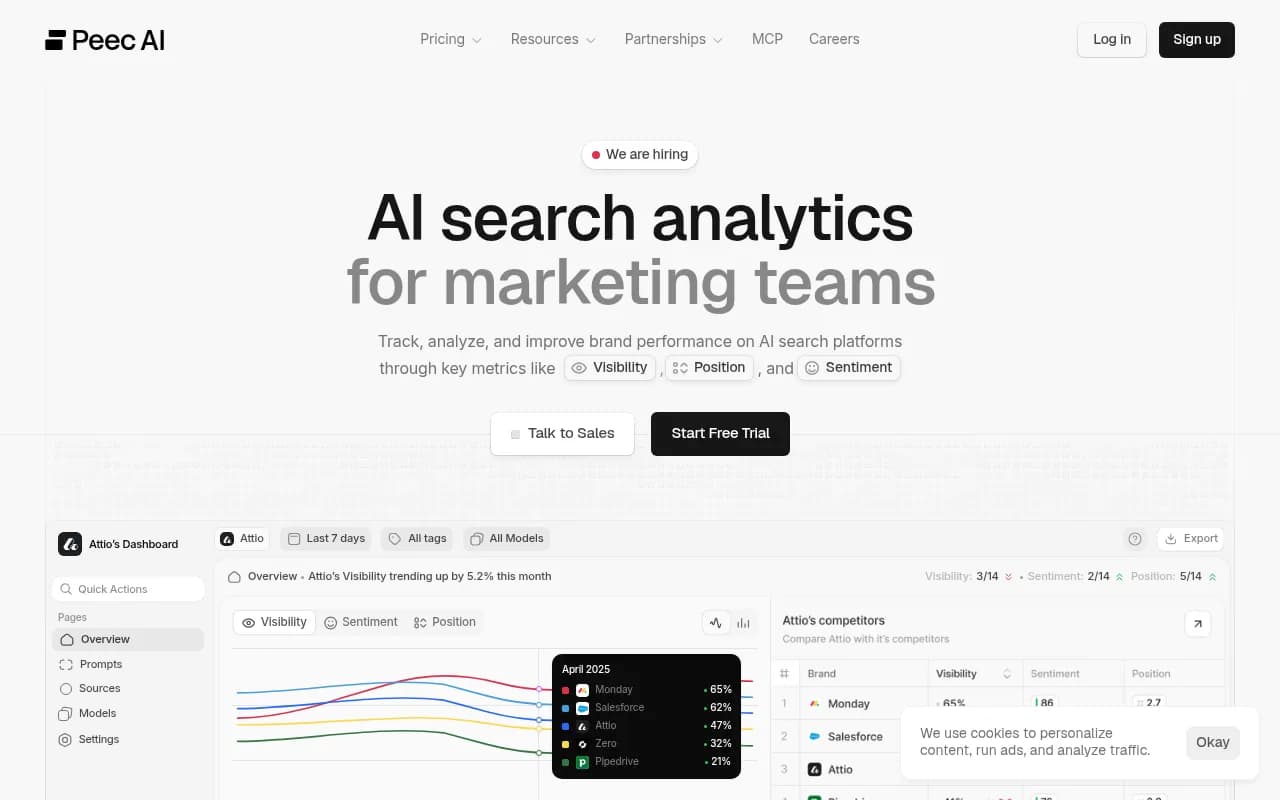
Compared to the broader GEO tool market, $79/month is genuinely competitive. Promptwatch starts at $99/month for a single site with 50 prompts, Profound and AthenaHQ are significantly more expensive at enterprise price points, and Otterly.AI and Peec.ai have lower entry points but fewer features. For pure monitoring coverage at this price with unlimited seats and projects, LLMrefs is hard to beat on cost alone.
The value question is whether monitoring alone is worth $79/month. If you're an agency that needs to show clients AI visibility data and you're already paying for traditional SEO tools, LLMrefs is a reasonable add-on. If you're a brand trying to actually improve AI visibility, the lack of optimization features means you'll likely need additional tools alongside it.
Strengths and limitations
What it does well:
- The keyword-first approach genuinely lowers the barrier to entry. SEO teams don't need to rethink their workflow -- they import keywords and get AI visibility data. This is a real UX advantage over prompt-based tools.
- Unlimited seats and projects at a flat rate is unusual and valuable for agencies. Most competitors charge per domain or per user, which makes costs unpredictable at scale.
- Coverage across 11 AI engines with geo-targeting in 50+ countries is broad. The inclusion of Google AI Mode, DeepSeek, and Meta AI alongside the obvious ChatGPT and Perplexity is thorough.
- The share of voice and position metrics are statistically grounded -- aggregating across 25+ fan-out prompts per keyword gives more reliable data than single-prompt checks.
- API access at $79/month is generous. Most competitors reserve this for higher tiers.
Honest limitations:
- LLMrefs is a monitoring tool, not an optimization platform. It shows you where you stand but doesn't help you improve. There's no content gap analysis, no content generation, no AI content briefs, and no writing agent. Platforms like Promptwatch go further by identifying exactly what content you're missing and helping you create it.
- No AI crawler logs or traffic attribution. You can't see which AI crawlers are hitting your site, how often, or whether your AI visibility is translating into actual traffic and revenue. This is a significant gap for teams that need to connect GEO efforts to business outcomes.
- No ChatGPT Shopping tracking or entity tracking. As ChatGPT's product recommendation features grow, this becomes a more meaningful omission for e-commerce brands.
- No Reddit or YouTube deep-dive analytics. While LLMrefs shows Reddit and YouTube as citation sources, it doesn't surface specific threads or videos influencing AI recommendations the way more specialized platforms do.
- Weekly refresh cadence may be too slow for brands in fast-moving categories or during competitive campaigns where daily visibility shifts matter.
Bottom line
LLMrefs is a solid, affordable entry point into AI search visibility tracking. The keyword-first interface, flat-rate pricing with unlimited seats, and broad engine coverage make it a practical choice for SEO agencies and in-house teams who want to add GEO monitoring to their existing workflow without a steep learning curve or a steep price tag.
That said, it's a monitoring tool. If you need to understand why you're invisible in AI search and take action to fix it -- content gap analysis, AI content generation, crawler log analysis, traffic attribution -- LLMrefs will show you the problem but leave you to solve it yourself. For teams that need the full optimization loop, Promptwatch is the stronger option.
Best use case: SEO agencies that want affordable, multi-client AI search visibility tracking with a familiar keyword-based interface and no per-seat costs.
Frequently asked questions
What is LLMrefs?
How much does LLMrefs cost?
Is there a free plan or trial for LLMrefs?
Which AI search engines does LLMrefs track?
Does LLMrefs help with content creation or just monitoring?
Is LLMrefs good for agencies?
Similar and alternative tools to LLMrefs