Key takeaways
- Semrush added an AI Visibility Toolkit in 2025, making it useful for teams already on the platform who want basic AI monitoring alongside traditional SEO
- Brandlight.ai is purpose-built for AI brand monitoring, but like most dedicated tools in this space, it focuses on tracking rather than helping you fix what it finds
- Neither tool offers the full action loop (find gaps, create content, track results) that the most capable platforms now provide
- If your priority is AI search visibility specifically, dedicated platforms generally outperform retrofitted SEO suites on depth of coverage
- For teams that want monitoring AND content optimization in one workflow, there are stronger alternatives worth considering
The question used to be simple: which SEO tool gives you the best keyword data? Now it's messier. AI search has split the market into two camps: traditional SEO platforms scrambling to add AI monitoring, and purpose-built tools designed from scratch to track how brands appear in ChatGPT, Perplexity, Claude, and Google AI Mode.
Brandlight.ai and Semrush sit on opposite sides of that divide. Semrush is the established SEO giant, used by millions of marketing professionals, that bolted on an AI visibility module in 2025. Brandlight.ai is a newer, narrower tool built specifically around AI brand monitoring. Neither is a bad choice. But they're built for different situations, and picking the wrong one wastes time and budget.
This guide breaks down what each tool actually does, where each falls short, and which one makes more sense depending on what you're trying to accomplish.
What Semrush's AI visibility toolkit actually does
Semrush needs no introduction for most SEOs. It's been the go-to platform for keyword research, backlink analysis, site audits, and competitor intelligence for years. In 2025, it added an AI Visibility Toolkit to its Semrush One bundle, letting existing customers track AI Overviews, ChatGPT mentions, and brand perception across AI platforms.
The AI module covers a reasonable set of use cases. You can monitor how often your brand appears in AI-generated responses, track competitor visibility in the same AI platforms, and get some strategic suggestions for improving your presence. For teams already standardized on Semrush, this is genuinely convenient: one login, one invoice, one reporting workflow.
But the AI toolkit is an addition, not a core product. Semrush built its architecture around traditional search data. The AI monitoring layer sits on top of that, and it shows. Coverage tends to be less granular than dedicated tools. The platform uses fixed prompt sets rather than letting you define the exact questions your customers are actually asking. There's no AI traffic attribution connecting your AI visibility to actual revenue. And the depth of prompt intelligence -- things like query fan-outs, difficulty scores, and volume estimates -- is limited compared to what purpose-built platforms offer.
That said, if you're already paying for Semrush and your AI monitoring needs are moderate, the toolkit is a reasonable starting point. You're not getting a separate bill for it, and the integration with your existing SEO workflow is real.
What Brandlight.ai does
Brandlight.ai takes the opposite approach: it's built specifically to track how brands appear in AI-generated responses. The focus is on brand monitoring across LLMs, with dashboards showing where your brand is mentioned, how sentiment looks, and how you compare to competitors.
For teams whose primary concern is "are we showing up in AI answers?" rather than traditional keyword rankings, that narrow focus can be a feature. You're not paying for a sprawling SEO suite when all you need is AI brand tracking.
The limitation is that Brandlight.ai, like most dedicated monitoring tools, stops at the data. It shows you where you're invisible. It doesn't help you do much about it. There's no content generation, no content brief creation grounded in real prompt data, no crawler log analysis to understand how AI engines are actually reading your site. You see the gap; you're on your own to close it.
That's not unique to Brandlight.ai. Most AI visibility tools in 2026 still operate this way. But it's worth being clear-eyed about: monitoring is the beginning of the work, not the end.
Head-to-head comparison
| Feature | Semrush AI Toolkit | Brandlight.ai |
|---|---|---|
| AI brand monitoring | Yes (ChatGPT, AI Overviews) | Yes (multiple LLMs) |
| Traditional SEO tools | Full suite | None |
| Custom prompt tracking | Limited (fixed prompts) | More flexible |
| Competitor AI visibility | Yes | Yes |
| Content generation for AI | No | No |
| Content gap analysis | No | No |
| AI crawler logs | No | No |
| Prompt volume/difficulty | No | No |
| Reddit/YouTube tracking | No | No |
| Traffic attribution | No | No |
| Pricing transparency | Yes (bundled with Semrush One) | Limited public info |
| Best for | Teams already on Semrush | Brand-focused AI monitoring |
The table tells a clear story: both tools are monitoring-first. Neither helps you act on what they find. The main differentiator is whether you need traditional SEO capabilities alongside the AI monitoring (Semrush) or a more focused AI-only view (Brandlight.ai).
Where Semrush wins
Semrush wins on breadth. If you need keyword research, backlink analysis, site audits, and AI monitoring under one roof, nothing else comes close at scale. The platform has 10 million users for a reason: it's genuinely comprehensive for traditional SEO, and the AI module is a reasonable addition for teams that don't want to manage a separate tool.
The G2 ratings back this up. Semrush holds enterprise, SMB, and usability badges for 2026, which reflects its maturity as a platform. The support infrastructure, documentation, and integrations are all there.
For teams where AI visibility is a secondary concern and traditional SEO is the main job, Semrush is the pragmatic choice.
Where Brandlight.ai wins
Brandlight.ai wins on focus. If AI brand monitoring is your primary concern and you already have traditional SEO covered elsewhere, a dedicated tool tends to go deeper on the specific problem it's solving. You get more granular brand sentiment tracking, more flexible prompt configuration, and a product roadmap pointed entirely at the AI visibility problem.
It's also a cleaner tool to evaluate. You're not paying for features you don't use. If your team's question is specifically "how does our brand appear in AI answers?" rather than "how do we rank in Google?", a dedicated platform makes more sense.
The bigger problem both tools share
Here's the honest issue: in 2026, monitoring-only tools are increasingly hard to justify as standalone investments. Knowing you're invisible in ChatGPT is useful. Knowing exactly which prompts you're missing, why you're missing them, and having a system that helps you create content to close those gaps -- that's where the real value is.
Neither Semrush's AI toolkit nor Brandlight.ai gets you there. They show you the problem. They don't solve it.
This is the gap that separates the monitoring-first generation of tools from platforms built around an action loop: find gaps, create content, track results. A few platforms now do all three.
Alternatives worth considering
If you're evaluating Brandlight.ai and Semrush, it's worth knowing what else is out there -- especially if you want more than a monitoring dashboard.
For monitoring + content optimization
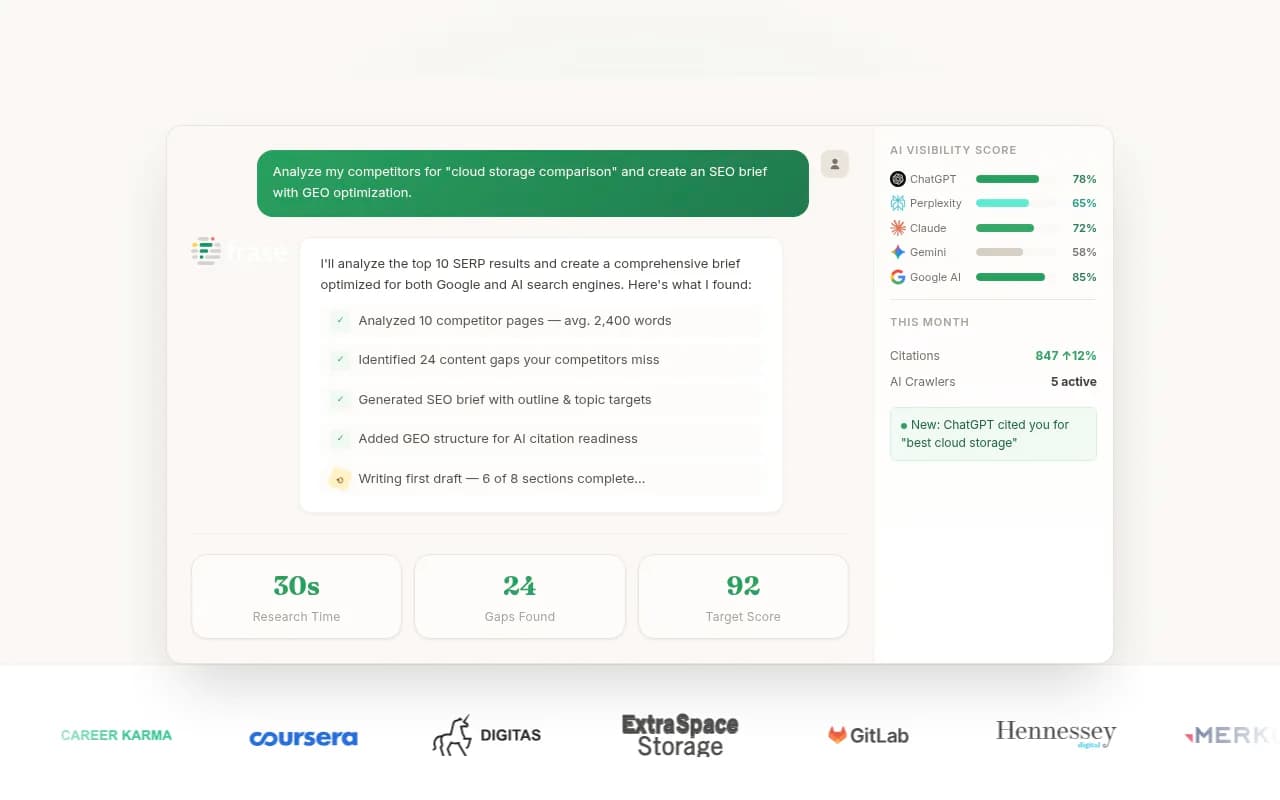
Frase pairs AI engine tracking with research, writing, and optimization tools in one workflow. If you want to find a gap and immediately start closing it, Frase is worth a look.
For enterprise-grade tracking
Profound is the strongest dedicated monitor for enterprise teams that need deep reporting and analytics without necessarily needing content generation built in.
For affordable monitoring
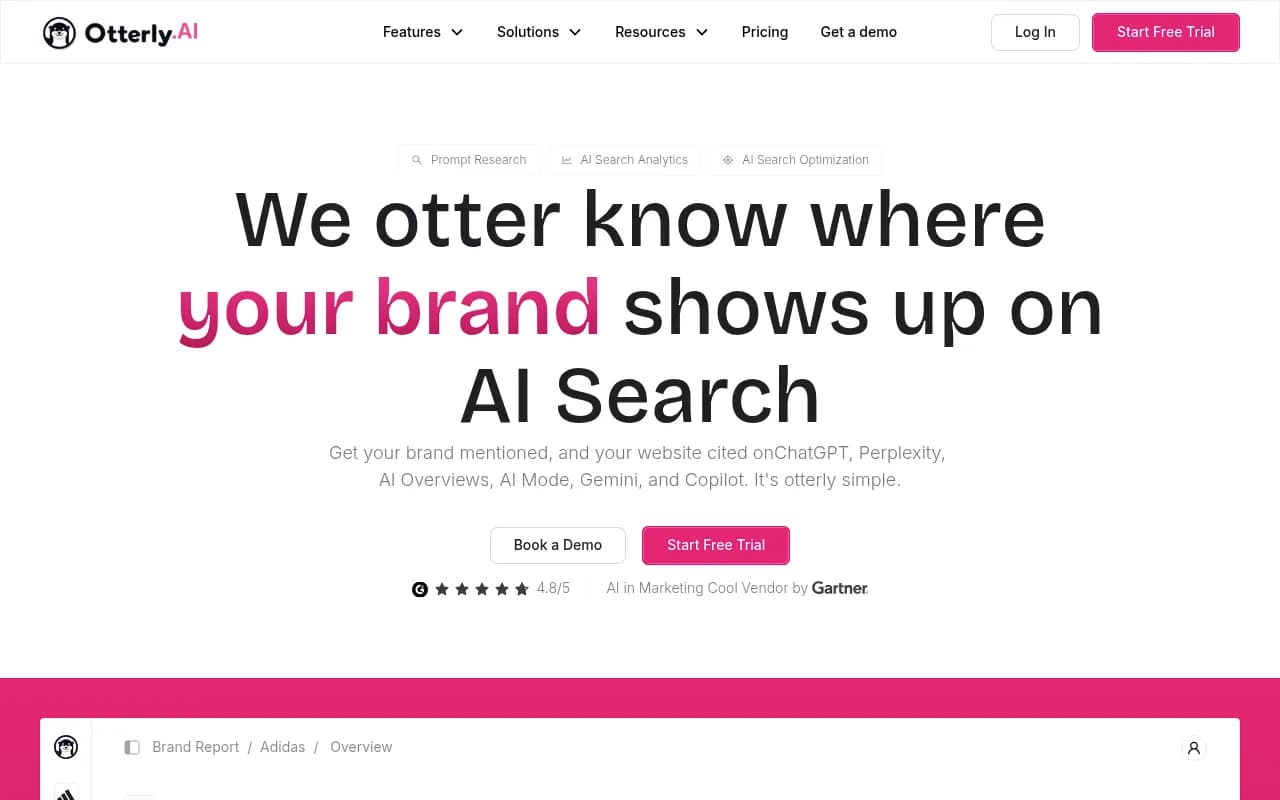
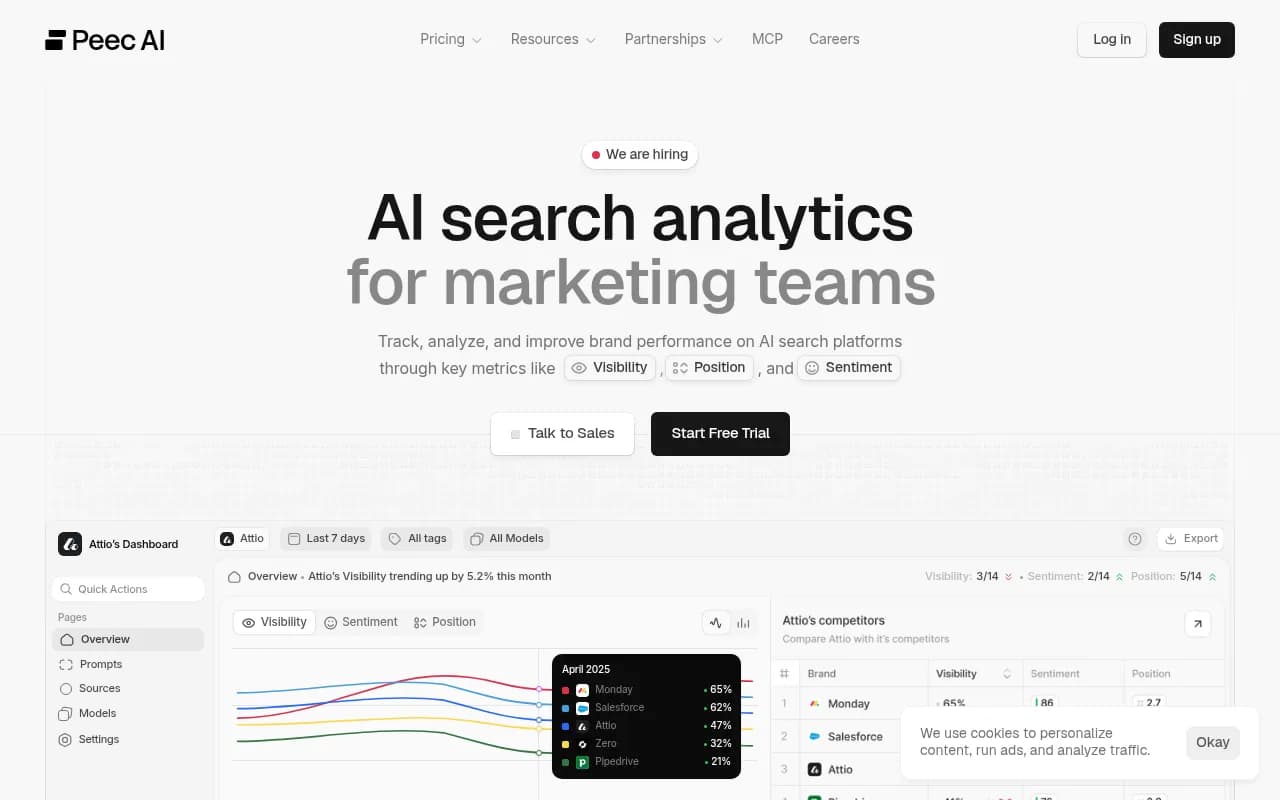
Otterly.AI and Peec AI both offer solid AI brand monitoring at lower price points than the enterprise platforms. Good for smaller teams testing the waters.
For the full action loop
Promptwatch is worth a serious look if you want a platform that goes beyond monitoring. It tracks how your brand appears across 10 AI models (ChatGPT, Perplexity, Claude, Gemini, Grok, DeepSeek, Copilot, Meta AI, Google AI Overviews, and Google AI Mode), then helps you act on what it finds. Answer Gap Analysis shows exactly which prompts competitors are winning that you're not. Content Agents generate articles and briefs grounded in real prompt data. AI Crawler Logs show how AI engines are reading your site. And page-level tracking connects all of it to actual traffic and revenue.

It's the difference between a dashboard that tells you you're losing and a platform that helps you stop losing.
Which one should you pick?
The honest answer depends on what you actually need:
Pick Semrush if you're already a Semrush customer and want AI monitoring without adding another tool to your stack. The AI Visibility Toolkit isn't the deepest option on the market, but it's convenient and integrated with everything else you're already doing.
Pick Brandlight.ai if AI brand monitoring is your primary focus, you already have traditional SEO covered, and you want a dedicated tool that goes deeper on the AI-specific problem.
Consider alternatives if you want to do more than monitor. Both tools will tell you where you're invisible. Neither will help you become visible. For that, you need a platform built around optimization, not just observation.
The market for AI visibility tools is moving fast. A year ago, most teams were still figuring out whether AI search mattered. Now the question is which tool helps you do something about it. That's a harder question than either Brandlight.ai or Semrush is currently built to answer.
A note on the broader landscape
The research is clear that AI search is eating into traditional search traffic. SparkToro's analysis found about 68% of Google searches ended without a click in early 2026. ChatGPT reached roughly 900 million weekly active users by February 2026. Google's AI Overviews reach an estimated 2 billion people monthly.
In that environment, being cited in AI answers is becoming as important as ranking on page one. The tools that help you get there are still maturing. Semrush and Brandlight.ai are both reasonable starting points. But if you're serious about AI visibility as a growth channel, it's worth investing in a platform that treats optimization as the goal, not just monitoring.