Key takeaways
- Google AI Overviews appear in roughly 15-16% of all searches, and Pew Research found that click-through rates drop from 15% to 8% when an AI summary is present — so being cited inside the overview matters more than ranking below it.
- Most GEO tools only monitor. The ones worth paying for also help you identify content gaps and fix them.
- The tools in this list were chosen based on whether they cover Google AI Overviews specifically (not just ChatGPT or Perplexity), how actionable their data is, and whether they fit teams of different sizes and budgets.
- If you're just starting out, SE Ranking and Otterly.AI offer the lowest barrier to entry. For enterprise programs, Profound and BrightEdge are the serious options. For the full action loop — find gaps, create content, track results — Promptwatch is the most complete platform available.
- No single tool does everything perfectly. The right choice depends on whether you need monitoring, content optimization, or both.
Google AI Overviews have quietly become one of the most important real estate decisions in SEO. When an AI summary appears at the top of a search result, the traditional blue links below it get roughly half the clicks they normally would, according to Pew Research Center data from 2025. That's not a marginal shift — it's a structural change in how organic traffic works.
The response from the SEO industry has been a wave of new tools claiming to track, optimize, and "dominate" AI Overviews. Most of them are dashboards that show you data and then leave you to figure out what to do with it. A few actually help you act on what they find.
This guide covers the 7 tools worth your attention in 2026 — what they actually do, who they're built for, and where each one falls short.
What makes a GEO tool worth using for Google AI Overviews?
Before getting into the list, it's worth being clear about what separates a useful tool from a vanity dashboard.
A good GEO tool for AI Overviews should tell you:
- Which of your tracked keywords trigger an AI Overview
- Whether your domain is cited inside that overview
- Which competitors are being cited instead of you
- How citation rates change over time
A great one also helps you understand why you're not being cited and gives you a path to fix it — through content gap analysis, brief generation, or optimization recommendations.
Most tools on the market right now do the first part reasonably well. Very few do the second part at all.
The 7 best GEO tools for Google AI Overviews in 2026
1. Promptwatch — best for the full optimization loop
Promptwatch is the tool that goes furthest beyond monitoring. Where most platforms show you a citation rate and leave you there, Promptwatch is built around a three-step loop: find the gaps, create content to fill them, then track whether it worked.
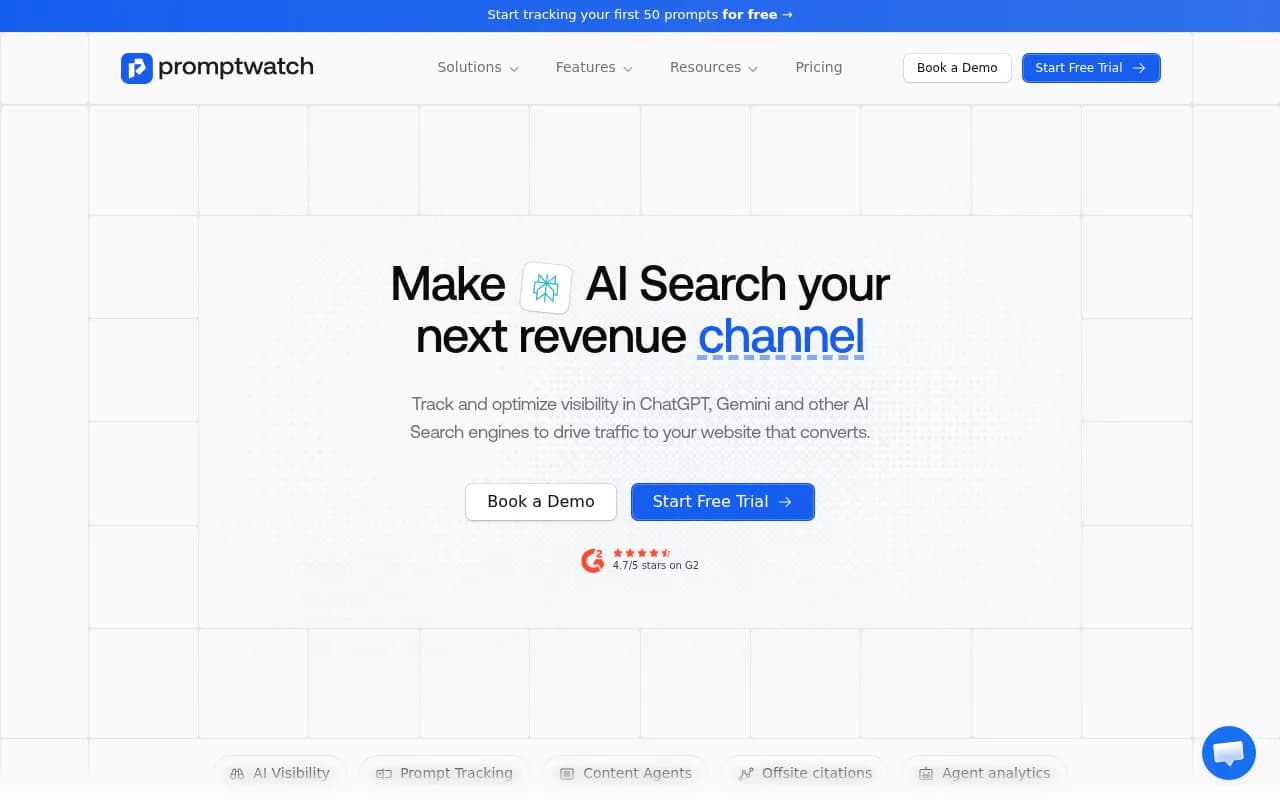
The Answer Gap Analysis feature shows you exactly which prompts your competitors are visible for that you're not — not as a vague category, but as specific questions and topics that AI models are already answering using other sources. From there, Content Agents generate articles, comparisons, and briefs grounded in real prompt data, citation volumes, and competitor analysis.
For Google AI Overviews specifically, Promptwatch tracks responses as they appear in real user interfaces rather than through API calls alone. This matters because AI Overview content can differ from what the API returns. The platform also logs AI crawler activity on your site in real time — which pages Google's crawlers are reading, how often, and when a page moves from crawled to cited.
Promptwatch covers 10 AI models including Google AI Overviews and Google AI Mode, with multi-language and multi-region support. Pricing starts at $99/month for the Essential plan (1 site, 50 prompts, 5 articles), with Professional at $249/month and Business at $579/month. A free trial is available.
The main limitation: it's a purpose-built GEO platform, not a traditional SEO suite. If you need keyword rank tracking for blue-link positions alongside AI Overview monitoring, you'll want to pair it with something like SE Ranking or Semrush.
2. Semrush AI Visibility Toolkit — best for teams already on Semrush
Semrush has been the default SEO platform for a lot of marketing teams for years, and their AI Visibility Toolkit is a natural extension of that. It integrates AI Overview tracking directly into Position Tracking, so you can see which of your monitored keywords trigger an overview and whether your domain appears as a source.
The Semrush AI Overviews Study (2025) found that AI Overviews appeared in roughly 15.69% of queries by November 2025, after peaking near 25% in July. Semrush's own data infrastructure is what makes their coverage credible — they're tracking at scale across a massive keyword database.
The honest limitation here is that Semrush uses fixed prompt templates rather than dynamic, real-user prompt tracking. You're monitoring the queries you set up, not necessarily the full range of ways users are actually asking about your category. It also doesn't have content generation built in, so the optimization work still falls entirely on your team.
Pricing starts at $139.95/month for the Pro plan, though AI Overview features are available across tiers.
3. SE Ranking — best for budget-conscious teams
SE Ranking has quietly built one of the more complete AI Overview tracking features at a price point that agencies and smaller teams can actually justify. Starting at $95.20/month on the Pro annual plan, it includes AI Overview detection and citation tracking as part of the core platform rather than as an expensive add-on.
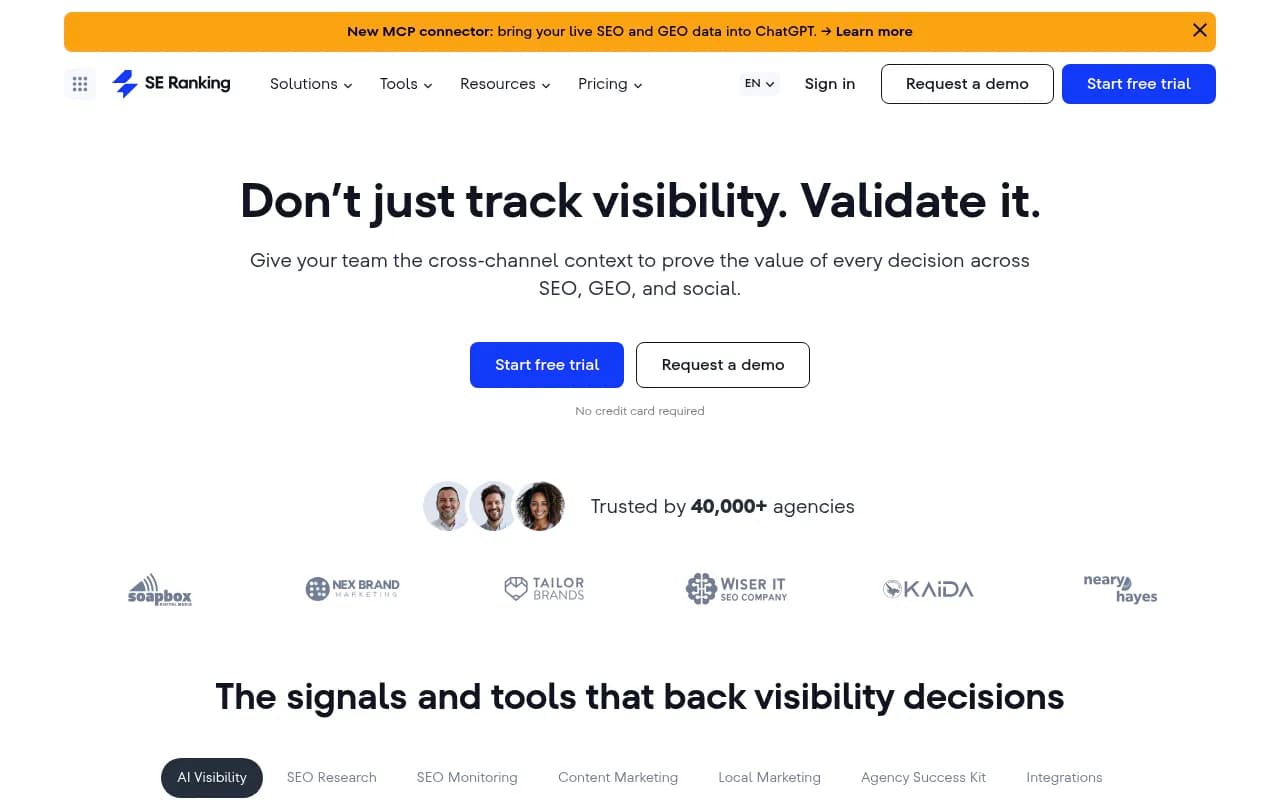
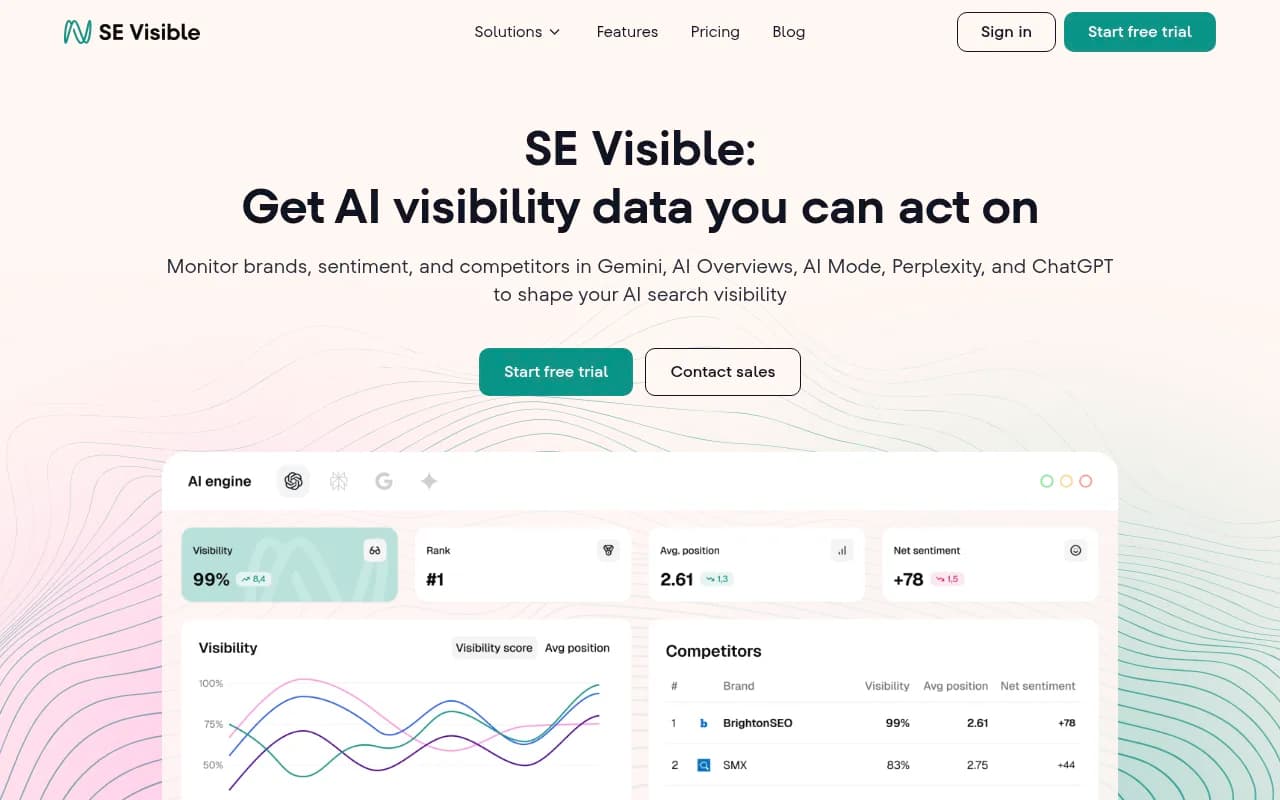
The SE Visible product (their dedicated AI visibility tracker) extends this into a standalone tool for teams that want to separate AI monitoring from traditional rank tracking. Coverage includes Google AI Overviews alongside other AI search engines.
Where SE Ranking falls short is depth. The citation analysis and competitor benchmarking aren't as granular as what you get from Profound or Promptwatch. But for a team that needs to know whether their keywords are triggering AI Overviews and whether they're being cited, SE Ranking gets the job done without requiring an enterprise budget.
4. Profound — best for enterprise GEO programs
Profound is one of the more serious platforms in the GEO space, built for enterprise brands that need structured AI visibility programs rather than ad hoc monitoring. The Growth tier starts at $399/month (some sources cite $499/month depending on configuration), and it's genuinely not priced for small teams.
What you get for that price is detailed citation tracking across multiple AI engines, competitive benchmarking, and the kind of reporting infrastructure that enterprise marketing teams need to justify GEO investment internally. Profound is particularly strong on the analytics side — understanding which content types and domains AI models prefer, and how your visibility shifts over time.
The gaps: no content generation, no Reddit or YouTube tracking, and no AI crawler logs. It's a monitoring and analytics platform, not an optimization engine. For enterprise teams that already have content production capacity and just need the intelligence layer, that's fine. For teams that need help acting on the data, it's a limitation worth knowing about.
5. Otterly.AI — best for solo marketers and small teams
Otterly.AI is the most accessible entry point on this list. At $29/month for the Lite plan, it offers AI Overview tracking and brand mention monitoring without the complexity or cost of the enterprise platforms.
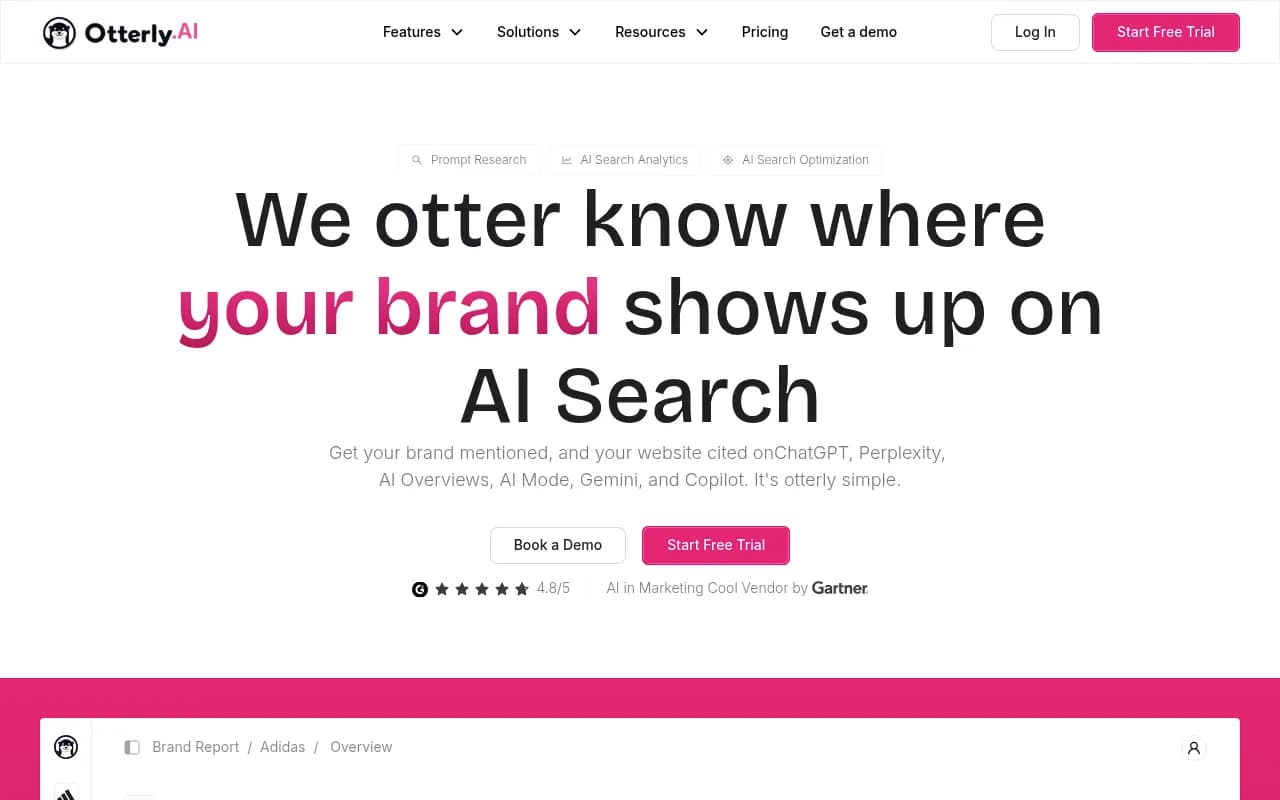
It's genuinely useful for solo marketers, small agencies, or anyone who wants to start tracking AI visibility without committing to a significant budget. The interface is clean, setup is fast, and you get meaningful data on whether your brand is appearing in AI-generated answers.
The tradeoff is obvious: Otterly.AI is monitoring-only. There's no content gap analysis, no content generation, no crawler logs, and no deep competitive intelligence. It shows you where you stand; it doesn't help you improve. For teams that are just starting to understand their AI visibility, that's a reasonable starting point. For teams that need to move the needle, you'll outgrow it quickly.
6. Ahrefs Brand Radar — best for Ahrefs users who want AI coverage
Ahrefs added Brand Radar as their answer to AI search monitoring, and it does what you'd expect from Ahrefs: solid data, familiar interface, and integration with their existing backlink and keyword infrastructure.
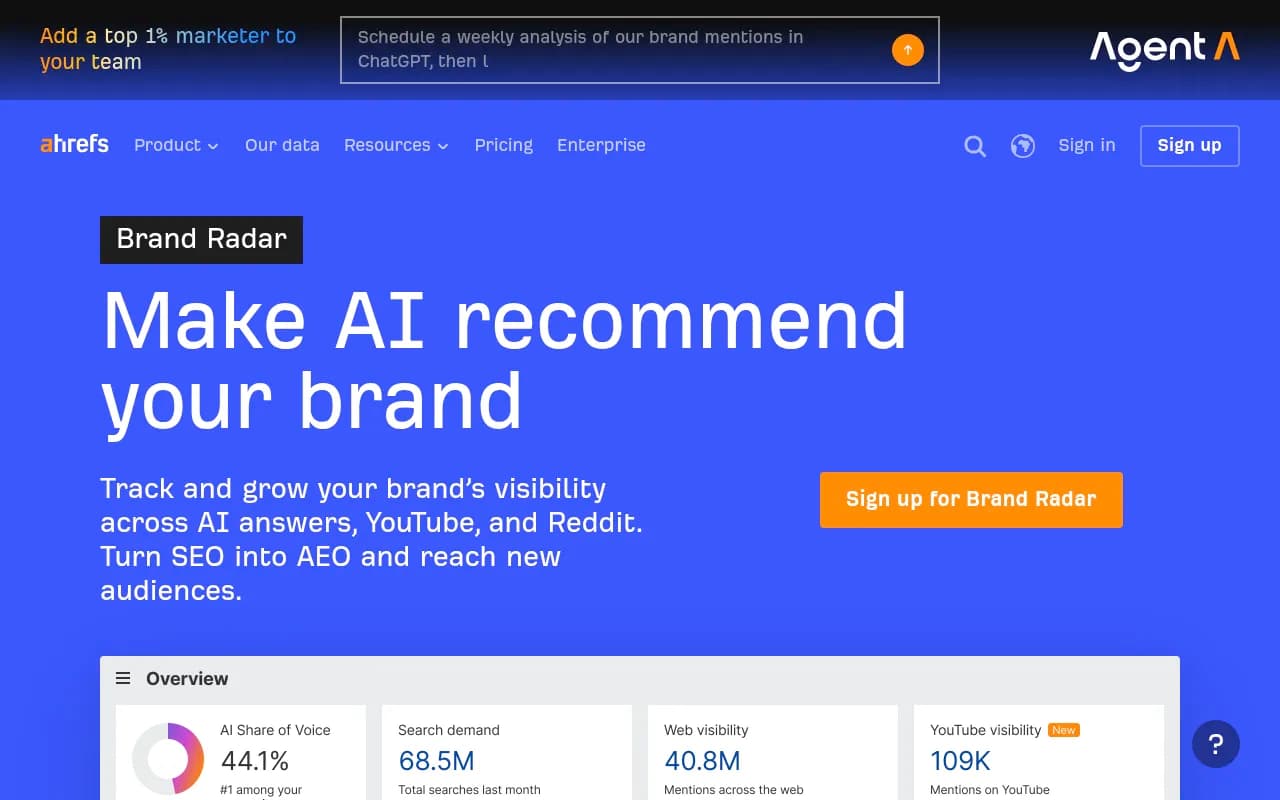
Brand Radar tracks your brand mentions and citations across AI search engines including Google AI Overviews, with citation source analysis that fits naturally into Ahrefs' existing domain authority framework. If you're already using Ahrefs for link building and keyword research, adding Brand Radar is a low-friction way to extend into AI visibility.
The limitations are real though. Brand Radar uses fixed prompts rather than dynamic tracking, so you're limited to the queries you configure. There's no AI traffic attribution — you can see citations but not how they translate to actual visits. And like most tools in this space, there's no content optimization or generation capability built in.
Pricing starts at $129/month per AI index on top of an existing Ahrefs subscription.
7. BrightEdge — best for large in-house SEO teams
BrightEdge has been an enterprise SEO platform for years, and their AI search intelligence features are a natural extension of that positioning. They track Google AI Overviews alongside other AI engines, with the kind of reporting and integration capabilities that large organizations need.
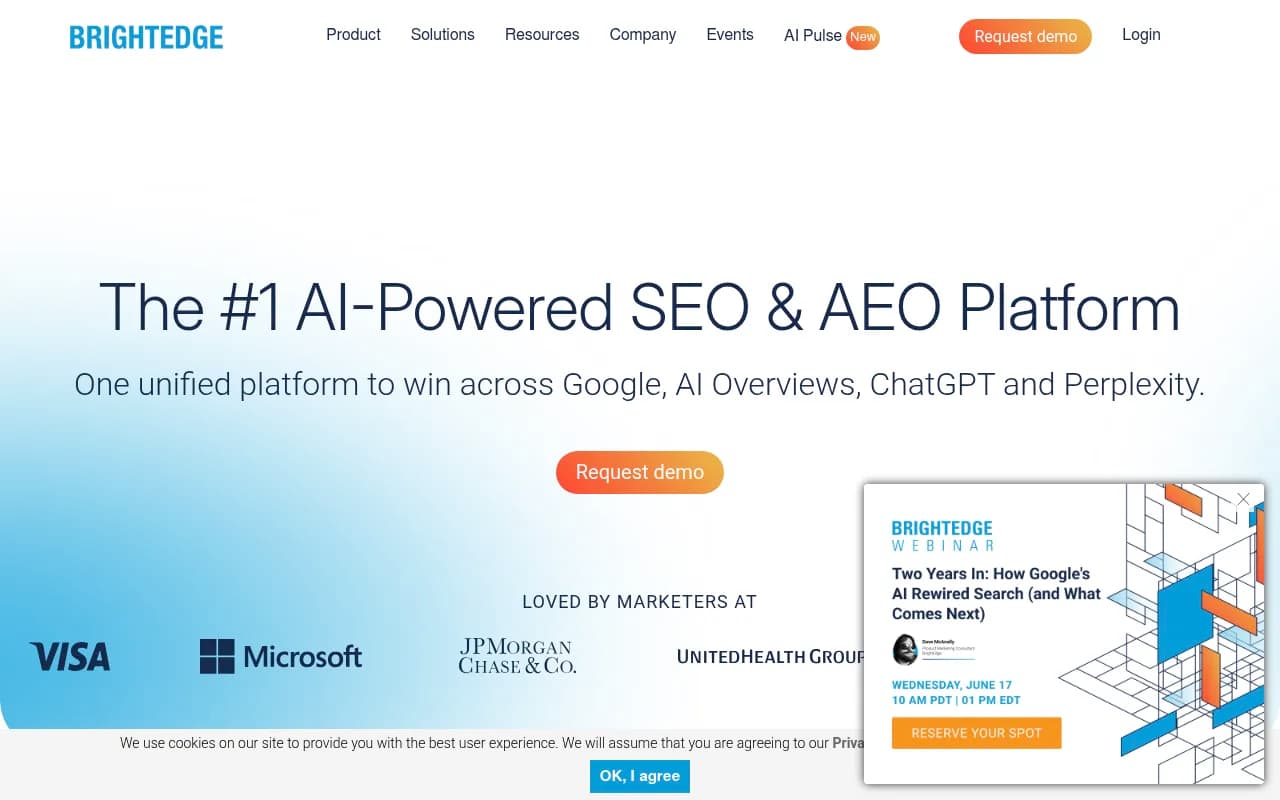
The platform is genuinely powerful for teams with complex multi-site, multi-region needs. BrightEdge's data infrastructure is enterprise-grade, and their AI Overview tracking integrates with their broader content performance analytics.
The obvious limitation is price and accessibility. BrightEdge is custom-priced and clearly aimed at large in-house teams or agencies with significant budgets. It's not a tool you spin up for a quick experiment. And like Profound, it's primarily an analytics and monitoring platform — content optimization still happens outside the tool.
How these tools compare
| Tool | Google AI Overviews | Content generation | Crawler logs | Starting price | Best for |
|---|---|---|---|---|---|
| Promptwatch | Yes | Yes | Yes | $99/mo | Full optimization loop |
| Semrush AI Toolkit | Yes | No | No | $139.95/mo | Teams already on Semrush |
| SE Ranking | Yes | No | No | $95.20/mo | Budget-conscious teams |
| Profound | Yes | No | No | $399/mo | Enterprise monitoring |
| Otterly.AI | Yes | No | No | $29/mo | Solo marketers |
| Ahrefs Brand Radar | Yes | No | No | $129/mo+ | Ahrefs users |
| BrightEdge | Yes | No | No | Custom | Large in-house teams |
The pattern in that table is hard to miss. Most tools track. One optimizes.
What to look for beyond citation rate
Citation rate is the obvious metric — are you appearing in AI Overviews or not? But there are a few other things worth tracking that many teams overlook.
Citation volatility. Google AI Overviews are not stable. The sources cited for a given query can change week to week, sometimes dramatically. A tool that shows you historical citation data is more useful than one that only shows the current state.
Competitor citation analysis. Knowing you're not cited is less useful than knowing who is being cited and what content they have that you don't. The best tools make this comparison easy.
Prompt coverage. If you're only tracking 20 keywords, you're getting a narrow picture. AI Overviews appear across a huge range of informational queries, and the prompts that trigger them aren't always the ones you'd expect from traditional keyword research.
The gap between crawl and citation. One of the more interesting signals available in advanced platforms is the lag between when an AI crawler reads your content and when it starts citing it. Understanding this timeline helps you set realistic expectations for how long optimization work takes to show results.
Which tool should you actually use?
The honest answer depends on what you need right now.
If you're just starting to understand your AI visibility and have a limited budget, Otterly.AI or SE Ranking are reasonable starting points. They'll show you whether you're being cited and for which queries, without requiring a significant investment.
If you're at an enterprise and need structured reporting and competitive intelligence, Profound or BrightEdge are the serious options. They're expensive, but they're built for the scale and complexity that large organizations need.
If you want to actually improve your AI Overview visibility rather than just measure it, Promptwatch is the most complete option available. The combination of Answer Gap Analysis, Content Agents, and crawler log data gives you a path from "we're not being cited" to "here's the content we need to create" to "here's evidence it's working." That full loop is what most tools in this space still don't offer.
The GEO tool market is moving fast. Several platforms that were monitoring-only a year ago are adding optimization features. But right now, in mid-2026, the gap between tools that track and tools that help you act is still significant. Choose based on where you are in your AI visibility journey — and what you actually plan to do with the data.