Key takeaways
- Profound is a strong enterprise AI visibility tracker, but it lacks white-label reporting, agency-native pricing, and content generation -- three things agencies need to deliver results at scale.
- The best Profound alternatives for agencies combine monitoring with gap analysis and content tools, so you can show clients what's wrong and fix it in the same platform.
- Multi-client workspace management, pitch environments, and white-label exports are the features that separate a real agency platform from a single-brand tool that agencies can technically use.
- Promptwatch is the only platform in this comparison rated as a "Leader" across all categories in a 2026 review of 12 GEO platforms -- and the only one that closes the full loop from gap detection to content creation to citation tracking.
- Pricing varies widely: some tools charge per seat, others per client, and a few punish growth. Check the model before committing.
Why agencies outgrow Profound
Profound does a few things well. Its enterprise-grade AI search monitoring is genuinely thorough, and its governance features make it a reasonable fit for large in-house teams with compliance requirements. But agencies have a different problem.
You're not managing one brand. You're managing five, twenty, maybe fifty. You need to spin up a new client environment in minutes, hand a branded PDF to a client without Profound's logo on it, and -- critically -- do something with the data beyond just looking at it.
That last part is where most monitoring tools fall short. Knowing that a client's AI Share of Voice is 12% is fine. Knowing exactly which prompts competitors are winning that the client isn't, then generating the content to close those gaps, is what actually moves the needle. Profound doesn't do that. Neither do most of its competitors.
So this guide focuses on the eight platforms that come closest to a full agency stack in 2026: tools with real multi-client management, white-label reporting, and at least some content capability. A few of them are monitoring-only but genuinely good at it. The best ones go further.
What to look for before picking a platform
Before getting into the tools, here's a quick checklist. If a platform misses more than three of these, it's not really built for agencies -- it's a single-brand tool you can technically use at scale.
- Multi-client workspaces with isolated environments and role-based access
- Pitch environments so you can run a prospect audit before the sales call
- Broad AI model coverage -- at minimum ChatGPT, Perplexity, Gemini, Claude, and Google AI Overviews
- Gap analysis that shows which prompts competitors own and you don't
- Content generation or briefs grounded in real prompt data
- White-label exports -- branded PDFs, scheduled reports, or a custom-domain dashboard
- Agency-friendly pricing that scales with your client count, not against it
- Reddit and YouTube citation tracking, since a growing share of AI answers cite community content
The 8 best Profound alternatives for agencies in 2026
1. Promptwatch -- best for agencies that need to act on data, not just collect it
Promptwatch is the most complete platform in this list. Where most tools stop at monitoring, Promptwatch runs a full loop: find gaps, generate content, track results. That distinction matters a lot when you're billing clients for outcomes.
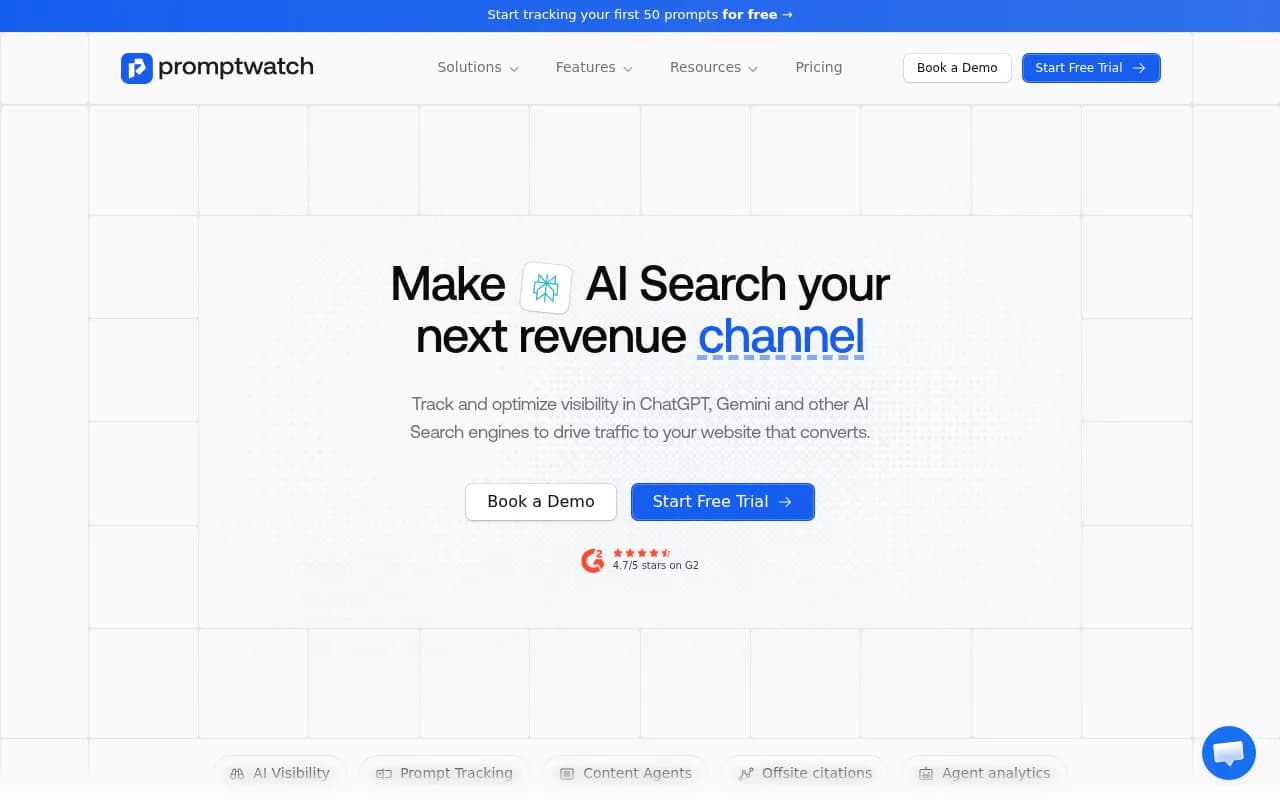
The Answer Gap Analysis shows exactly which prompts competitors appear for that your client doesn't. You see the specific topics, angles, and questions AI models are already answering -- just not with your client's content. From there, Content Agents generate articles, listicles, comparisons, and briefs grounded in real prompt data, citation data, and competitor analysis. Then page-level tracking shows which new pages get crawled, cited, and by which models.
For agencies specifically, the AI Crawler Logs are worth calling out. You can see in real time which AI crawlers are hitting a client's site, which pages they're reading, and what errors they're encountering. Most competitors don't have this at all.
Coverage spans 10 AI models: ChatGPT, Perplexity, Google AI Overviews, Google AI Mode, Claude, Gemini, Meta/Llama, DeepSeek, Grok, and Copilot. Pricing starts at $99/month for a single site, with the Professional plan at $249/month covering two sites, 150 prompts, and crawler logs. Agency and enterprise pricing is available on request.
The one honest caveat: Promptwatch's white-label reporting is available, but if white-label is your absolute top priority above everything else, confirm the current state of that feature with the team before committing.
In a 2026 comparison of 12 GEO platforms, Promptwatch was the only one rated as a "Leader" across all categories. That's not a marketing claim -- it reflects a genuine gap between what Promptwatch does and what monitoring-only tools offer.
2. Profound -- the baseline you're replacing (and why)
It's worth being clear about what Profound actually does well before writing it off entirely.
Profound is a serious enterprise platform. Its AI search monitoring is thorough, its data is reliable, and it handles governance requirements that matter to large in-house teams. If you're an agency embedded inside a single enterprise client, Profound might be the right call.
But for agencies managing multiple clients, the gaps are real:
- No white-label reporting -- client-facing reports carry Profound's branding
- No content generation -- you identify gaps, then figure out how to close them yourself
- No agency-native pricing -- you're paying enterprise rates regardless of your client count
- Limited gap intelligence -- you see where you appear, but not a prioritized list of what to create next
Profound is a monitoring tool. The alternatives below are optimization platforms.
3. Search Party -- built for agency workflows
Search Party was designed with agencies in mind from the start, which shows in its multi-client dashboard and partner program structure.
The platform handles prompt tracking across major AI models and gives agencies a clean way to manage separate client environments. Its reporting is solid, and the agency partner program includes co-marketing and referral structures that Profound doesn't offer at all.
Where Search Party falls short: prompt metrics are limited compared to Promptwatch, and there's no content gap analysis or generation capability. You'll still need a separate tool to actually create the content that closes visibility gaps.
Good fit for: agencies that want a clean monitoring and reporting layer and are comfortable handling content strategy separately.
4. Scrunch AI -- strong monitoring with agency-friendly structure
Scrunch AI has built a reputation for reliable AI search monitoring with a cleaner agency-facing interface than most enterprise tools.
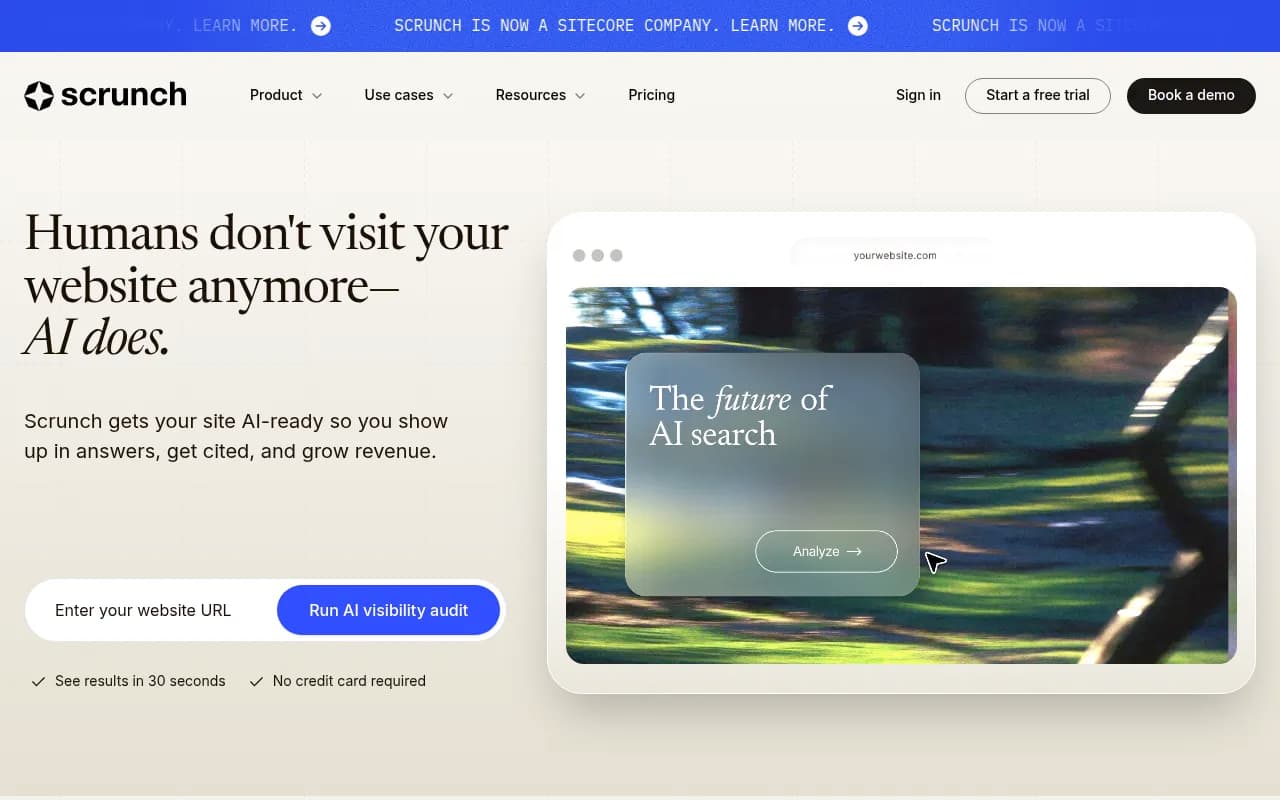
It covers the major AI models, offers competitor benchmarking per client, and has reporting features that work reasonably well for client-facing use. The pricing structure is more agency-friendly than Profound's, though it's still not as flexible as a true per-client model.
The honest limitation: Scrunch AI is monitoring-focused. There's no content generation, no crawler logs, and no Reddit or YouTube citation tracking. You'll see the data, but you won't get much help acting on it.
Good fit for: agencies that already have a content production workflow and just need clean monitoring data to feed into it.
5. AthenaHQ -- solid monitoring, limited action
AthenaHQ is a monitoring platform that agencies use when they want reliable data without a lot of complexity.
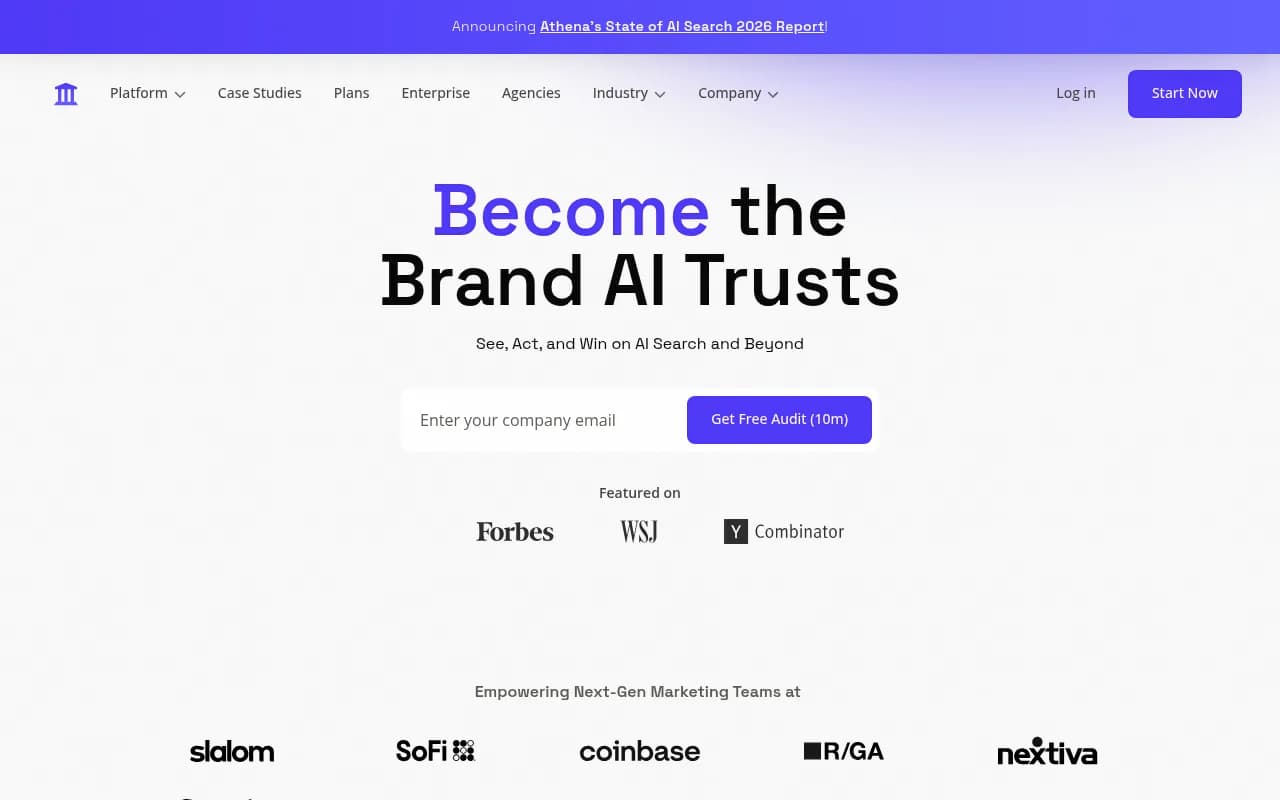
It tracks AI visibility across the major models, surfaces competitor data, and produces reports that are presentable to clients. The interface is clean and the data is trustworthy.
But AthenaHQ is monitoring-only in a meaningful sense. There's no content optimization, no gap-to-brief workflow, and no crawler log visibility. It's a good data layer -- it just doesn't do much with the data once it has it.
Good fit for: agencies that want a straightforward monitoring tool and have the internal capacity to handle strategy and content separately.
6. SE Ranking -- traditional SEO roots with growing AI visibility features
SE Ranking has been a reliable SEO platform for years, and its AI visibility features have matured enough in 2026 to be worth considering for agencies that want one platform for both traditional and AI search.
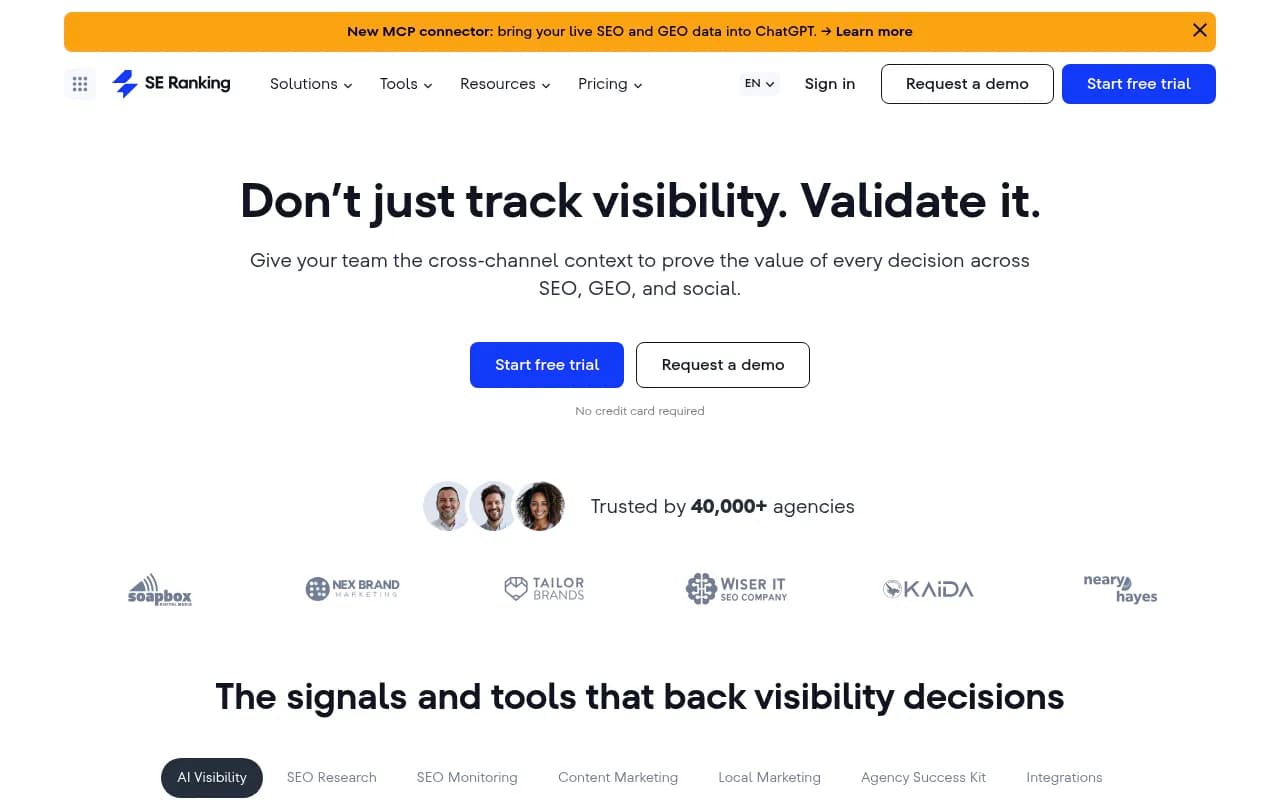
The white-label reporting is genuinely good -- one of the stronger implementations in this list. Client workspace separation works well, and the pricing scales reasonably with agency size. The platform also covers a broader range of traditional SEO metrics than any pure-play AI visibility tool.
The trade-off is depth. SE Ranking's AI visibility tracking is solid but not as granular as dedicated GEO platforms. Prompt volume data, query fan-outs, and crawler log visibility aren't there. If AI search is your primary service line, you'll feel the ceiling.
Good fit for: agencies that sell AI visibility as part of a broader SEO retainer and want one platform to cover both.
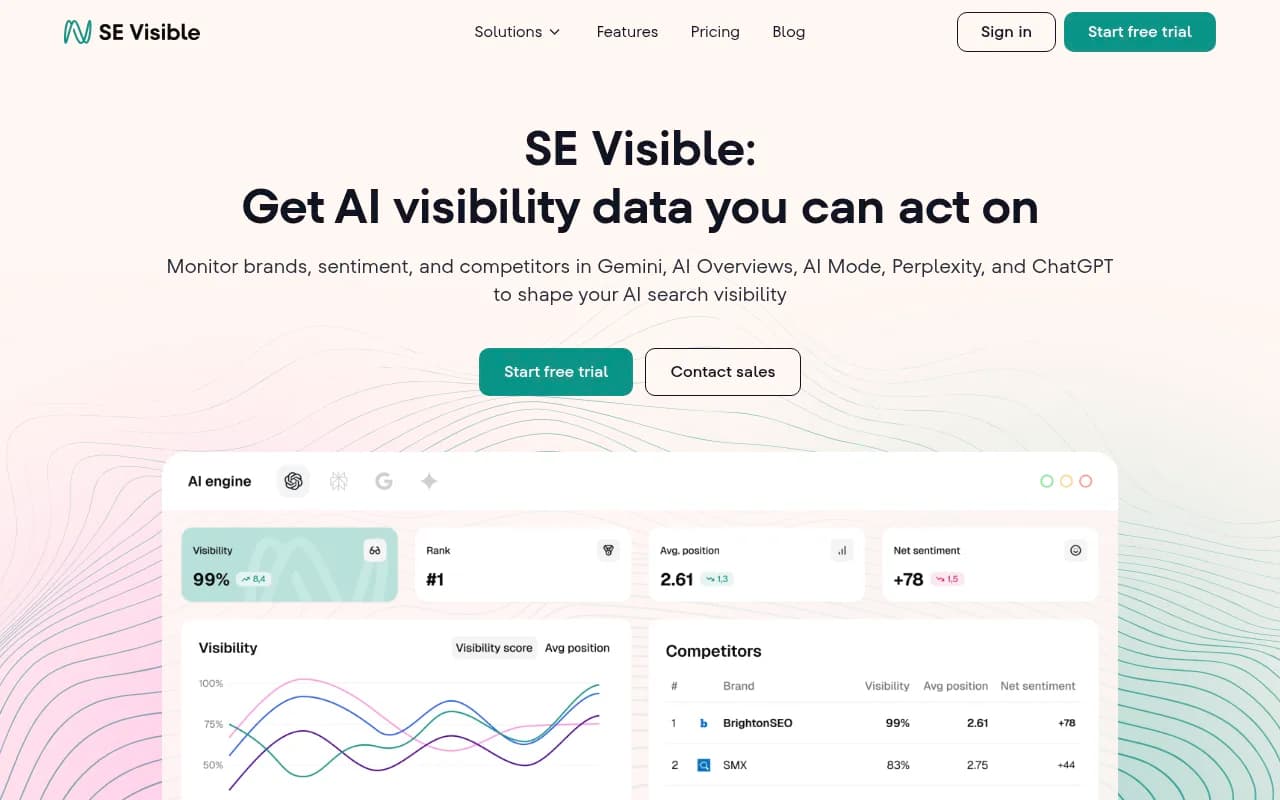
7. Semrush AI Visibility Toolkit -- familiar platform, limited AI depth
Semrush is the tool most agencies already have. Its AI Visibility Toolkit adds some AI search monitoring on top of an already comprehensive traditional SEO platform.
The advantage is obvious: if your team is already in Semrush every day, adding AI visibility data to the same interface reduces friction. The white-label reporting infrastructure is mature, and the platform handles multi-client management reasonably well through its agency features.
The problem is that Semrush's AI visibility features use fixed prompts -- you're tracking a predefined set of queries rather than building a custom prompt set for each client. That's a meaningful limitation when client needs vary. There's also no AI traffic attribution connecting visibility to actual revenue.
Good fit for: agencies that are deeply embedded in Semrush and want to add AI visibility without switching platforms, accepting some depth trade-offs.
8. Otterly.AI -- affordable entry point for smaller agencies
Otterly.AI is the most accessible option in this list from a pricing standpoint, which makes it worth including for smaller agencies or those just starting to build an AI visibility service.
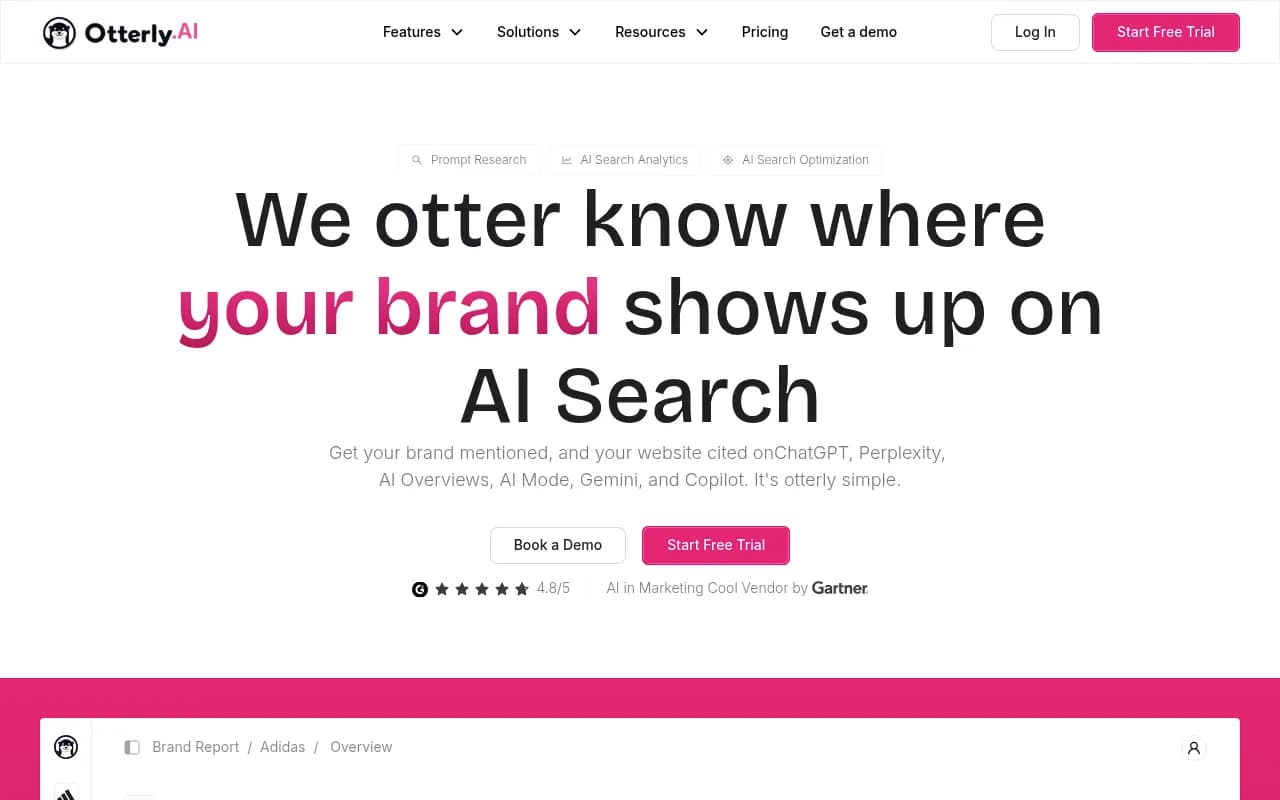
It tracks brand mentions and citations across AI models, produces basic reports, and doesn't require a significant budget commitment to get started. For agencies with a handful of clients who want to dip a toe in before investing in a full platform, it's a reasonable starting point.
The limitations are real though. No crawler logs, no visitor analytics, no content generation, and no Reddit or YouTube tracking. Otterly.AI is monitoring in its most basic form. You'll outgrow it quickly if AI visibility becomes a core service line.
Good fit for: smaller agencies testing the market before committing to a full platform investment.
Side-by-side comparison
| Platform | Multi-client workspaces | White-label reporting | Content generation | Gap analysis | Crawler logs | Reddit/YouTube tracking | Agency pricing |
|---|---|---|---|---|---|---|---|
| Promptwatch | Yes | Yes | Yes (Content Agents) | Yes (Answer Gap Analysis) | Yes | Yes | Yes (agency/enterprise) |
| Profound | Limited | No | No | Limited | No | No | No |
| Search Party | Yes | Yes | No | Limited | No | No | Yes |
| Scrunch AI | Yes | Partial | No | No | No | No | Partial |
| AthenaHQ | Yes | Partial | No | No | No | No | Partial |
| SE Ranking | Yes | Yes (strong) | No | No | No | No | Yes |
| Semrush AI Toolkit | Yes | Yes (mature) | No | No | No | No | Yes |
| Otterly.AI | Limited | Basic | No | No | No | No | Yes (affordable) |
How to choose
The right platform depends on what you're actually selling.
If AI visibility is a standalone service line and you're billing clients on outcomes -- visibility scores, citation growth, traffic from AI search -- you need a platform that closes the full loop. Promptwatch is the only one in this list that does that end-to-end. The gap analysis tells you what content to create, the Content Agents create it, and the tracking shows you when it starts getting cited. That's a complete service you can charge for.
If AI visibility is one component of a broader SEO retainer, SE Ranking or Semrush might be the pragmatic choice. You lose some depth, but you gain simplicity and a platform your team already knows.
If you're just starting out and want to validate demand before investing, Otterly.AI or Scrunch AI give you a low-cost way to run client audits and see if the service lands.
The one thing to avoid: picking a monitoring-only tool and assuming the data will speak for itself. Clients don't pay retainers for dashboards. They pay for results. The platforms that help you produce results -- not just report on them -- are the ones worth building a service around.
A note on the broader market
The AI visibility category is moving fast. A year ago, most of these platforms didn't exist in their current form. By the end of 2026, the gap between monitoring tools and optimization platforms will be even more obvious -- because agencies that can show citation growth and attribute it to revenue will win clients that agencies with dashboards-only can't keep.
The agencies building on platforms with content generation, crawler logs, and traffic attribution now are the ones that will have the case studies and the proof points when clients start asking harder questions. That's not a prediction -- it's already happening with the agencies using Promptwatch's Content Agents and seeing pages move from crawl to citation in weeks rather than months.
Pick the platform that matches where you want to be in 12 months, not where you are today.