Key takeaways
- Otterly.AI is a solid entry point for teams that want quick, low-friction AI brand monitoring without a steep learning curve or high price tag.
- Promptwatch covers the full GEO loop: track visibility gaps, generate content to close them, and measure the impact on traffic and citations.
- The core difference isn't features -- it's what happens after you see the data. Otterly shows you the problem; Promptwatch helps you fix it.
- If you're running a single brand and just want to know whether AI models mention you, Otterly may be enough. If you're trying to actually improve your AI search presence, you'll hit its ceiling fast.
- Promptwatch is the only platform in the 2026 comparison rated as a "Leader" across all categories, including content generation, crawler logs, and traffic attribution -- none of which Otterly offers.
Why this comparison matters in 2026
AI search has moved from "interesting experiment" to a real traffic channel. ChatGPT, Perplexity, Google AI Overviews, Claude -- these tools now answer questions that used to send people to your website. If your brand isn't cited in those answers, you're invisible to a growing slice of your audience.
That shift has created a market full of tools claiming to solve "AI visibility." But they're solving very different versions of the problem. Some just tell you whether your brand shows up. Others try to help you actually change that. Promptwatch and Otterly.AI sit at opposite ends of that spectrum, which makes them worth comparing directly.
This guide breaks down what each tool actually does, where each one makes sense, and what you'd be giving up by choosing one over the other.
What Otterly.AI does
Otterly.AI is a lightweight AI brand monitoring tool. You set up a list of prompts, it queries AI models on a schedule, and you get visibility scores and alerts when your brand appears (or stops appearing) in responses.
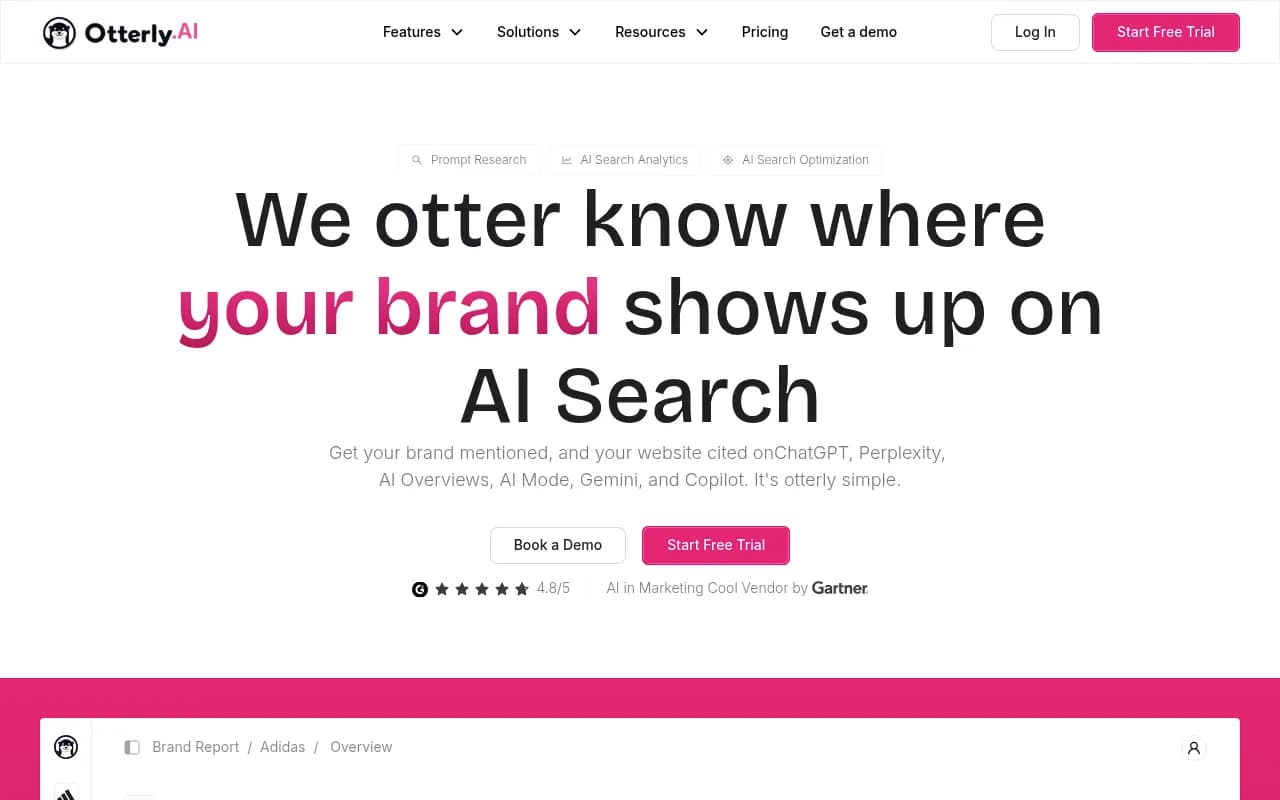
The appeal is simplicity. Setup takes minutes, the interface is clean, and you don't need to understand GEO deeply to get value from it. For a team that's just starting to think about AI search and wants a quick answer to "are we being mentioned?", Otterly delivers that without friction.
What it tracks:
- Brand mentions across a handful of AI models
- Sentiment around those mentions
- Share of voice vs competitors
- Basic prompt-level visibility scores
What it doesn't do is tell you why you're not showing up, which prompts you're losing, what content would change that, or whether any of it connects to actual website traffic. It's a dashboard that shows you a number. What you do with that number is entirely up to you.
What Promptwatch does
Promptwatch is built around a different premise: visibility data is only useful if it leads to action. The platform tracks AI visibility across 10+ models (ChatGPT, Perplexity, Claude, Gemini, Grok, DeepSeek, Google AI Overviews, Copilot, Meta AI, Mistral), but that's the starting point, not the product.
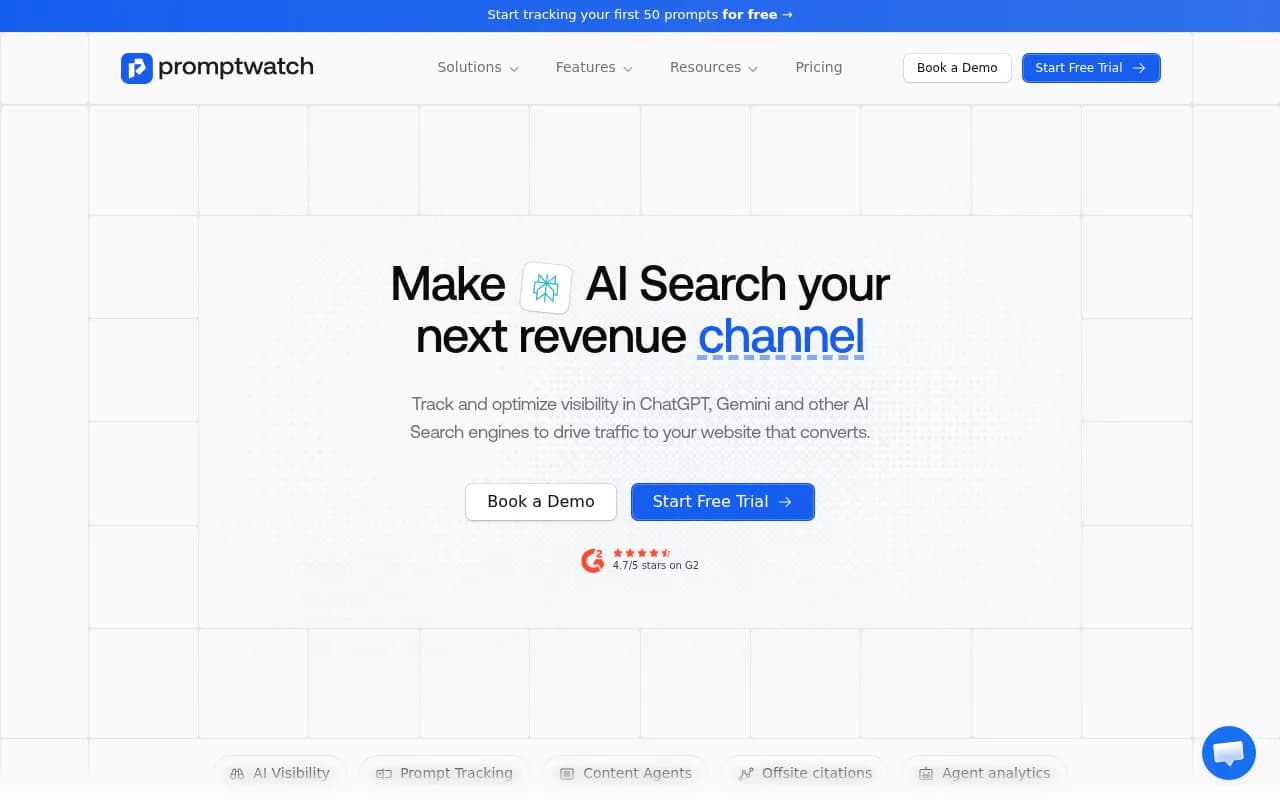
The core workflow looks like this:
- Find the gaps. Answer Gap Analysis shows you the specific prompts where competitors are being cited and you're not. Not just "your visibility is low" -- the exact questions AI models are answering without referencing your site.
- Create content to close them. Content Agents generate articles, comparisons, and briefs built around real prompt data, citation patterns, and competitor analysis. The output is designed to be cited, not just indexed.
- Track what changes. Page-level tracking shows which of your pages are being cited, by which models, and how often. Agent Analytics logs show when AI crawlers visit your site, which pages they read, and when a crawl turns into a citation.
That loop -- find gaps, fix them, measure results -- is what separates Promptwatch from monitoring tools. Most competitors, including Otterly, stop at step one.
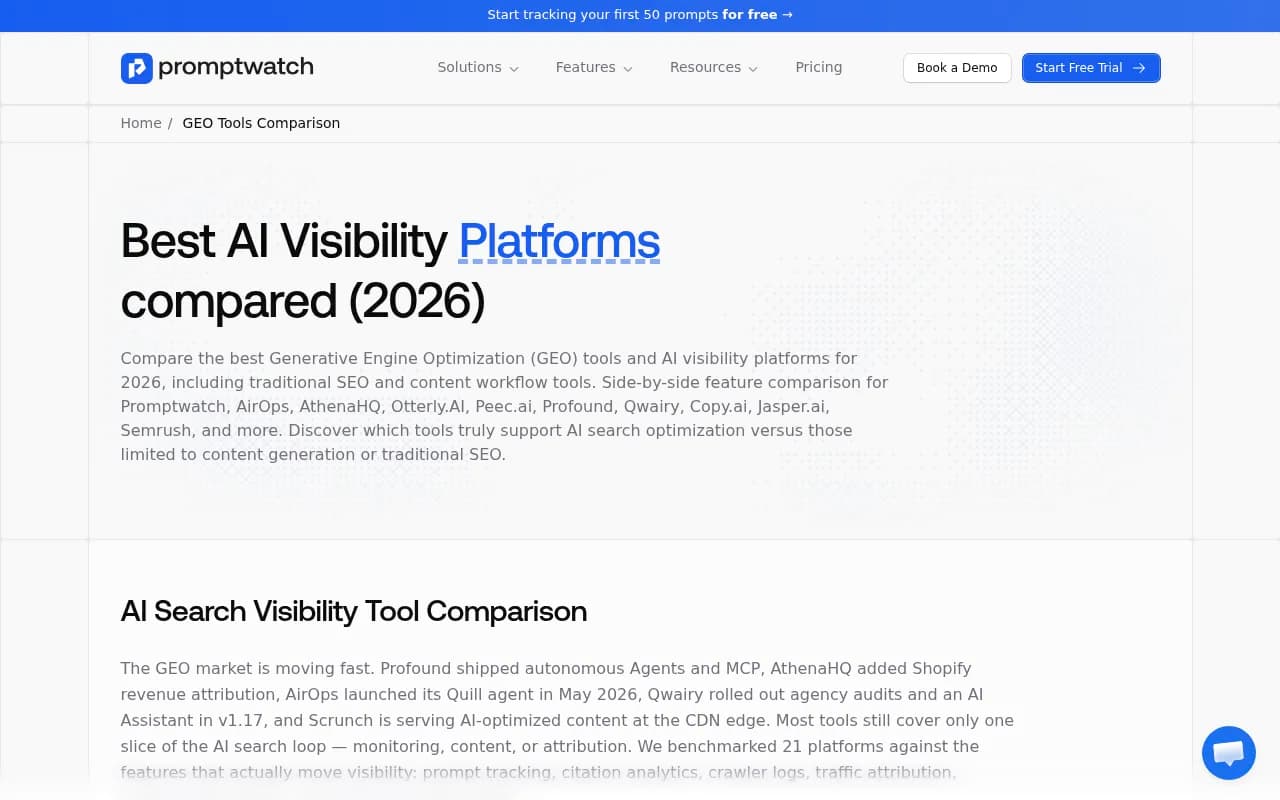
Feature comparison
Here's a direct side-by-side of what each platform covers:
| Feature | Otterly.AI | Promptwatch |
|---|---|---|
| Brand mention monitoring | Yes | Yes |
| Sentiment tracking | Yes | Yes |
| Share of voice | Yes | Yes |
| Competitor visibility | Basic | Advanced (heatmaps) |
| Number of AI models tracked | ~5 | 10+ |
| Prompt volume & difficulty scores | No | Yes |
| Answer Gap Analysis | No | Yes |
| Page-level citation tracking | No | Yes |
| AI crawler logs (Agent Analytics) | No | Yes |
| Content generation (AI articles) | No | Yes |
| Content briefs with prompt data | No | Yes |
| Reddit & YouTube citation insights | No | Yes |
| ChatGPT Shopping tracking | No | Yes |
| AI traffic attribution | No | Yes |
| Multi-language / multi-region | Limited | Yes |
| Query fan-outs | No | Yes |
| Offsite citation analysis | No | Yes |
| API & Looker Studio export | No | Yes |
| Website integrations (Cloudflare, GSC, etc.) | No | Yes |
| Free trial | Yes | Yes |
| Starting price | ~$19/mo | $99/mo |
The price gap is real and worth acknowledging. Otterly starts cheaper. But the question is whether cheaper monitoring is actually useful if it doesn't tell you what to do next.
Where Otterly.AI makes sense
Otterly is a reasonable choice in a few specific situations:
You're just getting started with GEO. If your team has never tracked AI visibility before and you want to understand the basics -- which models mention you, how often, how that compares to competitors -- Otterly gives you that without requiring a significant budget or time investment.
You have a small brand with limited content needs. If you're a solo founder or a small team that publishes infrequently, the content generation and gap analysis features in Promptwatch may be more than you need right now.
You want a quick sanity check. Some teams use lightweight monitoring tools alongside a more capable platform. Otterly can work as a secondary check or a low-cost way to monitor a specific brand or product line.
What you should be clear-eyed about: Otterly won't tell you why your visibility is low, what to publish to improve it, or whether your efforts are working at the page level. If those questions matter to your team, you'll outgrow it quickly.
Where Promptwatch pulls ahead
The gap becomes obvious when you move past "are we visible?" to "how do we get more visible?"
Answer Gap Analysis
This is the feature that most directly separates the two tools. Promptwatch shows you the specific prompts where your competitors appear and you don't. You see the exact questions, the AI models answering them, and the content that's currently being cited. That's actionable. A visibility score without this context is just a number.
AI crawler logs
Promptwatch's Agent Analytics logs every time an AI crawler (ChatGPT, Perplexity, Claude, etc.) visits your site -- which pages they read, any errors they hit, how often they return, and when a crawl turns into an actual citation. This matters because AI indexing doesn't work like Google indexing. Pages can be crawled without being cited, and errors that don't affect Google rankings can completely block AI citations. No other tool in the 2026 comparison offers this.
Content generation grounded in real data
The Content Agents in Promptwatch don't just generate generic articles. They pull in prompt volume data, citation patterns, competitor analysis, and your brand guidelines to produce content that's specifically designed to fill the gaps AI models are exposing. That's a fundamentally different output than a blog post written to a keyword.
Traffic attribution
Promptwatch connects AI citations to actual website visits and revenue. You can see which AI-cited pages are driving traffic, which models are sending visitors, and how that translates to conversions. Otterly has no attribution layer -- you see visibility scores, but you can't connect them to business outcomes.
Reddit and YouTube insights
AI models frequently cite Reddit threads and YouTube videos in their responses. Promptwatch surfaces the specific discussions and videos that are influencing AI recommendations in your category. This is a channel most GEO tools ignore entirely, and it's increasingly important as models like Perplexity and ChatGPT pull heavily from community content.
Pricing reality check
Otterly.AI starts around $19/month, which makes it accessible for individuals and small teams. Promptwatch's Essential plan starts at $99/month (1 site, 50 prompts, 5 articles), with Professional at $249/month and Business at $579/month.
That's a meaningful difference, but the comparison isn't really "same thing, different price." You're comparing a monitoring dashboard to a full optimization platform. The more relevant question is: what's the cost of being invisible in AI search, and what's the value of actually fixing it?
For a marketing team at a mid-size company where AI search is becoming a real traffic channel, $249/month for a platform that actively helps you improve visibility is a different calculation than $19/month for a tool that tells you visibility is low.
Both offer free trials, so you can test the actual workflow before committing.
What other platforms are worth considering?
If neither tool is quite the right fit, a few others are worth looking at depending on your situation:
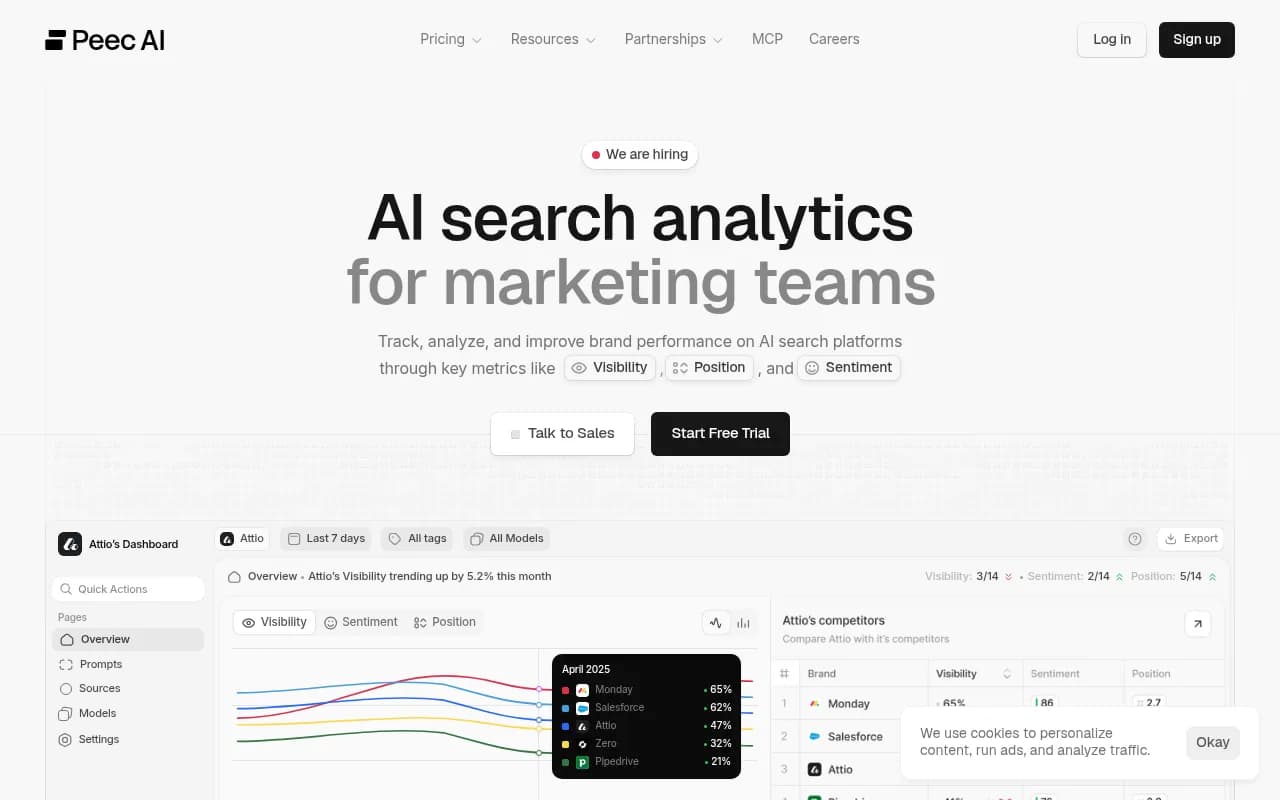
Peec AI sits between Otterly and Promptwatch in terms of depth -- more analytics than Otterly, less content tooling than Promptwatch.
AthenaHQ is monitoring-focused with solid enterprise features, though it lacks content generation and crawler logs.

Profound has strong enterprise features including autonomous agents and MCP support, though it comes at a higher price point.
Search Party is built for agencies managing multiple clients, with good reporting but limited prompt metrics.
The honest verdict
Otterly.AI is a fine tool for what it is: a lightweight, affordable way to monitor AI brand mentions. If you're early in your GEO journey and just want to understand whether AI models know you exist, it's a reasonable starting point.
But "monitoring" and "optimization" are different jobs. Otterly tells you the score; it doesn't help you change it. If your goal is to actually improve how your brand appears in AI search -- to find the gaps, create content that fills them, and track the results -- you need a platform built for that work.
Promptwatch is that platform. It's more expensive and more complex, but it's the only tool in this space that covers the full loop from visibility gap to published content to citation tracking to traffic attribution. For teams where AI search is a real priority, that's the difference between a dashboard and a workflow.
Both tools offer free trials. The best way to understand the gap is to run them side by side for a week and see what each one actually tells you to do next.