Key takeaways
- Otterly.AI is a capable monitoring tool for tracking brand mentions in AI search engines, but it stops at data -- it doesn't help you act on what you find.
- Seven meaningful gaps stand out in 2026: no AI crawler logs, no content generation, no traffic attribution, no prompt volume/difficulty scoring, no Reddit/YouTube tracking, no ChatGPT Shopping visibility, and limited offsite citation analysis.
- Each gap has a direct cost: you can see you're invisible in AI answers but have no clear path to fixing it.
- Several tools fill individual gaps well; one platform (Promptwatch) covers all seven in a single workflow.
- If you're paying for monitoring but not improving your AI visibility, you're getting half the value you need.
Otterly.AI has been a popular entry point into AI search monitoring. It's affordable, reasonably easy to set up, and it gives you a quick read on whether your brand is showing up in ChatGPT, Perplexity, and Google AI Overviews. For a lot of teams, that was enough in 2024.
It's not enough in 2026.
AI search has matured fast. ChatGPT now runs ads and shopping carousels. Perplexity is driving real referral traffic. Google's AI Mode is reshaping how people find products and services. The question isn't just "am I visible?" anymore -- it's "why am I invisible, what do I do about it, and is my content actually getting crawled?"
Otterly.AI doesn't answer those questions. Here's a breakdown of the seven specific things it's missing, and the tools that actually fill each gap.
1. AI crawler logs
This is the gap most people don't realize they need until they're deep into a GEO project. Knowing that ChatGPT or Perplexity isn't citing you is one thing. Knowing why -- whether they've never crawled your page, hit a crawl error, or crawled it but decided not to cite it -- is something else entirely.
Otterly.AI has no crawler log functionality. You get visibility scores, but no window into what AI bots are actually doing on your site.
This matters more than it sounds. If an AI crawler is hitting your site and bouncing due to a server error, no amount of content optimization will fix your citation rate. You need to see the logs first.
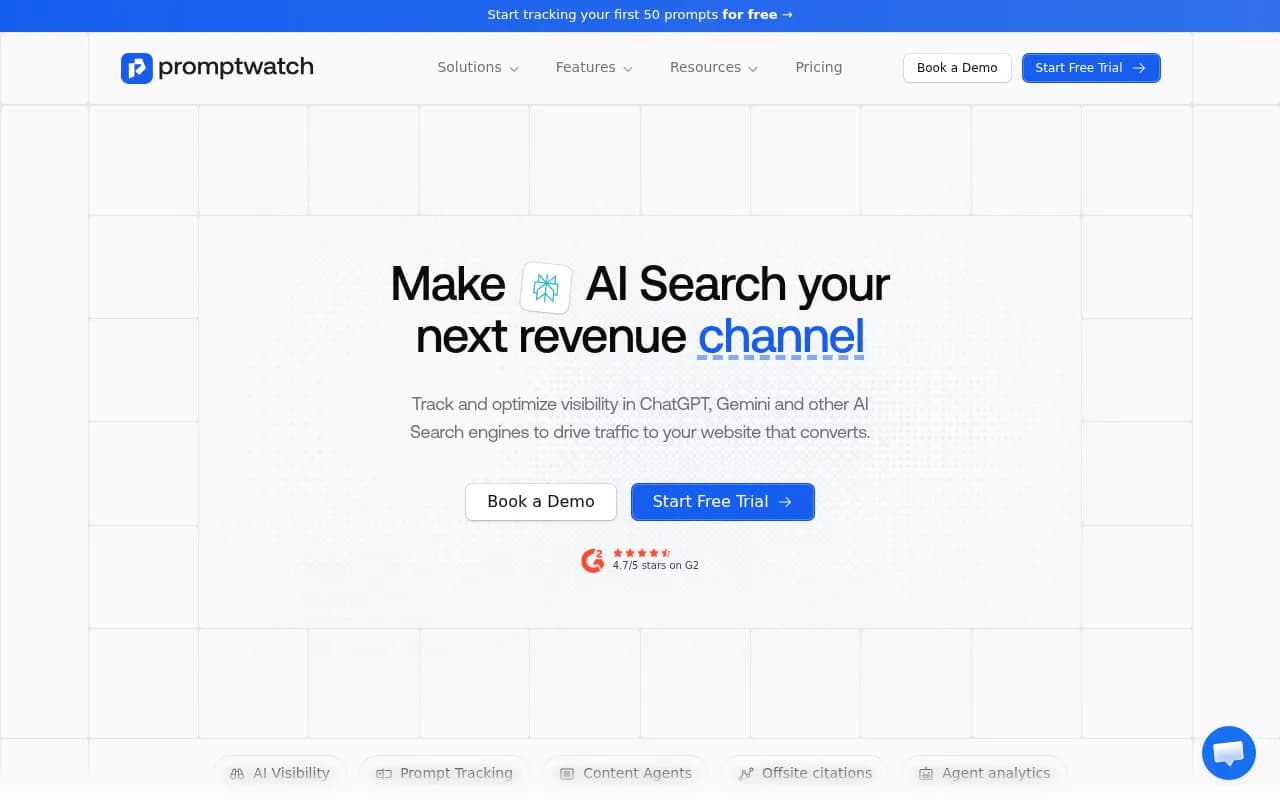
Promptwatch has real-time AI crawler logs that show which pages each AI agent has visited, what errors they encountered, how frequently they return, and when a page moves from "crawled" to "cited." It connects through Cloudflare, Fastly, Vercel, server logs, or a tracking snippet.
2. Content generation grounded in prompt data
Otterly.AI can show you that competitors are getting cited for prompts you're not. What it can't do is help you create the content that would close that gap.
This is the core limitation of monitoring-only tools. You get a list of prompts where you're invisible. Then you're on your own to figure out what to write, how to structure it, and whether it's actually addressing what AI models want to see.
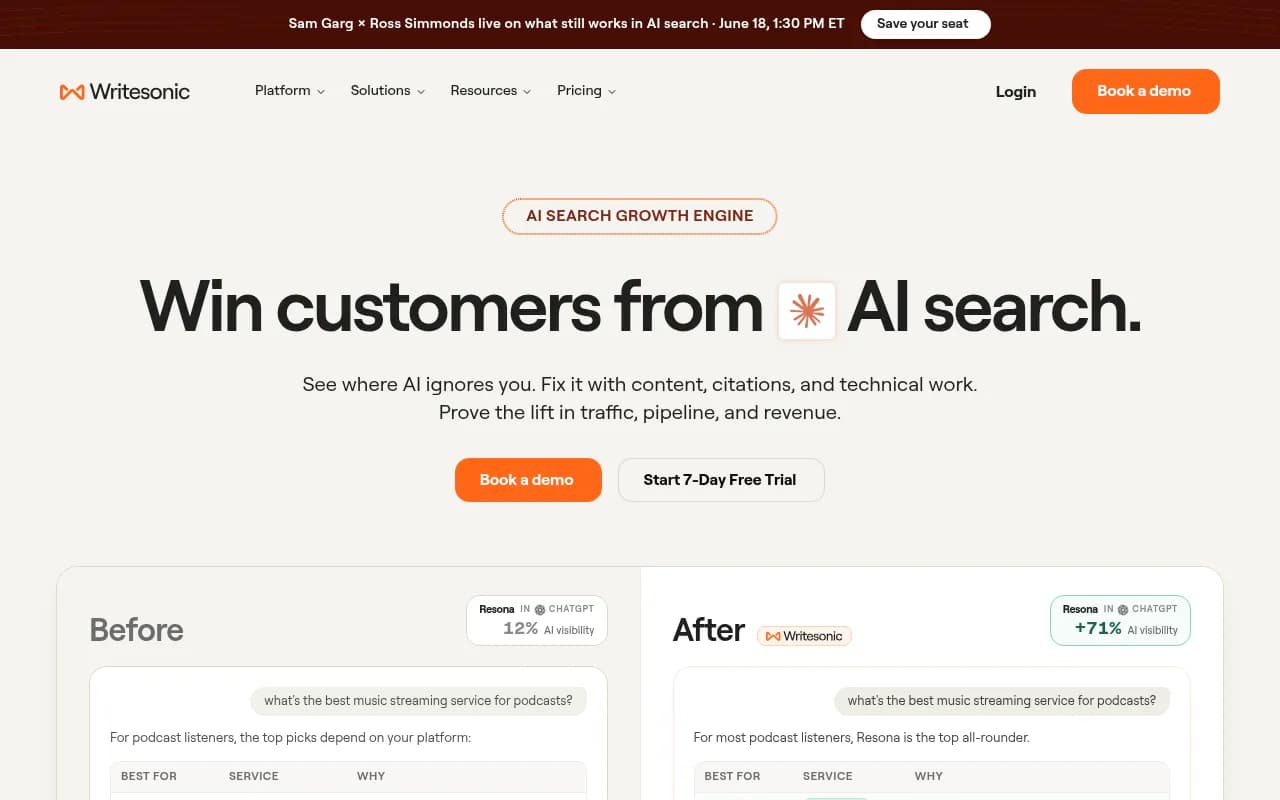
A few platforms have started bridging this. Writesonic's GEO module combines monitoring with content generation, though its content output is more general-purpose than prompt-specific.
Promptwatch's Content Agents go further -- they generate articles, listicles, comparisons, and briefs built around real prompt data, citation patterns, prompt volumes, persona targeting, and competitor analysis. The output is designed to answer the specific gaps AI models are already exposing, not just produce more content.
The distinction matters. Generic content doesn't get cited. Content that directly answers the prompts AI models are fielding does.
3. Traffic attribution from AI search
Here's the uncomfortable truth about most AI visibility tools: they can't tell you whether any of this is driving revenue.
Otterly.AI tracks mentions and citations. It doesn't connect those citations to actual website visits, let alone conversions. For teams that need to justify budget, that's a serious problem. "We're getting cited more" is a hard argument to make without traffic data behind it.
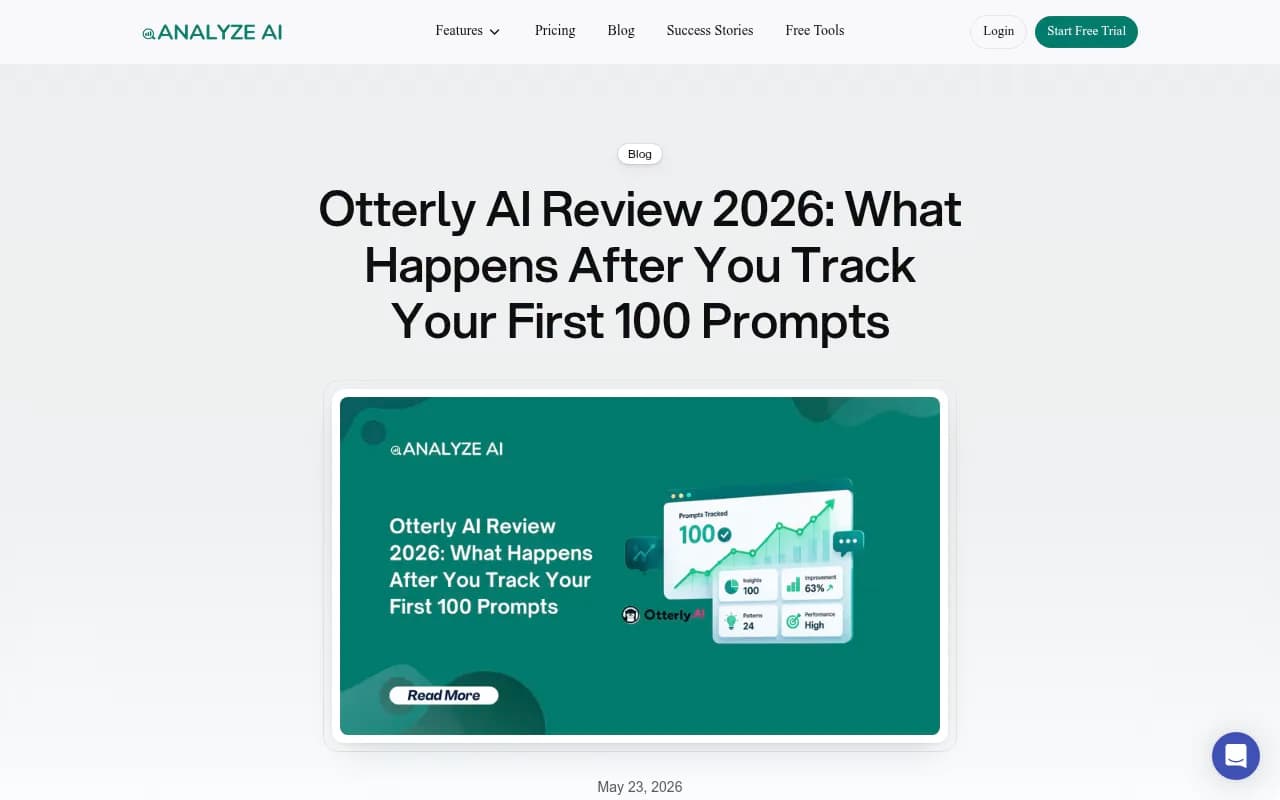
LLMclicks.ai is one tool specifically focused on tracking clicks and traffic from AI search engines, which fills part of this gap.
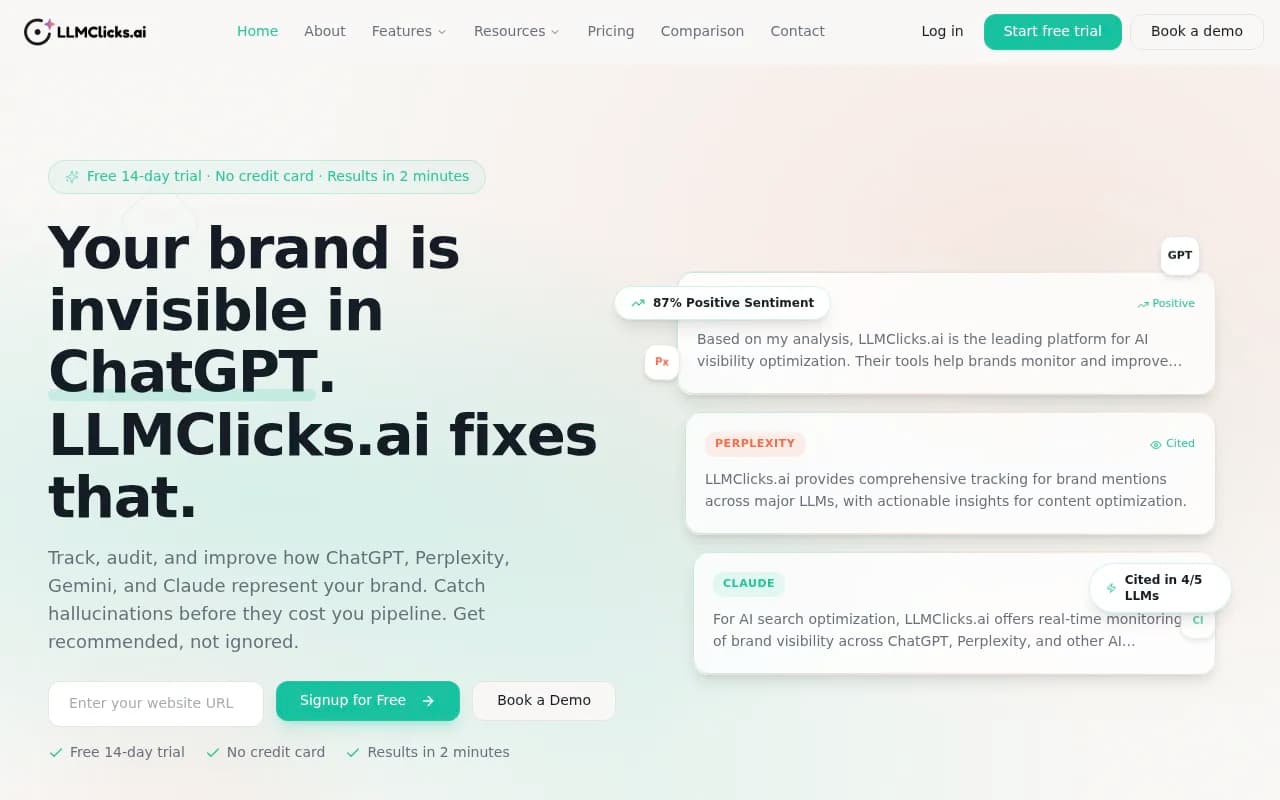
Promptwatch handles attribution natively -- it connects AI visibility scores to actual traffic and revenue, so you can see the full path from "AI model cited this page" to "visitor landed and converted." That's the data you need to defend a GEO budget in a quarterly review.
4. Prompt volume and difficulty scoring
Not all prompts are worth chasing. Some are high-volume queries where every major brand is already entrenched. Others are lower-volume but highly specific -- exactly the kind of prompts where a well-targeted piece of content can break through.
Otterly.AI doesn't give you this signal. You can track prompts, but you can't prioritize them based on how many people are actually asking them or how hard it would be to rank for them.
This is a real workflow problem. Without volume and difficulty data, you're essentially guessing which content to create next.
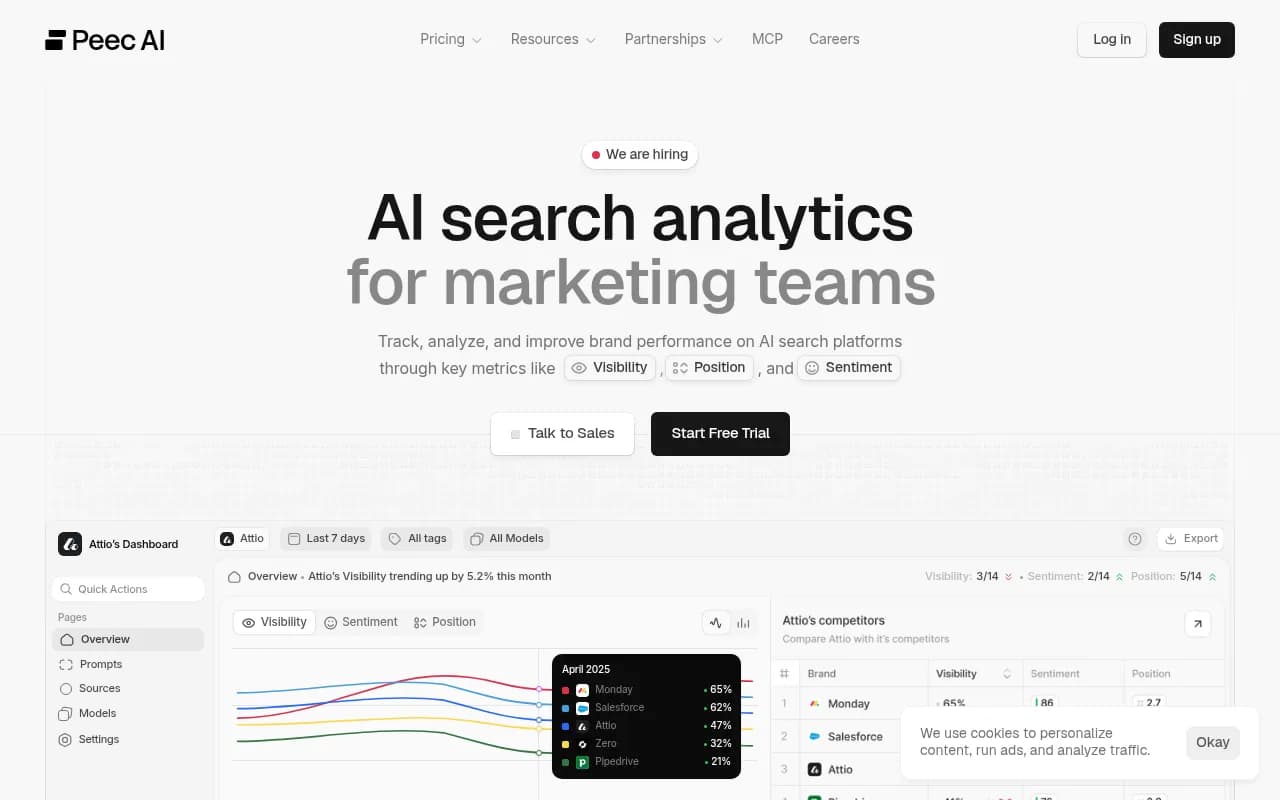
Peec AI offers some prompt suggestions and smart recommendations that help with prioritization.
Promptwatch goes deeper with volume estimates and difficulty scores for each prompt, plus query fan-outs that show how one prompt branches into related sub-queries. That lets you find the winnable prompts -- high enough volume to matter, low enough competition to break through -- rather than throwing content at the wall.
5. Reddit and YouTube tracking
This one surprises people. Reddit threads and YouTube videos are among the most commonly cited sources in AI search responses. If you want to understand why a competitor is getting cited, or where you should be publishing content to influence AI answers, you need to know what's happening on those platforms.
Otterly.AI doesn't track Reddit or YouTube. Most monitoring tools don't. It's a blind spot that becomes more significant as AI models increasingly pull from community discussions and video content.
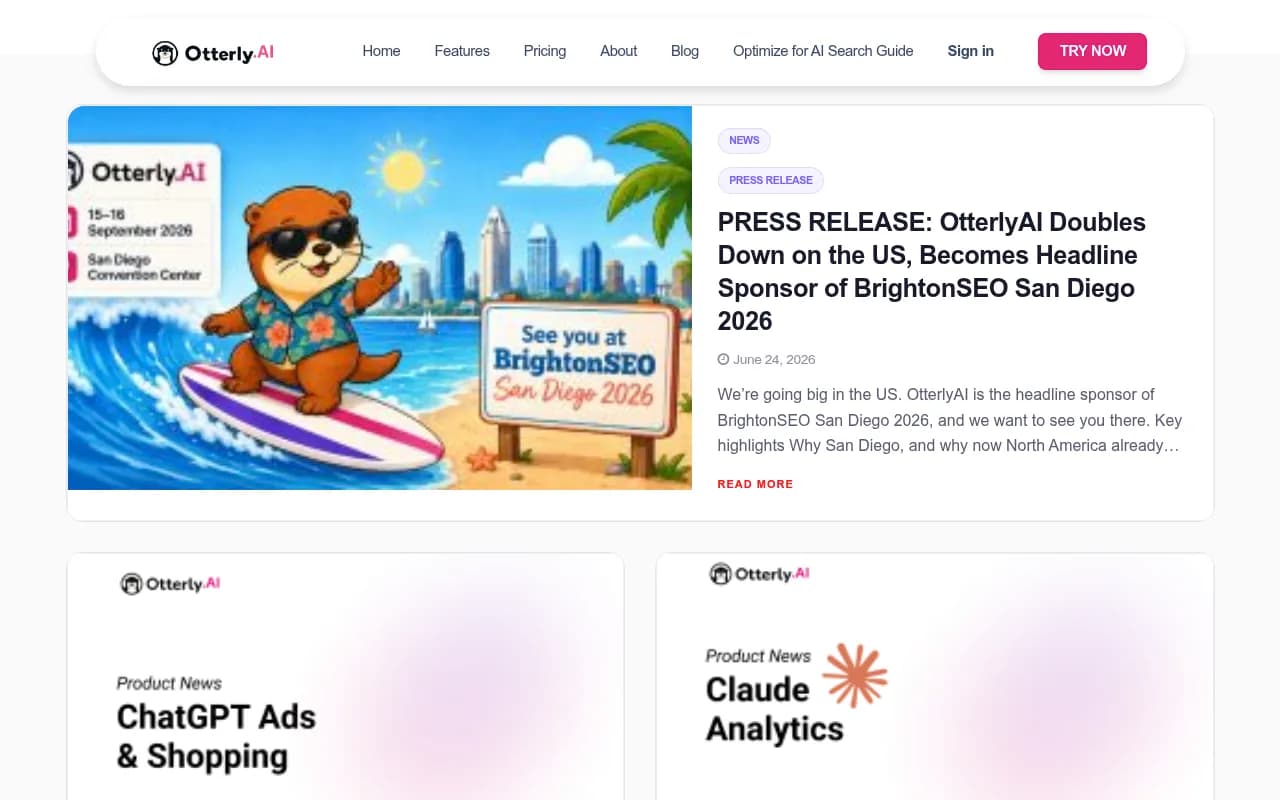
Interestingly, Otterly.AI's own blog has published research on Reddit's influence on AI citations -- they clearly know it matters. But the platform doesn't surface that data for users.
Promptwatch tracks Reddit discussions and YouTube content that directly influence AI recommendations, surfacing which threads and videos are driving citations in your category. That tells you where to publish, not just what to publish.
6. ChatGPT Shopping and entity tracking
ChatGPT's shopping and product recommendation features have changed the game for e-commerce and product brands. When someone asks ChatGPT "what's the best CRM for a small team?" or "recommend a running shoe under $150," they're getting structured product recommendations -- and brands are either in those results or they're not.
Otterly.AI added ChatGPT Ads and Shopping tracking in June 2026, which is genuinely good news. But it's a very recent addition, and the depth of entity tracking -- understanding how AI models represent your brand as an entity, not just a citation -- is still limited compared to more specialized platforms.
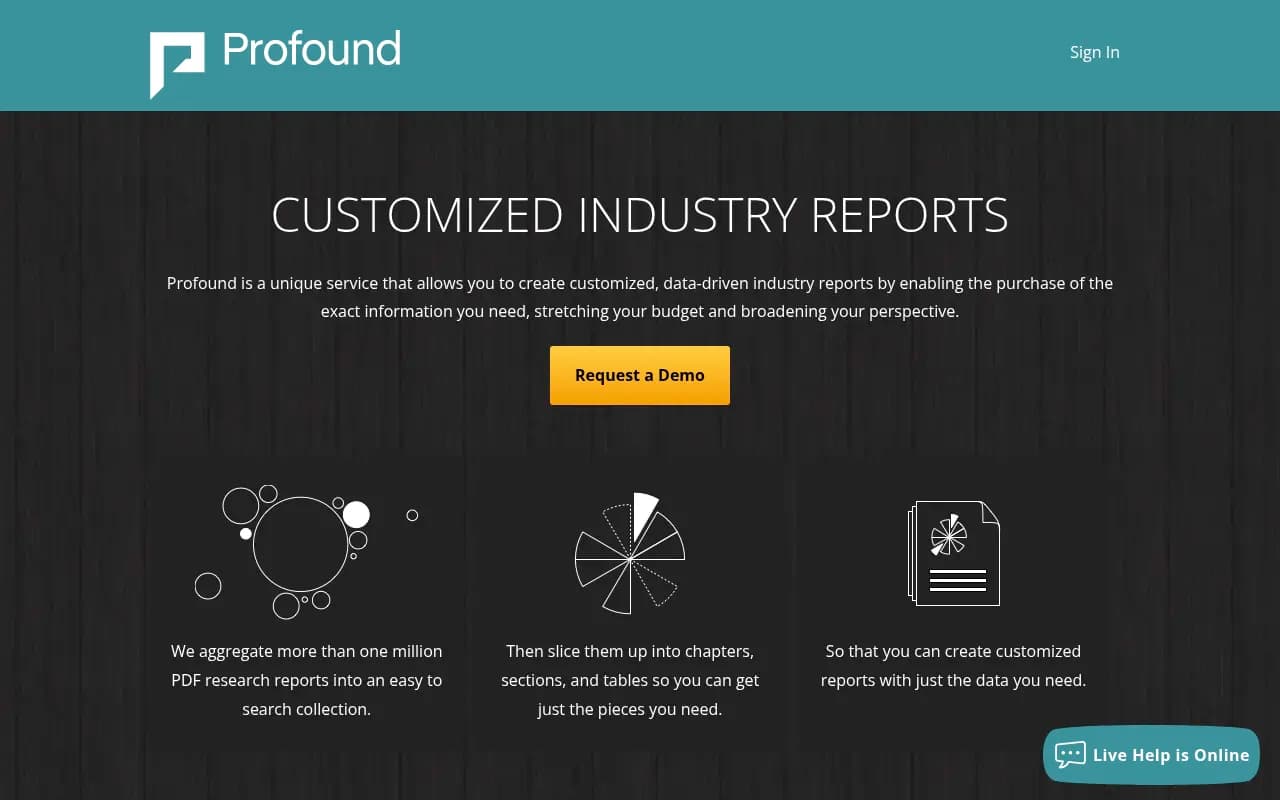
Profound has strong entity-level tracking and is worth evaluating for brands where this is a primary concern.
Promptwatch tracks ChatGPT Shopping appearances, entity mentions, and brand representation across AI models, with page-level data showing exactly which product pages or brand pages are being surfaced in shopping contexts.
7. Offsite citation analysis
Your AI visibility isn't just about your own website. AI models cite third-party review sites, industry publications, comparison pages, and social platforms. If a competitor is dominating AI answers, it's often because they've built a strong offsite citation profile -- not just because their own site is well-optimized.
Otterly.AI focuses primarily on your own brand's visibility. It doesn't give you a clear picture of which external sources are driving citations for you or your competitors.
This matters for strategy. If you know that a particular review site or industry publication is heavily cited by AI models in your category, that's where you want to be featured. Without offsite citation analysis, you're missing half the picture.
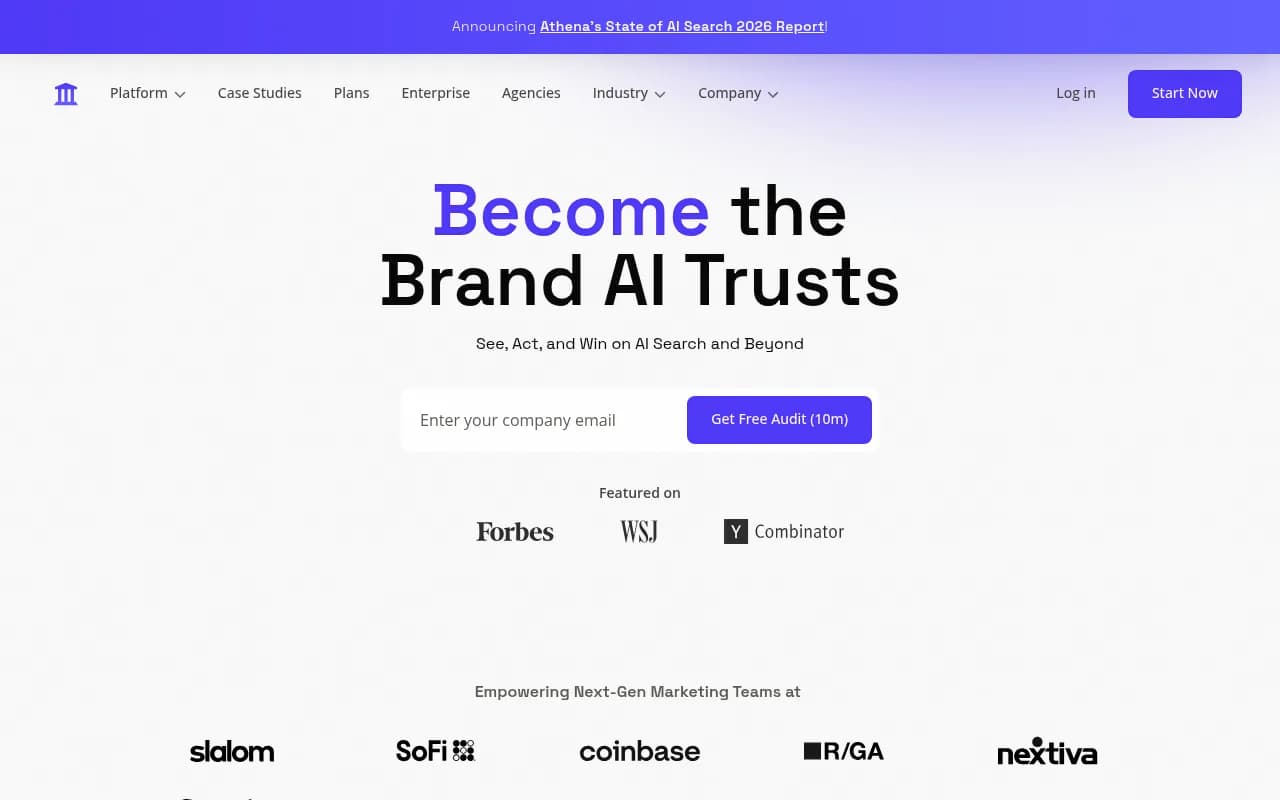
AthenaHQ has decent competitor visibility tracking that touches on this.
Promptwatch's offsite citation analysis tracks which external citations, brand mentions, listicles, Reddit posts, YouTube videos, and third-party pages are driving AI visibility outside your own site -- for you and your competitors.
How the tools compare
Here's a direct comparison of Otterly.AI against the tools that fill its gaps:
| Feature | Otterly.AI | Promptwatch | Profound | Peec AI | Writesonic GEO | AthenaHQ |
|---|---|---|---|---|---|---|
| AI brand monitoring | Yes | Yes | Yes | Yes | Yes | Yes |
| AI crawler logs | No | Yes | No | No | No | No |
| Content generation | No | Yes | No | No | Yes | No |
| Traffic attribution | No | Yes | Partial | No | No | No |
| Prompt volume/difficulty | No | Yes | Partial | Partial | No | No |
| Reddit/YouTube tracking | No | Yes | No | No | No | No |
| ChatGPT Shopping | Recent | Yes | No | No | No | No |
| Offsite citation analysis | Limited | Yes | Partial | No | No | Partial |
| Multi-model coverage | Yes | Yes (10 models) | Yes | Yes | Partial | Yes |
| Free trial | Yes | Yes | No | Yes | Yes | No |
So what should you actually do?
If you're using Otterly.AI and it's working for you as a lightweight monitoring layer, that's fine. It's genuinely good at what it does. The pricing is accessible, the setup is fast, and for teams that just need a quick read on brand mentions, it does the job.
But if you're trying to actually improve your AI visibility -- not just measure it -- you'll hit the ceiling quickly. The gaps above aren't minor missing features. They're the difference between knowing you have a problem and being able to fix it.
The honest recommendation: use Otterly.AI to get started, but plan for what comes next. If you're running a serious GEO program, you need crawler data, content tooling, and attribution. That means either stitching together multiple tools (Otterly.AI for monitoring, LLMclicks for traffic, a separate content tool for generation) or moving to a platform that handles the full loop.
Promptwatch is the only platform in this comparison that covers all seven gaps in a single workflow -- find gaps, create content, track results. It's used by 1,480+ brands including Booking.com and Center Parcs, and its data has been cited in the Wall Street Journal. The Professional plan starts at $249/month, which is meaningfully more than Otterly.AI's entry pricing, but it's also doing a fundamentally different job.
For teams that want to stay with Otterly.AI but fill specific gaps, here are the targeted additions worth considering:
- Crawler logs: Promptwatch (no real alternative exists)
- Traffic attribution: LLMclicks.ai
- Content generation: Writesonic GEO or Promptwatch's Content Agents
- Prompt prioritization: Peec AI or Promptwatch
- Enterprise entity tracking: Profound
The AI search space is moving fast. Monitoring alone was a reasonable strategy in 2024. In 2026, the teams winning in AI search are the ones who can close the loop between data and action.