Key takeaways
- Salesforce leads CRM AI search with 31.4% share of voice, HubSpot follows at 24.2%, and Zoho surprises at 21.0% -- the gap is smaller than most people expect.
- 94% of B2B software buyers now use generative AI during vendor selection, which means your CRM visibility in AI answers directly affects pipeline.
- Most AI visibility tools only monitor -- they show you where you're invisible but don't help you fix it. A smaller number of platforms actually help you create content that closes the gap.
- Native CRM integrations (HubSpot, Salesforce) are still rare in this category, but API access and webhook support let you connect most platforms to your existing stack.
- The right platform depends on your team size, whether you need content generation alongside monitoring, and how deeply you want to tie AI visibility data to revenue.
Why CRM teams should care about AI search visibility
Here's something that catches a lot of marketing and revenue teams off guard: your brand can rank on page one of Google and still be completely absent from ChatGPT, Perplexity, or Google AI Overviews when a buyer asks "what's the best CRM for a mid-market SaaS company?"
That gap matters more than it used to. Forrester research cited by AthenaHQ puts the number of B2B software buyers using generative AI during vendor selection at 94%. That's not a niche behavior -- it's the default. And when a buyer asks an AI which CRM to consider, the answer they get shapes their shortlist before they ever visit your website.
The CRM category itself is a useful illustration. AthenaHQ analyzed 233 AI responses across 2,100 sources and found Salesforce at 31.4% share of voice, HubSpot at 24.2%, and Zoho at 21.0%. Those numbers are surprisingly close given how different those companies' traditional market positions are. Zoho doesn't outspend Salesforce on marketing by any stretch, but it's nearly matching it in AI search visibility.
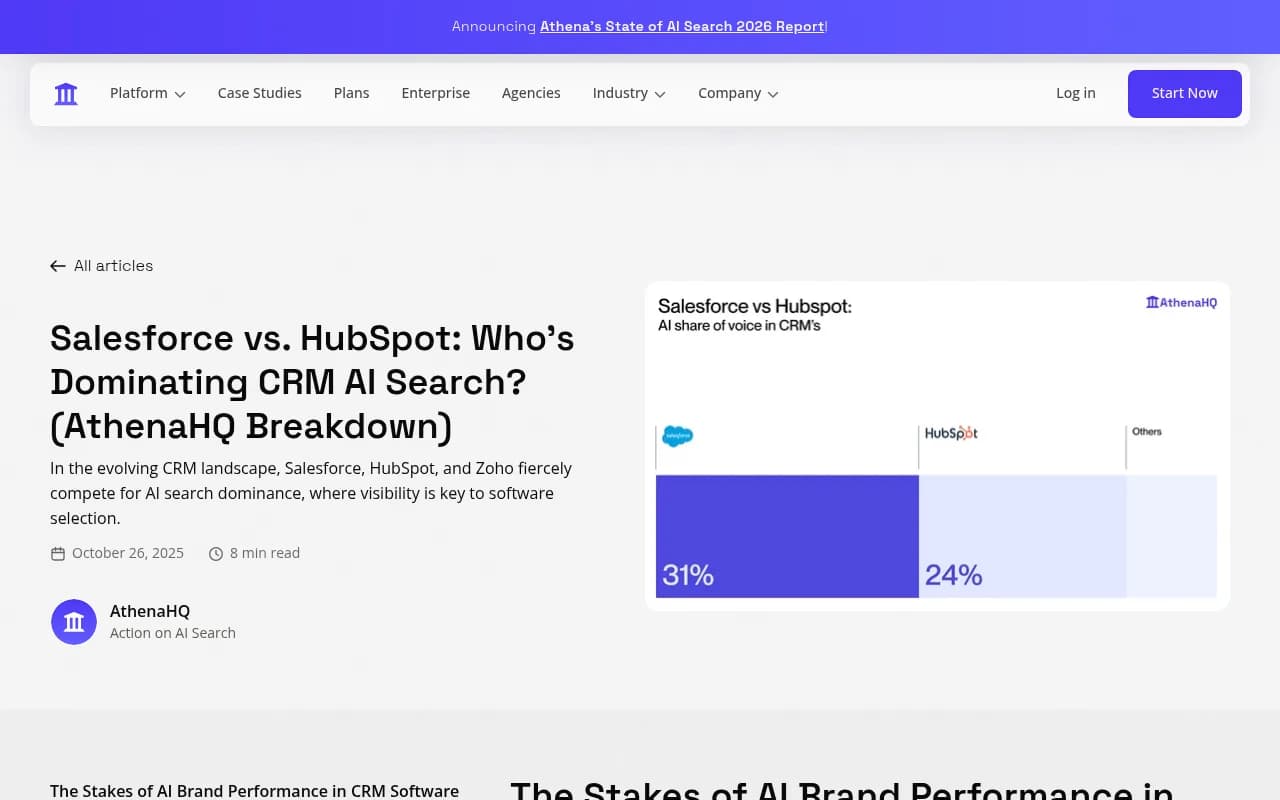
The lesson: AI visibility is not a direct function of brand size or ad spend. It's a function of content quality, citation authority, and how well your brand shows up in the discussions AI models draw from. That's something you can actually influence -- if you're tracking it.
What to look for in an AI visibility platform (especially if you use a CRM)
Before getting into specific tools, it's worth being clear about what "CRM integration" actually means in this context, because the term gets used loosely.
Most AI visibility platforms don't have a native HubSpot or Salesforce connector in the way that, say, your email tool does. What they typically offer instead:
- API access so your team can pull visibility data into your CRM's custom objects or dashboards
- Webhook support for triggering CRM workflows when visibility scores change
- CSV/Looker Studio exports that your ops team can ingest into Salesforce reports
- Native integrations with a small number of platforms (this is still rare but growing)
Beyond integration mechanics, the more important question is what you actually want to do with the data once it's in your CRM. A few common use cases:
- Tie AI visibility scores to account records so sales reps know which prospects are seeing your brand in AI answers
- Trigger nurture sequences when your brand drops from AI recommendations in a competitor's category
- Report AI-driven traffic and pipeline attribution alongside traditional channel data
- Flag content gaps to your content team via CRM tasks or Slack notifications
With that framing in mind, here's how the main platforms stack up.
The leading AI visibility platforms in 2026
Promptwatch
Promptwatch is one of the few platforms in this category that goes beyond monitoring into actual optimization. The core workflow is: find gaps in your AI visibility, generate content to close those gaps, then track whether the new content gets cited. That loop -- find, fix, track -- is what separates it from the majority of tools that stop at the dashboard.
For CRM-connected teams, Promptwatch offers a Looker Studio integration and API access, which means you can pipe visibility data into Salesforce or HubSpot custom dashboards without much friction. The AI Crawler Logs feature is particularly useful for ops teams: it shows you exactly which pages AI crawlers are reading, how often they return, and when a page moves from being crawled to being cited. That's the kind of data that helps you explain AI-driven pipeline to a revenue team.
It monitors 10 AI models including ChatGPT, Perplexity, Claude, Gemini, Google AI Overviews, Grok, DeepSeek, and Copilot. Pricing starts at $99/month.

AthenaHQ
AthenaHQ is a monitoring-focused platform with strong analytical depth. The CRM comparison data cited earlier in this guide came from AthenaHQ's tracking infrastructure, which gives you a sense of the granularity it can reach. It's good at competitive share-of-voice analysis and breaking down which AI models favor which brands.
The limitation is that AthenaHQ is primarily a monitoring tool. It will tell you that Salesforce is beating you at 31.4% vs your 18%, but it won't generate the content to close that gap. For teams that have a separate content operation and just need clean data, that's fine. For teams that want an all-in-one solution, it falls short.
Profound
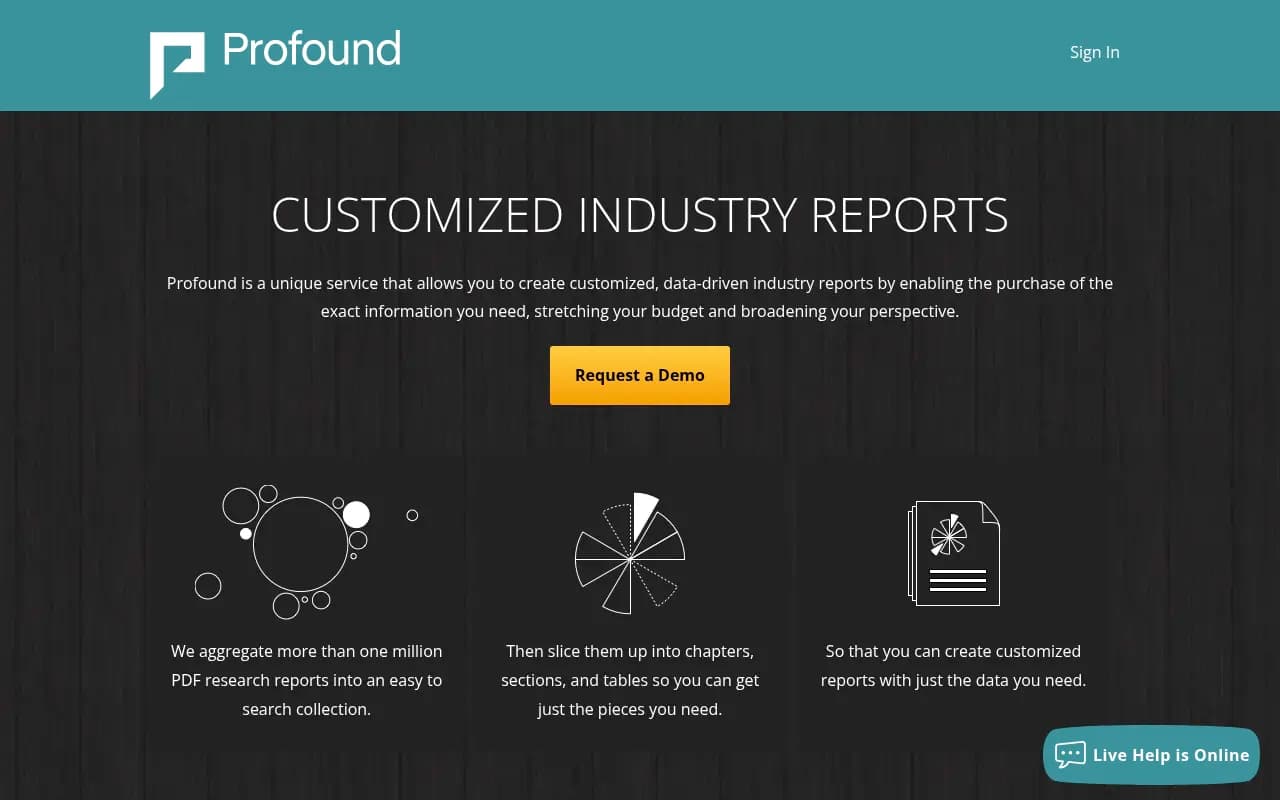
Profound is aimed squarely at enterprise teams with complex prompt research needs. It supports up to 10 AI models at the enterprise tier and has solid prompt volume and difficulty scoring. The $99/month entry price is accessible, but the features that matter most for large organizations are at higher tiers.
No native CRM integration, but API access is available. Worth evaluating if you're an enterprise team running structured prompt research programs.
Peec AI
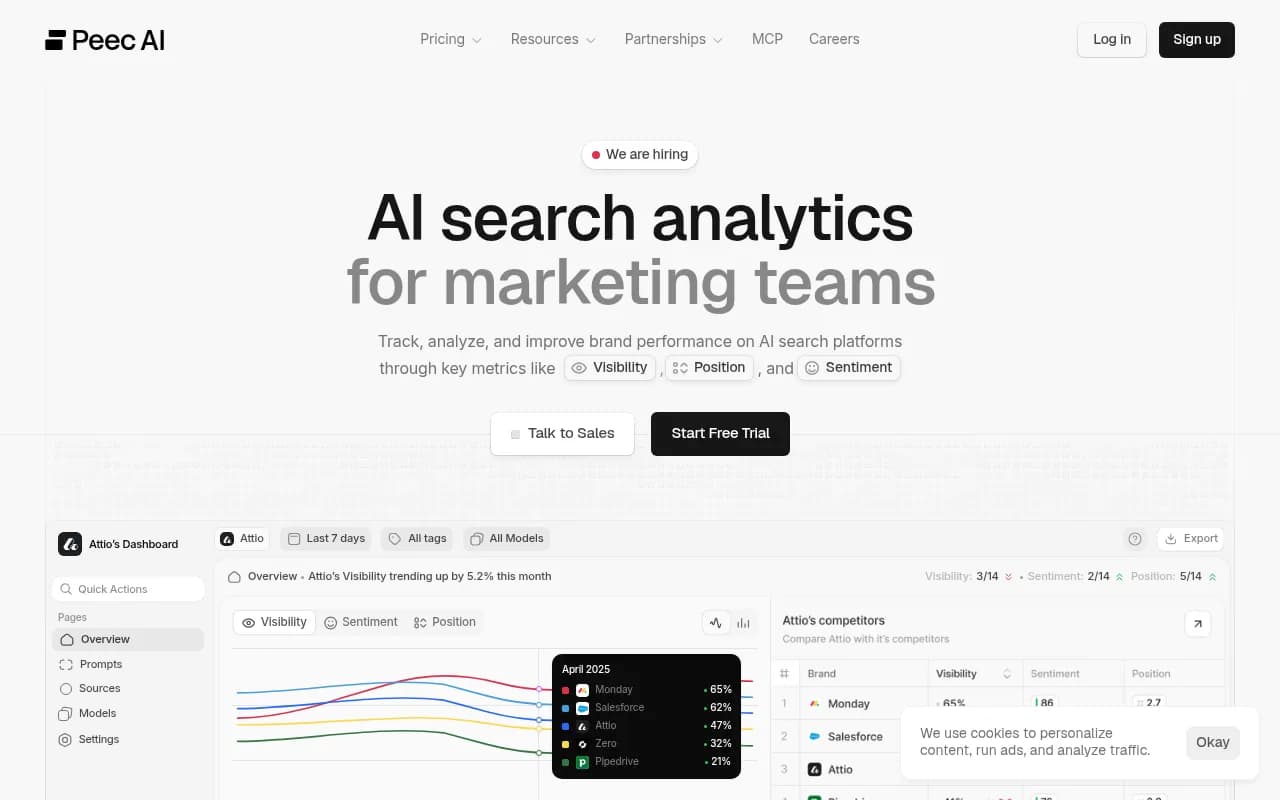
Peec AI offers flexible model selection -- you pick which LLMs you want to track rather than being locked into a fixed set. The €85/month starting price is reasonable, and the smart suggestion features help surface optimization opportunities without requiring you to dig through raw data manually.
API access is available for CRM connections. It's a solid mid-market option, particularly for teams that want control over which models they monitor.
Otterly.AI
Otterly.AI is the lowest-cost entry point in the category at $29/month. It covers four AI models at the base tier and is genuinely useful for small teams or agencies that want basic brand monitoring without a large budget commitment.
The tradeoff is feature depth. No content generation, limited competitive analysis, and no crawler logs. If you're just getting started and want to see whether your brand appears in AI answers, it's a reasonable first step. Scaling up from here will eventually require switching platforms.
KIME
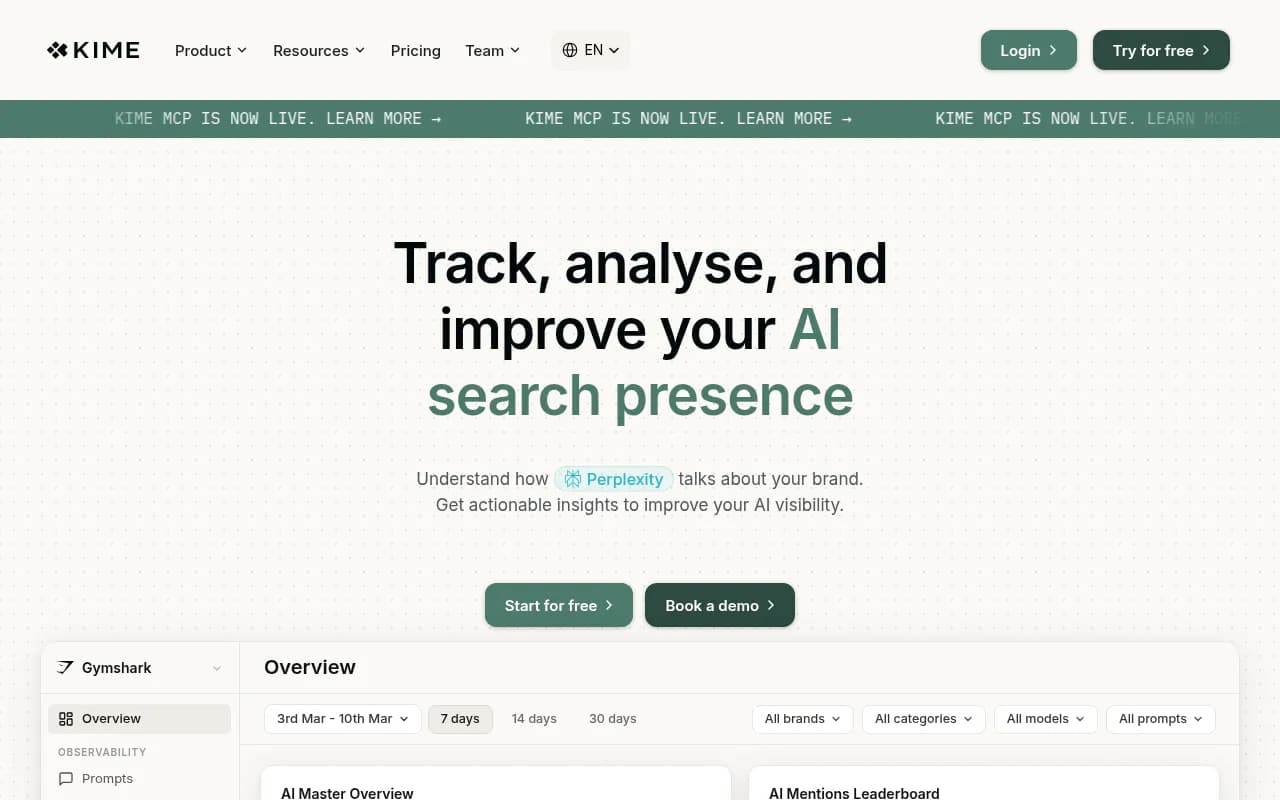
KIME tracks up to 10 AI models and includes an "Action Centre" for optimization suggestions. At €149/month for the entry tier with multi-seat access, it's positioned as an end-to-end platform rather than a pure monitoring tool.
The multi-brand and multi-country support makes it worth considering for agencies or companies with multiple product lines. CRM integration is via API.
Semrush AI Visibility Toolkit
If your team already uses Semrush, the AI Visibility Toolkit is the path of least resistance. It covers five AI models and slots into the existing Semrush workflow. The limitation is that prompts are fixed rather than customizable, which matters if your brand operates in a niche where the default prompt set doesn't capture how buyers actually search.
No native CRM integration, but Semrush's broader ecosystem has some Salesforce connectors through third-party tools.
Nightwatch
Nightwatch started as a rank tracker and added AI search monitoring as an extension. At $32/month plus a $99 AI add-on, it's a reasonable option for teams that want traditional SEO and AI visibility in a single tool. Covers four AI models.
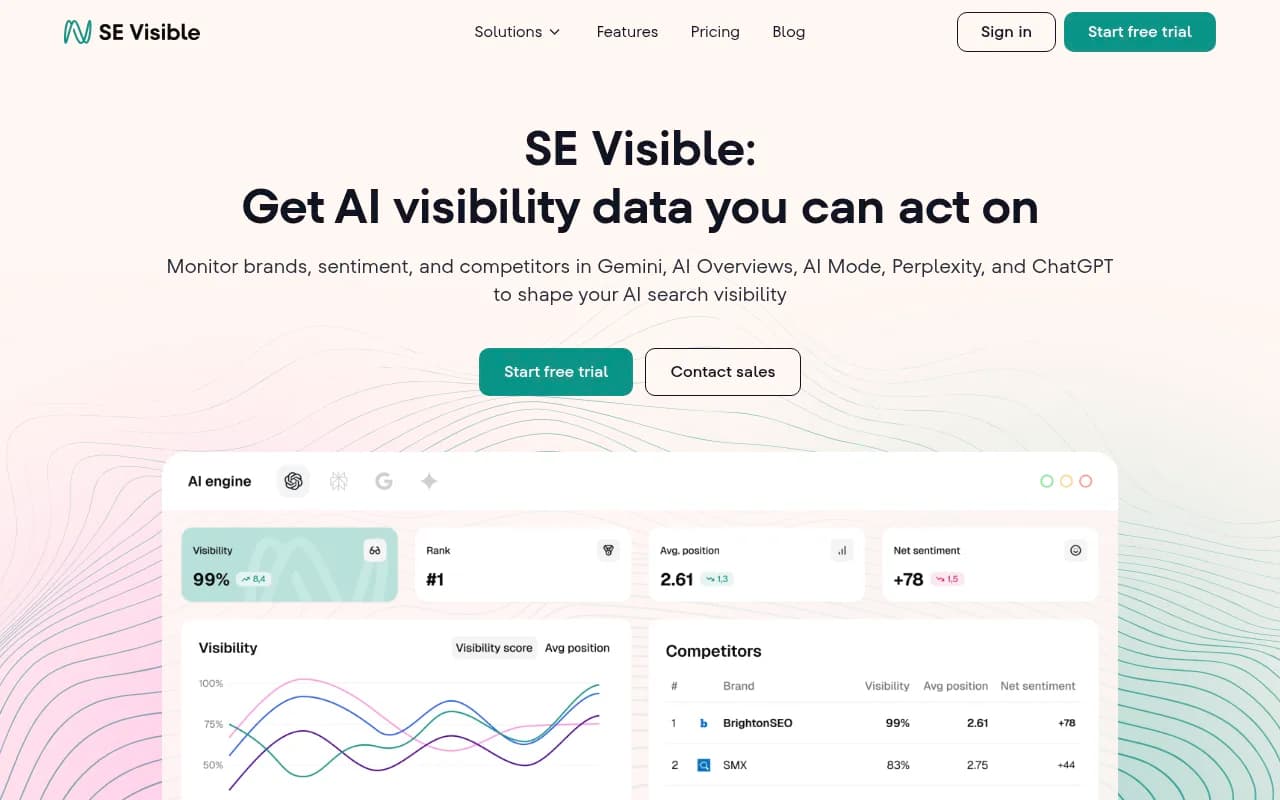
SE Ranking Visible
SE Ranking's AI visibility product covers five models and is designed for multi-brand, multi-country use cases. The $99/month price point is competitive for what it offers.
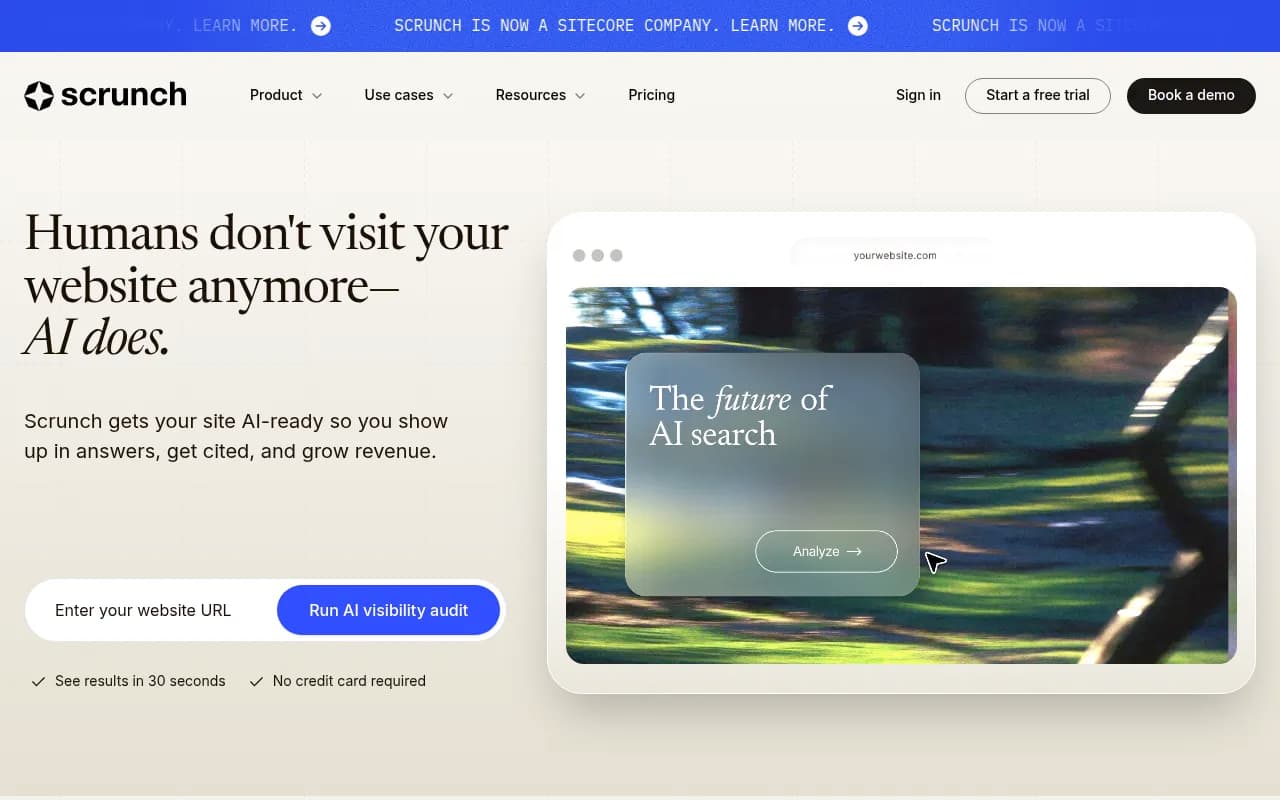
Scrunch AI
Scrunch AI is built for brands and agencies that need clean monitoring dashboards with competitive context. It's a solid monitoring tool with good visualization, though like most competitors it stops short of content generation.
Platform comparison table
| Platform | AI models tracked | Content generation | CRM integration | Starting price | Best for |
|---|---|---|---|---|---|
| Promptwatch | 10 | Yes (Content Agents) | API + Looker Studio | $99/mo | Full-cycle optimization + revenue attribution |
| AthenaHQ | Multiple | No | API | Custom | Competitive share-of-voice analysis |
| Profound | Up to 10 | No | API | $99/mo | Enterprise prompt research |
| Peec AI | Up to 10 | No | API | €85/mo | Flexible model selection |
| KIME | 10 | Partial (Action Centre) | API | €149/mo | Multi-brand, multi-country |
| Otterly.AI | 4 (base) | No | No | $29/mo | Budget entry-level monitoring |
| Semrush AI Toolkit | 5 | No | Third-party | Bundled | Existing Semrush users |
| Nightwatch | 4 | No | No | $32/mo + $99 add-on | SEO + AI in one tool |
| SE Ranking Visible | 5 | No | API | $99/mo | Multi-brand agencies |
| Scrunch AI | Multiple | No | API | Custom | Agency monitoring dashboards |
How to actually connect AI visibility data to your CRM
The integration question is worth spending a moment on, because "API available" doesn't mean "easy to set up."
For HubSpot users
HubSpot's custom objects and workflow engine make it reasonably straightforward to build an AI visibility data layer. The general approach:
- Use your AI visibility platform's API to pull share-of-voice, citation rate, and prompt-level data on a scheduled basis (daily or weekly).
- Push that data into HubSpot custom properties on your company records -- for example, a "AI visibility score" property that updates automatically.
- Build HubSpot workflows that trigger based on score changes. A drop below a threshold could notify your content team; an increase could trigger a sales sequence for accounts in that category.
- Add AI visibility metrics to your HubSpot dashboards alongside traditional channel data.
Platforms with Looker Studio integration (like Promptwatch) make step four easier because you can build a unified dashboard that pulls from both HubSpot and your AI visibility tool without custom engineering.
For Salesforce users
Salesforce's flexibility is both an advantage and a complexity. The most common approach:
- Create custom fields or objects in Salesforce to store AI visibility data (share of voice, citation count, model-specific scores).
- Use a middleware tool like Zapier, Make, or a custom integration to sync data from your AI visibility platform's API into those Salesforce fields.
- Build Salesforce reports and dashboards that surface AI visibility alongside pipeline data -- this is where the real value emerges, because you can start to see correlations between visibility and deal velocity.
- Use Flow Builder to trigger internal alerts or tasks when visibility scores change significantly.
The teams getting the most value from this setup are ones where sales and marketing share a common definition of "AI visibility" and have agreed on which prompts matter most for their category. Without that alignment, the data sits in Salesforce but nobody acts on it.
For other CRMs (Zoho, Pipedrive, etc.)
Most AI visibility platforms don't have native connectors for Zoho or Pipedrive, but the API-plus-middleware approach works the same way. Zoho in particular is interesting because, as the AthenaHQ data shows, it punches well above its weight in AI search visibility -- so if you're a Zoho shop, there's a reasonable argument that your CRM vendor is doing something right in this space that you could learn from.
What HubSpot's own AI visibility success can teach you
It's worth pausing on the HubSpot example, because it's instructive beyond just being a CRM benchmark.
According to Semrush's 2025 AI Visibility Index, HubSpot outperforms larger competitors like Salesforce and Adobe in AI-generated answers despite having a smaller overall market footprint. The reason comes down to two things: discovery (being mentioned in review sites, forums, and community discussions) and authority (having structured, factual content that AI models can draw from directly).

HubSpot's content strategy is built around answering specific questions thoroughly -- the kind of questions buyers ask AI models. That's not an accident. It's a deliberate choice to invest in content that serves AI answer engines, not just Google's ten blue links.
The practical takeaway: if you're evaluating AI visibility platforms, look for ones that help you replicate this approach. Monitoring tells you where you're losing. Content generation tools help you win. The platforms that do both -- track the gap and help you close it -- are the ones worth paying for.
Which platform should you choose?
The honest answer depends on what your team actually needs.
If you want monitoring only and have a tight budget, Otterly.AI or Peec AI get you started without a large commitment. If you're an enterprise team running structured prompt research programs, Profound is worth a serious look. If you already live in Semrush, the AI Visibility Toolkit is the path of least resistance.
But if you want to move from "we can see we're invisible" to "we've created content that's getting cited and we can tie it to pipeline," the platforms that support that full cycle are a much shorter list. Promptwatch is the clearest example of a platform built around that action loop rather than just the monitoring dashboard.
The CRM integration question is secondary to this. Any platform with API access can be connected to HubSpot or Salesforce with some engineering effort. The harder question is whether the data you're pulling is actionable -- and whether the platform helps you act on it or just shows you the problem.
AI search visibility is now a real channel for B2B pipeline. The brands that figure out how to track it, optimize for it, and connect it to revenue data in their CRM will have a meaningful advantage over the ones still treating it as a novelty.