Key takeaways
- BrightEdge and Conductor are legacy enterprise SEO suites that have added AI visibility features -- useful if you're already embedded in their ecosystems, but neither was built for AI search from the ground up.
- Omnia is a dedicated AI visibility tracker focused on prompt monitoring and citation analysis, but sits closer to the monitoring-only camp than a full optimization platform.
- Promptwatch is the only platform in this comparison that closes the loop from gap discovery to content creation to citation tracking -- making it the strongest choice for teams that want to actually improve their AI search presence, not just measure it.
- Price and complexity vary significantly: BrightEdge and Conductor are enterprise-contract tools, while Promptwatch starts at $99/mo with a free trial.
- If you're choosing a single platform to own AI search in 2026, the deciding factor is whether you need a monitoring dashboard or an optimization engine.
The way enterprise marketing teams think about search has changed faster in the last 18 months than in the previous decade. AI-generated answers from ChatGPT, Perplexity, Google AI Overviews, and Gemini now intercept buyer intent before a click ever happens. Your brand either appears in those answers or it doesn't -- and traditional rank tracking tells you nothing about which.
So teams are asking a reasonable question: does my current platform handle this? And if not, what does?
This guide compares four platforms that come up most often in that conversation: BrightEdge, Conductor, Omnia, and Promptwatch. They're not all playing the same game, which is exactly why a direct comparison is useful.
What we're actually comparing
These four tools represent different philosophies about what "enterprise marketing software" should do in 2026.
BrightEdge and Conductor are traditional enterprise SEO platforms that have bolted on AI visibility features. They have large customer bases, deep integrations, and years of data -- but their core architecture was designed for a world of keyword rankings and organic traffic, not AI citations.
Omnia is a newer, dedicated AI visibility platform. It focuses specifically on how brands appear in AI-generated answers, with prompt tracking and citation analysis at its core.
Promptwatch sits in a different category entirely. It tracks AI visibility across 10+ models, but the platform is built around what happens after you see the data -- finding content gaps, generating content to fill them, and then tracking whether that content gets cited. It's the difference between a dashboard and a workflow.
BrightEdge: enterprise SEO with AI features added on
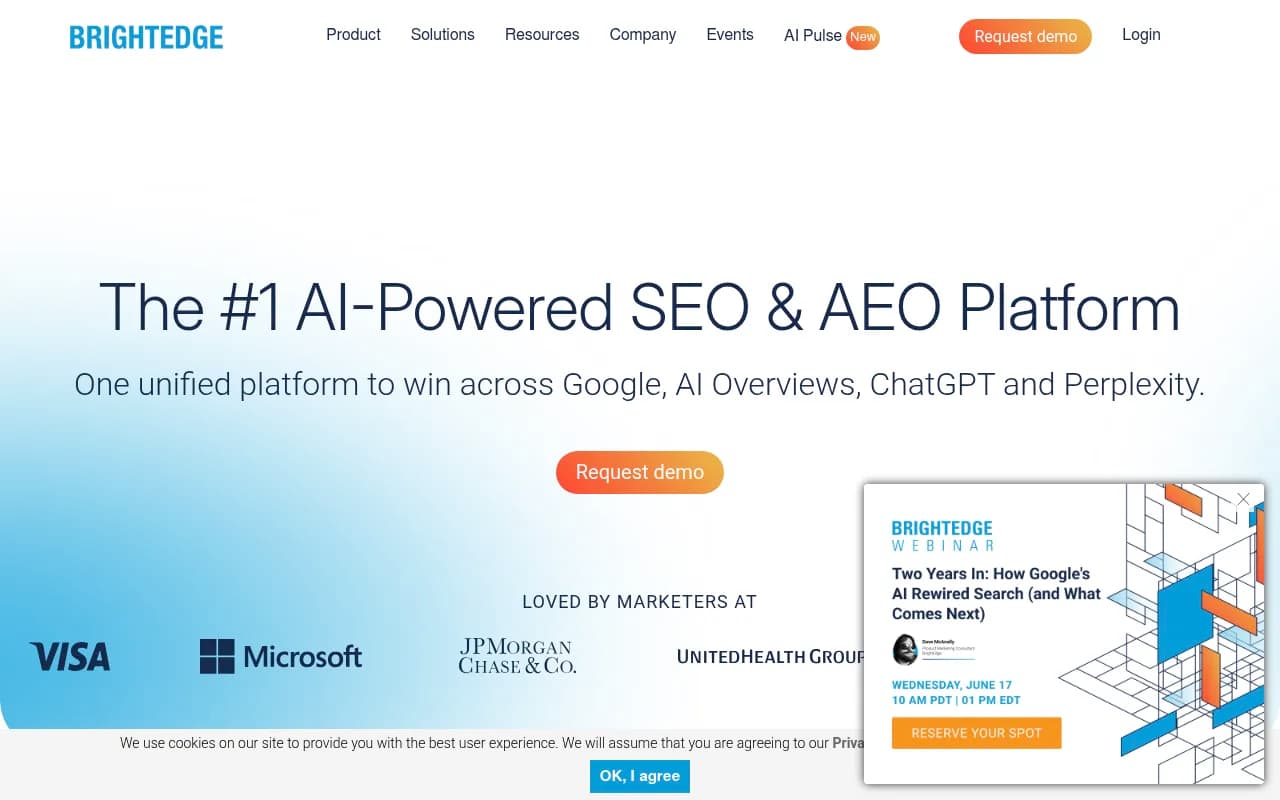
BrightEdge has been the dominant name in enterprise SEO for years. Its Data Cube is genuinely impressive -- billions of data points, deep keyword research, content recommendations, and integrations that large marketing teams rely on. For traditional SEO, it's a serious platform.
The AI visibility story is more complicated. BrightEdge has added monitoring for AI-generated answers, and it covers major platforms including Google AI Overviews. But the feature set reflects where the product came from: it's monitoring layered onto an SEO foundation, not a purpose-built AI search tool.
A few things stand out as limitations when you're specifically trying to win in AI search:
The prompt tracking is tied to a fixed set of queries. You can't easily model how real users are prompting AI engines, which matters because AI search behavior is messier and more conversational than keyword search. Prompt volume data and difficulty scoring -- the kind of intelligence that helps you prioritize which gaps to close first -- aren't part of the picture.
There's also no content generation tied to the AI visibility data. BrightEdge will tell you where you're not appearing; it won't help you write the content that would change that. For teams already using BrightEdge for traditional SEO, the AI features are a reasonable add-on. For teams building an AI search strategy from scratch, it's probably not where you'd start.
Pricing is enterprise-contract only, which means custom quotes, annual commitments, and a sales process before you can evaluate anything properly.
Conductor: organic marketing platform with AI search insights
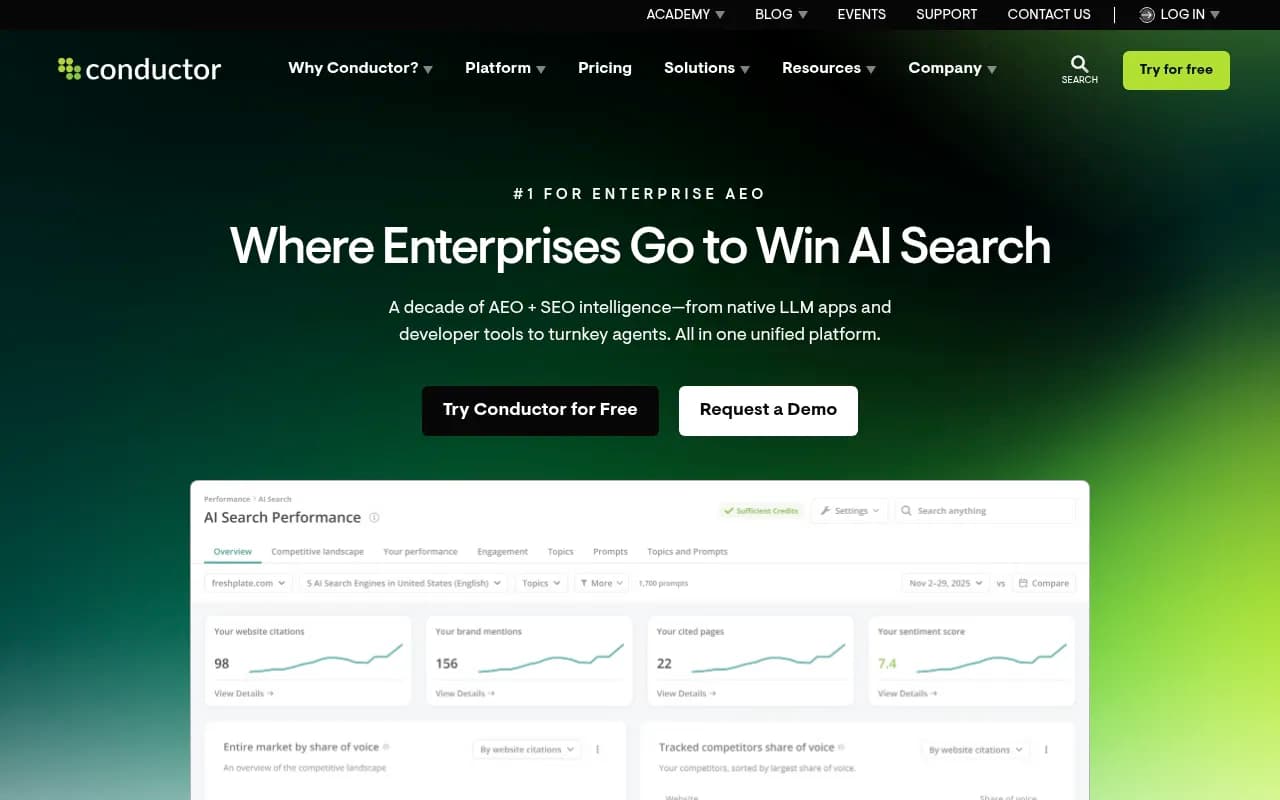
Conductor takes a slightly different angle. It positions itself as an "organic marketing platform" rather than a pure SEO tool, which means it has stronger content workflow features than BrightEdge. Teams can manage content briefs, track performance, and collaborate across marketing and SEO in one place.
On AI visibility, Conductor has added tracking for AI-generated answers, and it integrates reasonably well with the broader content workflow. If your team is already using Conductor to manage content production, having some AI visibility data in the same interface is genuinely useful.
But the same structural limitation applies: Conductor's AI features are additions to a platform built for traditional search. The depth of AI-specific analytics -- model-by-model breakdowns, citation source analysis, crawler log data showing how AI bots are actually reading your site -- isn't there in the way a dedicated platform would offer it.
Conductor also sits at the enterprise price point, with custom contracts and a setup process that takes time. It's a strong platform for large teams managing high content volume, but if AI search visibility is your primary concern rather than a secondary metric, you're working around the tool's core design.
Omnia: dedicated AI visibility tracking
Omnia is one of the cleaner dedicated AI visibility platforms in the market. It focuses specifically on prompt monitoring, citation tracking, and share-of-voice analysis across AI engines -- which means it doesn't carry the legacy weight of a traditional SEO suite.
The core workflow is straightforward: you set up prompts relevant to your category, Omnia queries AI models on a regular cadence, and you see where your brand appears (and where competitors appear instead). Citation analysis shows which sources AI models are pulling from, which helps explain why competitors are getting recommended.
Where Omnia runs into the same wall as most monitoring tools is the action layer. The platform is good at showing you the data. It's less equipped to help you do something about it. There's no content generation tied to the gap analysis, no AI crawler logs showing how models are reading your site, and no page-level tracking connecting specific content to specific citations.
For teams that want clean, focused AI visibility monitoring and are comfortable doing the content work separately, Omnia is a solid option. For teams that want a single platform to find gaps, create content, and track results, it's half the picture.
Promptwatch: the full optimization loop
Promptwatch is the platform in this comparison that was built specifically for AI search from the start -- and it shows in how the product is structured.
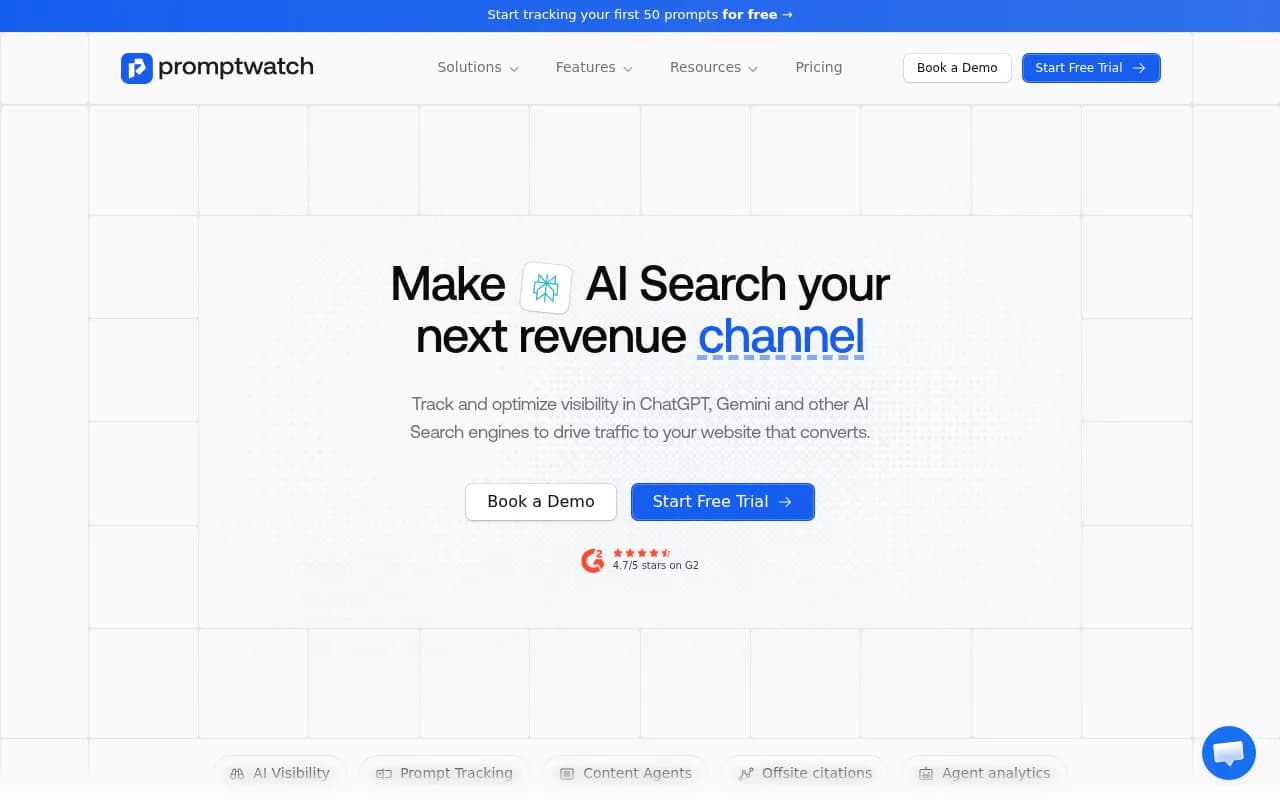
The core difference isn't the monitoring (though it covers 10 AI models including ChatGPT, Perplexity, Google AI Overviews, Google AI Mode, Claude, Gemini, Grok, DeepSeek, Copilot, and Mistral). The difference is what happens after you see where you're invisible.
Finding the gaps
Promptwatch's Answer Gap Analysis shows exactly which prompts competitors are appearing for that you're not. Not just "you're missing from these results" -- but the specific topics, angles, and questions AI models want to answer but can't find on your site. Prompt volume estimates and difficulty scores help you prioritize which gaps are worth closing first, rather than guessing.
Creating content that gets cited
Content Agents generate articles, listicles, comparisons, and briefs grounded in actual prompt data, citation patterns, competitor analysis, and brand guidance. This isn't generic content -- it's built around the specific gaps the data identified. The output is engineered to answer what AI models are already looking for.
Tracking what changes
Page-level tracking shows which specific pages are being cited, by which models, and how often. AI Crawler Logs give you real-time data on when ChatGPT, Claude, Perplexity, and others are crawling your site -- which pages they're reading, errors they're hitting, and how often they return. Agent analytics shows the timeline from publish to crawl to citation, so you can see the loop closing.
This cycle -- find gaps, generate content, track results -- is what separates Promptwatch from the other three platforms in this comparison. BrightEdge and Conductor show you traditional SEO data with AI features added. Omnia shows you AI visibility data. Promptwatch shows you AI visibility data and then helps you change it.
Additional capabilities that matter for enterprise teams: offsite citation analysis (tracking Reddit threads, YouTube videos, and third-party pages that drive AI visibility), ChatGPT Shopping tracking, multi-language and multi-region monitoring, competitor heatmaps, and integrations with Cloudflare, Fastly, Vercel, Google Search Console, and Looker Studio.
Promptwatch is used by 1,480+ brands and agencies including Booking.com, Center Parcs, and Everflow. Pricing starts at $99/mo (Essential), $249/mo (Professional), and $579/mo (Business), with a free trial available. That's a meaningful contrast with BrightEdge and Conductor's enterprise-contract model.
Side-by-side comparison
| Feature | BrightEdge | Conductor | Omnia | Promptwatch |
|---|---|---|---|---|
| Built for AI search | No (added on) | No (added on) | Yes | Yes |
| AI models tracked | Partial | Partial | Multiple | 10+ (ChatGPT, Perplexity, Gemini, Claude, Grok, DeepSeek, Copilot, Mistral, Meta AI, Google AI Overviews) |
| Prompt volume & difficulty | No | No | Limited | Yes |
| Answer gap analysis | No | No | Partial | Yes |
| AI content generation | No | No | No | Yes (Content Agents) |
| AI crawler logs | No | No | No | Yes |
| Page-level citation tracking | No | Limited | No | Yes |
| Offsite citation analysis | No | No | No | Yes |
| Reddit & YouTube tracking | No | No | No | Yes |
| ChatGPT Shopping tracking | No | No | No | Yes |
| Multi-language/region | Yes | Yes | Limited | Yes |
| Pricing model | Enterprise contract | Enterprise contract | Custom | From $99/mo, free trial |
| Best for | Enterprise SEO teams already on BrightEdge | Content-heavy enterprise teams | Monitoring-focused AI visibility | Teams that want to improve AI visibility, not just track it |
How to choose
The honest answer is that the right choice depends on what problem you're actually trying to solve.
If you're a large enterprise already deeply embedded in BrightEdge or Conductor for traditional SEO, the path of least resistance is using their AI features as a supplementary signal. You're not going to rip out an enterprise platform for AI visibility alone. But you should be clear-eyed that you're getting monitoring, not optimization.
If you're building an AI search strategy and want a dedicated tool for it, Omnia is a reasonable starting point for monitoring-focused teams. It's cleaner and more purpose-built than the legacy suites for this specific use case.
If you want to actually move the needle -- to find where you're invisible, create content that changes that, and track the results -- Promptwatch is the only platform in this comparison that does all three. The pricing is also accessible enough that you don't need an enterprise procurement cycle to get started.
One practical approach for larger teams: run Promptwatch alongside an existing enterprise SEO platform rather than replacing it. The AI visibility data and content workflows are complementary to traditional SEO, not competitive with it.
Other tools worth knowing
The market for AI visibility tools has expanded quickly. A few others worth considering depending on your specific needs:
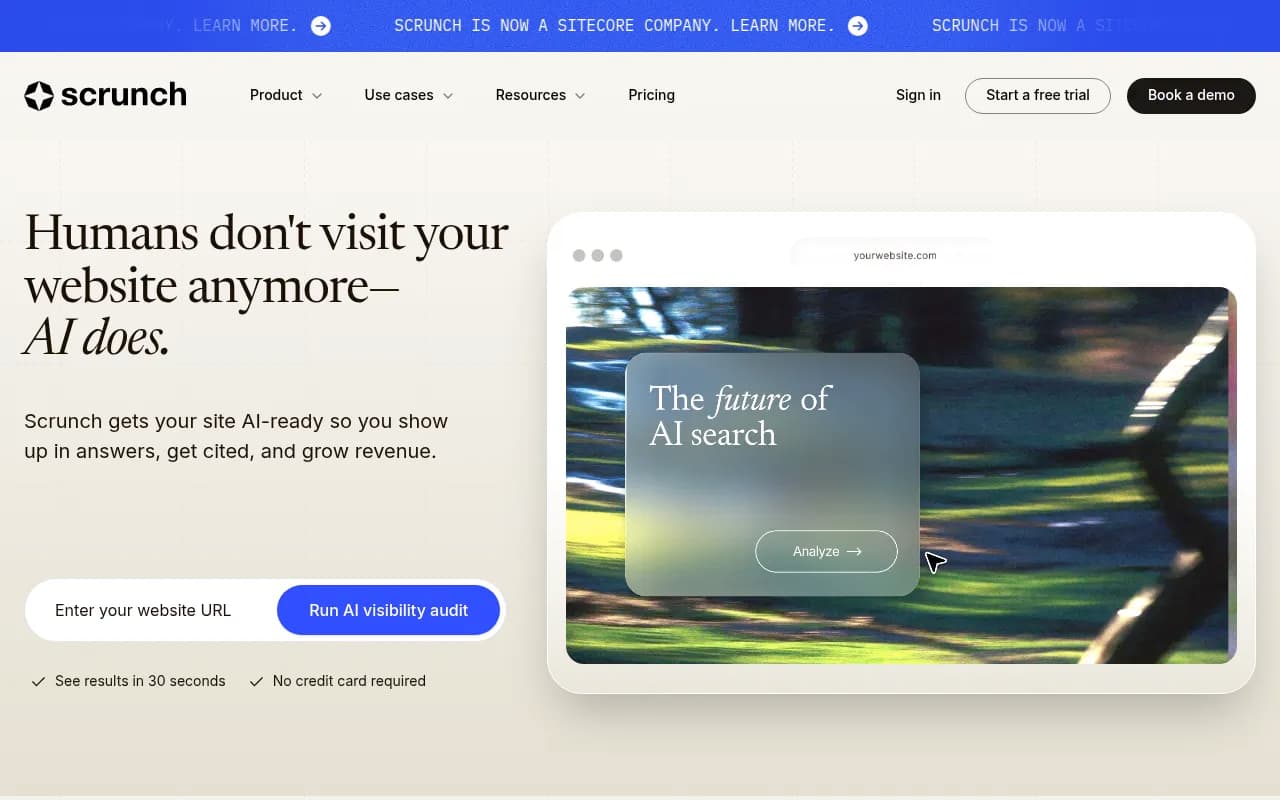
Scrunch AI is frequently cited as a strong monitoring platform for agencies and marketing teams that want broad AI engine coverage with clean reporting. It's more monitoring than optimization, but the interface is well-regarded.
Profound targets enterprise teams that need governance and depth in their AI visibility data. It's a serious platform at a serious price point -- better suited to large organizations with dedicated analytics resources.
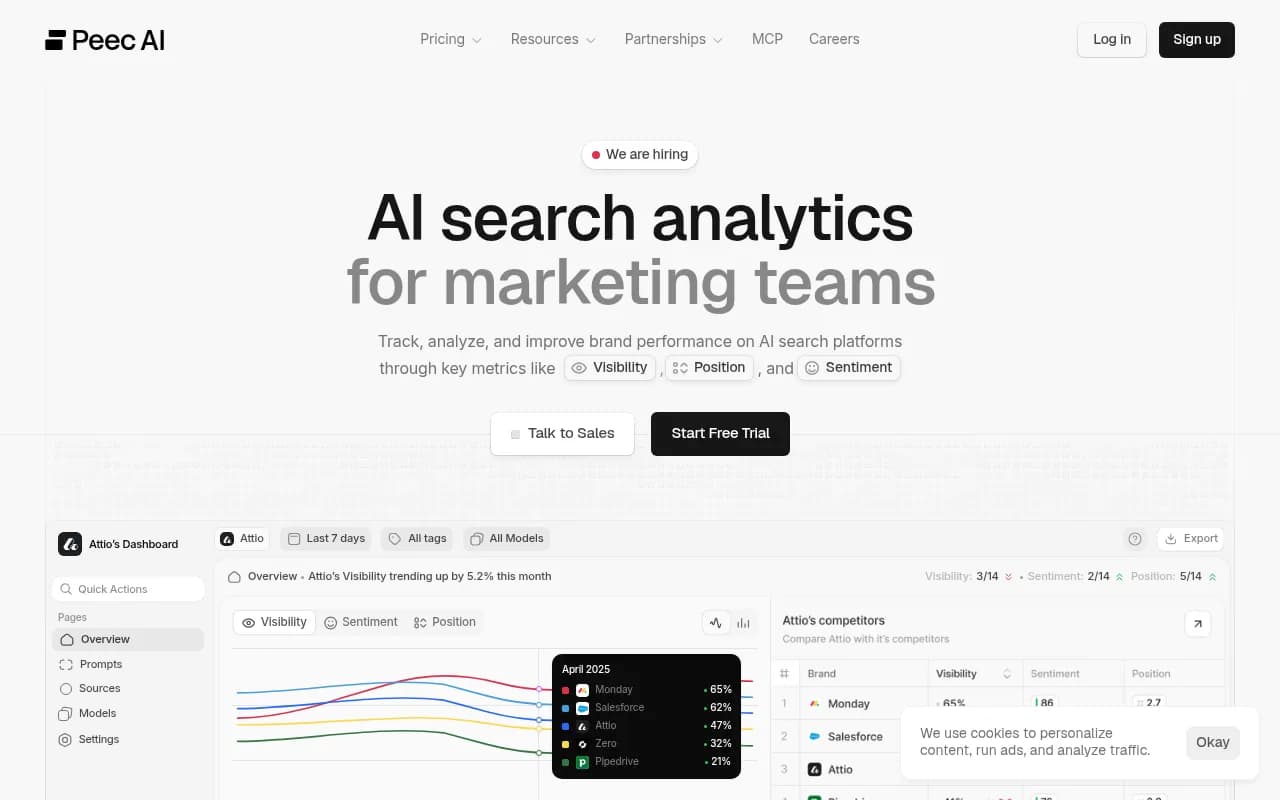
Peec AI is a lighter-weight monitoring tool that works well for teams just getting started with AI visibility tracking. Less depth than the platforms above, but lower friction to get running.
Otterly.AI is one of the more affordable monitoring options. Good for smaller teams or as a secondary tool, but lacks the depth of analysis that enterprise teams typically need.
Semrush has added AI visibility features to its existing platform. If you're already a Semrush user, it's worth exploring -- though like BrightEdge and Conductor, the AI features are additions to a traditional SEO foundation, and the prompts are fixed rather than customizable.
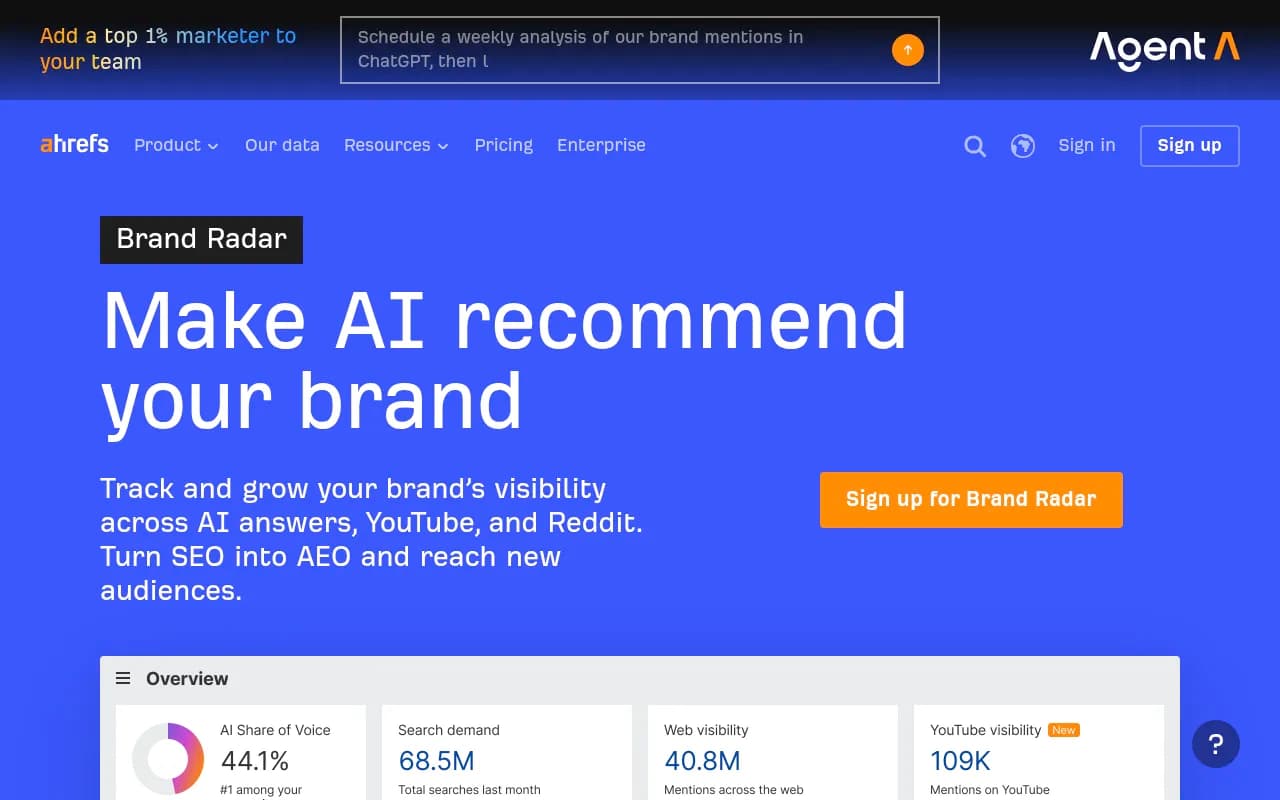
Ahrefs Brand Radar tracks brand mentions across AI search engines. Useful as a signal, but limited by fixed prompts and no AI traffic attribution -- so you can see mentions but not connect them to business outcomes.
The bottom line
BrightEdge and Conductor are strong platforms for enterprise SEO. They'll remain relevant for teams managing large-scale traditional search programs. But neither was designed for AI search, and the features they've added reflect that -- they're monitoring layers, not optimization systems.
Omnia is a better starting point if AI visibility is your primary focus and you want a dedicated tool. It's cleaner and more purpose-built for this specific problem.
Promptwatch is the platform to use if you want to close the loop. The combination of gap analysis, content generation, crawler logs, and citation tracking in one place -- at a price point that doesn't require an enterprise contract -- makes it the most complete option for teams serious about AI search in 2026.
The question isn't really "which tool has the best dashboard." It's "which tool helps me show up in AI answers that I'm currently missing from." Only one of these four answers that question end-to-end.