Key takeaways
- Otterly.AI, Scrunch, and Peec AI are all monitoring-only tools — they show you where you're invisible in AI search but give you no way to fix it
- Peec AI has the cleanest dashboard and best prompt-level analytics, but its per-engine add-on pricing can push costs from €89 to €585/month for full LLM coverage
- Scrunch adds hallucination detection and some content tools, making it the most capable of the three — but it's priced for enterprise and still doesn't close the optimization loop
- Otterly.AI is the cheapest entry point at $29/month, good for teams that just want basic brand monitoring across a few AI engines
- If you need to actually improve your AI visibility (not just measure it), you need a platform that combines gap analysis, content generation, and citation tracking in one workflow
There's a category problem hiding inside the AI visibility tools market right now. Dozens of platforms have launched in the past 18 months, all promising to show you how your brand appears in ChatGPT, Perplexity, Gemini, and the rest. Most of them do exactly that. They show you a score. They show you a chart. They send you a weekly email.
Then they stop.
Otterly.AI, Scrunch, and Peec AI are three of the most talked-about tools in this space. They're genuinely useful for what they do. But what they do is narrower than most buyers realize before signing up. This guide breaks down each tool honestly — what it covers, what it costs, where it hits a wall — and explains why monitoring alone isn't a strategy in 2026.
What these three tools actually do
Before getting into the comparison, it's worth being precise about the category. All three tools are AI search monitoring platforms. They query AI engines (ChatGPT, Perplexity, Google AI Overviews, etc.) with prompts relevant to your brand or industry, then report back on whether your brand appeared, how often, and in what context.
That's genuinely useful data. A year ago, most marketing teams had zero visibility into how AI models were representing their brand. These tools changed that.
The problem is that the market has moved. Knowing you're invisible isn't enough anymore. The question is what you do about it.
Peec AI
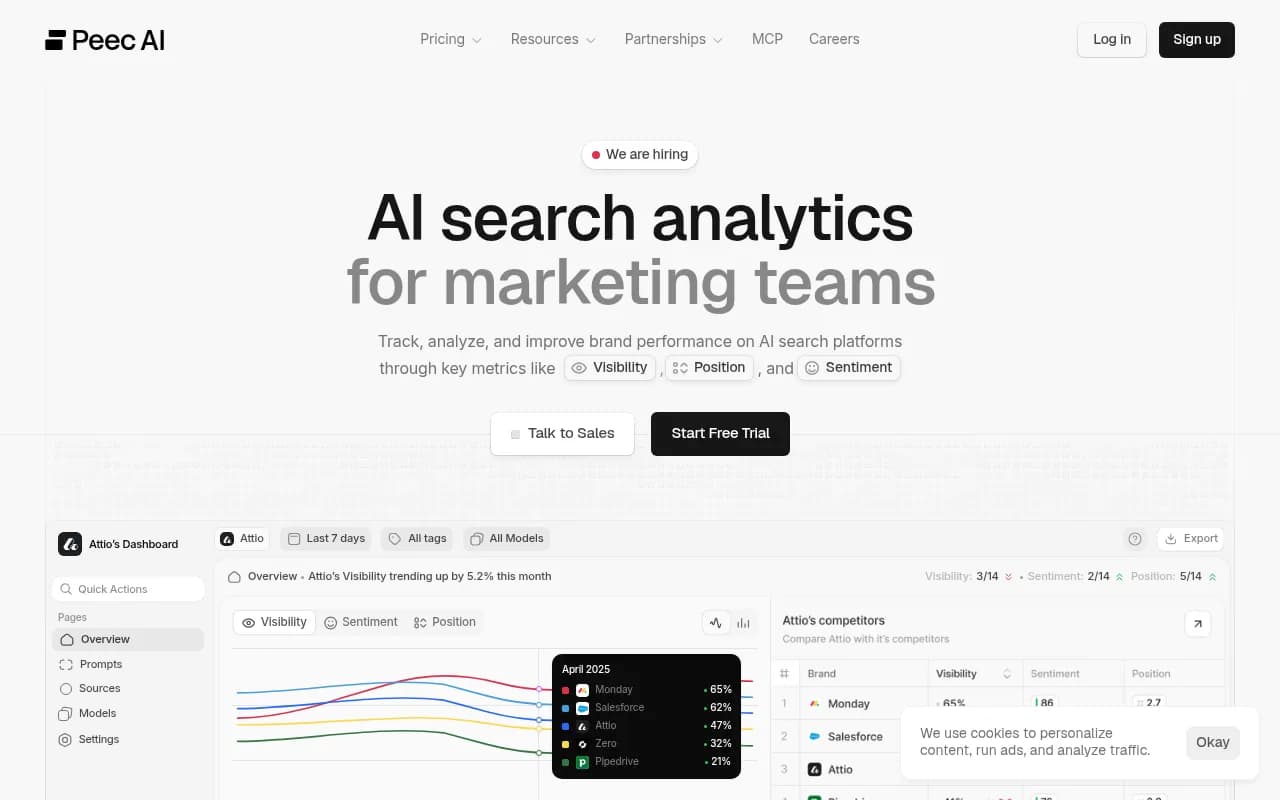
Peec AI is the fastest-growing challenger in this space — $29M raised by late 2025, $4M+ ARR in ten months, and a dashboard that's genuinely well-designed. If you've looked at AI visibility tools recently, you've probably seen it.
The core product tracks how your brand shows up across AI engines on a daily cadence. The interface is clean, setup takes about 30 minutes, and the prompt-level analytics are among the best in the monitoring-only category. You can see exactly which prompts triggered a mention, which didn't, and how your visibility compares to competitors.
What Peec AI does well
The dashboard is information-dense without being overwhelming. Prompt-level breakdowns let you see granular data rather than just aggregate scores. Unlimited countries and languages at no extra cost is a real differentiator — most competitors charge per region.
Where Peec AI hits the wall
The advertised €89/month starter price covers three AI engines. Add Gemini, Claude, or Google AI Mode and you're paying add-on fees that can push the effective monthly cost to €585 for full LLM coverage. The Pro plan at €199/month caps you at 100 prompts and 9,000 AI answers per month.
More importantly: there's no content creation tooling, no site audits, no optimization engine. Peec tells you where you're invisible. It does not help you become visible. For teams that hit that ceiling quickly, the gap is frustrating.
Otterly.AI
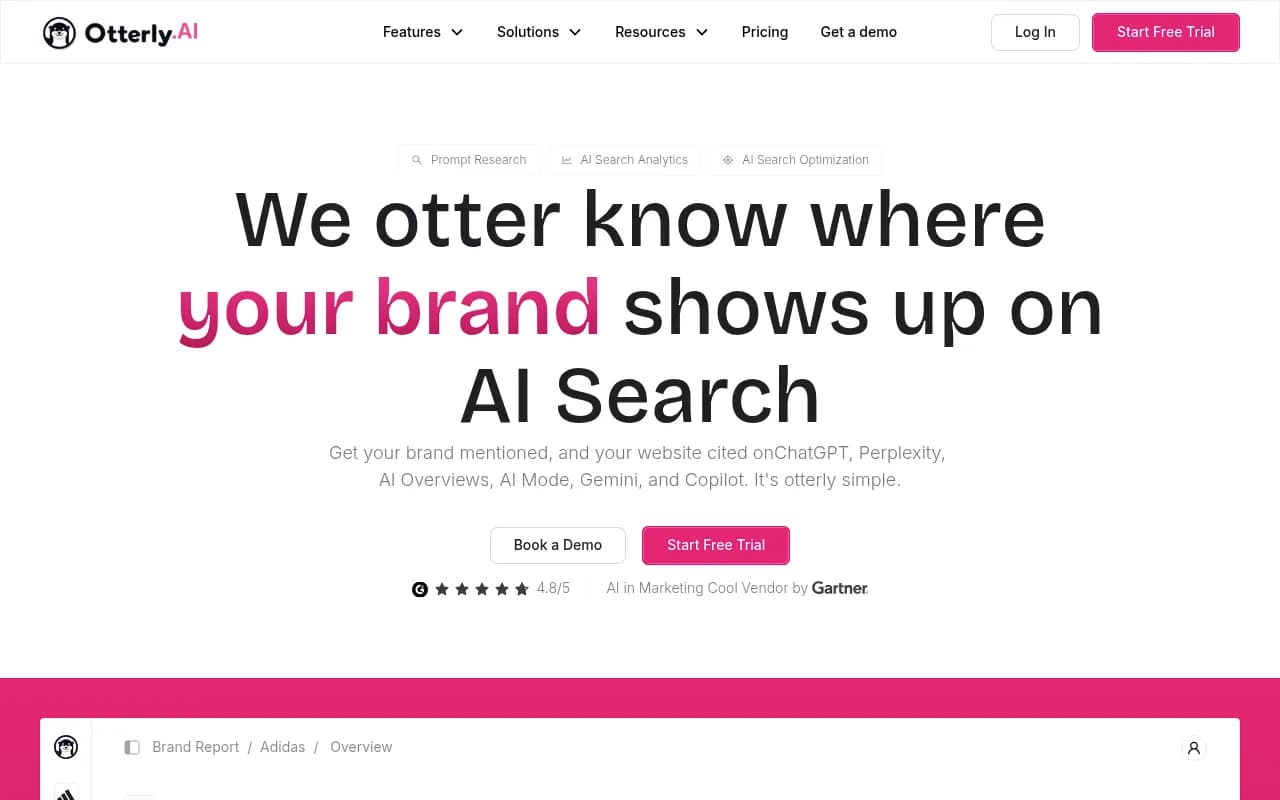
Otterly.AI is the most accessible entry point in this comparison. Plans start at $29/month, which is meaningfully cheaper than Peec's starter tier. For small teams or solo marketers who just want to know whether their brand shows up in AI search, it's a reasonable starting point.
What Otterly.AI does well
Price. That's the main thing. Otterly gets you basic brand monitoring across several AI engines without a significant budget commitment. The setup is straightforward and the reporting is clear enough for teams that don't need deep analytics.
Where Otterly.AI hits the wall
Otterly is the thinnest product of the three. The monitoring is functional but not particularly deep — you get brand mention tracking without much in the way of prompt-level granularity, competitive benchmarking, or actionable recommendations. It's a dashboard that tells you a number.
At the $29/month price point, that's arguably fine. But teams that start here tend to outgrow it quickly once they realize that knowing their visibility score doesn't tell them what to do next.
Scrunch AI
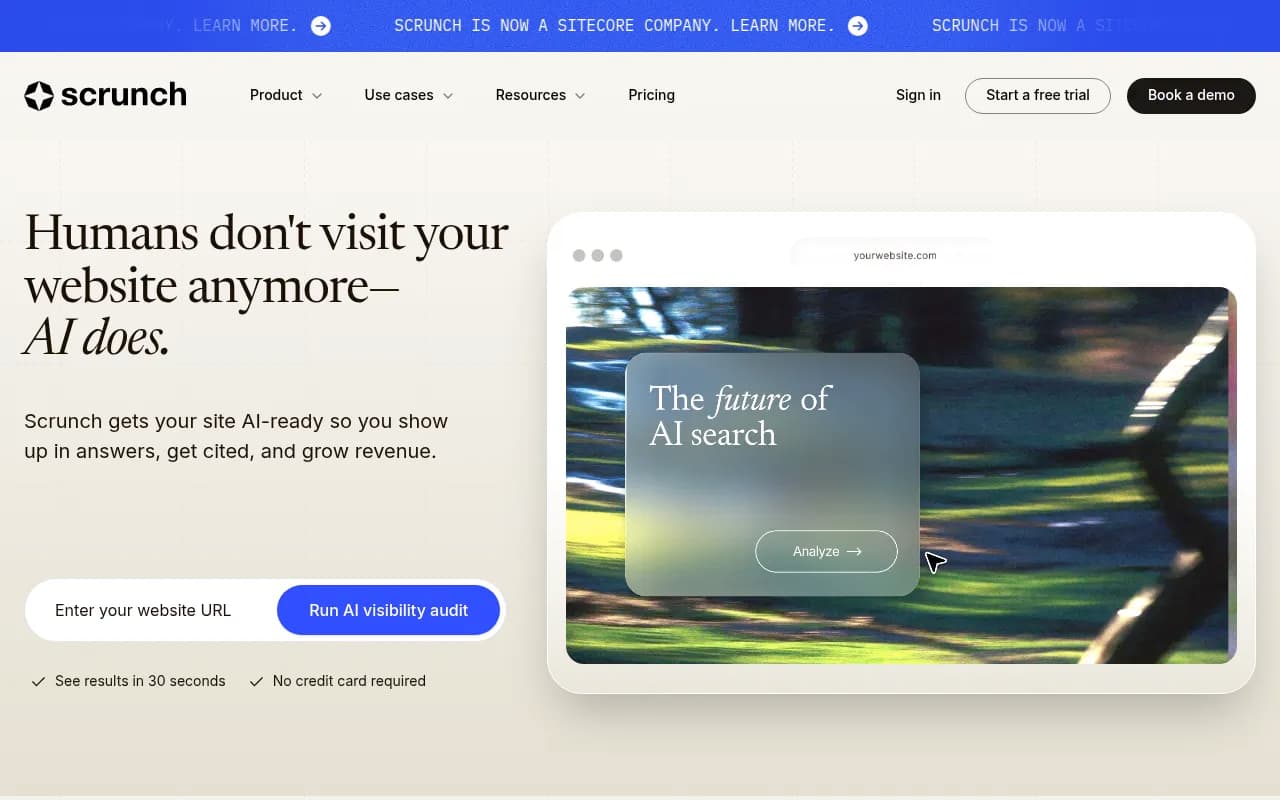
Scrunch positions itself slightly differently from the other two. It's more enterprise-focused, better funded, and has one genuinely distinctive feature: hallucination detection. For brands at scale where AI models might be misquoting your pricing, misrepresenting your features, or attributing claims you never made, that's actually important.
What Scrunch does well
Hallucination detection is the standout. If you're a large brand and you're worried about AI models saying incorrect things about you, Scrunch is one of the few tools that actively monitors for this. It also has some content generation tools, which puts it a step ahead of Peec and Otterly in the optimization direction.
Where Scrunch hits the wall
The content tools are limited and don't form a complete optimization workflow. You can generate some content, but there's no closed loop from gap identification to content creation to citation tracking. Enterprise pricing also puts it out of reach for most mid-market teams.
The hallucination detection is genuinely useful, but it's a defensive capability. It tells you when AI is saying wrong things about you. It doesn't help you get AI to say the right things about you more often.
Side-by-side comparison
| Feature | Peec AI | Otterly.AI | Scrunch AI |
|---|---|---|---|
| Starting price | €89/month | $29/month | Enterprise (custom) |
| AI engines covered (base plan) | 3 | Several | Enterprise |
| Prompt-level analytics | Yes | Limited | Yes |
| Competitor benchmarking | Yes | Limited | Yes |
| Hallucination detection | No | No | Yes |
| Content generation | No | No | Limited |
| Site audits / gap analysis | No | No | No |
| Citation tracking | No | No | Limited |
| AI crawler logs | No | No | No |
| Optimization workflow | No | No | No |
| Multi-language / multi-region | Yes (included) | Limited | Yes |
| Best for | Mid-market analytics | Entry-level monitoring | Enterprise brand safety |
The pattern is clear. All three tools are strong at the monitoring layer. None of them close the loop into optimization.
Why monitoring alone isn't enough in 2026
Here's the honest version of what happens when you use a monitoring-only tool:
You set up your prompts. You get your visibility score. You see that competitors are showing up in AI responses and you're not. You share the report with your team. Everyone agrees it's a problem. Then... nothing changes, because the tool doesn't tell you what content to create, which gaps to close, or how to actually get AI models to cite your site.
This isn't a criticism of the tools themselves. They do what they say they do. The problem is that many buyers come in expecting an optimization platform and get a measurement tool instead.
The distinction matters more now than it did 18 months ago. In early 2025, just knowing your AI visibility score was novel enough to be useful. In 2026, with AI search accounting for a growing share of how people discover products and brands, measurement without action is just expensive reporting.
What the optimization loop actually looks like:
- Identify which prompts competitors are visible for that you're not (gap analysis)
- Understand what content AI models are citing when they answer those prompts (citation analysis)
- Create content specifically designed to fill those gaps (content generation grounded in real prompt data)
- Track whether AI models start citing your new content (page-level citation tracking)
- Repeat
None of the three tools in this comparison support steps 2, 3, or 4 in any meaningful way.
What to use if you need the full loop
If you're past the "just tell me my score" stage and need a platform that helps you actually improve your AI visibility, the options look different.
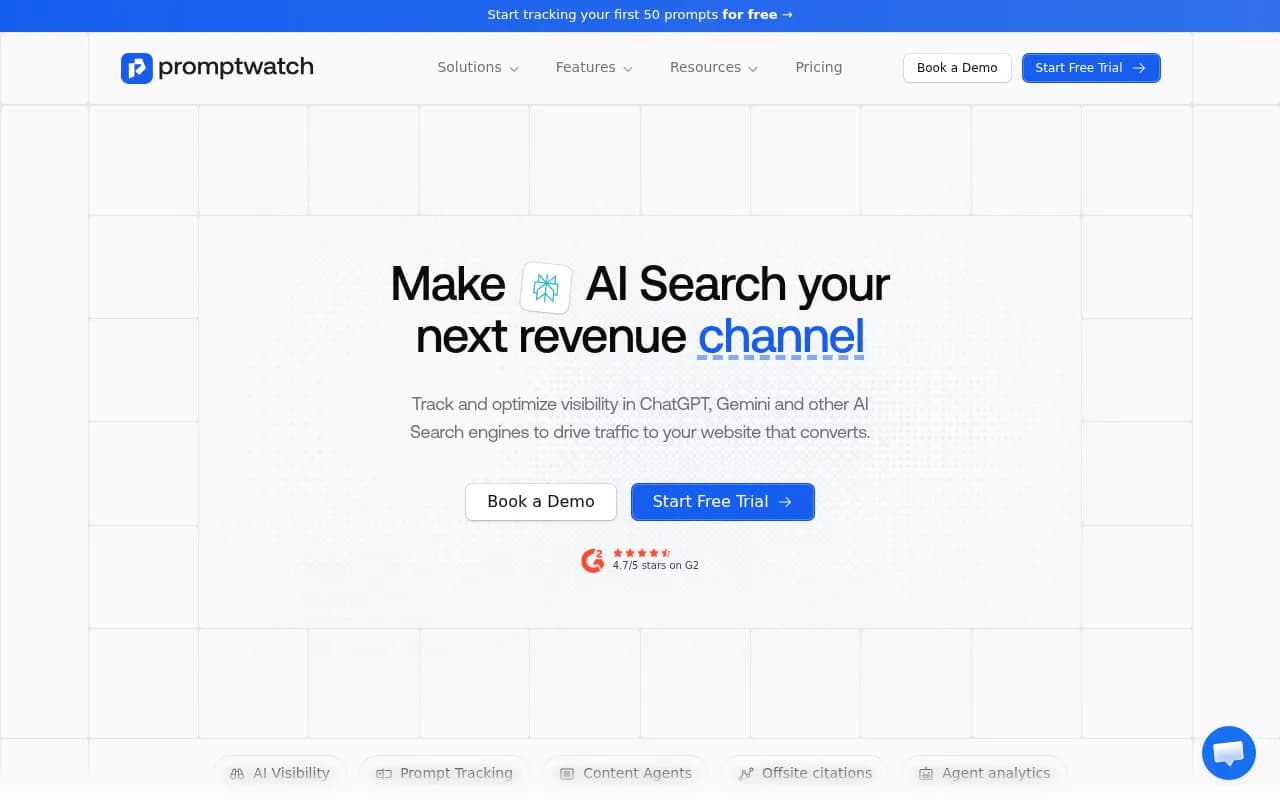
Promptwatch is the platform that covers the full workflow. It tracks visibility across 10 AI models (ChatGPT, Perplexity, Google AI Overviews, Google AI Mode, Claude, Gemini, Meta/Llama, DeepSeek, Grok, Mistral, Copilot), but the monitoring is just the starting point. The Answer Gap Analysis shows you exactly which prompts competitors are visible for that you're not — and more specifically, what content your site is missing that AI models are looking for. Content Agents then generate articles, listicles, and comparisons grounded in real prompt data and citation analysis, not generic SEO filler. And page-level tracking shows you when AI models start citing your new content, closing the loop from gap to content to result.
The AI Crawler Logs feature is also worth calling out specifically, because none of the three tools in this comparison have anything like it. It shows real-time logs of AI crawlers (ChatGPT, Claude, Perplexity, etc.) hitting your website — which pages they read, errors they encounter, how often they return, and when pages move from crawl to citation. That's the kind of data that tells you not just whether you're visible, but why you're not visible and what to fix.
For teams that need the monitoring layer without the optimization overhead, Peec AI remains a reasonable choice for mid-market analytics. Otterly works for teams on tight budgets who just need basic brand monitoring. Scrunch makes sense for large brands with hallucination risk.
But if the goal is to actually rank in AI search — not just measure whether you do — monitoring-only tools are the wrong starting point.
Other tools worth knowing about
The three tools in this comparison aren't the only options. A few others worth mentioning depending on your situation:
For teams already in the Ahrefs ecosystem:
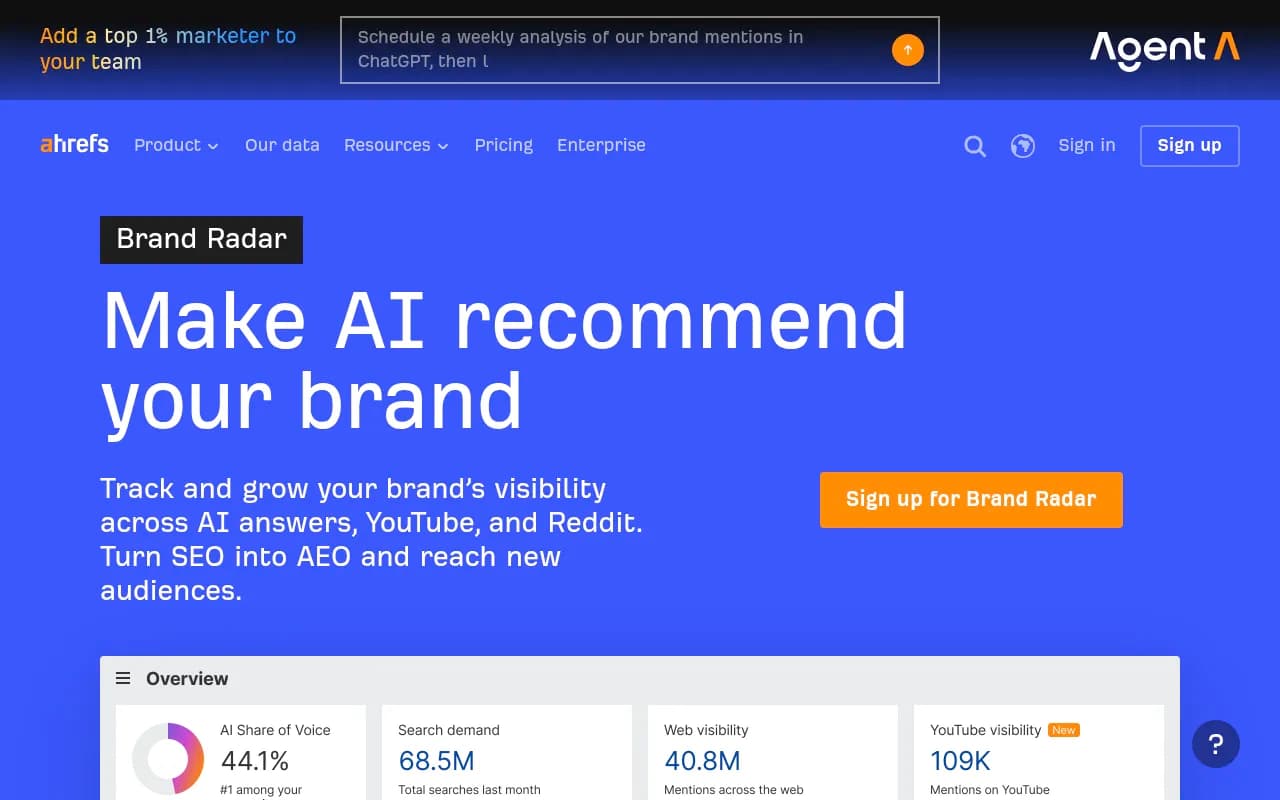
Ahrefs Brand Radar uses real search data (243M+ prompts from People Also Ask queries) rather than fabricated prompts, which makes the visibility scores more meaningful. It covers six AI engines plus YouTube, TikTok, and Reddit. If you're already paying for Ahrefs, it's worth exploring before adding a separate monitoring tool.
For enterprise teams with deep SEO workflows:
Profound is the category leader at the enterprise level — $155M raised, $1B valuation, Fortune 500 clients. It's a serious platform with serious pricing. Not for SMBs, but worth knowing about if you're evaluating at scale.
For agencies managing multiple clients:
Search Party is built for agencies and handles multi-client reporting reasonably well. It's more limited on the analytics side but works for teams that need to report AI visibility across many accounts.
For budget-conscious teams that want broader engine coverage:
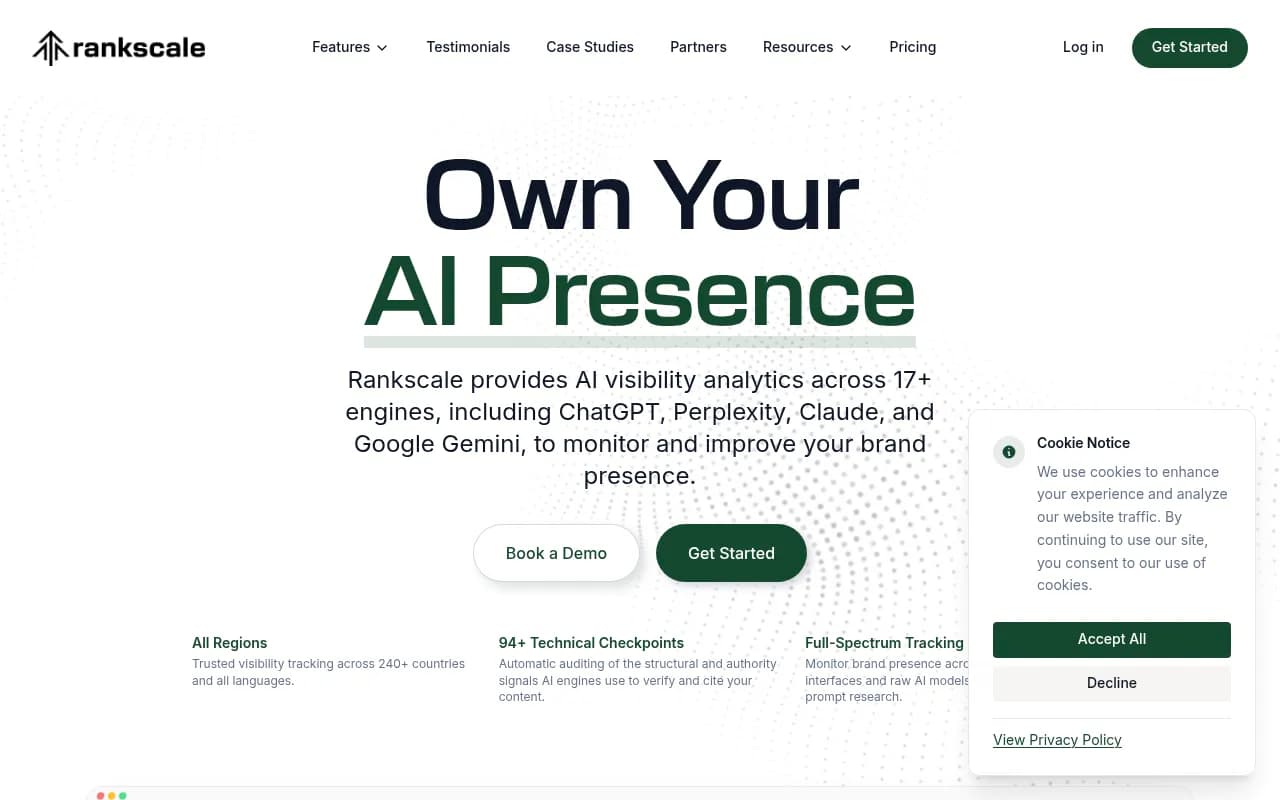
Rankscale offers broad AI engine coverage at lower price points, with unlimited seats in some plans. Worth a look if cost per prompt is a primary concern.
How to choose
The right tool depends on what you're actually trying to accomplish:
- You want to know if your brand shows up in AI search, nothing more: Otterly.AI at $29/month is fine
- You want clean, granular prompt-level analytics and don't mind the per-engine add-on costs: Peec AI
- You're a large brand worried about AI hallucinations misrepresenting your product: Scrunch
- You want to actually improve your AI visibility, not just measure it: you need a platform with gap analysis, content generation, and citation tracking built in
The monitoring-only tools in this comparison are honest products. They do what they say. The issue is that "monitoring" and "optimization" are different jobs, and in 2026, most marketing teams need both.
Buying a monitoring tool and expecting it to improve your rankings is like buying a scale and expecting it to help you lose weight. The measurement is useful. But the measurement isn't the work.