Key takeaways
- ChatGPT Shopping tracking is rare: most GEO platforms monitor brand mentions in text responses but don't track product-level visibility in AI shopping carousels
- Profound has an Amazon Rufus module, but full AI shopping coverage (including ChatGPT Shopping) is locked behind enterprise pricing
- Promptwatch is one of the few platforms that explicitly tracks ChatGPT Shopping alongside standard brand visibility, at published mid-market pricing
- If you're an e-commerce brand, the difference between "brand mentioned" and "product recommended in a shopping carousel" is enormous -- and most tools only measure the former
- This guide focuses specifically on which platforms cover product discovery in AI, not just general AI visibility
Why ChatGPT Shopping tracking is a different problem
Most conversations about GEO tools treat "AI visibility" as a single thing: does your brand appear when someone asks ChatGPT a question? That framing made sense in 2024. It's too narrow now.
ChatGPT rolled out shopping recommendations in 2025, and the behavior is meaningfully different from a standard text citation. When a user asks "what's the best running shoe under $150?", ChatGPT can now surface a product carousel with images, prices, and direct purchase links -- powered by a combination of its training data, Bing's product index, and merchant feeds. Your brand could be getting cited in text responses while your actual products are completely absent from those carousels. Or vice versa.
These are two separate visibility problems. And right now, the majority of GEO platforms only solve one of them.
Profound recognized this early. Its Amazon Rufus module tracks how products appear in Amazon's AI shopping assistant -- a genuinely useful feature for brands selling on Amazon. But ChatGPT Shopping is a different surface, and coverage there varies significantly across platforms.
Here's a breakdown of which Profound alternatives actually address product discovery in AI, and what they're each good for.
The platforms that actually track ChatGPT Shopping
Promptwatch
Promptwatch is the most complete option for brands that want both standard AI visibility and ChatGPT Shopping tracking in one place. It explicitly monitors ChatGPT's product recommendations and shopping carousels as a distinct tracking surface -- separate from regular brand citation tracking.
What makes this useful in practice: Promptwatch captures AI responses as they appear in real user interfaces, not just through API calls. That distinction matters for shopping specifically, because ChatGPT's shopping carousel behavior in the actual product can differ from what you'd see hitting the API directly. You're getting data on what real users actually see.
Beyond shopping, Promptwatch covers 10 AI models (ChatGPT, Perplexity, Google AI Overviews, Google AI Mode, Claude, Gemini, Meta/Llama, DeepSeek, Grok, Mistral, Copilot), tracks AI crawler logs in real time, and includes content generation tools that help you close the gaps it finds. Pricing is published: $99/mo for Essential, $249/mo for Professional, $579/mo for Business.
For e-commerce teams that want shopping visibility plus the ability to act on what they find, this is the most direct Profound alternative.
Profound
Profound's Amazon Rufus module is worth mentioning here because it was genuinely ahead of its time -- tracking product visibility inside Amazon's AI shopping assistant before most competitors had even thought about the problem. If your brand sells heavily on Amazon and you want that specific surface tracked, Profound has a head start.
The limitation is pricing. The Starter plan ($99/mo) only covers ChatGPT. Perplexity and Google AI Overviews require the Growth plan at $399/mo. Full model coverage, including the shopping features, sits at enterprise pricing that isn't publicly listed. For many teams, that's a significant barrier.
Ranketta
Ranketta is a newer platform (founded 2025) built specifically around e-commerce and product-level tracking. It tracks ChatGPT Shopping as a distinct surface alongside Google AI Overviews and Perplexity, with enterprise plans adding Gemini, Claude, Google AI Mode, and Copilot.
The product-level focus is the differentiator: rather than just tracking whether your brand is mentioned, Ranketta tracks whether individual products appear in AI shopping results. For D2C brands with large catalogs, that granularity is hard to find elsewhere.
Platforms with strong general AI visibility but limited shopping coverage
These tools are solid for brand monitoring and GEO work, but don't have dedicated ChatGPT Shopping tracking as of mid-2026.
Ahrefs Brand Radar
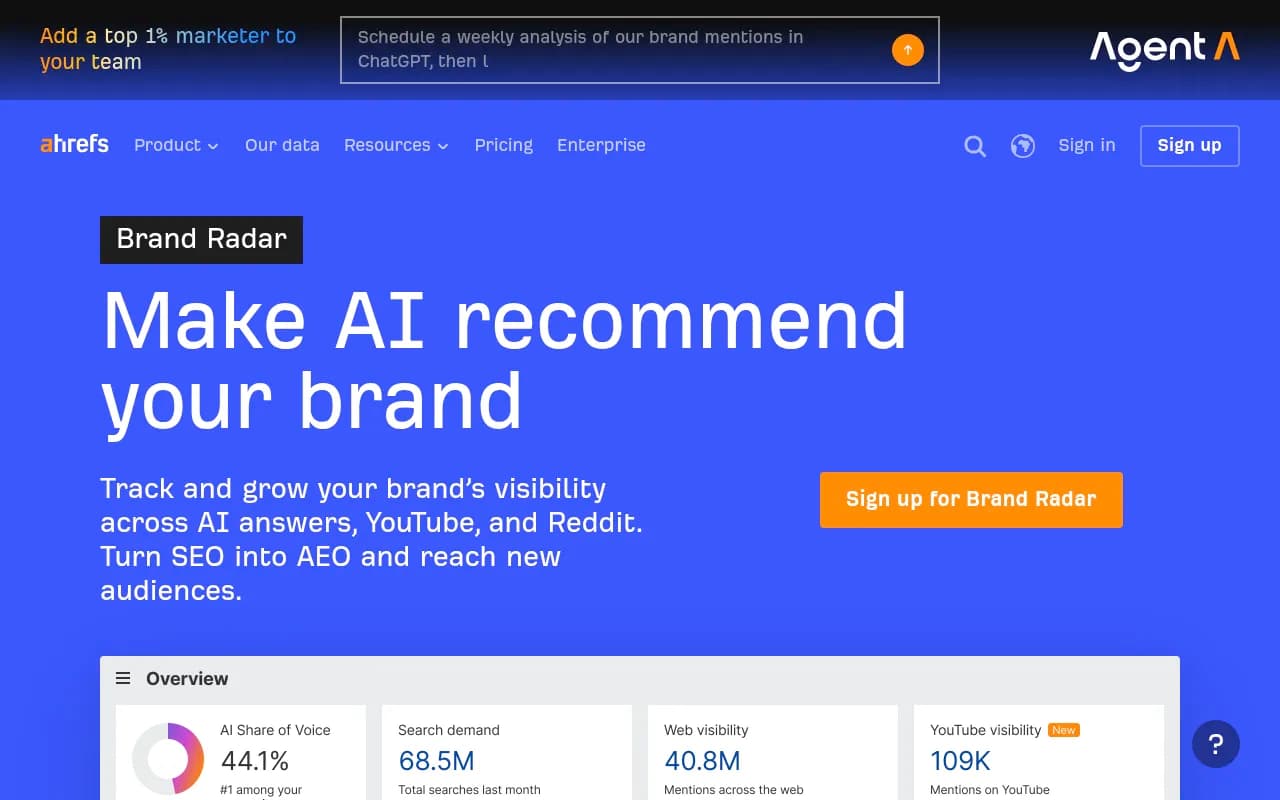
Brand Radar covers six AI engines and uses a data approach that's worth understanding: its prompts are derived from real "People Also Ask" data with actual search volume behind them, rather than fabricated queries. That means the visibility scores reflect real user behavior, not hypothetical questions.
For shopping specifically, Brand Radar doesn't have a dedicated product tracking module. It's better suited for brand-level visibility across text responses. Current Ahrefs users get the most value here since it integrates with the broader toolset. Pricing starts at $50/mo for 2,500 checks.
Semrush AI Visibility Toolkit
Semrush's AI visibility features are built into a platform most SEO teams already use, which lowers the adoption friction considerably. The AI tracking covers the major engines, and the integration with Semrush's existing keyword and content tools is genuinely useful.
The limitation for shopping-focused brands: Semrush uses fixed prompt sets rather than custom prompts, and there's no dedicated ChatGPT Shopping tracking surface. It's a good option for teams that want AI visibility as part of a broader SEO workflow, not as a standalone product discovery monitor.
Otterly.AI
Otterly is the budget-friendly option in this space. It covers the main AI engines, the interface is clean, and the pricing is accessible for smaller teams. What it doesn't have is content generation, crawler logs, or shopping-specific tracking. If your primary concern is "is my brand being mentioned in AI responses?", Otterly handles that. If you need product-level visibility, look elsewhere.
Scrunch AI
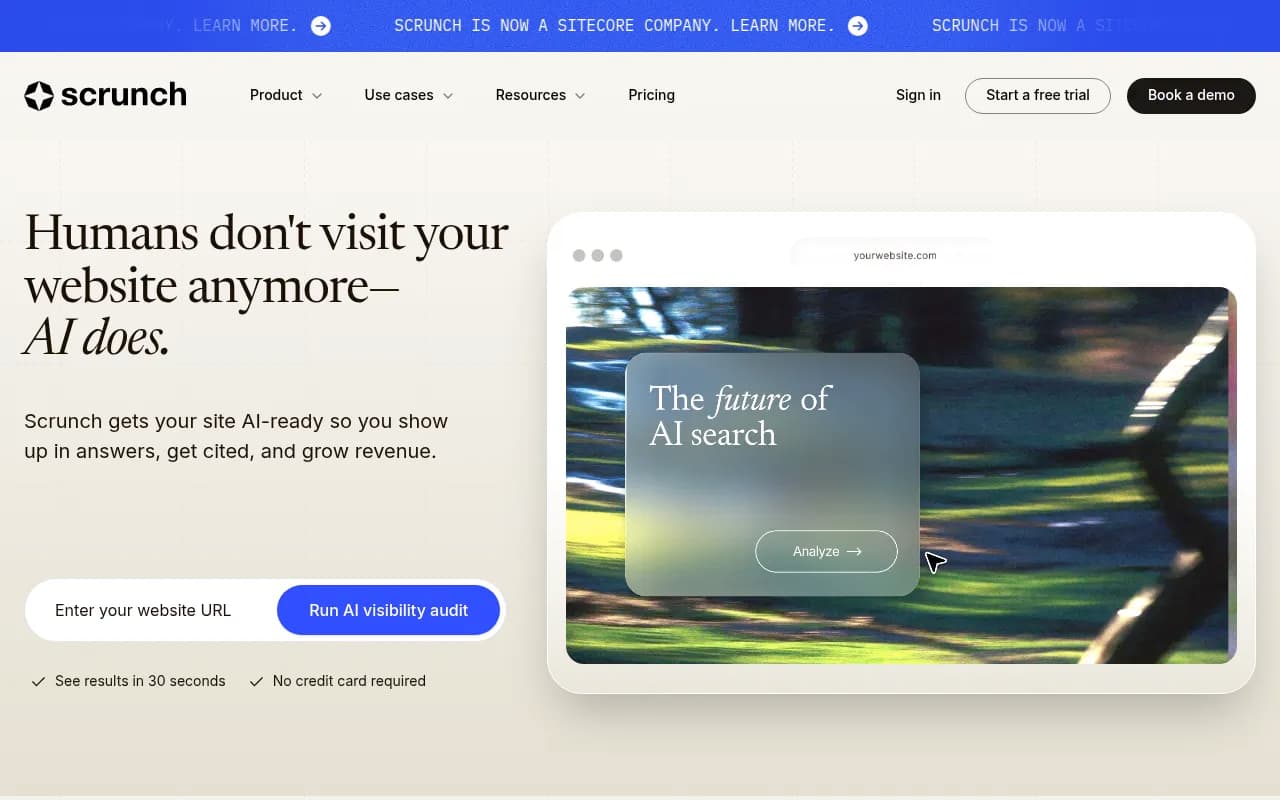
Scrunch positions itself as an enterprise-grade monitoring platform with a focus on influencing how AI crawlers read and interpret your site. It's strong on the technical side -- helping brands structure content so AI engines can actually use it -- but shopping tracking isn't a core feature.
Peec AI
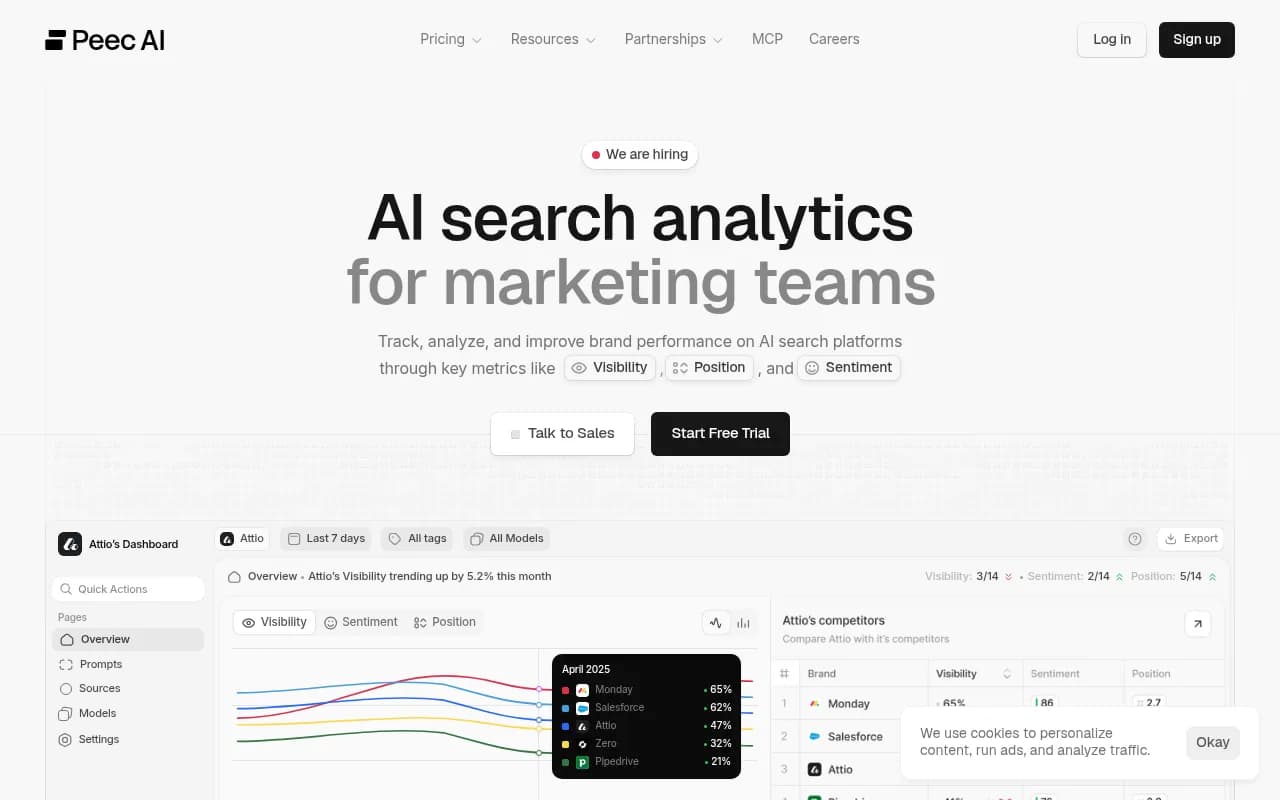
Peec covers the major AI engines and includes some smart suggestions for improving visibility. It's a monitoring-first tool without content generation or shopping-specific features. Good for teams that want a lightweight tracker without a lot of complexity.
AthenaHQ

AthenaHQ is monitoring-focused and covers multiple AI engines with solid reporting. Like most tools in this category, it doesn't extend into product discovery tracking. The interface is clean and the data is reliable, but it stops at showing you what's happening rather than helping you change it.
Writesonic GEO
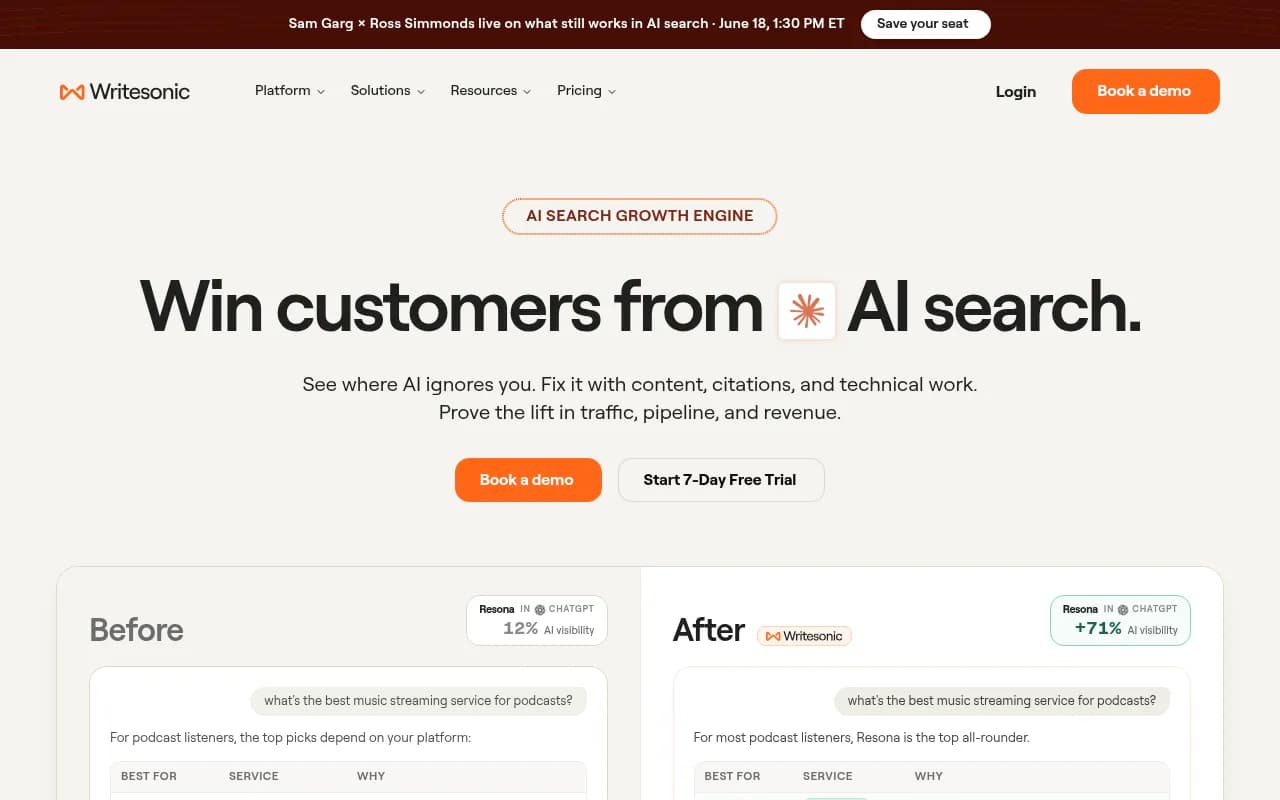
Writesonic's GEO module is interesting because it combines visibility tracking with content generation -- you can see where you're missing and then create content to fill the gap, all in one workflow. It doesn't have dedicated shopping tracking, but the content side is more developed than most pure-monitoring tools.
Comparison table: ChatGPT Shopping tracking and key features
| Platform | ChatGPT Shopping tracking | AI engines covered | Content generation | Crawler logs | Published pricing |
|---|---|---|---|---|---|
| Promptwatch | Yes | 10 | Yes | Yes | Yes ($99-$579/mo) |
| Profound | Amazon Rufus (not ChatGPT Shopping) | 6+ (enterprise) | No | No | Partial ($99-$399/mo, enterprise unpublished) |
| Ranketta | Yes | 3-7 (plan dependent) | Yes (limited) | No | Yes |
| Ahrefs Brand Radar | No | 6 | No | No | Yes ($50-$699/mo) |
| Semrush AI Toolkit | No | 5 (fixed prompts) | Limited | No | Yes (bundled) |
| Otterly.AI | No | 5 | No | No | Yes |
| Scrunch AI | No | Multiple | No | Partial | Yes |
| Peec AI | No | 4 | No | No | Yes |
| AthenaHQ | No | Multiple | No | No | Yes |
| Writesonic GEO | No | 4 | Yes | No | Yes |
What to actually look for when evaluating these tools
Real UI capture vs. API-only
This is the most underappreciated distinction in the GEO tool market. ChatGPT's shopping carousel, for example, behaves differently depending on whether you're accessing it through the consumer interface or the API. Tools that only query the API can miss entire response surfaces -- including shopping recommendations -- that real users see.
Promptwatch and Profound both explicitly capture front-end responses. Most other tools don't specify, which is worth asking about before committing.
Product-level vs. brand-level tracking
If you're an e-commerce brand, "your brand was mentioned" and "your product appeared in a shopping recommendation" are completely different outcomes. Brand-level tracking tells you about awareness. Product-level tracking tells you about purchase intent.
Right now, Ranketta and Promptwatch are the clearest options for product-level tracking. Most other platforms operate at the brand level.
The action gap
A pattern that shows up consistently across this market: most tools are monitoring dashboards. They show you data. They don't help you do anything with it.
The more useful framing is: what happens after you see the data? Can you identify which specific content gaps are causing you to miss AI citations? Can you generate content to fill those gaps? Can you track whether that new content actually gets crawled and cited?
Platforms like Promptwatch and Writesonic GEO have started building these workflows. Most others haven't.
Prompt construction matters
Where do the prompts come from? Some platforms let you define your own. Others use fixed prompt sets. Others (like Ahrefs Brand Radar) derive prompts from real search data.
For shopping specifically, the prompts need to reflect how real users actually shop through AI -- "best [product category] under [price]", "recommend a [product] for [use case]" -- not generic brand awareness queries. If a tool doesn't let you customize prompts or doesn't use realistic shopping queries, its shopping visibility data will be limited.
Which platform fits which situation
If you're an e-commerce brand that sells direct-to-consumer and wants to track how your products appear in ChatGPT Shopping and Google AI Overviews, Promptwatch is the most complete option at a published price point. Ranketta is worth evaluating if your focus is narrower (primarily ChatGPT Shopping and Google AIO) and you want a platform built specifically for that use case.
If you're on Amazon and want to track Rufus specifically, Profound's enterprise tier is the only platform with that module -- though you'll need to contact sales for pricing.
If you're an SEO team that wants AI visibility alongside your existing workflow and shopping isn't a priority, Ahrefs Brand Radar or Semrush's toolkit integrate cleanly with tools you're already using.
If budget is the primary constraint, Otterly.AI covers the basics at a lower price point, with the understanding that shopping tracking and content tools aren't included.
The bigger picture
ChatGPT Shopping is still relatively new, and the GEO tool market is catching up. Most platforms were built to answer a simpler question: "does my brand appear in AI text responses?" That was the right question in 2024.
The question in 2026 is more specific: "does my brand appear in AI text responses, AND do my products appear in AI shopping carousels, AND which of those appearances are actually driving traffic and revenue?"
Very few platforms can answer all three parts of that question. The ones that can -- particularly around the shopping carousel piece -- have a meaningful advantage for e-commerce brands navigating AI search.
The market will likely consolidate around platforms that close the loop from visibility to content to traffic attribution. For now, the gap between monitoring-only tools and action-oriented platforms is wide enough that it's worth being deliberate about which category you're buying into.