Key takeaways
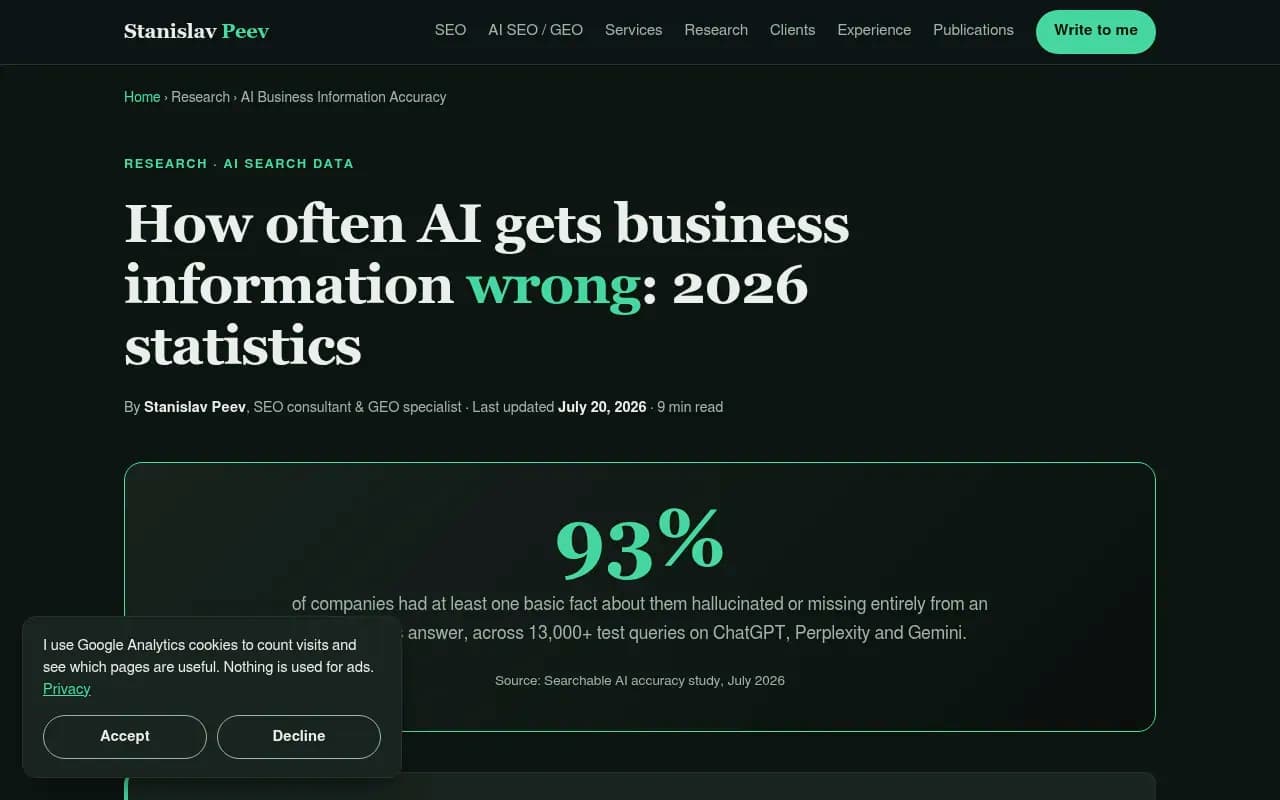
- In the largest accuracy study cited here (Searchable, 13,000+ queries on ChatGPT, Perplexity and Gemini), 93% of companies had at least one basic fact hallucinated or missing.
- Small businesses fare worse: 50% received at least one fabricated fact, against 32% of large companies.
- Platforms differ a lot. Gemini scores best on business data because it reads Google Maps directly, while ChatGPT and Perplexity lag.
- Most errors are repeated from somewhere, usually stale directory listings and third-party pages. Fixing the sources is the only lever you have.
- A monthly self-audit takes under an hour and catches most problems.
A caveat before the numbers. Most of the business-accuracy statistics below come from one secondary roundup (a 2026 research page by SEO consultant Stanislav Peev) that summarizes studies from Searchable, SOCi, Seer Interactive and BrightLocal. I have attributed each figure to the original study as that page does, but I could not check them against the primary reports. Treat them as directional, not gospel.
Why chatbots get facts wrong in the first place
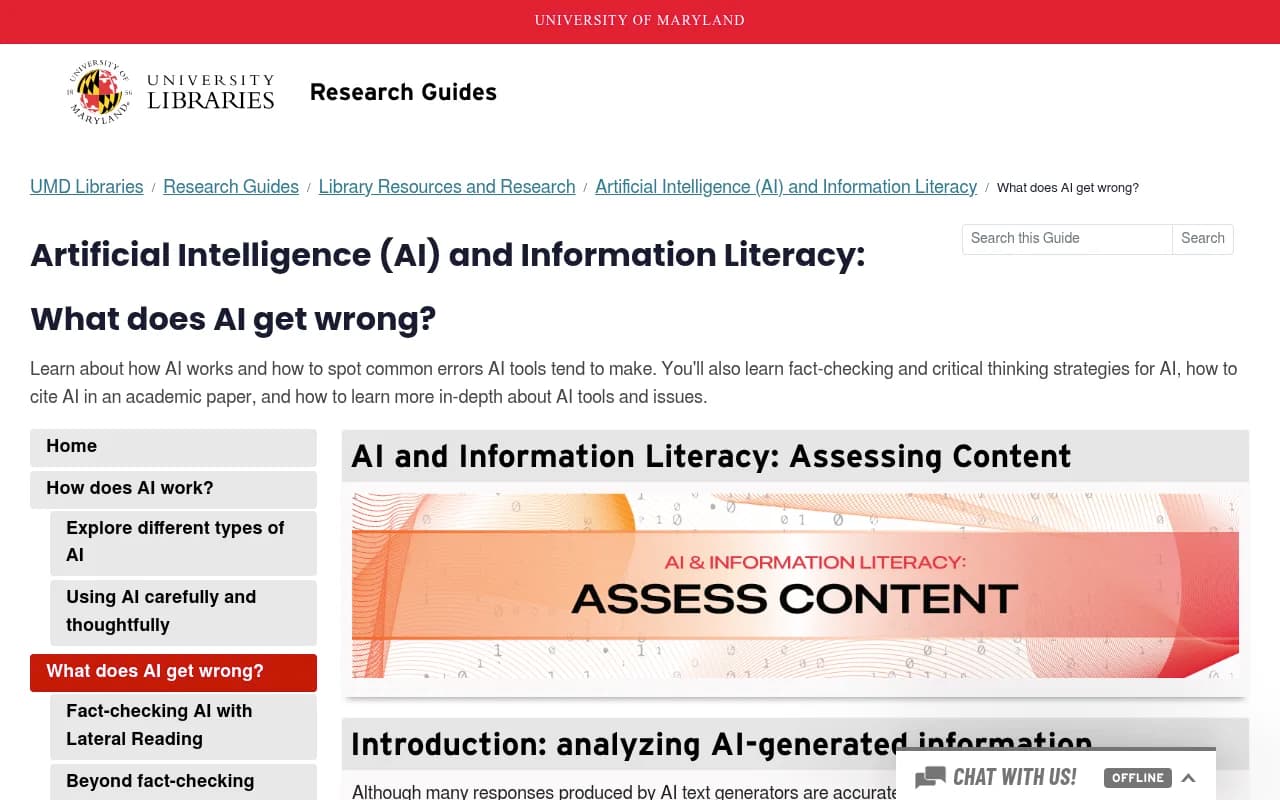
A chatbot is not looking up your company in a database. The University of Maryland Libraries put it plainly in their AI literacy guide: when you prompt a chatbot, it is not assessing whether the information is correct the way a human would. It generates the most likely string of words to answer the prompt. Sometimes that is right. Sometimes it is a mix of truth and fiction, and the model cannot tell which.
For brands, that produces two kinds of failure. One is outright fabrication: a founding year that never happened, a product you do not sell. The other is quieter and more common: the model pulls a fact from a stale or wrong source and states it with total confidence.
The headline number: 93% of companies have a wrong or missing fact
The Searchable study queried ChatGPT, Perplexity and Gemini more than 13,000 times about real companies and checked every answer against verified records such as Companies House filings and official company profiles. So "wrong" means verifiably wrong, not just outdated opinion.
| Metric | Value | Source |
|---|---|---|
| Companies with at least one wrong or missing fact | 93% | Searchable, 2026 |
| SMEs receiving at least one fabricated fact | 50% | Searchable, 2026 |
| Large companies (500+ staff) receiving a fabricated fact | 32% | Searchable, 2026 |
| Brand name confused or misattributed, SMEs | 4% | Searchable, 2026 |
| Brand name confused, large companies | 0.7% | Searchable, 2026 |
| Service description accurate, large brands vs SMEs | 93% vs 87% | Searchable, 2026 |
The brand-name confusion gap is five to one. A small company's name gets mixed up with another business about five times as often as a large company's name. That makes sense: big brands have more pages, more links and more unambiguous mentions for a model to latch onto.
The fact types AI got wrong most often were company size, contact details and founding year. Those are exactly the details a prospective customer acts on.
Two honest limits. The sample is London-based companies, and the roundup notes that no comparable US-wide study exists yet. And a 93% figure counts missing facts as errors, so part of that number is the model not knowing something rather than inventing it. Still, from a customer's point of view, a blank where your phone number should be is about as useful as a wrong one.
The phone number problem
Contact details are where this gets painful. The Seer Interactive data, as reported in the same roundup, found AI gave out a phone number most of the time (91%) but only about 27% of the numbers matched the business's Google Business Profile. Confident, specific, and usually wrong.
The same source says 59% of ChatGPT's phone number citations point to third-party sites rather than the brand's own pages. Measured against a brand's own customer service page, Gemini was accurate 89% of the time and ChatGPT only 68%, the lowest of the seven models Seer tested.
Think about what that means in practice. Someone asks an assistant how to reach you, gets a dead number from an old directory listing, and never tells you it happened. You will not see this in your analytics.
Which chatbot is most accurate about businesses
Gemini, by a wide margin, on this data. SOCi measured Gemini's business profile accuracy at 100% because it reads Google Maps data directly, versus 68% for ChatGPT and Perplexity.
| Platform | Accuracy measure | Result | Source |
|---|---|---|---|
| Gemini | Business profile accuracy | 100% | SOCi, 2026 |
| ChatGPT | Business profile accuracy | 68% | SOCi, 2026 |
| Perplexity | Business profile accuracy | 68% | SOCi, 2026 |
| Gemini | Phone accuracy vs brand's customer service page | 89% | Seer Interactive |
| ChatGPT | Phone accuracy vs brand's customer service page | 68% | Seer Interactive |
The lesson is not that Gemini is smarter. It is that accuracy tracks the quality of the data pipe. If a model reads a maintained, structured source directly, it is right. If it assembles an answer from a dozen scraped pages, it is as right as the worst page.
That same pipe problem shows up in recommendations. SOCi found only 1.2% of business locations get recommended by ChatGPT at all, versus 35.9% appearing in Google's local 3-pack. Being described wrongly is bad. Not being mentioned is a different problem, and a bigger one for local businesses.
Where AI gets its facts about you
Most business errors are not invented from nothing. They are repeated from somewhere. Industry measurements attribute roughly 60-70% of ChatGPT's local business results to Foursquare data, cross-checked against Yelp, directories and crawled web pages. OpenAI has not confirmed that figure, so hold it loosely. What is not in doubt is the direction: your accuracy depends on other people's databases.
Retrieval volume matters too. According to Promptwatch Data on average sources per response, ChatGPT cites about 5 sources per web-search answer, while Google AI Overviews and Perplexity each cite roughly 10. Microsoft Copilot swung from under 2 to nearly 17 sources within a few weeks before settling at the low end. Every extra source is another place a wrong fact can enter. That report counts citation slots, not correctness, so it tells you how many chances there are for an error, not how often one lands.
For wider context on what gets cited, Promptwatch's data on ChatGPT citations by content type found product pages are the most cited type (22.4% of citations, Sep 28 to Oct 4, 2026). Your own product and landing pages are the pages models are most likely to quote, which is good news if they are accurate and bad news if they are vague or contradictory.
It is not just business facts: the wider accuracy picture
Brand facts are one slice of a general reliability problem.
- The BBC and other European broadcasters found around 45% of AI chatbot responses based on news articles contained errors. That measures news, not company facts, so it is loosely relevant, but it shows the baseline.
- A Stanford-linked study covered by Hacks/Hackers found that when questions carried a false premise, GPT-5 got roughly four out of five adversarial questions wrong. A Gemini 3 Flash user hit a wrong answer about once every 22 questions, a GPT-5 user once every seven. Accuracy also dropped 16-17 percentage points on average when answer choices were removed and models had to answer freely.
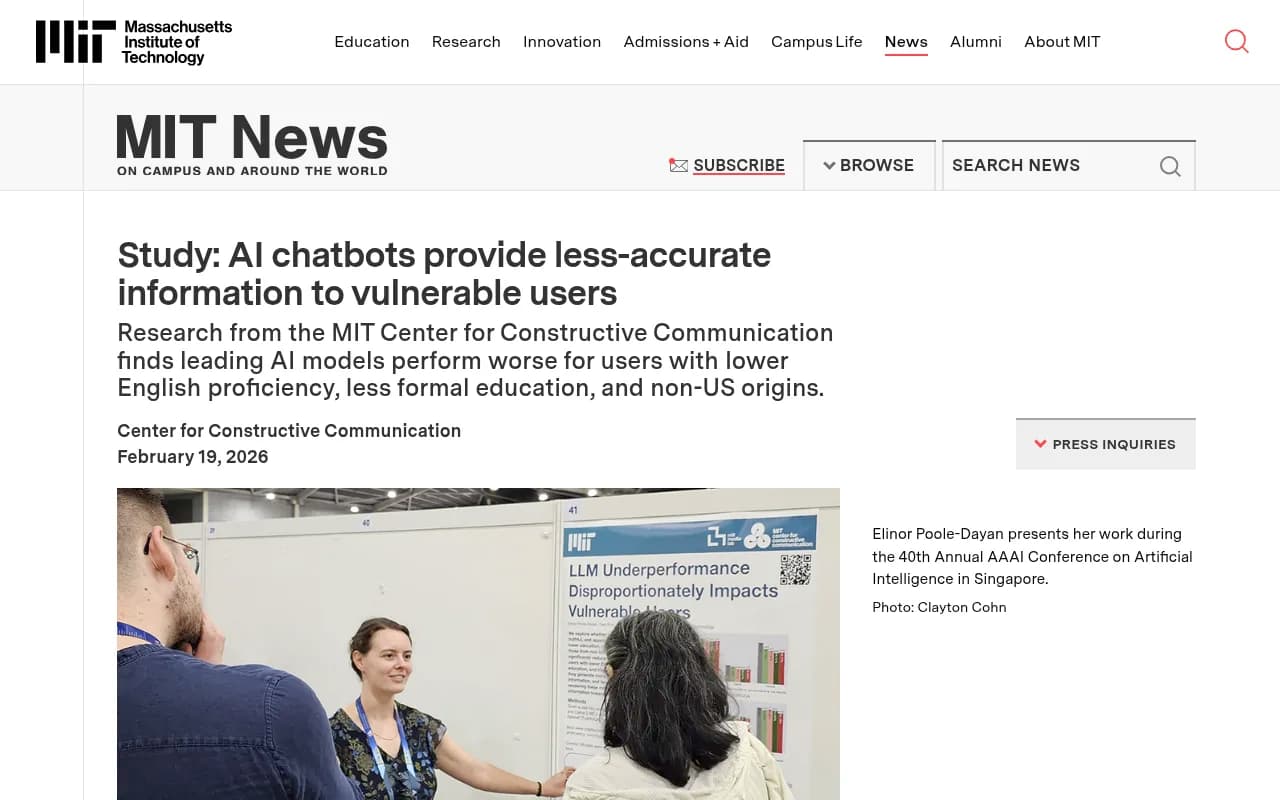
- MIT's Center for Constructive Communication (February 2026) found leading models perform worse for users with lower English proficiency, less formal education, and non-US origins.
The false-premise result matters for brands. If a customer asks "why did [Brand] discontinue its free plan?" and you never had one, a model is likely to play along. People misremember details constantly, and the chatbot tends to reinforce the error.
Why customers are now exposed to this
The roundup cites BrightLocal 2026 data saying 45% of consumers now ask AI for local business recommendations, up from 6% a year earlier. One correction worth knowing: a widely repeated claim that "45% of customers use ChatGPT to find local services" is a misquote. The underlying BrightLocal figure says 45% use any AI tool, and the ChatGPT-specific number is 31%. The roundup also says 63% of AI users trust what the AI tells them.
Wrong facts, delivered with confidence, to people who trust them. That is the actual risk.
A 10-minute self-audit
You do not need a tool to start. Open fresh chats (no history, no logged-in personalization if you can avoid it) in ChatGPT, Gemini and Perplexity and ask about:
- Your business hours
- Your phone number and contact page
- Your address and locations
- Your core services or products
- Your pricing or pricing model
- Your founding year and company size
- Your top two competitors and how you compare
- A false-premise question ("Why did you stop offering X?") for something you never did
- Your leadership team
- "Is [Brand] a good choice for [your typical customer]?"
Score each answer: correct, incomplete, wrong, or fabricated. Save the responses with dates. Repeat monthly, because model data shifts.
How to fix wrong facts
There is no correction form. As the roundup puts it, there is no correction mechanism, only source cleanup. In practice that means:
- Fix the primary records: Google Business Profile, Companies House or your local registry equivalent, LinkedIn company page, Crunchbase, Wikipedia or Wikidata if you qualify.
- Audit directories and aggregators (Foursquare, Yelp, industry directories) for stale phones, addresses and hours. Listing-management platforms like Yext, Synup and BrightLocal exist for this.
- Put the facts on your own site in plain text, on crawlable pages. A clear About page, contact page and pricing page beat a clever design that hides facts in images or scripts.
- Make sure AI crawlers can actually read those pages. Blocked bots mean the model falls back on third-party sources.
- Remove contradictions. If your old pricing page, a press release and your homepage disagree, the model will pick one at random.
If you want to check whether crawlers are reaching your pages, the free Agentic Readiness Check shows which AI crawlers can read your site.
Tools for monitoring what AI says about you
A monthly manual audit works for one brand and ten prompts. It breaks down once you have multiple markets, products or competitors. A few categories of tool help.
For tracking and fixing AI visibility end to end, Promptwatch tracks how ChatGPT, Gemini, Perplexity, Claude and Google AI Overviews describe your brand. Its Brand Narrative feature pulls the individual claims AI makes about you out of tracked responses and groups them by theme, such as pricing, features or support. On Business and higher plans, Fact Check lets you mark a claim accurate or inaccurate and then finds the pages on your site that state it or its opposite, so you know where the model is learning the wrong thing. Its crawler logs also show whether AI bots can read the pages that hold your facts.

Other options in the catalog take different angles:

Searchable turns AI responses into measurable scores, and its accuracy study is the source of the 93% figure above.

Waikay focuses on AI brand perception, which is closer to the facts-and-narrative question than pure rank tracking.
SOCi is built for multi-location brands, and its data is behind the Gemini 100% vs ChatGPT 68% comparison.
Yext pushes verified brand data to directories and AI channels, which attacks the stale-listing problem directly.
| Need | Tool type | Examples |
|---|---|---|
| See what AI says and which claims are wrong | AI visibility and narrative tracking | Promptwatch, Waikay, Searchable |
| Fix listings across directories | Listing management | Yext, Synup, BrightLocal |
| Multi-location accuracy and reviews | Local marketing platforms | SOCi, Chatmeter, Reputation.com |
| Enterprise AI visibility reporting | Enterprise platforms | Profound, BrightEdge, Conductor |
For a broader view of the category, the directory at bestgeosoftware.com lists GEO and AI visibility tools side by side.
What to do this month
Run the 10-prompt audit across three chatbots and log the results. Fix any wrong fact at its source, starting with Google Business Profile and the top two directories feeding it. Check your own site states the key facts in plain, consistent text. Then re-run in 30 days and compare. If you manage dozens of locations or several brands, a monitoring tool will save you the hours.
The uncomfortable part is that nobody is coming to correct this for you. The models repeat what the web says about you. If the web is wrong, the answer is wrong, and the customer never tells you.