Key takeaways
- Profound is strong on data depth, but its published self-serve tiers (reportedly $99 and $399) may be gone, and one roundup says you now have to ask for a quote. Check its pricing page before you budget.
- If you want AI visibility tracking and nothing else, skip the SEO suites (Semrush, Ahrefs, SE Ranking, Nightwatch) unless you already pay for them.
- Prices are not comparable across tools. Some sell prompts, some sell credits, some sell per domain. Compare cost per tracked prompt and which engines are actually included.
- Claude, Gemini and Google AI Mode are often paid add-ons. Read the plan details, not the logo wall.
- Most roundups on this topic are vendor-biased. The Frase and AirOps lists each put their own product or category first, so treat their rankings accordingly.
Why people look for a Profound alternative
Profound was one of the early movers in this category. Real-user prompt volume data, front-end response capture and an Amazon Rufus shopping module are genuinely differentiating. Nobody serious disputes that.
The friction is mostly commercial. Earlier in 2026 the Starter plan at $99/mo covered ChatGPT only, and Growth at $399/mo capped you at 100 tracked prompts and 3 seats. One roundup now reports those tiers were removed in September, leaving a free 7-day trial (50 prompts a day) and custom Enterprise quotes. Other sources still quote the old numbers, so treat them as possibly stale and confirm directly.
For a content team of three that wants to know whether ChatGPT and Perplexity name the brand, an enterprise contract is overkill. That is the gap this guide is about.
What "AI visibility only" actually means
The core mechanic behind almost every tracker is the same: schedule prompts, store the responses, build a dashboard. A competent developer can build that in a few weeks, which is why there are 40+ tools in the space and why many feel interchangeable.
So "focused" should mean you get these things and not much else:
- Prompt tracking across the engines you care about
- Citation and source data (which URLs get cited)
- Competitor comparison
- Some form of reporting or export
You don't need a backlink index, a keyword database or a site crawler bundled in, and you shouldn't pay for them. If you want what you learn to turn into published pages, that is a different category (monitoring plus execution), and I cover where it fits below.
How to evaluate a tracker before you pay
Check engine coverage per plan
A site listing ten engines doesn't mean your plan includes ten. Peec AI includes 3 models of your choice and charges for a fourth. Otterly's base plan covers ChatGPT, Google AI Overviews, Perplexity and Copilot, while Claude, AI Mode and Gemini are add-ons. Engines also behave differently. Promptwatch Data on average sources per response shows ChatGPT citing about 5 sources per web-search answer, Google AI Overviews about 10, and Perplexity almost exactly 10 each day. Copilot swung from under 2 to nearly 17 within weeks. Pick a tool that reports each engine separately, because an averaged score hides all of that.
Understand where the prompts come from
Most tools invent prompts: they guess what users might ask. Ahrefs Brand Radar claims 243M+ prompts drawn from real People Also Ask data, and Profound claims a Profound Index of 400M real conversations. Both are vendor claims, but the question is the right one. Also remember the prompt is only a proxy for what the engine actually runs. Promptwatch's ChatGPT query fanout data shows one prompt splitting into 3 to 8+ searches, and average fanout query length dropping from about 117 characters in December to roughly 53 in April. Tools that expose fanout or sub-query data give you a closer look at real behavior. ChatGPT also began using the site: operator at scale on August 8, 2026, per Promptwatch Data.
Compare cost per prompt, not sticker price
Peec and Otterly sell prompts, Scrunch sells prompts plus a response cap, AthenaHQ sells credits, Semrush sells per domain. A $29 plan with 15 prompts is probably less useful than a dearer plan covering your real buyer questions.
Cost per tracked prompt on monthly billing, from one third-party pricing comparison:
| Tool | Plan | Approx. cost per prompt |
|---|---|---|
| LLM Pulse | Entry | about EUR 0.66 |
| Otterly.AI | Premium | $1.22 |
| Peec AI | Advanced | $1.41 |
| Peec AI | Pro | $1.63 |
| Otterly.AI | Standard | $1.89 |
| Peec AI | Starter | $1.90 |
| Otterly.AI | Lite | $1.93 |
| Scrunch | Core (older plan) | $2.00 |
| Semrush | AI Visibility | $3.96 |
Note that LLM Pulse charges 50 to 61% more for daily checks than weekly ones, so the cheapest number assumes weekly.
The 12 focused alternatives
Order here is by fit for "tracking without bloat", not a universal ranking.
1. Promptwatch
Promptwatch is the one I'd shortlist first if you might want more than a dashboard later. It tracks ChatGPT, Gemini, Perplexity, Claude, Google AI Overviews, AI Mode, Copilot, Meta AI and others from the real interfaces, per country and language, and every plan includes all models and unlimited seats. It is not a bolt-on to an SEO suite: it traces citations, IP-verified AI crawler logs and visitor analytics, then helps you act through the Action Board and Content Agent (the latter on Business).
Pricing is published: Essential $95/mo (50 prompts), Professional $245/mo (150 prompts), Business $579/mo (350 prompts), with agency plans from $199/mo. Confirm at promptwatch.com/pricing. There is a 7-day free trial, and a free AI visibility report if you want a quick look first. See also the Promptwatch vs Profound comparison.

2. Peec AI
The usual answer for small and mid-sized marketing teams that want clean prompt-level analytics and source data. Starter is $95/mo for 50 prompts and 1 project, Pro is $245/mo for 150 prompts and 2 projects, Advanced is $495/mo for 350 prompts and 5 projects with multi-country support and Looker Studio. Daily tracking and unlimited users are included on all plans. It is billed in USD now, previously EUR 85. Weakness: strictly a tracker, with no crawler logs or content generation.

3. Otterly.AI
The cheapest credible entry point from a dedicated vendor: Lite is $29/mo for 15 prompts, Standard $189/mo for 100 prompts (with API and MCP access), Premium $489/mo for 400. Annual billing takes roughly 15% off. The catch is the add-ons: Claude, AI Mode and Gemini cost extra, and 100 more prompts is $99/mo.

4. Scrunch
Scrunch pairs monitoring with an audit of how AI agents read your site. Pricing sources disagree: current figures reported are Starter $300/mo and Growth $500/mo, while older pages still quote a Core plan at $250/mo. Check scrunch.com/pricing before deciding. It is pricier than the pure trackers and heavier on enterprise-style features, so I'd only pick it if the agent-readiness part matters to you.

5. LLM Pulse
Starts from EUR 49/mo for 50 prompts with weekly checks and has the lowest cost per prompt in the pricing comparison above. Fine if weekly cadence is enough. If you need daily data, the price jump narrows the advantage.

6. AthenaHQ
AthenaHQ Starter is reported at $295/mo with 11 models, and it sells on credits rather than prompts, which makes costs harder to predict. It adds an action center with recommendations. Better for teams that want guidance, less so for pure monitoring on a budget.

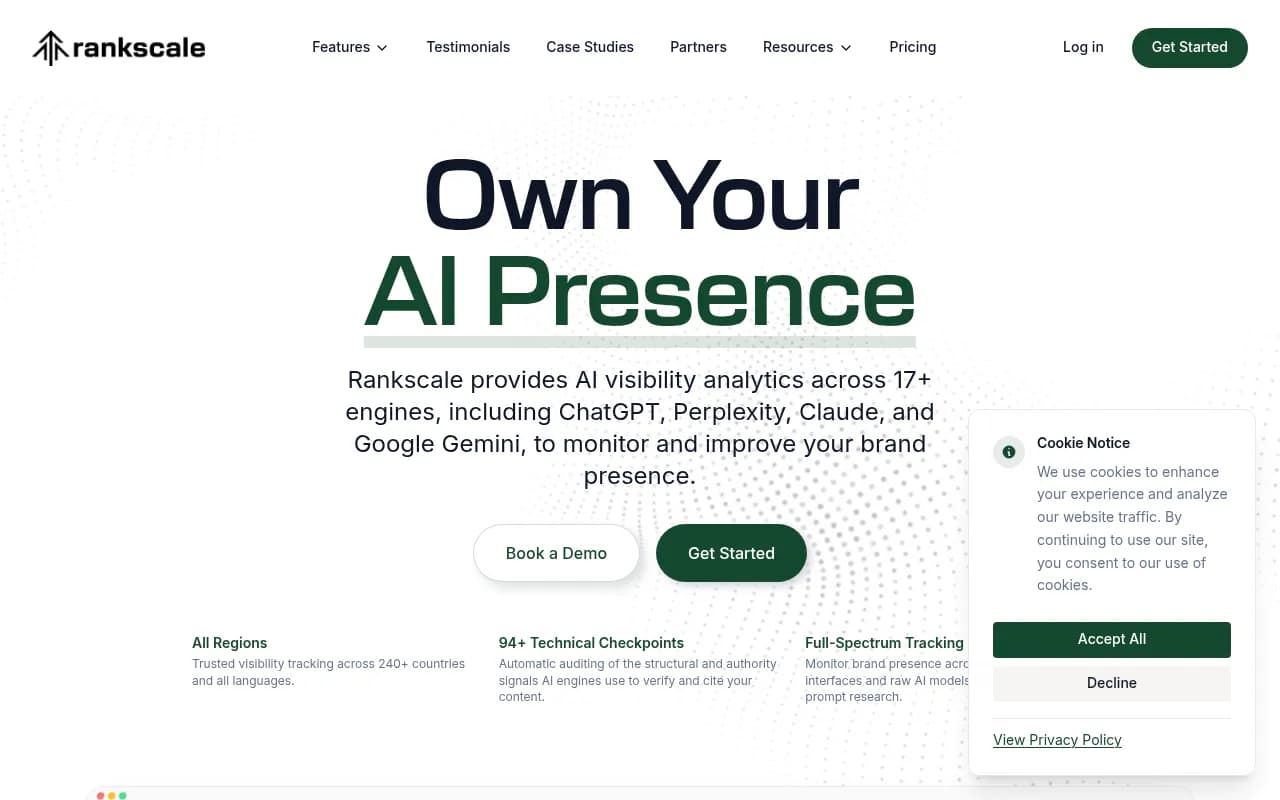
7. Rankscale
About $20/mo, billed annually only, with a Pro tier at $99/mo. A reasonable way to test whether tracking helps your team at all before committing real budget.
8. Knowatoa
Starts at $59/mo and focuses on AI Overviews and brand monitoring. Lightweight, narrow, and cheap enough to run alongside another tool as a cross-check.

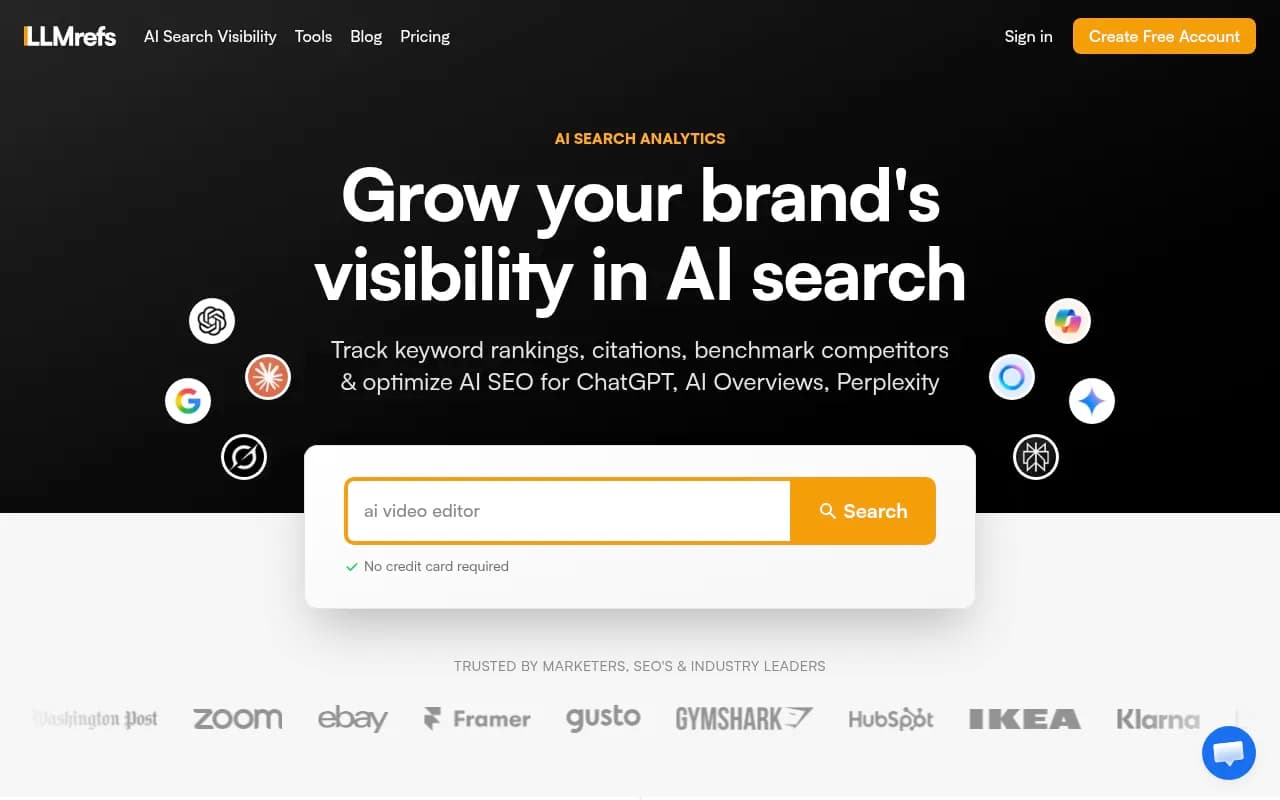
9. LLMrefs
$79/mo for 500 prompts, which is a lot of prompts for the money. Strong if your concern is breadth of query coverage and keyword-style citation analysis.
10. Evertune
Self-serve from about $60/mo. It analyzes AI responses at scale, which suits teams that care about statistical stability over a handful of prompts.

11. Searchable
Turns AI responses into measurable scores. A fit if you mainly need a simple score to report upward, though it is less deep than the leaders on citation tracing.

12. Ahrefs Brand Radar
Technically part of an SEO suite, but it is the one to take seriously if you already use Ahrefs. Paid options run from $50/mo (2,500 checks) up to $699/mo for all 6 AI indexes. Its data claim, 243M+ prompts from real People Also Ask questions, is the most interesting provenance argument in the category. If you don't use Ahrefs, the suite context is the bloat you were trying to avoid.

Side-by-side summary
| Tool | Entry price (reported) | Billing unit | Engine caveat | Best for |
|---|---|---|---|---|
| Promptwatch | $95/mo | Prompts and responses | All models on every plan | Tracking plus acting on gaps |
| Peec AI | $95/mo | Prompts | 3 models, 4th is add-on | Prompt-level analytics |
| Otterly.AI | $29/mo | Prompts | Claude, Gemini, AI Mode extra | Cheapest start |
| Scrunch | $250 to $300/mo | Prompts plus responses | Verify plan names | Agent-readiness audits |
| LLM Pulse | EUR 49/mo | Prompts | Daily costs 50 to 61% more | Low cost per prompt |
| AthenaHQ | $295/mo | Credits | 11 models | Guided recommendations |
| Rankscale | $20/mo | Plan | Annual only | Low-risk trial |
| Knowatoa | $59/mo | Plan | AI Overviews focus | Budget cross-check |
| LLMrefs | $79/mo | Prompts | 500 prompts | Query breadth |
| Evertune | $60/mo | Self-serve | Response-scale analysis | Statistical rigor |
| Searchable | Varies | Plan | Score-first | Simple reporting |
| Ahrefs Brand Radar | $50/mo | Checks | Per-index pricing | Existing Ahrefs users |
All prices come from third-party roundups and vendor pages checked in October 2026. Prices move, so confirm on each vendor's site.
Who should stay with Profound
If you are an enterprise team that needs the deepest data, real-conversation volume data, and Amazon Rufus tracking, and you have budget for a custom contract, Profound still earns its place. Even one independent roundup flags the data quality as best-in-class while calling the product too expensive and complex for most B2B SaaS content teams. Both can be true.
A note on the roundups themselves. The Frase list ranks Frase first and the AirOps list is organized around AirOps' own category. They are useful for discovering names, but not for neutral ranking. The same goes for any list, including this one: I have put Promptwatch first for the reasons stated, and you should test two or three tools on your own prompts.
How to run a fair trial
- Write 20 to 30 prompts your actual buyers would ask, including a few competitor comparisons.
- Run them on two tools at once for at least a week.
- Compare engine by engine, not a blended score.
- Check whether the citations listed are real, clickable URLs you can verify in the live interface.
- Ask whether the tool can tell you what to do next, or only that something changed.
For more options, browse the GEO software directory at bestgeosoftware.com or the AI rank tracking tools directory.
Which one to pick
Solo marketer or small team on a budget: Otterly Lite or Rankscale to test, then Peec Starter. Content team that wants the work after the report: Promptwatch. Already paying for Ahrefs: turn on Brand Radar and see if it is enough. Enterprise with procurement: Profound or Scrunch, after quotes. Start with a 7-day trial wherever one exists, and make the decision on your own prompts rather than a vendor's demo.