Key takeaways
- Profound's own pricing page now shows a free Trial and a custom Enterprise plan. The $99 Starter and $399 Growth tiers that many roundups still quote may be stale, so confirm before budgeting.
- Cost per prompt falls as you move up tiers. Otterly goes from about $1.93 per prompt at $29 to about $1.22 at $489, but the cheapest entry also has the fewest prompts.
- Price per prompt is only half the story. Engine add-ons, response caps, and whether the tool helps you fix gaps all change the real cost.
- Compute your real prompt count first: buying questions x engines x cadence. For most B2B teams it lands well above 50.
- Almost every "best alternatives" article is written by a vendor who ranks itself first. Treat the numbers below as a starting point and verify them on each vendor's pricing page.
Why per-prompt pricing is the right yardstick
Profound is a serious product. It raised a $96 million Series C in November 2025 and publishes some of the most-read research in the category. The complaint buyers have is about the price ladder and the lack of a plain number, not the data.
The third-party roundups disagree on what Profound costs. Linkeddit, a July 2026 comparison, lists Starter at $99 a month for 50 prompts and Growth at $399 for 100. That is $1.98 and $3.99 per prompt, and it is a four-fold price jump for a two-fold increase in coverage. Visiblie, checking in April, could not read those prices at all. Profound's official pricing page, as I read it now, shows only two plans: a free Trial (limited agent credits, 50 prompts run daily for 7 days, three engines, no customization of prompts, no export or API) and a custom Enterprise plan with up to 9 answer engines, an API, SSO and SOC 2.
There is also a self-serve Agency Growth plan, which ZeroRank reports at $99 a month with 400 agent credits per client workspace. That figure is third-party, so check it.
The practical upshot: if you want to see a number before talking to sales, per-prompt pricing from other vendors gives you a way to compare. Profound is still worth a demo if you need nine engines and enterprise security. For everyone else, here is what the rest of the market publishes.

A caveat about the sources
I pulled these numbers from third-party roundups dated April to October 2026, not directly from every vendor's pricing page. Linkeddit sells a competing product (Answer Radar, $60 a month) and says so. Frase, Visiblie and Orchly each rank themselves first. That is normal for this genre, but it means prices can be out of date and rankings are self-interested. Re-check anything you plan to buy.
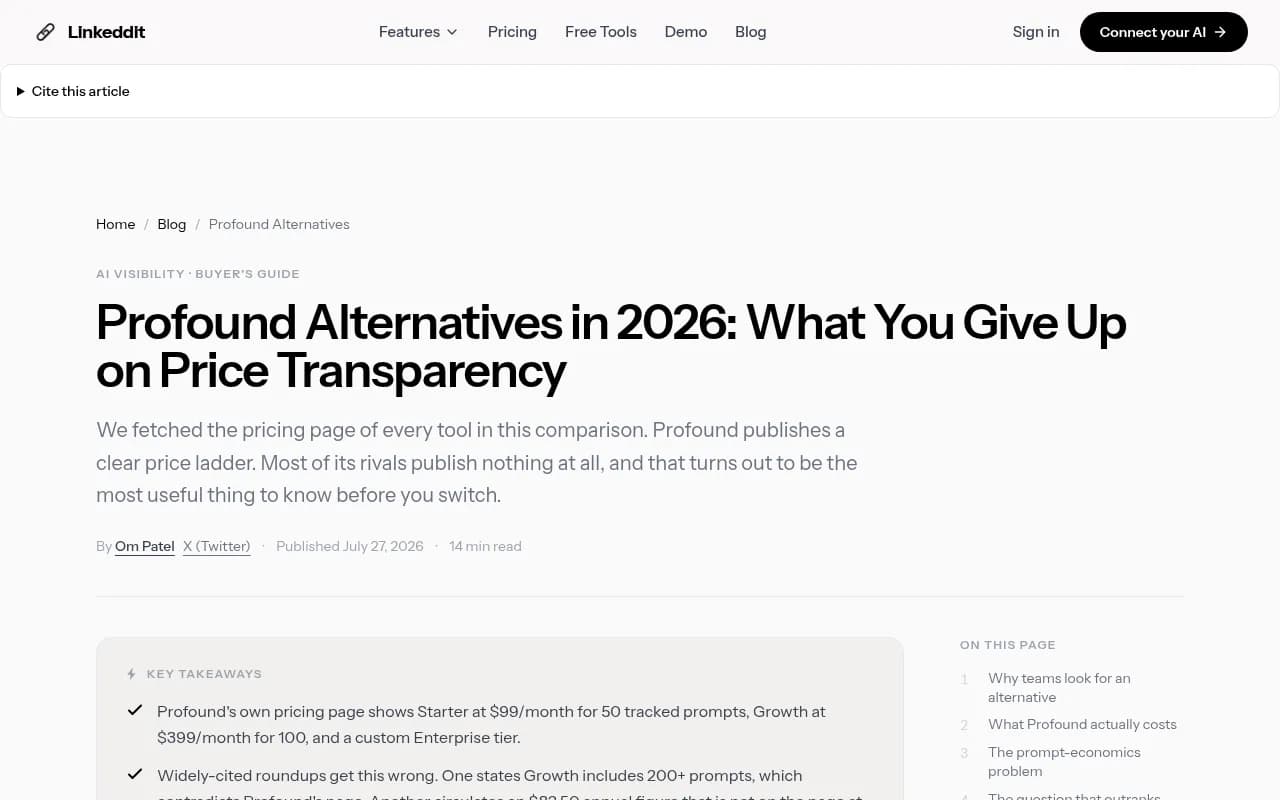
The Linkeddit piece is the most useful of the three for this topic because it checks which vendors actually render a price. Of ten vendors, seven did. Peec AI and Scrunch published nothing it could read, though Visiblie found numbers for both in April.
Published prices compared
| Tool | Entry price | Prompts | Notes |
|---|---|---|---|
| Otterly.AI | $29/mo (Lite) | 15 | $189 for 100 prompts, $489 for 400. Claude, Gemini and AI Mode are paid add-ons |
| HubSpot AEO | $50/mo ($45 annual) | 25 | ChatGPT, Gemini, Perplexity. Still labelled beta |
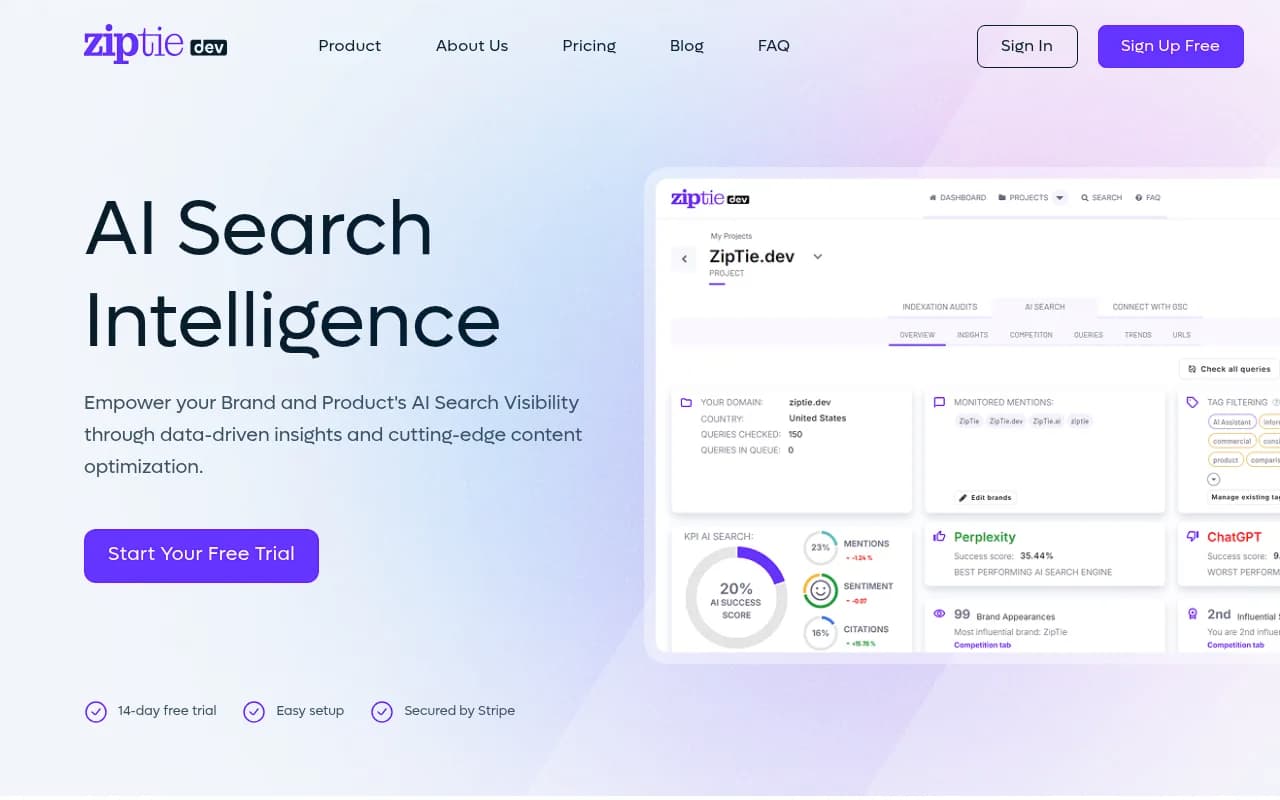
| ZipTie | $69 / $99 / $159 | Usage-based (Pro: 2,000 AI searches) | Frase lists it from $35.63, a different usage-based figure |
| Visiblie | EUR 129/mo (Growth) | 100 | 4 base engines, 5 seats |
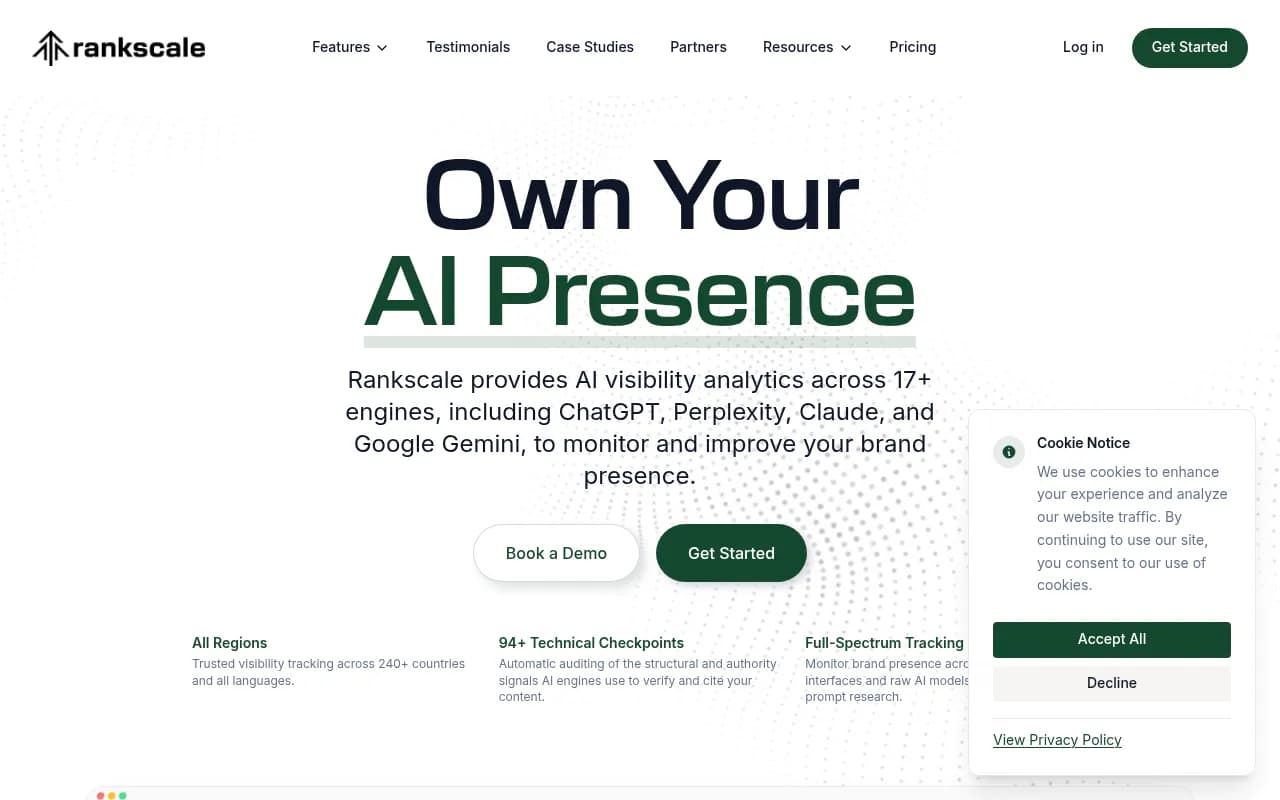
| Rankscale | EUR 99/mo (Pro) | Credit-metered | Rated up to 4,800 AI responses per month |
| AthenaHQ | Free tier, then $295/mo | Varies | Action center and content agent |
| Peec AI | EUR 205/mo (Pro, April 2026) | 150 | A 350-prompt tier also exists |
| Scrunch AI | $250/mo (Core, April 2026) | 125 | 5 seats, 7-day trial, SOC 2 Type II |
| Ahrefs Brand Radar | $199/mo per index or $699 for all (Linkeddit) | n/a | Visiblie lists EUR 358 or 654, so confirm |
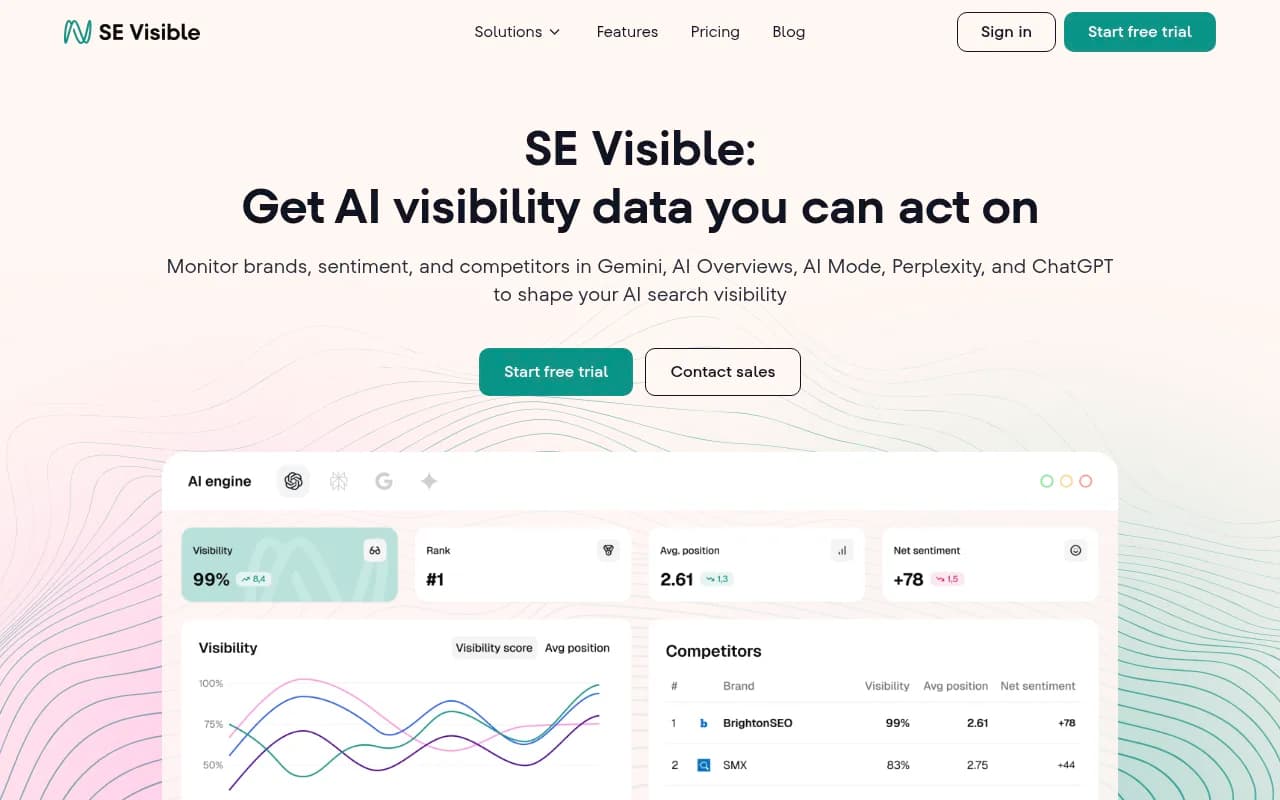
| SE Ranking Visible | $71.20/mo annual, $89 monthly | n/a | Add-on to SE Ranking |
The Ahrefs conflict is real. Two sources give different structures for the same product, and I could not resolve it from the research. Look at the live page.
Cheap entry points
Otterly.AI
Otterly.AI is the cheapest way in at $29 a month, but you get 15 prompts and four engines, with Claude, Gemini and AI Mode sold as add-ons. At $29 for 15 it works out to roughly $1.93 per prompt. At the Premium tier ($489 for 400) it drops to about $1.22. It is a monitor, not a fixer.

HubSpot AEO
HubSpot's AEO tools cost $50 a month ($45 billed annually) for 25 prompts across ChatGPT, Gemini and Perplexity. That is about $2 per prompt, and the product is still in beta. It makes sense if you already live in HubSpot.

ZipTie
ZipTie prices by usage rather than prompt count, which makes per-prompt comparison awkward. The Pro plan at $159 gives 2,000 AI searches across three engines. Fine if your workload is spiky; harder to forecast if it is not.
Rankscale
Rankscale Pro is EUR 99 a month, credit-metered, and the vendor rates it at up to 4,800 AI responses a month. Credits make budgeting a little opaque, so test with a small project first.
Mid-market options
Peec AI and Scrunch AI
Peec Pro was listed at EUR 205 a month for 150 prompts in April 2026, with a 350-prompt tier above it. Scrunch Core was listed at $250 for 125 prompts and five seats. Both were hard to price from their own pages in Linkeddit's check, which is itself a finding for a buyer who wants transparency.


AthenaHQ
AthenaHQ has a free tier and then $295 a month. It goes beyond reporting with an action center and a content agent, so the extra money buys some of the fix.

SE Ranking Visible, Ahrefs Brand Radar and Semrush
If you already pay for a classic SEO suite, adding AI tracking to it can be cheaper than a standalone tool. SE Ranking's add-on is $71.20 a month billed annually. Ahrefs Brand Radar and the Semrush toolkit sit on top of their parent products. The tradeoff is that AI data tends to be shallower than at specialist tools.

Where Promptwatch fits
Promptwatch is the option I would look at if you want the number on the page and the fix in the same product. Published pricing is plain: Essential is $95 a month for 50 prompts, Professional is $245 for 150 prompts, and Business is $579 for 350 prompts. That is about $1.90, $1.63 and $1.65 per prompt, and every plan includes all supported AI models, unlimited seats, Agent Chat and Brand Narrative. Annual billing gives 12 months for the price of 10. Confirm current prices at promptwatch.com/pricing.
Per-prompt cost is not why I would pick it, though. Promptwatch tracks the real interfaces of ChatGPT, Google AI Overviews, Google AI Mode, Gemini, Perplexity, Copilot and others, then goes further than a monitor: IP-verified AI crawler logs show whether bots read your pages, and the Action Board and Content Agent turn gaps into published articles. Business is the first plan with the automated Content Agent, faster-than-daily tracking and Fact Check. Agencies have Kick-off ($199), Growth ($399) and Scale ($799) plans with unlimited prompts, though those are sized by responses instead.
That last point matters for comparison. Prompt count is not the only unit. Promptwatch plans also state response allowances (6,000, 18,000 and 42,000 on the three brand plans), which is closer to what you actually consume.

For head-to-head detail, see Promptwatch vs Profound. You can start with the free AI visibility report or the 7-day free trial on monthly billing.
How to do the per-prompt math properly
Count what you really need
The formula from the research is buying questions x engines x cadence. Weekly cadence is enough for most teams. Fifteen buyer questions across four engines is already 60 data points, and a real category with several competitors and personas lands far above 50 prompts.
Remember one prompt is not one search
Promptwatch's ChatGPT query fanouts report (early December 2025 to April 2026) shows ChatGPT rewrites a prompt into shorter keyword-style searches. Average fanouts per response fell from 2.15 in December to about 1.84 by early March, and average fanout length fell from about 117 characters to roughly 53 by April. So a tracked prompt samples a user question, and what the model searches is something different. That is a reason to favor tools that show fan-outs, not just a prompt tally.
Check what is metered besides prompts
- Engine add-ons. Otterly charges extra for Claude, Gemini and AI Mode. Profound's Trial excludes Perplexity, Claude and AI Mode.
- Response caps and credits, which Rankscale and ZipTie both use.
- Seats. Scrunch includes five; Promptwatch includes unlimited.
- Whether the data comes from real interfaces or API calls. They can differ.
- Training-data answers versus live retrieval. HubSpot documents that ChatGPT and Gemini lean on training data while Perplexity uses live search.
Think about what monitoring prices are doing
One practitioner on r/GEO_optimization, quoted by Linkeddit, argued monitoring prices will trend toward zero and the real question is who builds beyond monitoring. I think that is half right. Prices are falling, but the work after the dashboard is where teams stall.
Which one to pick
| Your situation | Look at |
|---|---|
| Testing the idea on a tiny budget | Otterly Lite, HubSpot AEO |
| Already on Ahrefs, SE Ranking or Semrush | The add-on from your suite |
| Mid-size team wanting seats and a trial | Scrunch, Peec, Visiblie |
| Want monitoring plus fixing, with published prices | Promptwatch, AthenaHQ |
| Need nine engines and SOC 2 with a demo | Profound Enterprise |
More options are listed in the GEO software directory at bestgeosoftware.com and the rank tracker directory at ai-rank-tools.com.
Final checklist before you buy
- Open each vendor's pricing page yourself and screenshot it with the date.
- Multiply your real prompt need by engines, then compare cost per prompt at that volume, not at entry.
- List the add-ons you need and price them in.
- Ask whether the tool helps you publish fixes or only reports.
- Run a one-month trial on one project before committing annually.
The cheapest sticker price rarely survives step two.