Key takeaways
- A brand mention and a citation are different signals. A mention means the answer names you; a citation means the answer links a source. Neither is traffic or revenue.
- A useful citation report breaks results down by domain, URL, content type, source type and prompt intent, then connects them to your own pages.
- Citation behavior shifts fast. Reddit's share of ChatGPT citations fell from roughly 4% to 0.5% on August 14, 2026, so a static report goes stale within weeks.
- Monitoring and fixing are separate purchases. The best tools show which pages and third-party sources AI already trusts, then help you act on that.
- Test every vendor with the same 15 to 20 prompts before paying.
Why mention counts are not enough
Most AI visibility dashboards open with a number: your brand was mentioned in 34% of tracked answers. Fine. But that number cannot tell you why you were mentioned, which page got you there, or what to do when you were not.
Citations are where the work lives. When ChatGPT, Perplexity or Google AI Overviews answer a question, they pull from specific URLs. If you know which domains and pages feed the answer, you know where to publish, where to pitch, and which competitor pages to study. If you only know a count, you have a scoreboard and no plan.
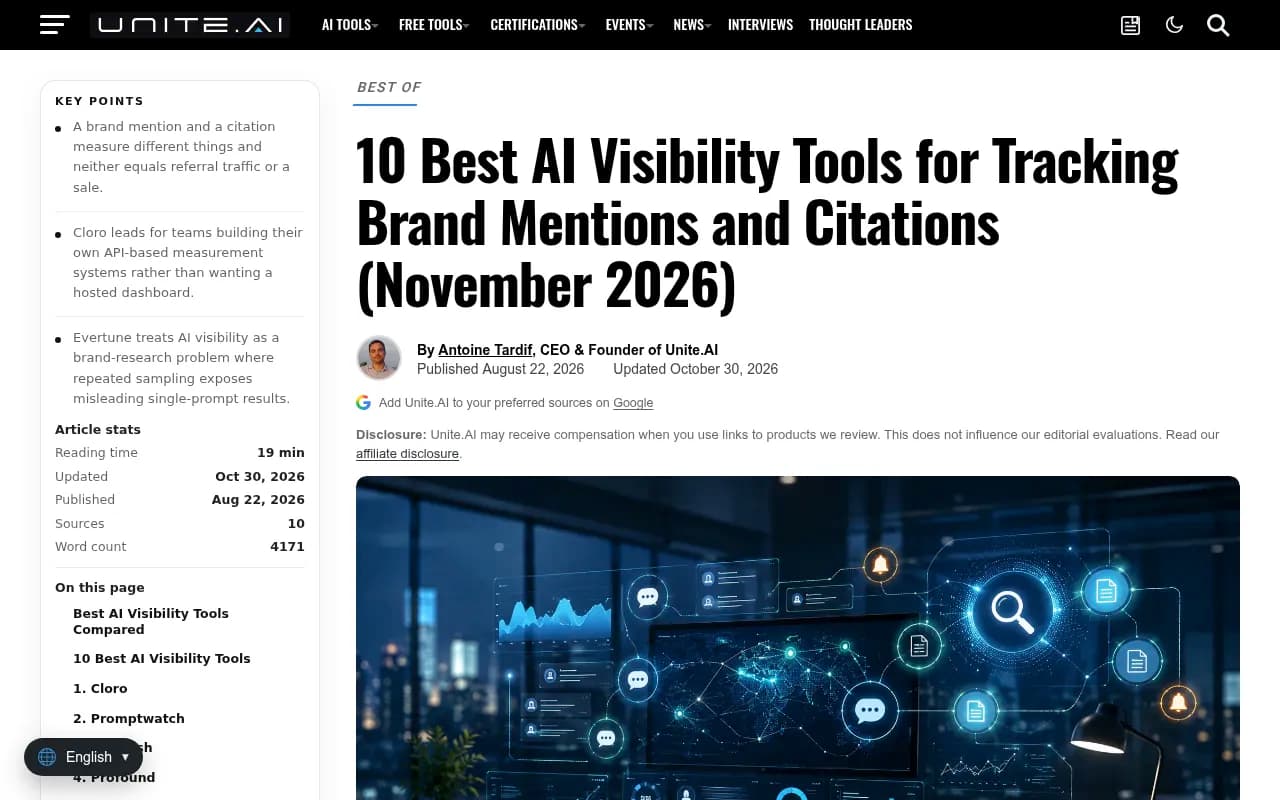
The Unite.AI review of AI visibility tools puts the distinction plainly: a mention names the company, a citation identifies a linked source, and neither equals referral traffic or a sale. One Quora commenter said it more bluntly: most dashboards just count mentions, which misses the useful part. I agree.
What a good citation source report contains
Here is the checklist I would hold every vendor to. Not every tool passes all of it, and that is the point of the exercise.
Domain and URL level detail
The minimum is a ranked list of domains cited for your tracked prompts. Better is the exact URL, because a domain-level view hides whether AI cites your pricing page or a random blog post. You also want your own citation rate (how often cited sources are yours) next to competitors'.
Content type and source type
This is the dimension most tools skip, and it changes what you write. In Promptwatch Data's content type report (Sep 28 to Oct 4, 2026), product pages were 22.4% of classified ChatGPT citations and landing pages 16.8%. Listicles were 13.6%, documentation 7.5%, comparisons 5.9% and reviews 1.7%. For commercial prompts, product pages, landing pages, listicles and comparisons made up almost 70% of citations.
Branded prompts looked different: reviews were 5.6% of citations, more than three times their overall share. A report that cannot split by content type and prompt intent hides that.
Citation trends over time
Citation patterns are not stable. Promptwatch Data on content half-life tracked every page ChatGPT cited on July 6, 2026 for 90 days: landing pages and docs stayed cited longest, while news lost half its pages within 36 days. If your tool only gives you a snapshot, you cannot tell whether a page is ramping up or decaying.
Platform changes matter too. Reddit's share of ChatGPT citations collapsed from about 4% to 0.5% on August 14, 2026, while Google's surfaces declined more gradually. And in the October 2026 social media citation data, ChatGPT got 0.46% of citations from social platforms versus 12.2% for Google AI Overviews. A strategy built on one model's habits breaks when that model changes.
Third-party and offsite sources
Many citations point at pages you do not own: review sites, listicles, forums, news. A good report shows which of those name you, which name only competitors, and which are worth a pitch. Link-less brand mentions on cited pages are a real opportunity.
Connection to your own site
The best reports close the loop. Did the AI crawler actually read the page? Was it cited? Did anyone click? Dageno's guide makes a point I like: citation tracking is not citation improvement, and no monitoring platform can force an engine to cite you. What it can do is show which URLs are already sources, which topics lack an authoritative page, and whether things improve after you act.
How the main tools compare on citation reporting
The table below is based on vendor positioning and the research I could verify. I did not verify pricing for most vendors, so check each site before buying.
| Tool | Citation reporting strength | Acts on findings? | Notes |
|---|---|---|---|
| Promptwatch | Citation trends by content and source type, page-level tracking, offsite mentions, crawler logs | Yes, content agents and action board | Broadest end-to-end stack |
| Profound | Citations, sentiment, benchmarking, FactCheck | Marketing agents | Enterprise focus |
| Peec AI | Source analysis, visibility, position, sentiment | Prioritized actions and Peec Agent | Popular with agencies |
| Ahrefs Brand Radar | Pre-collected AI response index, citations, source research | Research-led | Good for broad discovery |
| Scrunch AI | Prompt and citation tracking, page audits | Agent-ready content delivery | Strong on crawler diagnostics |
| Semrush | Mentions, citations, competitor research | Inside the SEO suite | Best if you already use Semrush |
| Otterly.AI | Basic monitoring with content checks | Limited | Affordable baseline |
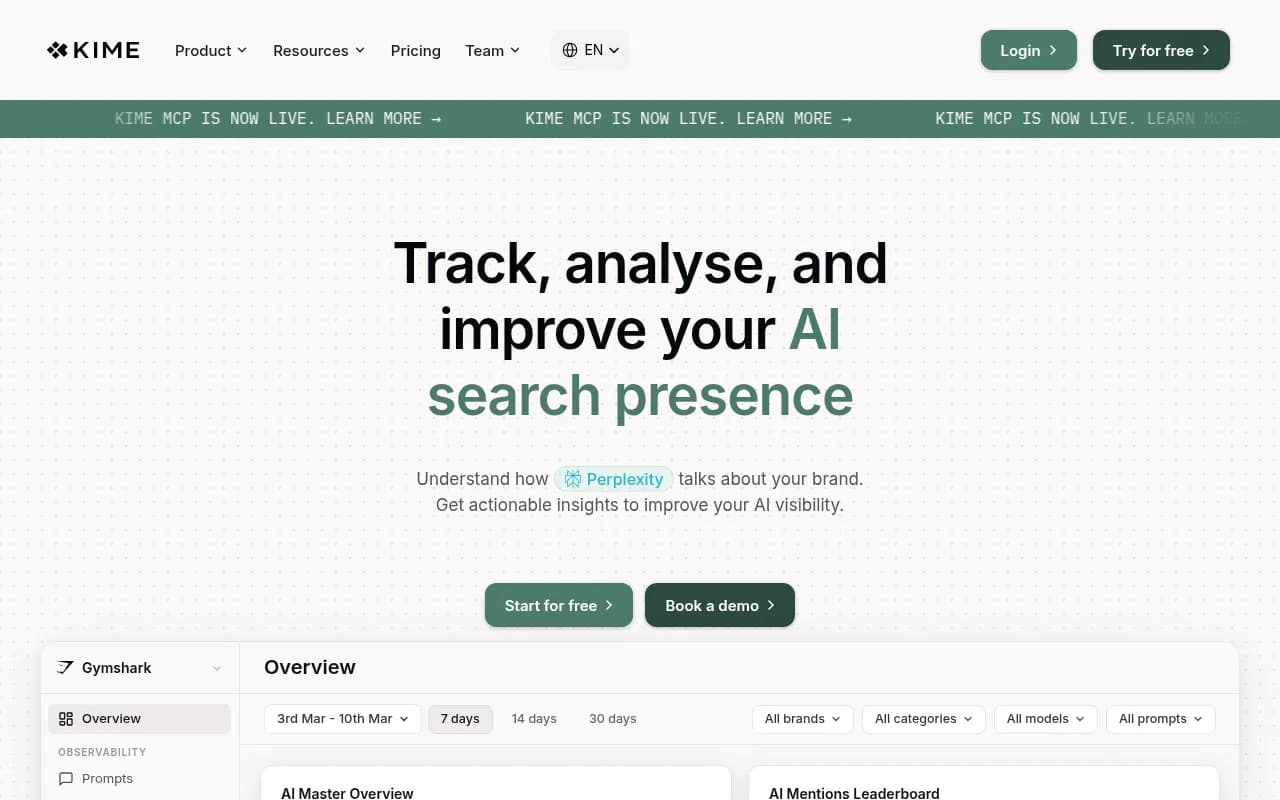
| KIME | Citation analytics, sentiment, ad tracking | Agentic executions | Vendor's own ranking puts it first, treat that with care |
Tools worth a closer look
Promptwatch
Promptwatch is the one I would start with if citation sources are the priority, because the reporting goes past a domain list. Citations are classified into 22 content types and 20 source types, with URL positions over time and first cited date, ramp-up, peak and decay half-life per cited page. Dedicated reports cover the Reddit threads, YouTube videos, LinkedIn posts and Instagram accounts AI cites, which most competitors ignore.
What makes it more than a report: Page Tracker shows which prompts cite any URL, yours or a competitor's, and IP-verified crawler logs help tell an access problem from a content problem. Offsite Mentions find third-party pages that name you without linking. From there the Action Board and Content Agent turn gaps into drafts. Business is $579/mo and is the first plan with the Content Agent; confirm current prices at promptwatch.com/pricing. There is a 7-day free trial on monthly billing, and a free AI visibility report if you want a quick look first.

If you are choosing between it and a specific rival, the head-to-head pages cover Promptwatch vs Profound and Promptwatch vs Peec.
Profound
Profound is the usual enterprise name: daily prompt tracking, citations, sentiment and competitive benchmarking, plus a FactCheck feature for inaccurate claims. It is strong for large brands with budget. Expect a higher price point, and check whether it covers social citation sources, since I could not confirm that.

Peec AI
Peec combines visibility, position and sentiment with source analysis, and its agent suggests technical and content actions. Reviewers frequently recommend it to European agencies. It is a good middle option if you want sources and suggested actions without enterprise overhead.

Ahrefs Brand Radar
Brand Radar works from a pre-collected index of AI responses plus custom prompt tracking, which makes it good for research: you can look at citations around a topic before you set up anything. If your team already lives in Ahrefs, the workflow is familiar.

Scrunch AI
Scrunch pairs prompt and citation tracking with page audits and agent traffic monitoring. Its angle is crawler diagnostics and agent-readable pages, so it fits teams whose main worry is whether AI can even read their site.

Semrush AI Visibility Toolkit
If Semrush is already your SEO home, the AI toolkit reduces tool sprawl. Per the Unite.AI review it covers mentions, citations, audience estimates and prompt tracking. The tradeoff is less AI-specific depth than the dedicated platforms.
Otterly.AI
Otterly is the cheap starting point. It gives you monitoring and basic content checks. Fine for a first baseline, but do not expect deep citation analysis by content type.

KIME
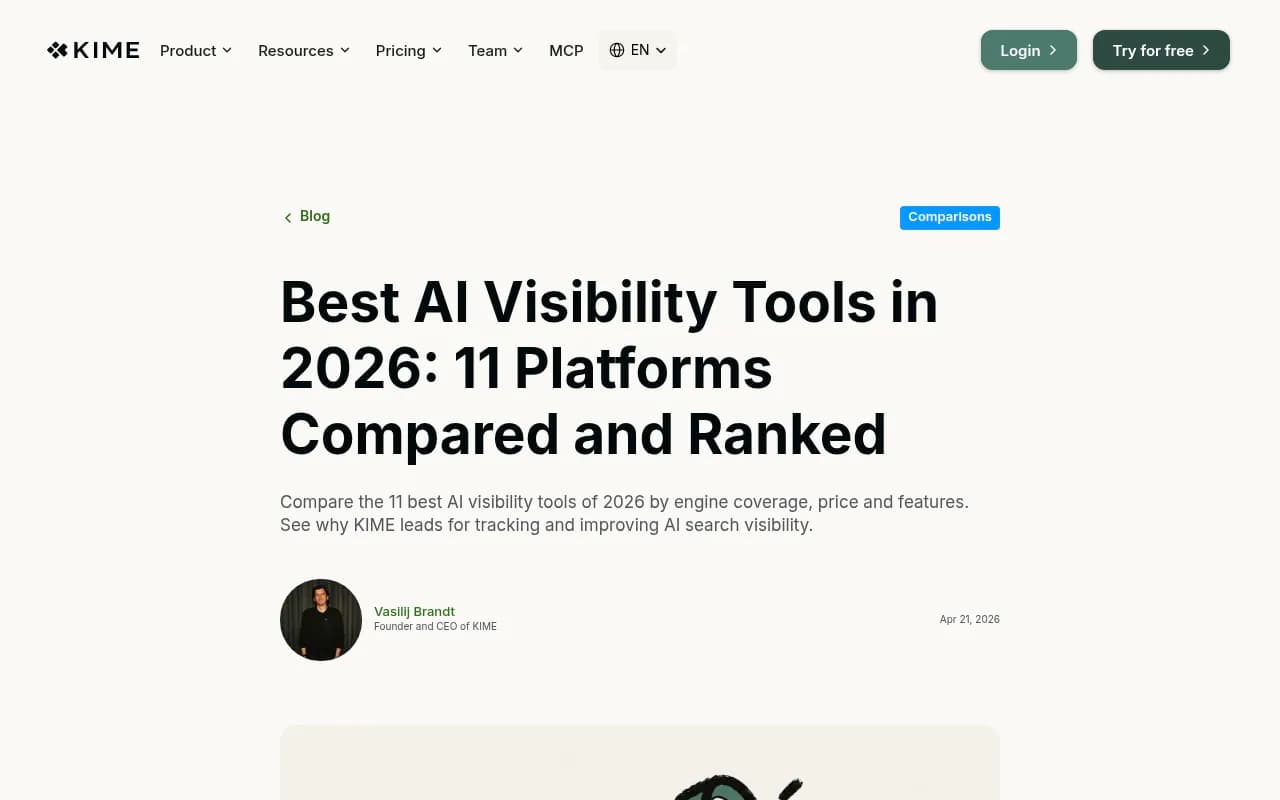
KIME tracks nine engines at the top tier and reports citation-level analytics, sentiment, and competitor ads inside AI answers. The ranking I found that puts it first was published by KIME itself, so weigh it accordingly. Entry plans track only two engines.
Others to know
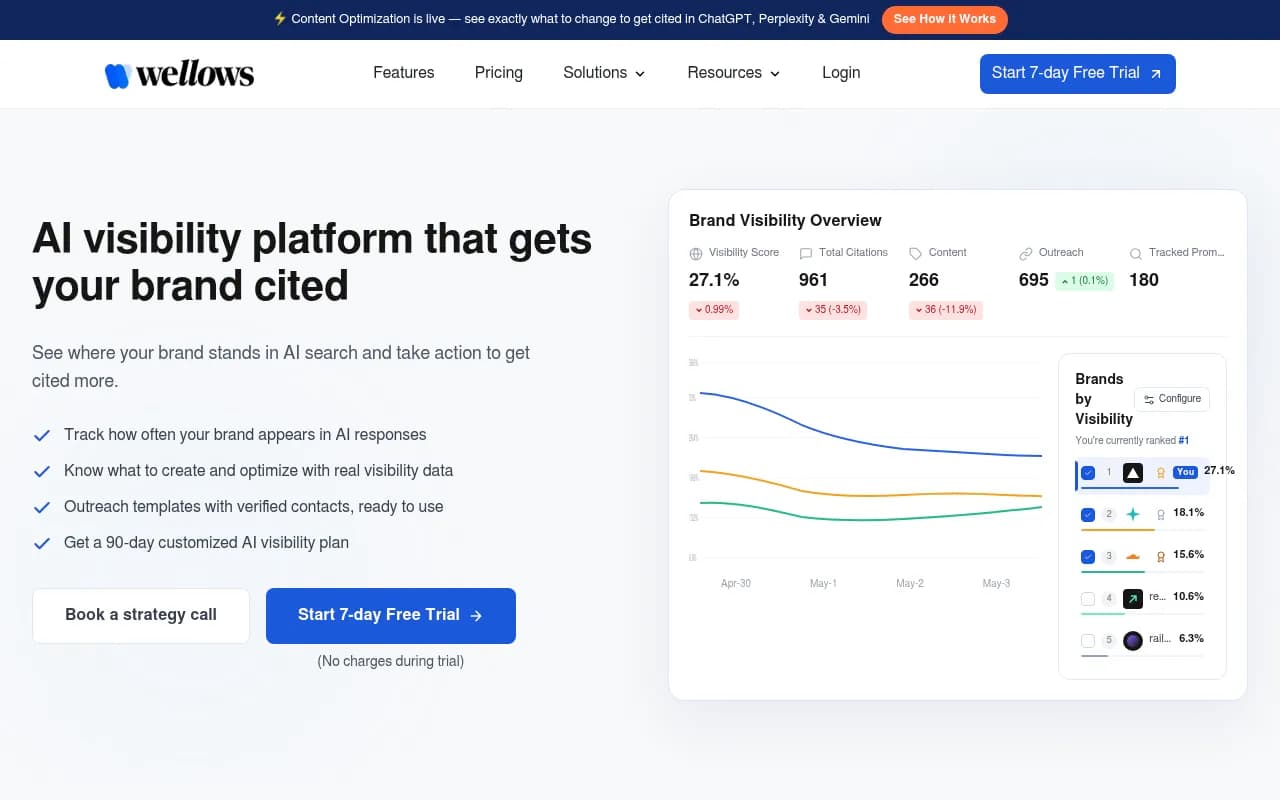
Smaller names worth a look for narrower jobs: MentionBird for seeing which sources engines cite, Findable for citation-gap analysis, Wellows for citation tracking with outreach, and Passionfruit for tying citations to revenue. For a wider scan, the GEO software directory at bestgeosoftware.com lists many more.
MentionBird
How to test a citation report before you buy
Vendor demos use clean data. Use your own.
- Write 15 to 20 prompts a real buyer would ask: category terms, best-for queries, comparisons, and your brand name. The Quora advice to use fresh chats and check whether facts are right is sound.
- Run the same set in every trial. Same prompts, same country, same time window.
- Spot check five answers by hand in the real ChatGPT or Perplexity interface. Do the tool's cited URLs match what you see? Collection method matters, since user-facing answers and citations can differ from API outputs.
- Ask for a breakdown by content type and prompt intent. If it does not exist, note it.
- Find one competitor page that gets cited when you do not. Can the tool show you that page, the prompt, and how often it recurs?
- Check the time dimension. Can you see when a page was first cited and whether it is fading?
- Look for the export. CSV, API or MCP access decides whether the data ends up in your own reporting.
One more caution: the Ahrefs claim that only about 12% of URLs cited by AI assistants also rank in Google's top 10 circulates widely, but I could not verify it at the source, so treat it as unconfirmed. You do not need it anyway. Tracking AI citations separately from rankings is justified by the fact that sources shift independently, as the Reddit data shows.
What to do with the report
A citation report is only useful if someone acts on it. Roughly in order:
- Sort cited sources into yours, competitors' and third-party. Third-party sources that name competitors but not you are the pitch list.
- Match content types to intent. If commercial prompts lean on product pages and comparisons, make sure you have strong ones, not just blog posts.
- Refresh decaying pages, especially news and time-bound content that loses citations in weeks.
- Check crawlability. A page AI never reads cannot be cited. The Meta-WebIndexer data shows how quickly crawler mix changes, from about 2% to nearly 38% of tracked AI crawler requests between mid-July and August 9, 2026.
- Do not over-rotate on one platform. Promptwatch Data on domain rank found sites with domain rank 46 to 75 earned almost half of ChatGPT citations in August 2026, while DR 91 to 100 fell to about 3%. Authority alone is not the lever people assume.
- Expect breadth. Almost half of ChatGPT responses cite 10 or more unique domains, so there are many places to earn a citation, not one.
If you would rather have a team run this, an agency such as 1001 SEO Media handles GEO and AI search work, but the tools above let an in-house team do the monitoring itself.
Which one should you pick?
- Citation depth and acting on it: Promptwatch.
- Enterprise budgets and brand accuracy: Profound.
- Agency reporting at moderate cost: Peec AI.
- Broad research on top of an Ahrefs workflow: Brand Radar.
- Crawler and agent accessibility: Scrunch AI.
- Cheapest baseline: Otterly.AI.
For other categories, the AI rank tracking directory at ai-rank-tools.com is a useful second opinion. Whatever you choose, trial it with your own prompts and judge it by one question: when the report shows a gap, does it tell you which page to build, which site to pitch, and how you will know it worked?