Key takeaways
- Franchise networks have a visibility problem most tools weren't built for: you need location-level tracking, not just brand-level tracking, and most AI visibility platforms only do the latter.
- The best platforms for franchise use in 2026 combine multi-location monitoring, competitor benchmarking per location, and content gap analysis so you can actually fix what's broken.
- Promptwatch is the only platform rated "Leader" across all GEO categories in a 2026 comparison of 12 platforms, and its multi-site tracking, crawler logs, and content generation make it the strongest fit for franchise marketing teams.
- Tools like Birdeye Search AI and BrightEdge cover local AI visibility from different angles -- Birdeye for location-level citation tracking, BrightEdge for enterprise-scale reporting.
- Monitoring alone isn't enough. The platforms that actually move the needle help you create content that fills the gaps AI models expose.
Why franchise networks have a harder AI visibility problem than most brands
Most brands have one website, one set of pages, and one visibility score to worry about. Franchise networks have fifty, or five hundred.
When someone asks ChatGPT "best pizza near downtown Austin" or Perplexity "which HVAC company should I call in Phoenix," the AI isn't pulling from a single brand page. It's synthesizing reviews, local citations, third-party directories, Reddit threads, and whatever content it found relevant when it last crawled the web. That means your Austin location could be getting cited constantly while your Phoenix franchise is invisible -- and your brand-level dashboard would never show you the difference.
That's the core problem. Traditional AI visibility tools were built around a single brand, a single domain, and a handful of tracked prompts. Franchise marketing teams need something different: per-location visibility, prompt tracking that reflects how real customers search for local services, and a way to identify which locations are underperforming before the franchisee starts asking why leads dried up.
The good news is that the AI visibility space has matured enough in 2026 that real solutions exist. The bad news is that most platforms still aren't built with franchise complexity in mind. This guide walks through what to look for and which tools come closest.
What to look for in a franchise AI visibility platform
Before comparing tools, it's worth being specific about what franchise networks actually need. These requirements differ from what a single-brand SaaS company or e-commerce store needs.
Multi-location tracking at scale
You need to track visibility for each location separately, not just the brand as a whole. That means the platform needs to support multiple sites or location profiles, ideally without charging enterprise prices for each one. Look for platforms that offer multi-site plans or location-level segmentation within a single account.
Locally-relevant prompt tracking
Generic prompts like "best [category] brand" don't reflect how customers find local businesses through AI. You need to track prompts like "best [service] in [city]" or "who should I call for [problem] near me." The platform needs to support geo-targeted prompt tracking, ideally down to city or neighborhood level.
Competitor benchmarking per location
Your franchise in Denver might be competing against a different set of local competitors than your franchise in Miami. Useful competitor tracking needs to be location-aware, not just brand-aware.
Content gap analysis and fix capability
Knowing that your Phoenix location isn't being cited is only useful if you can do something about it. The best platforms show you what content is missing and help you create it. Monitoring-only tools leave you with a dashboard full of red numbers and no clear path forward.
AI crawler visibility
Understanding whether AI crawlers are even reaching your location pages -- and whether they're hitting errors, thin content, or redirect chains -- is critical for franchise sites where location pages are often templated and may have duplicate content issues.
The platforms worth considering in 2026
Promptwatch -- best overall for franchise networks
Promptwatch is the platform that comes closest to solving the franchise visibility problem end-to-end. It tracks visibility across 10 AI models (ChatGPT, Perplexity, Google AI Overviews, Claude, Gemini, Grok, DeepSeek, Copilot, Meta AI, and Mistral), supports multi-site tracking, and goes well beyond monitoring into actual optimization.
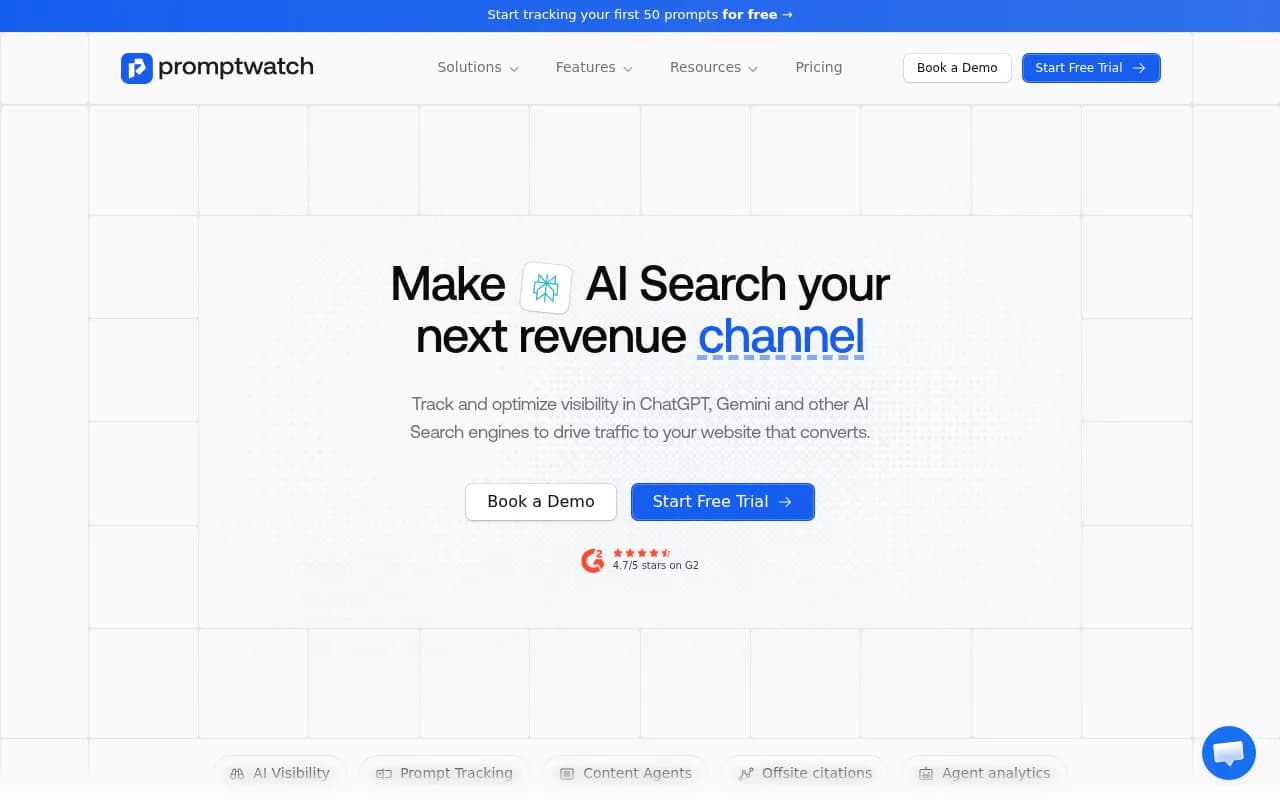
The feature that matters most for franchise teams is the Answer Gap Analysis. It shows you exactly which prompts your competitors are being cited for that you're not -- broken down by topic, angle, and question type. For a franchise network, you can run this per location, identify which markets have the worst gaps, and prioritize content creation accordingly.
The Content Agents then generate articles, location pages, and comparison content grounded in real prompt data and citation patterns -- not generic SEO filler. This matters because AI models cite specific, authoritative content. A thin location page with address and hours won't get cited. A page that actually answers the questions AI models are fielding about your service category in that city will.
Promptwatch also has AI Crawler Logs, which show you in real time which pages AI crawlers are visiting, how often, what errors they're hitting, and when a page moves from crawled to cited. For franchise networks with hundreds of location pages, this is genuinely useful -- you can spot which pages are being ignored entirely and fix the underlying issue.
Pricing starts at $99/month for one site, $249/month for two sites with crawler logs, and $579/month for five sites. For larger franchise networks, custom agency and enterprise plans are available. It's used by 1,480+ brands and agencies including Booking.com and Center Parcs.
Birdeye Search AI -- best for local citation tracking
Birdeye has been in the local reputation management space for years, and their Search AI product extends that into AI visibility with a focus on location-level tracking. It's built for multi-location businesses and understands the local search context better than most pure-play GEO tools.
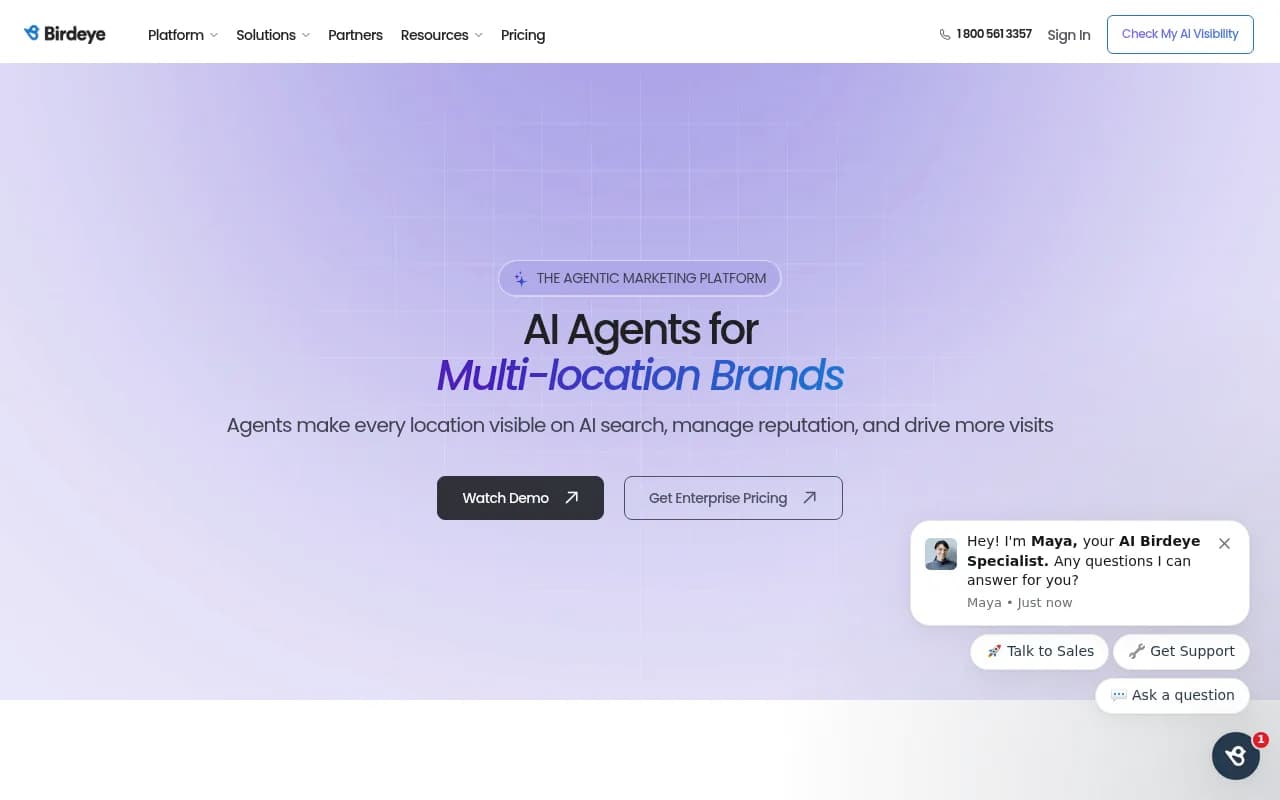
Where Birdeye excels is in connecting AI visibility to the local signals that actually drive it: reviews, local citations, Google Business Profile data, and directory listings. If your Phoenix franchise is invisible in AI results, Birdeye can often tell you whether it's because the location has weak review signals or missing directory citations -- the kind of local SEO hygiene that feeds into AI recommendations.
The tradeoff is that Birdeye is stronger on diagnosis than on content creation. It'll tell you what's wrong with your local signals, but it won't generate the content that fills the gap.
BrightEdge -- best for enterprise franchise reporting
BrightEdge has been an enterprise SEO platform for over a decade, and their AI visibility features reflect that heritage: strong reporting, deep integrations, and the kind of data governance that large franchise organizations need.
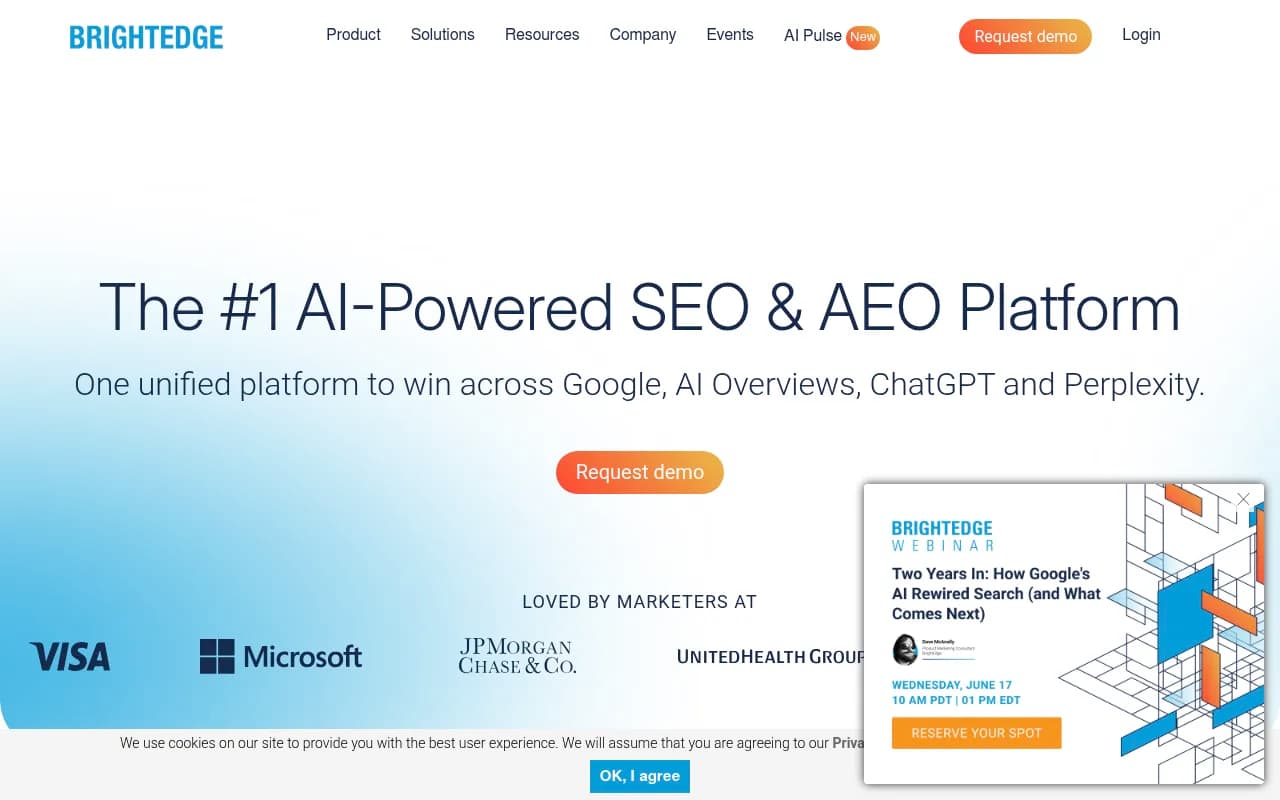
For franchise networks with dedicated SEO teams and complex reporting requirements, BrightEdge's AI search intelligence features give you visibility into how your brand appears across AI engines at scale. The platform integrates with existing enterprise data stacks, which matters when you're trying to connect AI visibility data to broader marketing dashboards.
The downside is cost and complexity. BrightEdge is priced for enterprise, and the setup investment is real. It's not the right choice for a franchise network that wants to move fast.
Profound -- best for enterprise depth
Profound is one of the stronger dedicated AI visibility platforms, with deep tracking capabilities and solid reporting. It's particularly well-suited for teams that need detailed analytics and compliance-grade data.
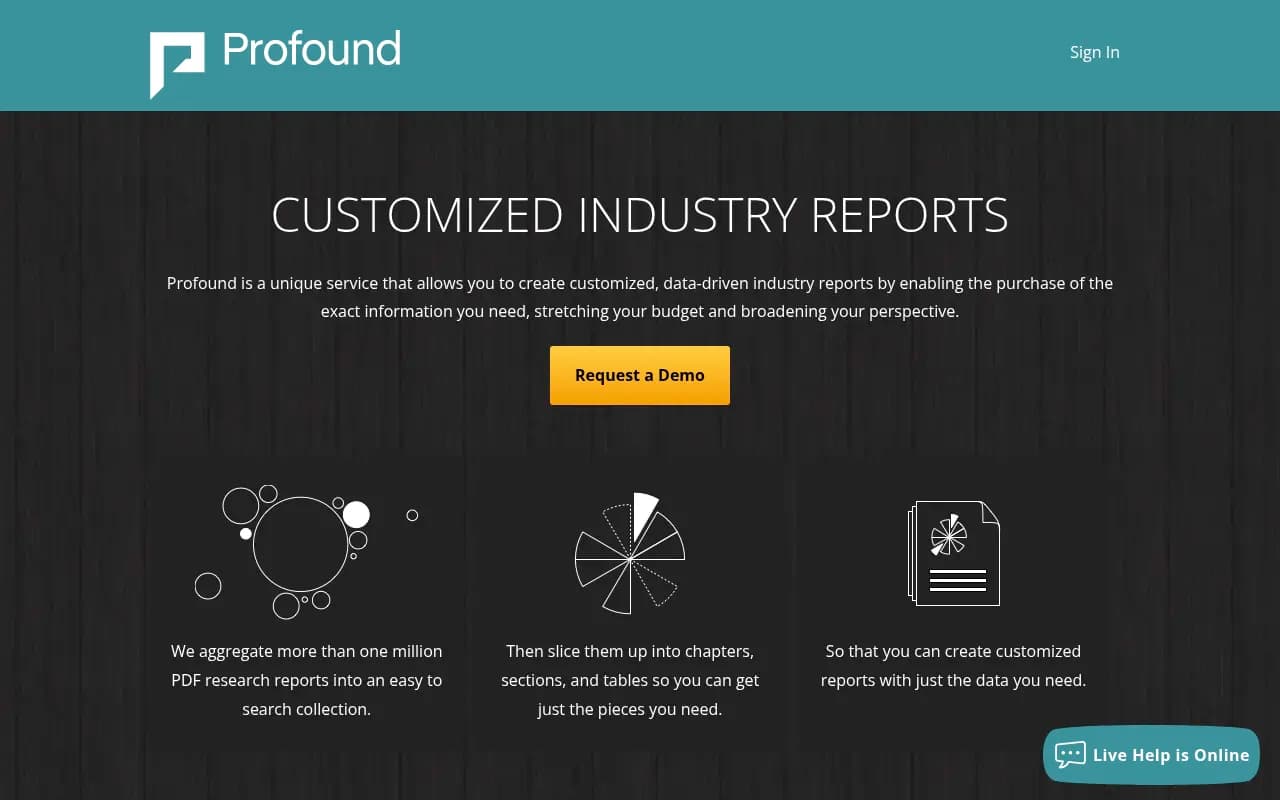
For franchise networks, Profound's strength is in the depth of its monitoring. It tracks AI responses across multiple models and gives you detailed breakdowns of citation patterns, sentiment, and competitor positioning. The reporting is thorough enough to satisfy enterprise stakeholders.
Where it falls short for franchise use is in the action layer. Profound is primarily a monitoring platform -- it shows you where you stand but doesn't help you create content to improve it. For a franchise network with dozens of underperforming locations, that gap matters.
Otterly.AI -- best for budget-conscious franchise teams
If you're running a smaller franchise network and need basic AI visibility monitoring without the enterprise price tag, Otterly.AI is worth a look. It covers the major AI models and gives you brand mention tracking at a price point that makes sense for smaller operations.
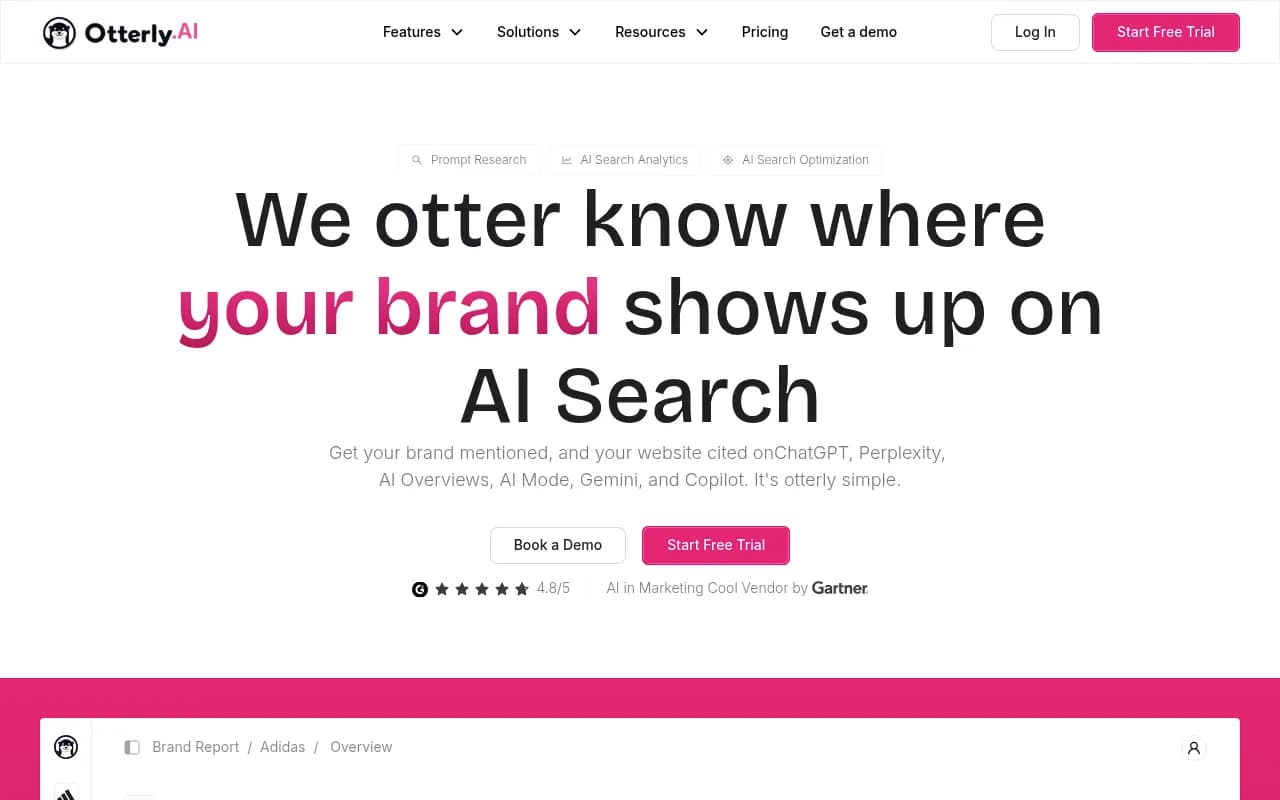
The honest limitation is that Otterly.AI is a monitoring tool. It doesn't have crawler logs, content generation, or deep gap analysis. For a franchise network trying to understand why specific locations are underperforming and fix it, you'll hit the ceiling quickly. But as a starting point for teams that are new to AI visibility tracking, it's a reasonable entry.
SE Ranking -- best for teams that want SEO and AI visibility together
SE Ranking's AI visibility tracker covers ChatGPT, Gemini, Google AI Mode, and Perplexity, and it sits inside a broader SEO platform that most marketing teams already find useful. For franchise networks that are managing traditional SEO alongside AI visibility, having both in one place reduces tool sprawl.
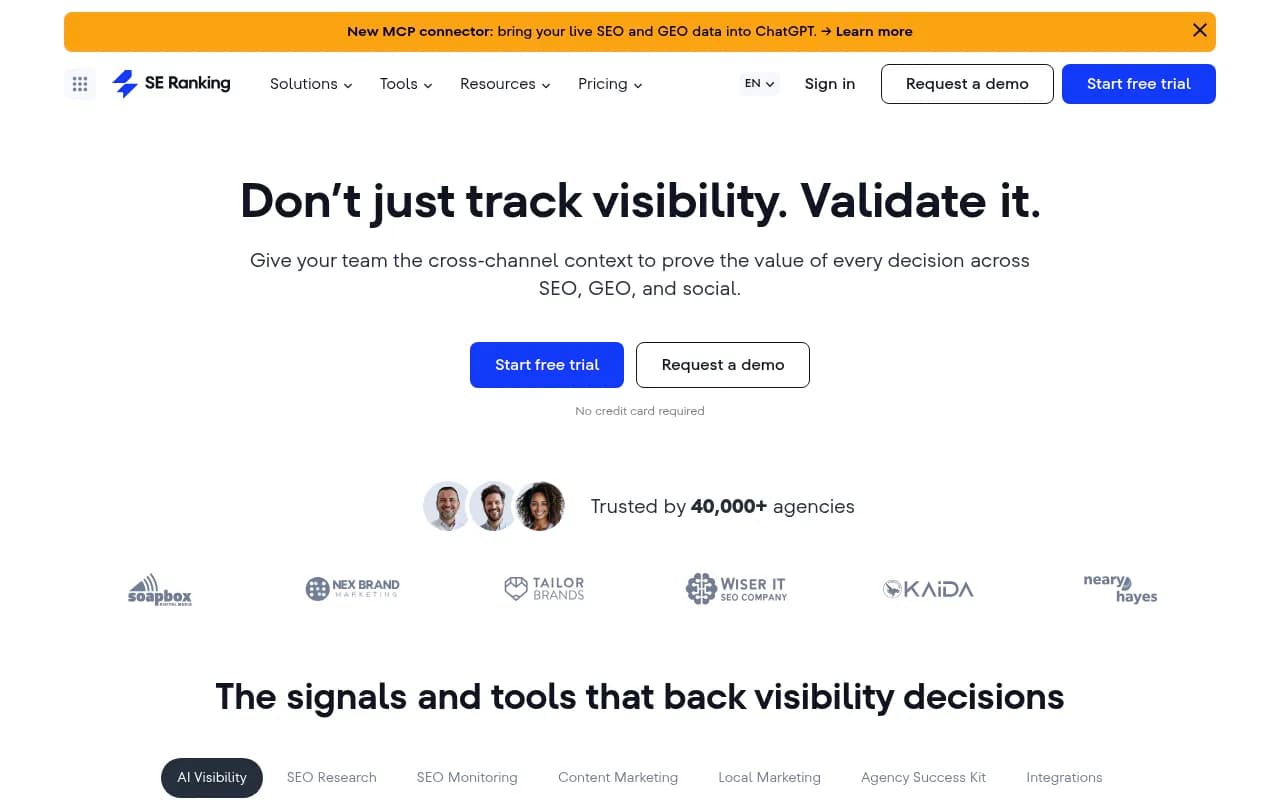
The AI visibility features include brand visibility scoring and sentiment tracking. It's not as deep as dedicated GEO platforms, but for teams that don't want to manage separate tools for SEO and AI visibility, it's a practical choice.
Conductor -- best for content-driven franchise teams
Conductor is an organic marketing platform that has added AI search insights to its existing content intelligence features. For franchise networks that are already doing content marketing and want to extend that into AI visibility, Conductor's workflow integrations are useful.
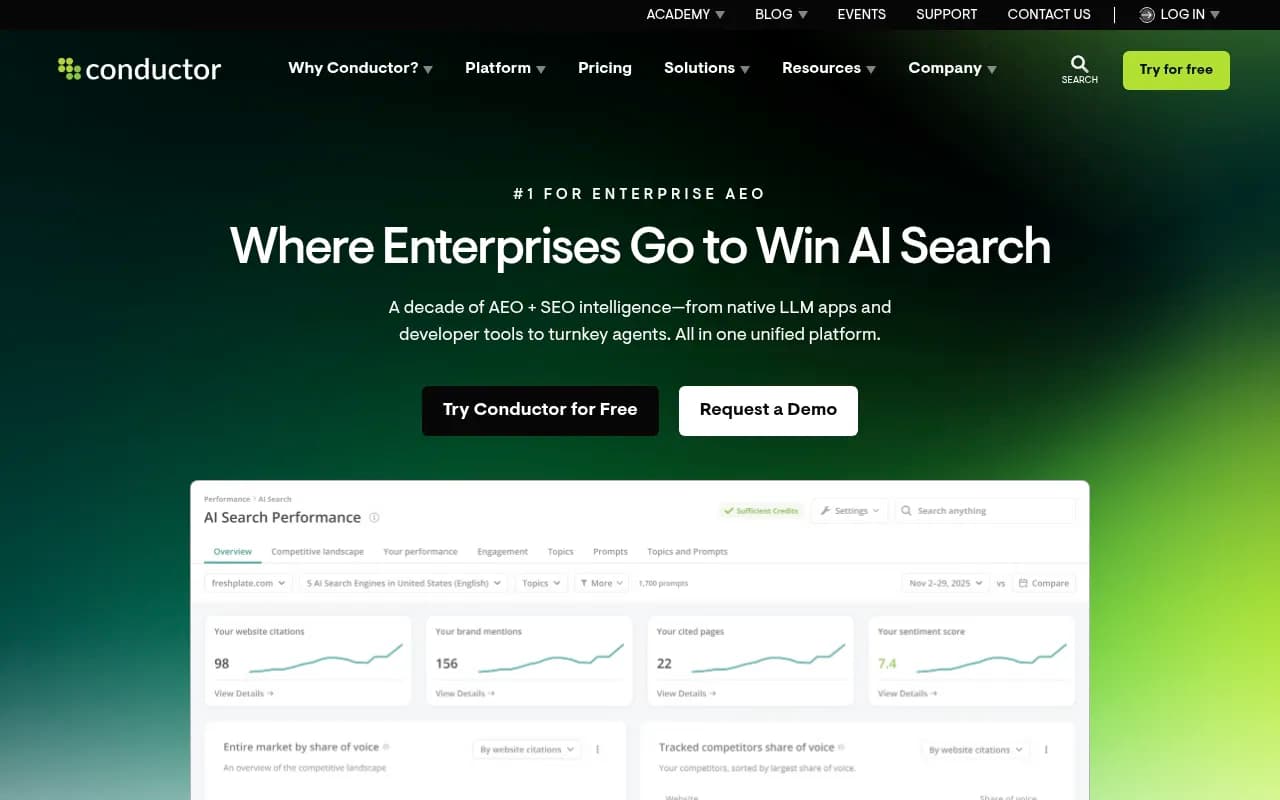
It's more of a content marketing platform with AI visibility features than a dedicated GEO tool, which means it fits best for franchise marketing teams that are already producing location-specific content and want to understand how that content performs in AI results.
AthenaHQ -- monitoring-focused alternative
AthenaHQ is a monitoring-focused AI visibility platform with clean reporting and solid coverage of the major AI models.
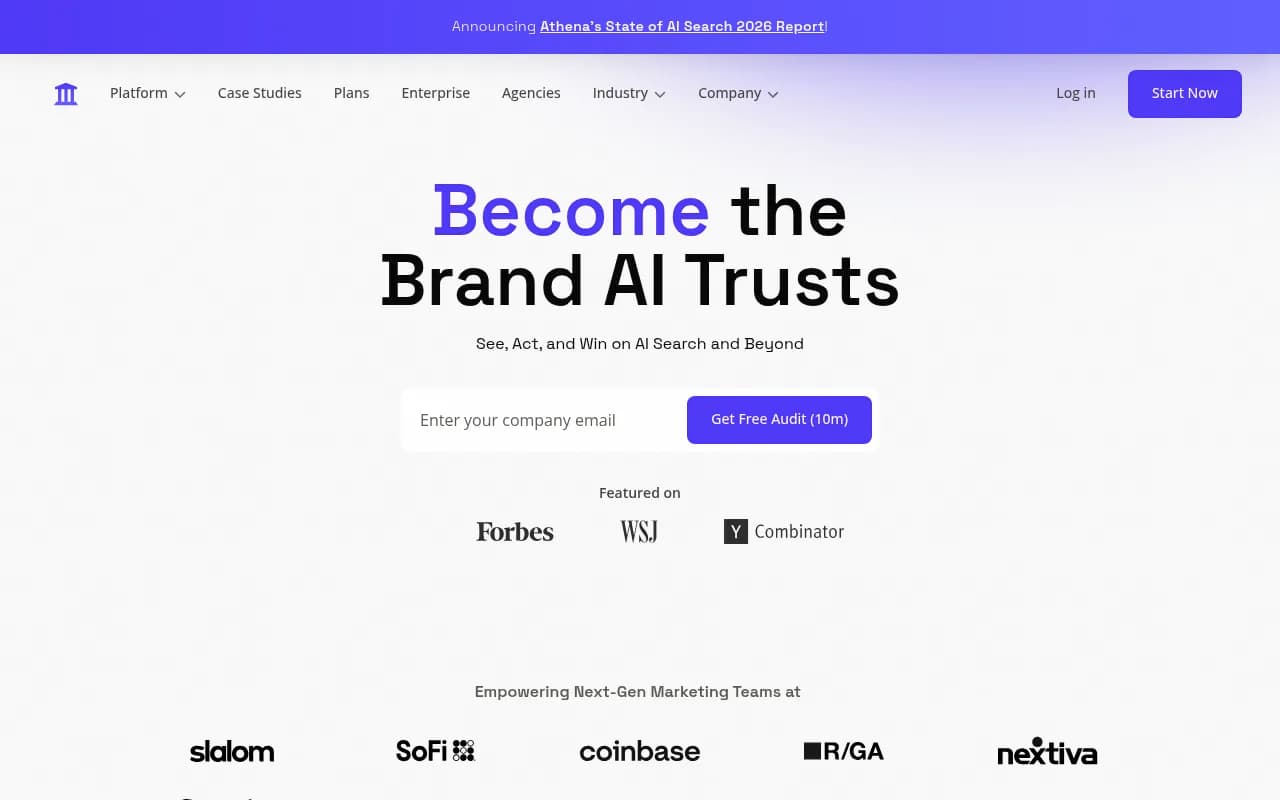
For franchise networks, the limitation is the same as most monitoring-only tools: it shows you where you stand but doesn't help you move. The reporting is clear and the data is reliable, but the action layer is missing.
Comparison table
| Platform | Multi-location support | Local prompt tracking | Content generation | Crawler logs | Best for |
|---|---|---|---|---|---|
| Promptwatch | Yes (multi-site plans) | Yes (city/state level) | Yes (Content Agents) | Yes | Franchise networks wanting end-to-end optimization |
| Birdeye Search AI | Yes (built for multi-location) | Yes (local signals focus) | No | No | Local citation and review-driven visibility |
| BrightEdge | Yes (enterprise) | Yes | Limited | No | Large enterprise franchise reporting |
| Profound | Limited | Yes | No | No | Deep monitoring for enterprise teams |
| Otterly.AI | Limited | Basic | No | No | Budget monitoring for smaller networks |
| SE Ranking | Limited | Yes | No | No | Teams combining SEO and AI visibility |
| Conductor | Yes | Yes | Yes (content workflows) | No | Content-driven franchise marketing teams |
| AthenaHQ | Limited | Yes | No | No | Clean monitoring dashboards |
How to actually use these tools across a franchise network
Having the right platform is half the battle. The other half is building a process that works at franchise scale.
Start with a visibility audit by location
Before you can prioritize, you need a baseline. Run your tracked prompts for each location and score them by visibility. Which markets are getting cited? Which are invisible? Which have competitors dominating the AI results? This audit gives you a ranked list of locations to fix, starting with the ones where you're losing the most ground.
Build location-specific prompt sets
Generic prompts won't surface the gaps that matter. For each location, build a set of prompts that reflect how customers in that market actually search. "Best HVAC company in Denver" is more useful than "best HVAC company." Tools like Promptwatch let you track prompts at the city and state level, which makes this practical at scale.
Identify the content gaps per location
Once you know which locations are underperforming, look at what content is missing. Are the location pages thin? Are there no locally-relevant articles or guides? Is the brand absent from local directories and review platforms that AI models cite? The answer gap analysis in platforms like Promptwatch shows you exactly what content AI models want to see but can't find on your site.
Create content that AI models will actually cite
This is where most franchise marketing teams get stuck. They know they need more content, but they don't know what to write. The best AI visibility platforms solve this by generating content briefs and articles grounded in real prompt data -- the specific questions AI models are fielding in each market. A location page that answers "what should I look for in an HVAC company in Denver" is far more likely to get cited than a page that just lists your address and service areas.
Monitor crawler activity on location pages
AI models can only cite content they've crawled. If your location pages have thin content, duplicate text across locations, or technical errors that prevent crawling, you'll never appear in AI results regardless of how good your content is. Crawler logs show you which pages are being visited, how often, and what's going wrong -- so you can fix the underlying issues before creating new content.
Track results and iterate
AI visibility changes as models update and as competitors create new content. Set a monthly review cadence for each location, track how visibility scores change after you publish new content, and use that data to prioritize the next round of work. The platforms that connect content publication to citation changes (like Promptwatch's agent analytics) make this feedback loop much tighter.
The honest reality about franchise AI visibility in 2026
Most franchise networks are still treating AI visibility as a brand-level problem when it's actually a location-level problem. The brands that figure this out first will have a significant advantage -- not because AI visibility is some magic traffic channel, but because AI recommendations are increasingly the first touchpoint for local service decisions.
When someone asks Perplexity which plumber to call or which gym to join, the answer they get shapes their decision before they ever visit a website. Being in that answer, for each location, in each market, is the new local SEO.
The platforms that help you get there aren't the ones with the prettiest dashboards. They're the ones that show you the gaps and help you close them -- location by location, prompt by prompt.