Key takeaways
- A ChatGPT rank tracker does not record a position. It runs your buyer prompts on a schedule and logs whether you are named, cited, and how often compared with competitors.
- For "best tool for X" prompts, Promptwatch Data (Sep 28 to Oct 4, 2026) shows product pages, landing pages, listicles and comparisons make up almost 70% of ChatGPT's commercial citations.
- Cheap monitors (Otterly.AI, Nightwatch, Morningscore) tell you whether you are named. Platforms like Promptwatch also tell you why, and help fix it.
- Track by prompt set, country and run count. One screenshot is not a measurement.
- Treat vendor-written "best tools" listicles with suspicion. Most of the ones ranking trackers are written by trackers.
Why "best tool for X" prompts matter for SaaS
A buyer types "best CRM for small agencies" or "what should I use for customer onboarding?" into ChatGPT. It answers with a handful of named products. That shortlist forms before anyone visits your site, and Google Search Console will never show you the conversation.
This is why SaaS teams need a tracker built around commercial prompts, not a generic brand-mention monitor. The prompt types that matter most:
- Category prompts: "best project management tool for remote teams"
- Use-case prompts: "best invoicing software for freelancers in Germany"
- Alternative prompts: "alternatives to [competitor]"
- Branded prompts: "is [your product] good for startups"
If you only track the branded ones, you will see a flattering picture and miss the discovery moment entirely.
What a ChatGPT rank tracker actually measures
There is no rank 1 to 10 in ChatGPT. A tracker runs your prompts through ChatGPT, then logs a few things:
- Whether your brand is mentioned, and where in the answer
- Which URLs are cited as sources, and whether yours is among them
- Share of voice against named competitors
- Sentiment of how you are described
The same prompt can return different answers by run, model version and locale. So a good tracker repeats prompts, tracks by country, and reports trends rather than a single snapshot. Manual testing in a spreadsheet falls apart at around 10 prompts, which is about where a SaaS company with three product lines starts.
One technical question to ask every vendor: does it collect data from the real ChatGPT interface or from the API? User-facing answers and citations can differ from API output. I could not confirm this for most of the cheaper tools, so ask before you pay.
What ChatGPT cites for "best tool" prompts
Before picking a tracker, it helps to know what you are trying to move. Promptwatch's ChatGPT citation share by content type data (Sep 28 to Oct 4, 2026) breaks citations down by prompt intent. For commercial prompts like "best CRM for small businesses", the closest match to "best tool for X":
| Content type | Share of commercial citations |
|---|---|
| Product pages | 26.0% |
| Landing pages | 20.6% |
| Listicles | 15.0% |
| Comparisons | 7.9% |
Those four add up to almost 70%. Comparisons punch above their weight: 7.9% for commercial prompts against 5.9% across all prompts.
For software specifically, Promptwatch's software citation data for the same week shows GitHub (1.2%), Microsoft's docs (0.98%) and G2 (0.73%) leading, followed by AWS docs, Google Cloud docs, Gartner and Capterra. By source type, docs and help centers earn 2.64%, vendor sites 2.01%, and review sites and analysts 1.57%. G2, Gartner, Capterra and Software Advice together earn more than any single vendor, Microsoft included.
The practical read for a SaaS company:
- Make product pages comparable: clear pricing, who it is for, what it integrates with.
- Keep G2 and Capterra profiles complete and current.
- Get into the "best of" roundups ChatGPT already cites, and publish your own comparison pages.
- Keep docs crawlable. They are a bigger share of citations than most marketing teams assume.
Content age matters too. In Promptwatch's content half-life data, landing pages and docs stayed cited longest, while news lost half its pages within about 36 days. A tracker that shows when a cited page first appeared and when it fades is more useful than one that only counts mentions.
And don't count on Reddit as a shortcut. Promptwatch Data shows reddit.com's share of ChatGPT citations fell from about 4% to 0.5% on August 14, 2026, and ChatGPT drew just 0.46% of its citations from social platforms in the week of Sep 28 (social media citations report).
Write prompts the way ChatGPT searches
ChatGPT's own web searches are short. Per Promptwatch's query fanout data, average query length fell from about 117 characters in December to about 53 from April, and the average sat around 1 to 2 searches per response, well below the 3 to 8 often quoted. That means headings like "Best CRM for small agencies 2026" match better than long conversational questions. Cover sub-questions (X vs Y, pricing, alternatives) with focused pages rather than one mega-page. Also worth knowing: on August 8, 2026, ChatGPT started using the site: operator at scale (report), so your own domain's structure affects how it gets searched.
How to evaluate a tracker as a SaaS team
A short checklist beats a long feature matrix:
- Prompt volume and refresh rate. 50 prompts is fine for one product, thin for a suite.
- Country and language tracking, if you sell internationally.
- Exact citation URLs, not just "mentioned yes/no".
- Competitor tracking that discovers rivals automatically.
- Real ChatGPT UI data, or a clear statement of what is collected.
- A path from insight to action: content gaps, briefs, publishing.
- Traffic attribution, so you can show AI visitors converting.
Also note that most pricing and positioning below comes from vendor-written comparisons (KIME's April 2026 article, for instance, ranks KIME first). Confirm prices on each vendor's site.
The best ChatGPT rank trackers for SaaS in 2026
Promptwatch
Promptwatch is the one I would shortlist first if the goal is revenue rather than a dashboard. It tracks ChatGPT through the real UI, with prompt volumes, difficulty scores, query fan-outs and personas, so you can build a "best tool for X" monitor around prompts that buyers actually use. Where it separates from monitors is what happens next: IP-verified AI crawler logs show whether ChatGPT's bots can read your pricing and docs pages, visitor analytics tie AI traffic to conversions, and the Action Board and Content Agent turn gaps into planned, written and published pages in Webflow, Framer or WordPress. Plans start free (10 prompts, ChatGPT only) and paid plans from $95/mo, with a 7-day trial on monthly Essential. Confirm at promptwatch.com/pricing.

Crisp, for example, reported 2x higher conversion rates from AI traffic than traditional channels and scaled content to 5-10 articles a day using it. That is a SaaS case study, which is why it matters here.
Profound
Enterprise-oriented AI search analytics. Strong monitoring, higher price tier, and no equivalent of crawler-log-to-citation analysis. Reasonable if you have an enterprise procurement process and a dedicated team.

Otterly.AI
The cheap entry point, listed from $29/mo in KIME's comparison. It is a monitor. You get mentions and citations across engines, but not crawler logs, traffic attribution or content generation. Good for agencies watching several small brands.

Peec AI
Clean prompt tracking with suggestions. Another monitoring-first tool, suited to teams that already have a content process and just need the numbers.

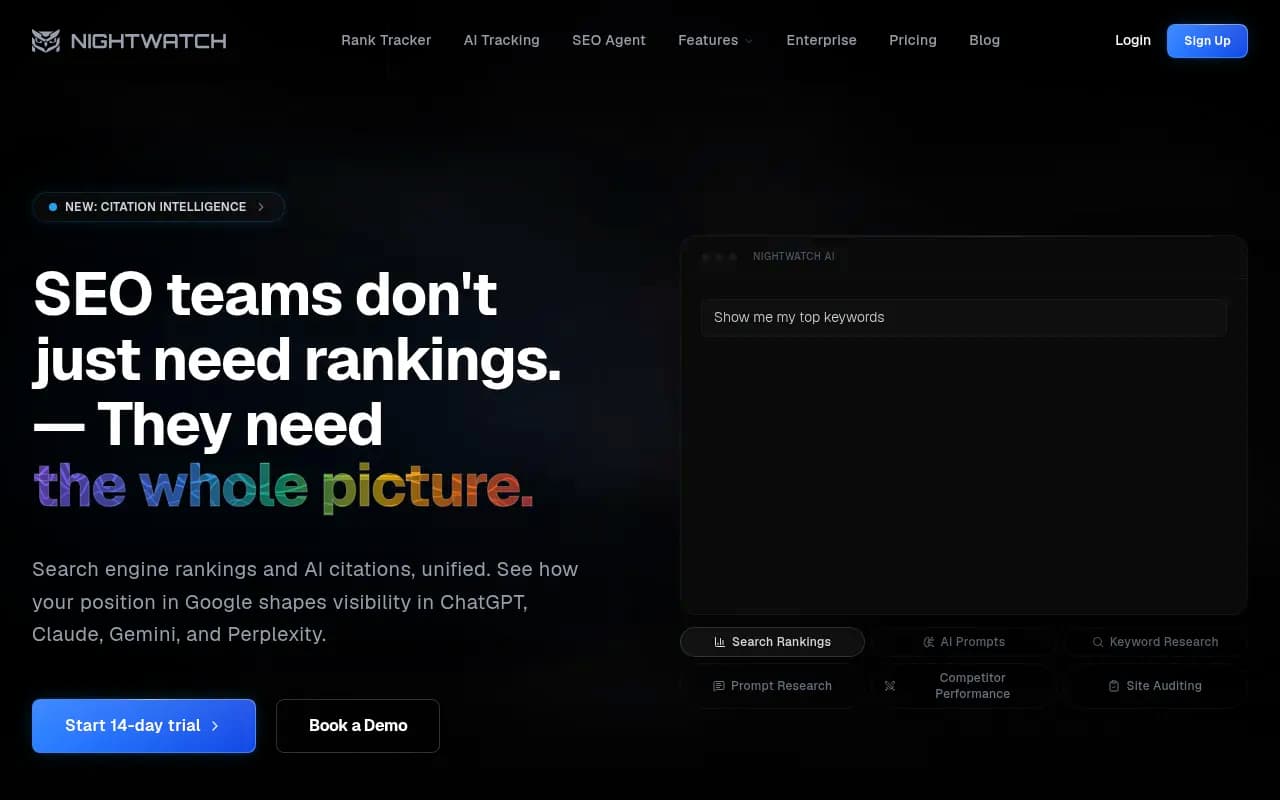
Nightwatch
Hybrid SEO and AI rank tracking, listed at $39/mo plus an AI add-on. Useful if your team already lives in a classic rank tracker and wants ChatGPT alongside it.
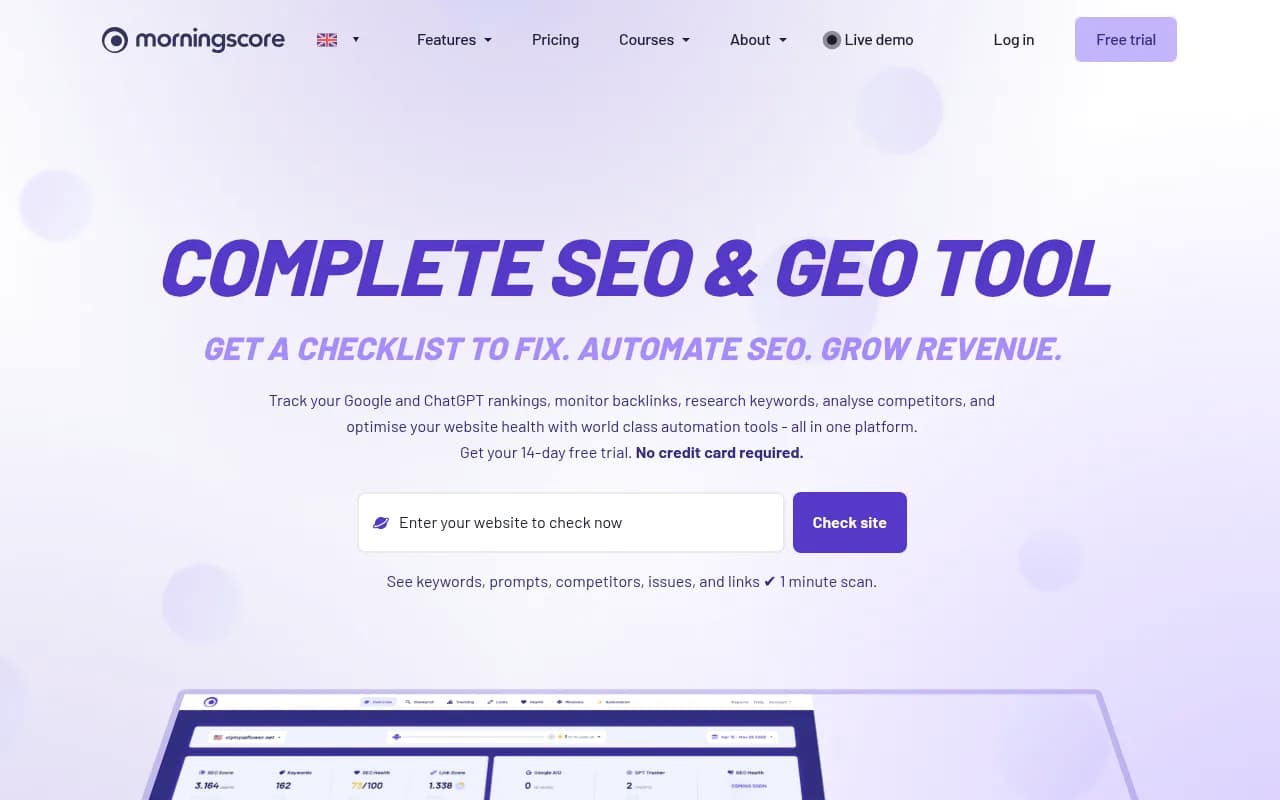
Morningscore
Gamified and beginner-friendly, listed from $49/mo. Fine for early-stage startups without a dedicated SEO person.
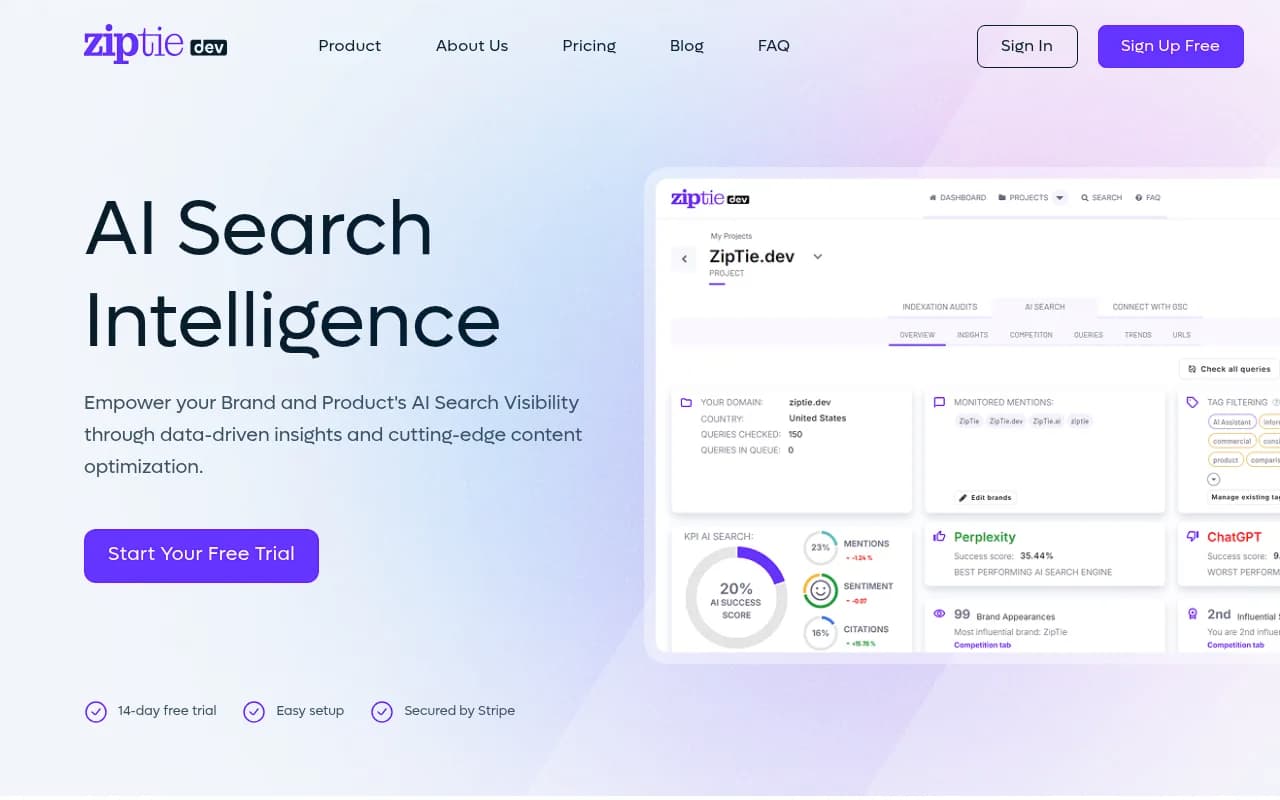
ZipTie
Focused on actionable recommendations, listed around $69/mo. Worth a trial if you want clearer next steps than a raw dashboard gives.
AthenaHQ and Scrunch
Both are monitoring-focused platforms that show up regularly in SaaS shortlists. Compare their prompt limits and whether they use real UI data.


Semrush and Ahrefs Brand Radar
If you already pay for a traditional SEO suite, the AI add-ons are convenient. The trade-off is typically fixed prompt sets and shallower AI-specific data.

Comparison table
| Tool | Listed starting price | Strength | Limits |
|---|---|---|---|
| Promptwatch | Free; paid from $95/mo | Crawler logs, AI traffic, content agent, real UI data | More to set up than a simple monitor |
| Profound | From $99/mo (as listed) | Enterprise analytics | Higher tiers, monitoring-led |
| Otterly.AI | $29/mo | Low cost, multi-brand | Monitoring only |
| Nightwatch | $39/mo + AI add-on | SEO and AI in one | AI is an add-on |
| Morningscore | $49/mo | Beginner friendly | Light on depth |
| ZipTie | $69/mo | Action focus | Narrower scope |
| Peec AI | Check vendor | Clean prompt tracking | No crawler or traffic data |
Prices for everyone except Promptwatch come from third-party roundups and are unverified.
Which should you pick?
- Pre-product-market-fit startup with a small budget: Otterly.AI, Morningscore or the free Promptwatch tier to learn what your prompts look like.
- Growing SaaS with a content team: Promptwatch Essential or Professional, because the gap between "you are invisible" and "here is the page to write" is where the work lives.
- Mid-market or multi-product SaaS: Promptwatch Business, which adds the automated Content Agent and 350 prompts.
- Enterprise with a procurement team: Profound or Promptwatch Enterprise (ISO/IEC 27001 certified, SSO).
- Agency running several SaaS clients: Promptwatch Agency plans or Otterly.AI for lean monitoring.
More options are listed in the AI rank tracking tools directory if you want to browse beyond this shortlist.
A simple weekly routine
- Build a monitor of 30 to 50 prompts: category, use-case, alternatives and branded.
- Record baseline mention rate, share of voice, and which URLs get cited.
- Each week, look at the prompts where a competitor is named and you are not.
- Check whether the cited pages are product pages, listicles or comparisons, and plan the matching content.
- Check crawler logs for errors on your pricing, docs and comparison pages.
- Update G2 and Capterra profiles, then re-measure.
Expect noise. Do not react to one day's swing. Look at four-week trends.
Bottom line
Pick a tracker for what you will do with the data. If you only want to know whether ChatGPT names you, a $29 to $50 monitor does that. If you want to change the answer, you need citation data, crawler access, and a way to publish content that matches what ChatGPT actually cites for commercial prompts. For SaaS, that means comparable product pages, strong review-site profiles, and comparison content, in that order.