Key takeaways
- Omnia is a solid AI visibility monitoring tool, but it focuses primarily on brand presence measurement rather than helping you act on what you find.
- Most teams eventually hit a wall with monitoring-only platforms: you can see where you're invisible, but the tool doesn't help you fix it.
- The best alternatives in 2026 vary widely: some are deeper on data, some add content generation, some integrate with your existing SEO stack, and some are built specifically for agencies or ecommerce.
- Price, model coverage, and whether you need optimization tools (not just dashboards) are the three questions worth answering before picking a platform.
- If you want a platform that closes the loop from gap detection to content creation to citation tracking, Promptwatch is the only option in this list rated as a "Leader" across all evaluation categories in 2026.
Why teams look for Omnia alternatives
Omnia does what it says on the tin. You set up prompts, it monitors how your brand appears across AI engines, and you get a dashboard showing mention rates, citation share, and competitive position. For teams just getting started with AI visibility, that's genuinely useful.
The friction starts when you want to do something with the data.
Say Omnia shows you that a competitor is being cited for "best project management tool for remote teams" and you're not. Now what? You know the gap exists. But Omnia doesn't tell you what content is missing from your site, doesn't generate a brief to fill that gap, and doesn't track whether a new article you publish eventually gets picked up by ChatGPT or Perplexity.
That's the core limitation of monitoring-only platforms: they describe the problem without helping you solve it.
There are other reasons teams shop around too. Model coverage matters. If you're on a budget plan and only tracking ChatGPT, you're missing what Perplexity, Gemini, and Claude say about you. Prompt quality matters. Tools that fabricate their own prompts give you visibility scores based on questions nobody actually asks. And for agencies managing multiple clients, the workflow and white-labeling story matters a lot.
Here's a look at the landscape before we get into specifics.
How to think about the alternatives
Before picking a tool, it helps to know which problem you're actually trying to solve. The AI visibility category has four rough types of tools:
- Dedicated AEO/GEO platforms: purpose-built for tracking and improving AI search visibility
- SEO suites with AI features: Ahrefs, Semrush, SE Ranking -- your existing tools adding AI tracking as a module
- Brand monitors: tools that track mentions across AI alongside social and news
- Optimization platforms: tools that close the loop from monitoring to content creation to result tracking
Most Omnia alternatives fall into the first or last category. The SEO suite options are worth considering if you already pay for those platforms and don't want another subscription.
| Tool | Type | Content generation | Crawler logs | Model coverage | Starting price |
|---|---|---|---|---|---|
| Promptwatch | AEO + Optimization | Yes | Yes | 10 models | $99/mo |
| Profound | AEO Platform | No | No | 6+ models | $99/mo (ChatGPT only) |
| AthenaHQ | AEO Platform | No | No | Multiple | Not published |
| Scrunch AI | AEO Platform | No | No | Multiple | Not published |
| Peec AI | AEO Platform | Limited | No | Multiple | Freemium |
| Otterly.AI | AEO Platform | No | No | Multiple | Freemium |
| Ahrefs Brand Radar | SEO Suite Module | No | No | 6 AI indexes | $50-$699/mo |
| Semrush AI Visibility | SEO Suite Module | No | No | Multiple | Add-on |
| Search Party | Agency Platform | No | No | Multiple | Not published |
| Rankscale | AEO Platform | No | No | Multiple | Freemium |
The 10 best Omnia alternatives in 2026
1. Promptwatch
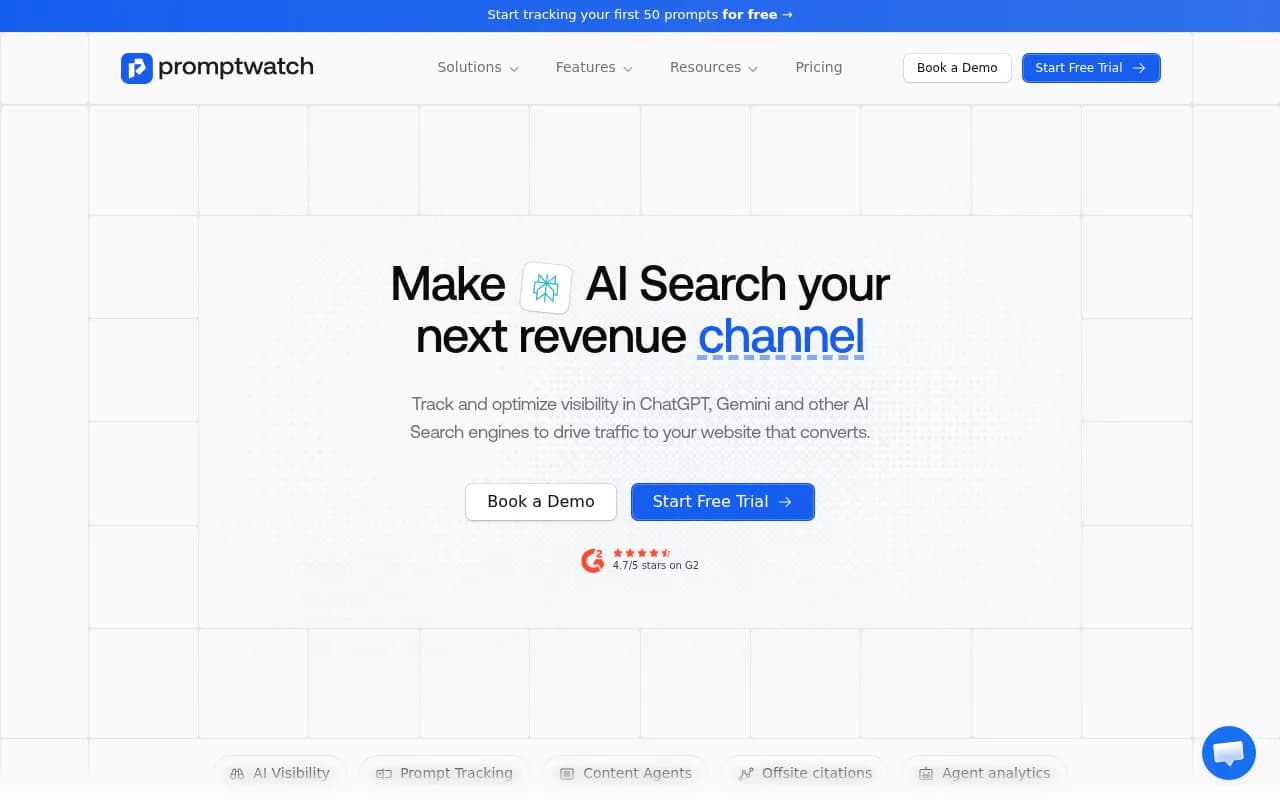
If the gap between "I can see the problem" and "I can fix the problem" is frustrating you, Promptwatch is the most direct answer to that frustration. It's built around what it calls an action loop: find gaps, create content, track results.
The Answer Gap Analysis shows you exactly which prompts competitors rank for in AI search that you don't. Not just "you're less visible than Competitor X" -- it shows the specific questions AI models are answering with competitor content instead of yours. From there, Content Agents generate articles, comparisons, and briefs grounded in real prompt data, citation patterns, and competitor analysis.
Then you track whether it worked. Page-level tracking shows which of your pages are being cited, by which models, and how often. AI Crawler Logs show when ChatGPT, Claude, or Perplexity actually crawl your site -- and flag errors they hit along the way.
The data story is also worth noting. Promptwatch tracks how AI search engines behave in real user interfaces, not just through APIs. That matters because user-facing answers and citations can differ from what you'd see hitting an API directly. With 4.5 billion citations, clicks, and prompts processed, the dataset is large enough to surface meaningful patterns.
It covers 10 AI models: ChatGPT, Perplexity, Google AI Overviews, Google AI Mode, Claude, Gemini, Meta/Llama, DeepSeek, Grok, Mistral, and Copilot. Pricing starts at $99/mo for the Essential plan (1 site, 50 prompts, 5 articles), $249/mo for Professional (crawler logs, 150 prompts, 15 articles), and $579/mo for Business (5 sites, 350 prompts, 30 articles).
2. Profound
Profound was one of the first serious AEO platforms and still has features most competitors haven't caught up to. The front-end response capture is genuinely different -- it records what users actually see in AI interfaces, not just what the API returns. The Amazon Rufus shopping module is unique in the category. And the real-user prompt volume data (not fabricated queries) is a meaningful differentiator.
The pricing structure is where teams run into trouble. The $99/mo Starter plan covers ChatGPT only. Getting Perplexity and Google AIO requires jumping to $399/mo. Broader model coverage means enterprise pricing that isn't published. If you need multi-model tracking from day one, the cost adds up fast.
Profound also doesn't have content generation or optimization tools. It's a very good monitoring platform, but you'll need something else to act on what it shows you.
3. AthenaHQ
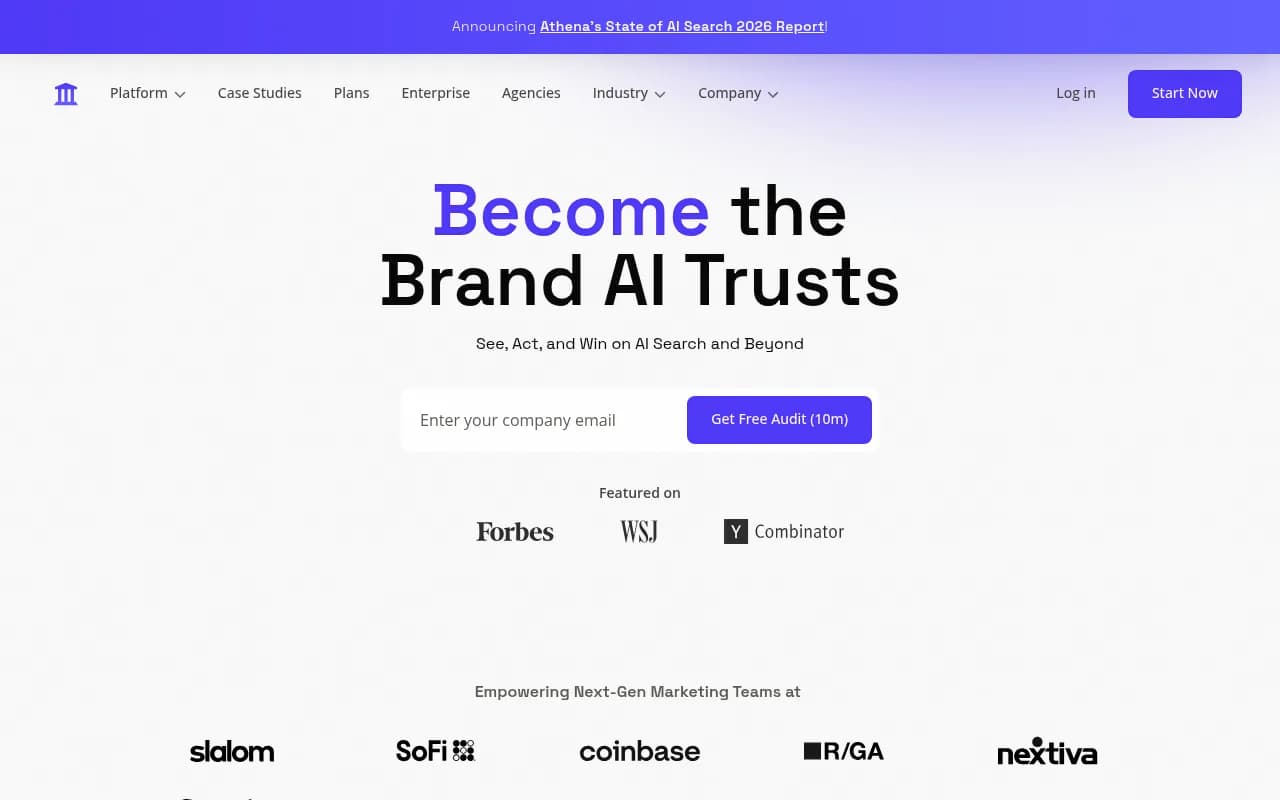
AthenaHQ takes a structured approach to AI visibility tracking with solid multi-model coverage and clean competitive benchmarking. The interface is straightforward and the prompt management workflow is well-designed for teams that want to run systematic tracking across a defined set of queries.
Where it falls short is the same place most monitoring platforms do: it shows you the data but stops there. No content gap analysis, no content generation, no crawler logs. If your team is comfortable doing the "what do we do about this?" work independently, AthenaHQ gives you solid inputs. If you want the platform to help you act, you'll hit a ceiling.
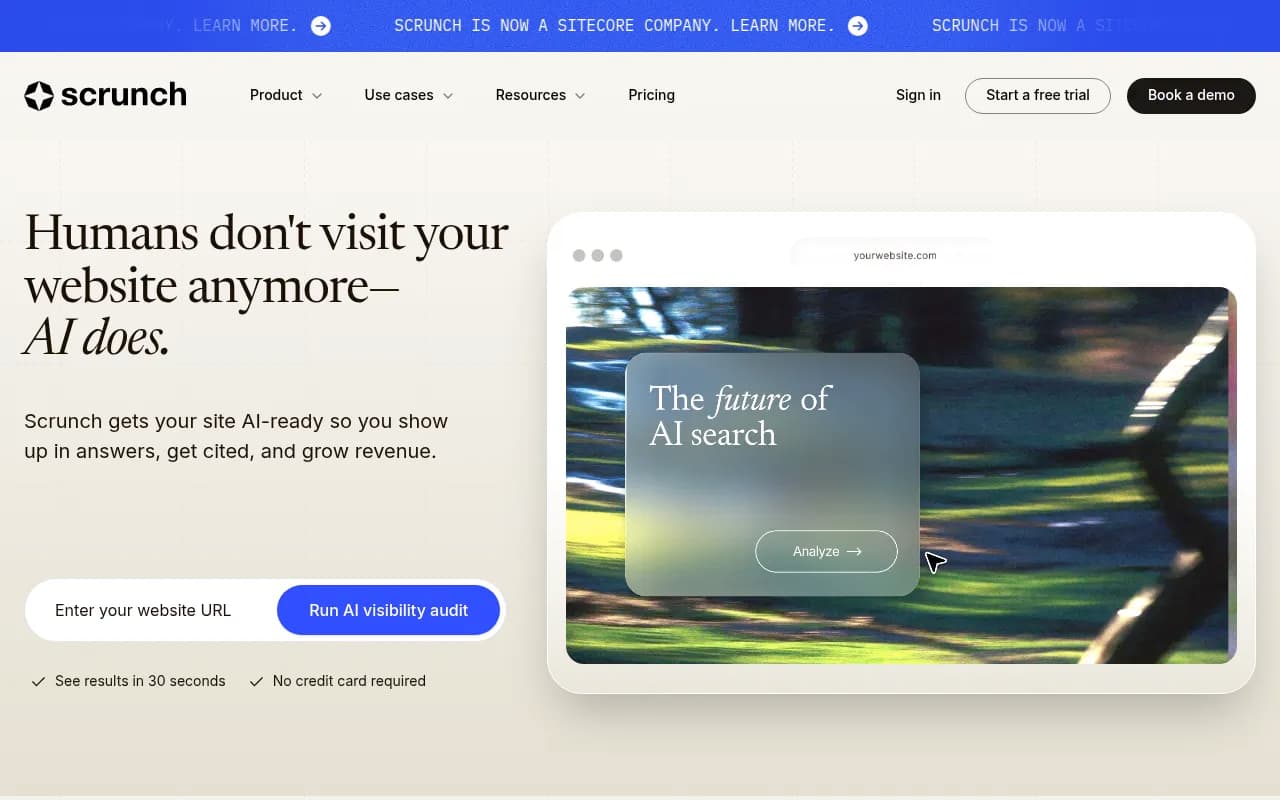
4. Scrunch AI
Scrunch AI is positioned toward brands and agencies that want AI visibility monitoring with a reasonably clean reporting layer. It covers multiple models and gives you competitive share-of-voice data, which is useful for client reporting.
The feature set is more limited than Profound or Promptwatch -- no crawler logs, no content tools, no prompt volume data. But for teams that primarily need a monitoring dashboard and don't want to pay enterprise prices, it's a reasonable option. Agencies in particular seem to use it for the reporting workflow more than the analytical depth.
5. Peec AI
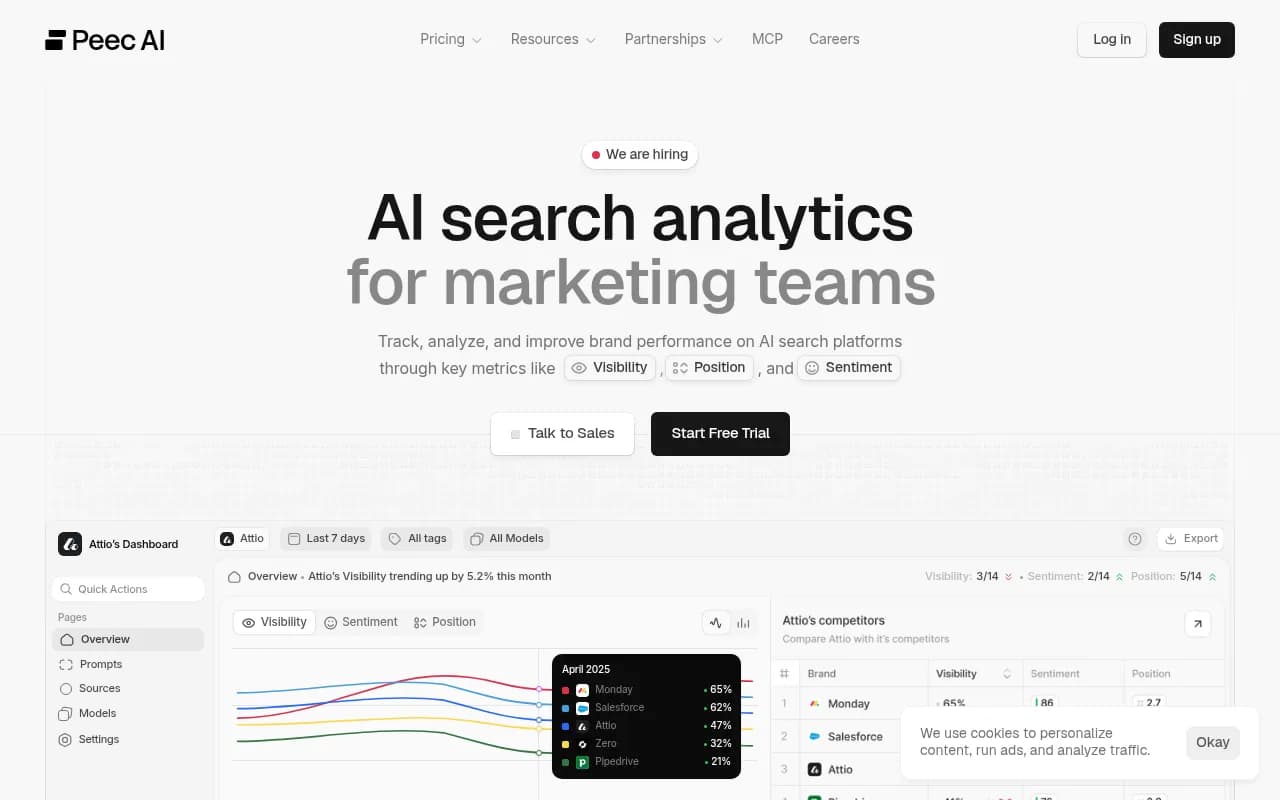
Peec AI sits in the more accessible tier of the market. There's a freemium entry point, which makes it easy to test before committing. The tracking covers multiple AI models and gives you brand mention data and some competitive context.
The "smart suggestions" in the product description are worth investigating -- some monitoring tools have started adding lightweight recommendation layers that point toward content improvements without going full content-generation. Whether that's enough depends on how much optimization work your team can do independently.
For smaller teams or those just starting to take AI visibility seriously, Peec AI is a low-friction starting point.
6. Otterly.AI
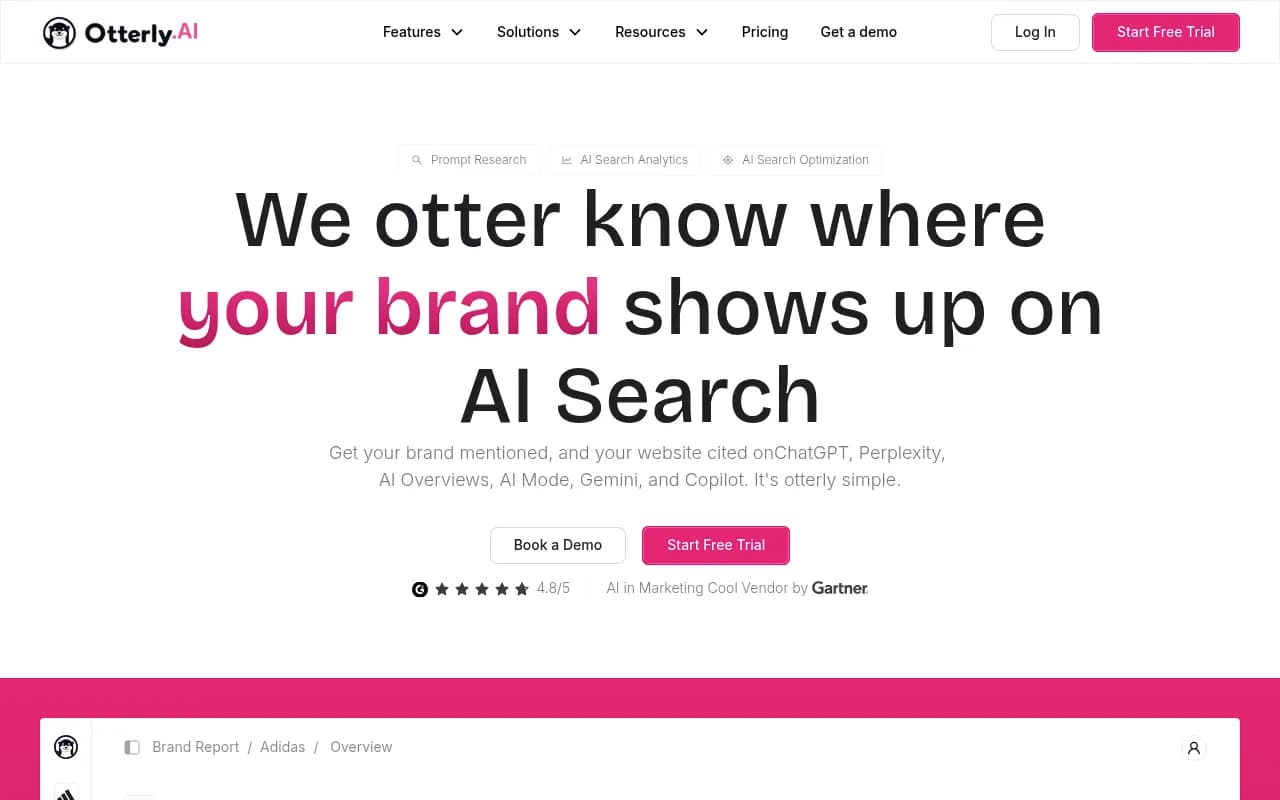
Otterly.AI is one of the more affordable dedicated monitoring tools in the category. It covers the major AI engines, gives you brand mention tracking and citation analysis, and has a clean enough interface for regular use.
The honest assessment: it's a basic monitoring tool. It won't tell you why you're not being cited, won't help you create content to fix that, and doesn't have crawler logs or prompt intelligence. But at its price point, it's not trying to. If you want a simple, affordable way to see how your brand shows up in AI search without committing to a full optimization platform, Otterly.AI works.
7. Ahrefs Brand Radar
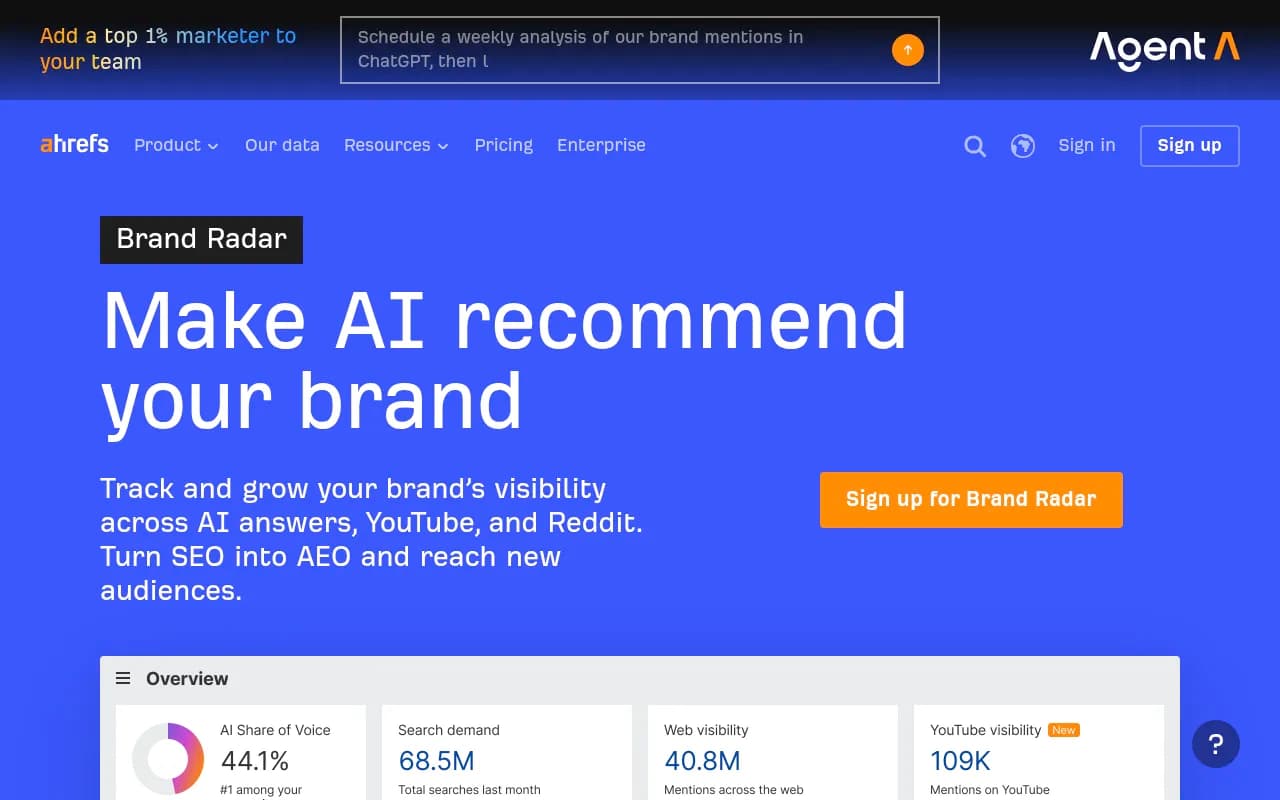
If you're already an Ahrefs user, Brand Radar is worth a serious look before adding another subscription. The data quality argument is compelling: Brand Radar's prompts are derived from real "People Also Ask" data with measurable search volume behind them, not fabricated queries. That means the visibility scores reflect questions real users actually ask.
The coverage spans 6 AI indexes with pricing from $50/mo (2,500 checks) up to $699/mo for all indexes plus custom prompt checks. The fixed prompt structure is a limitation -- you can't fully customize the query set -- and there's no AI traffic attribution. But for teams that want AI visibility grounded in real search behavior and already live in the Ahrefs ecosystem, it's a natural fit.
8. Semrush AI Visibility Toolkit
Semrush's AI visibility features are an extension of a platform most marketing teams already know. If your team runs SEO through Semrush, adding AI visibility tracking within the same platform reduces tool sprawl and keeps your data in one place.
The limitation is the fixed prompt structure -- you're tracking AI visibility for queries Semrush defines, not necessarily the ones most relevant to your specific business. There's also no AI traffic attribution connecting visibility to actual revenue. For teams that want a quick read on AI visibility without adding a new vendor, it's convenient. For teams that want deep, customized tracking, it's not built for that.
9. Search Party
Search Party is built with agencies in mind. The workflow supports managing multiple client brands, and the reporting layer is designed for client-facing output. If you're an agency that needs to show clients their AI visibility performance, Search Party's structure makes that easier than most alternatives.
The gaps are on the analytical side: prompt metrics are more limited than dedicated AEO platforms, and there's no content gap analysis. It's a good fit for agencies that need clean reporting and client management, less so for teams that want to dig into why visibility is what it is and what to do about it.
10. Rankscale
Rankscale focuses on AI search rank tracking with a clean interface and freemium entry point. It's a newer entrant in the category and covers the core use case -- tracking how your brand appears across AI engines over time.
The feature set is lighter than the more established platforms, but that's partly by design. For teams that want straightforward rank tracking without a lot of complexity, Rankscale is worth testing. The freemium tier makes the barrier to entry low.
What the research actually shows about this category
The AI visibility tool category has exploded. Omnia's own blog lists 28 platforms. Other roundups count 40+. The reason there are so many is that the core mechanic is simple to build: schedule prompts, store responses, build a dashboard. A single developer can ship a basic version in weeks.
What actually separates tools isn't the dashboard. It's three things:
Data quality. Are the prompts based on real user behavior or fabricated queries? Tools that construct their own questions give you visibility scores for questions nobody asks. Ahrefs Brand Radar and Promptwatch both have real-data stories here -- Ahrefs from PAA data, Promptwatch from 4.5 billion processed prompts.
Model coverage. Tracking only ChatGPT in 2026 is like tracking only Google in 2020 and ignoring Bing, Yahoo, and DuckDuckGo. Perplexity has carved out the research segment. Claude and Gemini cover enterprise and Google Workspace. You need multi-model data to see the full picture.
What happens after the monitoring. This is the biggest differentiator. Most tools show you the gap and stop. The question "what do I do about this?" is left entirely to you. Platforms that help you answer that question -- through content gap analysis, content generation, and result tracking -- are fundamentally more useful for teams that want to improve, not just measure.
How to choose the right alternative
A few questions that narrow the field quickly:
Do you already use Ahrefs or Semrush? Start there. Adding AI visibility within a platform you already pay for is the lowest-friction option, even if the features are more limited.
Are you an agency managing multiple clients? Search Party and Scrunch AI are built for that workflow. Promptwatch also has agency and enterprise pricing with multi-site support.
Do you need content tools, not just monitoring? Promptwatch is the only platform in this list that closes the full loop from gap detection to content generation to citation tracking. If you want a monitoring-only tool, Profound, AthenaHQ, or Otterly.AI are all solid.
Is budget the primary constraint? Peec AI, Otterly.AI, and Rankscale all have freemium or low-cost entry points. Promptwatch's Essential plan at $99/mo is competitive for what it includes.
Do you care about ecommerce or shopping AI? Profound's Amazon Rufus module is unique. Promptwatch tracks ChatGPT Shopping. If your business depends on product recommendations in AI search, that's a specific capability to verify before committing.
The honest answer is that no single tool is right for every team. But the clearest dividing line in 2026 is between platforms that show you the problem and platforms that help you solve it. If you're switching away from Omnia because you want more than a dashboard, make sure the alternative you pick actually delivers on that.