Key takeaways
- Otterly.AI is a solid entry-level monitoring tool, but it stops at showing you data — it doesn't help you act on it
- The most common complaint from teams switching away: "It tracks the source, but gives zero actionable strategy on how to restructure content to get cited"
- The best alternatives in 2026 combine tracking with content gap analysis, AI content generation, and crawler-level diagnostics
- Promptwatch is the only platform rated "Leader" across all GEO categories in a 2026 comparison of 12 platforms — and the only one that closes the full loop from gap detection to content creation to citation tracking
- Budget-conscious teams have solid options too, including Peec AI, ZipTie, and SE Ranking's AI visibility layer
Why teams are leaving Otterly.AI in 2026
Otterly.AI isn't a bad tool. For a team that just wants to dip their toes into AI visibility tracking, it's affordable and easy to set up. But there's a ceiling, and most teams hit it fast.
The core problem is what one Reddit user described bluntly: "It tracks the source, but gives zero actionable strategy on how to restructure content to get cited." That's the monitoring-only trap. You get a dashboard that tells you ChatGPT mentioned you 3 times out of 10 tracked prompts. Great. Now what?
The other friction points that keep coming up:
- Weekly update cycles that can't keep pace with how quickly AI search results shift
- No crawler logs, so you can't see whether AI engines are even reading your pages
- No content gap analysis to identify what topics competitors are getting cited for that you're not
- Reporting that's too thin for client-facing or boardroom presentations
- No Reddit or YouTube tracking, even though those sources heavily influence AI citations
As one commenter on r/b2bmarketing put it: "Unless a tool gives clear recommendations or ties to revenue, it's hard to justify $100-$400/month just to know if ChatGPT mentioned your brand today."
That's the bar the alternatives below need to clear.
The four types of tools you'll find in this space
Before diving into specific tools, it helps to know what category each one falls into. They're not all solving the same problem.
| Category | What it does | Best for | Trade-off |
|---|---|---|---|
| Dedicated GEO/AEO platforms | Track prompts across AI engines, analyze citations, optimize content | Teams treating AI visibility as a core discipline | Usually single-purpose; needs to sit alongside SEO tools |
| SEO suites with AI features | Existing SEO platforms (Semrush, Ahrefs, SE Ranking) that added AI tracking | Teams already invested in an SEO stack | AI features are often secondary; less depth |
| Content optimization tools | Help you write content that AI models want to cite | Content teams focused on production | Don't always track visibility directly |
| Monitoring-only dashboards | Show you where you appear, nothing more | Early-stage awareness; quick audits | The Otterly.AI problem — no actionability |
The tools below span all four categories, but the emphasis is on platforms that actually help you do something with the data.
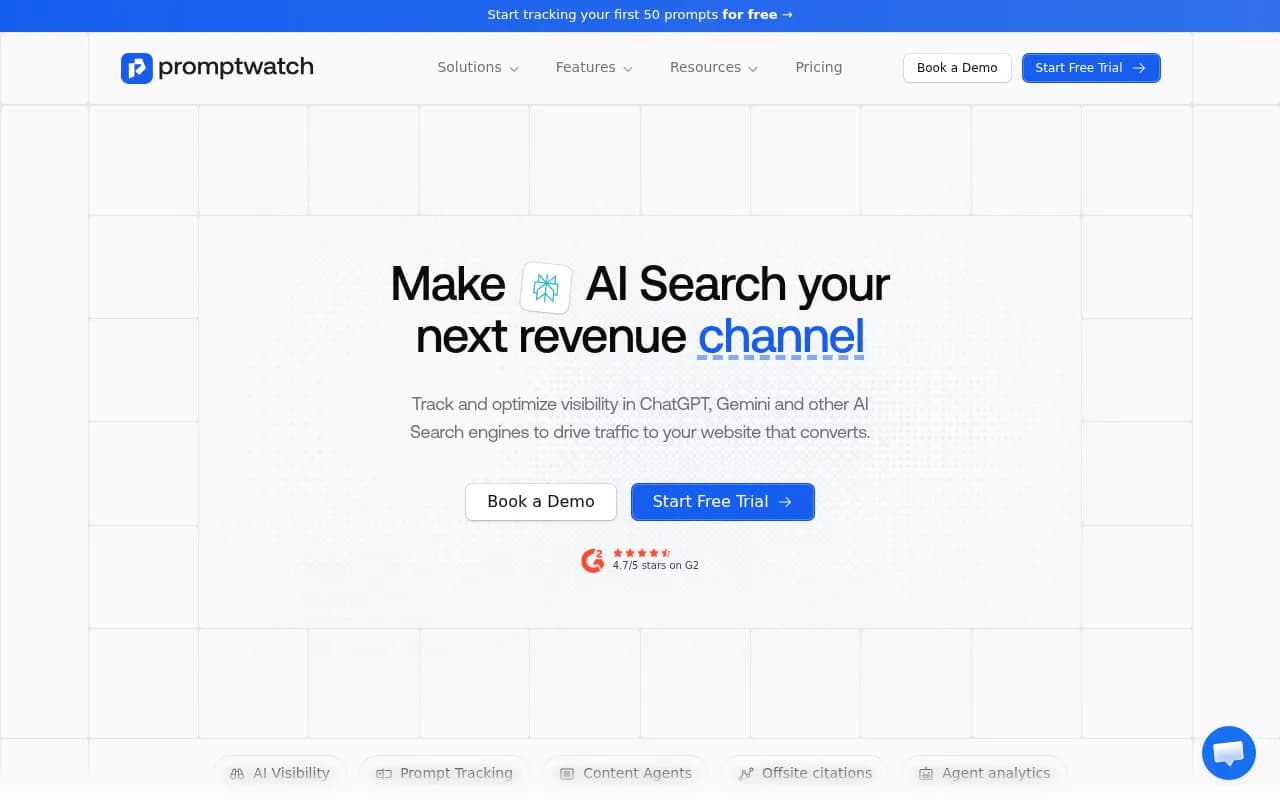
1. Promptwatch — best overall for teams serious about GEO
Promptwatch is the most complete platform in this space right now. In a 2026 comparison of 12 GEO platforms, it's the only one rated "Leader" across all categories — and the reason is simple: it's built around action, not just observation.
Most tools show you a visibility score. Promptwatch shows you the score, then tells you exactly what's missing, then helps you create the content to fix it. That three-step loop — find gaps, generate content, track results — is what separates it from every monitoring-only competitor.
The Answer Gap Analysis is particularly useful. It identifies the specific prompts where competitors are getting cited and you're not, then maps those gaps to the content your site is missing. You're not guessing what to write next. The data tells you.
From there, Content Agents generate articles, listicles, comparisons, and briefs grounded in real prompt data, citation volumes, persona targeting, and competitor analysis. This isn't generic AI writing — it's content engineered around the specific gaps AI models are exposing.
A few other things that stand out:
- AI Crawler Logs show which pages ChatGPT, Claude, Perplexity, and others are actually reading — including errors and crawl frequency. Most competitors don't have this at all.
- Prompt Intelligence gives you volume estimates and difficulty scores for each prompt, so you can prioritize high-value, winnable queries instead of spreading effort thin.
- Reddit and YouTube tracking surfaces discussions that directly influence AI recommendations — a channel most tools ignore entirely.
- ChatGPT Shopping tracking monitors when your brand appears in product recommendations and shopping carousels.
- It covers 10 AI models: ChatGPT, Perplexity, Google AI Overviews, Google AI Mode, Claude, Gemini, Meta/Llama, DeepSeek, Grok, Mistral, and Copilot.
Pricing starts at $99/month (Essential: 1 site, 50 prompts, 5 articles), with Professional at $249/month and Business at $579/month. A free trial is available.
Promptwatch is used by 1,480+ brands and agencies including Booking.com, Center Parcs, and Everflow.
2. Scrunch AI — best for agencies managing multiple brands
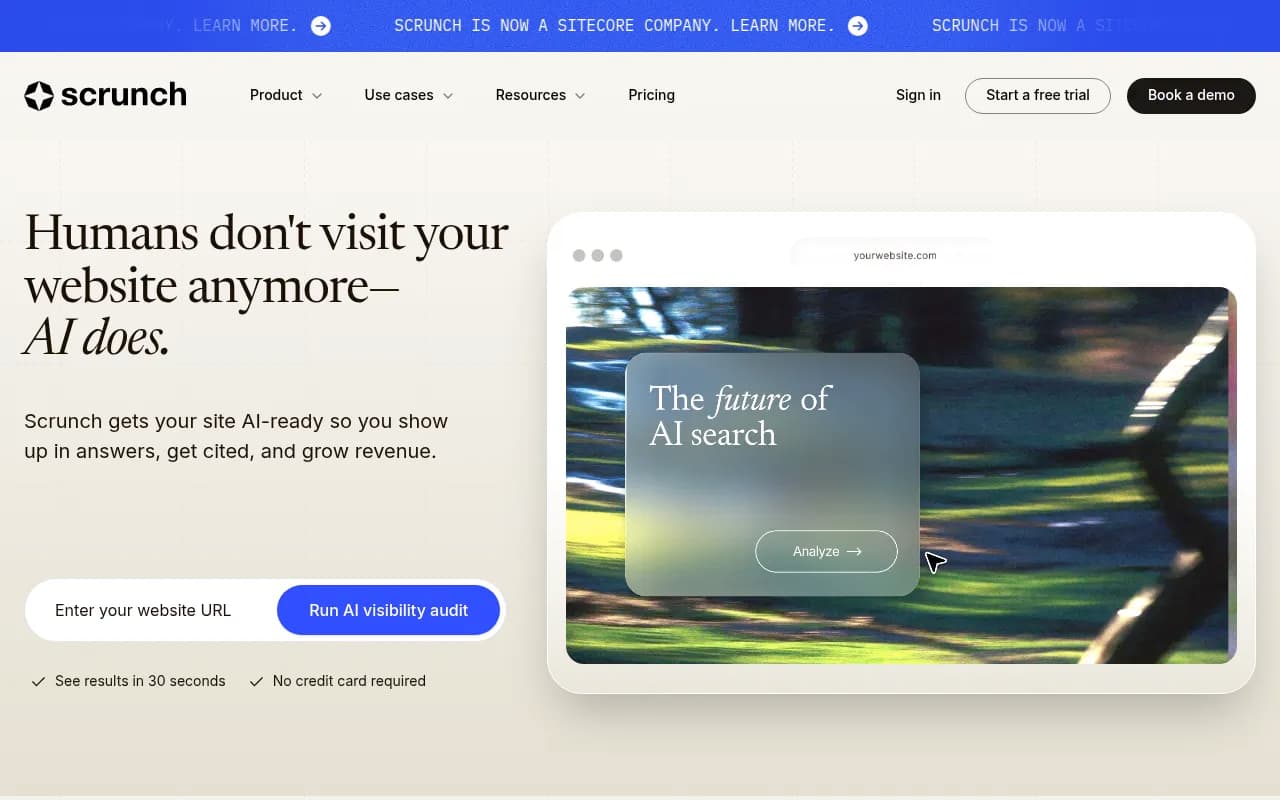
Scrunch AI is a solid step up from Otterly.AI for agencies. It has better reporting, multi-brand management, and a cleaner interface for client-facing work. The monitoring layer is more robust than Otterly's, with more frequent updates and better sentiment analysis.
Where it falls short: it's still primarily a monitoring platform. Content optimization and gap analysis aren't core features. If you need to show clients not just where they appear but why and how to improve it, you'll need to pair Scrunch with something else.
That said, for agencies that want a professional-grade monitoring tool without the complexity of a full GEO platform, Scrunch is worth a look.
3. Profound — best for enterprise teams with budget
Profound sits at the higher end of the market, and it earns the price for the right buyer. It has strong analytics, good multi-model coverage, and reporting that holds up in enterprise environments.
The trade-off is that it's still more monitoring than optimization. You get detailed data on where you appear and how that changes over time, but the content recommendations layer is thinner than what you'd get from a platform built around the full optimization loop. It also doesn't have Reddit or YouTube tracking, which matters more than people expect given how much those sources influence AI citations.
For a large enterprise team that needs audit-grade reporting and has a separate content team to act on the data, Profound works well. For a team that wants one tool to do both, it's not quite there.
4. Peec AI — best budget option with smart suggestions
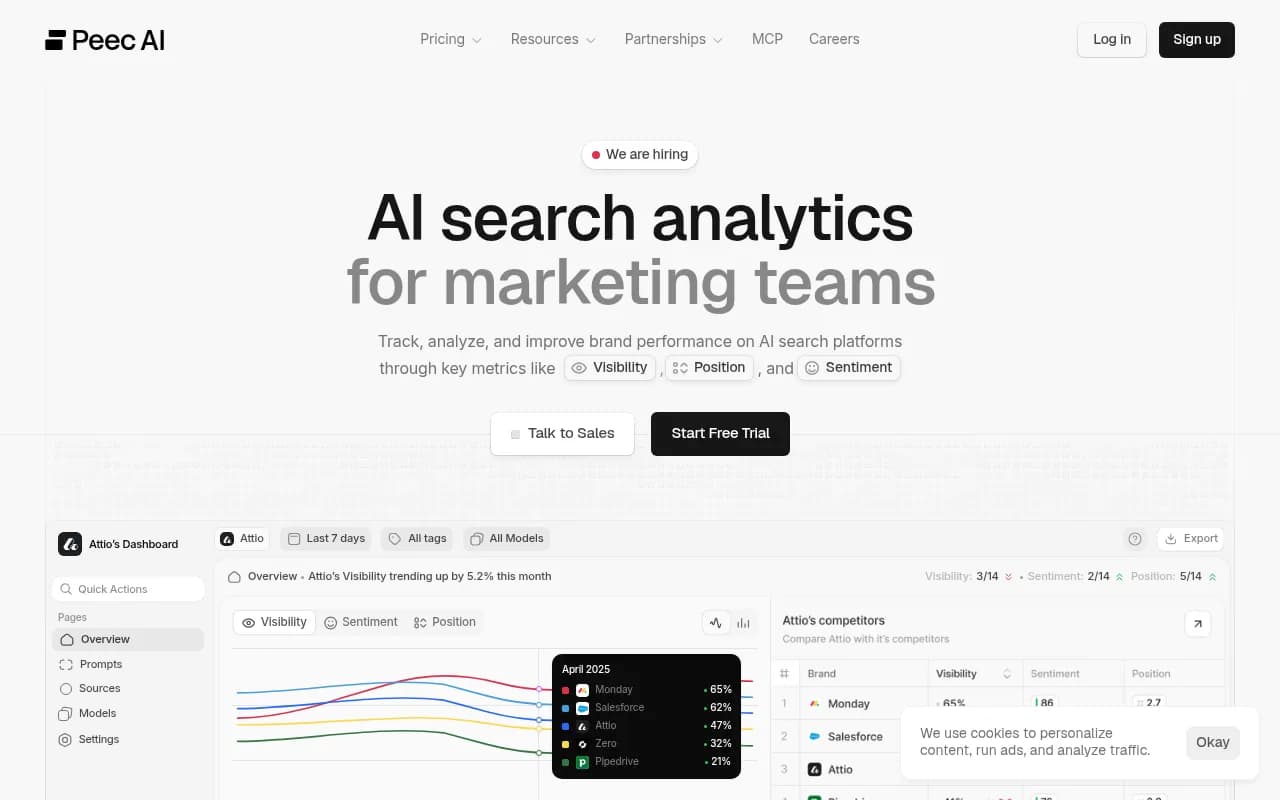
Peec AI punches above its weight for the price. It tracks AI visibility across the main models, gives you competitive benchmarking, and includes some basic content suggestions that Otterly.AI doesn't offer.
It's not as deep as Promptwatch or Profound — the content optimization layer is more "suggestions" than "generation," and the prompt intelligence features are limited. But if you're a smaller team or agency that needs something more actionable than Otterly without a major budget jump, Peec AI is a reasonable middle ground.
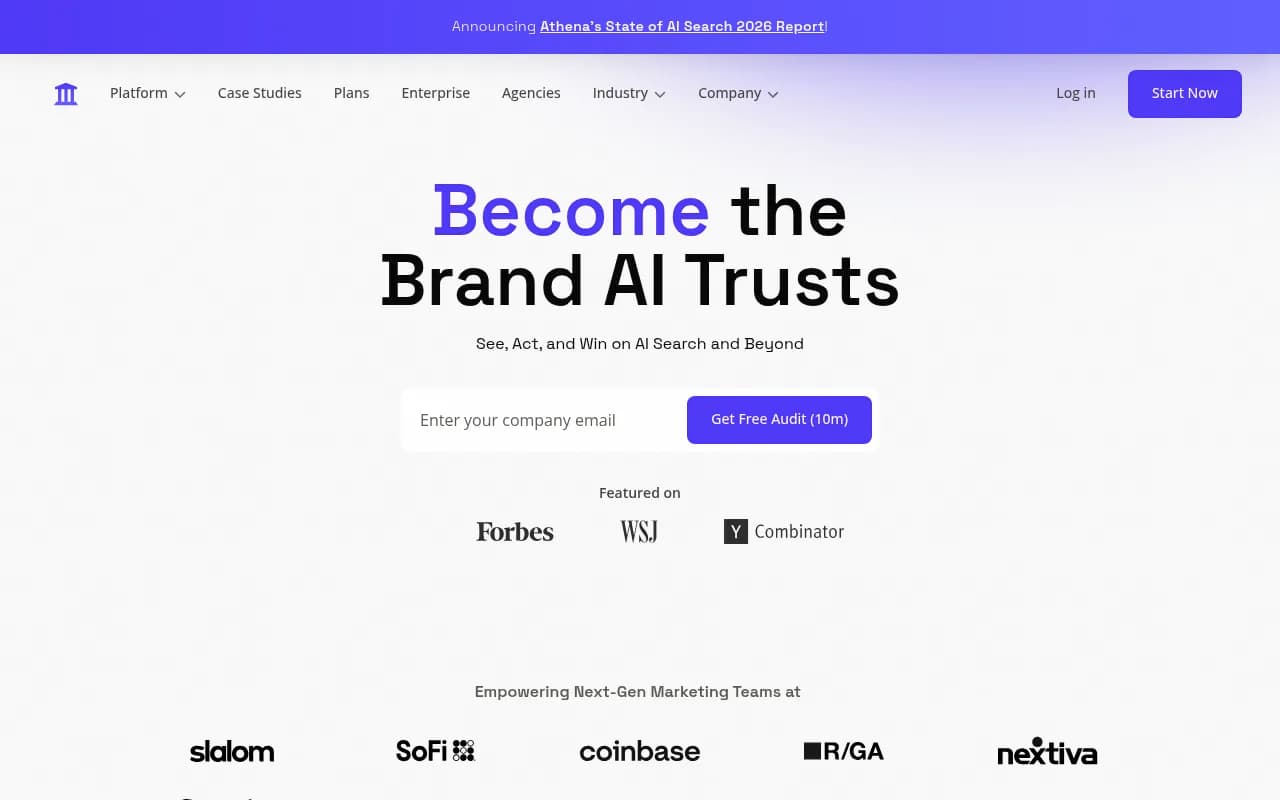
5. AthenaHQ — best for structured monitoring workflows
AthenaHQ has a clean, well-structured interface that works well for teams running systematic monitoring workflows. It covers the major AI models, tracks citation share over time, and has decent competitive comparison features.
The honest limitation: it's monitoring-focused. The platform doesn't have content generation, crawler logs, or Reddit/YouTube tracking. It's a better Otterly.AI in terms of depth and interface, but it doesn't solve the fundamental "now what?" problem. Teams that switch to AthenaHQ often find themselves still needing a second tool to act on the data.
6. ZipTie — best lightweight option for focused tracking
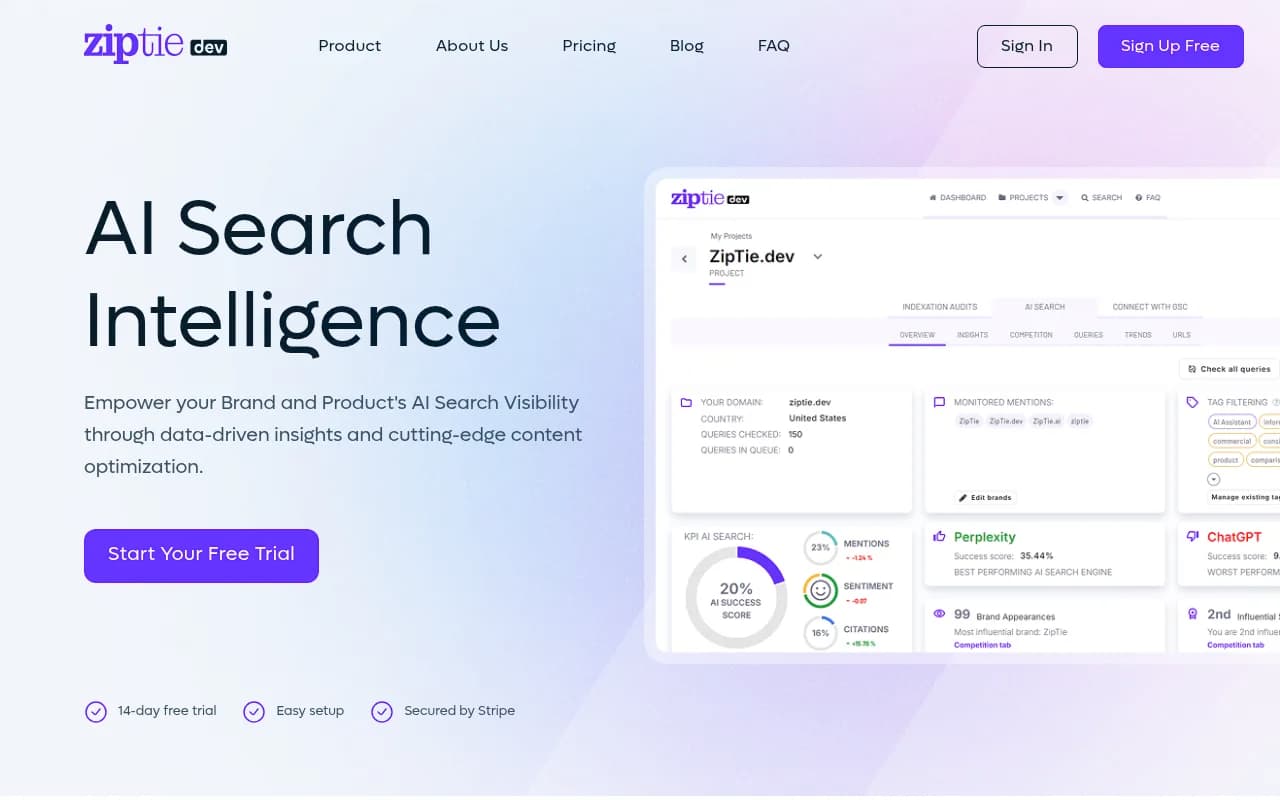
ZipTie is a focused AI visibility tracker that does one thing well: showing you how your brand appears across AI search engines without a lot of overhead. It's lighter than the enterprise platforms, easier to set up, and more affordable.
It's not trying to be a full GEO platform. There's no content generation, no crawler logs, no Reddit tracking. But for a team that wants clean, reliable monitoring data without paying for features they won't use, ZipTie is a sensible choice.
7. SE Ranking — best for teams already in an SEO suite
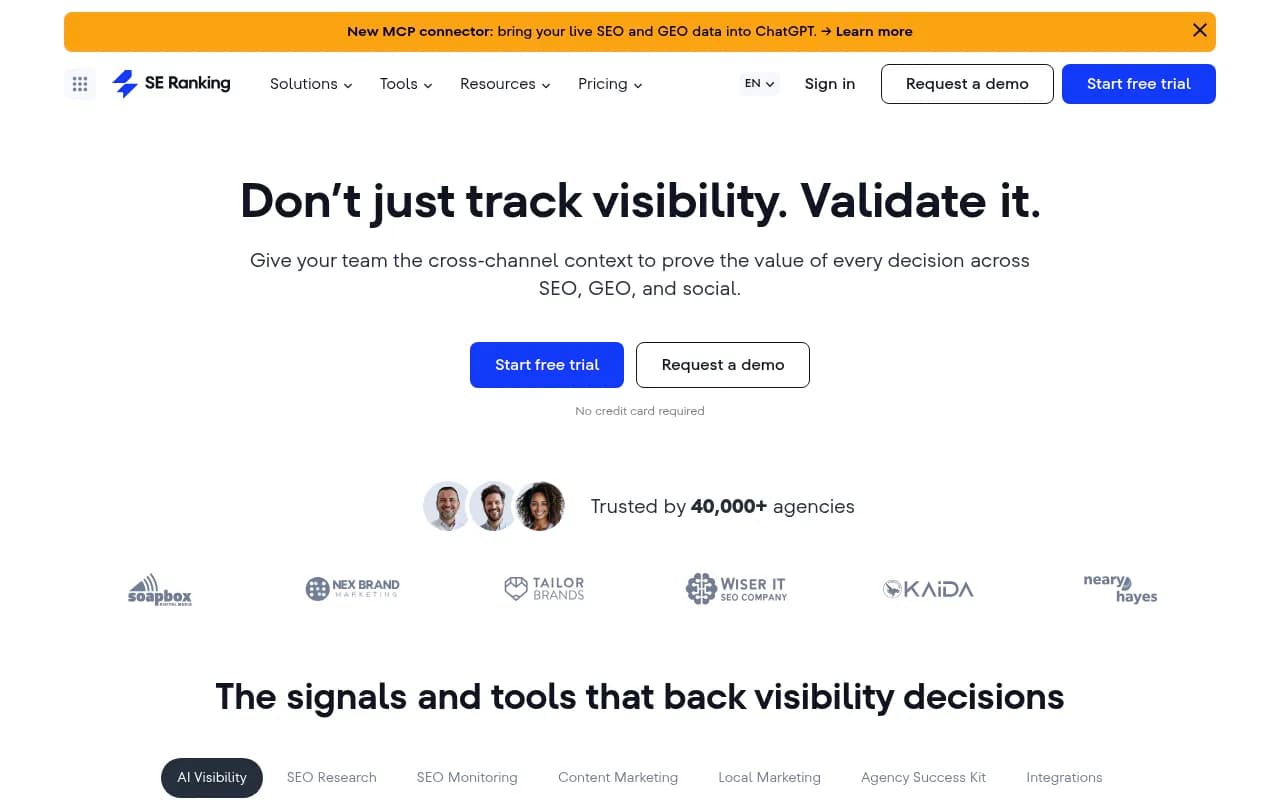
SE Ranking added AI visibility tracking as part of its broader platform, and the integration is actually pretty good. If you're already using SE Ranking for traditional SEO, the AI visibility layer gives you a unified view of organic and AI search performance without adding another tool to your stack.
The depth isn't quite there compared to dedicated GEO platforms — the prompt library is smaller, and there's no content generation or crawler log functionality. But for teams that want to consolidate tools and get "good enough" AI visibility alongside their existing SEO workflow, it's a practical option.
8. Semrush AI Visibility Toolkit — best for existing Semrush users
Semrush has added AI visibility features to its platform, which makes sense given that it's already the SEO tool of choice for a huge number of marketing teams. The AI visibility toolkit tracks how your brand appears in AI-generated answers and gives you competitive benchmarking.
The limitation that comes up repeatedly: Semrush uses fixed prompts rather than letting you define your own. That means you're tracking visibility for queries Semrush chose, not necessarily the ones your buyers are actually asking. There's also no AI traffic attribution, so you can't connect AI visibility to actual site visits or revenue.
For a team already deep in the Semrush ecosystem, it's worth turning on. For a team evaluating tools from scratch, it probably shouldn't be the primary choice for GEO work.
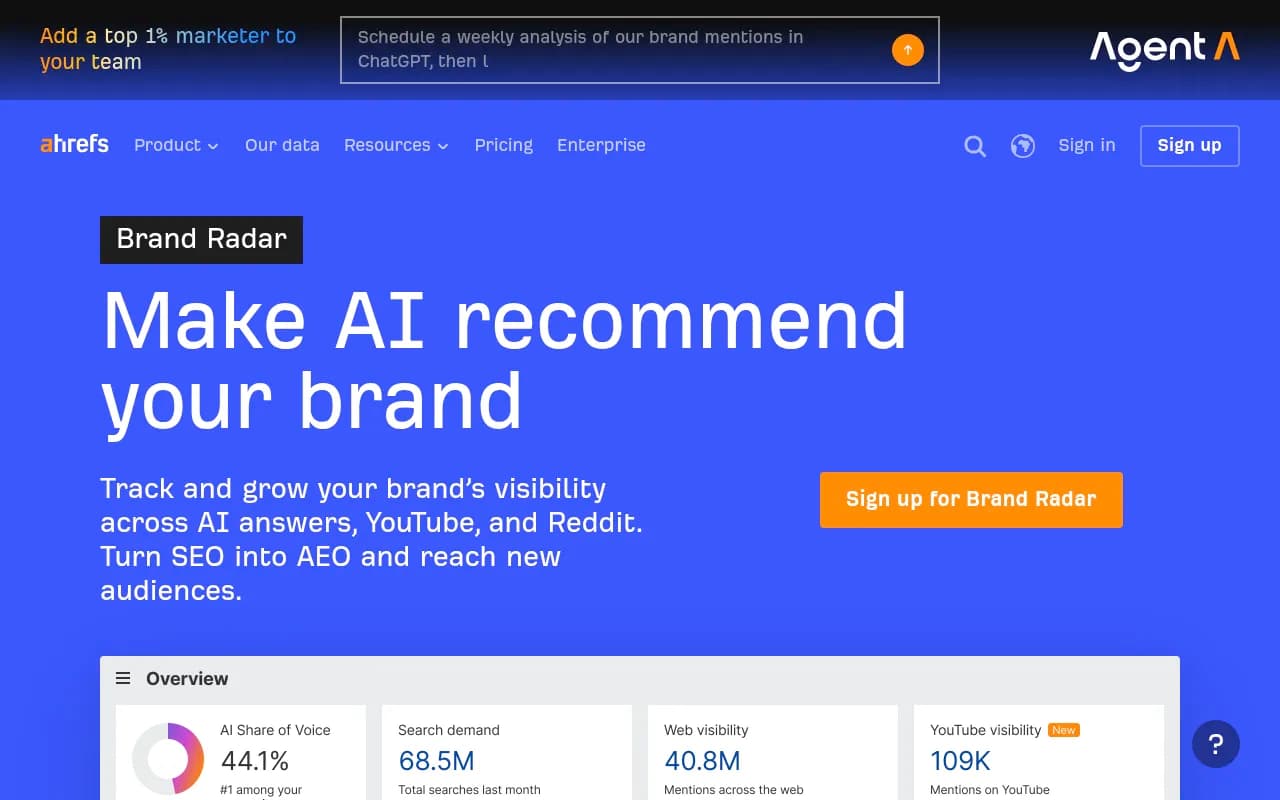
9. Ahrefs Brand Radar — best for Ahrefs loyalists
Ahrefs Brand Radar tracks your brand across AI search engines and gives you a sense of citation share and competitive positioning. Like the Semrush offering, it's a natural add-on if you're already paying for Ahrefs.
The same fixed-prompt limitation applies here. You're working with Ahrefs' prompt set, not your own. And there's no AI traffic attribution, which makes it hard to justify the investment purely on GEO grounds. It's a useful signal layer for Ahrefs users, not a standalone GEO platform.
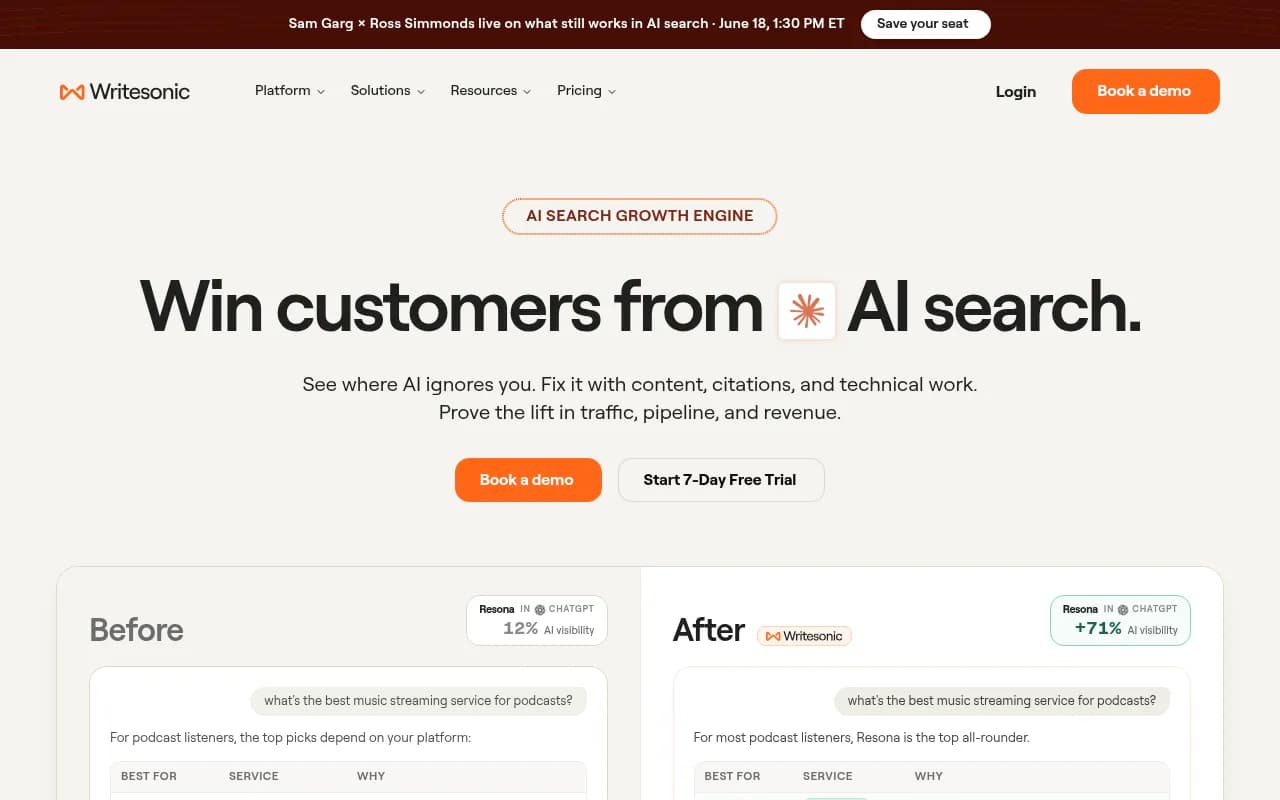
10. Writesonic GEO — best for teams that want monitoring and content creation
Writesonic has built a GEO-focused layer on top of its existing AI writing platform. The combination is interesting: you get AI visibility monitoring alongside content generation tools, which at least partially addresses the "now what?" problem.
The monitoring side is less deep than dedicated GEO platforms — fewer models covered, less granular prompt data. But the content creation side is genuinely useful, and the integration between "here's where you're not appearing" and "here's content you could publish" is a step in the right direction.
For content-heavy teams that want to start acting on AI visibility data without a major platform investment, Writesonic GEO is worth testing.
Side-by-side comparison
| Tool | Monitoring | Content generation | Crawler logs | Reddit/YouTube | Prompt customization | Starting price |
|---|---|---|---|---|---|---|
| Promptwatch | Yes (10 models) | Yes (Content Agents) | Yes | Yes | Yes | $99/mo |
| Scrunch AI | Yes | No | No | No | Yes | Custom |
| Profound | Yes | Limited | No | No | Yes | Custom |
| Peec AI | Yes | Basic suggestions | No | No | Yes | ~$49/mo |
| AthenaHQ | Yes | No | No | No | Yes | Custom |
| ZipTie | Yes | No | No | No | Yes | Affordable |
| SE Ranking | Yes (via suite) | No | No | No | Limited | From $44/mo |
| Semrush AI Toolkit | Yes | No | No | No | Fixed prompts | From $139/mo |
| Ahrefs Brand Radar | Yes | No | No | No | Fixed prompts | From $129/mo |
| Writesonic GEO | Yes | Yes (writing tools) | No | No | Yes | From $49/mo |
| Otterly.AI | Yes | No | No | No | Yes | From $99/mo |
How to choose the right tool for your situation
The right answer depends on where you are in your GEO maturity and what you actually need the tool to do.
If you're just starting out
Peec AI or ZipTie give you a low-cost way to understand your AI visibility baseline without overcommitting. Once you know what you're looking at, you'll have a much clearer sense of whether you need to upgrade.
If you're already in an SEO suite
Turn on the AI visibility features in Semrush or SE Ranking first. They're not the deepest options, but they're free (or low-cost) additions to tools you're already paying for. If you hit the ceiling quickly — which most teams do — then look at a dedicated platform.
If you're running an agency
Scrunch AI has the best multi-client management and reporting for agency workflows. Promptwatch also has agency and enterprise pricing with white-label options worth exploring.
If you need the full optimization loop
Promptwatch is the clear choice. It's the only platform that closes the gap between "here's where you're invisible" and "here's the content that will fix it." The Answer Gap Analysis, Content Agents, and Crawler Logs work together in a way that no monitoring-only tool can match.
The key question to ask any vendor: "After I see my visibility score, what does your platform help me do next?" If the answer is vague, you're looking at a monitoring tool dressed up as an optimization platform.
The bottom line
Otterly.AI made sense when AI visibility tracking was a novelty. In 2026, with ChatGPT at 900 million weekly active users and AI Overviews appearing across a significant share of high-intent queries, "knowing you're not appearing" isn't enough. You need to know why, and you need tools that help you fix it.
Most of the alternatives above are better than Otterly in at least one dimension. But if you want a single platform that handles the full cycle — tracking, gap analysis, content creation, and attribution — Promptwatch is the one to evaluate first. Everything else requires you to stitch together multiple tools to get the same result.
Start with a free trial, run the Answer Gap Analysis against your top 20 prompts, and see what your competitors are getting cited for that you're not. That alone is usually worth the price of admission.