Key takeaways
- Brandlight is enterprise-only and priced to scope. Its own blog describes a paid 3-month pilot instead of a free trial, while a third-party list quotes entry pricing near $199/month. The two claims conflict, so get a written quote.
- Most Brandlight alternatives lists are written by competitors. Treat every ranking, including the ones in this guide's research, as biased and test on your own prompts.
- The deciding question is whether your gap is measurement or output. If you already know where you are invisible and cannot ship the fix, a dashboard alone will not help.
- Track each AI engine separately. Citation behavior differs a lot between ChatGPT, AI Overviews, Perplexity and Copilot.
- Run a focused one-quarter pilot on one or two platforms. A single trend line teaches more than three first-week snapshots.
Why teams look past Brandlight
Let me be fair first. Brandlight is a real product with real enterprise customers. It came out of stealth in April 2025, per Profound's agency roundup, and its strength is the source lens: understanding which third-party pages feed AI answers and how to shift them. Brandlight's own research claims roughly 85% of the sources AI cites for category questions are third-party or social. That is a vendor claim, but it matches the general direction of what other datasets show.

So why switch? The complaints that show up repeatedly in comparison articles are these:
- Pricing is not published. You need a sales conversation, and one reviewer suggests budgeting a few weeks just to learn whether it is in range.
- Onboarding is sales-led and built around dedicated strategists and multi-brand portfolios. Smaller teams pay for capacity they do not use.
- Methodology documentation is thin for technical evaluators who want to know how prompts run, how citations are extracted, and how rate limits are handled.
- There is no production layer. Brandlight points at problems and advises, but content creation and publishing sit elsewhere.
- Brandlight's headline proof points (Kimberly-Clark moving 12 of 12 brands into the top three, 100% pilot-to-annual conversion, zero churn) are self-reported and unverified.
None of that makes Brandlight a bad choice. It makes it a choice you should test against alternatives, not accept because a vendor-written list said so.
What to look for before you switch
Before you compare logos, write down what your enterprise actually needs. These are the criteria that separate platforms in practice.
Engine-by-engine measurement
A platform that blends everything into one score hides the useful part. Promptwatch Data on average sources per response shows how different the engines are. ChatGPT cites about 5 sources per web-search answer, Google AI Overviews about 10, and Perplexity almost exactly 10 every day. Microsoft Copilot swung from under 2 to nearly 17 sources within a few weeks before settling low. If your tool collapses those into a single number, you cannot tell a content problem from engine noise.
Perplexity's stability makes it a decent test bench. Copilot should be judged on monthly trends, not weekly snapshots.
Competitive context, not a cited-or-not flag
You share almost every answer with other sites. Per Promptwatch's data on unique domains per ChatGPT response (Sep 28 to Oct 4, 2026), 47.6% of responses cite 10 or more different domains, and 66.1% cite at least 8. For organic prompts with no brand named, 52.5% cite 10 or more. Brand-specific prompts are narrower: only 21.3% cite 10+, and 5 domains is the most common count.
The implication for buyers: the platform should show which competitors and third-party domains appear alongside you, and how the model describes you. It should also measure across many prompts. One prompt tells you very little.
Evidence you can verify
Ask how prompts are collected (real interfaces or APIs), how citations are extracted, and whether crawler activity is logged. Public docs beat a slide deck. If a vendor will not explain methodology to a technical evaluator, that is information.
Security and procurement
For Fortune 500 and regulated buyers, SOC 2 Type II, ISO 27001 and named enterprise references are the gate. Check this early. The tool your security team approves is the only one you will actually get to use, so do it before you fall for a demo. Audit logs, role-based access, SSO and data residency belong on the checklist too.
Multi-brand workspaces
Portfolios, business units and client rosters need real workspace isolation. Starter-tier trackers rarely have it. Ask what happens to prompt caps and seats when you add the fifth brand, because some vendors push you to a custom quote sooner than the pricing page suggests.
Measurement versus output
This is the question that decides most evaluations. If you know where you lose and cannot produce the content, a measurement-only tool adds a dashboard to a problem you already understand. If your content engine is healthy and you only need visibility, buy the best measurement tool and skip the rest.
Shortlist: Brandlight alternatives for enterprise
The table summarizes how the main contenders differ. Details like pricing change often, so confirm everything with the vendor.
| Platform | Best for | Strength | Watch out for |
|---|---|---|---|
| Promptwatch | Enterprises that want monitoring plus execution | Monitor, trace, act and measure in one product, with crawler logs and a Content Agent | Content Agent starts at the Business plan |
| Profound | Measurement-only depth with a long procurement track record | Broad engine coverage and agency mode | Prompt and seat caps tighten for multi-brand teams; monitoring-focused |
| Scrunch | Teams that want agent-ready pages | Differentiated delivery layer for AI crawlers | Core tier covers only some engines; no content generation |
| Adobe LLM Optimizer | Teams already inside Adobe Experience Cloud | Low friction in an Adobe stack | Tied to the Adobe ecosystem |
| Evertune | Brands that want prompt-volume data and AI ads | Real prompt-volume focus | Expensive entry point |
| LLM Pulse | Mid-market teams wanting enterprise-style tracking at lower cost | Accessible pricing | Less enterprise procurement history |
| BrightEdge / seoClarity | Existing enterprise SEO suite customers | Entity work, SEO and AEO in one suite | AI-specific depth varies |
Promptwatch
Promptwatch is the option on this list I would look at first if your problem is output as well as visibility. It tracks ChatGPT, Gemini, Claude, Perplexity, Google AI Overviews, AI Mode, Copilot and others from the real interfaces, in each country and language you choose. Then it goes further than most trackers: IP-verified AI crawler logs show whether bots can read your pages, citation and Offsite Mentions reports show where answers come from, and the Content Agent writes and publishes pages to WordPress, Webflow or Framer against the gaps. Visitor analytics then show whether any of it sends traffic.

For enterprise buyers specifically, it is ISO/IEC 27001 certified and GDPR compliant, offers SSO, audit logs and a white-label client portal on Enterprise, and exposes an MCP server and REST API. Brand Narrative and Fact Check are useful if the concern is what AI says about you, because they pull individual claims out of responses and point to the pages teaching the wrong thing.
Pricing is published: Business is $579/mo, with Enterprise tailored. Confirm at promptwatch.com/pricing. There is a 7-day free trial on monthly plans, which is the main practical contrast with a paid 3-month pilot. See Promptwatch vs Profound and Promptwatch vs Brandlight for head-to-head detail.
Profound
Profound is the closest direct competitor to Brandlight in the enterprise GEO category and the usual pick when the need is deep measurement. It lists Growth at $399/month annual and Enterprise as custom, per DeepSmith's roundup. The honest drawbacks are the caps for multi-brand teams and the lack of a built-in production layer.

Scrunch
Scrunch pairs monitoring with agent-ready pages for AI crawlers. That delivery layer is an interesting bet, though whether it beats a well-structured CMS is still unproven. Check which engines your tier actually covers.

Adobe LLM Optimizer
If you live in Adobe Experience Cloud, this wins on friction alone. If you do not, there is little reason to take it on.
Evertune
Evertune is built around real prompt-volume data and plans for AI advertising. It is the most expensive entry point among the options in the research, so it makes sense only if prompt-volume truth matters to your planning.

LLM Pulse
LLM Pulse positions itself as enterprise-grade tracking without enterprise-only pricing. Note that it publishes the "best Brandlight alternatives" article it ranks itself first in, so weigh that accordingly.

Enterprise SEO suites
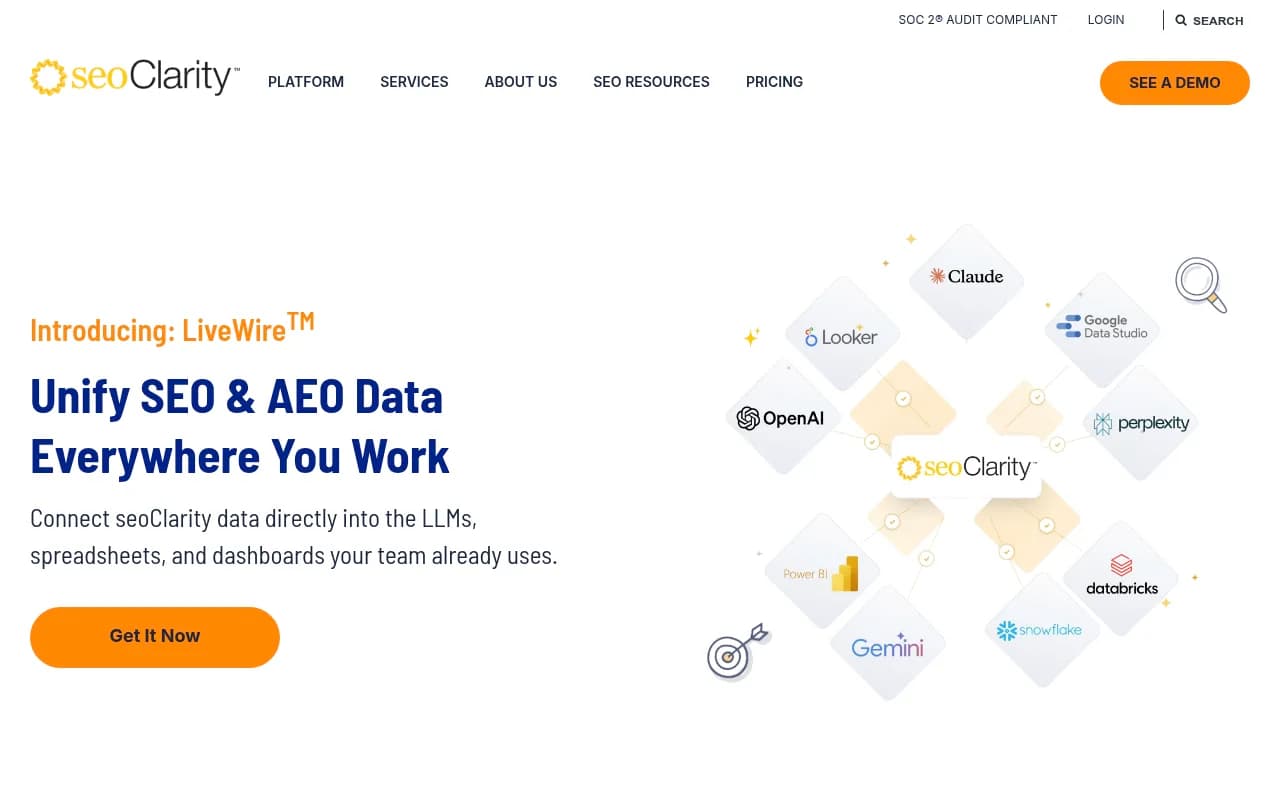
BrightEdge is strong on entity optimization and knowledge graph alignment, and seoClarity bundles AEO into an enterprise SEO platform. They suit teams that want one vendor for both. Expect shallower AI-specific data than a dedicated platform.
For a wider view, the GEO software directory at bestgeosoftware.com lists many more platforms.
Resolving the pricing conflict
The research turned up two incompatible Brandlight pricing claims. Brandlight's blog says enterprise-only, priced to scope, starting with a paid 3-month pilot. Mentionova says entry pricing starts around $199/month. I could not verify either. Do not quote a number in your business case until you hold a written proposal. Ask specifically about pilot cost, prompt and brand limits, engine coverage by tier and renewal terms.
How to run the evaluation
- Pick 30 to 50 prompts that reflect real buyer questions, mixing organic, brand-specific and competitor comparison types. The citation patterns differ across those types, as the unique-domains data shows.
- Run the same prompt set on two or three platforms for at least a few weeks. Compare engine by engine, not by headline score.
- Check that each platform shows co-cited competitors and third-party sources, not just whether you appeared.
- Test the exit: export your data, API access and what happens to historical records if you leave.
- Have security review the vendor in parallel, not after a verbal yes.
- Pick one. Track a focused prompt set for a quarter before deciding anything else.
Which one should you choose
- Choose Brandlight if you are a global brand or holding company in a regulated category, you value a strategist-led engagement, and you are comfortable with a sales-led pilot.
- Choose a measurement-first platform like Profound if your content engine is healthy and you need depth and procurement credibility.
- Choose Promptwatch if you want monitoring, crawler visibility and content execution in a single loop, with published pricing and a trial.
- Choose the platform inside your existing stack, such as Adobe or an enterprise SEO suite, if integration friction is your biggest cost.
One more thing. Nobody on any of these lists can guarantee rankings, citations, traffic or revenue. Be suspicious of anyone who implies otherwise, and of any "#1 platform globally" line that is the vendor's own claim.
If you want a quick baseline before talking to any vendor, Promptwatch's free AI visibility report scans how ChatGPT, Gemini and Perplexity describe your brand, with no login.