Key takeaways
- ChatGPT Shopping pulls product recommendations from publicly available web sources, and third-party review sites carry significant weight in what gets surfaced
- The system is explicitly unsponsored -- products rank by relevance and review quality, not paid placement
- Review signals from sites like Wirecutter, Reddit threads, YouTube videos, and niche review blogs all feed into ChatGPT's product reasoning
- Brands that lack third-party coverage are effectively invisible in ChatGPT Shopping, regardless of how good their product pages are
- Tracking which external sources are driving (or blocking) your AI visibility is now a real part of product marketing
When OpenAI launched Shopping Research inside ChatGPT in late 2025, most of the coverage focused on the user experience: the swipe interface, the clarifying questions, the personalized buyer's guides. What got less attention was the question underneath all of that -- how does ChatGPT actually decide which products to recommend?
The answer is more interesting than "it searches the web." Third-party reviews are doing a lot of the heavy lifting, and most brands haven't figured that out yet.
How ChatGPT Shopping actually works
ChatGPT Shopping Research isn't a search engine with a product index. It's closer to a research assistant that reads the web on your behalf. When you ask something like "find me the quietest cordless vacuum for a small apartment," ChatGPT doesn't just match keywords to product listings. It pulls from reviews, comparison articles, forum discussions, and editorial sources to build a picture of what's actually good.
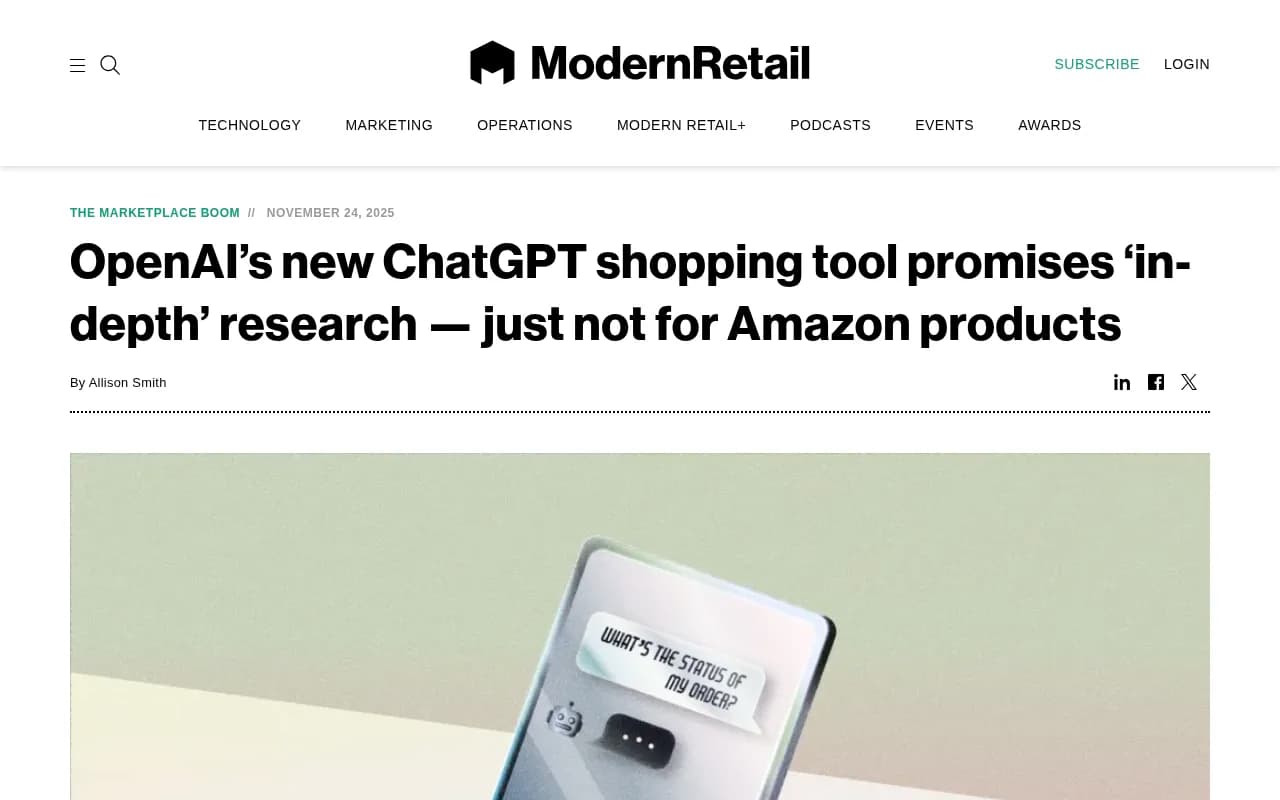
OpenAI has been explicit that recommendations are organic and unsponsored -- ranked by relevance to the query, not by who paid for placement. That's a meaningful difference from Google Shopping, where ads dominate the top of the page.
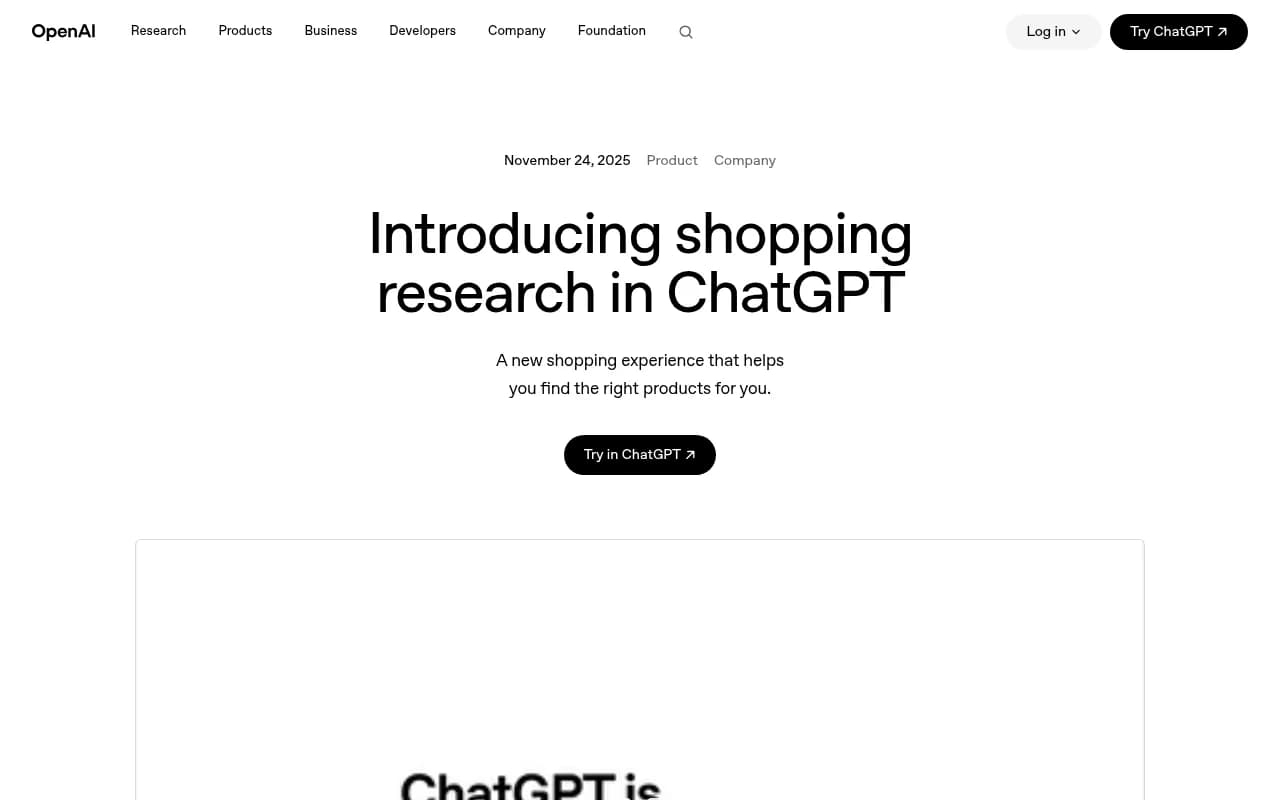
The system already handles around 50 million shopping-related queries per day, according to NBER research cited by OpenAI. That's not a niche feature -- it's a real discovery channel.
The mechanics, roughly: a user describes what they want, ChatGPT asks clarifying questions, then it researches across the internet, reads quality sources, and returns a tailored buyer's guide with product recommendations, prices, specs, and availability. The "reads quality sources" part is where third-party reviews come in.
Why third-party reviews carry so much weight
ChatGPT's product recommendations are influenced by several factors: structured product data on pages, price and availability, query relevance, and -- critically -- third-party reviews. Unlike traditional SEO, where your own website's content and backlinks drive visibility, ChatGPT Shopping prioritizes what other sources say about your product.
Think about how a human researcher would approach "best standing desk under $500." They wouldn't just read the manufacturer's product page. They'd check Wirecutter, scan Reddit threads, watch a YouTube review, maybe look at a niche ergonomics blog. ChatGPT does something similar, and the sources it trusts most tend to be the same ones a careful human would trust.
This creates a specific problem for brands: you can have perfect structured data, fast page speed, and great product photography, and still be invisible in ChatGPT Shopping if credible third-party sources haven't covered you.
What counts as a "quality source"
ChatGPT doesn't publish a whitelist of trusted review sites, but the pattern is pretty clear from how the system behaves:
- Editorial review sites with clear methodology (Wirecutter, RTINGS, Sweethome)
- Reddit discussions, particularly in product-specific subreddits where users share genuine experience
- YouTube reviews from channels with established credibility in a category
- Niche blogs and comparison sites that go deep on specific product categories
- Aggregated review data from major retailers, though this is less decisive than editorial coverage
The common thread is specificity and apparent independence. A 2,000-word review from a niche outdoor gear blog that actually tested the product carries more signal than a generic "top 10" listicle that clearly just scraped spec sheets.
The review gap problem
Here's the uncomfortable reality for most brands: the third-party review ecosystem is not evenly distributed. Established brands with years of coverage on Wirecutter, CNET, and major YouTube channels have a massive head start. Newer brands, niche products, and B2B-adjacent consumer goods often have thin or nonexistent third-party coverage.
In traditional SEO, a brand could compensate for this with strong on-site content and technical optimization. In ChatGPT Shopping, that compensation doesn't really work. If the AI can't find credible third-party sources saying your product is good, it's unlikely to recommend it -- even if your product genuinely is good.
This is the review gap: the distance between what your product actually is and what the AI-accessible review ecosystem says it is.
Closing that gap requires a different kind of marketing effort than most teams are used to. It's not about optimizing your product pages (though that still matters). It's about seeding credible coverage in the places ChatGPT is likely to read.
Where ChatGPT looks for review signals
Editorial and comparison sites
Sites like Wirecutter, RTINGS (for displays and audio), Sweethome, and category-specific review publications are high-signal sources. A mention in a Wirecutter roundup is probably the single most valuable third-party citation you can get for ChatGPT Shopping visibility.
Getting there is hard and can't be bought -- Wirecutter and similar sites don't accept paid placements. But you can increase your chances by making sure your product is easy to test, your PR outreach is targeted, and your product actually performs well in the relevant metrics these sites measure.
Reddit's influence on AI recommendations is underappreciated. ChatGPT reads Reddit threads, and subreddits like r/BuyItForLife, r/homelab, r/skincareaddiction, and hundreds of category-specific communities are full of genuine product recommendations. When real users in these communities mention your product positively -- especially in response to "what should I buy" questions -- that's review signal.
This isn't something you can fake easily. Reddit communities are good at detecting brand accounts and astroturfing. But if your product genuinely solves a problem, seeding it into the right communities (through honest participation, not spam) can build real review signal over time.
YouTube
YouTube reviews feed into ChatGPT's product reasoning more than most brands realize. A detailed review from a mid-sized YouTube channel in your product category -- someone with 50k subscribers who actually tests products -- can carry significant weight. The transcript of that video is readable by AI crawlers, and the credibility signals (view count, engagement, channel reputation) matter.
Niche comparison and affiliate sites
These get a mixed reputation in traditional SEO because of thin content and obvious monetization. But the better ones -- sites that actually test products and write detailed comparisons -- are legitimate sources for ChatGPT. A thorough comparison article that includes your product alongside competitors, with honest pros and cons, is useful review signal.
What this means for product marketing in 2026
The implication is that product marketing now has to think about AI visibility as a distinct channel, not just a byproduct of good SEO. The questions are different:
- Which third-party sites is ChatGPT citing when users ask about my product category?
- Which competitors have review coverage that I don't?
- Are there Reddit threads or YouTube videos driving AI recommendations against me?
- When ChatGPT recommends products in my category, am I appearing at all?
These aren't questions traditional SEO tools answer well. Tracking your brand's presence in AI-generated shopping recommendations requires a different kind of monitoring.
Promptwatch is built specifically for this -- it tracks which external sources (including Reddit threads, YouTube videos, and third-party review sites) are driving AI citations, and shows you where competitors are getting coverage that you're not. For brands trying to understand their ChatGPT Shopping visibility, that offsite citation analysis is the piece most monitoring tools miss entirely.
The structured data piece (it still matters)
Third-party reviews are the hidden factor, but they don't operate in isolation. ChatGPT Shopping also reads your product pages directly, and structured data still matters for a few reasons:
- Accurate price and availability information has to come from somewhere, and your product page is the source
- Schema markup (Product, Review, AggregateRating) helps AI crawlers parse your page correctly
- Clear, specific product descriptions help ChatGPT match your product to the right queries
The practical advice here is the same as it's always been for structured data: implement Product schema correctly, keep prices and availability current, and write product descriptions that answer the specific questions buyers have -- not just feature lists.
What's changed is the weighting. In traditional SEO, great on-page content could compensate for weak off-page signals. In ChatGPT Shopping, the off-page review ecosystem is probably the dominant factor for most product categories.
How to audit your ChatGPT Shopping visibility
If you want to understand where you actually stand, here's a practical approach:
-
Run the queries your customers would use. Ask ChatGPT "what's the best [your product category] for [your target use case]" and see if you appear. Try variations. Note which competitors show up and which sources ChatGPT cites.
-
Find the citation sources. When ChatGPT recommends a competitor, look at what it cites. Those are the sites you need coverage on.
-
Map your review gaps. Compare your third-party coverage against the top-recommended brands in your category. Where are they covered that you're not?
-
Track changes over time. One-off searches don't tell you much. You need systematic tracking to see whether your visibility is improving as you build review coverage.
For step 4 especially, manual tracking doesn't scale. Tools that monitor AI shopping recommendations systematically -- tracking which prompts surface your brand, which sources are cited, and how your visibility compares to competitors -- are worth the investment if ChatGPT Shopping is a meaningful channel for your business.
Comparison: what drives visibility in ChatGPT Shopping vs. Google Shopping
| Factor | Google Shopping | ChatGPT Shopping |
|---|---|---|
| Paid placement | Yes (dominant) | No |
| Product feed / structured data | Critical | Important but secondary |
| Third-party reviews | Minor factor | Major factor |
| Reddit / forum discussions | Minimal | Significant |
| YouTube reviews | Minimal | Significant |
| Editorial coverage (Wirecutter etc.) | Minimal | High weight |
| Brand authority / history | Moderate | Moderate |
| Price competitiveness | Important | Important |
| On-page content quality | Moderate | Moderate |
The contrast is stark. Google Shopping is largely a paid and technical game. ChatGPT Shopping is much more like earning media -- the brands that win are the ones that credible third parties have said good things about.
The longer-term picture
ChatGPT Shopping is still relatively new, and how it weighs different signals will change. OpenAI has been clear that the system learns from user behavior -- when users swipe left on a recommendation, that's feedback. When they click through and complete a purchase, that's feedback too.
Over time, this means the system will get better at identifying which sources are actually reliable and which products actually satisfy buyers. Brands that build genuine third-party credibility now are positioning themselves well for that future. Brands that try to game the system with low-quality review seeding will likely find those signals devalued.
The underlying principle is the same one that's driven good marketing for decades: be genuinely good, make sure credible people know about it, and make it easy for AI systems to find and understand that credibility. The execution is new. The principle isn't.
For brands that want to track exactly how this plays out for their specific products and categories, monitoring your ChatGPT Shopping visibility -- and the third-party sources driving it -- is no longer optional. It's the only way to know if your review-building efforts are actually working.