Key takeaways
- ChatGPT Search cites 2-3 sources per answer, so tracking whether your brand appears is more important than tracking keyword rankings
- You can run a basic AI visibility audit manually for free, but it doesn't scale — dedicated tools handle this automatically across multiple AI models
- The most useful metric is citation frequency: how often your brand appears across a defined set of relevant prompts
- Tracking mentions (your brand name in a response) and citations (your URL linked as a source) are two different things — both matter
- Fixing gaps requires more than monitoring; you need to know which topics AI models answer without citing you, then create content that fills those gaps
There's a specific kind of frustration that comes from ranking well on Google, running solid paid campaigns, and still hearing from a prospect that they "asked ChatGPT" and got pointed to a competitor. It's happening more often in 2026, and most marketing teams don't have a reliable way to track it.
This guide walks through exactly how to track your brand in ChatGPT answers — from a free manual approach you can run today, to the dedicated platforms that automate it at scale.
Understanding what you're actually tracking
Before you set up any tracking, it helps to be clear on what "appearing in ChatGPT" actually means, because there are two distinct things happening.
Mentions are when ChatGPT includes your brand name in a response — "According to [Brand], you should..." or "Companies like [Brand] offer this service." The user sees your name but may not get a link.
Citations are when ChatGPT Search links directly to a page on your website as a source for its answer. This is the higher-value outcome because it drives actual traffic and signals that AI models consider your content authoritative enough to reference.
Most tracking conversations conflate these two, which leads to inflated "visibility" numbers that don't tell you much. A Reddit thread in r/seogrowth put it well: "Rankings aren't really the game anymore. Actual citations inside AI answers like ChatGPT and Perplexity are what's driving brand discovery." Track both, but weight citations more heavily.
There's also a third signal worth watching: entity recognition, where ChatGPT describes what your brand does or positions it within a category, even without a direct link. This matters for brand perception even if it doesn't drive clicks.
Step 1: Build your prompt library
You can't track what you don't test. The first step is building a set of prompts that represent how your actual customers would ask questions in ChatGPT — not keyword-style queries, but natural questions.
Think about:
- Category-level questions ("What's the best [product category] for [use case]?")
- Comparison prompts ("How does [your brand] compare to [competitor]?")
- Problem-based prompts ("How do I solve [specific problem your product addresses]?")
- Recommendation prompts ("What tools do marketers use for [task]?")
Aim for 20-50 prompts to start. Organize them by theme or funnel stage. This becomes your baseline — you'll run these same prompts repeatedly over time to track changes.
One practical tip: look at your existing Google Search Console queries. The questions people type into Google are often close to what they ask AI models, just phrased more conversationally.
Step 2: Run the manual audit (the free approach)
Open ChatGPT (use the web search-enabled version, not just the base model — the distinction matters because ChatGPT Search browses the live web while the base model draws from training data with a knowledge cutoff).
Run each prompt from your library. For each response, record:
- Did your brand get mentioned?
- Did your brand get cited with a link?
- Which competitors were cited?
- Which external sources (Reddit, review sites, news outlets) appeared?
- What was the overall framing of the answer?
A simple spreadsheet works fine for this. Columns for prompt, your brand mentioned (Y/N), your brand cited (Y/N), competitors cited, and notes on the response framing.
This manual approach is genuinely useful for a first audit. Backlinko's Matt Kenyon has a free walkthrough of this exact process, including a prompt template you can copy. The limitation is that it doesn't scale — running 50 prompts manually every week across ChatGPT, Perplexity, Claude, and Gemini is a full-time job.
Step 3: Calculate your share of voice
Once you have your first round of results, calculate a simple share of voice metric:
Citation rate = (prompts where your brand was cited / total prompts tested) × 100
Do the same for each competitor. This gives you a baseline to measure against. If you run 40 prompts and your brand appears in 6 of them, your citation rate is 15%. If your main competitor appears in 22, that's the gap you're working to close.
Track this weekly or bi-weekly. Improvements take time — new content typically takes a few weeks to get crawled and cited — but the trend line matters more than any single data point.
Step 4: Use a dedicated tracking tool
Manual audits are good for getting started and understanding the mechanics. But for ongoing tracking, you need something automated.
Here's how the main options compare:
| Tool | AI models tracked | Content generation | Crawler logs | Prompt volume data | Free tier |
|---|---|---|---|---|---|
| Promptwatch | 10+ (ChatGPT, Perplexity, Claude, Gemini, Grok, etc.) | Yes (Content Agents) | Yes | Yes | No (free trial) |
| Semrush AI Visibility Toolkit | ChatGPT, Perplexity, Gemini, others | No | No | Limited | Via Semrush plan |
| Ahrefs Brand Radar | ChatGPT, Perplexity, Gemini, others | No | No | No | No |
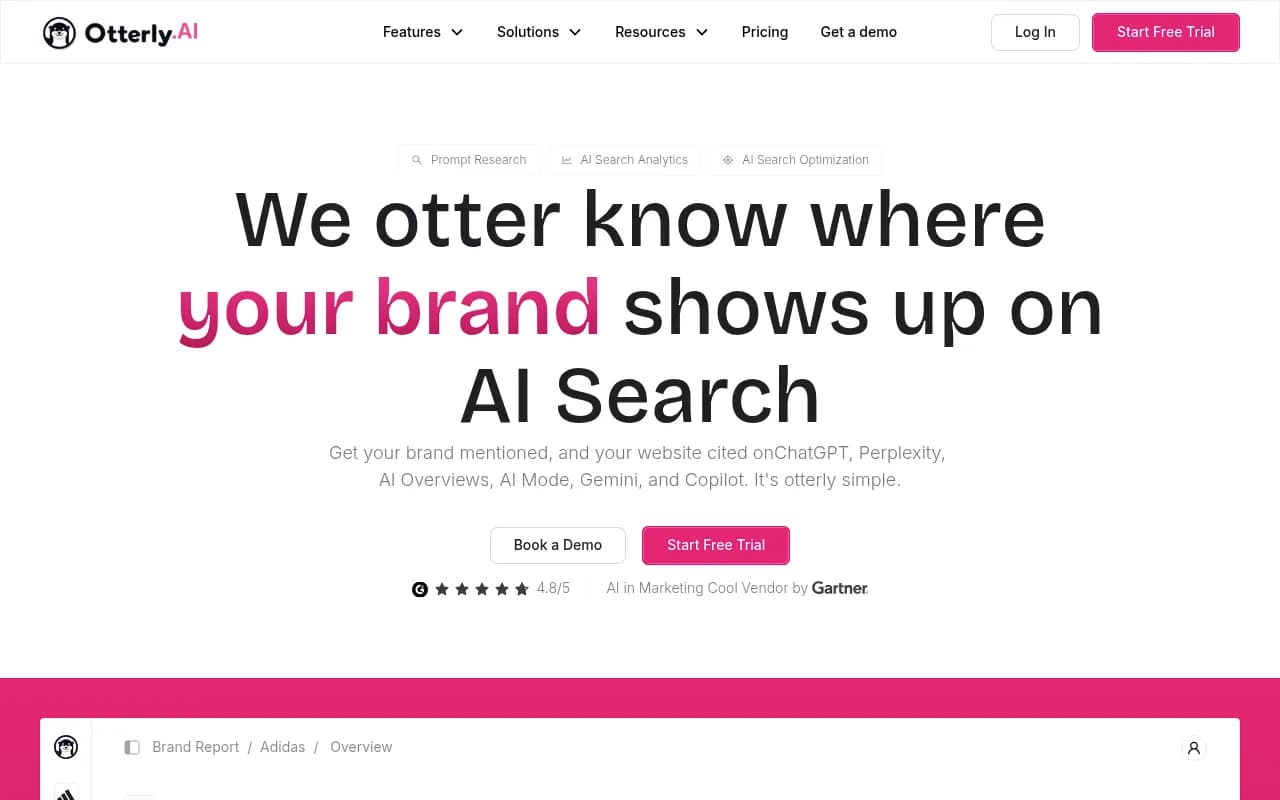
| Otterly.AI | ChatGPT, Perplexity, Gemini | No | No | No | Yes (limited) |
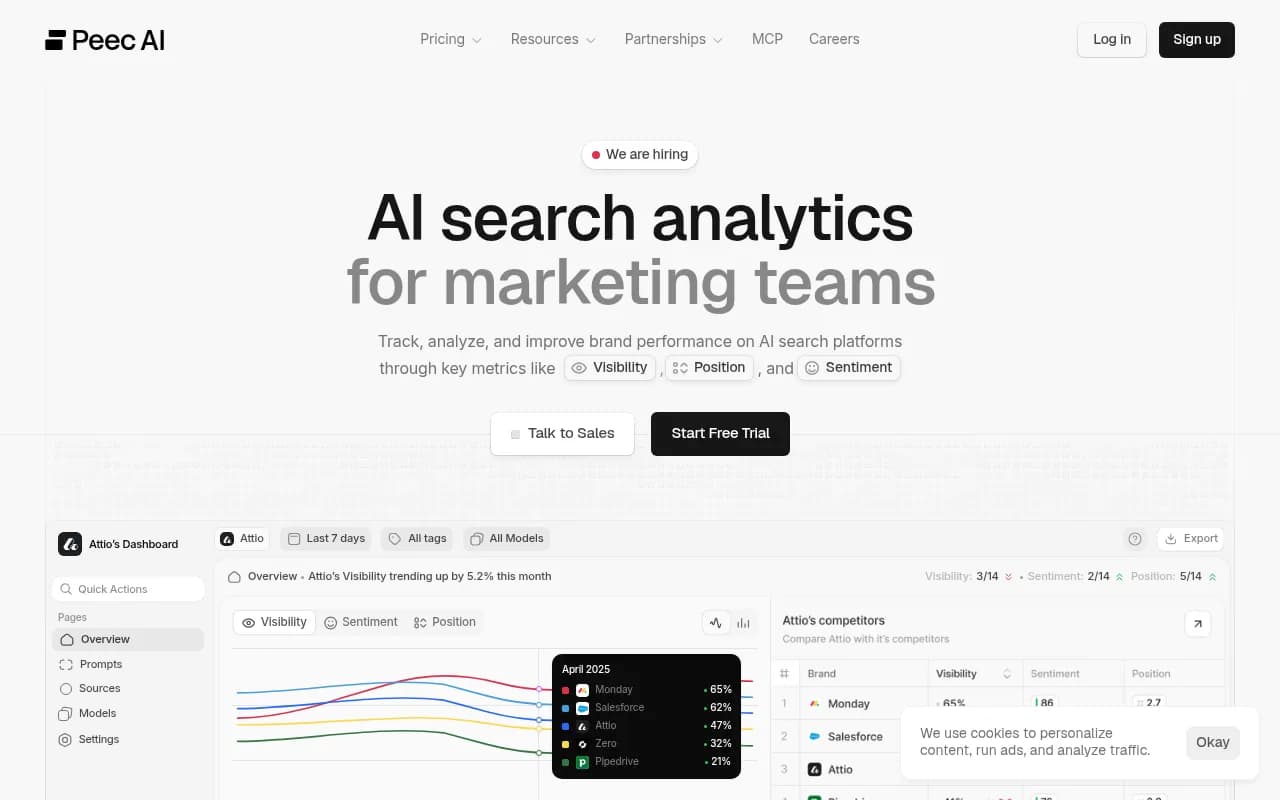
| Peec AI | ChatGPT, Perplexity, Claude | No | No | No | Yes (limited) |
| AthenaHQ | ChatGPT, Perplexity, Gemini | No | No | No | No |
The core difference between these tools is what they do after showing you the data. Most of them stop at monitoring — they tell you your citation rate is 15% and your competitor's is 40%, and then you're on your own to figure out why and what to do about it.
Promptwatch is built around closing that loop. The Answer Gap Analysis shows you the specific prompts where competitors are getting cited but you aren't, and the Content Agents generate articles and briefs designed to fill those gaps based on real prompt data. It also has AI crawler logs that show when ChatGPT's crawler visits your site, which pages it reads, and when those pages move from crawled to cited — that's genuinely useful for diagnosing why content isn't getting picked up.

For teams that just need basic monitoring and are already paying for Semrush, the AI Visibility Toolkit is a reasonable starting point:
If budget is tight, Otterly.AI and Peec AI both have free tiers that cover the basics:
Step 5: Diagnose why you're not appearing
Tracking tells you where you're missing. Diagnosis tells you why. There are a few common reasons brands don't appear in ChatGPT answers:
Your content doesn't directly answer the question. ChatGPT Search favors pages that give a clear, structured answer to a specific question. If your content is mostly product-focused or written for keyword density rather than genuine answers, it's less likely to be cited.
You're not being cited by trusted third parties. ChatGPT pulls heavily from sources it already trusts — review sites, industry publications, Reddit discussions, YouTube. If your brand isn't mentioned in those places, you're less likely to appear even when your own content is strong.
AI crawlers can't access your content. Some sites block AI crawlers in their robots.txt, or have technical issues that prevent crawling. Crawler log data (available in tools like Promptwatch) can surface these problems directly.
Your content covers the topic but not the specific angle AI models are answering. There's often a mismatch between what you've written and the specific framing of the question. A page about "project management software" may not get cited for "best project management tool for remote teams" if it doesn't address that specific use case.
Step 6: Fix the gaps
Once you know which prompts you're missing, the fix is usually content. Specifically:
- Write pages that directly answer the questions you're not appearing for
- Structure content with clear headings, direct answers near the top, and specific facts or data that give AI models something concrete to cite
- Build or earn mentions on the third-party sources AI models already trust in your category (industry publications, comparison sites, relevant Reddit communities)
- Make sure your brand is described consistently across your site, your Wikipedia page if you have one, and major third-party listings
The content you create for AI citation is different from traditional SEO content. It's less about keyword density and more about being the clearest, most direct answer to a specific question. Think of it as writing for a reader who will only see one source.
Step 7: Track results over time
After publishing new content, give it 3-4 weeks before expecting to see citation changes. Then re-run your prompt library and recalculate your citation rate.
The metrics worth tracking on an ongoing basis:
- Citation rate across your full prompt library
- Share of voice vs. key competitors
- Which specific pages are being cited (and which aren't)
- Which AI models cite you most (ChatGPT vs. Perplexity vs. Gemini can vary significantly)
- Traffic from AI search (visible in GA4 as referral traffic from chatgpt.com, perplexity.ai, etc.)
If you're using a platform with page-level tracking, you can see exactly which URLs are getting cited and how often. That tells you which content formats and topics are working, so you can double down on them.
Tools worth knowing about
Beyond the main platforms, a few other tools are worth mentioning depending on your situation:
For agencies managing multiple clients, Search Party has a workflow built around that use case:
For enterprise teams that need deep analytics and are already in the BrightEdge ecosystem:
For teams that want to track AI visibility alongside traditional rank tracking in one place, SE Ranking has added GEO capabilities:
For a lightweight, focused option that's specifically built for AI citation tracking:
The honest reality of AI brand tracking in 2026
Tracking your brand in ChatGPT is still messier than traditional rank tracking. AI responses aren't deterministic — the same prompt can produce different answers on different days, and ChatGPT Search results vary by user location, browsing history, and model version. Any tracking tool is giving you a sample, not a census.
That said, the directional signal is real and useful. If your citation rate is consistently low across a defined prompt set, that's a problem worth fixing. If a competitor consistently appears where you don't, that's a content gap you can close.
The brands doing this well in 2026 aren't treating AI visibility as a separate project from content marketing. They're using the prompt data to inform what they write, publishing content that directly answers the questions their customers are asking AI models, and tracking whether it works. That feedback loop — find the gap, create the content, measure the result — is what separates brands that show up in AI answers from brands that don't.