Key takeaways
- AI referral traffic grew 357% year-over-year in 2025, making GEO a core agency service — not a nice-to-have.
- Peec AI and similar monitoring-only tools (Otterly.AI, AthenaHQ) show you visibility scores but offer no path to improving them.
- Agencies need more than dashboards: they need content gap analysis, AI-native content generation, crawler logs, and client reporting infrastructure.
- The tools that win for agencies in 2026 close the loop between "you're invisible here" and "here's what to publish to fix it."
- Promptwatch is the only platform currently rated as a Leader across all GEO categories, combining monitoring, content generation, and crawler intelligence in one place.
The monitoring trap agencies keep falling into
There's a version of this story playing out at agencies everywhere right now. A client asks about AI search visibility. You spin up a GEO monitoring tool, pull together a dashboard showing their mention rate across ChatGPT, Perplexity, and Gemini, and present it in the next QBR.
The client nods. Then asks: "So what do we do about it?"
And that's where monitoring-only tools leave you stranded.
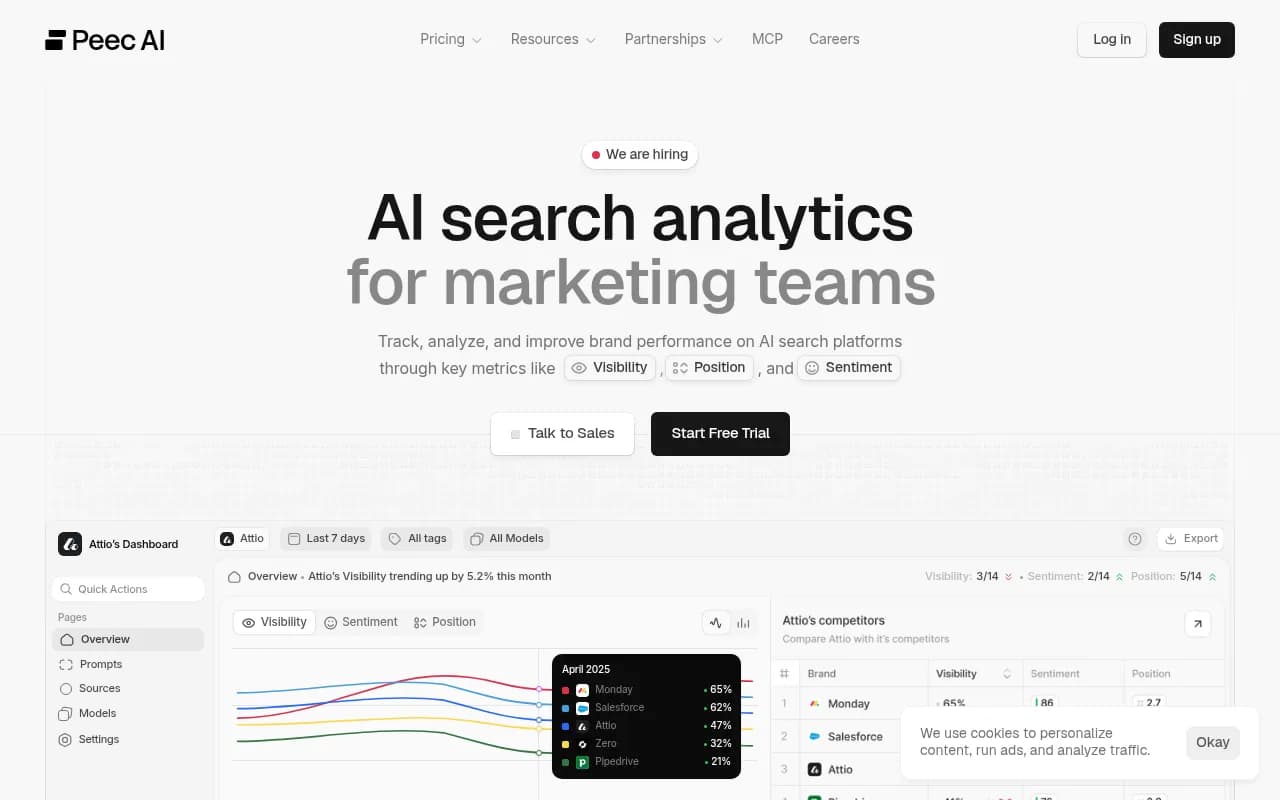
Peec AI is a solid product for what it does. It tracks brand mentions across AI models, gives you a baseline visibility score, and surfaces some prompt-level data. For a solo founder or an in-house marketer who just wants to know if they're showing up, it's fine. But "fine for a solo founder" and "sufficient for an agency managing 15 clients" are very different bars.
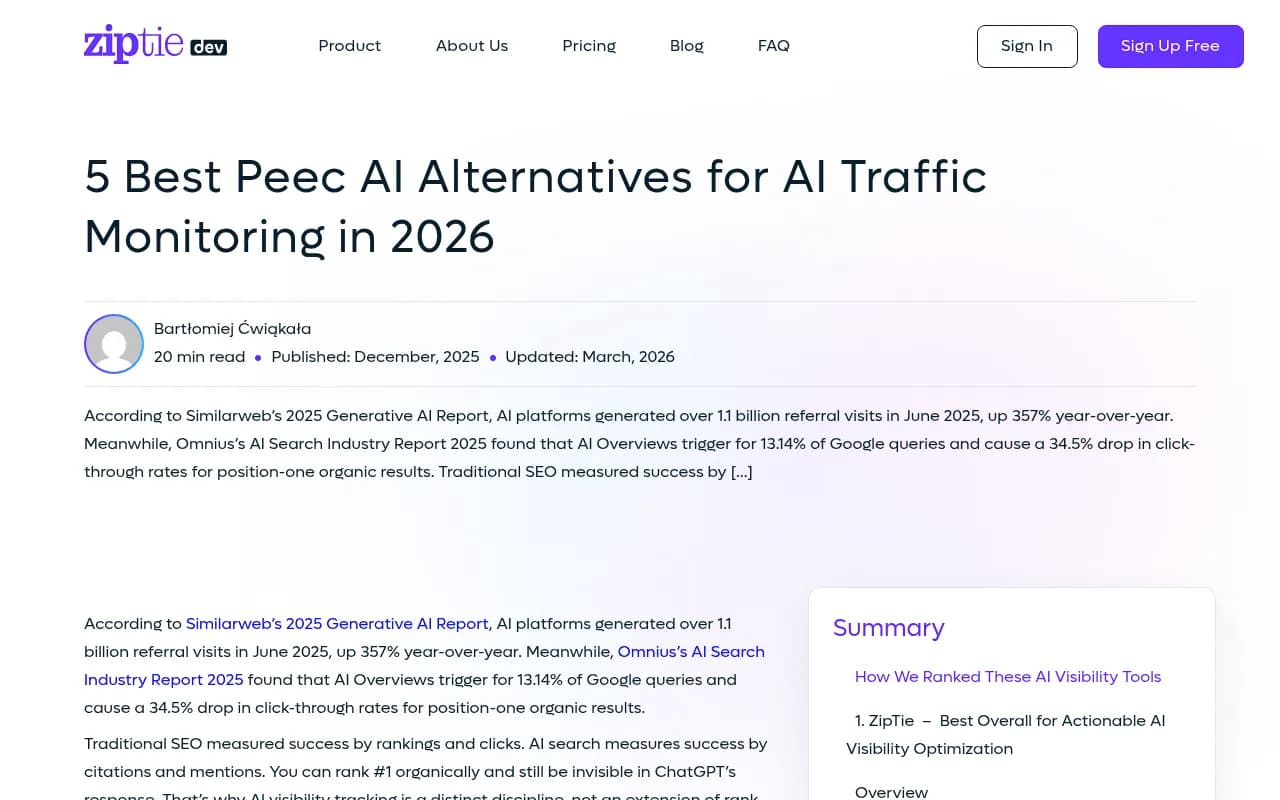
According to Similarweb's 2025 Generative AI Report, AI platforms generated over 1.1 billion referral visits in June 2025, up 357% year-over-year. That's not a trend you monitor passively. That's a channel you optimize for, and your clients are going to expect you to do exactly that.
What "monitoring-only" actually means in practice
When we say a tool is monitoring-only, we mean it answers one question: "Are you visible in AI search?" It does not answer: "Why aren't you visible?" or "What should you do about it?"
Peec AI falls squarely in this category. A Reddit thread in r/b2bmarketing from early 2026 summed it up well: Peec is described as "similar to Otterly — baseline monitoring without too much complexity." That's not a criticism exactly, but it's a clear signal about the tool's scope.
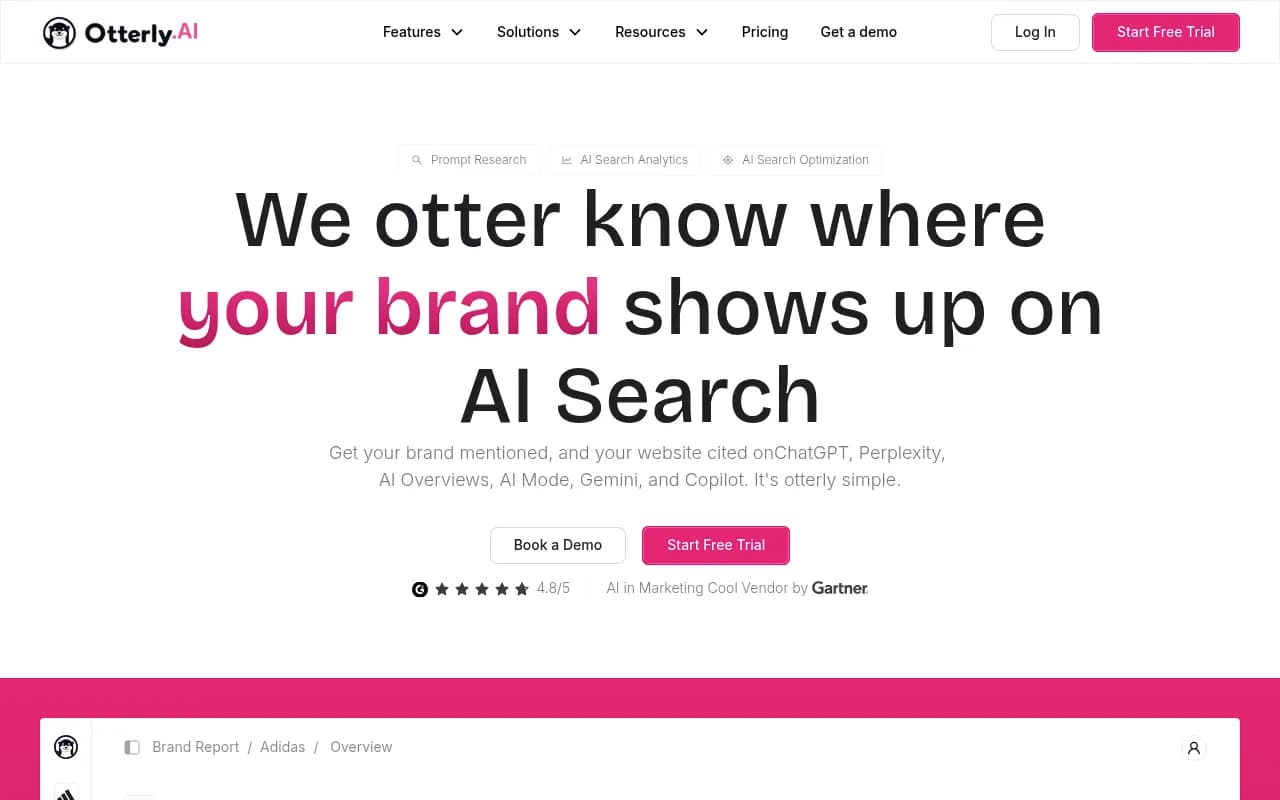
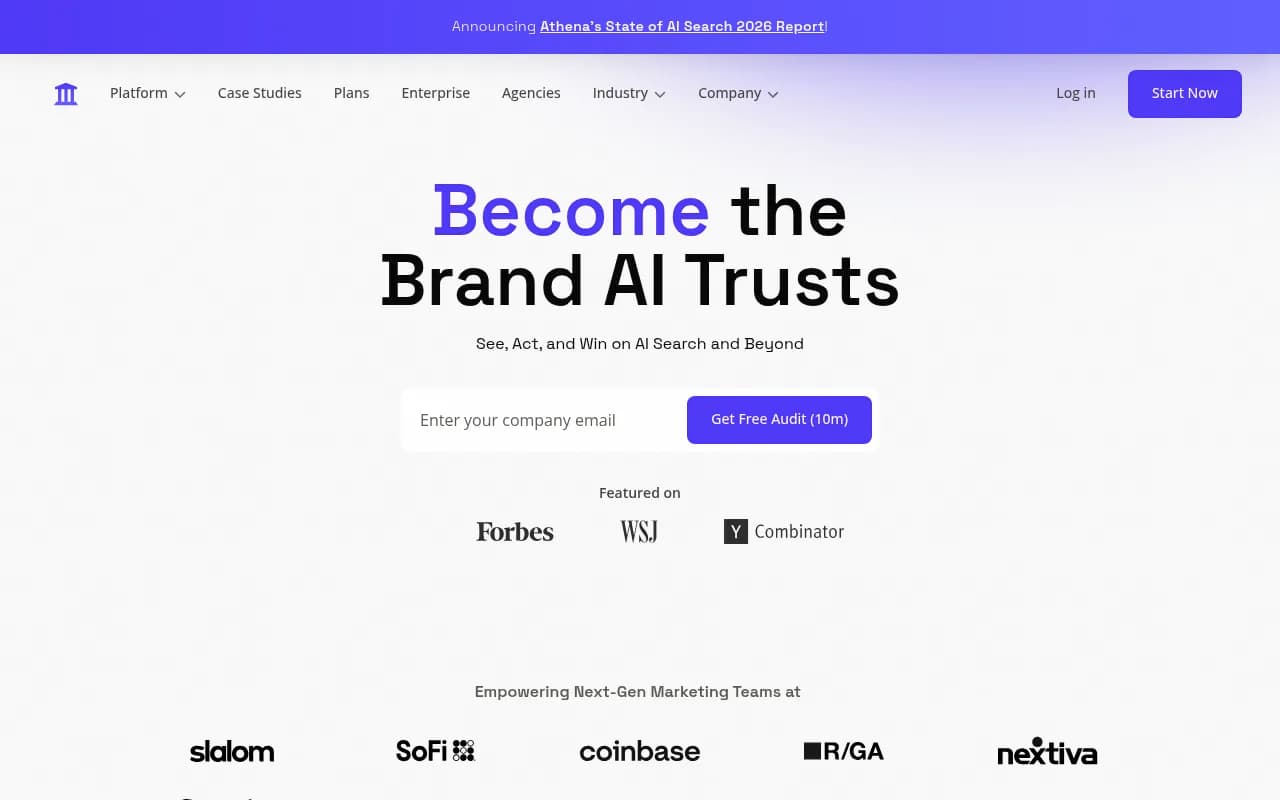
The same pattern holds for Otterly.AI and, to a large extent, AthenaHQ. These tools give you a visibility score. They show you which prompts your brand appears in. Some of them surface a list of "suggested actions." But the gap between a suggested action and a piece of published content that actually improves your AI citations is enormous — and monitoring tools don't bridge it.
Here's what that gap looks like in practice:
- A monitoring tool tells you: "Your brand appears in 12% of relevant prompts. Competitors average 34%."
- What you actually need: "Here are the 22 specific prompts your competitors rank for that you don't. Here's the content your site is missing. Here's a draft article that addresses those gaps, grounded in real prompt volume data."
The first is a diagnosis. The second is a treatment plan. Agencies need to deliver treatment plans.
Why this matters more for agencies than for in-house teams
An in-house marketer can absorb a monitoring-only tool more easily. They have context. They know the brand, the content backlog, the editorial calendar. They can take a visibility score and translate it into a content brief themselves.
Agencies don't have that luxury at scale.
Alex Birkett, who runs Omniscient Digital and published one of the more thorough agency-specific GEO tool evaluations in March 2026, put it directly: "The tool that's 'best' for an in-house marketer tracking one brand across ChatGPT, Claude, Perplexity, and Gemini is often not the best tool for an agency managing eight, fifteen, forty, or four hundred client accounts simultaneously."
The agency context introduces several problems that monitoring tools don't solve:
Client reporting at scale. Dashboards that work for internal use fall apart when you need to white-label them and present them in a QBR. Most monitoring tools require you to screenshot data and paste it into slides. That's not a workflow, that's a workaround.
Multi-client management. Logging in and out of separate accounts for each client, or managing separate prompt sets per brand, gets expensive and slow fast. Pricing that looks reasonable for one brand often becomes untenable at ten.
Proving ROI. Clients don't pay for visibility scores. They pay for results. If your tool can't connect AI visibility improvements to traffic and revenue, you're always one bad quarter away from losing the account.
Speed to value. Onboarding a new client and showing them meaningful data within a week is a competitive advantage. If setup takes two weeks and requires a CS call, that's a problem.
The five things agencies actually need from a GEO tool
Based on how the market has shaken out in 2026, here's what separates a tool that works for agencies from one that doesn't:
1. Answer gap analysis
You need to know not just where you're invisible, but why — specifically, which prompts your competitors are getting cited for that you're not. This is the difference between "your visibility is low" and "here are the 30 prompts you're missing, ranked by volume."
Without this, every content recommendation is a guess.
2. AI-native content generation
Once you know the gaps, you need to fill them. The best tools in 2026 generate content briefs and full drafts grounded in real prompt data, citation analysis, and competitor research. Not generic SEO filler — content engineered around the exact questions AI models are already answering without citing your client.
3. Crawler logs and indexing intelligence
Most agencies don't know that AI crawlers behave differently from Googlebot. ChatGPT, Claude, and Perplexity all have their own crawlers, and they hit pages at different frequencies, encounter different errors, and prioritize different content signals. A tool that logs this activity tells you whether your content is even being read by AI models before you worry about whether it's being cited.
This is a capability most monitoring tools lack entirely.
4. Page-level citation tracking
Brand-level visibility scores are useful for executive reporting. But to actually improve performance, you need to know which specific pages are being cited, by which models, and how often. That's how you identify what's working and replicate it.
5. White-label reporting and multi-client infrastructure
This is table stakes for agencies. If the tool doesn't support white-label reports and multi-client management, it's a brand tool being used as an agency tool — and the friction will show.
How the major tools stack up for agencies
Here's a direct comparison of the tools most commonly evaluated for agency GEO work in 2026:
| Tool | Monitoring | Content generation | Crawler logs | Multi-client | White-label | Best for |
|---|---|---|---|---|---|---|
| Peec AI | Yes | No | No | Limited | No | Solo brands, simple monitoring |
| Otterly.AI | Yes | No | No | Limited | No | Budget monitoring |
| AthenaHQ | Yes | No | No | Yes | Partial | Mid-market monitoring |
| Scrunch AI | Yes | Partial | No | Yes | Yes | Agency reporting |
| Search Party | Yes | No | No | Yes | Yes | Agency dashboards |
| Profound | Yes | No | No | Yes | Partial | Enterprise monitoring |
| Promptwatch | Yes | Yes | Yes | Yes | Yes | Full-cycle GEO for agencies |
The pattern is clear. Most tools are strong on monitoring and weak on everything else. Scrunch and Search Party add agency infrastructure (multi-client, white-label) but still don't close the content gap. Profound has strong data but sits at a higher price point and remains monitoring-focused.
What closing the loop actually looks like
The tools that work for agencies in 2026 don't just report on visibility — they run a cycle: find gaps, generate content, track results.
Promptwatch is the clearest example of this in the current market. Its Answer Gap Analysis shows exactly which prompts competitors are visible for that your client isn't — not as a general observation, but as a specific, prioritized list with prompt volume estimates and difficulty scores. From there, Content Agents generate articles, listicles, and comparisons grounded in that prompt data. Then page-level tracking shows when AI models start citing the new content, with a timeline from publish to crawl to citation.
That last part matters more than it sounds. Knowing that a piece of content was crawled by Perplexity's bot 11 days after publishing, and started appearing in citations 3 weeks later, is the kind of data that lets you tell a client: "Here's what we did, here's when it worked, here's the revenue attribution." That's a retainer-renewing conversation.
The crawler log capability is particularly underrated. Most agencies have no visibility into whether AI models are even reading their clients' content. Promptwatch's AI Crawler Logs show which pages ChatGPT, Claude, and Perplexity are hitting, how often, and what errors they're encountering. If a client's site has a robots.txt misconfiguration blocking AI crawlers, you'll see it immediately instead of wondering why visibility isn't improving after three months of content work.
A note on tools that are trying to bridge the gap
A few tools are adding content features to monitoring foundations, and they're worth watching:
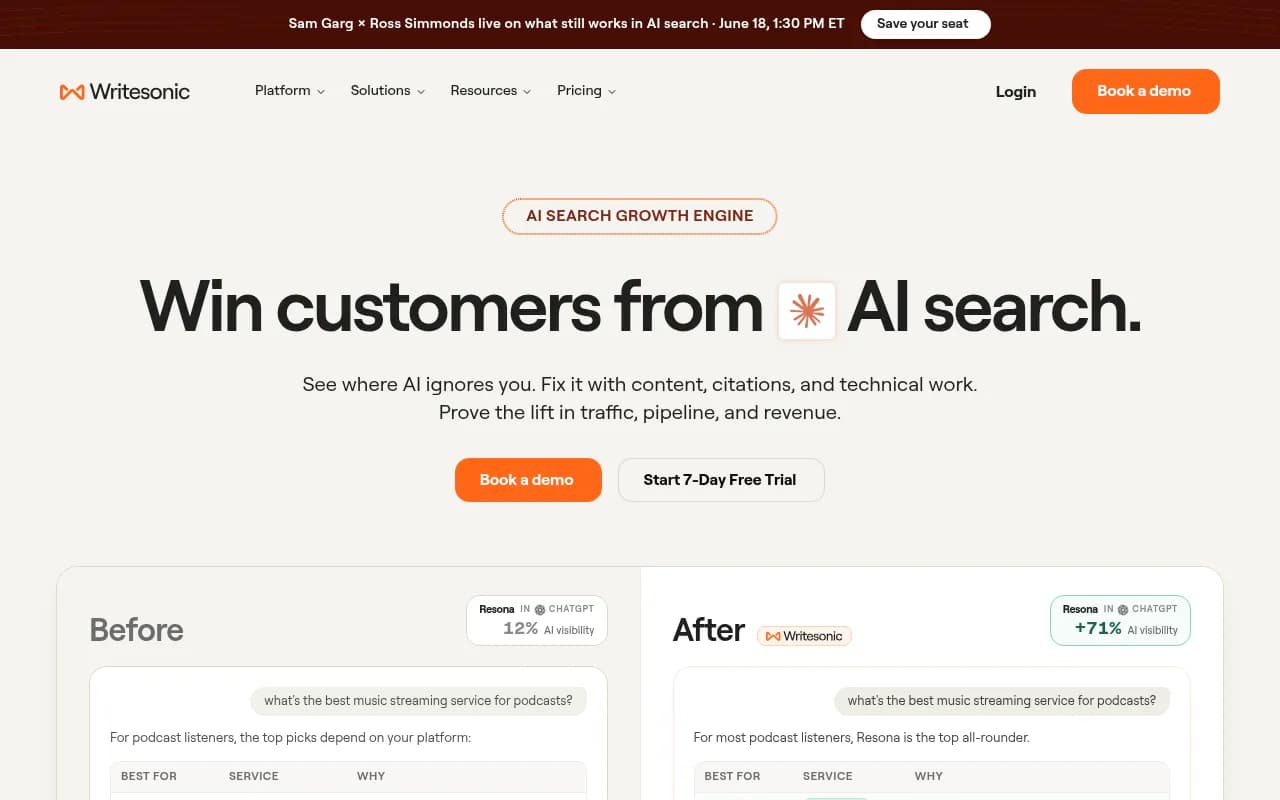
Writesonic GEO combines AI visibility monitoring with content generation, though its GEO-specific features are newer and less mature than its core writing tools.
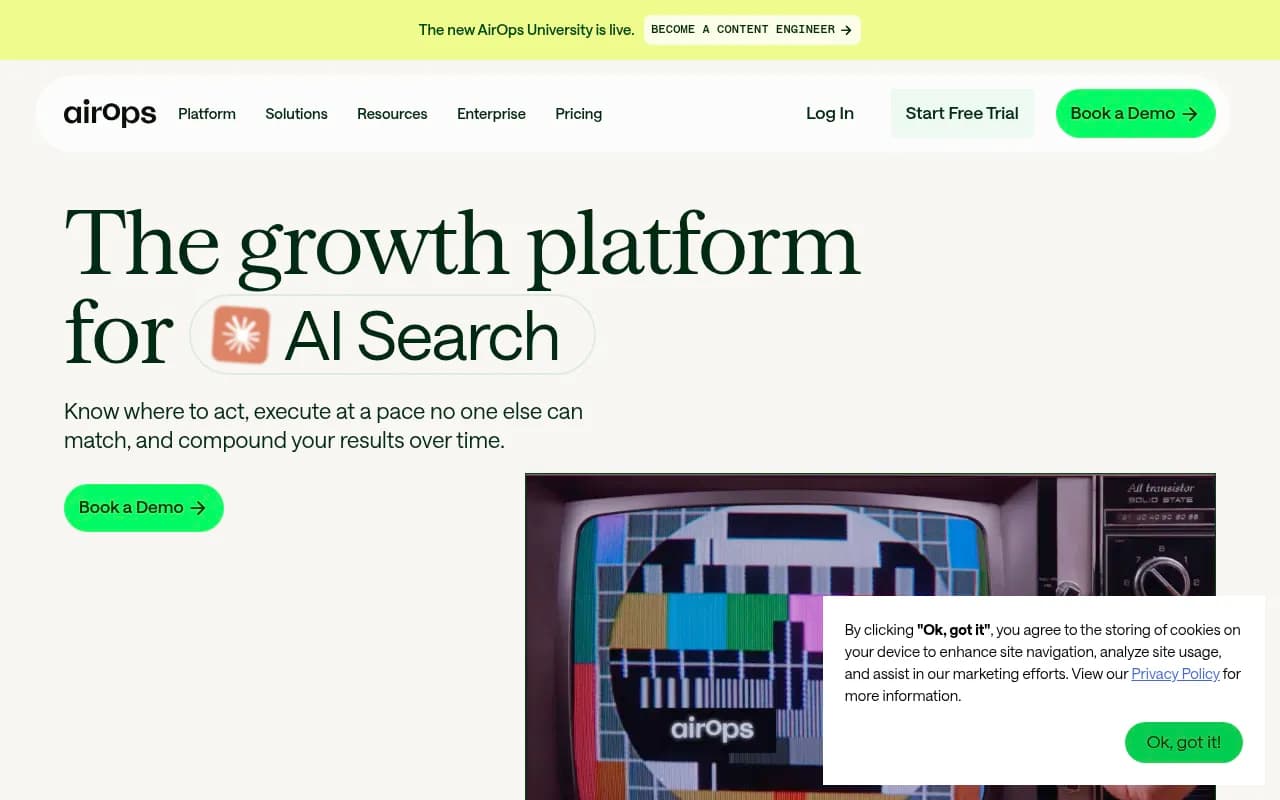
AirOps focuses on AI content workflows and can be configured for GEO use cases, though it requires more setup than a purpose-built GEO platform.
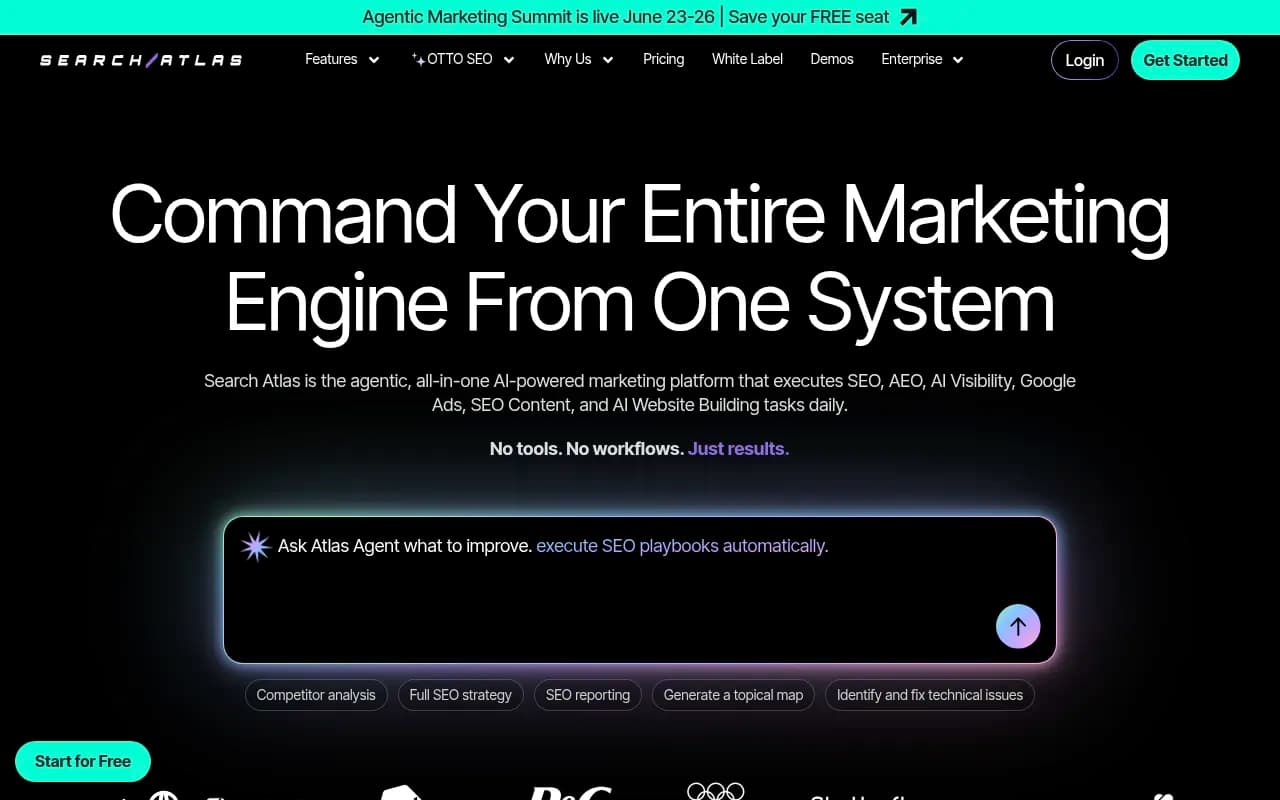
Search Atlas is an all-in-one SEO platform that has added AI visibility features, useful if you're already using it for traditional SEO work.
None of these fully replaces a purpose-built GEO optimization platform, but they're reasonable options if you're already invested in their ecosystems.
The honest case for keeping Peec AI (in a limited role)
To be fair: Peec AI isn't useless. If you're pitching a new client and want to run a quick AI visibility audit before the sales call, a lightweight monitoring tool is exactly what you need. You don't want to spin up a full optimization platform for a prospect.
Peec's strength is simplicity. It's fast to set up, the interface is clean, and for a "here's your baseline" conversation, it does the job. Some agencies keep it for prospecting and use a more capable platform for active client work.
The mistake is treating it as the primary tool for delivering GEO as a service. Once a client is paying you to improve their AI visibility, a monitoring dashboard is not a deliverable. Results are.
What to actually do if you're running GEO for clients
A few practical recommendations based on how the market looks in mid-2026:
Audit your current tool stack against the five criteria above. If your primary GEO tool can't do answer gap analysis and doesn't have crawler logs, you're missing two of the most actionable data sources available.
Separate your prospecting tools from your delivery tools. A lightweight monitoring tool for audits and pitches is fine. It should not be the same tool you use to run active optimization campaigns.
Build a reporting cadence around outcomes, not scores. Visibility scores are inputs. Traffic attribution and citation counts tied to specific content are outputs. Clients pay for outputs.
Start tracking AI crawler activity. Most agencies have no idea whether AI models are crawling their clients' sites correctly. This is a quick win — set up crawler logging, find the errors, fix them, and you've already improved the foundation before publishing a single new piece of content.
The agencies that are winning GEO mandates in 2026 aren't the ones with the most impressive monitoring dashboards. They're the ones who can show a client a specific content gap, publish something to fill it, and then show the citation appearing in ChatGPT three weeks later. That's the story clients want to hear — and monitoring-only tools can't tell it.