Key takeaways
- Ahrefs Brand Radar is the stronger pick for teams already deep in the Ahrefs ecosystem who want AI visibility data anchored in real search metrics and broad LLM coverage.
- SE Ranking's AI Visibility Tracker suits teams that want AI monitoring woven into a more affordable, all-in-one SEO suite without switching platforms.
- Neither tool was built ground-up for GEO -- both are AI visibility add-ons to traditional SEO platforms, which means they share similar blind spots: no content generation, limited prompt-level intelligence, and no crawler log access.
- If GEO is a primary concern rather than a secondary metric, dedicated platforms built specifically for AI search visibility will give you more to work with.
- The right choice depends less on which tool is "better" and more on which SEO suite you're already using -- and how seriously you need to act on AI visibility data, not just watch it.
Why this comparison matters right now
Traditional SEO tools have been scrambling to add AI visibility features since late 2024. The logic makes sense: if you're already tracking keyword rankings and backlinks in a platform, why not also track whether ChatGPT or Perplexity mentions your brand?
Both Ahrefs and SE Ranking took this approach. Ahrefs launched Brand Radar as a dedicated feature within its suite. SE Ranking built an AI Visibility Tracker into its platform. Both are real products with real data -- not just marketing slides.
But "AI visibility tracking inside an SEO tool" and "a GEO platform" are genuinely different things. This guide breaks down exactly what each tool does well, where each falls short, and when you'd choose one over the other.
What Ahrefs Brand Radar actually does
Ahrefs Brand Radar tracks how your brand (and competitors) appear across AI-generated answers. It monitors mentions in ChatGPT, Perplexity, Google AI Overviews, and a handful of other models, then surfaces share-of-voice data, citation sources, and visibility trends over time.
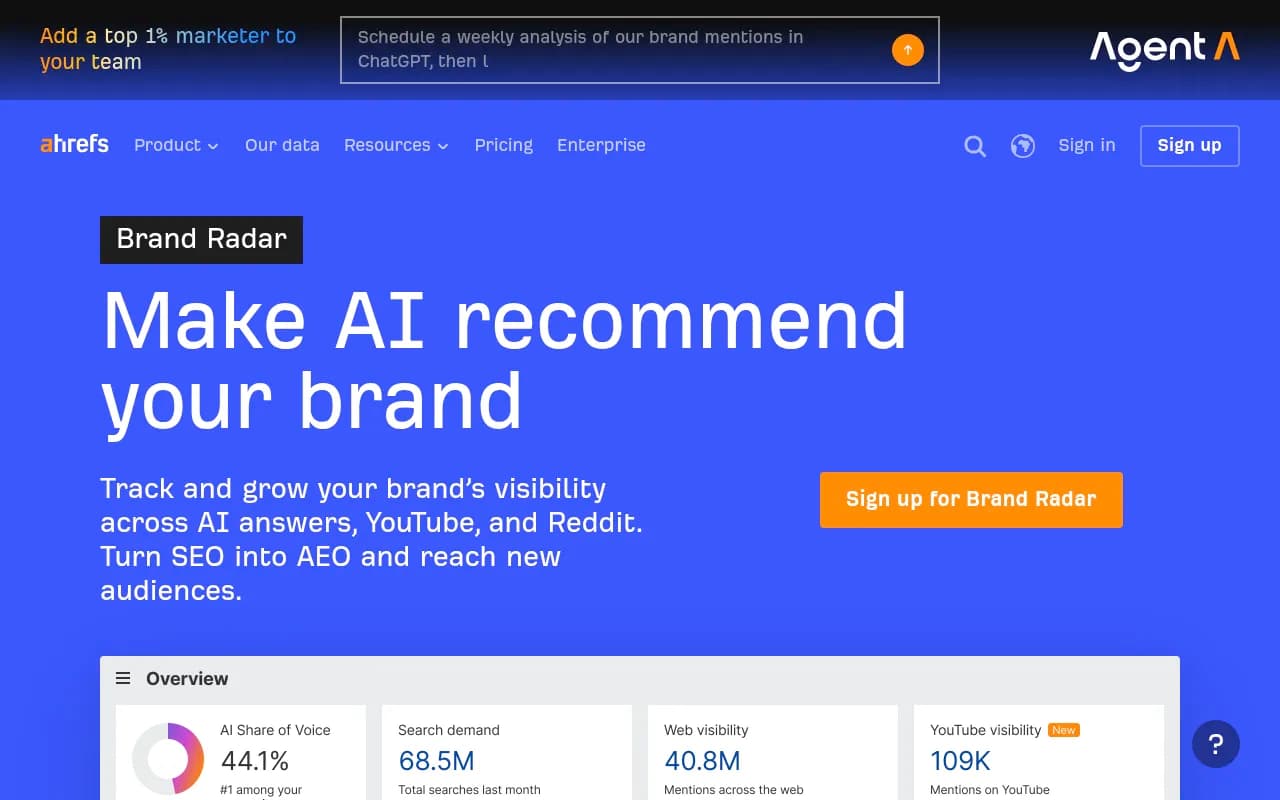
The main selling point is that it sits inside Ahrefs. If you're already using Ahrefs for keyword research, backlink analysis, and site audits, Brand Radar gives you AI visibility data without logging into a separate tool. The integration means you can cross-reference which pages are ranking in traditional search AND getting cited in AI answers -- that's genuinely useful context.
A few things worth knowing:
- Prompts in Brand Radar are largely fixed. You can't build custom prompt sets around your specific customer journey or product category. This is a real limitation if your brand operates in a niche where the obvious queries don't capture how people actually ask about you.
- There's no AI traffic attribution. You can see that an AI model cited your page, but you can't connect that citation to actual sessions or revenue in your analytics.
- No content generation tools. Brand Radar shows you where you're missing -- it doesn't help you fix it.
- Pricing is tied to Ahrefs subscriptions, which start at $129/month. Brand Radar isn't available on the cheapest tier.
Where Brand Radar genuinely shines is data quality. Ahrefs has a reputation for rigorous data, and that carries over here. The citation and source analysis is solid, and the YouTube and Reddit tracking (which feeds into AI visibility since these are frequently cited sources) is more developed than most competitors offer.
What SE Ranking's AI Visibility Tracker does
SE Ranking has been building out its AI monitoring capabilities as part of its broader SEO suite. The AI Visibility Tracker monitors brand mentions across AI search engines and surfaces share-of-voice data similar to what Brand Radar offers.
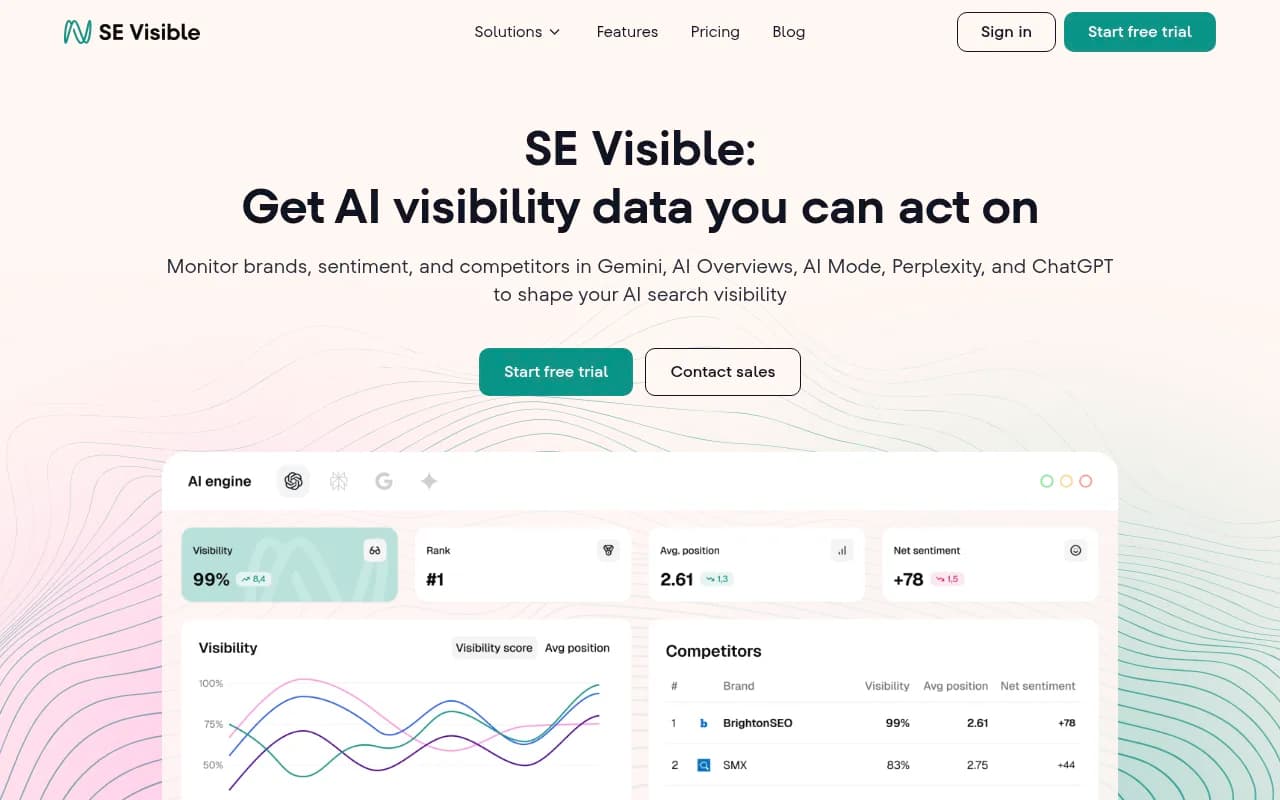
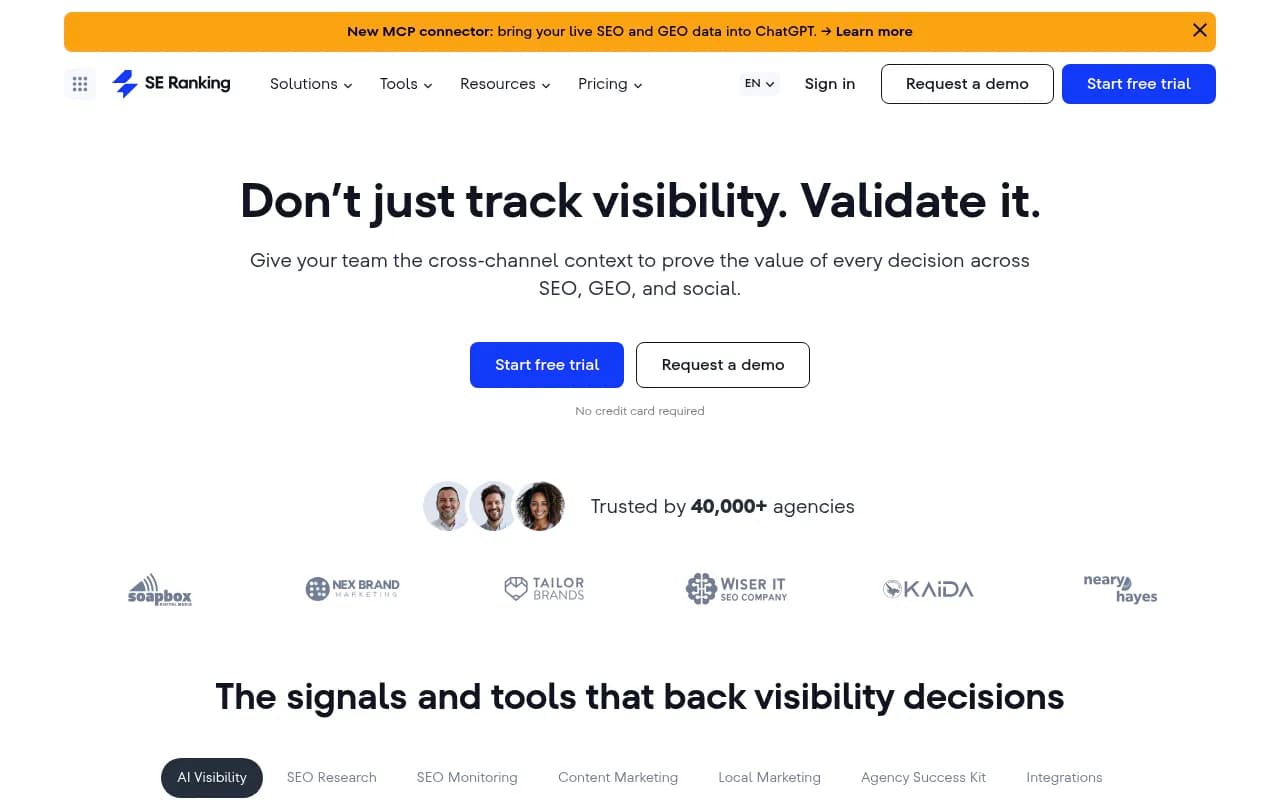
SE Ranking's positioning is different from Ahrefs in a few important ways:
- It's more affordable. SE Ranking's plans start around $65/month, making the AI visibility features accessible to smaller teams and agencies that can't justify Ahrefs pricing.
- The platform is designed as an all-in-one SEO suite, so it covers rank tracking, site audits, keyword research, and AI visibility under one roof -- similar to Ahrefs, but at a lower price point.
- The AI visibility data is woven into the broader SEO workflow rather than being a standalone module. This means you get a more integrated view of traditional and AI search performance together.
The limitations are also real. SE Ranking's AI visibility coverage is narrower than Ahrefs Brand Radar in terms of LLM breadth. The prompt customization is similarly limited. And like Brand Radar, it's a monitoring tool -- it shows you data but doesn't help you act on it.
Head-to-head comparison
Here's how the two tools stack up across the dimensions that matter most for GEO work:
| Feature | Ahrefs Brand Radar | SE Ranking AI Visibility |
|---|---|---|
| LLM coverage | ChatGPT, Perplexity, Google AIO, others | ChatGPT, Perplexity, Google AIO (narrower) |
| Custom prompts | Fixed/limited | Fixed/limited |
| Share-of-voice tracking | Yes | Yes |
| Citation source analysis | Strong (incl. YouTube, Reddit) | Basic |
| AI traffic attribution | No | No |
| Content generation | No | No |
| Crawler log access | No | No |
| Prompt volume/difficulty data | No | No |
| Traditional SEO integration | Deep (full Ahrefs suite) | Deep (full SE Ranking suite) |
| Starting price | ~$129/month | ~$65/month |
| Best for | Ahrefs users wanting AI visibility | SE Ranking users wanting AI visibility |
The pattern is clear: these tools are mirrors of each other in terms of GEO capability. Both bolt AI monitoring onto an existing SEO suite. Both are monitoring-only. The main differentiators are price, the depth of citation analysis (Ahrefs wins here), and which SEO ecosystem you're already in.
Where both tools fall short for serious GEO work
This is the honest part. If your goal is to genuinely improve your AI search visibility -- not just measure it -- both tools leave you with a lot of manual work.
Neither Ahrefs Brand Radar nor SE Ranking's AI Visibility Tracker will:
- Tell you which specific content gaps are causing AI models to skip your brand
- Generate or brief content designed to close those gaps
- Show you real-time AI crawler activity on your site
- Connect AI citations to actual traffic and revenue
- Give you prompt volume data so you can prioritize which gaps matter most
This isn't a knock on either product specifically. It reflects a broader limitation of building AI visibility as a feature inside a traditional SEO tool rather than as the core product.
The teams that are getting the most out of GEO in 2026 aren't just tracking their AI visibility score -- they're running a continuous cycle: find gaps, create content to fill them, track whether AI models start citing the new content, and repeat. That workflow requires more than a monitoring dashboard.
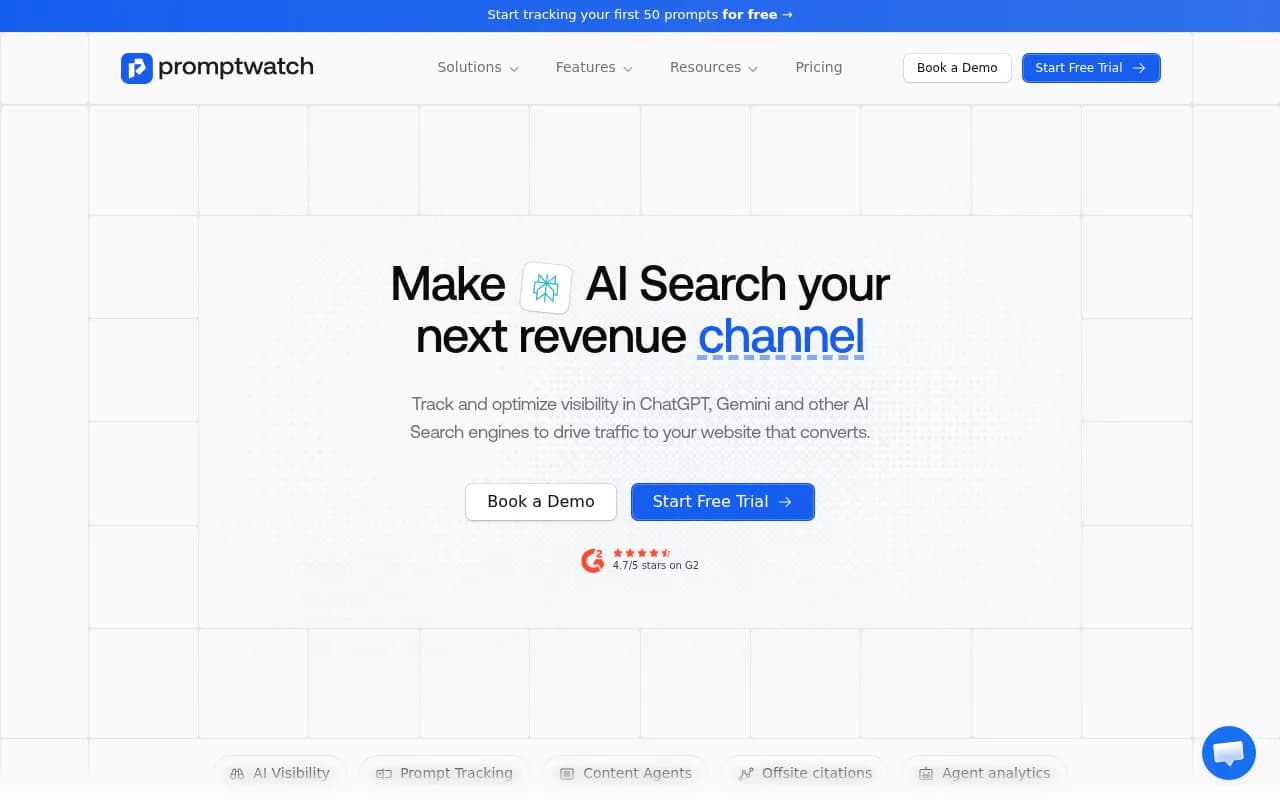
For teams that need that full loop, dedicated GEO platforms like Promptwatch are built specifically around it -- covering everything from answer gap analysis and AI content generation to crawler logs and traffic attribution.
Ahrefs Brand Radar: who it's actually for
Brand Radar makes the most sense if:
- You're already an Ahrefs subscriber and don't want to add another tool to your stack
- Your primary work is traditional SEO and AI visibility is a secondary metric you want to keep an eye on
- You care about data quality and want citation analysis that includes YouTube and Reddit signals
- You're tracking a well-known brand in a mainstream category where fixed prompts cover your use case
It's less suited for teams where GEO is a strategic priority, or for brands in niche categories where the standard prompts don't capture how customers actually search.
SE Ranking AI Visibility: who it's actually for
SE Ranking's AI Visibility Tracker makes sense if:
- You're already using SE Ranking and want AI monitoring without switching platforms
- Budget is a real constraint and you need AI visibility data at a lower price point
- You want a single platform for traditional SEO and basic AI monitoring
- You're an agency managing multiple clients who need a cost-effective all-in-one solution
The trade-off is narrower LLM coverage and less depth in citation analysis compared to Ahrefs. For most teams using SE Ranking, that's an acceptable trade-off given the price difference.
Other tools worth considering
If you're evaluating these two, it's worth knowing what else is in the market. The GEO tool space has grown significantly in 2026.
For monitoring-focused alternatives that go deeper than either Ahrefs or SE Ranking on AI visibility specifically:
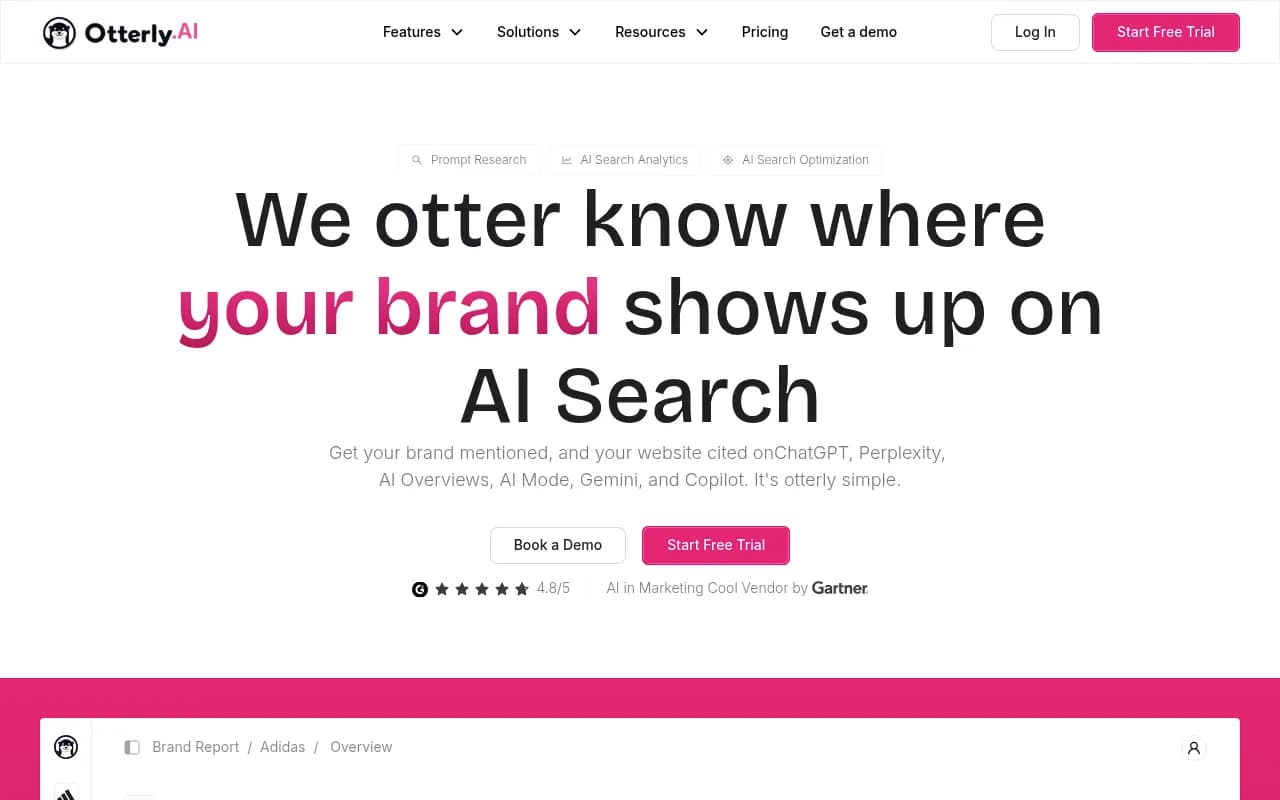
Otterly.AI is a prompt-based monitoring tool that gives you more flexibility in how you track AI mentions. It's not a full SEO suite, but for pure AI visibility monitoring it's more customizable than either Brand Radar or SE Ranking.
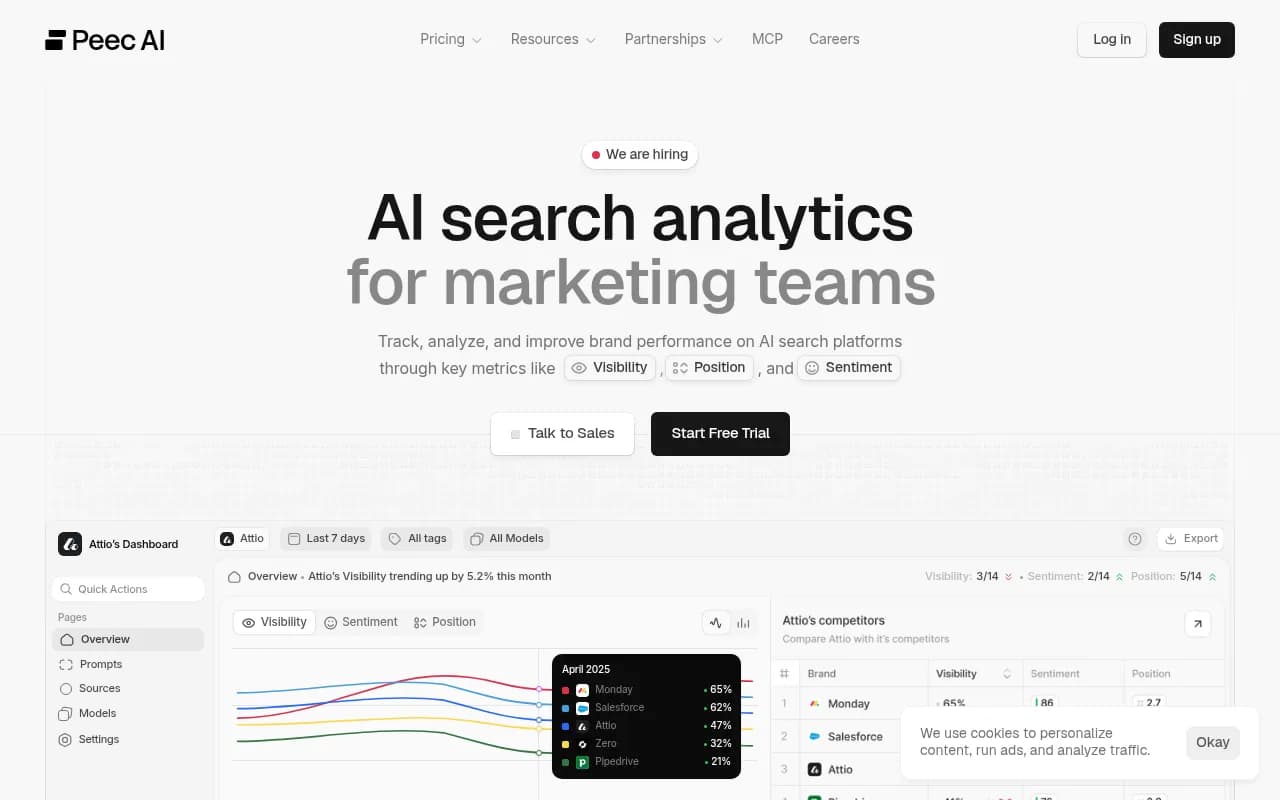
Peec AI focuses on citation-level sentiment -- not just whether you're mentioned, but how AI models frame your brand when they do mention you. That's a dimension neither Ahrefs nor SE Ranking covers well.
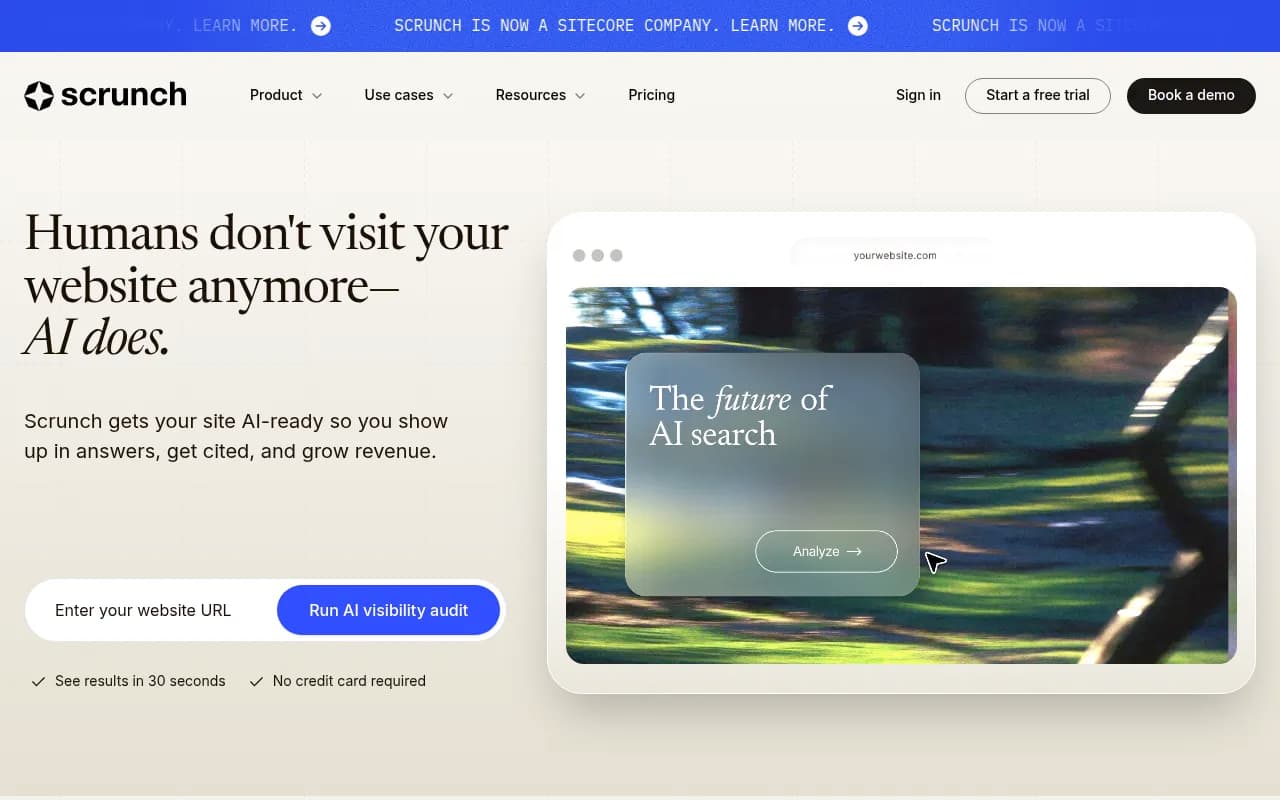
Scrunch AI is positioned at the premium end of AI monitoring, with deeper narrative and sentiment analysis. Worth looking at if you need to understand the qualitative story AI models are telling about your brand, not just the quantitative share-of-voice.

AthenaHQ is enterprise-focused and goes deeper on AI search strategy. It's more expensive than either Ahrefs Brand Radar or SE Ranking, but it covers more ground for teams where GEO is a primary concern.
For teams that want to go beyond monitoring entirely and actually optimize for AI search:
Profound is one of the more established dedicated GEO platforms, with strong analytics and strategist support for enterprise teams.
A note on the "SEO suite" approach to GEO
There's a reasonable argument for keeping AI visibility inside your existing SEO tool. Fewer logins, unified reporting, and the ability to correlate traditional and AI search performance in one place -- these are real benefits.
But there's also a real cost. When AI visibility is a feature rather than the core product, it tends to get the feature treatment: fixed prompts, basic dashboards, no action layer. The teams building dedicated GEO platforms are moving faster on things like prompt intelligence, crawler log analysis, and content generation because that's all they're building.
The honest answer for most teams in 2026 is probably a hybrid: use your existing SEO suite for traditional metrics and basic AI monitoring, and layer in a dedicated GEO tool if AI search visibility is genuinely strategic for your business.

The verdict
Ahrefs Brand Radar is the better AI visibility tool of the two -- broader LLM coverage, stronger citation analysis, YouTube and Reddit tracking. But it's also more expensive, and the advantage only matters if you're already in the Ahrefs ecosystem.
SE Ranking's AI Visibility Tracker is the right call if you're an SE Ranking user who wants AI monitoring without adding another platform. It does the job at a lower price, with the expected trade-offs in depth.
Neither tool is a GEO platform. Both are monitoring dashboards that show you data and leave you to figure out what to do with it. If that's enough for your current needs -- you want to track AI visibility as one signal among many -- either will work fine depending on which SEO suite you prefer.
If you need to actually move the needle on AI search visibility, not just measure it, you'll eventually outgrow both and want something built specifically for that job.