Key takeaways
- Entry-level AI search monitoring tools start around $49-$99/month but typically only track visibility without helping you improve it
- Mid-market platforms ($99-$579/month) vary significantly in depth -- some offer only dashboards, others include content generation and crawler logs
- Agency and enterprise programs ($2,000-$30,000+/month) bundle platform access with human strategy, content production, and reporting
- The biggest pricing trap is paying for monitoring-only tools when you need optimization -- always check whether a platform helps you act on the data, not just collect it
- Annual billing typically saves 20-30% across most platforms
The AI search optimization market has a pricing problem. Not in the sense that things are overpriced -- in the sense that it's genuinely hard to compare what you're buying. A $99/month tool and a $299/month tool might look identical on a feature checklist, but one shows you a dashboard and the other actually helps you rank.
This guide cuts through that. We'll walk through every meaningful budget tier, what you realistically get at each one, and where the value inflection points are.
Why AI search optimization pricing is so fragmented
Traditional SEO tools have been around long enough that pricing has mostly settled. You know roughly what Ahrefs or Semrush costs and what you get. AI search optimization is different -- the category is maybe two years old in any serious commercial sense, and vendors are still figuring out what to charge.
That creates a few specific problems for buyers:
The feature sets vary enormously. Some tools track five AI models; others track one. Some count "citations" at the domain level; others go page-by-page. Some include content generation; most don't. When vendors use the same words (visibility score, citation tracking, gap analysis) they often mean very different things.
Measurement standards don't exist yet. Unlike keyword rankings, there's no universal benchmark for "AI visibility." A platform that says your score improved 12 points might be measuring something completely different from a competitor showing a 40-point improvement.
The monitoring-vs-optimization gap is real. Most platforms in this space are dashboards. They show you where you're invisible. They don't help you fix it. That distinction matters enormously for pricing -- you're essentially paying for data vs. paying for outcomes.
With that context, here's how the market breaks down.
Tier 1: Free and freemium tools ($0-$49/month)
A handful of tools offer free tiers or very low-cost entry points. These are worth knowing about, but you should be clear-eyed about what they cover.
Ahrefs Webmaster Tools is free and gives you basic site health data. Its Brand Radar feature tracks brand mentions in AI outputs, though at the free tier you're working with limited prompt sets.
Semrush has a free tier too, but its AI visibility features sit behind paid plans. The free version won't tell you much about how you appear in ChatGPT or Perplexity.
At the $49/month range, you start seeing dedicated AI monitoring tools. Otterly.AI sits in this bracket and tracks brand mentions across several AI models. It's genuinely useful for a small brand that just wants to know whether it's showing up.
What you don't get at this tier: prompt volume data, content gap analysis, crawler logs, or anything that helps you act on what you're seeing. These tools answer "am I visible?" They don't answer "why not?" or "what should I do about it?"
Tier 2: Entry-level platforms ($50-$199/month)
This is where most small businesses and solo marketers start. The tools here are more capable than freemium options, but the gap between platforms is significant.
Peec AI and Rankscale sit in this range. Both track AI citations and brand mentions, with Peec offering some smart suggestions on where to improve.
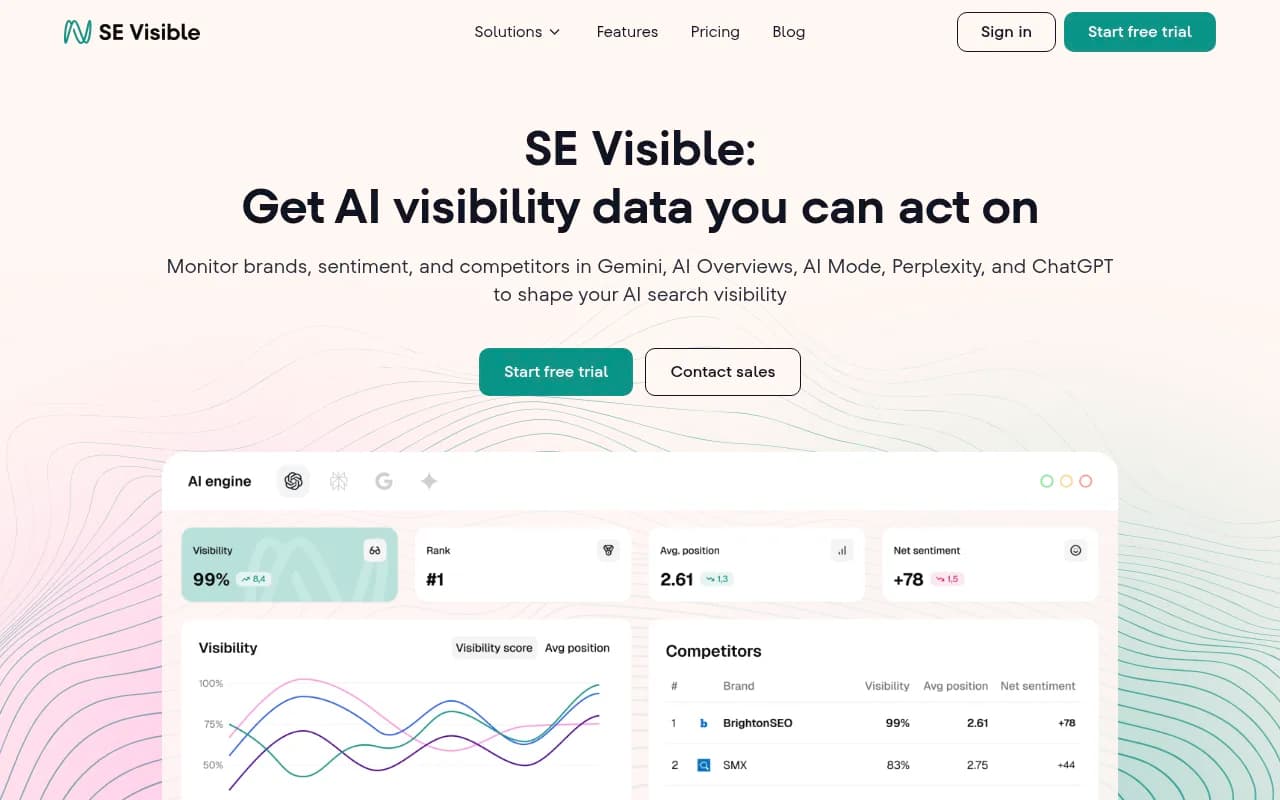
SE Ranking Visible is worth a look here too -- it extends SE Ranking's traditional SEO data into AI visibility tracking, which is useful if you're already using SE Ranking for keyword work.
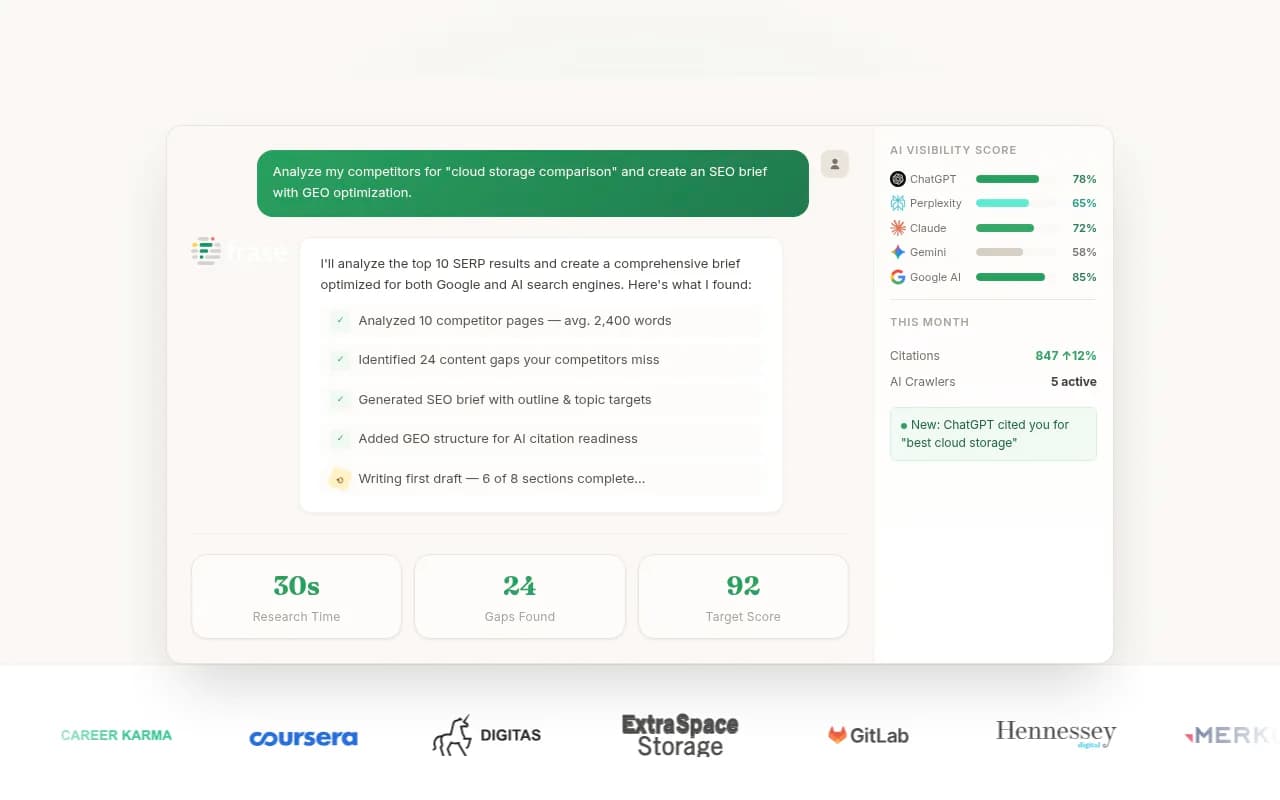
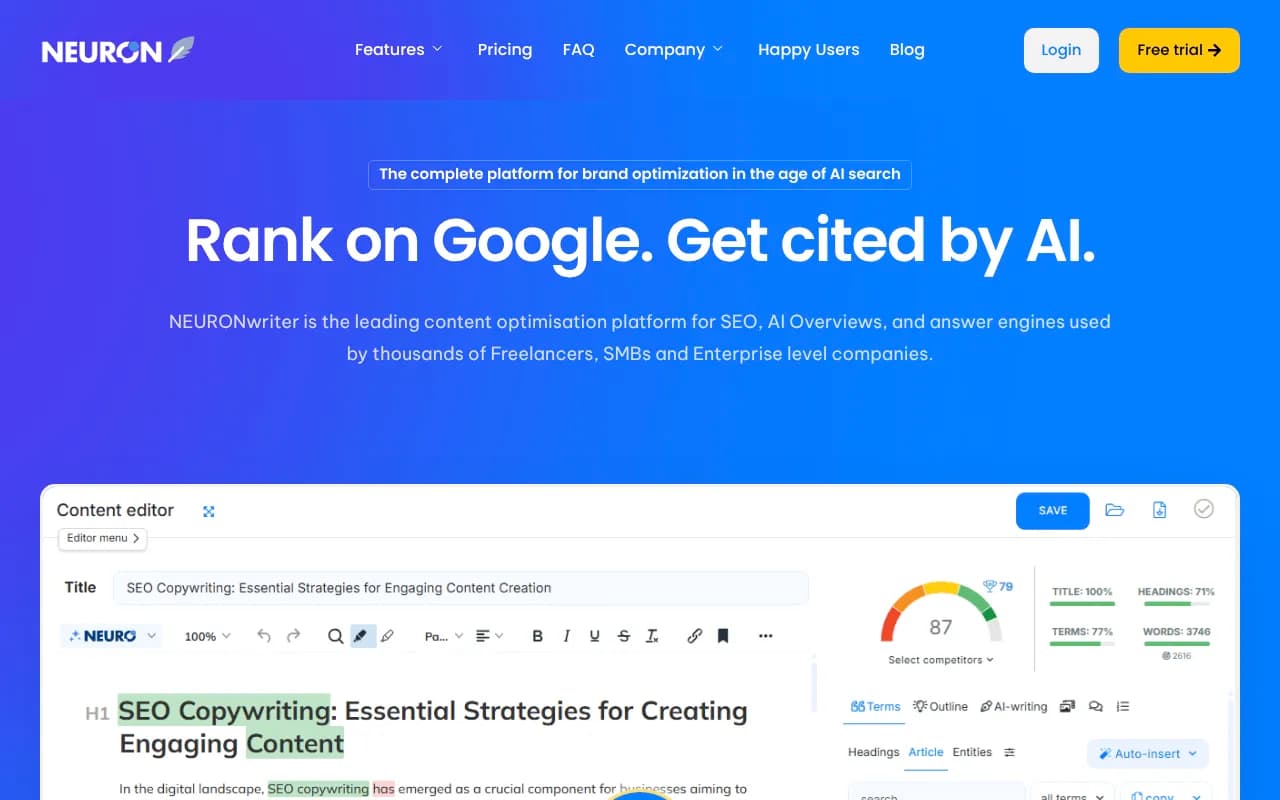
For content optimization specifically, tools like Frase and NeuronWriter fall in this range. They're not AI search monitoring tools per se, but they help you write content that's more likely to get cited.
The honest limitation at this tier: you're getting monitoring with limited depth. Prompt coverage tends to be narrow (often 20-50 prompts), model coverage may be limited to two or three AI engines, and there's usually no content generation or crawler data. Fine for awareness; not enough for a serious optimization program.
Tier 3: Mid-market platforms ($200-$600/month)
This is where the real differentiation starts. At this price point, some platforms are still just better dashboards -- more prompts, more models, nicer UI. Others start crossing into genuine optimization territory.
Profound sits in the mid-to-upper end of this range. It has strong analytics and a clean interface, and it's popular with enterprise marketing teams. The trade-off is that it's primarily a monitoring platform -- you get excellent data but limited built-in tools for acting on it.
AthenaHQ is another monitoring-focused option. It tracks visibility well but stops short of content optimization and generation.
Search Party is built more for agencies and includes some workflow features, though prompt metrics and content gap analysis are limited compared to more full-featured platforms.
Promptwatch sits at $99-$579/month depending on the plan, and it's one of the few platforms at this price point that covers the full loop: finding gaps, generating content to fill them, and tracking whether that content gets cited. The Essential plan ($99/month) covers one site with 50 prompts and 5 AI-generated articles. Professional ($249/month) adds crawler logs, 150 prompts, and 15 articles. Business ($579/month) scales to 5 sites and 350 prompts.
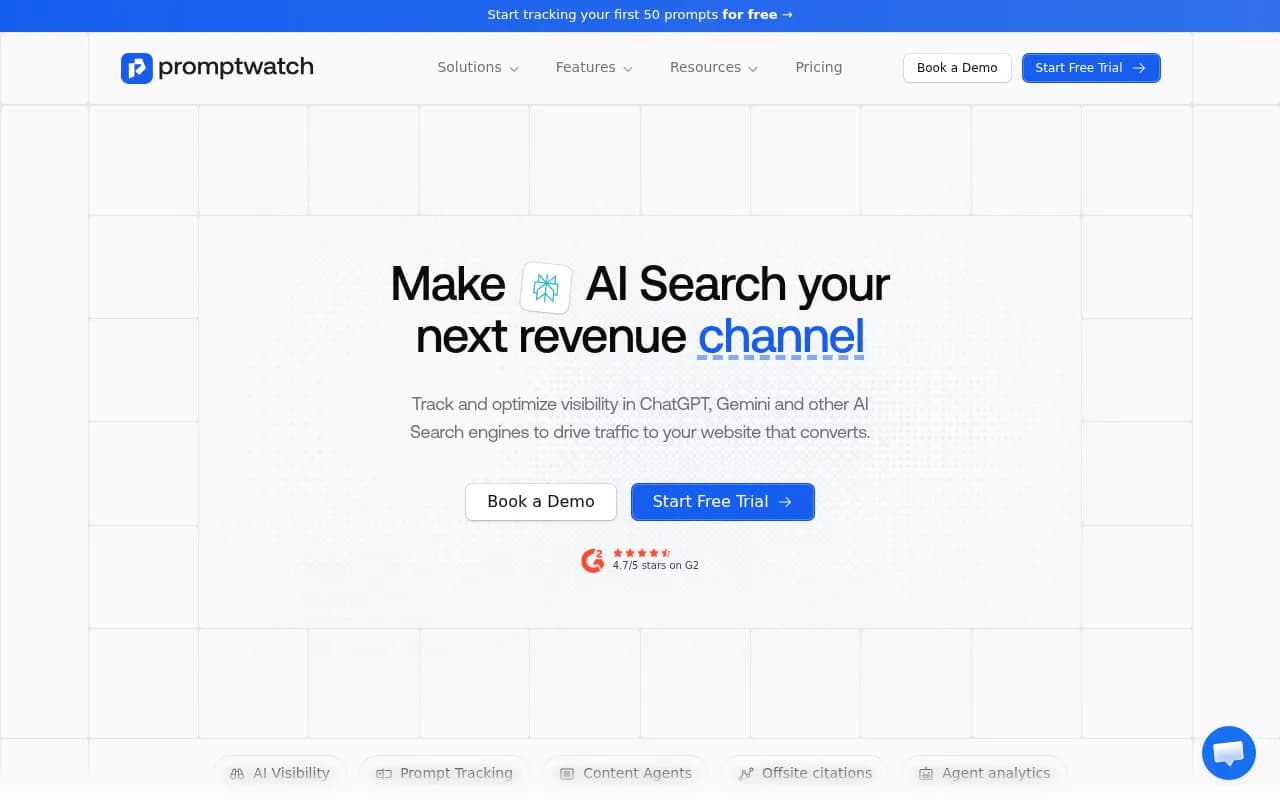
What separates Promptwatch from the monitoring-only tools at similar price points is the Answer Gap Analysis and Content Agents. Most platforms at $200-$400/month show you where competitors are being cited and you're not. Promptwatch shows you that and then generates the content designed to close those gaps -- grounded in real prompt data, not generic SEO templates.
Scrunch AI is another option worth considering in this tier, particularly for agencies managing multiple brands.
Here's a comparison of the main mid-market platforms:
| Platform | Price range | Models tracked | Content generation | Crawler logs | Prompt volume data |
|---|---|---|---|---|---|
| Promptwatch | $99-$579/mo | 10+ | Yes | Yes (Pro+) | Yes |
| Profound | ~$200-$400/mo | 6-8 | No | No | Limited |
| AthenaHQ | ~$199-$399/mo | 5-7 | No | No | No |
| Search Party | Custom | 5-6 | No | No | Limited |
| Otterly.AI | $49-$149/mo | 4-5 | No | No | No |
| Peec AI | $49-$199/mo | 4-6 | Limited | No | No |
Tier 4: Enterprise platforms ($600-$2,000+/month)
At this level, you're typically looking at platforms built for large marketing teams or agencies managing many brands simultaneously.
BrightEdge is the clearest example here. It's been an enterprise SEO platform for years and has added AI search tracking. The depth of data is impressive, but pricing is custom and typically starts well above $1,000/month. It's built for teams with dedicated SEO analysts who can work with complex dashboards.
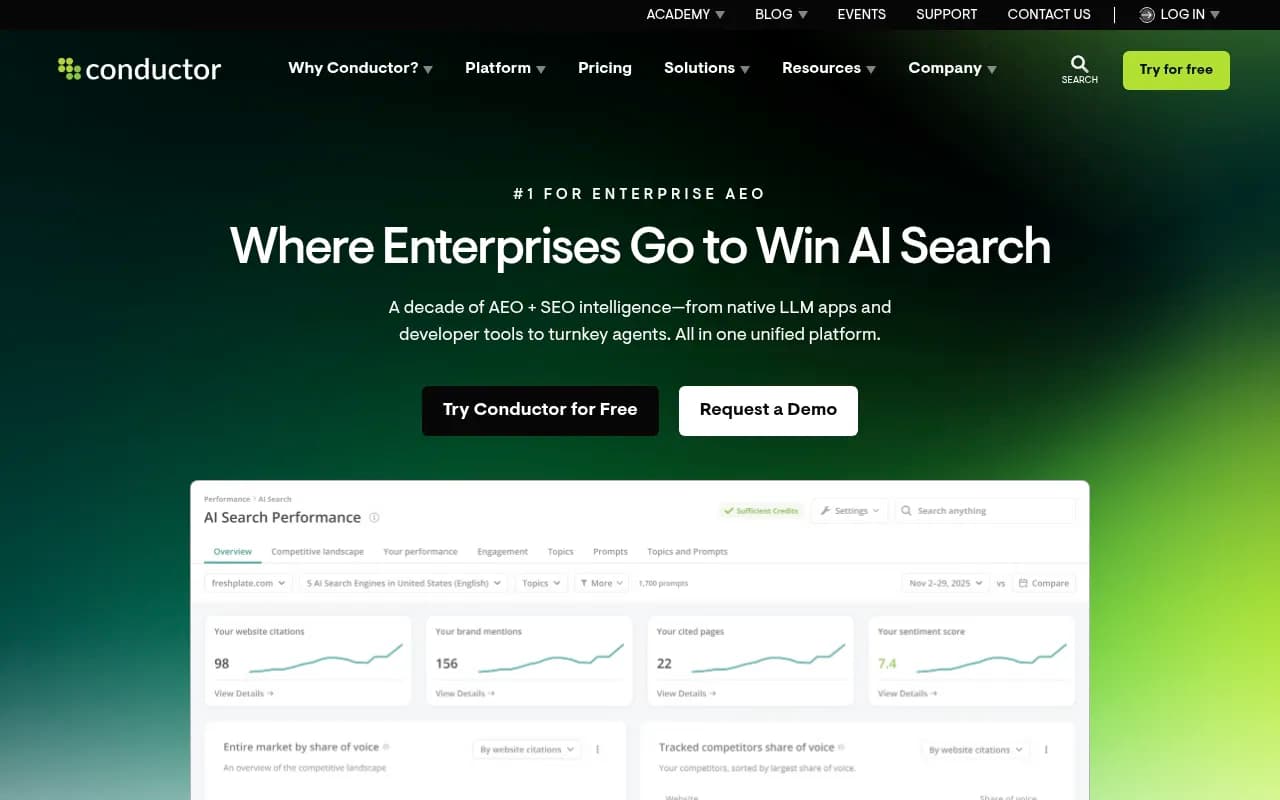
Conductor is similar -- strong enterprise pedigree, AI search features layered on top of a mature platform, and pricing that reflects the enterprise sales motion.
MarketMuse sits in this range for content strategy specifically. It's excellent for large content operations that need to map topical authority at scale.
What you get at this tier that you don't get below it: dedicated customer success, SLA-backed uptime, deeper API access, custom reporting, and usually more seats. The platforms themselves aren't always more capable than good mid-market tools -- you're paying partly for the enterprise wrapper.
Tier 5: Agency retainers and managed programs ($2,000-$30,000+/month)
This is where platform pricing ends and service pricing begins. According to Digital Elevator's 2026 AEO/GEO pricing research, most credible mid-market retainers land between $2,000 and $8,000/month. Enterprise programs run $10,000-$30,000+/month.
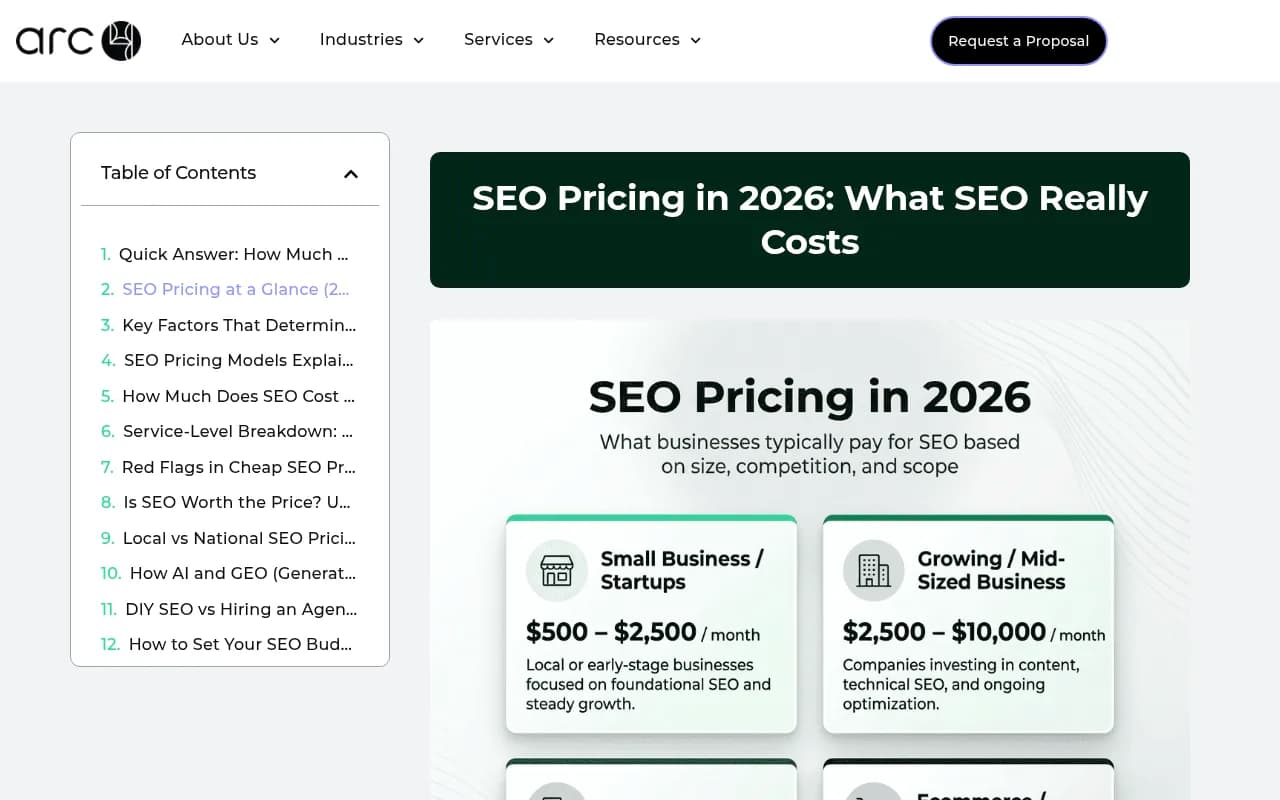
What you're buying at this tier is a combination of platform access, human strategy, content production, and ongoing optimization. The agency brings the tools; you pay for the expertise and execution on top of them.
The range within this tier is wide because deliverables vary so much. A $2,500/month retainer might cover monthly reporting, one or two content pieces optimized for AI citation, and basic monitoring. A $15,000/month program might include weekly strategy calls, a full content calendar, digital PR for citation building, entity optimization, and custom analytics.
For agencies building AI search programs for clients, platforms like Search Atlas and Writesonic GEO offer white-label or agency-tier options worth evaluating.
The hidden costs most buyers miss
Platform subscription costs are only part of the picture. A few things that often get underestimated:
Content production. AI search optimization lives or dies on content quality. Even if your platform generates briefs or drafts, you'll likely need human editing. The Editorial Freelancers Association puts marketing content rates at $0.25-$1.00 per word. A serious content program can add $1,000-$5,000/month on top of your platform costs.
Schema and technical work. Structured data markup helps AI engines understand your content. If you're not handling this in-house, expect to pay $49-$200/month for a dedicated schema tool or hourly developer time.
Multi-site and multi-region costs. Most platforms price per site or per prompt set. If you're tracking multiple brands, languages, or regions, costs scale quickly. Check whether a platform's pricing model fits your actual use case before committing.
Annual vs. monthly billing. Most platforms offer 20-30% discounts for annual commitments. At the $249/month level, that's roughly $600/year in savings. Worth calculating before you default to monthly.
How to choose the right tier for your situation
The right budget level depends less on your company size and more on what you're actually trying to accomplish.
If you just want to know whether your brand is showing up in AI search results, an entry-level monitoring tool at $49-$149/month is probably enough. Tools like Otterly.AI or Peec AI will answer that question.
If you want to understand why competitors are being cited and you're not, you need a platform with prompt-level data and gap analysis. That's the $99-$400/month range, and the quality difference between platforms here is significant.
If you want to actually improve your AI visibility -- not just measure it -- you need a platform that connects monitoring to content creation and tracks the results. That's where the monitoring-only tools fall short regardless of price. Promptwatch's action loop (find gaps, generate content, track results) is the clearest example of this approach in the mid-market range.
If you're an agency managing AI visibility for multiple clients, you need platform features built for that workflow: white-label reporting, multi-site management, and ideally some automation. Budget for $500-$1,500/month in platform costs plus your own time.
A practical budget framework
| Situation | Recommended monthly budget | What to prioritize |
|---|---|---|
| Solo marketer / small brand | $99-$199 | Monitoring + basic gap analysis |
| Growing brand, one site | $199-$579 | Full monitoring + content generation + crawler logs |
| Agency (5-10 clients) | $500-$1,500 | Multi-site, white-label, workflow tools |
| Enterprise (in-house team) | $1,000-$2,000+ | Deep analytics, API access, custom reporting |
| Managed program (agency retainer) | $2,000-$15,000 | Platform + strategy + content production |
The bottom line
The AI search optimization market in 2026 has a lot of tools that look similar and price similarly but do very different things. The monitoring-vs-optimization divide is the most important distinction to understand before you spend anything.
Paying $299/month for a dashboard that shows you're invisible is not the same as paying $299/month for a platform that shows you you're invisible and then helps you do something about it. Make sure you know which one you're buying.
For most mid-market brands, the $99-$579/month range covers serious optimization work if you pick the right platform. For agencies and enterprises, the platform cost is usually the smaller line item -- the bigger investment is the human time and content production that makes the data actionable.