Key takeaways
- Peec AI is a clean, analytics-focused AI visibility tracker built around flexible model selection and unlimited seats — good for teams that want clear data without complexity.
- Dageno AI positions itself as a full optimization workflow: monitoring, strategy, content generation, and attribution in one platform.
- Neither tool has the crawler log depth, prompt volume data, or content agent capabilities of more established platforms like Promptwatch.
- For agencies managing multiple clients, the right choice depends on whether you need a lightweight reporting tool (Peec AI) or a more opinionated optimization system (Dageno AI).
- Both are worth evaluating on a free trial before committing, especially given how fast this category is moving in 2026.
The AI visibility tools market has exploded. Two years ago, there were maybe five serious options. Now there are dozens, and new ones appear every few months. Most of them look similar at first glance: you enter some prompts, they run them against ChatGPT and Perplexity, you get a visibility score. Done.
Peec AI and Dageno AI are both trying to do more than that. They've each built a distinct angle on the problem, and for agencies specifically, those angles matter a lot. An agency managing 10 or 20 clients doesn't just need a dashboard. They need something that helps them explain results to clients, identify what to fix, and show progress over time.
This guide digs into both platforms with that agency lens in mind.
What these platforms actually do
Before getting into the comparison, it's worth being clear on what "AI visibility" even means in practice. When someone asks ChatGPT "what's the best project management tool for remote teams," your brand either appears in that answer or it doesn't. AI visibility tools track that systematically: they run hundreds or thousands of prompts across multiple AI engines, parse the responses, and tell you how often your brand gets mentioned, cited, or recommended.
The harder part is figuring out why you appear (or don't), and what to do about it. That's where platforms diverge significantly.
Peec AI
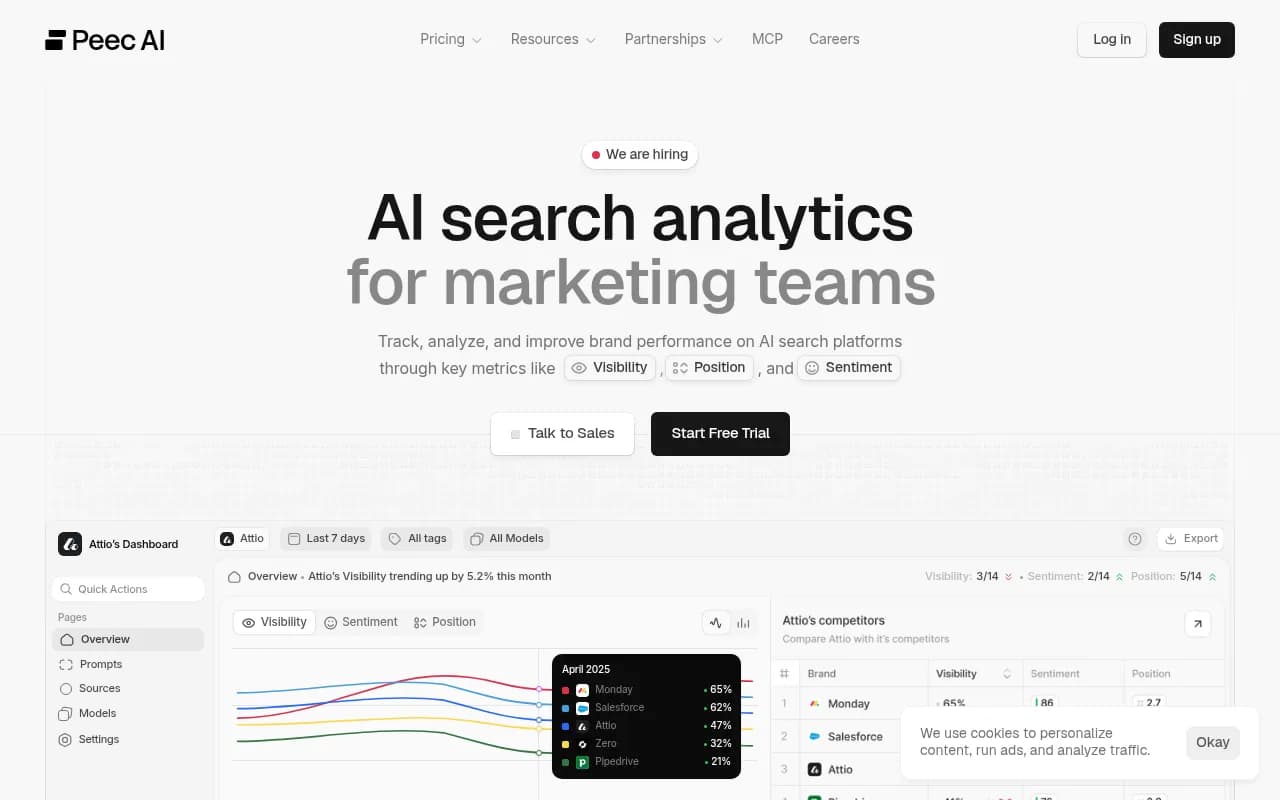
Peec AI is a Berlin-based platform that has built a reputation for clean, flexible AI search analytics. The standout feature is that every plan includes unlimited seats, which is genuinely unusual in this space and makes it easier to give clients or internal stakeholders access without worrying about per-user costs.
The platform lets you choose which AI models to monitor rather than forcing you to track all of them, which is useful if your clients' audiences are concentrated on specific platforms. The interface is designed to be readable without a lot of training, and the reporting is clean enough to share directly with clients.
Where Peec AI is more limited: it's primarily a monitoring and analytics tool. It tells you where you stand. The optimization side, figuring out what content to create or what to fix, is largely left to you.
Dageno AI
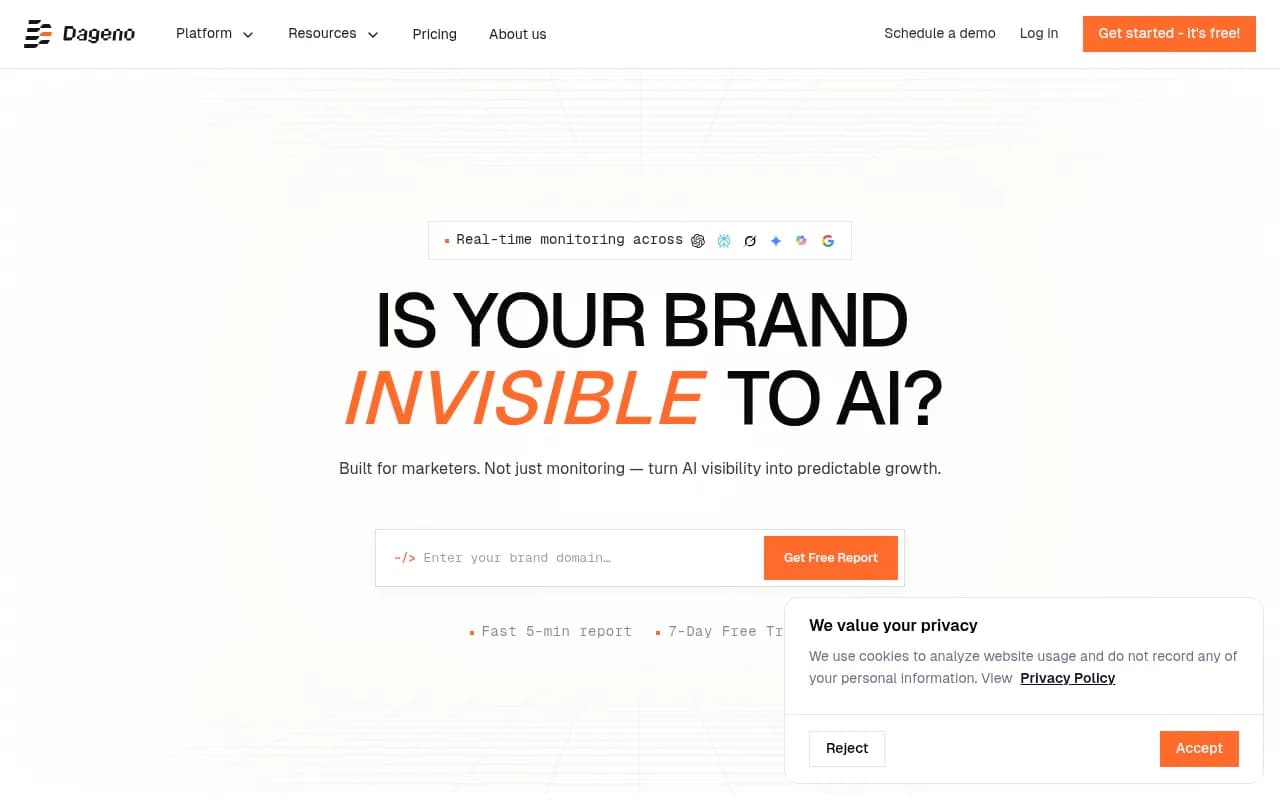
Dageno AI takes a more opinionated approach. The platform is built around the idea that monitoring alone isn't enough, and it tries to close the loop from data to action. According to Dageno's own positioning, the workflow goes: data monitoring → strategy → content generation → result attribution.
In practice, this means Dageno includes features for identifying content gaps, generating optimization recommendations, and tracking whether those changes actually moved the needle. For agencies that want to show clients a clear before/after story, that attribution layer is valuable.
The trade-off is that more opinionated platforms can feel prescriptive. If your agency has its own content workflow, you may not want another tool trying to own that process.
Head-to-head comparison
| Feature | Peec AI | Dageno AI |
|---|---|---|
| AI models covered | Flexible selection | Multiple engines |
| Seat pricing | Unlimited seats on all plans | Standard per-seat model |
| Content optimization | Limited | Yes, built-in |
| Content generation | No | Yes |
| Attribution / result tracking | Basic | Yes |
| Agency client management | Basic | More structured |
| Crawler log access | No | No |
| Prompt volume data | Not confirmed | Not confirmed |
| Free trial | Yes | Yes |
| Best for | Clean analytics, client reporting | Full optimization workflow |
A few things stand out from this comparison. The unlimited seats model at Peec AI is a real differentiator for agencies, where the cost of adding a client stakeholder to a dashboard can otherwise add up fast. Dageno's content generation and attribution features are a real differentiator for agencies that want to show ROI.
Neither platform, however, offers crawler log access or prompt volume/difficulty data. Those are capabilities you'd need to go to a more established platform to get.
Agency-specific considerations
Running these tools for a single brand is one thing. Running them across a client portfolio is another. Here's how each platform holds up against the specific pressures agencies face.
Client reporting
Peec AI's clean interface makes it relatively easy to pull data that looks presentable in a client report. The unlimited seats model means you can give clients read access without it costing you anything extra, which clients tend to appreciate.
Dageno AI's attribution layer is more useful here in the long run. Being able to show a client "we identified this gap, created this content, and your visibility for these prompts went from 12% to 34%" is a much stronger story than a visibility score on its own.
Scalability across clients
Neither platform has published detailed information about multi-client workspace management, which is a gap worth probing during a trial. Agencies typically need to switch between client accounts quickly, keep data siloed, and generate separate reports without manual work.
For context, platforms like Search Party were specifically built with this agency workflow in mind.
Content workflow integration
If your agency already has a content production process, Dageno's built-in content generation might be redundant, or it might conflict with how you work. Peec AI's lighter-touch approach leaves more room for your own process, but also leaves more work on your plate.
Explaining AI visibility to clients
This is underrated. A lot of agency clients don't fully understand what AI visibility is yet. The cleaner and more intuitive the interface, the easier it is to walk a client through a screen share and have them actually understand what they're looking at. Peec AI's design philosophy seems oriented toward this. Dageno's more complex workflow may require more explanation.
What's missing from both platforms
Being honest about the gaps matters here, because agencies making tool decisions need the full picture.
No crawler log access
Crawler logs, meaning real-time data on when AI bots like ChatGPT's crawler or Perplexity's bot are actually visiting your clients' websites, are one of the most actionable signals in AI visibility work. They tell you which pages are being read, which are being ignored, and whether a page went from "crawled" to "cited." Neither Peec AI nor Dageno AI appears to offer this.
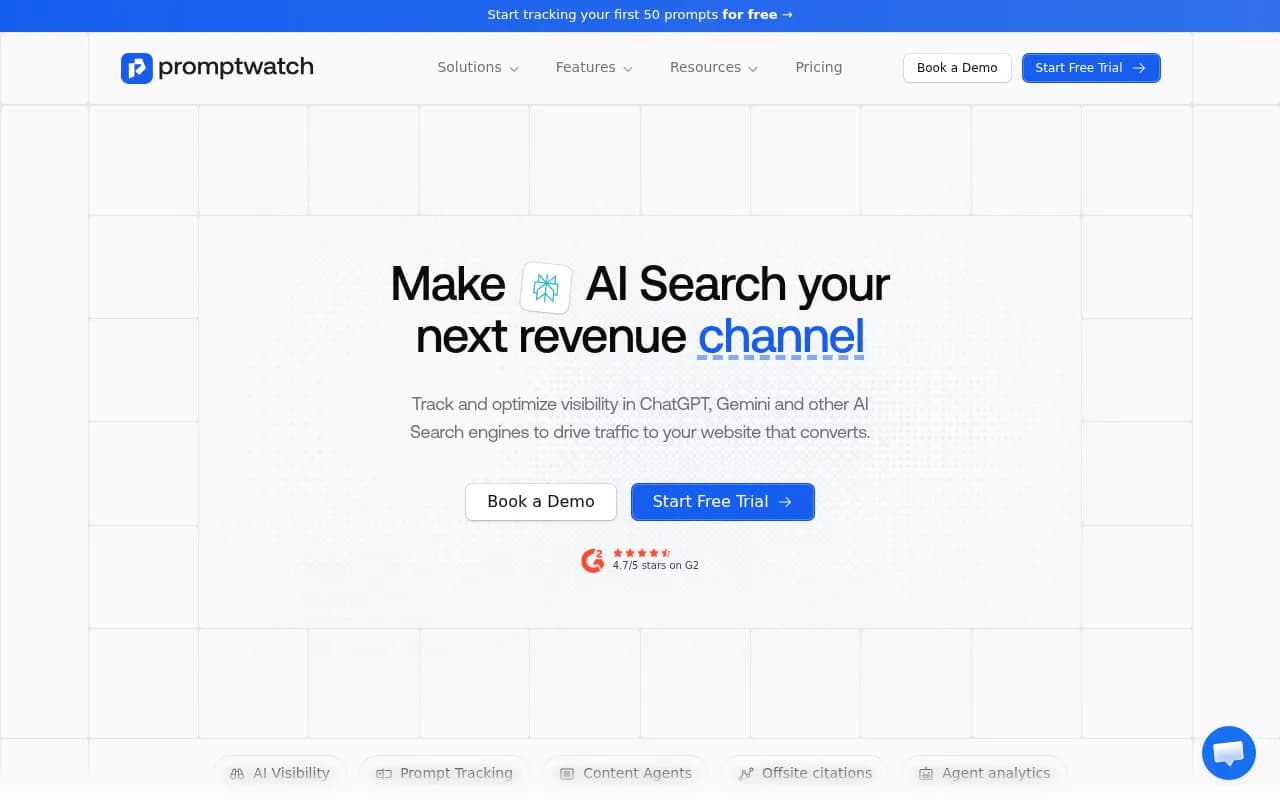
Platforms like Promptwatch have built crawler log access into their core offering, which gives a materially different level of diagnostic depth.
No prompt volume or difficulty data
Knowing that a prompt exists is one thing. Knowing that 50,000 people ask that prompt every month, and that your competitor has 80% visibility for it, is what lets you prioritize. Prompt volume and difficulty scoring, the AI equivalent of keyword search volume, aren't confirmed features of either platform.
Limited offsite citation analysis
AI models don't just cite your website. They cite Reddit threads, YouTube videos, industry publications, and third-party review sites. Understanding which of those external sources are driving AI recommendations for your category is important for an agency trying to build a comprehensive strategy. This is an area where neither Peec AI nor Dageno AI appears to have deep coverage.
How they compare to the broader market
The AI visibility tools market in 2026 has roughly four tiers:
- Enterprise platforms with deep data and high price points (Profound, BrightEdge)
- Full-stack optimization platforms that close the monitoring-to-action loop
- Clean analytics tools focused on monitoring and reporting
- Lightweight or niche tools for specific use cases
Peec AI sits comfortably in tier 3. It does monitoring and reporting well, with a pricing model that's friendly to agencies. Dageno AI is trying to move into tier 2, with content generation and attribution features that go beyond pure monitoring.
For comparison, here's how a few other tools in the catalog fit into this picture:
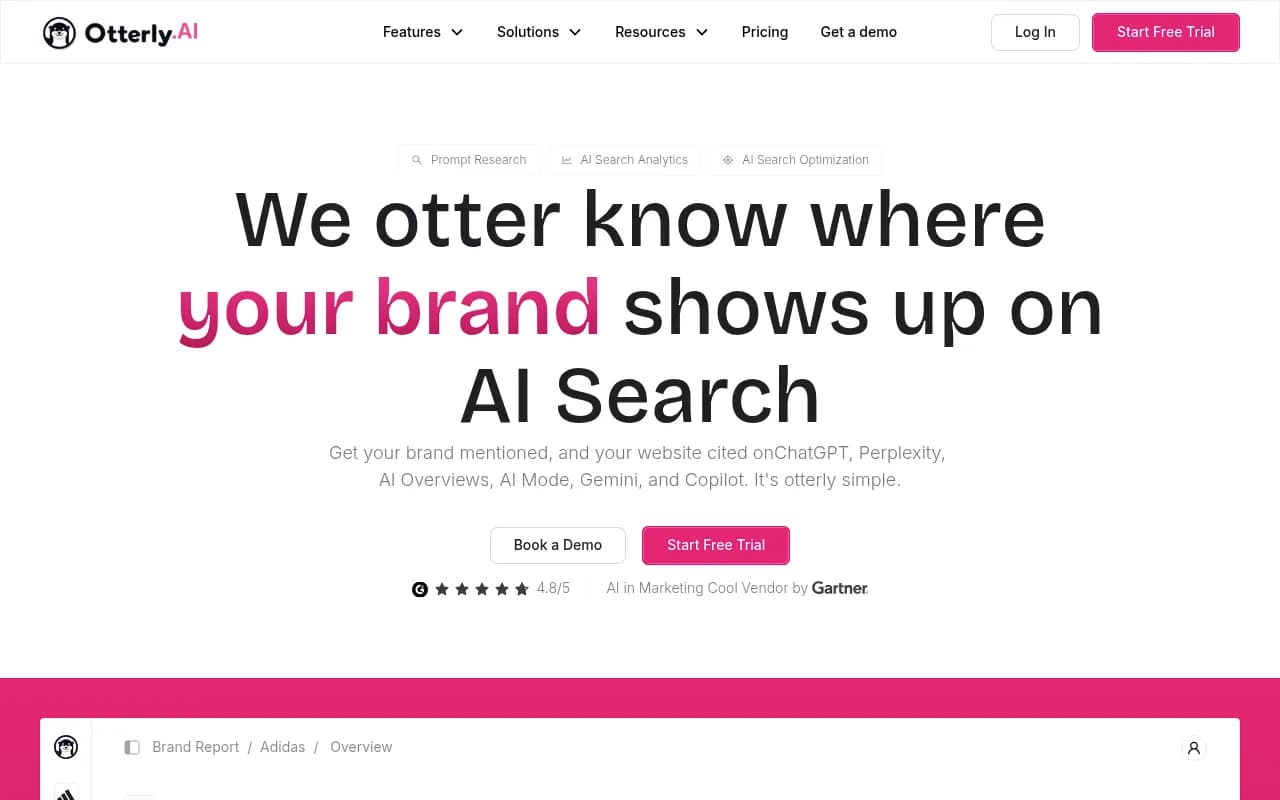
Otterly.AI is another monitoring-focused option that agencies use for affordable brand visibility tracking across AI engines.
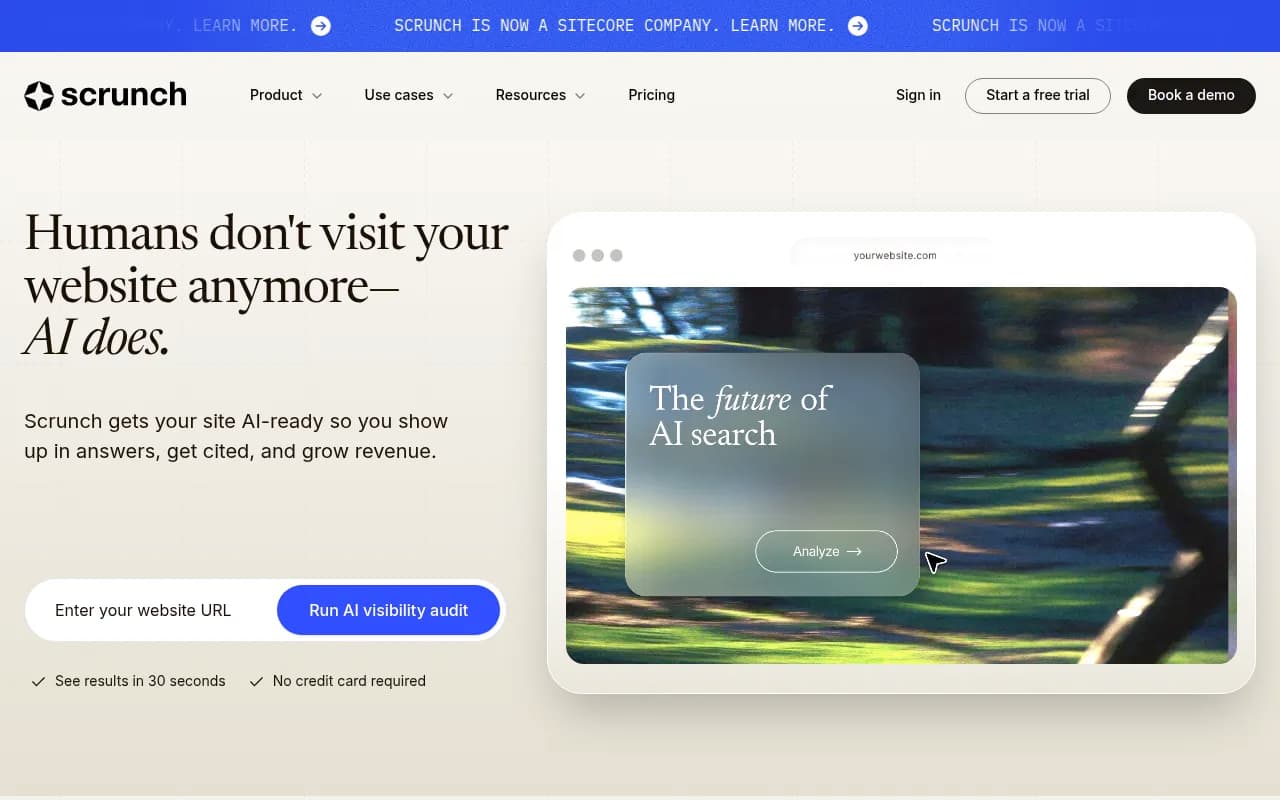
Scrunch AI is worth looking at if your clients need AI search monitoring with a stronger emphasis on brand safety and sentiment.
Profound is the enterprise option, with deeper analytics and agency-specific features, though at a significantly higher price point.
AthenaHQ is monitoring-focused and has been gaining traction with teams that want structured AI brand tracking without a lot of setup.
Pricing reality check
Neither Peec AI nor Dageno AI publishes fully transparent pricing on their public pages, which is frustrating when you're trying to build a business case. What's known:
- Peec AI has a Starter and Pro tier, with unlimited seats on both. This is a meaningful cost advantage for agencies with large teams or client stakeholders.
- Dageno AI offers a free trial and appears to be priced for teams rather than individual users, but the specifics require a conversation with their sales team.
For reference, the broader market ranges from around $99/month for entry-level monitoring tools to $500+ per month for full-stack platforms with content generation and attribution.
Which one should agencies choose?
There's no universal answer, but here's a practical framework.
Choose Peec AI if:
- You need clean, shareable analytics for client reporting
- You have a large team or many client stakeholders who need access
- You already have a content optimization workflow and don't need another tool owning that process
- You want flexibility in which AI models you monitor
Choose Dageno AI if:
- You want a single platform that covers monitoring through to content recommendations and attribution
- You're trying to build a repeatable AI visibility optimization workflow for clients
- Showing measurable before/after results is central to how you retain clients
- You're willing to invest time in a more complex platform
Neither platform is the right choice if you need crawler log access, prompt volume data, or deep offsite citation analysis. For those capabilities, you'd need to look at platforms that have invested more heavily in data infrastructure.
A note on the broader category
The AI visibility tools market is still young enough that platforms are changing fast. Features that are missing today may ship in three months. Pricing models are shifting. Some of these tools will consolidate or get acquired.
The safest approach for agencies is to run trials of two or three tools simultaneously against a real client account, not a test account. Real data reveals things that demos don't. Pay attention to how easy it is to explain the interface to a client, how actionable the recommendations actually are, and whether the data matches what you see when you manually check AI responses yourself.
If you want a platform that has already solved the monitoring-to-action loop at scale, with crawler logs, prompt volume data, content generation, and attribution built in, Promptwatch is worth a serious look alongside these two.
The category is moving fast. The tools you evaluate today will look different by the end of 2026. But the underlying question, "what does AI say about my clients, and what do I do about it?" isn't going anywhere.