Key takeaways
- The GEO platform market has split into two distinct categories: monitoring-only trackers and full optimization platforms that help you act on what you find.
- Most tools on the market today are trackers. They show you citation frequency, share of voice, and sentiment across AI models, but stop there.
- A smaller group of platforms close the loop: they identify content gaps, help you create content to fill them, and track whether that content earns citations.
- The distinction matters because visibility in AI search isn't a passive outcome. It requires ongoing content production targeted at the exact questions AI models are already answering for your competitors.
- Choosing the wrong category of tool means paying for data you can't act on.
Only 12% of URLs that ChatGPT cites currently rank in Google's top 10 search results. That number, cited in a 2026 analysis by Deepak Gupta, is the clearest possible signal that AI search and traditional search are operating on entirely different logic. You can spend years building a first-page Google ranking and remain completely invisible to the hundreds of millions of people asking questions on ChatGPT, Perplexity, and Gemini every week.
That reality has spawned an entire category of software: GEO platforms. But as the market has grown, it's fractured. Some tools are genuinely useful for improving your AI visibility. Others are dashboards that show you a problem and then leave you alone with it.
This guide maps the landscape, explains the difference between the two types of platforms, and helps you figure out which one you actually need.
Why the GEO market exists at all
To understand why the tracker/optimizer split matters, it helps to understand what GEO platforms are solving.
When a buyer asks ChatGPT "what's the best endpoint security tool for a 200-person company," the model doesn't run a keyword search. It synthesizes an answer from patterns it learned during training, weighted by signals like publication authority, content recency, citation frequency across the web, and how clearly a piece of content answers the specific question. Your Google ranking is largely irrelevant to this process.
The implication: brands need a completely different set of tools to understand and influence their AI visibility. They need to know which prompts their competitors are being cited for, which AI models are recommending them, what content is driving those citations, and what's missing from their own site that's causing them to be skipped.
That's the market GEO platforms are trying to serve. The problem is that "serving that market" means very different things to different vendors.
The tracker category: monitoring without action
The majority of GEO platforms today are trackers. They run your target prompts against multiple AI models on a schedule, capture the responses, and report back on whether your brand was mentioned, cited, or recommended.
This is genuinely useful data. Knowing that Perplexity mentions your competitor three times more often than you across your core buying prompts is actionable in the sense that it tells you there's a problem. But trackers stop there. They don't tell you why the gap exists, what content you'd need to create to close it, or whether the content you publish afterward actually moved the needle.
Common capabilities in the tracker category:
- Brand mention and citation frequency across AI models
- Share of voice comparisons against named competitors
- Sentiment analysis of AI-generated mentions
- Model-by-model breakdowns (ChatGPT vs. Perplexity vs. Gemini, etc.)
- Alert systems for sudden visibility changes
Tools like Otterly.AI, Peec AI, and AthenaHQ sit firmly in this category. They're well-built monitoring tools, and for teams that just want a dashboard to check in on, they work fine.
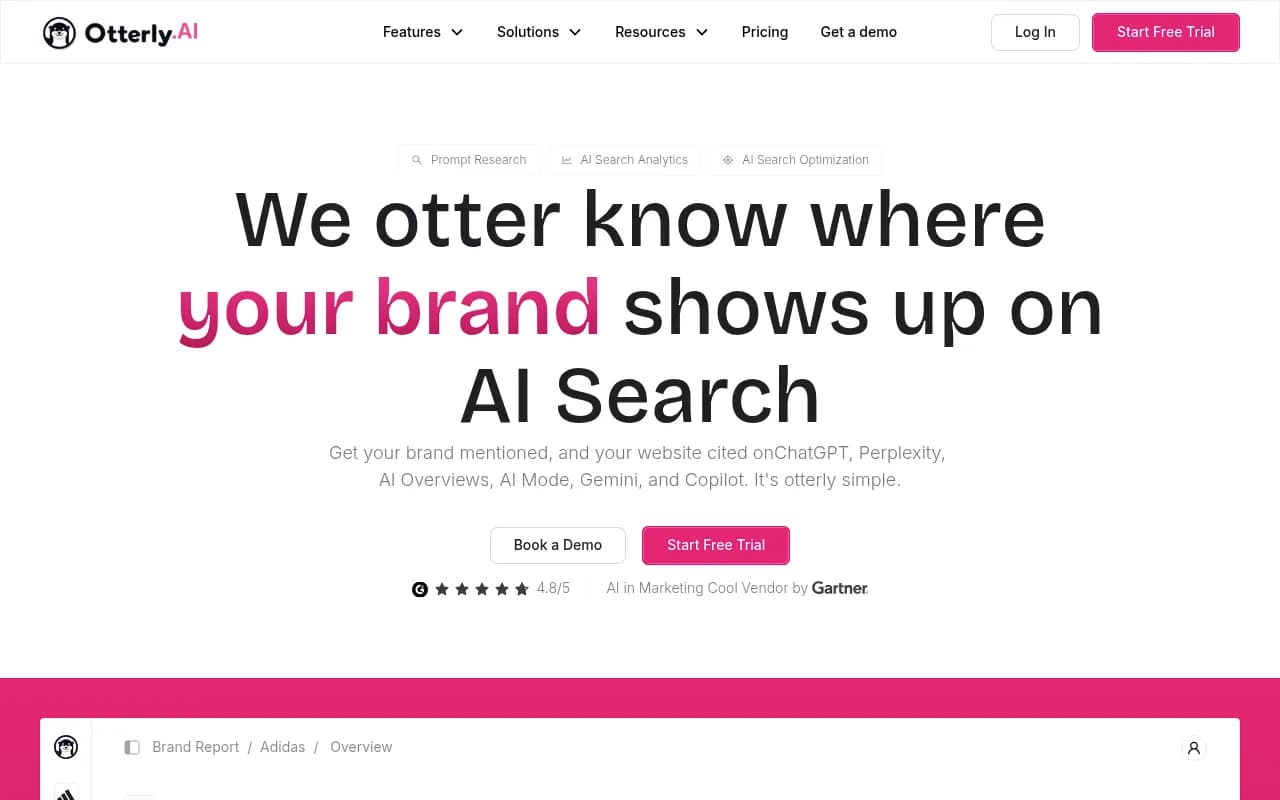
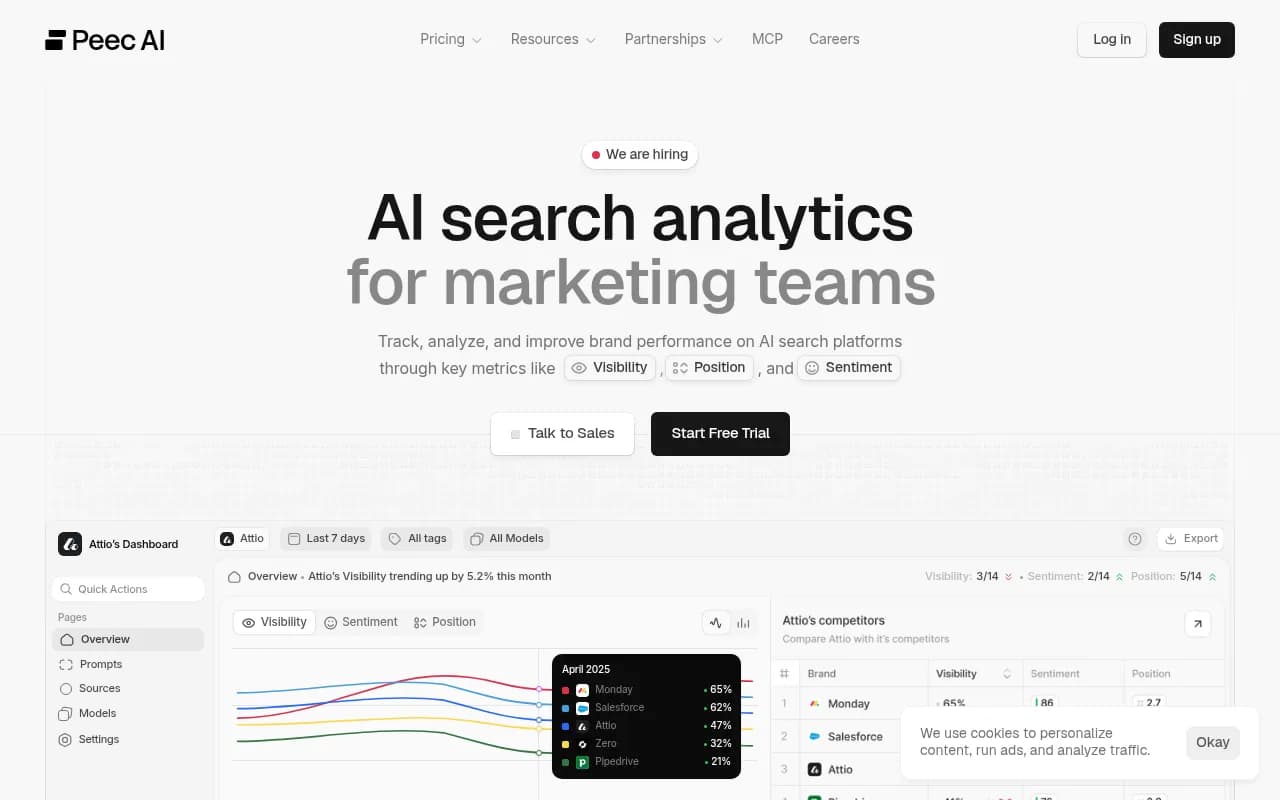
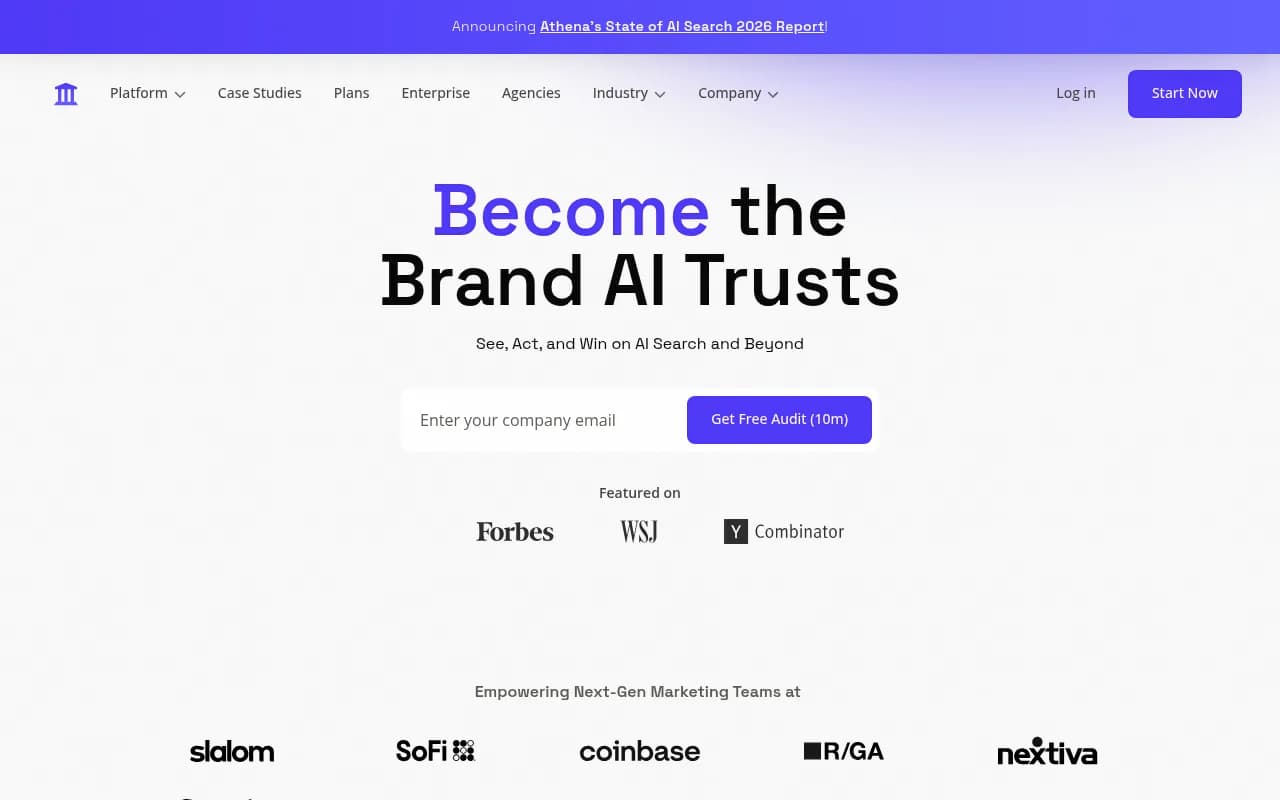
The limitation isn't that they're bad. It's that monitoring alone doesn't improve your visibility. It just quantifies how invisible you are.
The optimizer category: closing the loop
A smaller group of platforms go further. They don't just show you where you're missing. They help you figure out why, generate content to fix it, and track whether that content earns citations after you publish.
This is a fundamentally different product category, even if the marketing language often sounds similar.
The key capabilities that separate optimizers from trackers:
Answer gap analysis. Instead of just showing your citation rate, these tools identify the specific prompts where competitors are visible and you're not. You see the exact questions AI models are answering for your competitors that your content doesn't address.
Content generation grounded in prompt data. Not generic AI writing, but content briefs and articles built around the actual gaps identified. The best implementations pull in prompt volume data, competitor citation analysis, and brand guidelines to produce content that's specifically engineered to fill the holes.
Post-publish tracking. After you create and publish content, you need to know whether it worked. This means tracking when AI crawlers visit your pages, when those pages move from crawled to cited, and whether your visibility scores improve as a result.
AI crawler logs. Understanding how AI models discover and index your content is a capability most trackers don't have at all. Knowing that Claude's crawler visited your new article but hasn't cited it yet is different from knowing nothing.
Promptwatch is the clearest example of a platform built around this full loop. The workflow is: find the gaps with Answer Gap Analysis, create content with Content Agents grounded in real prompt and citation data, then track results through page-level citation tracking and AI crawler logs. It's the difference between a speedometer and a GPS.
Profound also has strong enterprise-grade analytics and goes deeper than basic monitoring, though it sits at a higher price point and lacks some of the content generation capabilities.
The hybrid category: traditional SEO tools adding GEO features
There's a third group worth acknowledging: traditional SEO platforms that have bolted GEO monitoring onto existing products. Semrush and Ahrefs are the obvious examples.
These tools have real advantages. If your team already lives in Semrush, having AI visibility data in the same interface reduces friction. The brand awareness and trust these platforms carry also means enterprise procurement is easier.
The limitations are real, though. Semrush's AI visibility tracking uses fixed prompts rather than custom ones, which means you're monitoring generic queries rather than the specific buying questions your customers actually ask. Ahrefs Brand Radar has similar constraints and lacks AI traffic attribution. Neither platform has the content generation or crawler log capabilities that define the optimizer category.
For teams that want a single platform and are willing to accept shallower GEO data, these are reasonable choices. For teams that are serious about improving AI visibility rather than just measuring it, they're not enough on their own.
A comparison of the major platforms
| Platform | Category | Custom prompts | Content generation | AI crawler logs | ChatGPT Shopping | Pricing (starting) |
|---|---|---|---|---|---|---|
| Promptwatch | Optimizer | Yes | Yes (Content Agents) | Yes | Yes | $99/mo |
| Profound | Optimizer (enterprise) | Yes | Limited | No | No | Higher tier |
| AthenaHQ | Tracker | Yes | No | No | No | Mid-range |
| Otterly.AI | Tracker | Yes | No | No | No | Lower tier |
| Peec AI | Tracker | Yes | No | No | No | Lower tier |
| Search Party | Tracker (agency) | Limited | No | No | No | Agency pricing |
| Semrush AI Visibility | Hybrid | Fixed prompts | No | No | No | Bundled |
| Ahrefs Brand Radar | Hybrid | Fixed prompts | No | No | No | Bundled |
The table makes the split visible. Most platforms are in the tracker column. The optimizer column is short.
Why the distinction matters in practice
Here's a concrete scenario. Your marketing team notices that when buyers ask "what's the best [your category] tool for mid-market companies," your top two competitors are cited in ChatGPT responses and you're not. You've been paying for a GEO tracker for three months. You have a chart showing the gap. Now what?
With a tracker, the answer is: figure it out yourself. You might guess that you need more content, or better content, or more backlinks, or more press coverage. You might be right. You might spend three months on the wrong thing.
With an optimizer, the answer is more specific. The platform shows you which prompts are driving competitor citations, what content on their sites is being pulled, what topics your site is missing entirely, and what a piece of content targeting that gap should look like. You create it, publish it, and then watch the crawler logs to see when AI models pick it up.
That's not a marginal difference. For teams that are accountable for AI visibility as a business metric, the tracker/optimizer gap is the difference between having data and having a workflow.
What to look for when evaluating GEO platforms
Prompt customization
Can you define the exact prompts that matter to your buyers, or are you stuck with the platform's preset queries? Fixed prompts are a significant limitation. Your buyers ask specific questions in specific ways, and generic prompts won't capture the visibility gaps that actually affect your pipeline.
Model coverage
The major AI models behave differently. A platform that only tracks ChatGPT misses what's happening on Perplexity, Google AI Overviews, Claude, and Gemini. Look for coverage across at least 6-8 models, and check whether the platform tracks real user-facing responses rather than just API outputs (which can differ meaningfully).
Content gap analysis
Does the platform tell you what's missing, not just what's underperforming? There's a difference between "your citation rate is 12%" and "here are the 23 prompts where competitors are cited and you're not, and here's what content would address them."
Post-publish tracking
Can you connect a piece of content you published to a change in your citation rate? Without this, you're flying blind on whether your GEO efforts are working.
Crawler visibility
Do you know when AI crawlers are visiting your site, which pages they're reading, and whether those pages are being cited? This is a diagnostic capability that most platforms don't offer, and it's genuinely useful for troubleshooting why certain pages aren't earning citations.
Traffic attribution
Can you connect AI visibility to actual website traffic and revenue? This is the hardest capability to build and the one most platforms skip entirely. If you need to justify GEO investment to leadership, you need this.
The platforms worth knowing beyond the top tier
The GEO market has a long tail of newer and more specialized tools. A few worth knowing about:
Scrunch AI focuses on brand and agency use cases with solid monitoring capabilities.
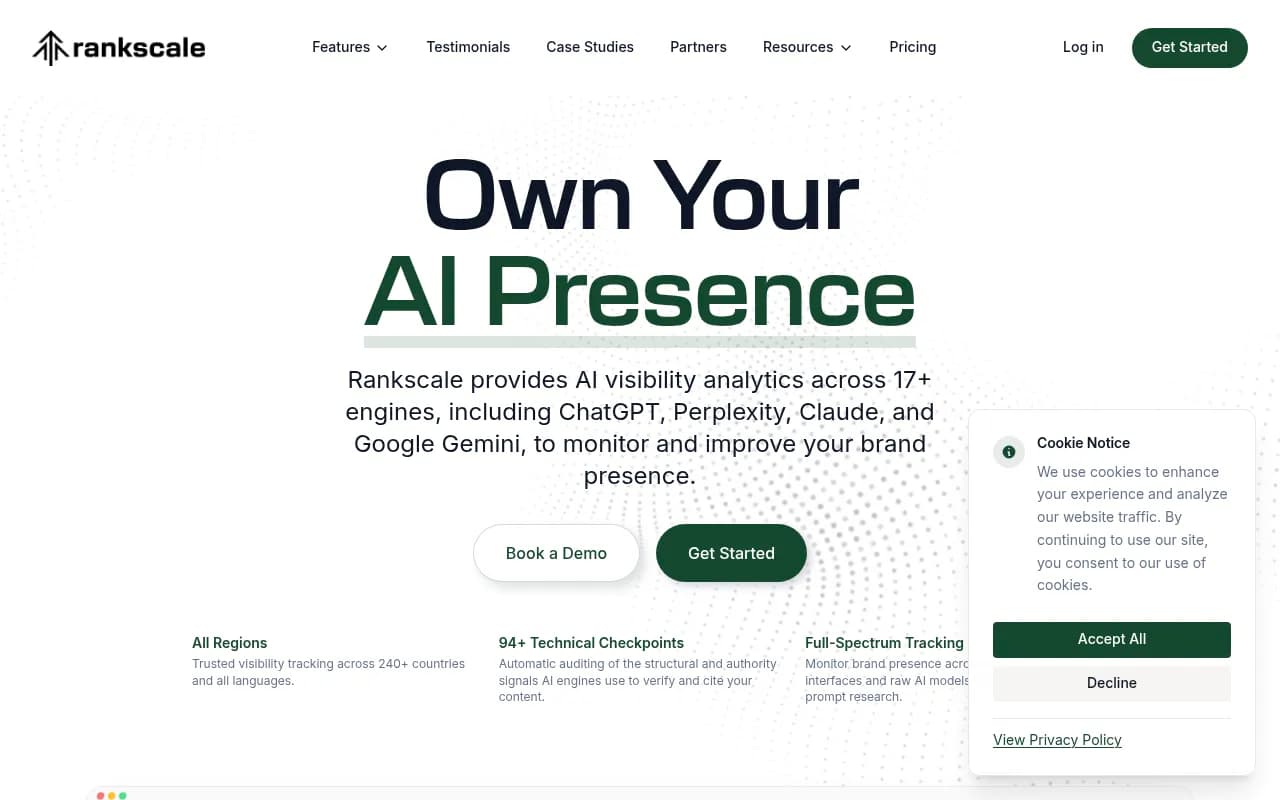
Rankscale is a newer entrant with AI rank tracking that's worth watching as it matures.
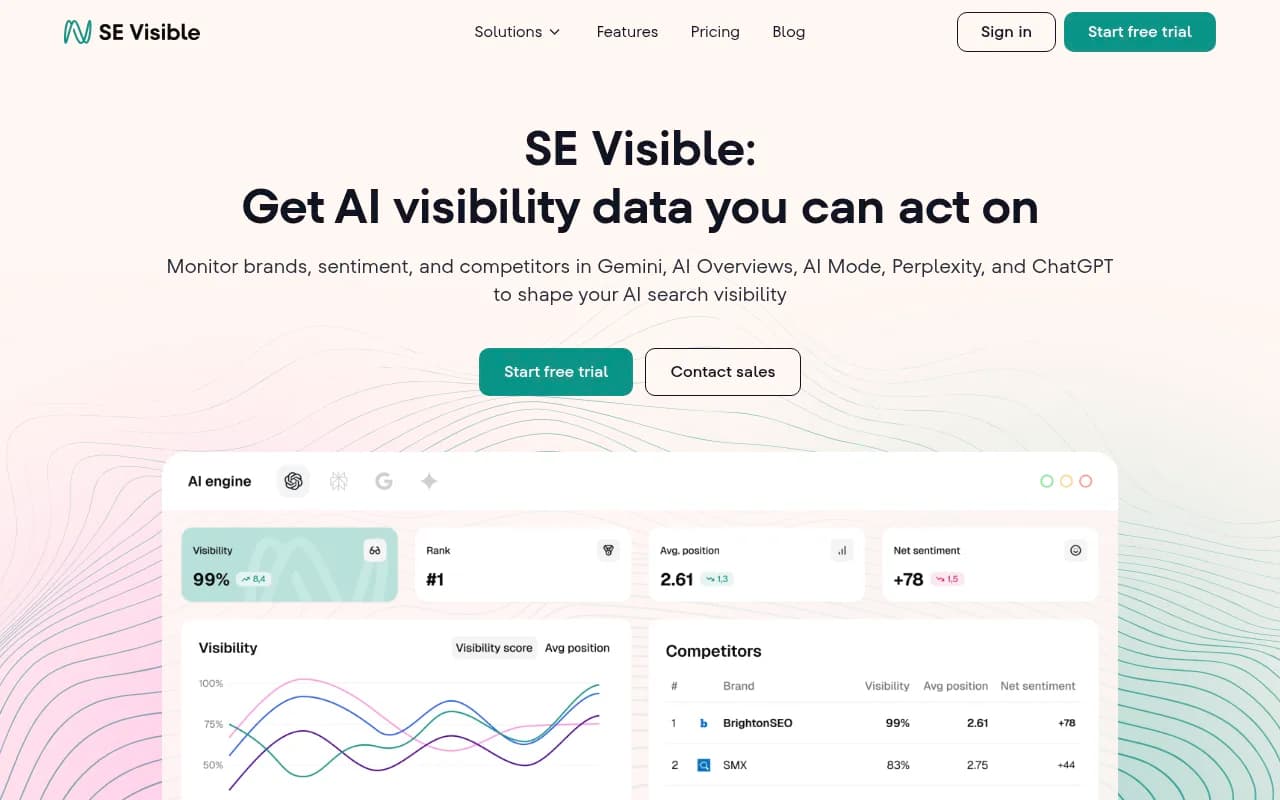
SE Ranking's Visible product extends their existing SEO platform into AI visibility territory.
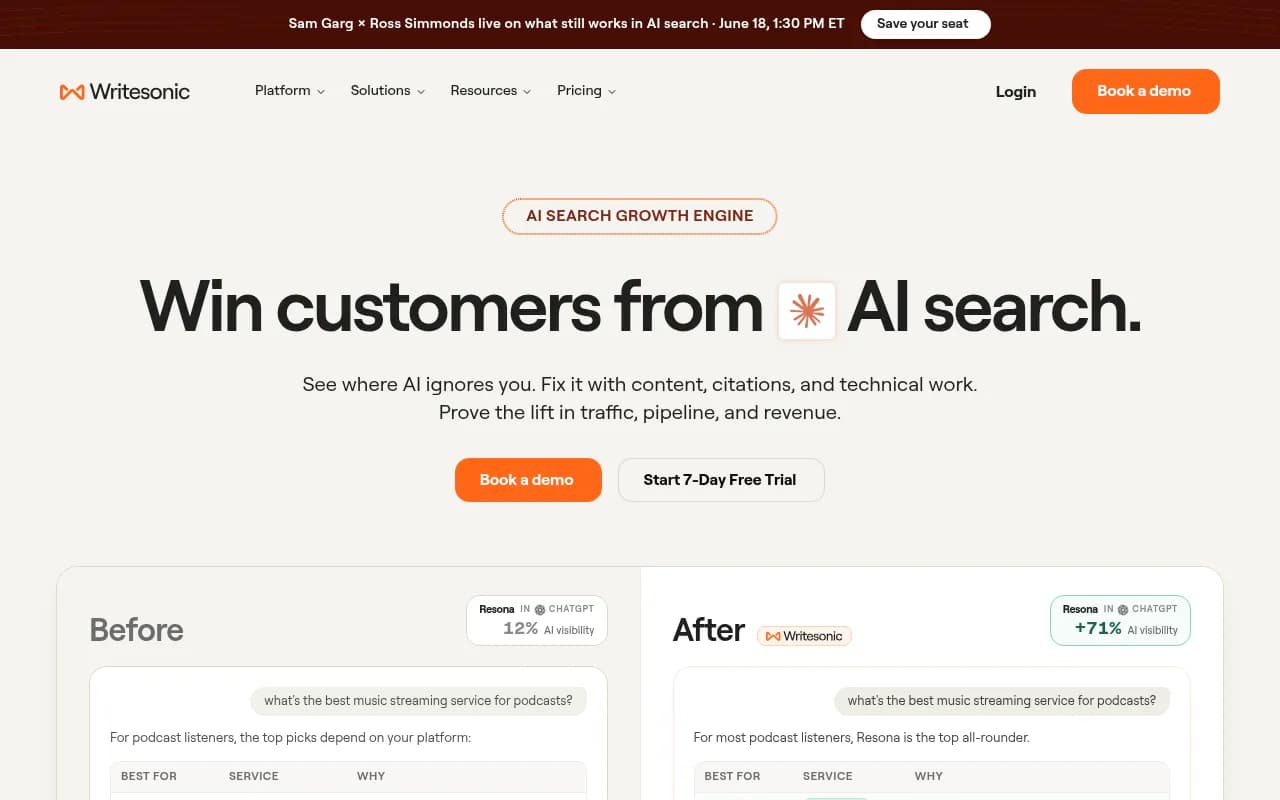
Writesonic GEO combines content generation with AI visibility monitoring, though it's more of a content tool with monitoring features than a true GEO optimizer.
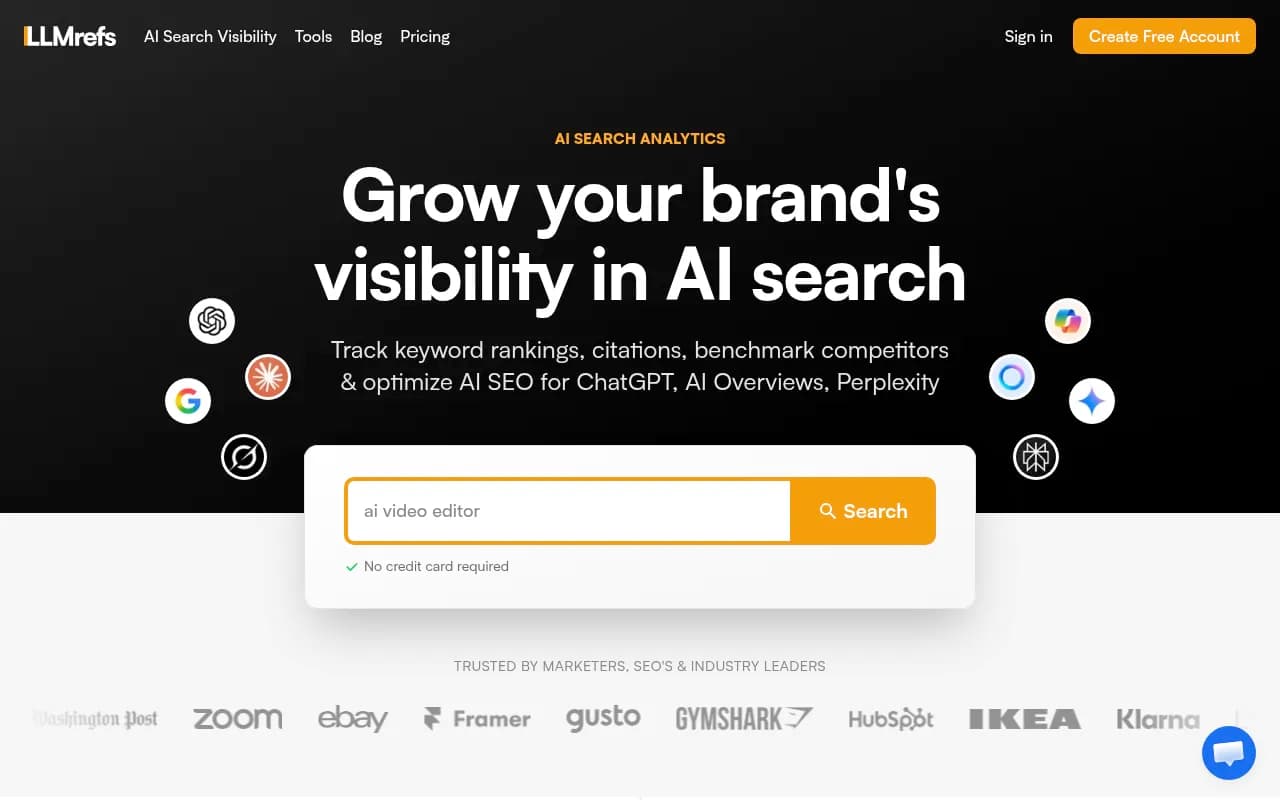
LLMrefs focuses specifically on query insights for citation optimization, which is useful for teams that want to go deep on prompt-level data.
None of these are in the same tier as the platforms discussed above for serious GEO work, but they're worth knowing if you have specific use cases or budget constraints.
How to choose
The right platform depends on where you are in your GEO maturity.
If you're just starting out and want to understand your current AI visibility before committing to a full optimization workflow, a tracker is a reasonable starting point. Otterly.AI is affordable and gets you basic monitoring quickly. Peec AI has some smart suggestions layered on top of monitoring.
If you're past the "understanding the problem" phase and want to actually improve your AI visibility, you need an optimizer. The workflow matters: find gaps, create content, track results. A tracker can't close that loop.
If you're an enterprise team with complex reporting needs and a larger budget, Profound has strong analytics depth. If you want the full optimization loop with content generation, crawler logs, and traffic attribution in one platform, Promptwatch is the most complete option in the market right now.
If you're an agency managing multiple clients, Search Party has agency-specific workflow features, though its prompt metrics are shallower than dedicated GEO platforms.
The one thing to avoid: choosing a platform based on brand recognition from traditional SEO. Semrush and Ahrefs are excellent SEO tools. Their GEO features are add-ons, not core products, and the fixed-prompt approach means you're monitoring a proxy for your actual AI visibility rather than the real thing.
The bigger picture
The tracker/optimizer split in the GEO market reflects a broader truth about AI search: visibility isn't something that happens to you, it's something you build. AI models cite brands that have clear, authoritative, well-structured answers to the questions buyers are asking. That content doesn't exist by accident. It gets created because someone identified the gap and filled it.
Platforms that just show you the gap are useful. Platforms that help you close it are where the market is heading. The vendors that figure out the full loop, from gap identification through content creation to citation tracking, are the ones that will matter in 2027 and beyond.
The question for your team isn't just "which GEO platform should we buy." It's "do we want to monitor our AI visibility or improve it?" The answer to that question tells you exactly which category of tool you need.