Key takeaways
- ChatGPT and Gemini are different products with different source mixes, so the same brand gets described differently. Different wrong answers are the expected result, not a glitch.
- Promptwatch Data (Sep 28 to Oct 4, 2026) shows ChatGPT draws only 0.46% of its citations from social platforms, while Google AI Overviews draws 12.2%.
- ChatGPT's picture of your brand rests on very few pages. Product pages and landing pages are about 39% of its citations, so one stale page carries a lot of weight.
- Fixing it means finding which page each engine learned the wrong fact from, correcting that page, and re-checking each engine separately.
- Track both engines on their real interfaces over time. A single spot check tells you almost nothing.
The problem: two assistants, two different wrong stories
Here is a scenario I see constantly. A founder asks ChatGPT about their company and it says the pricing starts at a tier that was retired two years ago. Then they ask Gemini and it says the product is built for enterprises, when it is clearly aimed at small teams. Both answers are wrong. They are not wrong in the same way.
The instinct is to assume one of the two is simply "worse." The Reddit threads on this topic show how muddy that gets. One thread asks why people like Gemini more than ChatGPT, and the replies contradict each other: some say Gemini is more up to date, others say it feels weaker, and one commenter points out that many Gemini fans are students who got a free year of the Pro plan. Opinions about tone and quality tell you little about brand accuracy.
The more useful question is mechanical. What does each engine read, how much of it does it read, and what does it do with the gaps?
Reason 1: they are built to do different jobs
ChatGPT, Gemini, Perplexity and Grok are not interchangeable. They are tuned differently, retrieve differently and write answers in different shapes. A Facebook group discussion on this point makes the practical argument that talking to them the same way gets you average results from all of them.
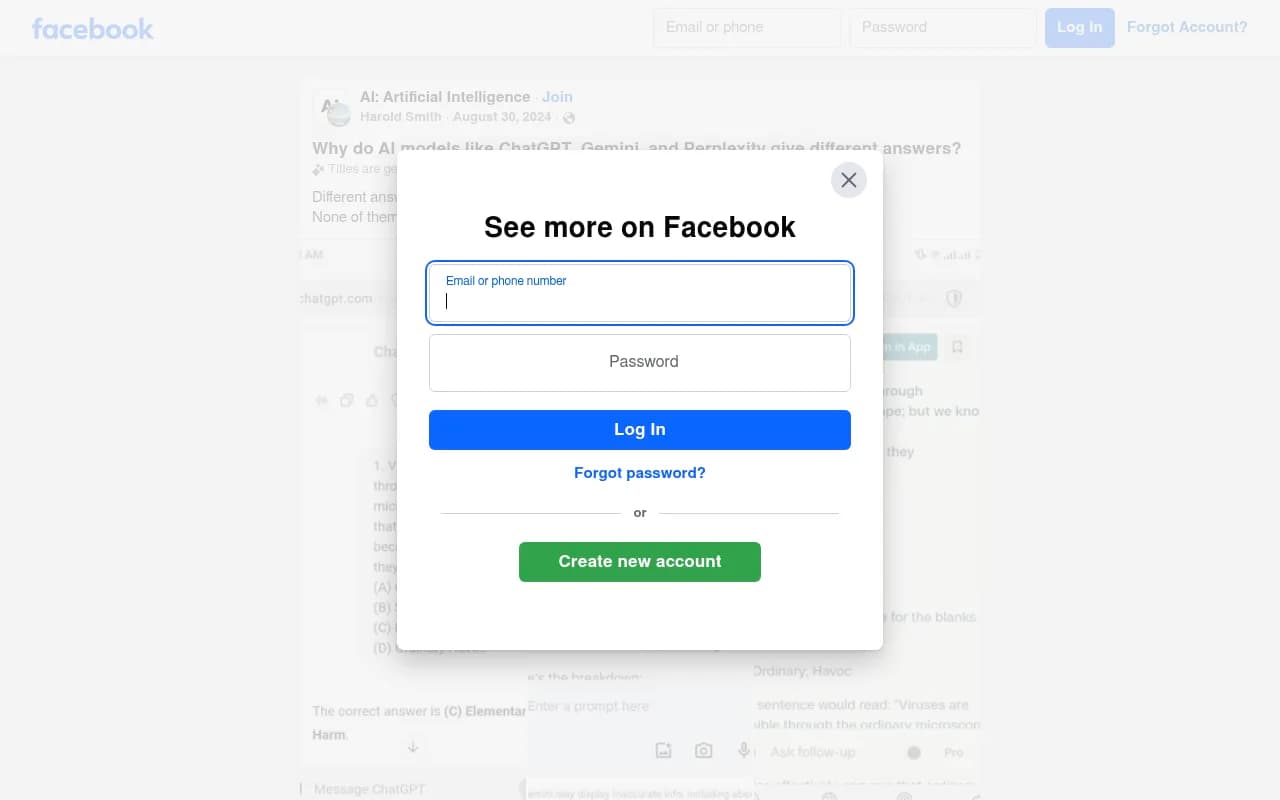
For brands the consequence is simple. Each engine has its own idea of what a good answer looks like, how many sources to pull, and when to answer from memory instead of searching. Two engines can look at the same internet and come away with different summaries.
Reason 2: they disagree about which brands matter at all
BrightEdge tracked the top brands each engine surfaces across B2B and consumer categories over several weeks, and reported roughly 60% disagreement between ChatGPT and Gemini, consistently. That is a third-party finding, so treat the exact number as indicative, but the direction matches what practitioners see: you cannot assume that appearing in one engine means appearing in the other.
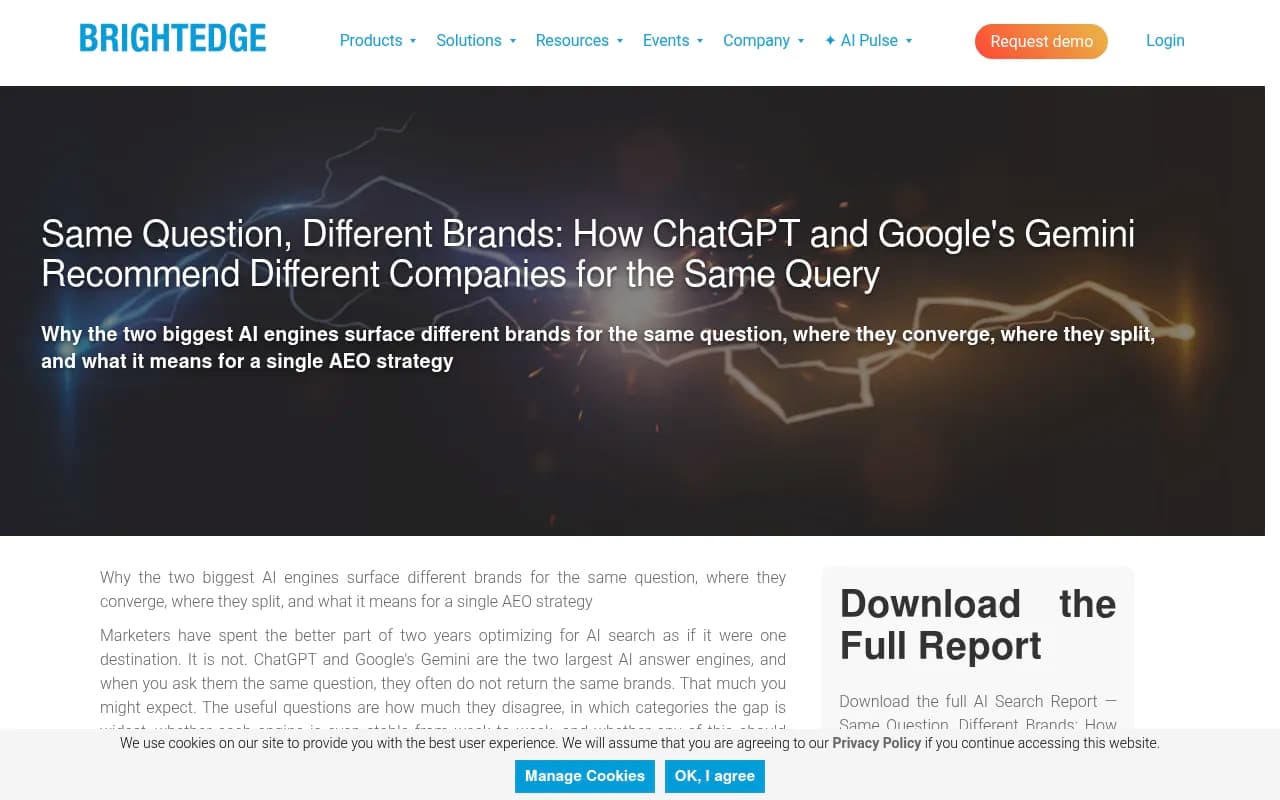
If the engines disagree about which brands to list, they will certainly disagree about what to say about each one.
Reason 3: they draw on different sources
This is the biggest driver, and the one you can measure. Promptwatch publishes first-party citation data, and its social media citations by AI model report (Sep 28 to Oct 4, 2026) shows how far apart the engines are:
| Engine | Share of citations from social platforms | Largest social sources |
|---|---|---|
| ChatGPT | 0.46% | LinkedIn (0.3%) |
| Google AI Overviews | 12.2% | YouTube (4.28%), Facebook (2.38%), Reddit (2.15%), Instagram (1.61%) |
| Perplexity | 2.7% | LinkedIn and Reddit (0.86% each), YouTube (0.79%) |
That is roughly a 26x gap between AI Overviews and ChatGPT. The Reddit story makes it sharper: Promptwatch's data shows reddit.com's share of ChatGPT citations collapsed from about 4% to 0.5% on August 14, 2026. A forum thread that shaped ChatGPT's description of your brand in July may no longer be in the picture, while Google's surfaces still lean on social and video.
A caveat on Gemini specifically. The data above covers Google AI Overviews, not the Gemini app, and I have not verified how Gemini weights Google's index or Knowledge Graph. What the data does support is the broader point: Google-side answers lean on YouTube, Facebook and Instagram far more than ChatGPT does.
So a wrong claim can come from very different places:
- In ChatGPT, it most likely traces back to a product page, landing page or listicle.
- In Google's AI answers, it may come from a YouTube video, a Facebook page or an old Reddit thread.
Reason 4: ChatGPT reads very few pages
Promptwatch's average sources per response report (dated Sep 2025, so numbers may have drifted) found ChatGPT citing about 5 sources per web-search answer, while Google AI Overviews cited about 10 and Perplexity about 10 almost every day. Newer data on unique domains per response shows almost half of ChatGPT responses cite 10 or more domains in a recent week, so the picture is shifting. The principle still holds: when an engine reads only a handful of pages, one outdated page matters a lot.
And which pages? Promptwatch's content type data (Sep 28 to Oct 4, 2026) says product pages are 22.4% of ChatGPT citations and landing pages 16.8%. That is about 39% of citations going to pages describing what a company sells. For branded prompts, the ones that name your company, product pages are 23.3% and landing pages 22.8%, and reviews climb to 5.6%, more than three times their share across all prompts.
Translation: when someone asks ChatGPT about you by name, it leans heavily on your own pages and on reviews. If those say something stale or vague, the answer will be stale or vague.
Reason 5: content ages at different speeds
Promptwatch's content half-life report tracked every page ChatGPT cited on July 6, 2026 for 90 days. Landing pages and docs stayed cited longest. News lost half its pages within 36 days.
This matters for wrong answers. A press article announcing a pricing change fades from ChatGPT's citations fairly fast, while an old landing page keeps getting cited for months. If your landing page still describes the old pricing, it wins.
Reason 6: randomness and model changes
Some of the difference is just noise. Generative models are probabilistic, so asking the same engine the same question twice can return different answers. Google's own Gemini help thread acknowledges that Gemini may respond differently to an identical prompt. Models also change under you. Promptwatch's data shows average citations per ChatGPT response dropped around the GPT-5.3 rollout on March 4, 2026, and ChatGPT started using the site: operator at scale on August 8, 2026, jumping from about 0.4% to about 17% of fanout queries.
Two practical lessons. First, one screenshot is not evidence. Second, a wrong answer that appears once in ten runs is a different problem from one that appears every time.
A diagnostic: what kind of wrong is it?
Before you fix anything, classify the error.
| Symptom | Likely cause | Where to look |
|---|---|---|
| ChatGPT cites old pricing or features | Stale product or landing page | Your own site, then review sites |
| Gemini or AI Overviews describes you oddly | Social, video or forum sources | YouTube, Facebook, Reddit, Instagram |
| You are missing from one engine's answers | Coverage gap, or crawlers blocked | Crawler access, content gaps |
| The answer changes run to run | Normal variance | Repeat the prompt many times |
| Claim is wrong in both, differently | Conflicting sources across the web | Audit every page that states the fact |
How to fix wrong answers at the source
1. Find the page the claim came from
You cannot fix what you cannot trace. For each wrong claim, find the citations on that response. Most wrong brand facts come from a handful of pages. Tools that expose the citation list for each answer help here, and platforms such as Promptwatch pair this with a Brand Narrative view that pulls out the individual claims AI makes about you, so you can see which ones are repeated and by which models.

2. Fix your own pages first
Promptwatch's own recommendation from the content type data is sensible: make sure your homepage, product pages and docs state plainly your pricing, features and who the product is for. Add a plain-language FAQ. Retire or redirect outdated pages instead of leaving them live.
One rule I like: every important fact should appear in the same words on at least two of your own pages. Models summarize. Consistent phrasing gives them less room to improvise.
3. Collect reviews on trusted sites
Branded prompts cite reviews at over three times their usual rate, so the third-party description of you matters. Keep your profiles on review sites current and encourage recent reviews.
4. Check the non-text sources
If Google's AI answers misdescribe you, check YouTube titles and descriptions, your Facebook page and any popular Reddit threads. They are overweighted there compared with ChatGPT.
5. Make sure AI crawlers can read the fix
Correcting a page only helps if the bots can reach it. Check robots.txt and server errors. Promptwatch's AI crawler logs show which bots hit which pages and where they fail, and the free Agentic Readiness Check gives a quick first read on crawler access.
6. Re-test each engine separately
Do not assume a fix in one place propagates to the other. Rerun the same prompt set weekly across engines and compare. A fix in ChatGPT can show up within weeks, while another engine might keep the old claim for much longer.
Tools that help with cross-engine monitoring
You need something that runs the same prompts across engines, on a schedule, and stores the answers. Options in our catalog range from simple monitors to full platforms.
| Tool | Best for |
|---|---|
| Promptwatch | Tracking, tracing sources, fixing content and measuring results in one loop |
| Peec AI | Straightforward multi-engine prompt tracking |
| Otterly.AI | Affordable monitoring for smaller teams |
| Profound | Enterprise analytics |
| BrightEdge | Enterprise SEO teams that want AI search in the same suite |



The difference worth caring about is whether the tool stops at telling you the answer is wrong. Monitoring-only dashboards leave the repair to you. Promptwatch goes further with content gap analysis, a Content Agent that writes and publishes pages, and page tracking to check whether the fix got crawled and cited. There is a 7-day free trial on monthly plans, and a free AI visibility report if you just want a first look. Confirm current pricing at promptwatch.com/pricing. For a wider scan of the category, the GEO software directory lists more options.
What this guide could not verify
I did not verify the internals of how Gemini uses Google's index or Knowledge Graph, or how schema markup, Wikidata and Google Business Profile influence what each engine says. Those are plausible levers, and worth testing, but I would not promise results from them without measuring.
A simple weekly routine
- Pick 20 to 30 prompts that name your brand, plus 10 competitor comparisons.
- Run them on ChatGPT and Gemini (and AI Overviews if relevant), in the real interfaces, in your target country.
- Log every factual error and the cited sources behind it.
- Fix the top three source pages. Re-run next week.
The wrong answers will keep differing between engines. That is fine. What you control is the pile of pages each one reads, and making sure those pages say the same true thing.