Key takeaways
- AI models do cite Dutch sources, but unevenly. In Temso's early 2026 data, Dutch prompts got Dutch citations 81.2% of the time on Google AI Overviews, 62.2% on ChatGPT and just 38.3% on Grok.
- Dutch and Swedish show the most English intrusion of the six languages Temso studied, so a Dutch page competes with English pages for the same answer.
- Format matters as much as language. Product pages, landing pages, listicles and comparisons dominate ChatGPT citations in Promptwatch Data, so Dutch pages should be built in those shapes.
- Native Dutch writing, answer-first structure, crawlable HTML and visible proof are the basics. Machine-translated copy is the thing I would avoid, though nobody has published solid data on whether it is penalised.
- Measure in Dutch. Track Dutch prompts, from the Netherlands and Belgium, and check which pages actually get cited.
Why Dutch needs its own GEO approach
Most GEO advice is written in English, for English prompts. That is fine until you realise that a Dutch-speaking buyer asking ChatGPT for "de beste boekhoudsoftware voor zzp'ers" may get a mix of Dutch and English sources, and your carefully written Dutch page is competing with both.
The data on this is thin but useful. Temso's "Lost in Translation" study (last updated April 20, 2026) analysed over 7 million citations from about 350,000 responses across 4 models, 6 non-English languages, 12 countries and 47 industries. It measured how often the cited sources match the language of the prompt.
| Model | Cited sources in local language (all six languages) | Dutch prompts: cited sources in Dutch |
|---|---|---|
| Google AI Overviews | 85.4% | 81.2% |
| Microsoft Copilot | 76.7% | 66.4% |
| ChatGPT | 70.2% | 62.2% |
| Grok | 51.7% | 38.3% |
Two things jump out. First, Dutch scores below the all-language average on every model. On Grok, Dutch prompts get 53.5% English sources, more than the 38.3% Dutch ones. Second, the spread between models is huge: 42.9 percentage points for Dutch between AI Overviews and Grok.
Temso suggests that models with tighter search integration (AI Overviews, Copilot) match the prompt language better, while models leaning on broader web indexing or generative citation drift toward English. That is an interpretation, not proof. Spanish and French do better, probably because there is more web content in those languages. Dutch is a smaller pool, which is both the problem and the opportunity: fewer Dutch pages means a well-built one has less to beat.
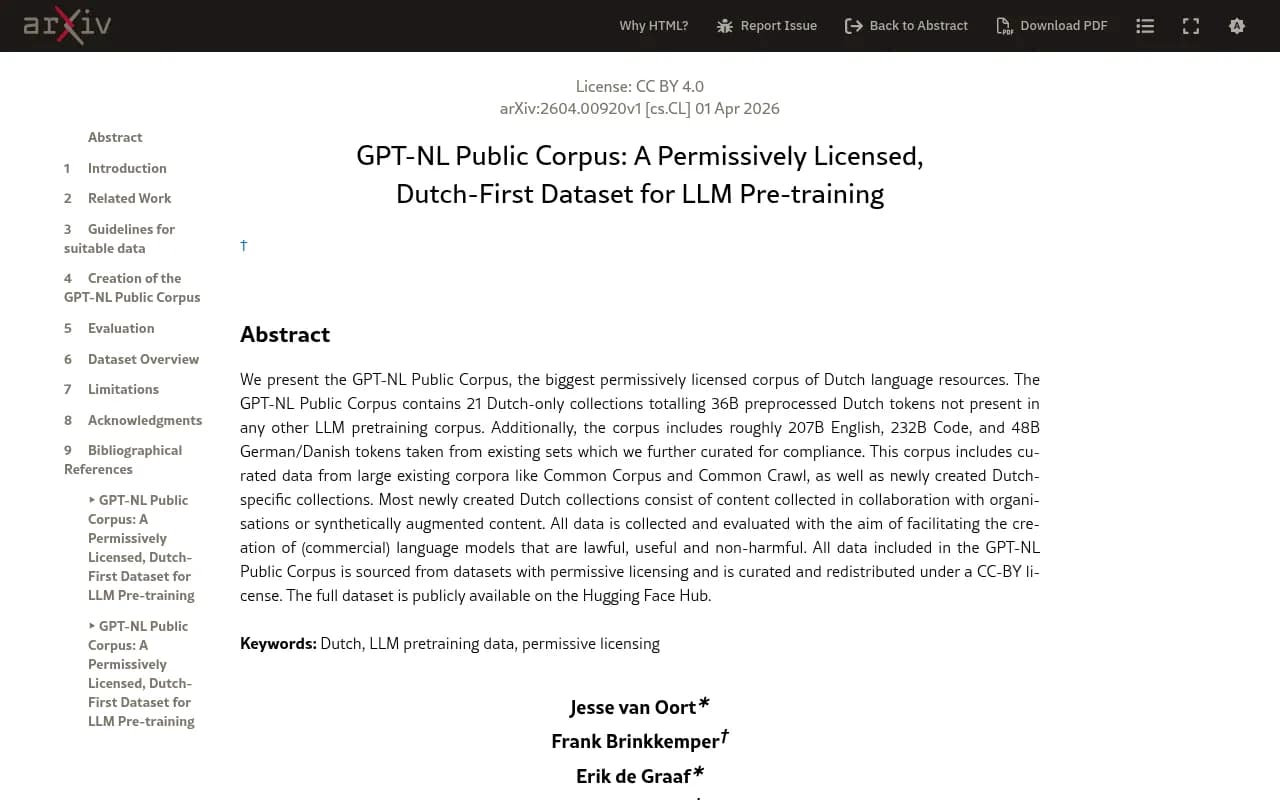
There is also a training-data angle. The GPT-NL Public Corpus paper (arXiv, April 2026) notes that organisations in Dutch-speaking regions depend on large multilingual models where Dutch is not the main focus. The corpus itself holds 36B Dutch tokens not found in other pretraining sets. It is a Dutch-first model effort, not something you can optimise for directly, but it explains why general models can feel shaky in Dutch.
Where your Dutch content has the best odds
Temso also broke results down by industry, and the gap between the most and least localised industries is 41 points.
| Industry | Share of cited sources in the local language |
|---|---|
| K-12 education | 76.9% |
| Cleaning services | 73.3% |
| Accounting and audit | 68.0% |
| Auto repair | 65.3% |
| Design agencies | 45.5% |
| Restaurants | 38.9% |
| Hotels and hospitality | 35.5% (52.4% English) |
The pattern is intuitive. Where the buyer needs a local provider, local rules or a local language, models reach for local pages. Where the category is global (travel, hospitality), English sources push in hard.
Practical read: if you sell a Dutch-market service like accounting, schoolbooks, cleaning or repair, a native Dutch page is your main shot and the competition is mostly other Dutch pages. If you are in a global-leaning vertical, you need to give the model a reason to prefer your Dutch page, usually local specifics an English page cannot supply: Dutch prices in euros, Dutch regulations, iDEAL, BTW, KVK numbers, Dutch delivery times.
Rule 1: Write Dutch, do not translate it
I have no study showing machine-translated Dutch gets penalised, and I will not pretend otherwise. But the reasoning for avoiding it is solid. Models match the language of the prompt, then pick the page that best answers the specific phrasing. Translated copy tends to carry English sentence structure, English-style headings and keyword choices nobody types into a Dutch chat box.
What native writing looks like in practice:
- Use the phrasing Dutch buyers use. "Wat kost", "welke is beter", "voor- en nadelen", "ervaringen met". Check how people actually ask, not how a dictionary would.
- Watch compound words. Dutch glues nouns together ("boekhoudpakketvergelijking"). People also write them apart by mistake. Use the standard spelling in headings, and mention common variants once in the body.
- Decide on je or u and stay consistent. B2B finance leans u, SaaS and consumer brands lean je. A model reading your page picks up that register too.
- Keep English terms only where Dutch people use them. "Software" and "CRM" are fine. Forced Dutch coinages are not.
- Mind the difference between nl-NL and nl-BE. Belgian Dutch uses different vocabulary, prices in euros are the same but regulations, retailers and shipping differ. If you serve Flanders, say so explicitly on the page.
This is one place I would pay a human editor, even if an AI tool produces the first draft. Tools like Grammarly have limited Dutch support, so native review is the safer path.
Rule 2: Pick formats models already cite
Promptwatch Data's report on content types in ChatGPT (Sep 28 to Oct 4, 2026) shows which page shapes get cited. Across all prompts: product pages 22.4%, landing pages 16.8%, listicles 13.6%, how-to guides 8.7%, documentation 7.5%, general articles 6.1%, comparisons 5.9%, news 5.7%, FAQ pages 3.3%, reviews 1.7%. The full breakdown is in Promptwatch's ChatGPT citation share by content type report.
That dataset is not Dutch-specific, so treat it as the baseline and not a Dutch finding. Still, the intent splits are useful for planning:
| Prompt intent | Top formats |
|---|---|
| Commercial ("beste CRM voor kleine bedrijven") | Product pages 26.0%, landing pages 20.6%, listicles 15.0%, comparisons 7.9% |
| Informational | Product pages 19.1%, landing pages 13.9%, listicles 13.6%, how-tos 10.7% |
| Branded | Product pages 23.3%, landing pages 22.8%, reviews 5.6%, FAQ 4.8% |
For a Dutch site this suggests a content set like:
- A clear Dutch product or service page per offering, with pricing in euros, specs and target audience stated plainly.
- A "beste X voor Y" listicle, honest enough that you would defend it to a customer. Get your brand into third-party Dutch roundups too, because ChatGPT cites those.
- A Dutch comparison page for the two or three alternatives buyers actually name.
- A public, crawlable help centre or documentation.
- An FAQ page written in the questions people type.
Kontent.ai makes a similar point: definitions, comparisons, FAQs, glossaries and product pages are the formats LLMs most reliably quote or paraphrase. A Dutch glossary ("Wat is ...?") is cheap to build and often underused.
One caution on freshness. In Promptwatch's content half-life data, news pages lost half of their citations within about 36 days, while landing pages and docs stayed cited for months. Dutch news-style posts are a poor long-term bet. Evergreen pages you keep updated are better.
Rule 3: Answer first, in language a model can lift
To The Web's audit advice is blunt and correct: older pages build up to the point the way SEO copy used to, but AI reads the opening lines to decide what a page covers. Their takeaway is to answer specific buyer questions directly, back claims with proof, make each section easy to extract and keep key content in crawlable HTML.

In Dutch, that translates to:
- Open with a two-sentence summary that names the topic and the audience. "Een boekhoudpakket voor zzp'ers kost gemiddeld ... per maand. Dit zijn de vijf opties die we vergeleken."
- Make each H2 a question or a clear statement, and answer it in the first sentence under it.
- Define jargon in place. Kontent.ai's advice to define terms so ideas stand on their own is sharper in Dutch, where English loanwords and Dutch terms mix freely ("btw-aangifte", "ZZP", "VAR").
- Put numbers, dates and named sources in the text, not only in images or accordions that need JavaScript.
- Add author names and credentials, and cite your sources. RWS lists this among its multilingual GEO moves.
Rule 4: Fix the technical basics before the prose
RWS puts it well: a poorly structured site with thin content will not earn citations however well it is configured for GEO. To The Web lists the usual failures: broken heading order, vague titles, no summary at the top, no visible FAQs or schema.
A short Dutch-site checklist:
- Language tags: set lang="nl" on pages, and use hreflang with nl-NL and nl-BE if you run both markets. I did not find tested data on how much hreflang influences AI citations, so treat it as good hygiene, not a proven lever.
- One URL per language version, with the full Dutch content in the HTML, not behind a script.
- Let AI crawlers in. Check robots.txt and your CDN or firewall rules. A lot of sites block AI bots by accident.
- Internal links with Dutch anchor text so topic clusters are obvious.
- FAQ markup on pages that actually show the FAQ.
If you want to see how AI bots behave on your site, Promptwatch logs IP-verified AI crawler visits and flags errors, which is the fastest way to catch a blocked Dutch section.

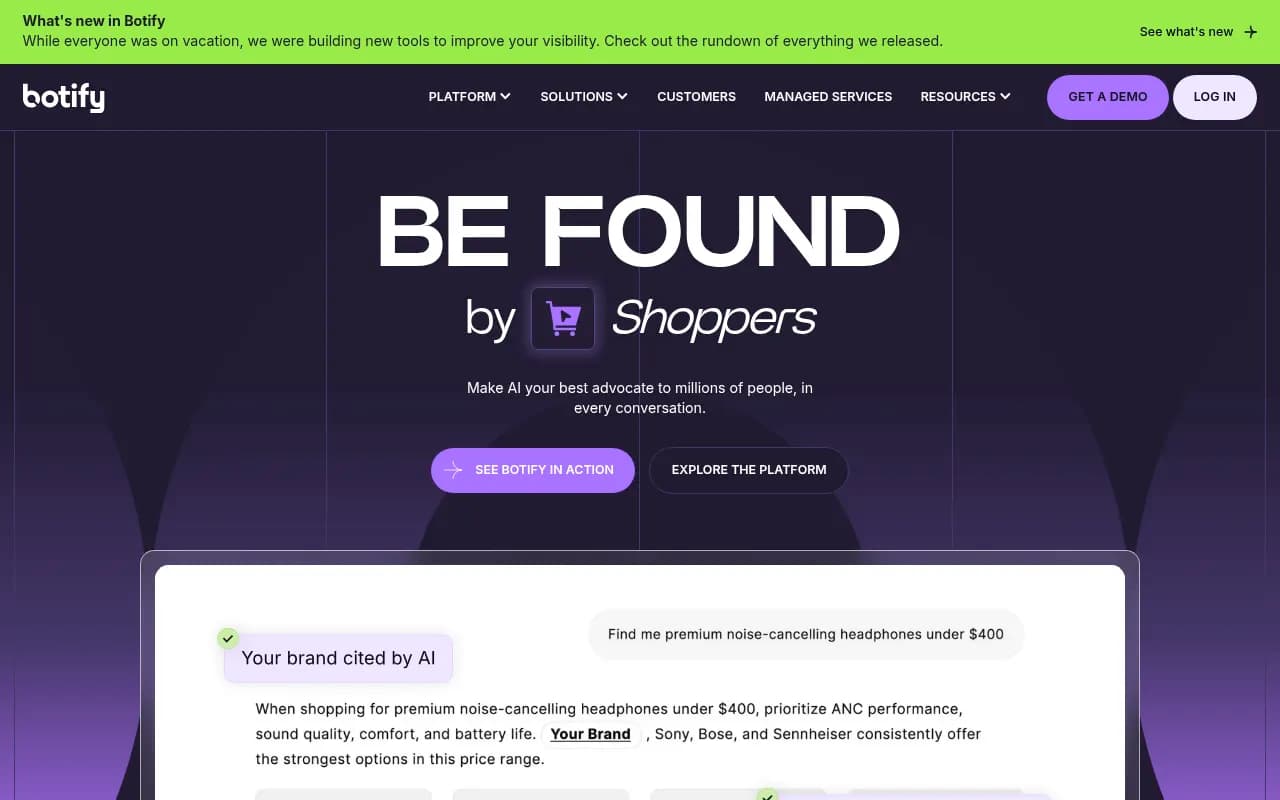
For a hands-on technical crawl, Botify is the enterprise option.
Rule 5: Earn Dutch mentions off your own site
Almost half of ChatGPT responses cite ten or more unique domains, per Promptwatch's unique domains report (Sep 28 to Oct 4, 2026). So the answer is built from many sources, and being named on other pages matters. For Dutch markets that means:
- Dutch comparison sites and "beste van" roundups in your category.
- Dutch trade media and industry associations.
- Review platforms your buyers use.
- Dutch communities. Be careful here: Promptwatch Data found reddit.com's share of ChatGPT citations fell from about 4% to 0.5% on August 14, 2026, and ChatGPT drew only 0.46% of citations from social platforms in the Sep 28 to Oct 4 week, against 12.2% for Google AI Overviews (social citations report). Social posts matter more for AI Overviews than ChatGPT.
I would put outreach effort into Dutch publishers and comparison sites before forums.
Rule 6: Match the model you care about
Because language matching varies so much, decide which assistants your buyers use. If your audience is on Google, AI Overviews cites Dutch sources most reliably, which is good news for Dutch pages. If your buyers use Grok, expect English sources to take a bigger share, and add more local specifics to your pages to stand out. Treat these as a starting point, since Temso's data covers early 2026 and models change.
How to measure Dutch GEO
A tracker set up in English will miss most of this. Build a prompt set in Dutch, split by intent (commercial, informational, branded), and run it from the right country. Then watch four things: whether you are mentioned, whether your own pages are cited, which language the cited sources are in, and which competitors appear.
Options from the catalog that are worth a look:
| Tool | Angle | Notes for Dutch work |
|---|---|---|
| Promptwatch | Tracking plus content and crawler data | Real-UI tracking by country and language, crawler logs, Content Agent that writes in the prompt's language |
| Trackerly.ai | Multi-LLM mention tracking | Advertises 20+ languages |
| Peec AI | Prompt-level visibility tracking | Popular with European teams |
| Otterly.AI | Affordable monitoring | Monitoring only |
| Profound | Enterprise analytics | Higher price tier |
I used the vendors' own descriptions here and have not tested Dutch accuracy on each, so run a pilot with 20 Dutch prompts before committing.




For producing Dutch content at volume, Promptwatch's Content Agent plans and publishes against gaps and writes in the prompt's language, with a Brand Book to keep tone consistent. Whatever generates the draft, a native speaker should read it before it goes live. More options are in the GEO software directory at bestgeosoftware.com.
Promptwatch's own prompt volumes and difficulty scores also help you choose which Dutch questions are worth writing for, rather than guessing.
A 30-day plan
- Week 1: Write 30 to 50 Dutch prompts as buyers would type them. Run them across ChatGPT, AI Overviews, Copilot and Perplexity. Record which sources get cited and in which language.
- Week 2: Audit your Dutch pages for heading order, summary-first openings, crawlability and AI bot access.
- Week 3: Rewrite or build the top five pages in the formats above, in native Dutch, with local specifics and named authors.
- Week 4: Pitch two or three Dutch roundups or publishers. Re-run the prompt set and compare.
Then repeat monthly. Citation behaviour moves, and the Promptwatch Data hub at promptwatch.com/data is worth checking for shifts.
What we still do not know
Three gaps are worth being honest about. Nobody has published solid data on whether hreflang or nl-BE versus nl-NL targeting changes citation odds. We do not have a ranked list of the most cited Dutch domains per industry. And the machine-translation question is open. Until someone measures it, the safe bet is the boring one: real Dutch, written by someone who would use the product, with the answer in the first sentence.