Key takeaways
- A rank tracker reports one position among roughly 10 blue links. A GEO platform measures whether you are one of about 5 (ChatGPT) or about 10 (AI Overviews, Perplexity) cited sources, engine by engine.
- Most teams should not rip out their rank tracker. They should run both in parallel for a quarter, then decide what to keep.
- Migrate in stages: audit, baseline, map keywords to prompts, connect crawler and traffic data, then retire reports you no longer use.
- AI engines shift fast, so a one-time baseline goes stale. Pick a platform that monitors continuously and acts on the findings.
- The hardest part is organizational. Someone has to own the data and do something with it.
Why rank trackers stopped telling the whole story
A classic rank tracker answers one question: where does this URL sit for this keyword? That was a good question when the results page was ten links and a few ads. It is a thin question now.
AI answers do not rank you. They cite you, or they do not. According to Promptwatch Data on sources per response, ChatGPT cites about 5 sources per web-search answer, Google AI Overviews about 10, and Perplexity almost exactly 10 every day. Microsoft Copilot swung from under 2 to nearly 17 within a few weeks before settling low. So the unit of measurement changes: you are no longer position 3, you are in or out of a short list, and the list is different on every engine.
Two more things break the rank-tracker model.
The prompt is not the query
ChatGPT does not search the literal prompt. It generates its own searches, called query fan-outs. Promptwatch's query fan-out report says a single prompt can trigger 3 to 8+ searches, though the measured average sat at 2.15 per response in December 2025 and about 1.84 by early March 2026. Average query length also shrank, from about 117 characters in December to about 53 in April. Your content only has to match one of those generated queries. A keyword list cannot tell you which ones those are.
It also keeps changing. Promptwatch Data shows ChatGPT started using the site: operator at scale on August 8, 2026, jumping from roughly 0.4% to about 17% of fan-out queries overnight.
Each engine behaves differently, and changes quickly
In the week of Sep 28 to Oct 4, 2026, social platforms made up 0.46% of ChatGPT citations but 12.2% of Google AI Overviews citations, with Perplexity at 2.7%. Reddit's share of ChatGPT citations collapsed from about 4% to 0.5% on August 14. If you built a strategy on a Reddit-heavy baseline in July, it was wrong by September.
A rank tracker has no answer for any of this. That is the real reason teams are moving, not hype.
Rank tracker vs GEO platform: what actually changes
| Dimension | Rank tracker | GEO platform |
|---|---|---|
| Unit of measure | Position 1 to 100 | Mention, citation, share of voice, sentiment |
| Input | Keyword list | Prompts, fan-outs, personas, topics |
| Engines | Google, Bing | ChatGPT, AI Overviews, AI Mode, Perplexity, Gemini, Copilot and others |
| Volatility | Daily, mostly stable | High, differs per engine |
| Traffic link | Search Console clicks | AI referral traffic, crawler logs |
| Output | Report | Report plus content and fix recommendations |
The last row matters most. Monitoring alone creates a new dashboard to ignore. Prompt trackers tell you whether your brand was mentioned. A fuller platform tells you why you are missing and what to do about it.
Do you need a migration at all?
Probably not a clean one. Organic search still drives revenue for most B2B teams, and Google rankings still feed AI Overviews. The pragmatic move is additive: keep the rank tracker for classic SERPs, add a GEO platform, and later consolidate if one tool covers both.
The Airfleet guide for B2B marketers frames the real decision well: the right tool comes down to the bandwidth and skills on your team, and how committed you are to acting on what the data shows.
If nobody has time to look at the data weekly, buying a better dashboard will not help. Fix that first.
The migration checklist
Borrowing the structure of a website migration (plan, baseline, map, parallel run, cut over, monitor) works surprisingly well here. Mishandled site migrations, Takeoff notes, can cost 20 to 40 percent of organic traffic, mostly because nobody owned the gap between teams. The same failure happens with tooling: the old reports die and nobody built the new ones.
Phase 1: Plan and scope
- Name an owner. One person is accountable for AI visibility reporting, with a backup.
- List every report your team and execs currently get from the rank tracker. Mark which ones anyone reads.
- Decide the questions the new setup must answer. Examples: Are we cited for our top commercial topics? Which competitor is winning each prompt? Is AI traffic converting?
- Set a trial window of 60 to 90 days with a clear keep, replace, or drop decision at the end.
- Get access to everything you need up front: Search Console, Bing Webmaster Tools, analytics, CDN or server logs, and CMS.
Phase 2: Freeze a baseline
Export before you change anything. Your rank tracker history is the only record of pre-AI-search performance, and some vendors delete data when you cancel.
- Export keyword rankings, share of voice, and landing page data for at least 12 months.
- Save top-25 commercial queries with their current positions and ranking URLs.
- Record organic sessions and conversions from Search Console and analytics.
- Note which SERP features you hold: featured snippets, People Also Ask, AI Overview citations.
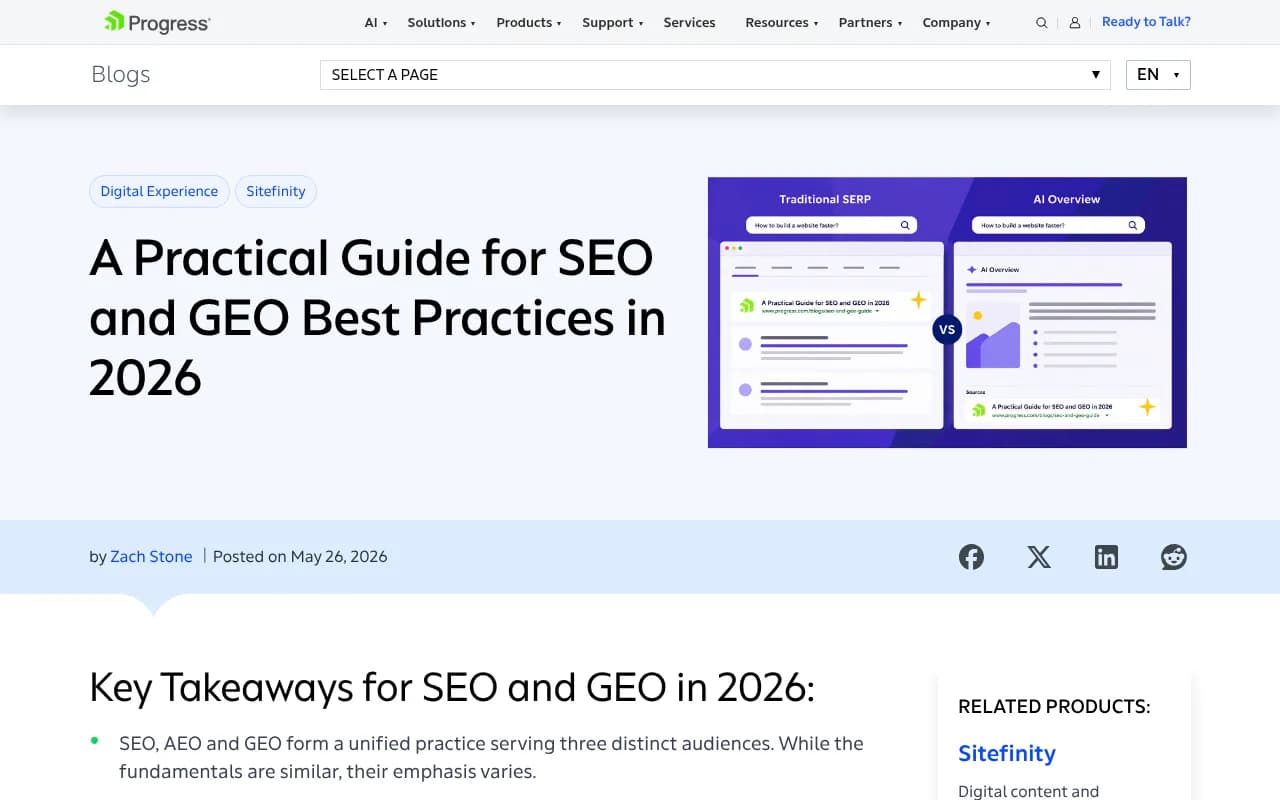
The Sitefinity guide recommends standing up AI Overview and citation monitoring on your top 25 commercial queries, and states that without this data, GEO investment is guesswork. Good starting scope. Keep it small at first.
Phase 3: Map keywords to prompts
This is the step nobody documents well, so here is a workable method.
- Take each of your top keywords and write 3 to 5 natural-language prompts a buyer would actually type. Include organic, brand-specific, and competitor comparison versions.
- Group them into topics, not keyword clusters. AI answers are topic-shaped.
- Add personas if your buyers differ (a CFO asks differently than an engineer).
- Add country and language if you sell in more than one market.
- Check query fan-outs for a few prompts. Promptwatch's fan-out data suggests headings that read like short search queries, with the entity and category up front.
You will not have a 1:1 mapping, and that is fine. Aim for coverage of your money topics, not parity with a 5,000-keyword list.
Phase 4: Pick the platform
There are over a hundred tools in this space now. Sort them by what you need rather than by brand name.
| Need | Tool types | Examples |
|---|---|---|
| Monitoring only, small budget | Prompt trackers | Otterly.AI, Peec AI, Rankscale |
| Rank tracker you already own, plus AI | SEO suite add-ons | Semrush, Ahrefs Brand Radar, SE Ranking Visible |
| Enterprise monitoring | Dedicated enterprise platforms | Profound, Scrunch, BrightEdge, Conductor |
| Monitoring plus content and fixes | End-to-end GEO platforms | Promptwatch |
Promptwatch is the one I would put first on a shortlist if your goal is to act on the data and not just watch it. It tracks the real interfaces of ChatGPT, Google AI Overviews, AI Mode, Gemini, Perplexity, Copilot and others, adds IP-verified AI crawler logs and AI traffic analytics, and its Content Agent plans, writes and publishes against your visibility gaps. Plans start at $95/month, so check promptwatch.com/pricing.

If you want to stay inside a suite you already pay for, the add-on route is reasonable for a first look.

For lightweight monitoring on a tight budget, these are common picks.


Enterprise teams with big technical SEO programs often look at these.

For more options, the GEO software directory at bestgeosoftware.com lists far more than fit here.
Questions to ask any vendor
- Does it capture the real user interface, or only API outputs? The answers can differ.
- Can it show query fan-outs, not just prompts?
- Can it track country and city level answers?
- Does it tell me which pages get cited, and which AI crawlers visit my site?
- Does it connect AI visibility to real visits and conversions?
- What does it do after it finds a gap?
- Can I export my data if I leave?
Phase 5: Connect the data you need to explain results
Mentions alone do not tell you why. Wire up these sources in the first two weeks:
- Crawler logs from your CDN (Cloudflare, Vercel, Fastly, CloudFront and so on) so you can see which AI bots read which pages and where they hit errors. Promptwatch's AI crawler traffic data shows how fast bot mix shifts: Meta-WebIndexer went from about 2% to nearly 38% of tracked AI crawler requests between mid-July and August 9, 2026 (report).
- AI referral traffic in analytics, via a script, tag manager template or CMS plugin.
- Search Console and Bing Webmaster Tools, so you can ask which pages rank in Google but never get cited by AI.
- A technical audit of structured data, headings, and crawlability. Sitefinity's advice is to audit schema coverage (Organization, WebSite, Article, FAQPage, Product and so on) and validate it with Google's Rich Results Test.
Phase 6: Run both systems in parallel
This is the stage most teams skip, and it is where trust gets built.
- Run the rank tracker and GEO platform side by side for at least one full reporting quarter.
- Compare the stories they tell. Pages that rank well in Google but get no AI citations are your first optimization list. Pages cited by AI that do not rank are worth understanding too.
- Do not compare numbers one to one. A rank of 4 and a visibility score of 38 measure different things.
- Re-baseline monthly. Engines move fast. The ChatGPT citation drop around the GPT-5.3 rollout on March 4, 2026 is a good example: average citations per response fell across all models.
Phase 7: Cut over reporting
- Build one dashboard for execs with three or four numbers: visibility or share of voice, citations to your own pages, AI-referred sessions, conversions from AI.
- Keep a smaller classic SEO view: organic sessions, rankings for top pages, Search Console clicks.
- Retire rank-tracker reports nobody opened during the trial.
- Decide whether to downgrade the rank tracker. Many teams keep a cheap plan for local and SERP history.
- Cancel only after you have exported everything.
Phase 8: Monitor and act
The migration is not done when the dashboards go live. It is done when the data changes what you publish.
- Review gaps weekly. Where are competitors cited and you are not?
- Match content to what gets cited. Product pages are the most cited type in ChatGPT at 22.4%, and landing pages and docs stay cited longest while news loses half its pages in 36 days. That tells you where evergreen effort pays.
- Do not chase domain authority alone. Sites with domain rank 46 to 75 earned almost half of ChatGPT citations in August 2026, while DR 91 to 100 fell to about 3%.
- Expect breadth. Almost half of ChatGPT responses cite 10 or more unique domains, so there is room to be one of many.
- Skip folklore. Markdown files are just 0.05% of AI search citations.
Common mistakes
- Treating GEO as a new keyword list. Prompts are conversations, and answers are built from fan-outs.
- Taking one baseline and trusting it for a year.
- Tracking only ChatGPT. Perplexity is stable enough to work as a test bench, Copilot is noisy, and AI Overviews behaves differently from all of them.
- Buying monitoring and never assigning anyone to act on it.
- Judging success on mentions without checking traffic, crawler access or conversions.
- Deleting rank tracker history before exporting it.
A note on honest limits
Prompt-based visibility is sampled data. Responses vary by user, location and day, so treat scores as trends. If a vendor shows you a single clean number with no explanation of how prompts, models and countries were chosen, ask more questions. And if your team is small and your leadership still cares mostly about classic organic traffic, starting with a cheaper monitor is a defensible choice.
If you would rather hand the strategy to specialists, 1001 SEO Media runs technical SEO and generative engine optimization programs, and uses Promptwatch for AI visibility work.
Quick-reference checklist
- Owner named, trial window set
- Existing reports audited and unused ones flagged
- 12 months of rank tracker data exported
- Top 25 commercial queries baselined
- Keywords mapped to prompts, topics, personas and countries
- Platform shortlisted against the vendor questions above
- Crawler logs, AI traffic, Search Console and Bing connected
- Schema and technical audit completed
- Rank tracker and GEO platform run in parallel for a quarter
- Exec dashboard rebuilt around citations, AI traffic and conversions
- Weekly review of gaps feeding the content calendar
- Old reports retired and data exported before any cancellation
The teams that make this move cleanly are not the ones with the fanciest tool. They are the ones who decided up front what question the data had to answer, and then changed what they published because of it.