Key takeaways
- Rank trackers can't see AI answers. Only 38% of pages cited in AI Overviews also rank in the top 10 for the same query, so a first-page Google ranking tells you little about whether ChatGPT names you.
- Each engine behaves differently. Promptwatch's data shows ChatGPT cites about 5 sources per answer, while Perplexity and AI Overviews cite about 10, so you need to track them separately.
- Monitoring-only tools answer "was I mentioned?". The better ones also show why you're missing and help you fix it.
- Match the tool to your stage: suite add-ons for teams already on Semrush or Ahrefs, cheap trackers for small teams, enterprise platforms for large budgets.
- Verify pricing on vendor pages before buying. Most figures in public roundups come from vendor-authored lists.
Why marketing teams need a separate tool for AI visibility
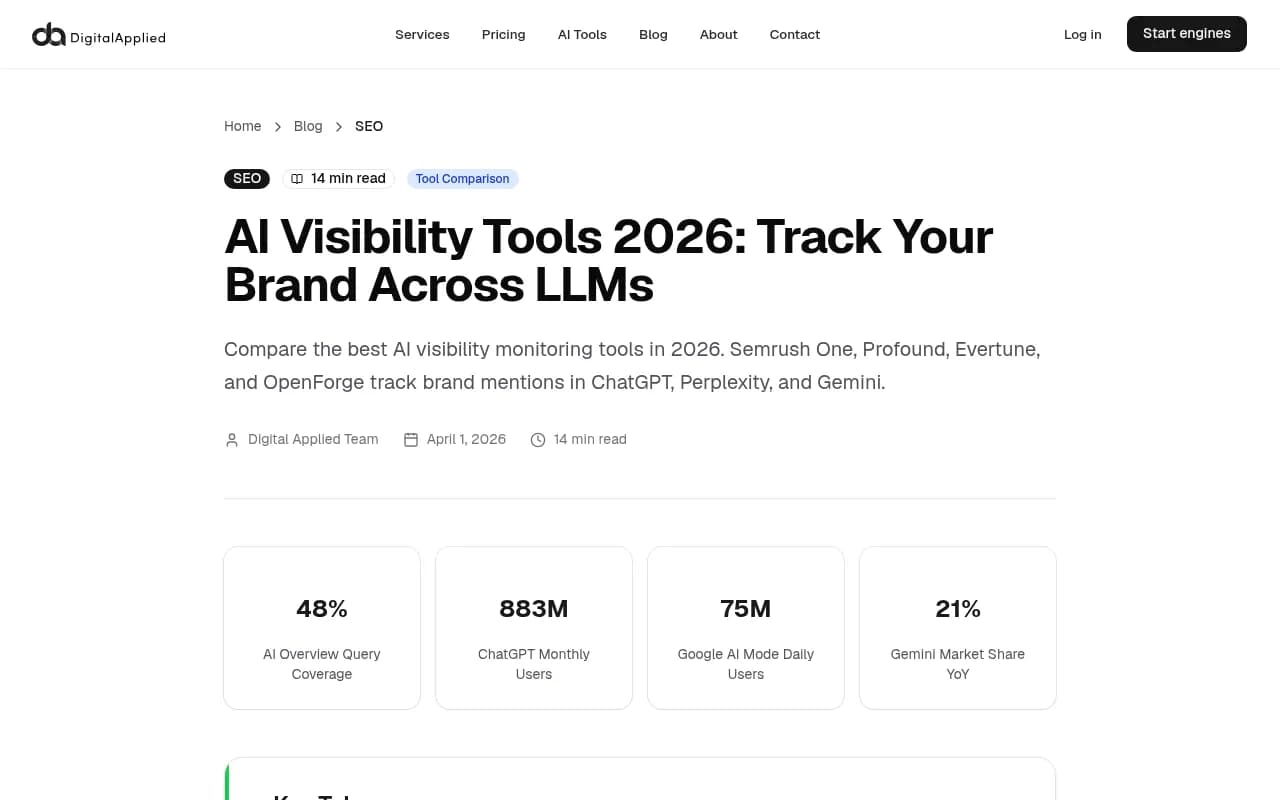
Buyers now get shortlists from AI answers. According to a Digital Applied roundup, ChatGPT has reached 883 million monthly users, Gemini's market share grew from 5% to 21% year over year, and AI Overviews appear in roughly 48% of Google searches. SparkToro estimated that about 68% of US Google searches ended without a click in early 2026. If the answer names three brands and you aren't one of them, you never got a chance.
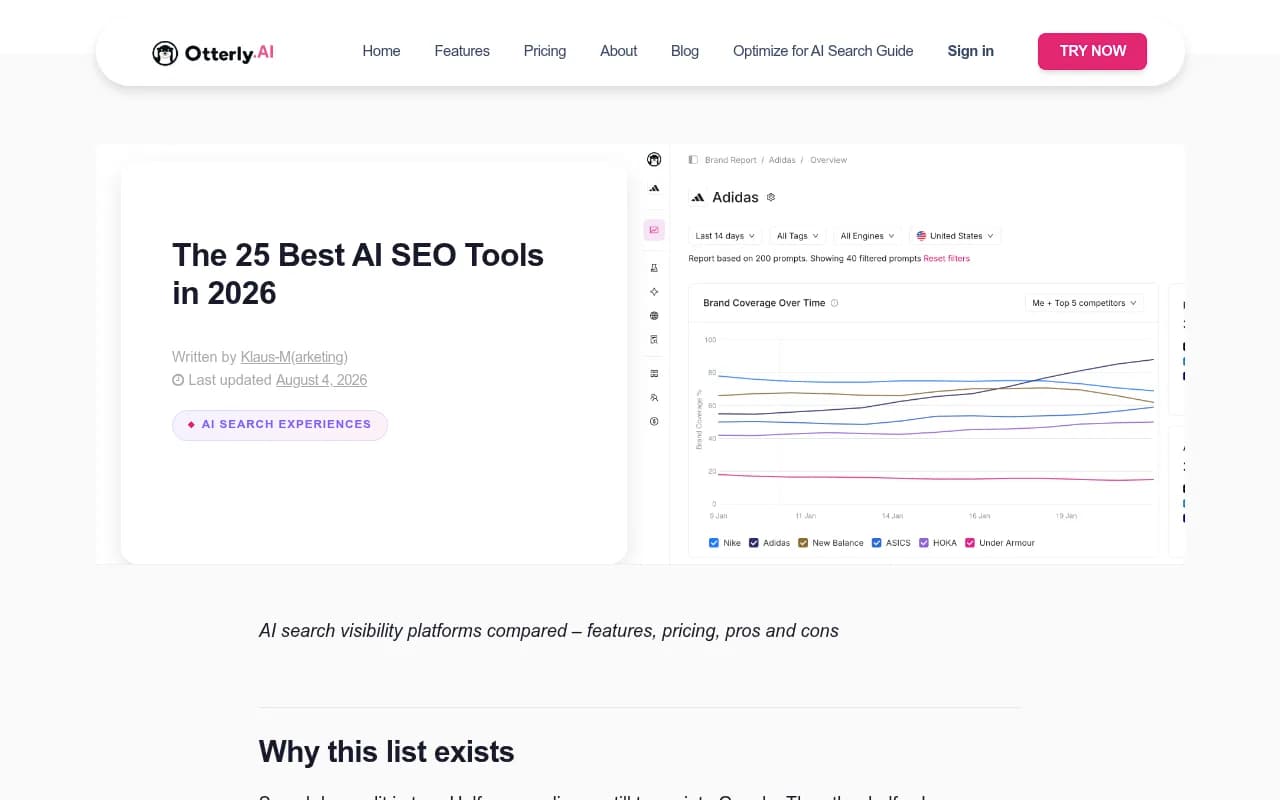
Traditional SEO tools track keyword positions, backlinks, and organic click-through. None of that tells you whether ChatGPT recommends you when someone asks for the best CRM for a small business. The Otterly.AI list (vendor-authored, so read it with that in mind) cites The Digital Bloom's 2025 AI Visibility Report: only 11% of cited domains overlap between ChatGPT and Perplexity, and roughly 80% of LLM citations don't rank in Google's top 100 for the same query. Your Google position and your AI position are mostly unrelated.
Each engine needs its own tracking
The engines don't cite the same way. Promptwatch Data's average sources per response report shows ChatGPT citing about 5 sources per web-search answer, Google AI Overviews about 10, and Perplexity almost exactly 10 every day. Copilot swung from under 2 to nearly 17 within weeks before settling low, so judge it on monthly trends.
Social sources differ even more. In Promptwatch's social citation data for Sep 28 to Oct 4, 2026, social platforms made up just 0.46% of ChatGPT citations, 2.7% of Perplexity's, and 12.2% of Google AI Overviews'. Reddit fell sharply in ChatGPT after August 14, 2026 (see the Reddit citation drop report). Any advice that says "win on Reddit for ChatGPT" is stale. That is the practical case for tracking each engine on its own.
What to look for in a tool
Before comparing vendors, decide what you actually need. These are the criteria that separate tools in practice:
- Engine coverage on the plan you'd actually buy. Many tools track nine engines on the top tier and three on the entry plan.
- Real interface data versus API output. User-facing answers and citations can differ from what an API returns.
- Prompt-level depth: citations, sentiment, share of voice, and position in the answer.
- Whether it stops at a dashboard or tells you what to change.
- Traffic attribution: can you connect AI mentions to visits and conversions?
- Price per tracked response, not just the headline monthly price.
The tools compared
The table below covers the tools most often shortlisted by marketing teams. Prices are starting points quoted in vendor or secondary roundups and may have changed, so confirm on each pricing page.
| Tool | Best for | Engines (typical) | Starting price (reported) | Acts on the data? |
|---|---|---|---|---|
| Promptwatch | Teams that want monitoring plus fixing | ChatGPT, Gemini, Perplexity, AI Overviews, AI Mode, Copilot, Claude, Meta AI, more | $95/mo (free tier available) | Yes, content agent and action board |
| Profound | Enterprise programs | 10+ engines | Reported from $99/mo (ChatGPT only) | Reports and content gaps |
| Otterly.AI | Small teams, low price | ChatGPT, AIO, AI Mode, Gemini, Perplexity, Copilot | Reported from $29/mo | Audits, mostly monitoring |
| Peec AI | Agencies, mid-market | ChatGPT, AIO, Perplexity, Gemini, Claude, more | Varies by plan | Monitoring and suggestions |
| Semrush AI Toolkit | Existing Semrush users | ChatGPT, AIO, AI Mode, Gemini, Perplexity | Reported $99/mo | Within the SEO suite |
| Ahrefs Brand Radar | Ahrefs users | ChatGPT, AIO, Perplexity | Reported $129/mo | Backlink overlay |
| Scrunch AI | Persona testing | ChatGPT, Claude, Gemini, AIO | Custom | Page audits |
| KIME | Teams wanting sentiment and ad tracking | Up to 9 engines | From EUR 99/mo | Agentic executions |
Promptwatch: monitoring plus action
Promptwatch is the one I'd put first for teams that want more than a scoreboard. It tracks the real interfaces of ChatGPT, Gemini, Perplexity, Google AI Overviews, AI Mode, Copilot, and others, by country and language, which matters because API answers can differ from what users see.

What sets it apart from prompt trackers is the layer after the dashboard. IP-verified AI crawler logs show whether GPTBot or PerplexityBot can read your pages and where they hit errors. Visitor analytics tie AI platforms to actual traffic and conversions. A content gap analysis maps your pages against the prompts AI answers, and the Content Agent can plan, write, and publish articles to WordPress, Webflow, or Framer, then track whether those pages get crawled and cited. Crisp reported 2x higher conversion from AI traffic than from traditional channels using this loop.
Plans start free (1 project, 10 prompts, ChatGPT only), with Essential at $95/month, Professional at $245, and Business at $579. Agency plans start at $199. The automated Content Agent is on Business and above. Check promptwatch.com/pricing before buying.
The tradeoff: if you only want a cheap mention counter, you will pay for depth you don't use.
Profound, Scrunch AI, and the enterprise tier
Profound is the best-funded name in the category, with a reported $96M Series C in February 2026. It covers a wide set of engines, including Meta AI, Grok, and DeepSeek, and connects AI mentions to behavioral data. The cost and complexity are the catch. It makes sense when AI search is a funded acquisition channel with a dedicated owner.

Scrunch AI tracks ChatGPT, Claude, Gemini, and AI Overviews, then adds persona-based query simulation and page-level audits. That persona angle is useful if different buyer types ask very different questions.

Other enterprise-leaning options in the catalog include Brandlight, Bluefish, and BrightEdge.

Budget and mid-market trackers
Otterly.AI
Built by marketers and priced accordingly, Otterly.AI covers ChatGPT, AI Overviews, AI Mode, Gemini, Perplexity, and Copilot, and ships free GEO audit and crawler simulation tools. Its own 25-tool roundup ranks itself second, so treat that ranking as marketing, but the product is a sensible low-cost starting point.

Peec AI
Peec AI is a Berlin-based platform reported to serve 2,000+ marketing teams, with project-level tracking, competitor benchmarking, and citation data. It's popular with agencies. One catch from Semrush's comparison: plans cap how many LLMs you choose, so check which engines are included.

Rankscale and ZipTie
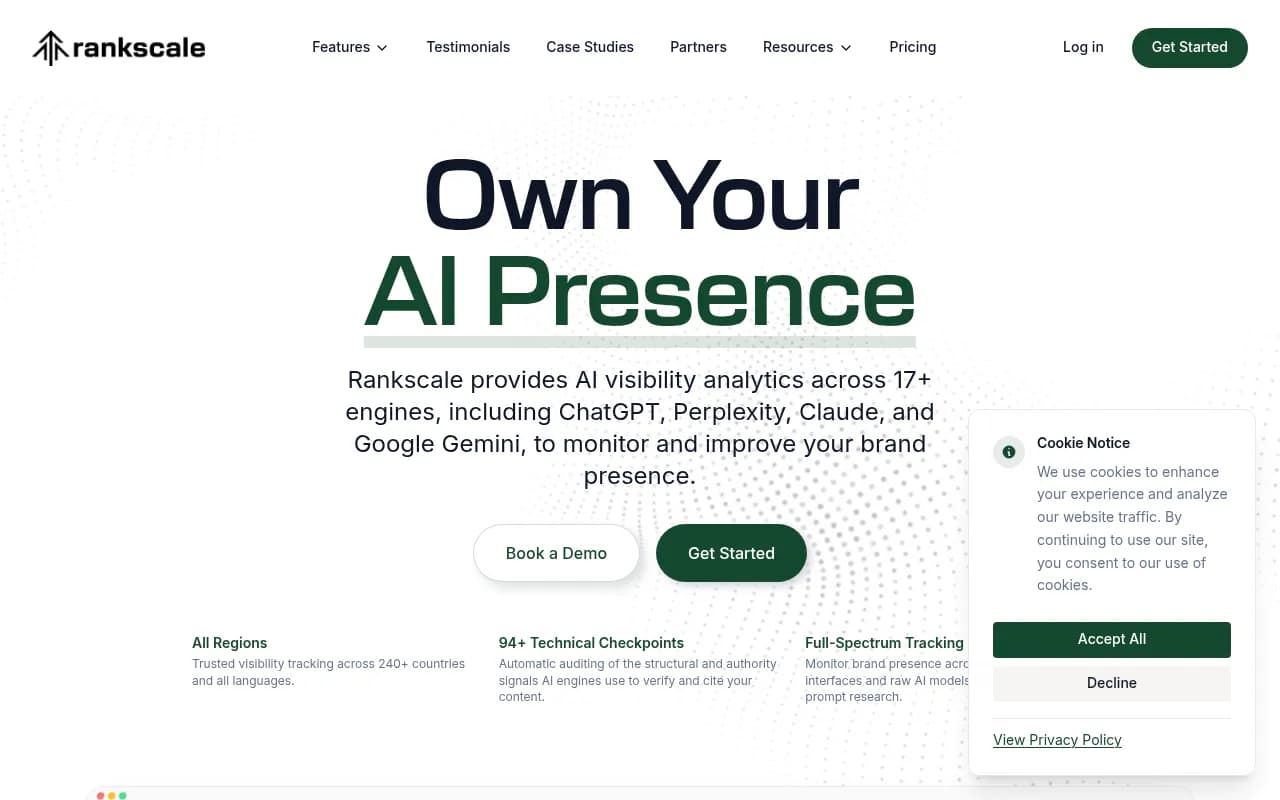
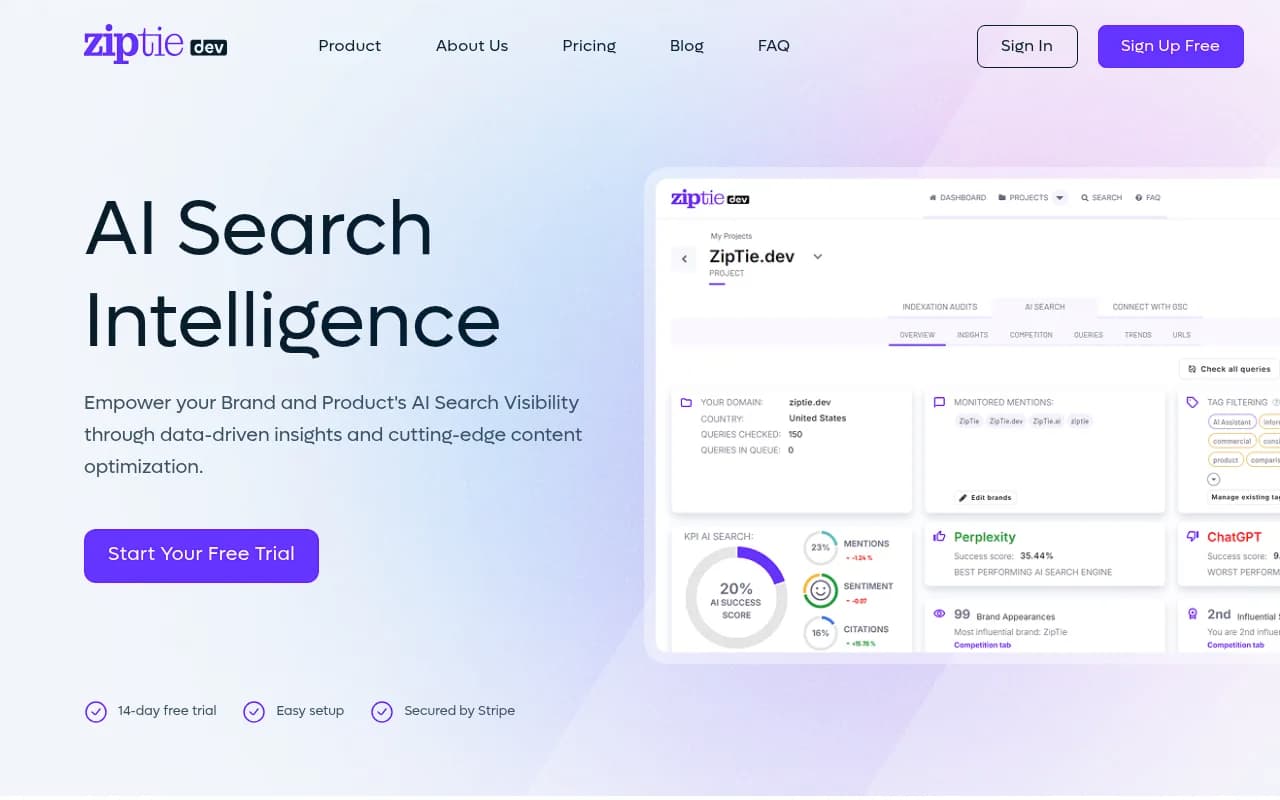
Rankscale is the cheapest entry point reported (around $19/month), and ZipTie is a focused tracker. Both are fine for a solo marketer testing whether AI search matters for their category.
Suite add-ons: Semrush, Ahrefs, HubSpot, SE Ranking
If you already pay for an SEO suite, the add-on removes a login and a procurement cycle. The tradeoff is usually fixed prompt sets and shallower AI-specific data.
Semrush's AI Visibility Toolkit tracks ChatGPT, Perplexity, Gemini, AI Mode, and AI Overviews, with sentiment and share-of-voice views. Claude, DeepSeek, and Grok come on the Enterprise AIO plan.
Ahrefs Brand Radar overlays AI mentions on backlink data, which helps if link-driven authority is your main lever.

HubSpot's AEO tools cover ChatGPT, Gemini, and Perplexity with a brand visibility score. They are a low-cost way in for HubSpot shops, but coverage ends there.

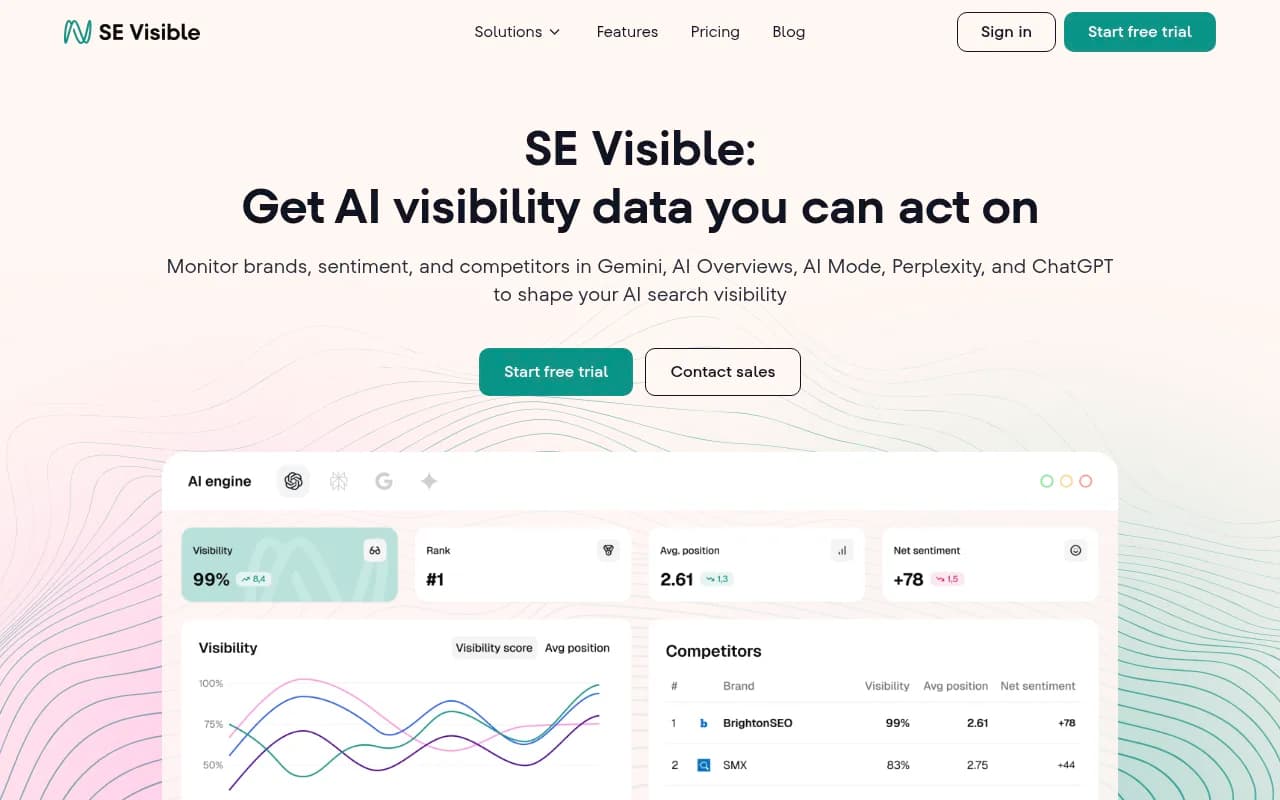
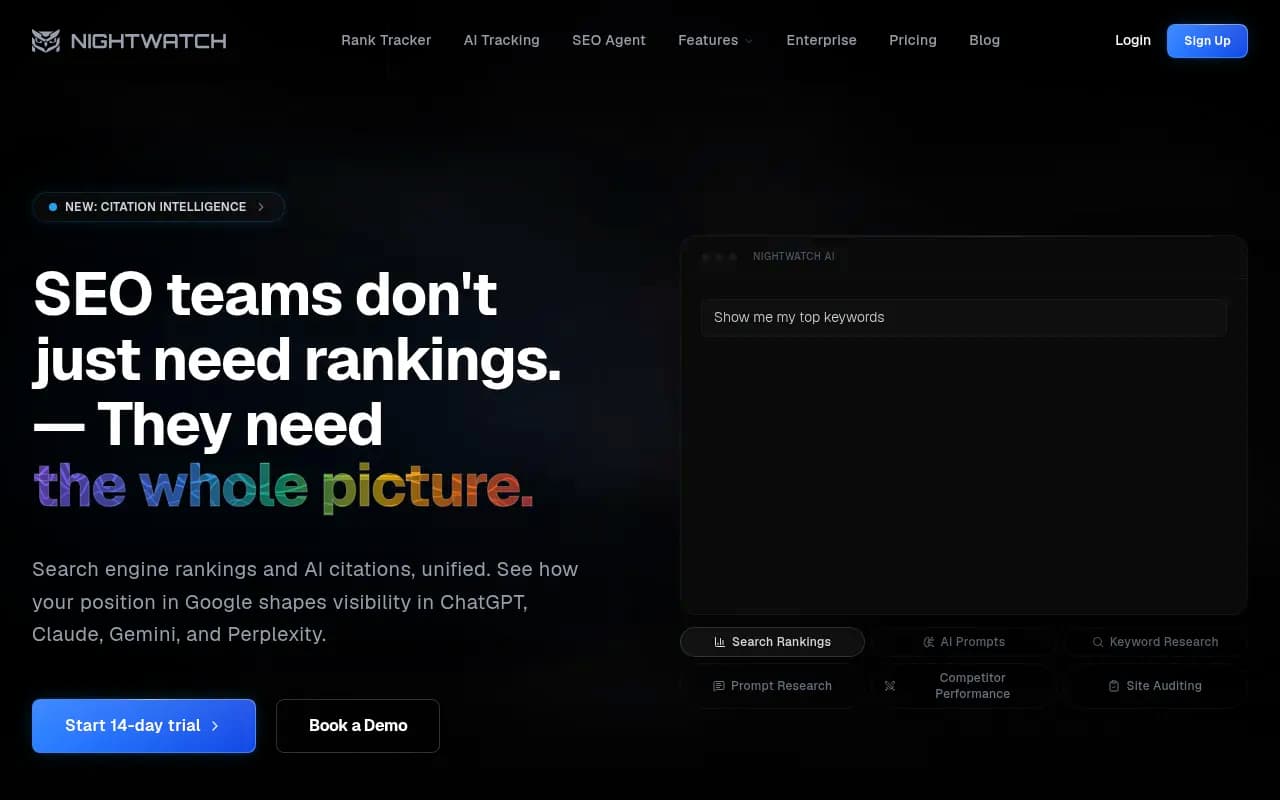
SE Ranking and Nightwatch pair classic rank tracking with AI visibility, useful when you want to test whether Google ranking changes move your AI mentions.
Other tools worth a look
The category is crowded. A few notable names in our catalog:
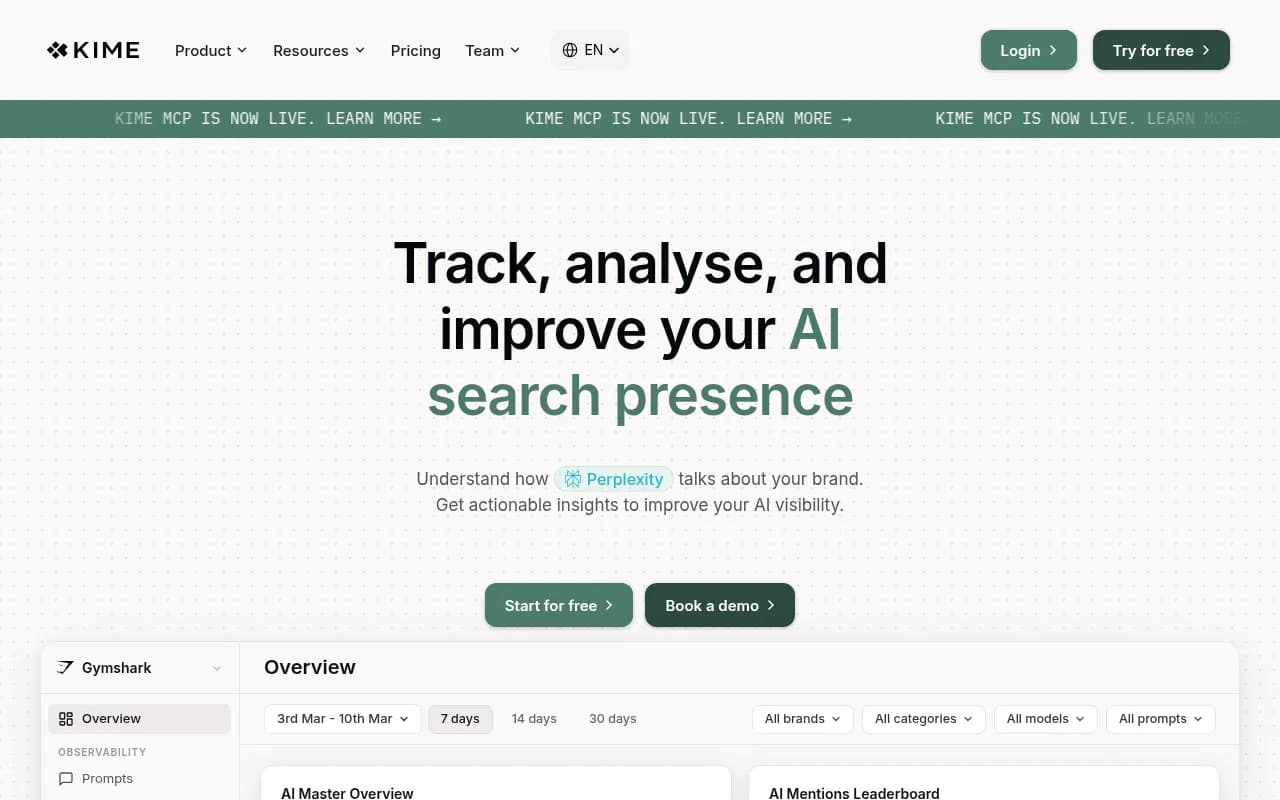
- KIME: nine engines, sentiment, and a feature showing which competitors advertise inside AI answers.
- Trakkr and Passionfruit: focus on tying AI traffic to revenue.
- Superlines: tracks from real AI interfaces rather than APIs.
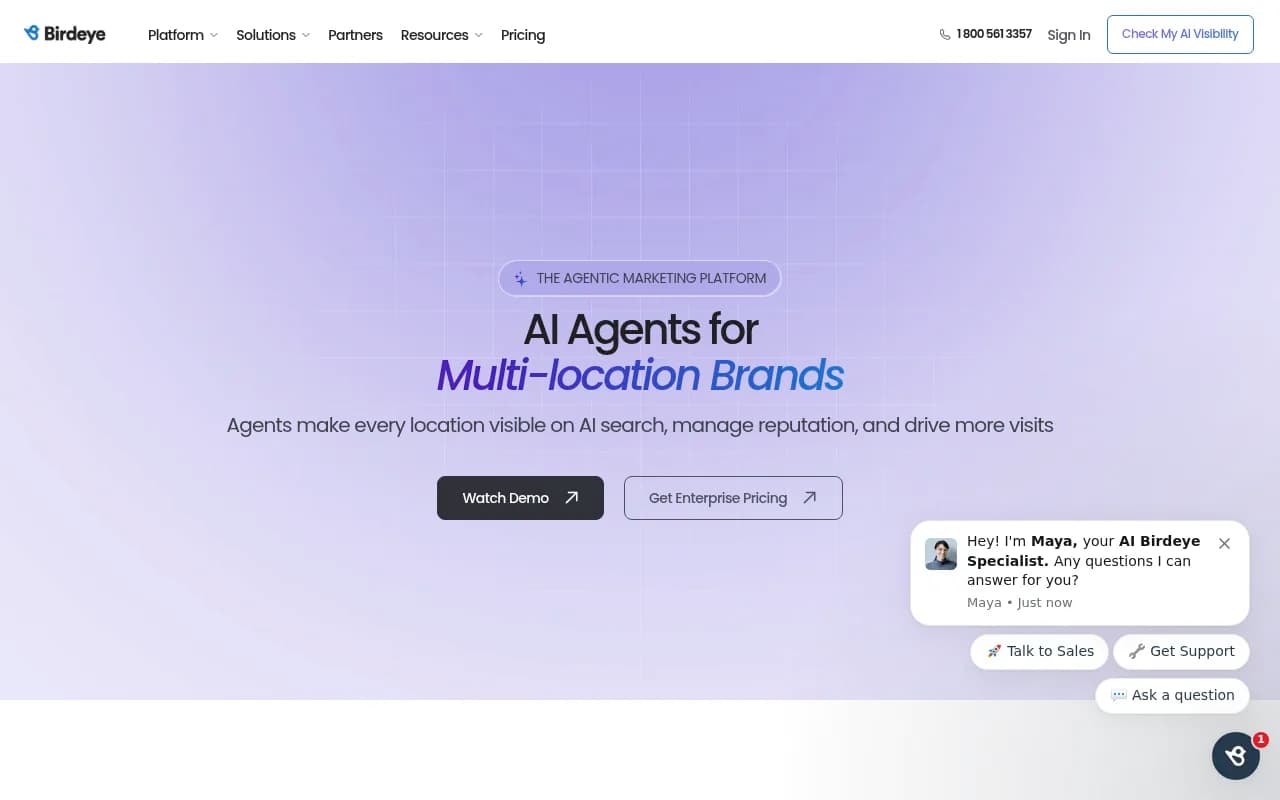
- Birdeye Search AI: location-level tracking for multi-location brands.
- Similarweb AI Brand Visibility: fits teams already in Similarweb.
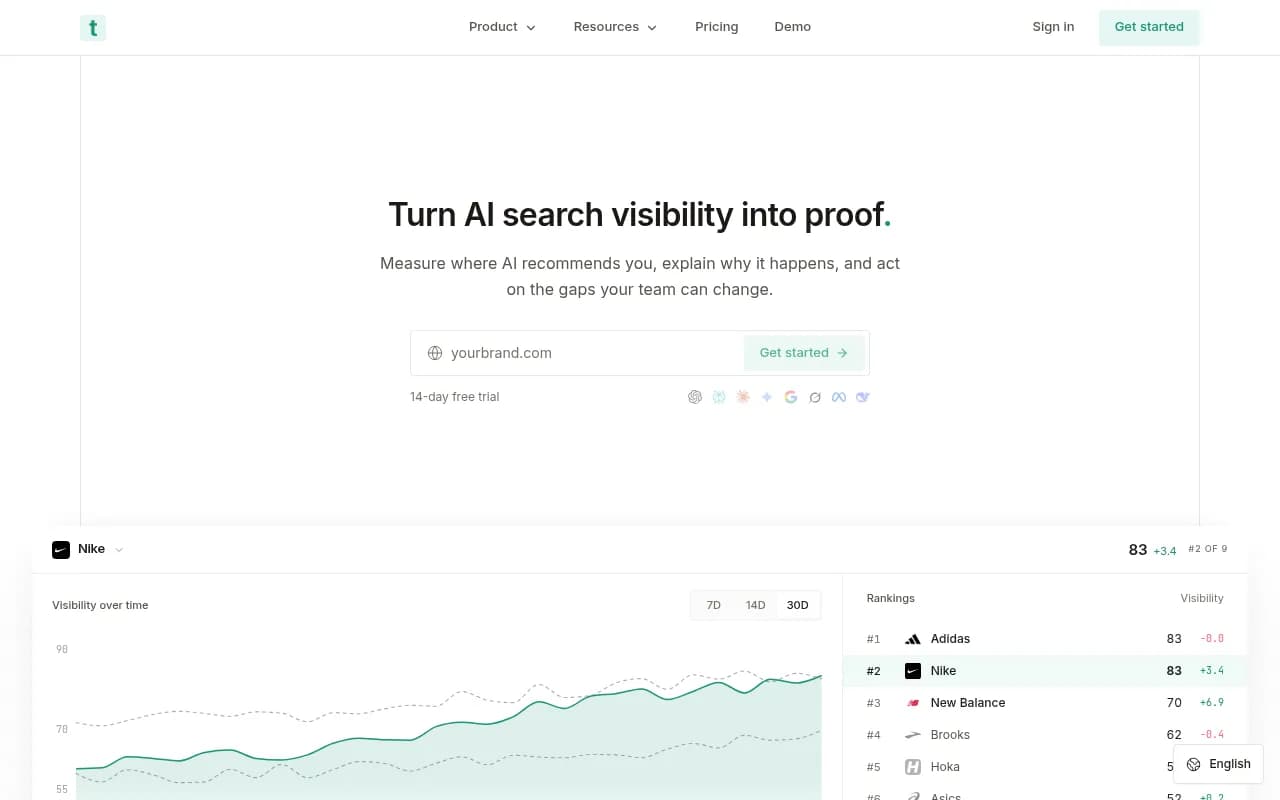
Superlines
Similarweb AI Brand Visibility
For a wider scan, the GEO software directory at bestgeosoftware.com lists more options by category.
A note on sources: the KIME and Otterly.AI roundups each rank their own product first. That doesn't make them wrong, but it's why this guide leans on first-party data where it can.
How to choose
| Your situation | Pick this type | Examples |
|---|---|---|
| Need to prove AI search is worth funding | Cheap tracker with free tier | Promptwatch Explore, Otterly.AI, Rankscale |
| Want to fix gaps, not just see them | Optimization platform | Promptwatch |
| Already on Semrush, Ahrefs, or HubSpot | Suite add-on | Semrush AI Toolkit, Brand Radar, HubSpot AEO |
| Agency with many clients | Agency plan, white-label reports | Promptwatch Agencies, Peec AI |
| Enterprise with procurement and security review | Enterprise platform | Profound, Scrunch AI, Promptwatch Enterprise |
| Ecommerce catalog | Product-level tracking | Ranketta, Yotpo Discover, Promptwatch Shopping Insights |
Setting up monitoring that produces useful data
Build a prompt set from real buyer questions
Start with 30 to 50 prompts across three types: category questions ("best project management software for agencies"), comparisons ("X vs Y"), and brand-specific queries. Pull ideas from Search Console queries, sales call transcripts, and People Also Ask. Tools with prompt volume data save guesswork here.
Pick engines by audience
Track ChatGPT, Gemini, and Perplexity at minimum. Add AI Overviews if Google is your main traffic source and Perplexity if your buyers do research-heavy B2B queries. Don't average them. A brand can dominate Perplexity and be invisible in ChatGPT.
Read the metrics together
- Low share of voice usually means a coverage problem: you lack pages for the prompts.
- Late position in the answer is a prominence problem.
- Mentions without citations to your domain point to content or crawlability issues.
- Weak sentiment is a reputation problem, often fixed offsite.
Benchmarks vary, but one roundup puts top-performing brands in competitive categories at 40 to 60% share of voice. Use that as a rough ceiling, not a target for week one.
Check crawler access first
Many visibility problems are technical. If AI crawlers get blocked or hit errors, no amount of new content helps. Look at your robots.txt and CDN rules, and use crawler logs if your tool offers them. Promptwatch's AI crawler traffic data shows how much verified traffic comes from OpenAI, Anthropic, Google, Perplexity, and Mistral bots.
Plan for content that gets cited
Promptwatch Data's content type report found product pages were the most cited type in ChatGPT at 22.4% of citations (Sep 28 to Oct 4, 2026), followed by landing pages and listicles. Its content half-life study found landing pages and docs stayed cited longest, while news lost half its pages within 36 days. Evergreen pages beat news posts if you want citations that last. Focused pages that answer one question fully tend to fit ChatGPT's small number of citation slots.
Common mistakes
- Buying on engine count alone, then finding the plan you can afford tracks three.
- Trusting a single week of data. Volatile engines like Copilot need monthly views.
- Treating mentions as the goal. Traffic and conversions from AI platforms are the number your CFO will ask about.
- Copying last year's tactics. Reddit's ChatGPT citation share dropped from about 4% to 0.5% in August 2026.
- Skipping the free trials. Most paid plans offer one, and a week of running your real prompts tells you more than any comparison article.
Final take
If you just need to find out whether AI search matters for your category, start with a free tier or a low-cost tracker and run your top 30 prompts. If you already know it matters and want to act on it, pick a platform that covers crawlers, citations, traffic, and content in one place, which is where Promptwatch is strongest. And if you live inside Semrush or HubSpot, use their add-ons for a first pass, then see how long it takes before you hit their limits.