Key takeaways
- Profound, Otterly.AI, and Peec AI all track AI citations, but they differ sharply on engine coverage, pricing, and how deep the data goes: Otterly starts at $29/month with 4 engines, Peec AI at $95/month with 3 engines per plan, Profound at custom enterprise pricing with the widest platform list
- All three primarily run prompts through the actual front-end interfaces of ChatGPT, Perplexity, and similar tools, not just APIs, which matters because API responses can differ from what a real user sees
- Citation counts are not stable. Promptwatch's tracking showed average citations per ChatGPT response drop roughly 27% within days of the GPT-5.3 rollout in March 2026, which is a strong argument against one-off audits
- None of these three tools closes the loop from "here's where you're invisible" to "here's the content that fixes it" the way a platform with content generation and CMS publishing does
- Your choice mostly comes down to budget and how many prompts/markets you need tracked daily, not which tool has the "best" data
Why citation tracking exists as its own category
A few years ago, nobody needed a tool to check if ChatGPT was mentioning their brand. Now it's a real budget line for a lot of marketing teams. The reason is simple: people ask AI assistants for recommendations the way they used to type into Google, and Semrush or Ahrefs have no idea what Perplexity said about you yesterday. Traditional rank trackers watch blue links. They are structurally blind to a ChatGPT answer that names three competitors and skips you entirely.
That gap is what Profound, Otterly.AI, and Peec AI were all built to fill. But "tracks AI citations" turns out to mean pretty different things depending on which of the three you're looking at, and the differences matter more than most comparison posts let on.
What each tool actually measures
Profound: breadth and enterprise depth, at enterprise pricing
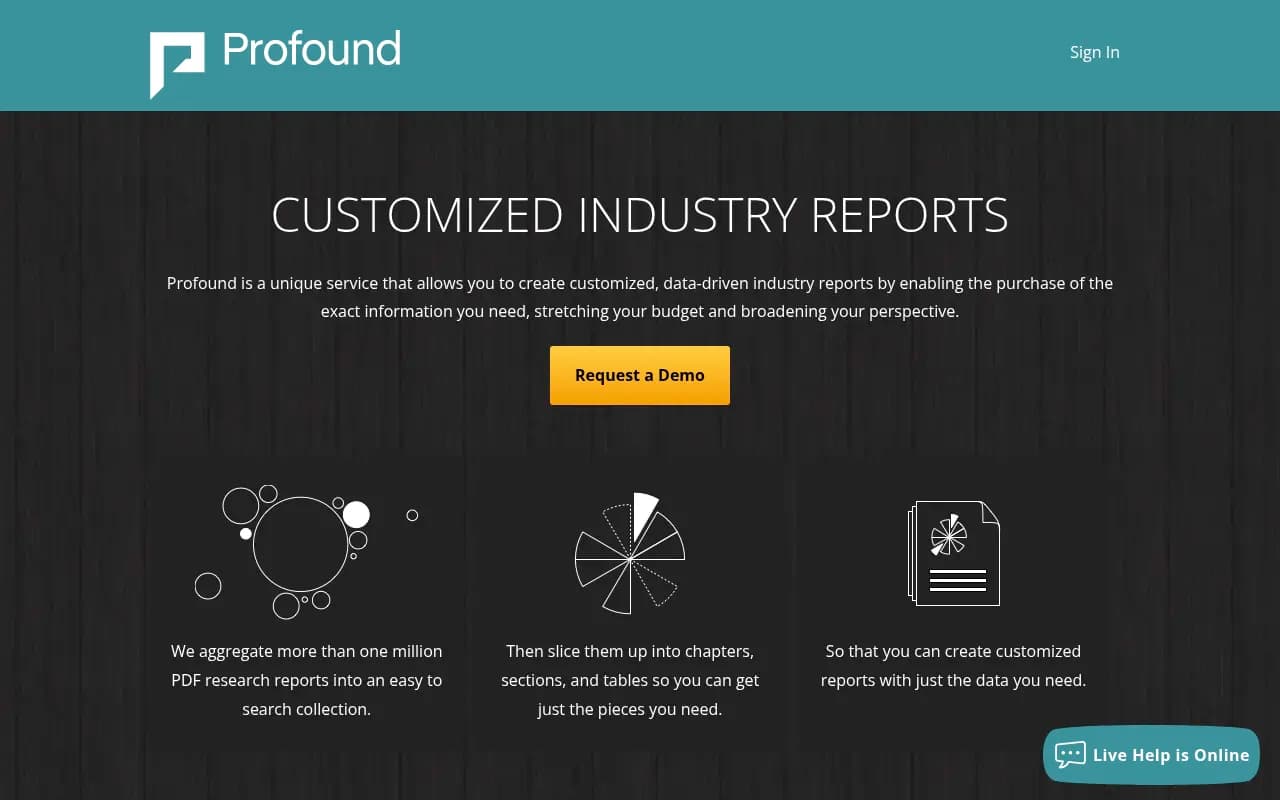
Profound leans hard into the idea of explaining why a brand shows up (or doesn't) in AI answers, not just confirming that it did. Its Answer Engine Insights and Agent Analytics features track crawler behavior alongside citation data, and the platform claims a dataset of over a billion real user prompts that it uses to model intent and demographics rather than relying purely on manually entered prompt lists.
The catch is access. Profound's public pricing has moved to a free trial (10 prompts, ChatGPT only, run once) plus a custom enterprise tier. Third-party roundups still quote a $99 or $499 starting price, but those numbers appear stale against Profound's current pricing page. Practically, this means Profound is built for teams that can justify a sales conversation and a real budget, not a solo marketer checking visibility on a Tuesday afternoon.
G2 reviews (over 1,100 of them, averaging around 4.5-4.6/5) consistently praise the depth of Profound's data but flag the cost, a learning curve, and dashboards that are harder to customize than buyers expect. One independent hands-on review scored Profound's data accuracy and AI traffic attribution at 3 out of 5, noting website-level analytics currently lean on CDN integrations, which tends to favor large retailers over smaller SaaS sites.
Otterly.AI: the budget-friendly, high-frequency option
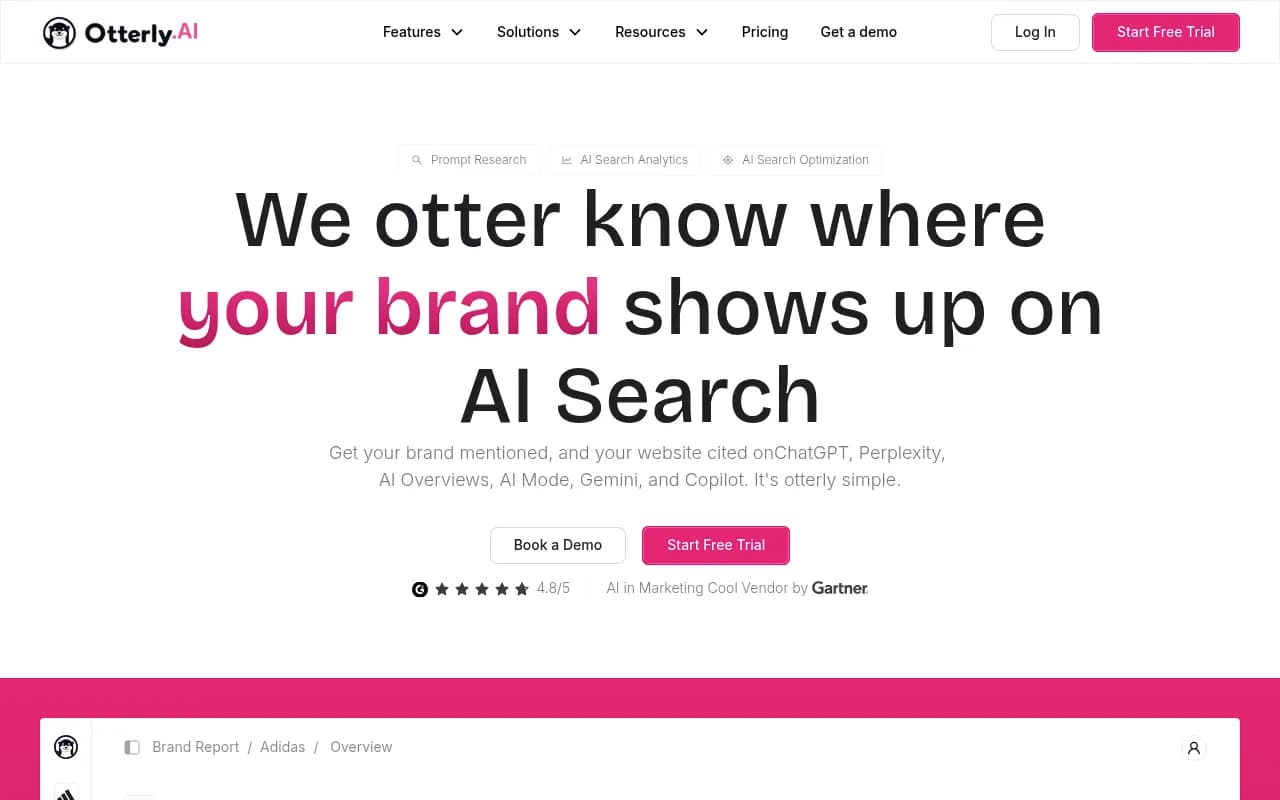
Otterly.AI's pitch is straightforward: track more engines, more countries, more often, for less money. The Lite plan starts at $29/month and covers ChatGPT, Google AI Overviews, Perplexity, and Microsoft Copilot out of the box, with Claude, Google AI Mode, and Gemini available as paid add-ons. What sets Otterly apart on paper is country and language coverage, over 50 markets tracked individually rather than collapsed into one global visibility number, plus daily citation and link-position tracking baked into every tier.
Otterly also ships a GEO Audit tool that checks crawlability, structured data, and content gaps, and it holds a solid G2 rating (roughly 4.5-4.7/5 from around 54 reviews) with a "High Performer" badge in the Answer Engine Optimization category. The tradeoffs show up at scale: the 15-prompt Lite allowance is thin for anyone running multi-product or multi-market programs, and costs climb quickly once you add the Claude tracking add-on and move up to the Standard or Premium tiers.
Peec AI: analytics-led, mid-market pricing
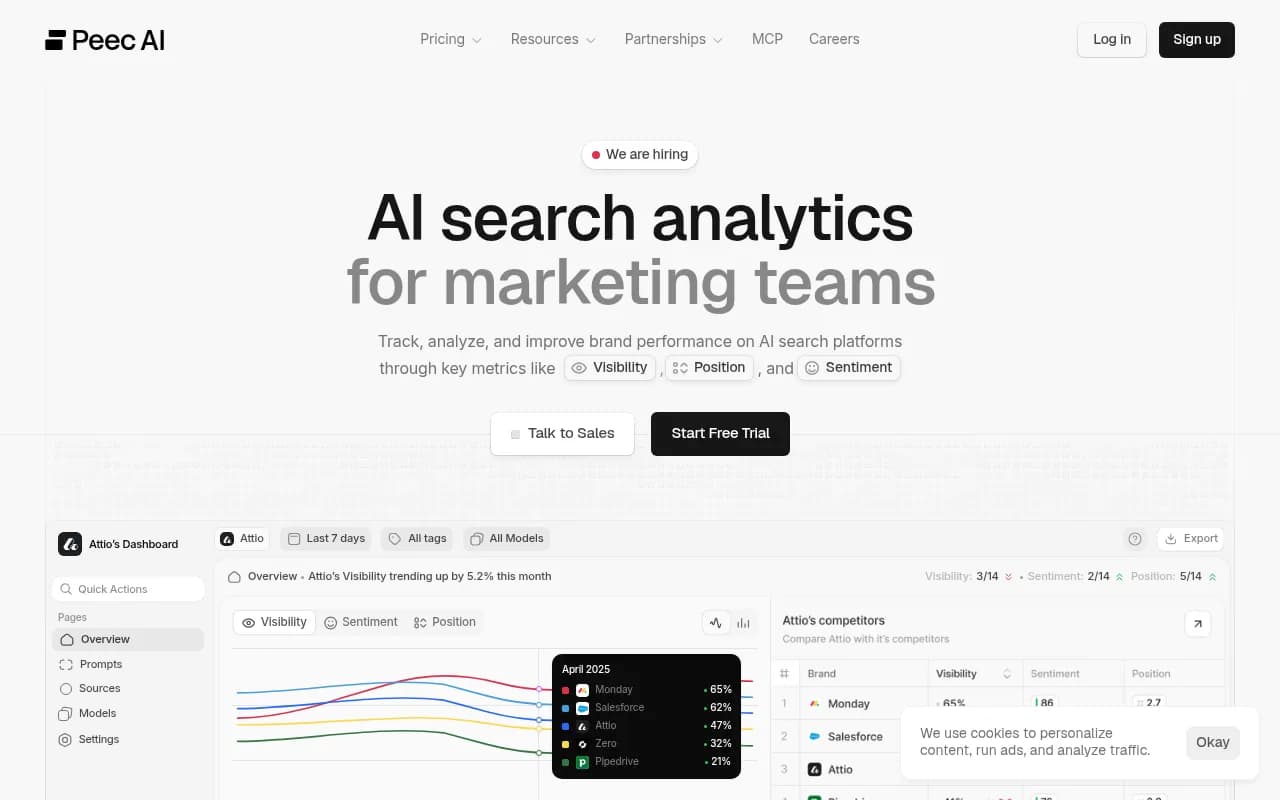
Peec AI sits between the two, both in price and in positioning. Plans start at $95/month for 50 prompts across 3 chosen models, scaling to $245/month for 150 prompts and 2 projects, and $495/month for 350 prompts with multi-country tracking and a Looker Studio connector. What Peec does well is classification: it tags sources as competitor, editorial, reference, or user-generated content, scores brand attributes, tracks objections raised about your brand in AI answers, and runs gap analysis to flag sources that name your competitors but skip you.
Peec also ships a crawlability audit covering 40+ known AI bots and an AI Shopping feature that tracks SKU-level win rates inside ChatGPT's shopping results, which matters if you sell physical products. The limitation is coverage per plan; you only get 3 of the available AI engines tracked unless you pay for add-ons or move to Enterprise.
Side-by-side comparison
| Tool | Entry price | Engines (base plan) | Country/language tracking | Citation classification | Crawler analytics |
|---|---|---|---|---|---|
| Otterly.AI | $29/mo | 4 (ChatGPT, AI Overviews, Perplexity, Copilot) | 50+ countries | Domain/URL tracking, less granular classification | Agent Analytics on higher tiers |
| Peec AI | $95/mo | 3 of ~7, rest are add-ons | Limited on lower tiers, multi-country on Advanced | Source type (competitor/editorial/reference/UGC), attribute scoring | Yes, 40+ bots |
| Profound | Custom (enterprise) | Up to 9 tracked engines on custom plans | Custom regions on Enterprise | Answer Engine Insights, prompt volume by intent/demographics | Yes, Agent Analytics |
The methodology question nobody explains clearly enough
Here's something most comparison articles skip: whether a tool queries the actual browser interface of ChatGPT or Perplexity, or just calls an API. This matters because the two can return different results. UI scraping captures what a real user actually sees, including citation formatting, source ordering, and whether ads showed up in the response. API calls return a cleaner, developer-facing version that can miss all of that.
Profound's own comparison materials state that it runs prompts daily through front-end browser interfaces, not API calls, and explicitly notes that Peec AI does the same. So despite some competitor marketing claiming otherwise, both appear to rely on UI-based monitoring rather than pure API sampling. Otterly makes a similar claim about querying real interfaces. If a tool you're evaluating won't tell you plainly which approach it uses, that's worth asking about directly before you buy.
A second, quieter issue is prompt volatility. Otterly's own past users have noted that single-prompt tracking carries a lot of natural variability, meaning one prompt's result on one day isn't a reliable signal on its own. This is one reason continuous, daily tracking across a basket of prompts beats a one-time snapshot, regardless of which tool you pick.
Why citation counts move even when your content doesn't
One thing that trips up a lot of buyers evaluating these tools: they assume a citation drop means something changed on their end. Often it hasn't. Promptwatch's tracking data shows average citations per ChatGPT response fell from roughly 6.4 to around 4.7-4.9 within days of the GPT-5.3 rollout on March 4, 2026, a platform-side change with no recovery a month later. That's a 27% drop that had nothing to do with any individual brand's content quality.
The same data set shows ChatGPT doesn't run one search per prompt either. It fans out into multiple sub-queries, averaging around 1.8-2.1 per response through early 2026 before settling closer to 1.0 by April, with average query length shrinking from around 117 characters to roughly 53. Practically, this means a tool that only reports on the literal prompt you typed is missing the actual sub-queries driving citations, comparisons, pricing questions, alternatives, and how-tos among them.
Content type matters too. Promptwatch's data on ChatGPT citation types in July 2026 found product pages had grown to about 32.8% of all citations, up from roughly 18% in March, nearly doubling in four months, while listicles, how-tos, and social posts were all climbing within the month. If the citation tool you're using doesn't break citations down by content type, you're missing one of the fastest-moving signals in this space right now.
Where all three tools stop short
Here's the honest gap. Profound, Otterly, and Peec AI are observation tools. They tell you what's happening in AI answers: who got cited, what sentiment showed up, which sources named your competitors. None of them writes the content, fixes the technical issue, or publishes the fix to your site for you. That's a separate job, and it's usually left to whoever runs your content or SEO team, assuming they have the bandwidth to act on what the dashboard is telling them.
This is the actual distinction worth paying attention to when comparing AI visibility platforms broadly: some are monitoring-only, and a smaller set combine monitoring with execution, things like automated content generation, CMS publishing, and prioritized action lists built directly from the citation and crawler data. Promptwatch falls into that second category, tracking citations across ChatGPT, Gemini, Claude, Perplexity, Google AI Overviews and AI Mode, and more, while also running Content Agents that plan, write, and publish GEO-optimized articles to Webflow, Framer, or WordPress, and generating a prioritized "Unified Actions" list rather than leaving you to interpret a dashboard on your own.
How to actually pick one
If you're a small team or solo operator just trying to get a baseline read on where you stand, Otterly's $29/month Lite plan is the lowest-friction entry point, and its 50+ country tracking is genuinely useful if you sell internationally. If you're a mid-market SEO or content team that wants sharper source classification and don't need every AI engine tracked at once, Peec AI's $95/month tier gives you more analytical depth per prompt. If you're running an enterprise program across multiple brands or regions and need crawler-level diagnostics plus prompt volume modeling, Profound's custom pricing is the one built for that scale, assuming you're comfortable with the sales process and cost.
Whatever you choose, don't treat a single audit as the answer. Citation behavior on ChatGPT alone shifted by roughly a quarter overnight once this year because of a model update nobody who wasn't watching daily would have caught. If you want to browse more options in this category beyond these three, the GEO software directory at bestgeosoftware.com and the AI rank tracking tools listed at ai-rank-tools.com both cover a wider set of platforms worth comparing against your specific budget and prompt volume needs.