Key takeaways
- In AI search, a third-party page that names your brand and says what you do can be used as evidence even without a link. The link matters less than the context.
- The pages that tend to name brands are review pages, listicles, comparisons and editorial articles. Social posts are a shrinking source, especially in ChatGPT.
- Finding unlinked mentions starts with running a fixed set of buyer prompts and recording which pages get cited and whether your brand is named on them.
- Record a brand mention and a website citation as two separate things. They are different wins and they need different fixes.
- Pages that name nobody in your category are openings for contributions. Pages that already name you are ones to keep accurate.
What an offsite mention is, and why links matter less
An offsite mention is any third-party page that names your brand: a roundup, a review, a comparison article, a forum thread, a news story, a podcast transcript. An unlinked mention is one where your name appears but nothing points back to your site.
In classic SEO, an unlinked mention was a to-do item. You emailed the author, asked for a link, moved on. In AI search the logic changes. A model retrieving that page can use the sentence "Acme is a payroll tool for small agencies" as evidence, link or no link. LinkedIn posts by Rahul Jain and Matt Hammel make the same point: securing third-party mentions for AI search is not the same job as link building, and treating it as the same job is a common SEO mistake.
You will see a statistic repeated a lot: roughly 85% of AI visibility comes from offsite mentions, and 85% of brands mentioned in ChatGPT have no citation links. Those numbers come from third-party studies (for example MOVE and AmICited), and I would treat them as directional rather than gospel. The underlying idea holds up, though. A link from a page that never names your brand in context does almost nothing for AI visibility, while a named mention in a relevant page can do a lot.
The flip side is worth knowing too. A Writesonic analysis of roughly 16 million brand appearances, shared in a Facebook group, found that about 40% of AI citations never name the brand behind the page they link to. So the two things come apart in both directions: mentions without links, and links without mentions.
Which pages actually name brands in AI answers
Before hunting for mentions, it helps to know what kinds of pages AI engines pull from. Promptwatch's data on ChatGPT citation content types (Sep 28 to Oct 4, 2026) breaks it down:
| Content type | Share of ChatGPT citations |
|---|---|
| Product pages | 22.4% |
| Landing pages | 16.8% |
| Listicles | 13.6% |
| How-tos | 8.7% |
| Documentation | 7.5% |
| General articles | 6.1% |
| Comparisons | 5.9% |
| News | 5.7% |
| FAQ pages | 3.3% |
| Reviews | 1.7% |
Editorial formats together (listicles, how-tos, articles, comparisons, news, reviews and others) add up to 43% of citations. For commercial prompts, product pages, landing pages, listicles and comparisons make up almost 70% of citations. For branded prompts, reviews climb to 5.6%, social posts to 3.0%, FAQ pages to 4.8% and press releases to 2.1%.
So when you go looking for third-party pages that name you, the realistic hit list is roundups, comparisons, review sites and editorial pieces. Not forum threads.
The social picture has changed
A lot of older advice says to seed Reddit and forums. For ChatGPT, that looks stale. Promptwatch's social citation report (Sep 28 to Oct 4, 2026) shows all seven social platforms together made up just 0.46% of ChatGPT citations, down from 5.8% in the earlier report. Reddit fell from 5.19% to 0.09%. Promptwatch's data on the Reddit drop pins the collapse on August 14, 2026, when reddit.com's share went from about 4% to 0.5%.
Other engines behave differently:
| Engine | Social share of citations | Notes |
|---|---|---|
| ChatGPT | 0.46% | LinkedIn is the top social platform at about 0.3% |
| Google AI Overviews | 12.2% | YouTube 4.28%, Facebook 2.38%, Reddit 2.15% |
| Perplexity | 2.7% | LinkedIn and Reddit tie at 0.86% |
So forums and social posts still matter for AI Overviews and partly for Perplexity. If your buyers use Google, don't write them off. But don't count on a Reddit thread to get you into ChatGPT anymore.
Why the count of cited domains matters
There is a second number worth keeping in mind. Promptwatch's unique domains report (Sep 28 to Oct 4, 2026) found that 47.6% of ChatGPT responses with citations cite 10 or more domains, and only 6% cite three or fewer. For organic prompts, 52.5% cite 10 or more.
Brand-specific prompts are different. Only 21.3% cite 10 or more domains, and the most common count is five. That short list of review sites and forums shapes how ChatGPT describes you. For organic questions, third-party pages are often how a brand gets into the answer at all.
Step 1: build a fixed prompt set
The method that works is boring. Write 20 to 50 prompts the way a real buyer would ask a shortlist question. Not "best CRM" in the abstract, but "best CRM for a 10-person recruiting agency that uses Gmail". Mix three types:
- Organic category prompts, where no brand is named
- Competitor comparison prompts ("X vs Y for ...")
- Brand-specific prompts, where your own name is in the question
Keep the set fixed. If you change prompts every week you can't tell whether anything improved.
Run them in the actual interfaces buyers use, in the countries and languages that matter. Answers in a ChatGPT window can differ from what an API returns, so a spot check by hand is worth doing even if you automate the rest.
Step 2: record two things per prompt
For each prompt, log:
- Whether your brand is named in the answer text
- Which URLs are cited, and whether each cited page names you
That gives you a small table you can sort. A rough version looks like this:
| Prompt | You named? | Cited page | Page names you? | Action |
|---|---|---|---|---|
| Best payroll tool for agencies | Yes | listicle on a review site | Yes | Keep accurate |
| Best payroll tool for agencies | No | same listicle | No | Pitch inclusion |
| Acme vs Rival | Yes | your own pricing page | Yes (self-citation) | Fine |
| Payroll for UK contractors | No | industry blog guide | No (names nobody) | Offer a contribution |
This is the core of the exercise, and it turns a vague goal ("get more mentions") into named pages, each with an editor or author you can approach. A Reddit thread in r/content_marketing makes a point I agree with: if an AI answer mentions a brand but doesn't cite its website, log those as two different things before calling it a content win.
Reading the results
- Named in the answer, not cited: a third party or the model's training data is carrying you. Find out which page.
- Cited, not named: your page or a page about you is used as a source but the answer doesn't recommend you. That is a content or positioning problem.
- Neither: you are absent. Look at who is cited and why.
- Both: protect it. Check that the facts on those pages are still correct.
Step 3: find the unlinked mentions
Once you have the list of cited pages, the unlinked mentions sit in two places.
Pages AI already cites
Open each cited page and search it for your brand name, product names and common misspellings. Note whether it links to you, what it says, and how recently it was updated. These are the highest-value pages because AI has already shown it trusts them for your category. Remember that news pages lose half their citations in about five weeks, while landing pages and docs keep most of theirs for months, per Promptwatch's content half-life data. A mention on a news item has a shorter shelf life than one on an evergreen comparison.
Pages AI might cite next
Traditional methods still work for this: search your brand name with operators that exclude your own domain, set up alerts, check which sites mention competitors. The difference is that you prioritize by what AI engines actually retrieve, not by domain rating alone. Promptwatch's domain rank data showed sites with DR 46 to 75 earned almost half of ChatGPT citations in August 2026, while DR 91 to 100 sites fell to about 3%. Mid-authority niche sites are worth chasing.
Tools that help
Doing this by hand works for a first pass. After that you want something that reruns the prompts daily and flags which cited pages mention you.
Promptwatch has an Offsite Mentions feature that finds third-party pages naming your brand, even when they don't link back, alongside citation analytics that show which of your pages and which third-party pages get cited. Its Page Tracker also lets you watch a specific URL, yours or a competitor's, and see which prompts cite it.

Other tools in this space cover parts of the job:
| Tool | What it's useful for here |
|---|---|
| Promptwatch | Offsite mentions, citation analytics, page-level tracking, content to act on gaps |
| Ahrefs Brand Radar | Brand tracking across AI engines inside an SEO suite |
| Semrush AI Visibility Toolkit | AI visibility alongside classic SEO data |
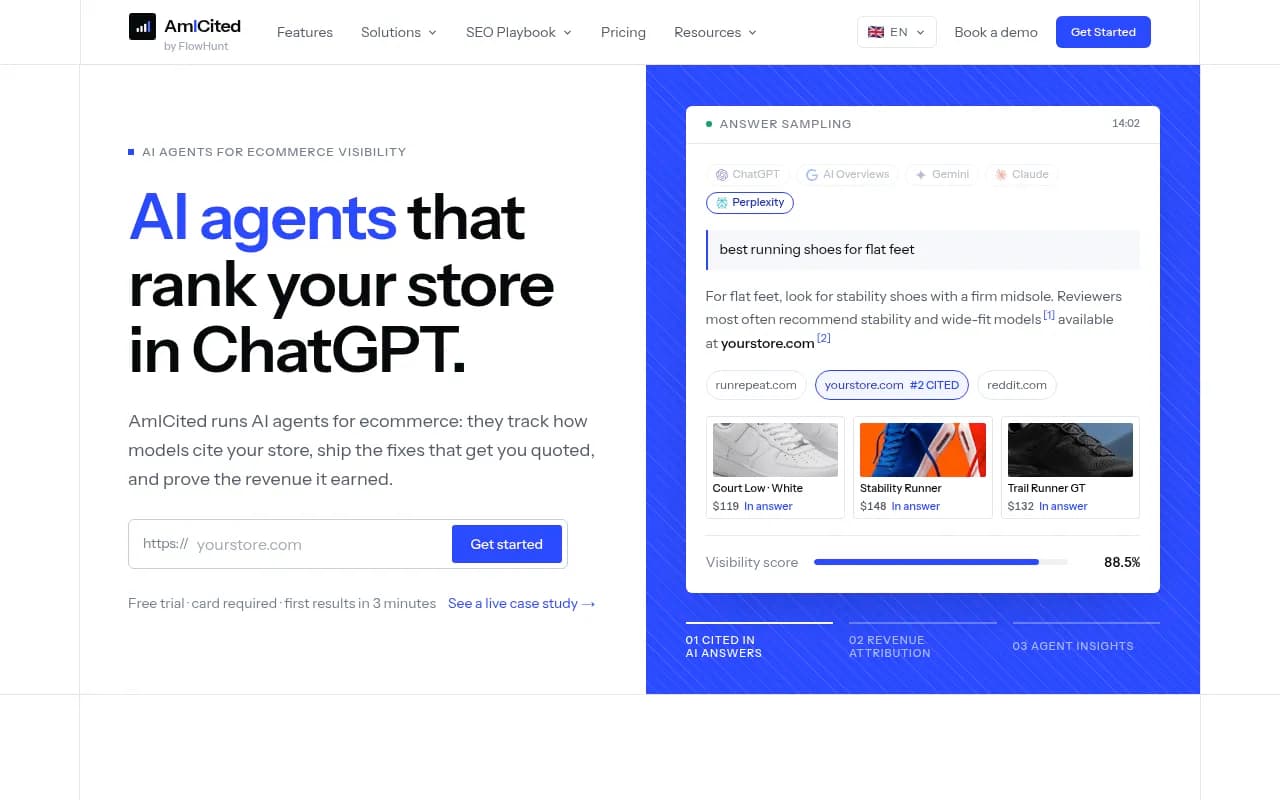
| AmICited | Tracking how AI engines cite your brand |
| MentionBird | Seeing which sources AI engines cite |
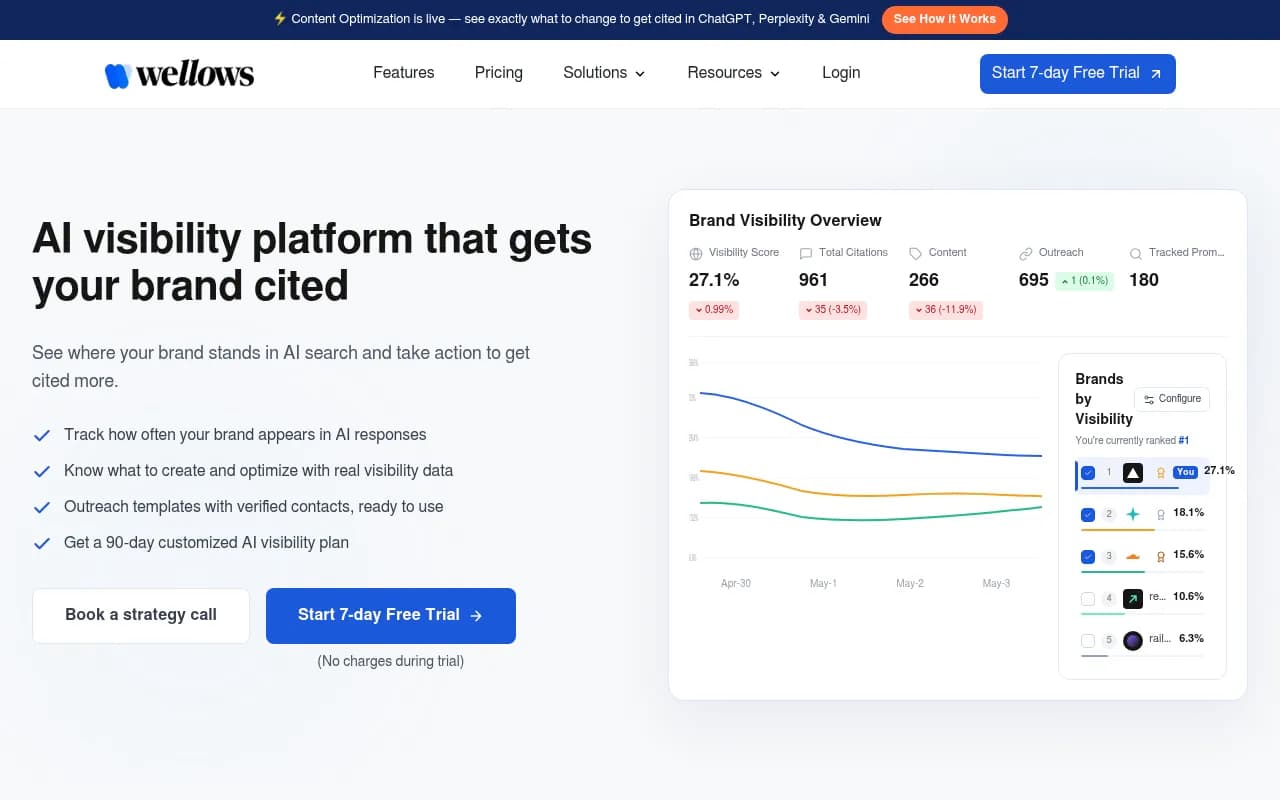
| Wellows | AI citation tracking with outreach tools |
| CrowdReply | Getting placed on pages AI already trusts |

MentionBird

I haven't compared pricing or feature depth for each of these, so check their sites before committing. If you want a wider list of options, the GEO software directory at bestgeosoftware.com is a good place to browse.
Step 4: turn mentions into action
Finding the pages is half of it. Here is what to do with each type.
Pages that name you
Keep them accurate. Check pricing, features, positioning and any claims. An outdated sentence on a listicle gets repeated by AI engines indefinitely. Email the editor with the correction and a short, factual update. A link request is optional, and now secondary.
Pages that name your competitors but not you
This is the straightforward outreach case. Send the author something they can use: a data point, a product update, a short description in the same format as the other entries. Roundups are the formats ChatGPT cites a lot, and Promptwatch's advice from its content type data is to get listed in the "best of" roundups cited for your category.
Pages about the category that name nobody
These are openings for a contribution: an expert quote, original data, a guest section. They are also where being named is cheapest, since there is no incumbent to displace.
Review sites
ChatGPT cites reviews far more when a prompt names a brand. Collect reviews on the trusted sites that appear on your brand-specific prompt citation lists. With only about five domains cited in a typical brand-specific response, each one carries weight.
Digital PR
If you don't have the time or contacts to run outreach, a PR or SEO agency can take it on. For example, 1001 SEO Media does digital PR and link building alongside generative engine optimization, which is the combination this kind of work needs. Whoever you hire, ask them to report on named mentions in pages AI cites, not only links acquired.
Step 5: measure whether it worked
Rerun the same prompt set on a schedule and track:
- Whether you are named, and where in the answer you appear
- How the answer describes you (the sentiment and the specific claims)
- Whether the pages you worked on are now cited
- Any traffic from AI platforms to your site
Position and description matter as much as presence. Being named last in a list of eight with a lukewarm description is a different result from being named first. Promptwatch's own advice from the unique domains report is to track where you appear and how ChatGPT describes you, not only whether you're cited.
Give it time, too. Mentions compound. One page naming you can lead to other pages copying or summarizing it, and the model sees the same claim from several sources. That takes weeks, not days.
Common mistakes
- Counting every link as a win. A link from a page that never names you in context barely moves AI visibility.
- Counting every mention as a win. A mention in an answer with no source is hard to defend or repeat.
- Investing in Reddit seeding for ChatGPT. The citation data above says that channel mostly dried up in August 2026, though AI Overviews and Perplexity still cite it.
- Publishing case studies only on your own site. Third parties naming you carry more weight than you describing yourself.
- Changing the prompt set every week and losing the trend line.
A simple weekly routine
- Run your fixed prompt set across the engines your buyers use.
- Log named versus cited, as two columns.
- Open any new cited page and check it for your brand.
- Send two or three outreach emails: one correction, one inclusion pitch, one contribution.
- Review last month's pages and see whether anything started being cited.
That is about an hour once the set is built. The first pass takes longer, mostly because you will discover how many pages you didn't know existed. For more research on what AI engines cite, the Promptwatch Data hub is updated regularly.