Key takeaways
- Entry price tells you almost nothing. The cap on keywords, prompts, projects and refresh frequency decides whether a plan survives your second quarter.
- SE Ranking's Core plan allows 2,000 daily keywords but only 100 GEO prompts per day, and the AI Search add-on costs extra ($89/mo monthly billing). Budget for the add-on, not just the base plan.
- Agencies should look at project and user limits first. Advanced Web Ranking and Keyword.com are built for many clients, while single-brand tools get expensive fast when you multiply them.
- Pricing varies by unit: by keyword, by prompt, or by check. Compare the cost per tracked keyword per month, not the headline number.
- Several caps below are unverified (Advanced Web Ranking, Keyword.com, Seobility, ZipTie, AIclicks). Confirm them on the vendor's pricing page before you buy.
Why keyword limits matter more than price
I have seen teams sign up for a $59 tracker, load 300 keywords, and discover on day two that the plan covers 50. The headline price was real. The usable plan was not.
AI Overview tracking makes this worse than classic rank tracking. A traditional rank tracker records one position per keyword per day. An AI Overview tracker has to record whether the keyword triggers an Overview at all, whether your domain is cited, where it sits in the source list, and sometimes what the answer says. Vendors meter that in different ways, so two plans that both say "daily tracking" can have wildly different ceilings.
There is also a storage question. Promptwatch's data shows Google AI Overviews cite about 10 sources per answer, roughly double ChatGPT's five (average sources per response, a report from 2025 where the AI Overview figure has stayed steady). Every tracked keyword can therefore return around ten cited domains. Tools differ in how many of those they keep per keyword, and whether competitors' citations are stored or only yours.
The four ways vendors meter AI Overview tracking
Before comparing plans, work out which unit you are being charged in.
- By keyword. You get a fixed pool of tracked keywords, and AI Overview data is attached to them. Advanced Web Ranking and SE Ranking's classic plans work this way.
- By prompt. Common in tools that grew out of AI visibility monitoring. SE Ranking's GEO limits (100 and 250 prompts per day) are this model.
- By check. You pay for each time the tool queries Google. ZipTie and Ahrefs Brand Radar lean on this. It is flexible, but it punishes daily tracking of large sets.
- By credit. You buy a pool and spend it across engines, clients and frequency. Rankscale works like this.
A keyword-based plan with daily refresh is predictable. A check-based plan is cheaper when you track weekly and far more expensive when you track daily. Work out your worst-case month, not your average one.
Comparison table: entry prices and what they cover
Prices come from vendor pages and the comparison tables in the research. They move often, so treat them as a starting point.
| Tool | Entry price | Metering model | Refresh | Organic rank alongside |
|---|---|---|---|---|
| Keyword.com | $4/mo | Keyword-based, many clients | Weekly, on-demand refresh | Yes |
| ZipTie | ~$42.75/mo | By check | Daily | Yes |
| AIclicks | $59/mo | Small keyword set | Daily | No |
| Seobility | $69.90/mo | By keyword count | Daily desktop, every 3 days mobile | Yes |
| Searchable | $125/mo | By prompt | Daily | No |
| SE Ranking | $129/mo (+$89/mo AI Search add-on) | Keywords plus prompts | Daily | Yes |
| Advanced Web Ranking | $139/mo | By keyword | On demand, daily, weekly or monthly | Yes |
| Search Atlas | $99/mo | 2,000 tracked keywords | Daily | Yes |
The jump from the cheapest to the most expensive is more than 30x, but the gap in what you get is nowhere near that. The cheap end trades refresh frequency and citation position. The expensive end trades money for projects, users and history.
SE Ranking: the clearest published limits
SE Ranking publishes its caps plainly, which makes it a good baseline for the rest of the market.
On the current subscription page:
| Plan | Monthly price | Annual price | Daily keywords | Projects | Seats | GEO prompts per day |
|---|---|---|---|---|---|---|
| Core | $129 | $103.20/mo | 2,000 | 10 | 1 | 100 |
| Growth | $279 | $223.20/mo | 5,000 | 30 | 3 | 250 |
The AI Search add-on is $89/mo on monthly billing, or $71.20/mo on annual billing. Extra keywords start at $22.40 on Core and $32 on Growth, and extra manager seats from $16. Both plans have a 14-day free trial.
Two things stand out. First, the keyword allowance and the prompt allowance are very different numbers. You can track 2,000 keywords for classic rankings but only 100 prompts per day for AI tracking. If your goal is AI Overview coverage across a large keyword set, the prompt cap is your real limit. Second, a Core plan with the add-on lands around $218 a month on monthly billing. One reviewer at Style Factory calls SE Ranking "no longer the bargain it once was" at $129, and when you add the AI layer I understand the complaint.
Be careful with older figures. Third-party reviews still quote tiers like Essential at $52 with 500 keywords, and Business at $207.20 with 5,000 keywords. Those conflict with the current page. Treat the subscription page as authoritative.
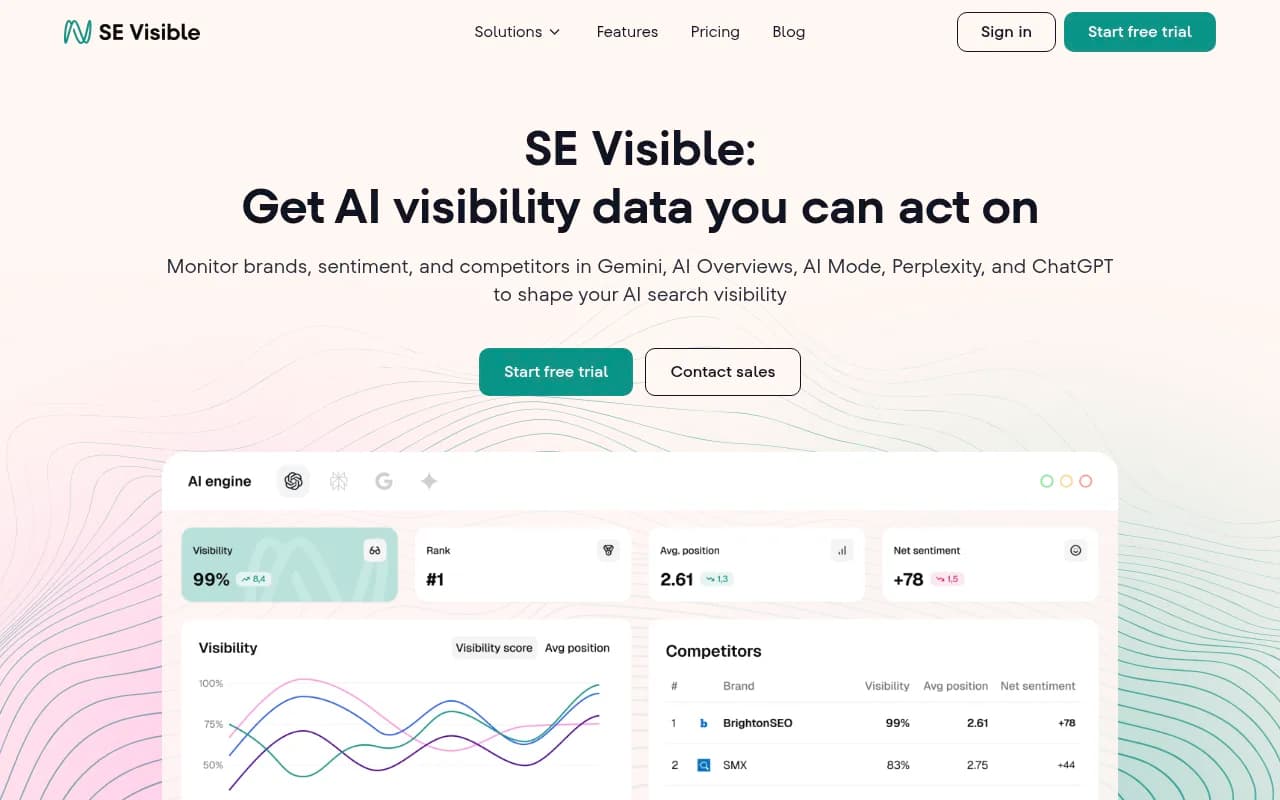
SE Ranking also has a separate AI-focused product:
Advanced Web Ranking: built for agencies
Advanced Web Ranking starts at $139/mo and is the most expensive tool on Searchable's list, which that article attributes to the features outside AI Overview tracking. Its selling point for scale is that it supports unlimited projects, users and history, with refresh on demand, daily, weekly or monthly. It tracks AI Overviews and AI Mode, plus ChatGPT and Perplexity.
I could not verify per-plan keyword caps from the research, so check them before you commit. What the published description does tell you is that the scaling variable is keywords, not seats or clients. For an agency with 30 clients that is the opposite of how most single-brand tools behave, where each new client pushes you up a tier.
Keyword.com: cheapest way to cover many clients
Keyword.com starts at $4/mo with AI Overview tracking included, refreshes weekly with on-demand updates, and shows organic rank next to the AI data. It does not report citation position. One review notes that its AI Visibility Rank Tracker is a separate pricing plan, so confirm which product you are buying.
Weekly refresh is fine for monitoring trends and client reporting. It is a poor fit if you are debugging a sudden drop and want daily movement.
ZipTie and AIclicks: small sets, flexible billing
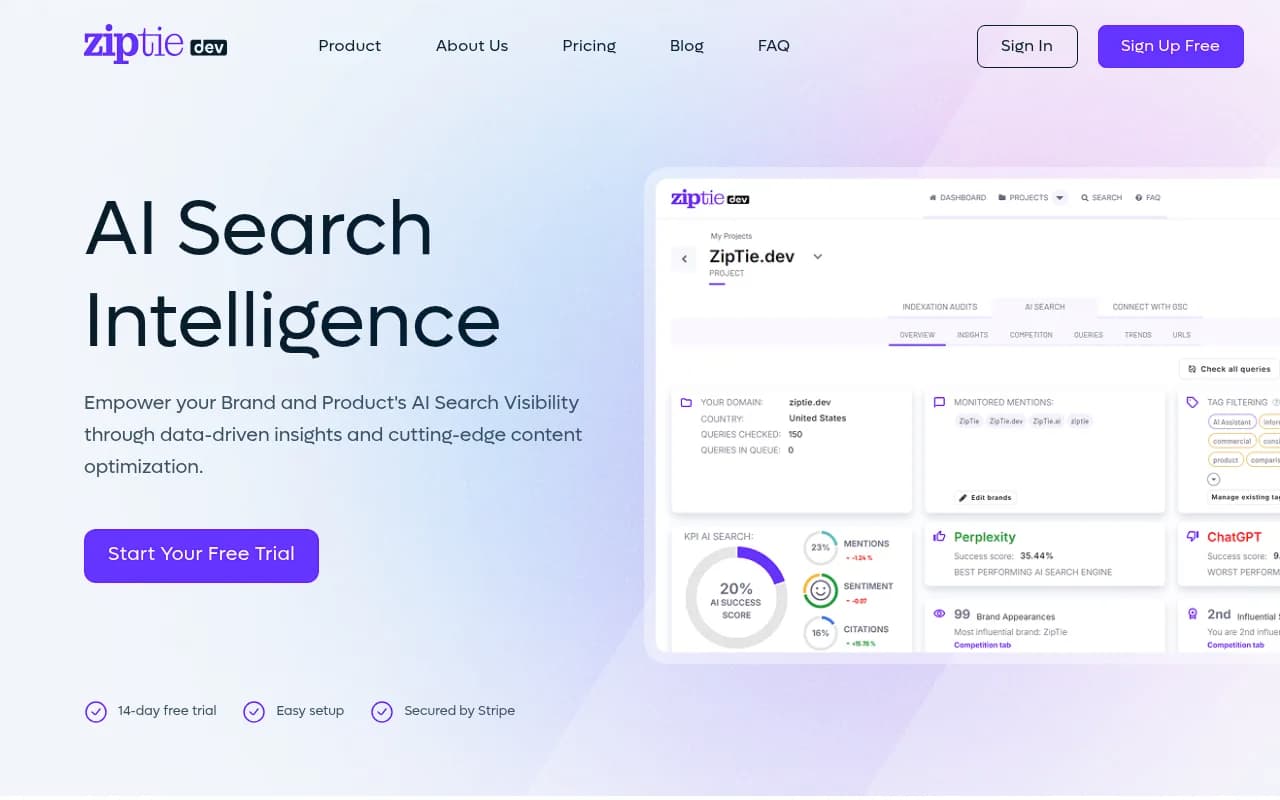
ZipTie costs around $43/mo and bills by check across AI Overviews, AI Mode, ChatGPT, Perplexity, Copilot and Gemini. It shows organic results beside AI data but not citation position. Pay-per-check pricing is attractive when you only need to check a handful of high-value keywords now and then. It gets pricey if you want everything checked daily.
AIclicks at $59/mo is positioned as an affordable tracker for a small keyword set. That wording is the vendor-neutral clue: it is built to stay small. Do not buy it expecting to grow into a thousand-keyword program.
Seobility and the free tier trap
Seobility's AI Overview tracker has a free tier with limited keywords, and paid plans scale by keyword count, from $69.90/mo. Citation position is available only on Premium, and mobile refreshes every three days rather than daily. That mobile lag matters because mobile and desktop AI Overview triggers differ. If most of your traffic is mobile, the effective freshness of your data is three days.
Free checkers are fine for a spot check. Semrush and BrightEdge-style studies find that AI Overview triggering varies by industry, so a free single-query check on one keyword tells you very little about your portfolio. Free tools answer "is my brand shown today." They do not scale.
Suites: Semrush, Ahrefs and Search Atlas
Big SEO suites bolt AI tracking onto existing keyword allowances. Per the Style Factory roundup, Semrush One Starter costs $199/mo (SEO-only starts at $139.95/mo) with 5, 15 or 40 projects depending on plan, and Ahrefs Lite costs $129/mo and Standard $249/mo with 5, 20 or 50 projects. Ahrefs Brand Radar starts at $199/mo as an add-on. I did not verify the AI Overview keyword limits for either, so read their pricing pages.

Search Atlas is the one to look at if you want a big keyword pool: its $99/mo Starter plan includes 2,000 tracked keywords, one user seat and one OTTO SEO project. Other rank trackers show how wide the range is. TrueRanker's Agency plan tops out at 2,000 keywords. AuthorityLabs Plus caps at 250 keywords for $65/mo. Similarweb's Rank Tracker goes up to 200,000. If your keyword list is truly large, only a few products sit in the right range.
Which plans actually scale
A plan scales when the cost of the next 1,000 keywords is predictable and the product does not change character as you add them. Here is how I would sort it.
| Your situation | What to look at | Watch out for |
|---|---|---|
| Solo site, under 100 keywords | AIclicks, ZipTie, Seobility | Plans designed to stay small |
| In-house team, 1,000 to 5,000 keywords | SE Ranking Growth, Search Atlas | Prompt caps lower than keyword caps |
| Agency, many clients | Advanced Web Ranking, Keyword.com | Weekly refresh on the cheapest tier |
| Enterprise, 10,000+ keywords | Similarweb, seoClarity, BrightEdge | Custom quotes, annual contracts |
Do the per-keyword math
Divide the monthly price by the number of keywords you will really track. SE Ranking Core with the AI add-on is about $218 for 2,000 keywords (about 11 cents each), but only 100 prompts daily get AI coverage. If your AI Overview list is 100 prompts, that is fine. If it is 800, you are into Growth or add-ons.
Check the refresh cadence per device
Weekly and every-three-days refreshes are not equal to daily. Use daily for keywords where a citation change affects revenue. Use weekly for the long tail.
Check what is stored
Ask whether the tool keeps all roughly ten cited domains per keyword, or just a yes or no on your own citation. Competitor analysis depends on the former.
What to track once you have the capacity
Capacity is wasted if you track the wrong things. Promptwatch Data for July 2026 shows the formats Google AI Overviews cited: listicles averaged 18.0% of citations, product pages 16.3%, how-tos 15.1% and news 13.5%. Listicles lost the top spot for the first time, and from July 28 product pages were the most cited format every day (AI Overviews citation types, July 2026). Listicles averaged about 26% in Q1, while product pages were around 9% in January and have nearly doubled. Video also rose from about 2.7% to over 6%.
The practical read: track which of your own product pages get cited, not just whether the brand name appears.
When AI Overviews are only one part of the job
AI Overviews are one surface. Searchable's own data found only 25.2% of 80,525 prompt-and-domain pairs cited by AI Overviews were also cited by ChatGPT, so tracking one engine does not cover the other. If you want ChatGPT, AI Mode, Perplexity and crawler data in the same place, a platform like Promptwatch covers the wider AI visibility picture, including content gap analysis and AI traffic, beyond what a keyword-metered rank tracker does.

For more options, the directories at bestgeosoftware.com and ai-rank-tools.com list trackers by category.
Questions to ask before you buy
- What is the unit: keyword, prompt, check or credit?
- Is AI Overview tracking included, or is it an add-on or separate product?
- What is the refresh cadence on mobile versus desktop?
- Does it store citation position and all cited domains?
- How many projects and seats does the plan allow?
- What do extra keywords cost, and can you add them without upgrading?
- Is there a free trial long enough to load your real list? SE Ranking offers 14 days, Keyword.com 14 days with 100 keywords.
Bottom line
Pick the tool whose limit matches the thing you will actually run out of. For most in-house teams that is prompts, not keywords. For agencies it is projects and users. For small sites it is the plan's design ceiling. Load your real keyword list during the trial, and verify the unverified caps above on the vendor's pricing page before paying for a year.