Key takeaways
- Multi-country tracking is not one feature. Check country limits, language limits, prompt limits and engine coverage separately, because plans often cap them independently.
- Vendor pages and roundups disagree on country limits for tools like Peec AI and Otterly.AI. Verify on the current pricing page before you commit.
- Citation behavior differs by engine, so a market that looks healthy in one assistant can be invisible in another. Measure each engine and each market on its own.
- Real-UI monitoring matters more for global brands than for domestic ones, because localized answers and AI Overviews can differ from API output.
- Tracking alone does not grow visibility. For global teams, the useful question is whether the platform helps you fix gaps market by market.
Why global brands need a different checklist
A US-only brand can get away with a simple setup: 50 prompts, one country, English. A brand selling in Germany, Brazil, Japan and the UK cannot. The same question asked in German from Berlin may produce a different answer, different sources and different competitors than the English version from London.
Most AI visibility roundups barely touch this. They list "multi-language support" as a checkbox and move on. In practice, that checkbox hides a lot of pricing and capability differences. This guide is about those differences.
Citation slots also vary by engine. Promptwatch Data shows ChatGPT citing about 5 sources per web-search answer, while Google AI Overviews and Perplexity sit near 10. Copilot swung from under 2 to nearly 17 within a few weeks before settling low. If the number of slots differs that much by engine, you should not assume one market or one engine predicts another.
What to check before you pick a platform
Countries, languages and prompts are separate limits
This is the pitfall that catches most teams. Some tools charge per country-language pair. Get3rd's comparison notes that 3RD tracks each pair separately, so four markets can force you onto a bigger plan than your prompt count suggests. Count your real markets first: Belgium in Dutch and French is two pairs, not one country.
Real UI data or API output
Answers shown to users in ChatGPT, Google AI Overviews and AI Mode can differ from what the underlying APIs return. For global brands, that gap widens because location and language shape the live answer. Platforms that scrape actual interfaces in each country give you something closer to what customers see. Superlines also positions itself around real-interface tracking.
Engine coverage per tier
Engine coverage is often gated. Profound's trial covers 3 engines and Enterprise up to 9, according to Get3rd. Otterly covers ChatGPT, AI Overviews, Perplexity and Copilot, with Gemini and AI Mode as paid add-ons. A cheap plan that skips the engine your market actually uses is not cheap.
Local detail below country level
If you run franchises or multi-location retail, country-level tracking is not enough. You want city or coordinate-level targeting so "near me" queries answer as if asked from the right spot.
What happens after you find the gap
Seeing that you are invisible in Spanish-language Mexico is step one. Someone still has to write, localize and publish the fix. Ask whether the platform helps with that or whether you need a second tool.
Comparison table
Pricing and limits below come from vendor pages and third-party roundups that disagree in places. Treat them as starting points and confirm on each pricing page.
| Platform | Multi-country / language | Entry price (reported) | Engines | Best for |
|---|---|---|---|---|
| Promptwatch | Any country and language on every paid plan; state/city and exact-coordinate tracking from Business | $95/mo (Essential) | All active models on paid plans | Teams that want to track and act |
| Profound | Multi-country and multi-language; trial limited to 1 region, 1 language | Custom enterprise; Starter reported around $99 | 3 on trial, up to 9 on Enterprise | Large enterprises, regulated industries |
| Peec AI | Reported 80+ countries; limits reported inconsistently | From about $95 or EUR 85-89 | 3 base, more on Enterprise | Agencies, international monitoring |
| Otterly.AI | Claims 50+ countries; wording inconsistent | $29 Lite, $189 Standard | 4 core, add-ons for Gemini and AI Mode | Budget prompt monitoring |
| Semrush AI Visibility Toolkit | No clear multi-market limit stated | From $99 per domain | Major engines | Teams already on Semrush |
| AthenaHQ | Multi-language reserved for Enterprise | Starter around $295 | 11 engines, single language on Starter | Monitoring-first teams |
| SE Ranking Visible | Seven countries | Varies | ChatGPT, Gemini, AI Mode, Perplexity | SEO teams on SE Ranking |
The platforms, one by one
Promptwatch
Promptwatch is the one I would put first for global brands, mostly because country and language tracking is not a premium upsell. Every paid plan includes country tracking across all active models, and it monitors the real interfaces of ChatGPT, Google AI Overviews, Google AI Mode, Gemini, Perplexity, Copilot, Meta AI and Amazon Alexa in each country and language. Business adds state and city tracking plus local targeting at exact coordinates, which matters for franchises and multi-location brands.
The bigger difference is what happens next. Crawler logs show which AI bots actually read your localized pages and where they hit errors. The Action Board lists prioritized fixes, and the Content Agent writes in the prompt's language and publishes to WordPress, Webflow or Framer. For a team running ten markets, that closes the gap between "we are missing in French" and "here is a published French page."

Pricing starts at $95/month for Essential (1 project, 50 prompts), $245 for Professional, and $579 for Business, which adds the Content Agent and city-level targeting. Agency plans start at $199 with unlimited projects. Confirm current numbers at promptwatch.com/pricing. It is also ISO/IEC 27001 certified and GDPR compliant, which helps with enterprise procurement in Europe.
Profound
Profound is the name that comes up for enterprise depth and compliance. Roundups from Frase and others cite broad engine coverage, multi-country and multi-language support, and a conversation explorer. The catch is the pricing structure. Enterprise is custom, and trial limits (1 region, 1 language, 3 engines) tell you little about what you will actually get. If you need depth and have the budget, it is a serious option. Expect a sales process.

Peec AI
Peec AI is popular with agencies and international brands because onboarding is simple and multi-language tracking is a stated strength. The confusing part is the country limits. Semrush says 80+ countries, Peec's own page says unlimited countries on every plan, Get3rd says 1 country on Starter and 3 on Pro, and a Reddit snippet claims five. I cannot tell you which is right today. Ask support, and get the answer in writing.

Otterly.AI
Otterly is the budget entry point at $29/month for 15 prompts, rising to $189 for 100 prompts with API, MCP and Looker Studio. Its pricing page reportedly says both "unlimited countries and languages" and "multi-country support (50+)," which is not the same thing. Fine for a first pilot in two or three markets. Less comfortable for a serious global rollout where Gemini and AI Mode cost extra.

Semrush AI Visibility Toolkit
If your team lives in Semrush, the toolkit is the path of least resistance. It starts at $99/month per domain according to Semrush, though third-party roundups list different tiers. The trade-off is that traditional suites tend to use fixed prompt sets and shallower AI-specific data. Good for adding AI to an existing workflow, weaker as the core of a global program.
AthenaHQ
AthenaHQ has a free tier with 300 credits and a Starter plan reported at $295 covering 11 engines, but in a single language. Multi-language sits on Enterprise. For global brands that is the wrong way around, since language is the thing you need first.

SE Ranking Visible
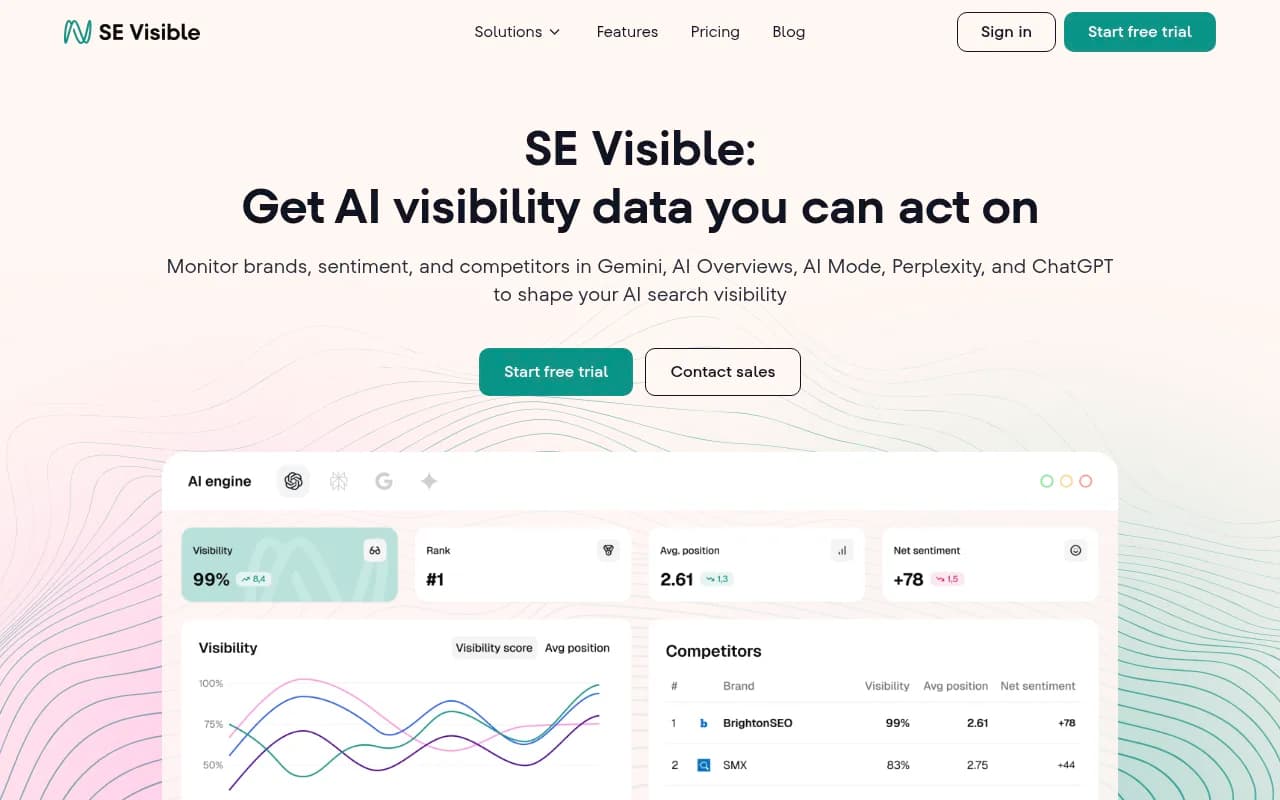
SE Ranking's Visible covers ChatGPT, Gemini, AI Mode and Perplexity across seven countries with scoring, sentiment and competitor benchmarking. Seven countries is a clear, checkable number, which is more than you can say for some rivals. Good if your footprint fits inside it.
Others worth a look
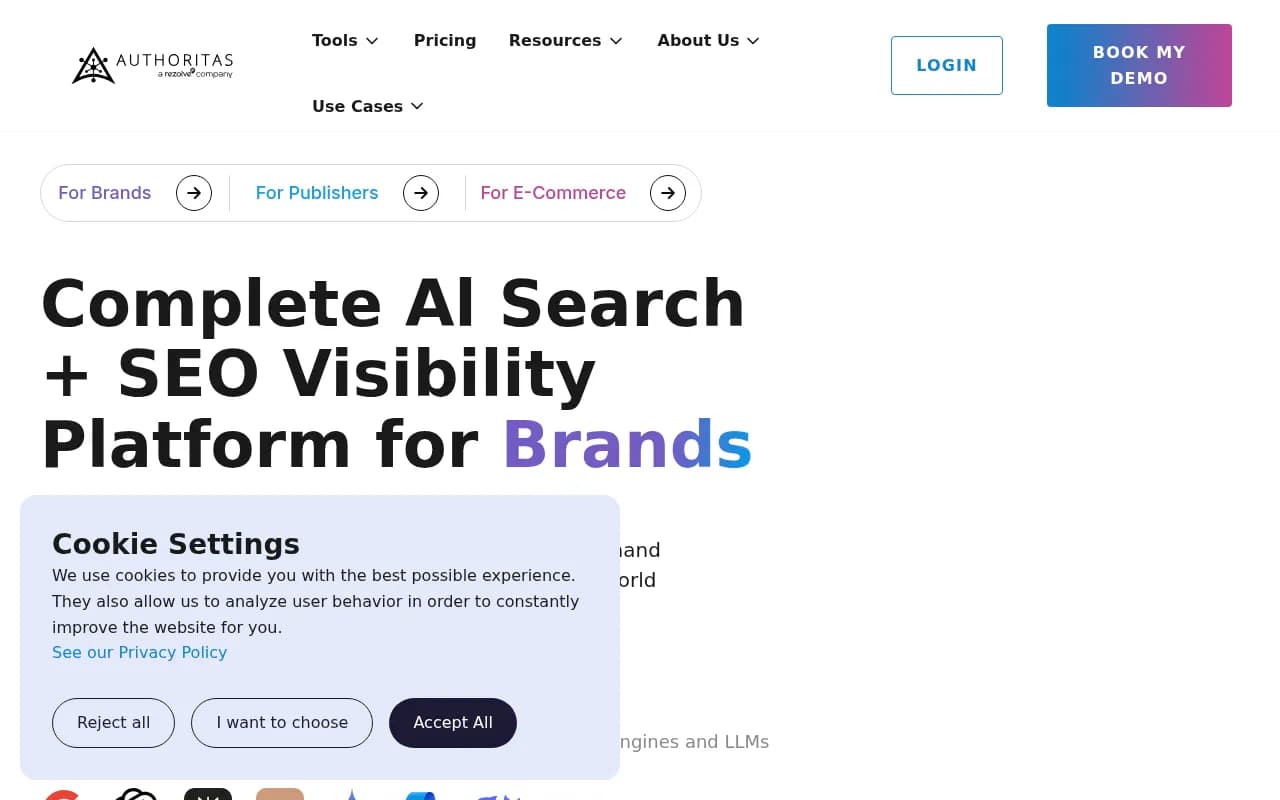
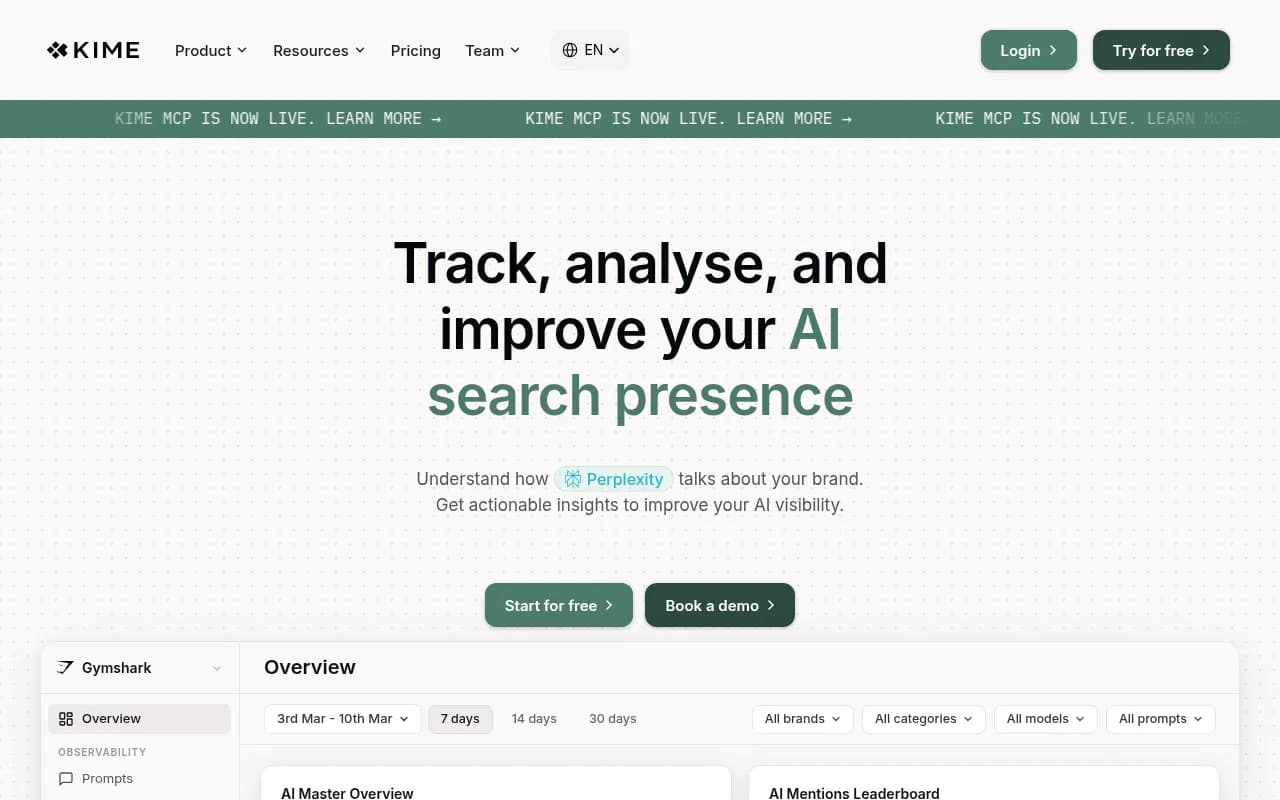
Authoritas gets recommended for brands selling across several countries and languages, and Alhena AI if you need ecommerce attribution as well. KIME claims unlimited countries and languages from EUR 99/month. Trackerly.ai advertises daily tracking in 20+ languages. Similarweb and BrightEdge suit enterprises already in those ecosystems.

For a wider scan of the category, the GEO software directory at bestgeosoftware.com and the rank tracker list at ai-rank-tools.com are useful starting points.
What the roundups say, and what they skip
The published comparisons are worth reading but come with bias. Frase's list ranks Frase first. Get3rd compares tools while selling 3RD. Peec's comparison page favors Peec. None of that makes them wrong, but it means the multi-country details are the first place marketing and accuracy diverge.
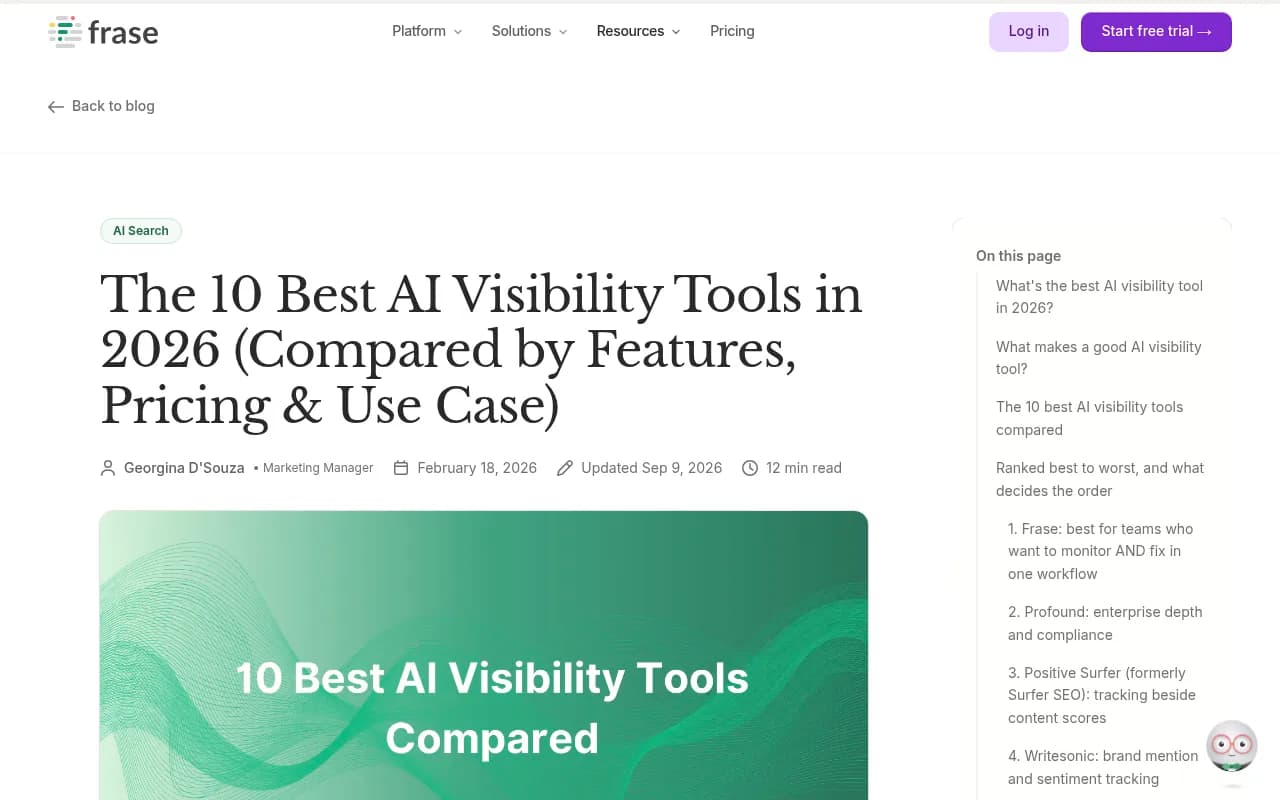
One useful framework from Nick Lafferty's ranking is to treat "global and localized insights" as its own evaluation criterion: multi-country monitoring, language-specific tracking, and regional performance comparisons.
How to run a fair trial
- List your markets as country-language pairs. Write down the number.
- Pick 10 to 15 prompts per market, written natively, not machine-translated from English. Local phrasing changes the answer.
- Ask each vendor for the exact country, language, prompt and engine limits on the plan you would buy. Get it in writing.
- Run the same prompt set in two platforms for a week and compare which one matches what you see when you ask the assistant yourself from that country.
- Check whether you can export data or connect it to Looker Studio, so regional teams can see their own numbers.
- Test the fix workflow. Pick one gap, and see how many steps it takes to get a localized page live.
Citation behavior also shifts quickly. Promptwatch's data shows ChatGPT cut Reddit citations from roughly 4% to 0.5% on August 14, 2026, and from Sep 28 to Oct 4, 2026, ChatGPT drew 0.46% of citations from social platforms while AI Overviews drew 12.2%. A strategy that leans on community content in one engine may fall flat in another, and probably in one market more than another.
Which one should you choose?
| Your situation | Start here |
|---|---|
| Many markets, need to track and publish fixes | Promptwatch |
| Large enterprise, procurement-heavy, regulated | Profound or Promptwatch Enterprise |
| Agency with many client markets | Promptwatch Agency plans or Peec AI |
| Tight budget, two or three markets | Otterly.AI or Peec AI Starter |
| Already standardized on Semrush or SE Ranking | Their AI toolkits, then reassess |
| Ecommerce across countries | Alhena AI or Authoritas, plus a tracker |
If you would rather hand the program to specialists than build it in-house, an agency can run country-level prompt research and localized content for you. 1001 SEO Media is one option, and it runs on Promptwatch for AI visibility work.
Final word
Do not buy on the strength of "multi-language support" alone. Count your markets, get the limits in writing, and favor tools that watch real interfaces in each country and help you fix what they find. For most global teams, that combination points to Promptwatch first, with Profound as the main enterprise alternative and Peec AI or Otterly for lighter pilots.