Key takeaways
- A ChatGPT rank tracker measures where and how often you appear across a set of non-branded prompts. A brand mention monitor watches what ChatGPT says when your brand is already part of the question.
- Promptwatch Data found that organic prompts cite 10 or more domains in 52.5% of responses, while brand-specific prompts most often cite just 5. Crowded answers need rank-style tracking. Short source lists need mention and sentiment monitoring.
- Most tools sold as either one now do both. The real differences are sampling frequency, citation depth, and whether the tool helps you fix problems.
- Start with one prompt set of 25 to 50 organic prompts plus 10 to 15 brand prompts, and run it daily. One-off checks are weak evidence.
- Skip any claim that a huge share of organic traffic already comes from AI. The numbers vendors quote vary wildly and are rarely sourced.
Why this question keeps coming up
Search for tools in this space and you will see two labels used almost interchangeably: ChatGPT rank tracker and brand mention monitor. Vendors blur them because the dashboards look alike. A table of prompts, a visibility percentage, a list of competitors.
But the jobs are different. And buying the wrong one means you stare at a chart that does not answer the question you actually have.
Unlike Google, ChatGPT gives you no Search Console, no impressions, no position report. It retrieves sources at query time, writes one answer, and names a handful of brands. Whoever gets named wins that moment. Both tool types exist to fill the measurement gap, just from different angles.
What a ChatGPT rank tracker does
A rank tracker starts from the prompt. You give it a list of questions your buyers might ask, such as "best project management software for small teams", and it runs them repeatedly. Then it reports:
- whether your brand appears in the answer
- where it lands in the order of brands named
- which sources were cited, and where your domain sits in that source list
- how you compare to competitors across the same prompts
The word "rank" is a bit generous. ChatGPT does not have a stable results page, so what you get is a sampled position, not a permanent one. Best-of prompts are especially volatile. Treat the numbers as directional: are you showing up more, or less, than last month?
This is the right tool when you are trying to win new discovery. Nobody typed your brand name. You want to know if you get recommended anyway.
What a brand mention monitor does
A mention monitor starts from the brand. It cares less about your position in a list and more about what is being said. A good one tracks:
- mention frequency, including mentions with no link at all
- sentiment and the specific claims ChatGPT makes about you ("expensive", "great support", "lacks integrations")
- accuracy, meaning outdated pricing or features that ChatGPT repeats confidently
- which third-party pages, review sites, and forums shape the description
This is the right tool when reputation is the worry. Think of a buyer who already knows your name and asks "is [your brand] any good?" The answer they get may decide the deal, and you will never see it in analytics.
The measurement framework both share
Before comparing tools, get your vocabulary straight. Four things get lumped together and they are not the same:
| Term | What it means | Which tool type cares most |
|---|---|---|
| Mention | Your brand name appears in the answer text, even with no source | Mention monitor |
| Citation | Your domain or page appears in the source list | Both |
| Position | Where your brand falls in the order of brands named | Rank tracker |
| Sentiment or claim | How the answer describes you | Mention monitor |
A mention without a citation usually means ChatGPT learned about you from somewhere else, such as a review site. A citation without a mention means your page was used as evidence but the answer named someone else. These are different problems with different fixes, and a tool that collapses them into one score hides the diagnosis.
The data point that decides which one you need
The cleanest way to choose is to look at what kind of prompts matter to your business, because ChatGPT behaves differently depending on the prompt.
Promptwatch's data on unique domains per ChatGPT response (Sep 28 to Oct 4, 2026, responses with at least one citation) is revealing:
| Prompt type | Example | Share citing 10+ domains | Most common pattern |
|---|---|---|---|
| Organic | "best project management software for small teams" | 52.5% | Crowded source list |
| Competitor comparison | "Asana vs Monday.com" | 49.1% | Crowded source list |
| Brand-specific | "is Asana good for small teams" | 21.3% | 5 domains (14.9% of responses) |
Overall, 47.6% of responses cite 10 or more domains and only 6% cite three or fewer.
What this means in practice: on organic and comparison prompts, you share every answer with a crowd. Your question is competitive. How high do you place, and who sits next to you? That is rank-tracker territory.
On brand prompts, the source list is short and concentrated. A handful of review sites and forums define how ChatGPT describes you. Your question is about narrative and sources. That is mention-monitor territory.
Promptwatch's own advice from the same report is worth repeating: plan on sharing every answer, track where you appear and how ChatGPT describes you rather than just whether you are cited, and measure across many organic prompts, because one prompt tells you little.
Head to head: rank tracker vs mention monitor
| Question | Rank tracker | Mention monitor |
|---|---|---|
| Starting point | Non-branded prompts | Your brand name |
| Main metric | Visibility, position, share of voice | Mention rate, sentiment, claims |
| Best prompt types | Organic, comparison | Brand-specific, reputation |
| Answers | Am I recommended? | What do they say about me? |
| Typical owner | SEO and content team | Brand, PR, product marketing |
| Failure mode | Chasing positions that shift daily | Watching sentiment with no discovery data |
Which one do you need?
You need a rank tracker first if
You sell something people search for by category. SaaS, ecommerce, travel, local services. Your buyers rarely know your name yet. The growth question is share of voice on commercial prompts, and your competitors are being named instead of you.
You need a mention monitor first if
Your brand is established and the risk is distortion. Regulated industries, enterprise software with long sales cycles, anyone dealing with outdated pricing or old product claims floating around. Here the question is accuracy, not position.
You need both if
You do any serious marketing. Honestly, that is most teams. The good news is that you rarely need two products. Most modern platforms bundle both views, and the split is in the prompt set, not the software.
Why a single check proves nothing
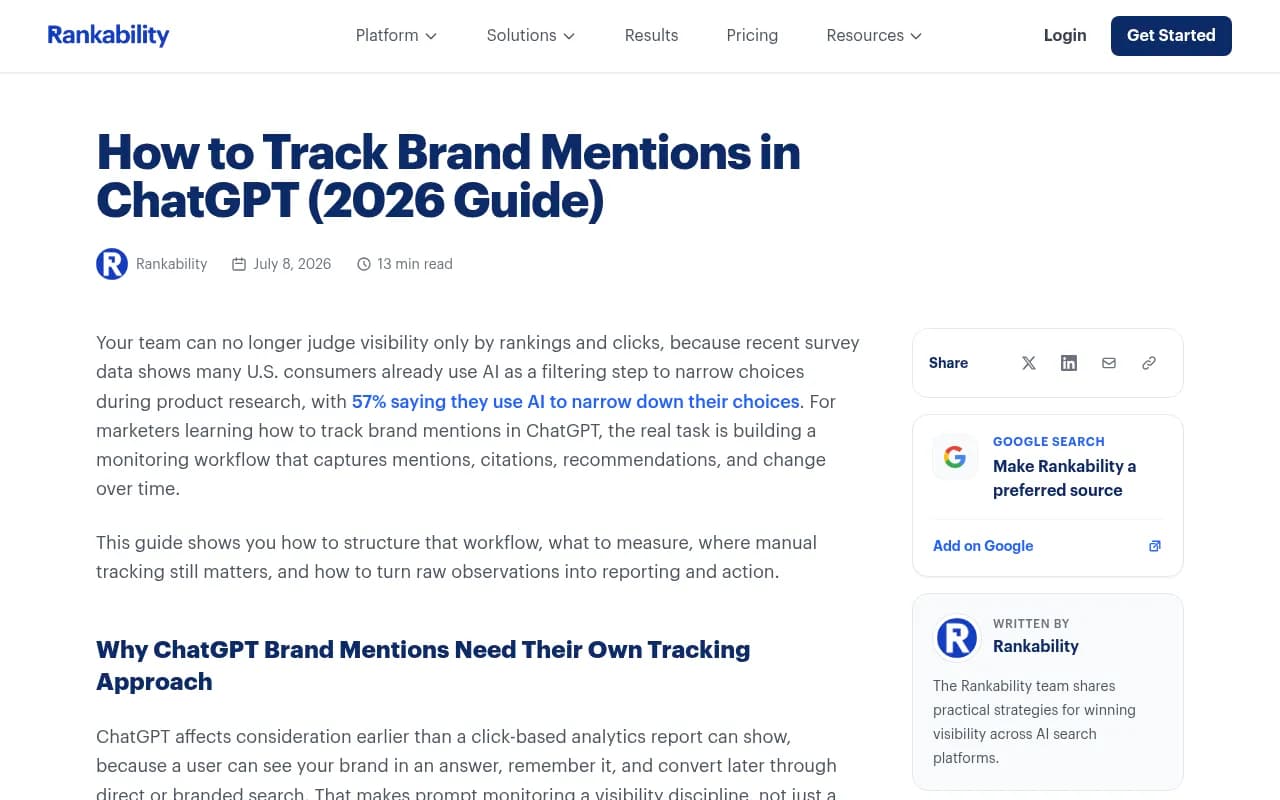
Outputs vary by prompt wording, session context, account state, and model updates. Run a prompt once and you have an anecdote. Rankability makes this point well: the goal is not perfect attribution but directional monitoring, where repeated observations show whether you are becoming more present, more cited, or more recommended.
Two practical rules follow from that. First, sample daily if you can, weekly at minimum. Second, cluster prompts into topics so you measure share of voice across a theme instead of reacting to one question.
Pair prompts with fan-out visibility
ChatGPT does not just run your prompt. It generates its own web searches. Promptwatch's query fanout data shows average searches per response falling from 2.15 in early December to about 1.84 by early March, with query length dropping from roughly 117 characters to the high 80s, then about 53 characters from April. Those are short, keyword-like searches. A tool that shows fan-outs tells you what ChatGPT actually looked for, which is far more useful than the prompt you typed.
What the tools look like in 2026
The category is crowded. Here is a practical grouping, not a ranking. Pricing changes often, so confirm on each vendor's site.
| Tool | Leans toward | Notes |
|---|---|---|
| Promptwatch | Both, plus fixing | Tracks real UIs, sentiment and claims, crawler logs, content agents |
| Peec AI | Mention and sentiment depth | Often recommended for how ChatGPT describes a brand |
| Otterly.AI | Light cross-engine monitoring | Low entry price, good for agencies with many brands |
| Profound | Enterprise narrative control | Higher price points |
| KIME | End-to-end tracking | Third-party pages cite entry pricing of EUR 99 a month |
| Searchable | Multi-surface ChatGPT tracking | Agency-friendly reporting |
| Morningscore | Beginners | Gamified, brand mention screenshots |
| Nightwatch | Hybrid SEO and AI rank tracking | Fits agencies already tracking Google |
Promptwatch
Promptwatch is the one I would look at first if you want both views in one place and want help acting on the results. It monitors the real interfaces of ChatGPT, Gemini, Perplexity, Google AI Overviews and others, so you are not relying on API answers that can differ from what users see. Brand Narrative pulls out the individual claims AI makes about you, which covers the mention-monitor side. Prompt tracking with volumes, difficulty, and fan-outs covers the rank-tracker side. Then the Content Agent and Action Board turn gaps into published pages, and crawler logs show whether ChatGPT's bots even read them. Plans start at $95 a month; confirm at promptwatch.com/pricing, and the free AI visibility report is a no-login way to see where you stand.

Peec AI
Peec is a solid pick when your priority is the way ChatGPT talks about you rather than raw position. It is cleaner and simpler than the enterprise suites.

Otterly.AI
Otterly is an affordable entry point and works well for agencies watching several brands. Expect monitoring, not much beyond it.

KIME
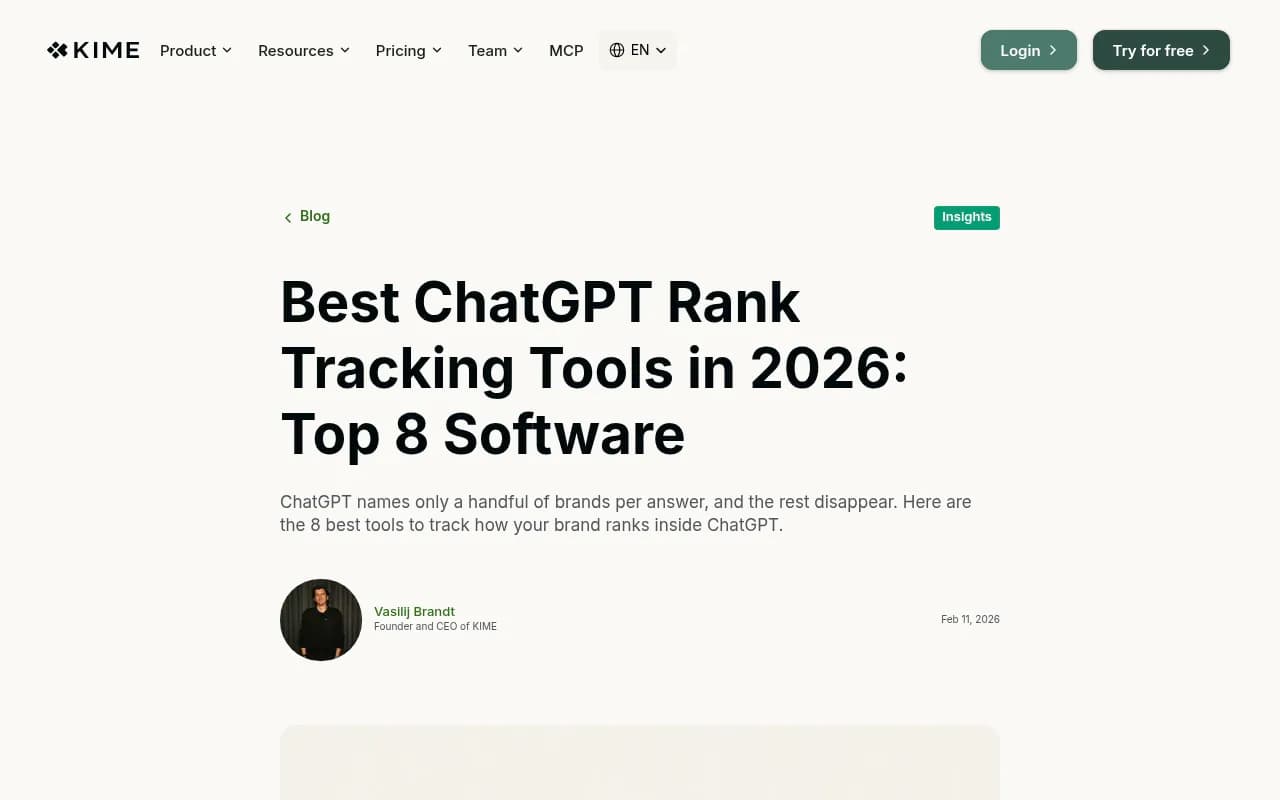
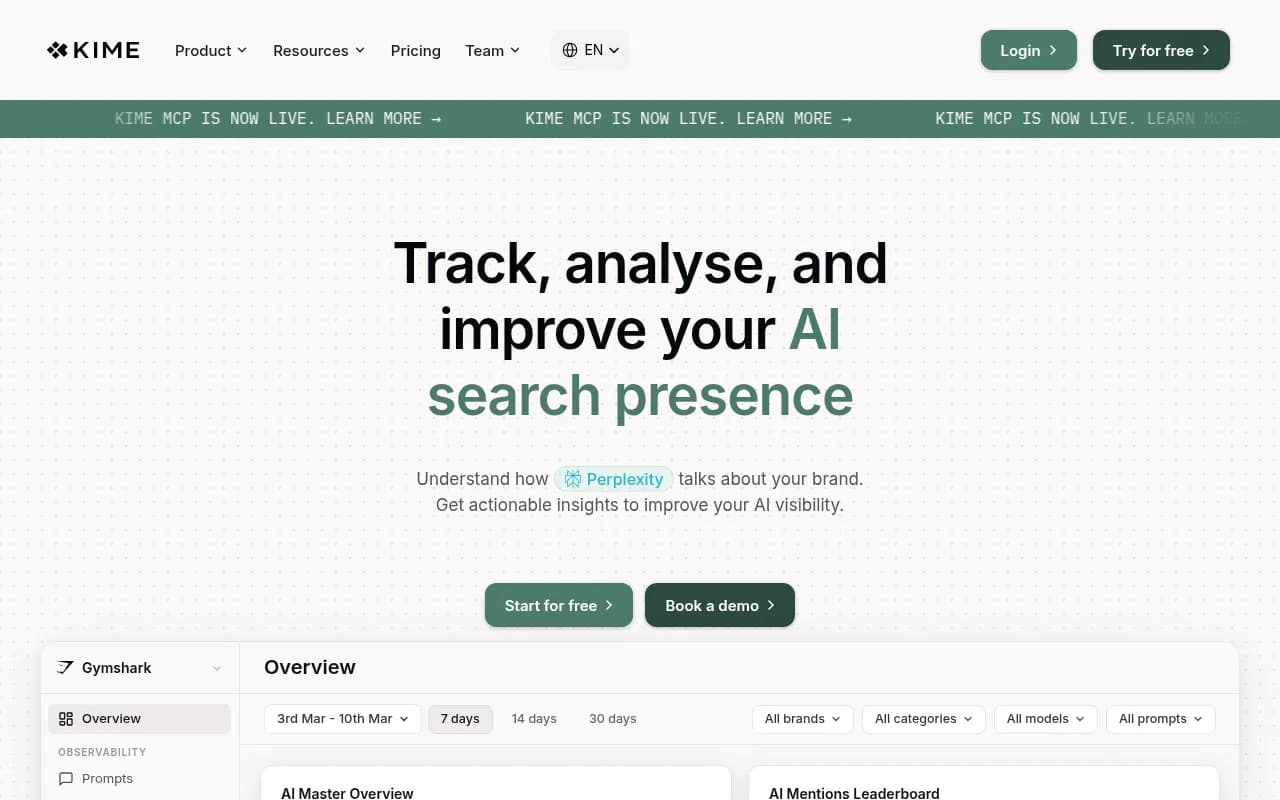
KIME pitches itself as the category leader, with tracking across nine AI engines and an Action Centre. Treat the vendor's own claim that 60% of organic traffic now comes from AI with caution. It is unsourced and looks far too high.
Searchable and Nightwatch
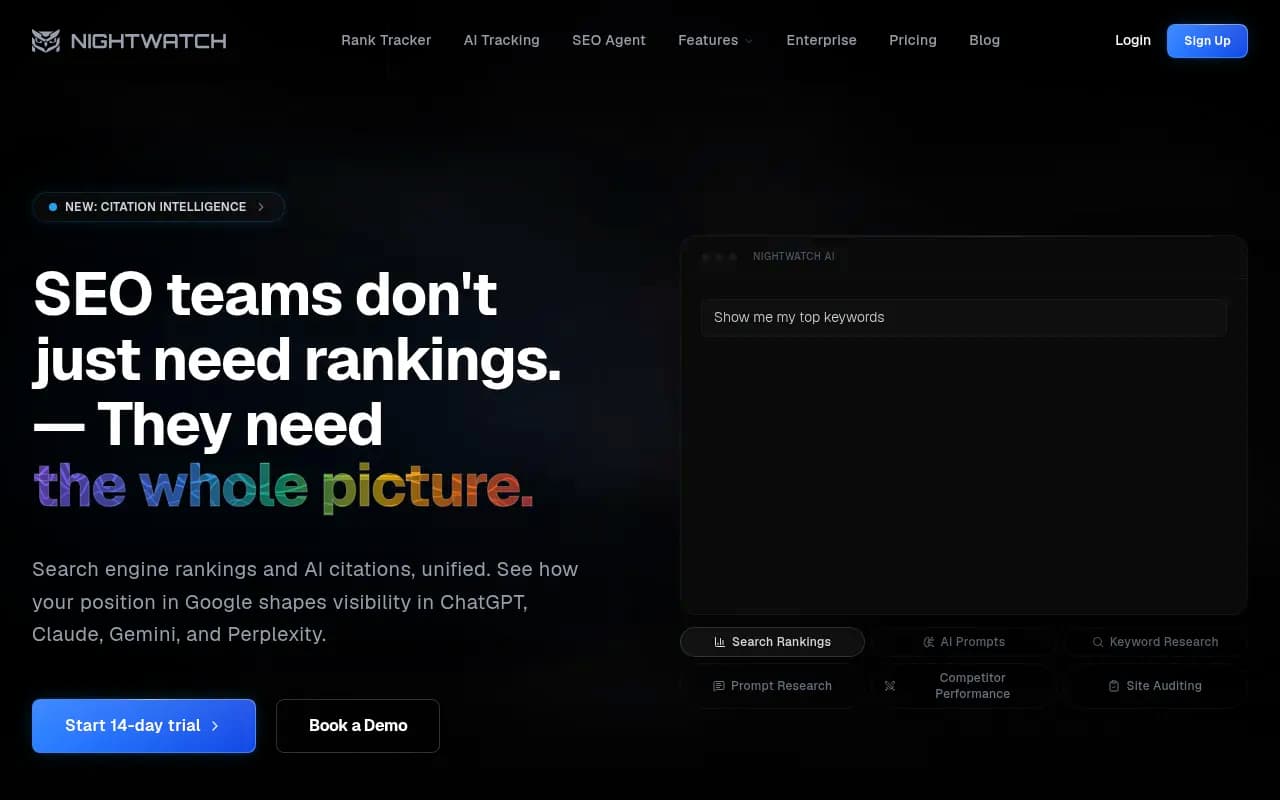
Searchable covers several ChatGPT surfaces and handles white-label reporting for agencies. Nightwatch makes sense if you want ChatGPT sitting next to classic Google rankings with unlimited seats.

For a wider look, the GEO software directory at bestgeosoftware.com and the rank tracker listings at ai-rank-tools.com cover far more options than fit here.
Features that separate good from mediocre
Whichever label the vendor uses, check for these:
- Real-interface data. User-facing ChatGPT answers and citations can differ from the API.
- Sampling frequency. Daily beats weekly, and a single run per prompt is thin.
- Citation depth. Can you see which URLs were cited and where your domain sits in the list?
- Claim-level sentiment, not just a positive or negative score.
- Competitor co-occurrence, meaning who is named in the same responses as you.
- Fan-out visibility.
- A way to act: content gaps, crawler data, or a prioritized to-do list.
Most low-cost trackers hit the first three and stop. That is fine for a founder checking whether they exist. It is not enough for a team that has to report monthly and improve things.
A simple setup that works for most teams
- Build 25 to 50 organic and comparison prompts around your category. These are your rank-tracking set.
- Add 10 to 15 brand prompts: "is [brand] good", "[brand] pricing", "[brand] vs [competitor]". These are your mention-monitoring set.
- Tag prompts by topic so you can see share of voice by theme.
- Run daily, and review weekly. Do not react to one-day swings.
- For brand prompts, check which review sites and forums sit in the source list. They shape the description more than your own site does.
- Log inaccurate claims, then find the page teaching ChatGPT the wrong thing and fix it.
- Re-audit after major ChatGPT updates. Promptwatch's citation drop data shows average citations per response fell around the GPT-5.3 rollout on March 4, 2026, and your baseline moves when that happens.
Common mistakes
Tracking only your brand name and calling it visibility. Of course you are mentioned when you are the question.
Tracking only organic prompts and ignoring reputation. You can rank well and still be described badly.
Treating ChatGPT as the whole market. No pair of AI platforms shares more than about a quarter of their cited pages, so a ChatGPT-only view can mislead you about Gemini or AI Overviews.
Buying on price alone. A $29 monitor that cannot show citations will cost more in wasted time than a pricier one that can.
The short answer
If you want to be recommended to people who do not know you yet, you need rank tracking on organic prompts. If you want to control what people hear once they do know you, you need mention monitoring on brand prompts. Pick one platform that does both, run a mixed prompt set daily, and judge it by whether the data leads to a page you can fix. If it only produces a chart, keep looking.