Key takeaways
- Google AI Mode pulls product information from structured data, review signals, and content clarity -- not just rankings.
- Brands cited in AI Overviews earn 35% higher organic CTR and 91% higher paid CTR compared to uncited brands on the same queries (Seer Interactive, November 2025).
- SERP position still matters: position #1 has a 33.07% AI citation probability vs. 13.04% at position #10.
- E-commerce is one of the most stable verticals for AI citation -- which means consistent optimization compounds over time.
- Tracking which product pages actually get cited (and by which AI models) is now a core part of any serious e-commerce SEO workflow.
What Google AI Mode actually does to product discovery
Google AI Mode isn't just a fancier version of AI Overviews. It's a conversational search layer that handles follow-up questions, compares products across multiple sources, and surfaces shopping recommendations with prices, ratings, and inventory data -- all before a user clicks anything.
For e-commerce brands, this changes the game in a specific way: a shopper can type "best waterproof running shoes under $120 for wide feet" and get a synthesized answer that names specific products, explains why they're recommended, and links to retailers. If your product page isn't in that answer, you've lost the sale before the buyer ever sees your site.
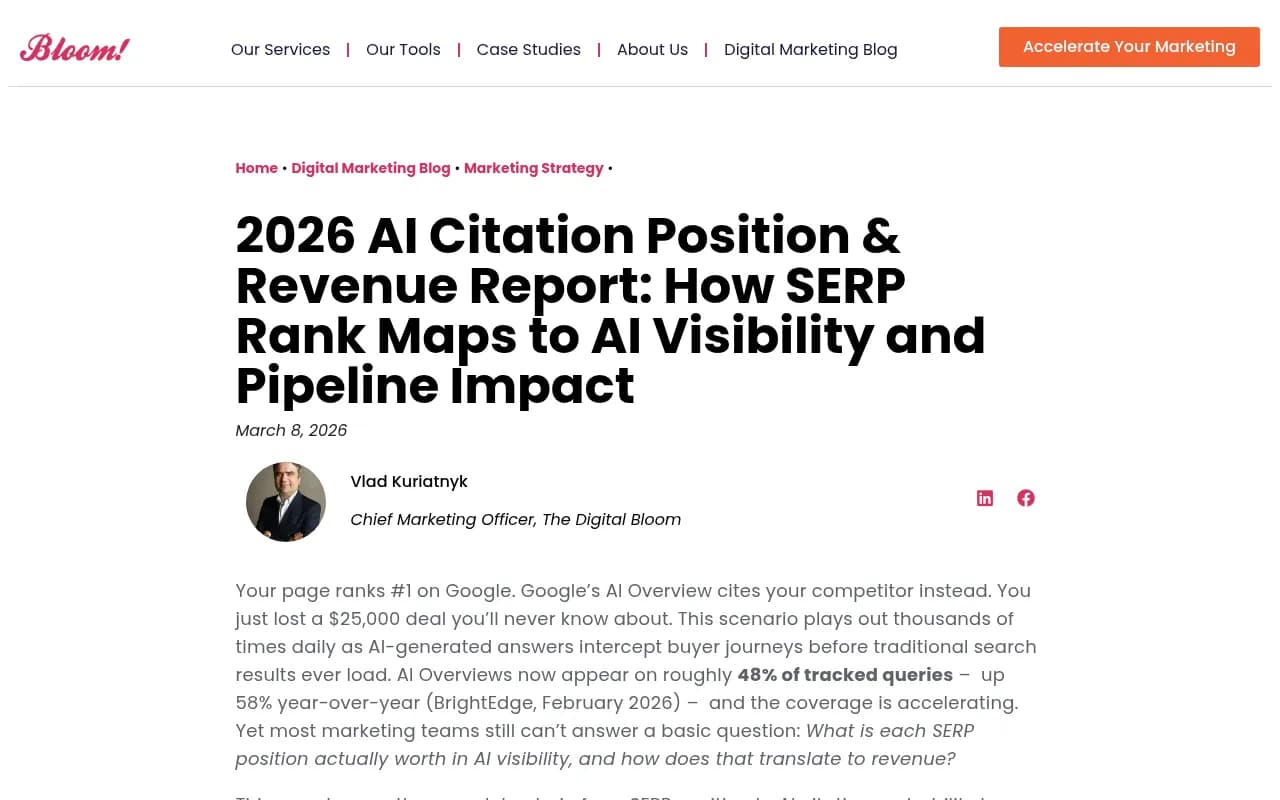
The uncomfortable reality: your page can rank #1 organically and still not appear in the AI-generated answer. According to data from The Digital Bloom's 2026 AI Citation Position & Revenue Report, organic CTR dropped 61% for queries where AI Overviews are present -- from 1.76% to 0.61%. The traffic is going somewhere. It's going to the brands being cited.
Why e-commerce product pages struggle to earn citations
Most product pages are built for conversion, not comprehension. They have a title, a price, a few bullet points, and a gallery. That's fine for a human who's already decided to buy. It's not enough for an AI model trying to decide whether your product deserves to be recommended.
Here's what AI systems are actually looking for when they evaluate a product page:
Can I understand what this product is and who it's for? If your product description is three sentences of marketing copy with no specifics, the AI has nothing to work with. It can't extract a recommendation from "premium quality you can trust."
Is there structured data telling me the key facts? Price, availability, ratings, brand, product category -- these need to be in machine-readable format, not just visible on the page.
Do other sources confirm this product exists and is good? AI models cross-reference. If your product has no reviews, no third-party mentions, and no presence outside your own site, it's a ghost.
Is the content fresh? Seer Interactive's data shows 65% of AI bot hits target content published in the past year, and 89% hit content updated within three years. A product page last touched in 2022 is at a real disadvantage.
The technical foundation: structured data you can't skip
Schema markup is the most direct way to communicate product information to AI systems. For e-commerce, the minimum viable setup includes:
Productschema withname,description,brand,sku,image, andurlOfferschema withprice,priceCurrency,availability, andsellerAggregateRatingwithratingValue,reviewCount, andbestRatingReviewschema for individual reviews where possible
Beyond the basics, a few additions make a real difference for AI citation:
ItemList schema on category pages helps AI understand your product catalog structure. FAQPage schema on product pages answers the follow-up questions shoppers ask -- and those are exactly the questions AI Mode handles. If your product page answers "Is this machine washable?" or "What's the return policy?" in structured FAQ format, you've given the AI something to cite directly.
One thing that's often overlooked: BreadcrumbList schema. It tells AI systems where a product sits in your catalog hierarchy, which helps with category-level queries ("best yoga mats from [brand]") not just product-specific ones.
Content depth: what a citation-worthy product page looks like
Think about what a knowledgeable sales associate would say about a product. They'd explain what it is, who it's for, why it's better than alternatives for certain use cases, and what the common questions are. That's the content model for AI-optimized product pages.
Write descriptions that answer real questions
Generic descriptions don't get cited. Specific ones do. Compare these two approaches:
"Our premium stainless steel water bottle keeps drinks cold for hours and is perfect for any adventure."
vs.
"The 32oz insulated bottle maintains cold temperatures for 24 hours and hot temperatures for 12 hours. The double-wall vacuum insulation works without condensation on the outside, making it safe for bags with electronics. The wide mouth fits standard ice cubes and most water filters."
The second version answers questions an AI can extract and relay: How long does it stay cold? Does it sweat? Will ice fit? These are the specifics that earn citations.
Add a Q&A or FAQ section
This is one of the highest-leverage changes you can make. A 5-8 question FAQ on each product page, marked up with FAQPage schema, directly feeds AI Mode's conversational format. Focus on:
- Sizing, fit, or compatibility questions
- Material, ingredients, or technical specs
- Use case questions ("Can I use this for X?")
- Comparison questions ("How does this compare to [competitor product]?")
- Post-purchase questions (care, warranty, returns)
Include use case context
AI models are trying to match products to intent. A product page that explains "This is ideal for runners who overpronate and need extra arch support" gives the AI the context to recommend it for the right query. Without that context, the AI has no reason to surface your product for "running shoes for overpronation."
Reviews and social proof: the trust signals AI actually reads
AI systems don't just look at your star rating. They read review content. A product with 200 reviews that mention specific features, use cases, and outcomes is far more citable than one with 200 reviews that say "great product, fast shipping."
A few practical moves:
Ask for specific feedback in your review request emails. Instead of "How did you like your purchase?", try "What do you use it for most? Did it meet your expectations for [specific use case]?" This nudges customers toward the kind of detailed reviews that AI can extract useful information from.
Respond to reviews. Responses signal that the product page is actively maintained, which feeds into freshness signals.
Don't suppress negative reviews. A product with a mix of honest reviews reads as more credible to AI systems than one with suspiciously uniform 5-star ratings.
Off-site signals: where AI actually looks beyond your product page
Here's something most e-commerce teams underestimate: AI models don't just cite your product page. They synthesize information from multiple sources. That means your visibility in AI answers depends partly on what's being said about your products elsewhere.
The sources that matter most:
- Review sites (Trustpilot, Google Reviews, industry-specific review platforms)
- Reddit discussions (yes, really -- AI models cite Reddit threads constantly)
- YouTube reviews and unboxing videos
- Comparison articles and "best of" listicles on third-party sites
- Press coverage and product features in publications
If your product appears in a "best [category] products of 2026" article on a credible site, that article becomes a citation source. If your product is discussed in a Reddit thread with genuine user experiences, that thread gets cited. Building a presence in these channels isn't just PR -- it's directly feeding the AI citation ecosystem.
Google Merchant Center and product feeds
For shopping-specific AI features, your Google Merchant Center feed is critical. Google AI Mode's shopping recommendations pull directly from product feeds, not just from crawled pages. This means:
- Keep your feed updated daily, not weekly
- Include all optional attributes:
color,size,material,age_group,gender,product_highlight - Use
product_highlightto add 3-5 bullet points of key features -- these appear directly in shopping surfaces - Ensure
availabilityis accurate in real time; out-of-stock products that appear in AI recommendations create a terrible experience and get deprioritized
The product_highlight attribute deserves special attention. These are the bullet points that appear in Google Shopping and increasingly in AI-generated product summaries. Write them as specific, factual statements, not marketing copy.
Tracking which pages are actually getting cited
Optimizing without tracking is guessing. You need to know which of your product pages are being cited in AI answers, which queries trigger those citations, and which competitors are being cited instead of you.
This is where most e-commerce teams hit a wall. Traditional rank tracking doesn't show AI citations. Google Search Console doesn't break out AI Mode traffic cleanly. You need tools built specifically for AI visibility.
Promptwatch is one of the more complete options here -- it tracks citations across ChatGPT, Perplexity, Google AI Overviews, Google AI Mode, and other AI models, and shows you page-level data on which specific product pages are being cited and how often. The crawler log feature is particularly useful for e-commerce: you can see when AI crawlers hit your product pages, which pages they return to, and when a crawl converts to an actual citation.
For tracking AI-driven traffic at the session level, LLMclicks.ai focuses specifically on clicks and visits originating from AI search engines.
If you want broader AI brand monitoring alongside traditional SEO metrics, BrightEdge has enterprise-grade AI search intelligence, and Semrush has added AI visibility features to its existing toolkit.
A practical comparison: what separates cited product pages from uncited ones
| Signal | Uncited product page | Citation-ready product page |
|---|---|---|
| Product description | 2-3 sentences of marketing copy | 150-300 words with specific features, specs, and use cases |
| Structured data | None or basic | Full Product + Offer + AggregateRating + FAQ schema |
| FAQ section | Not present | 5-8 questions with FAQPage schema markup |
| Review quality | Generic "great product" reviews | Detailed reviews mentioning specific use cases and features |
| Review count | Under 10 | 25+ with recent reviews in the past 6 months |
| Off-site mentions | Brand website only | Review sites, Reddit, comparison articles, YouTube |
| Merchant Center feed | Basic required fields only | All optional attributes including product_highlight |
| Content freshness | Last updated 2+ years ago | Updated within the past 12 months |
| Page load speed | 4+ seconds | Under 2 seconds (Core Web Vitals passing) |
| Internal linking | Isolated product page | Linked from category pages, related products, blog content |
The category page opportunity most brands miss
Product pages get most of the attention, but category pages are often better positioned to earn AI citations for broader queries. A query like "best noise-cancelling headphones under $200" is more likely to trigger an AI answer that cites a well-structured category page than individual product pages.
A citation-ready category page should:
- Have a genuine editorial introduction that explains what the category is and what buyers should consider
- Include comparison content (a table comparing key specs across products works well)
- Use
ItemListschema to mark up the products - Answer the common "how to choose" questions for the category
- Link to individual product pages with descriptive anchor text
Think of it as a buying guide that happens to live on your e-commerce site. That framing -- editorial, helpful, specific -- is exactly what AI models are looking for when they synthesize category-level recommendations.
Core Web Vitals still matter (more than you might think)
There's a temptation to treat technical performance as a separate concern from AI citation optimization. It isn't. Google's AI systems use the same crawl infrastructure as traditional search. Pages that load slowly, have layout instability, or block crawlers are less likely to be fully indexed and therefore less likely to be cited.
For e-commerce specifically:
- Lazy-load images below the fold, but make sure product images above the fold load immediately
- Avoid JavaScript-rendered product descriptions -- if the AI crawler can't see the text without executing JS, it can't cite it
- Ensure your
robots.txtandnoindextags aren't accidentally blocking product pages or category pages
Putting it together: a prioritized action list
If you're starting from scratch, here's a reasonable order of operations:
- Audit your top 20 product pages for structured data completeness. Fix
Product,Offer, andAggregateRatingschema first. - Add FAQ sections to your highest-traffic product pages. Mark them up with
FAQPageschema. - Rewrite product descriptions for specificity. Every description should answer at least three "can it..." or "does it..." questions.
- Update your Google Merchant Center feed to include
product_highlightattributes. - Build a review acquisition process that encourages specific, use-case-focused feedback.
- Identify which third-party sites and Reddit communities discuss your product category. Engage authentically.
- Set up AI citation tracking so you can measure what's working.
The brands that will win in Google AI Mode aren't necessarily the ones with the biggest budgets. They're the ones whose product pages are the most useful, specific, and machine-readable. That's a solvable problem -- and it compounds. Each product page you optimize is one more potential citation point across every AI-powered query in your category.