Key takeaways
- There's no single right cadence. Match monitoring frequency to prompt risk: daily for launches, reputation events and fast-moving platforms; weekly for core commercial prompts; monthly for content planning; quarterly for stable, low-risk baselines.
- AI answers are genuinely volatile, not just noisy. Promptwatch's data shows ChatGPT's average citations per response dropped from roughly 6.4 to 4.7-4.9 within a day of the GPT-5.3 rollout on March 4, 2026, with no recovery a month later.
- Different platforms move at different speeds. Perplexity holds steady at roughly ten sources per answer day after day, while Microsoft Copilot has swung from under 2 to nearly 17 sources in a matter of weeks, meaning you should judge it on monthly trends, not weekly snapshots.
- "Real-time" in most AI visibility tools actually means daily automated re-checks, not live streaming data. Even entry-level paid plans from most vendors, including Promptwatch, refresh daily as the fastest available cadence.
- Weekly is the right default cadence for most B2B teams once you've run an initial baseline, with daily escalation reserved for specific triggers rather than a permanent setting.
Why this question doesn't have one answer
I'll be honest, when people ask "how often should I check my AI visibility," they usually want a single number. Daily. Weekly. Whatever. But that's the wrong frame, because AI answer engines don't behave like a stable ranking system you can sample on a fixed clock. They behave like weather.
Traditional rank tracking assumes some persistence. A page ranking #4 for a keyword today is probably ranking #3, #4, or #5 tomorrow. AI answers don't have that same physics. The same prompt run twice in a row can pull different sources, cite a different number of them, and order competitors differently, even with nothing on your end changing at all. Thinking Machines Lab ran an identical prompt 1,000 times at temperature zero and still got 80 different responses. That's not a bug you're going to monitor your way around. It's the baseline noise floor of the category.
So the real question isn't "daily or weekly." It's: which prompts, on which platforms, need which cadence, and how do you tell a real shift from normal jitter?
The volatility data that should change your monitoring plan
This part actually surprised me. I expected AI citation patterns to drift gradually, the way Google's core updates roll out over days or weeks. Some platforms do drift slowly. Others fall off a cliff overnight.
Here's what Promptwatch's data shows about how differently platforms move:
- ChatGPT's citation drop after GPT-5.3: average sources per search-enabled response fell from about 6.4 to roughly 4.7-4.9 within a day of the March 4, 2026 model rollout, and it never recovered over the following month. If you were only checking monthly, you'd have missed the exact moment it happened and might have blamed your own content instead of a platform-wide change. See Promptwatch's citation drop data.
- ChatGPT started using the
site:operator at scale on August 8, 2026, jumping from about 0.4% to 17% of all fanout queries essentially overnight, with average searches per response nearly doubling from 1.08 to 1.83 on the same day. Documented in Promptwatch's site-operator fanout report. - Reddit's share of ChatGPT citations held steady around 3.8-4% for weeks, then collapsed to about 0.5% within a single week in mid-August 2026, an 86% relative drop. Meanwhile Google AI Overviews and AI Mode showed only gradual declines over the same window, no sharp cliff at all. That's the clearest evidence I've seen that a one-size cadence doesn't work: ChatGPT can cliff-drop overnight, Google surfaces drift slowly. Full numbers in Promptwatch's Reddit citation report.
- Baseline citation volume differs a lot by engine too. Perplexity sits at almost exactly ten sources per answer, "day after day, with barely a decimal of movement." Microsoft Copilot, by contrast, swung from under 2 sources to nearly 17 within a few weeks before settling low again, prompting Promptwatch's own guidance to judge Copilot on monthly trends rather than weekly snapshots, since a sudden swing is more likely a retrieval change on Microsoft's side than anything you did. See Promptwatch's average sources per response data.
Profound's independent volatility study backs this up from a different angle. Comparing the same ~80,000 prompts across two windows in 2025, they found "citation drift," meaning the percentage of domains cited in the later period but not the earlier one for identical prompts, at 59.3% for Google AI Overviews, 54.1% for ChatGPT, 53.4% for Copilot, and 40.5% for Perplexity, over just one month. Stretch the window to six months and drift balloons to 70-90%. Their conclusion was blunt: sporadic monitoring is "essentially meaningless" at that level of churn.
So the takeaway isn't "check more often, always." It's that different platforms need genuinely different sampling logic, and a fixed weekly or monthly check applied uniformly across ChatGPT, Perplexity, Copilot and AI Overviews will misread at least one of them.
A cadence model that actually works
Instead of picking one frequency, tier your prompts and platforms by risk and volatility. This is roughly the model most of the serious GEO practitioners converge on, and it maps well onto the volatility data above.
Daily monitoring, but as an alerting layer, not a panic button
Daily checks make sense for prompts tied to active launches, funding announcements, PR pushes, reputation risk, or a live competitor attack. The mistake most teams make is treating every daily fluctuation as a signal worth reacting to. A workable rule: act when the same visibility loss, inaccurate claim, or competitor displacement shows up in at least two platforms, two consecutive checks, or across 15% of a priority prompt cluster. Anything short of that is probably noise consistent with the drift numbers above.
Daily is also the practical ceiling for most tools right now. Nearly every AI visibility platform, Promptwatch included, lists "daily" as its fastest refresh cadence on paid plans. "Real-time" in this category generally means automated daily re-checks, not a live stream, so don't pay a premium chasing literal real-time unless a vendor can show you otherwise.
Weekly monitoring as the default for commercial prompts
For most B2B SaaS and product teams, weekly is the right floor for core commercial prompts, the ones tied to vendor shortlists, category comparisons, and sales conversations. It gives enough repetition to separate a real pattern from a one-off answer variation, while leaving content, SEO, and PR teams enough runway to actually ship a fix before the next check. This lines up with Nightwatch's guidance that weekly reviews "catch drops early" and with the reddit consensus among practitioners that weekly feels like the best default, since daily checks tend to cause overreaction to normal answer variation while monthly checks miss useful signal.
Monthly for optimization planning
Monthly reviews are where you step back from individual prompt movement and look at trends: is your visibility volatility increasing or settling, are new competitors showing up consistently, is a content push actually moving citation share. This is also the cadence AI-ops teams tend to use for manual spot-checks even when automated daily monitoring is running in the background, as a sanity check against tool blind spots.
Quarterly for stable, low-risk baselines
Reserve quarterly checks for prompts that are low-risk, low-volatility, and don't touch revenue or reputation. Don't rely on quarterly alone for anything that actually influences demand or public trust. Given the drift numbers above, a purely quarterly cadence on anything that matters is close to flying blind.
Should every platform get the same cadence?
No, and the data above is the reason. Here's a practical way to split it:
| Platform | Typical volatility pattern | Suggested monitoring approach |
|---|---|---|
| ChatGPT / ChatGPT Search | Can shift overnight (site: operator rollout, model updates, citation count changes) | Weekly baseline, daily during launches or after a known model update |
| Perplexity | Very stable citation volume, roughly 10 sources per answer consistently | Weekly is usually sufficient |
| Google AI Overviews / AI Mode | Gradual drift rather than sharp breaks | Weekly to monthly, watch trend lines over snapshots |
| Microsoft Copilot | Highly volatile citation counts, swings of 2 to 17 sources in weeks | Judge on monthly trends, not weekly snapshots |
| Claude, Gemini, Grok, DeepSeek | Less publicly benchmarked volatility, but subject to the same model-update risk | Weekly baseline, escalate around known model releases |
The practical implication: if your monitoring tool lets you set per-platform cadence or aggregate multiple daily samples into a weekly trend line, use that instead of a blanket "check everything once a week" setting.
What this means for your monitoring stack
Most AI visibility tools price by check volume (prompts × models × days), which means cadence isn't just a workflow decision, it's a budget decision. Ahrefs' custom prompt add-on, for example, meters usage so that daily monitoring of 25 prompts across 3 models for a month burns through a 2,500-check tier. That's a real argument for tiering your prompts rather than defaulting everything to daily.
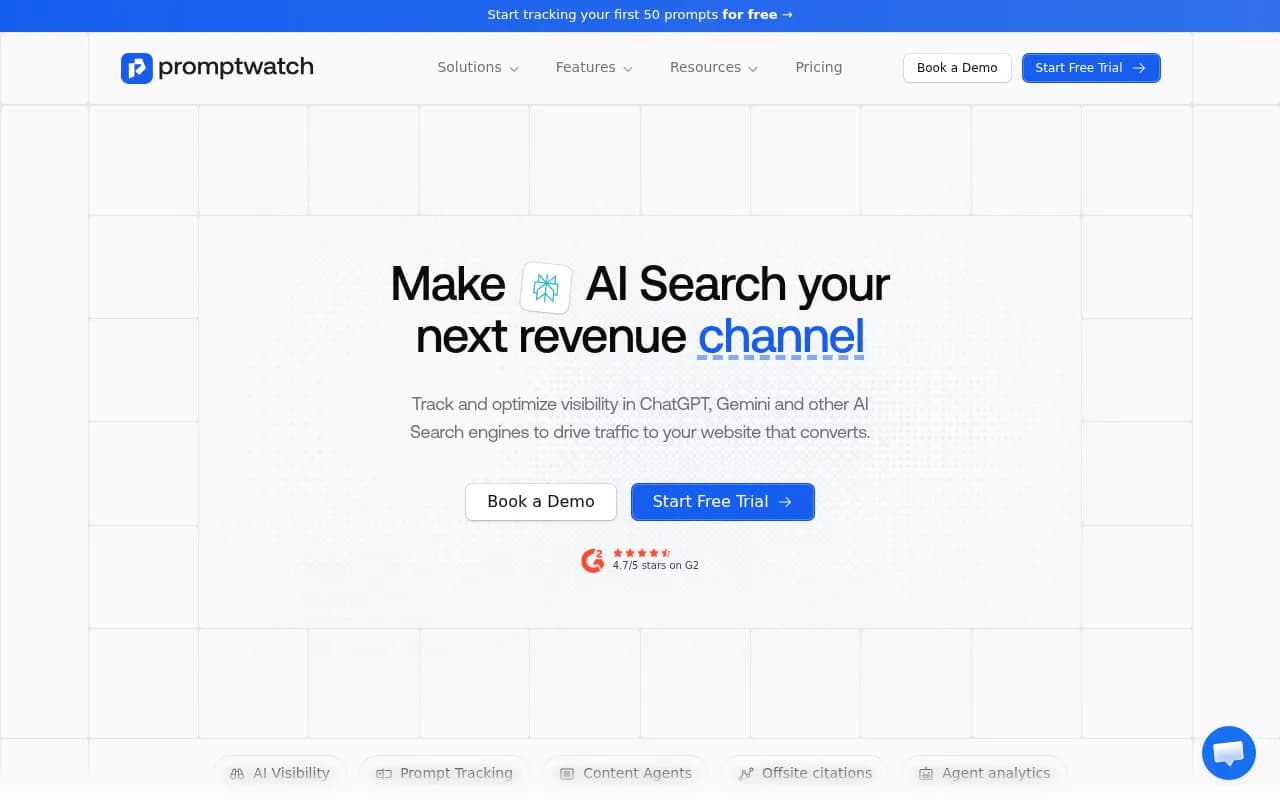
Promptwatch takes a similar approach on the pricing side, running daily tracking as the baseline refresh rate across its Essential, Professional, and Business plans, while letting you scale prompt volume and response counts as you tier prompts by importance. Where it goes further than most trackers is what happens after the check: crawler logs (Agent Analytics) show you when AI systems actually visited your pages and whether they hit errors, which explains the "why" behind a visibility drop instead of just flagging that one occurred. Combined with Unified Actions, a prioritized to-do list built from that data, it turns a daily or weekly check from a status report into something you can act on the same day.
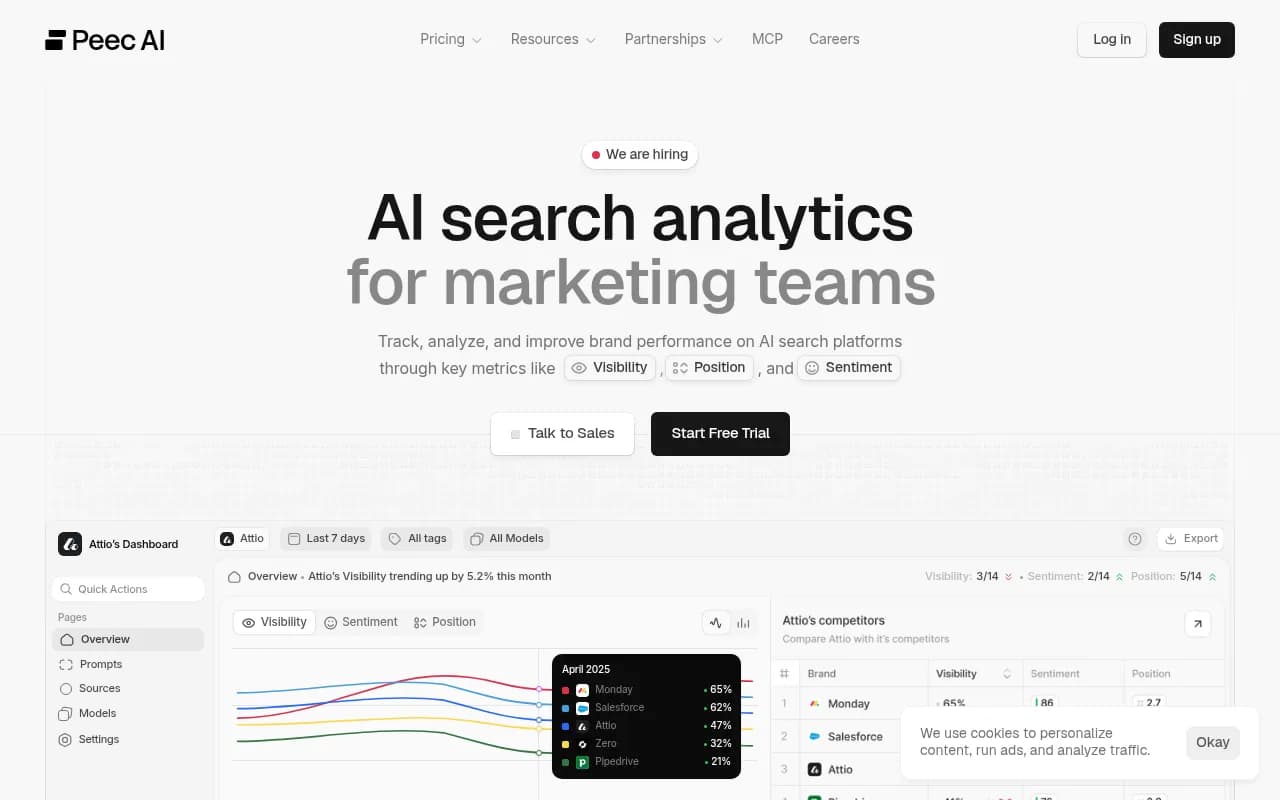
If you want a tighter, prompt-tracking-only option, tools like Peec AI and Otterly.AI are built around similar daily-by-default pricing structures at a lower entry cost, though without the crawler-log or content-generation layer.

A quick comparison of monitoring cadence built into common tools
| Tool | Fastest refresh advertised | Notes on cadence |
|---|---|---|
| Promptwatch | Daily | Daily tracking on all paid tiers, crawler logs add the "why" behind visibility changes |
| Peec AI | Daily (metered as prompts x models x days) | Pricing structure assumes daily as default, not opt-in |
| Profound | Daily/weekly depending on plan | Own volatility research recommends continuous sampling over snapshots |
| Ahrefs Brand Radar | Daily add-on, metered by checks | Costs scale directly with how often you check |
| Brand24 | Real-time alerts | One of few tools marketed on alerting rather than batch checks |
Practical rules to walk away with
- Don't check daily just because you can. Use daily monitoring as an alert layer with a clear trigger rule (two platforms, two consecutive checks, or 15% of a prompt cluster), not a habit.
- Set weekly as your default for anything tied to revenue, sales conversations, or category positioning, and treat that as the floor, not the ceiling.
- Judge Copilot and other high-swing platforms on monthly trend lines. A single weekly snapshot will lie to you about what's actually happening.
- When a model update ships (OpenAI, Google, Anthropic all push updates that change citation behavior without warning), assume your baseline just moved and re-check sooner than your normal schedule dictates.
- Budget your check frequency like you'd budget ad spend. More frequent checks on low-risk prompts is money and attention spent on noise.
If you're building out a full GEO monitoring stack rather than picking a single tool, the directory at bestgeosoftware.com is a reasonable place to compare options by feature set rather than marketing copy, and agenticseotools.com covers the newer wave of agent-driven tools that go beyond passive tracking into actually fixing what they find.
The honest answer to "daily, weekly, or real-time" is: pick the cadence the risk demands, not the cadence that feels the most thorough. Checking obsessively doesn't make your brand more visible in ChatGPT. Acting on the right signal, at the right frequency, does.