Key takeaways
- Lead with one page: a visibility trend, a competitor comparison, and one recommendation. Everything else goes in an appendix.
- ChatGPT has no ranking positions like Google. Report mention rate, citation rate, position within the answer, share of voice and sentiment, measured across many prompts.
- Segment prompts by intent (commercial, informational, branded). Promptwatch Data shows each intent has a different citation mix.
- Annotate model changes on every chart. Citation behaviour shifts abruptly, and your boss will ask why the line dropped.
- Pick a tool that can export or schedule reports, then spend your time on interpretation, not copy-pasting.
Why most ChatGPT reports get ignored
I have seen a lot of these reports. A 14-page PDF with a screenshot of ChatGPT naming the brand once, a table of 80 prompts, and a line that says "visibility improved". Nobody reads it, because nobody can tell what to do after reading it.
A boss wants three things answered fast. Are we showing up? Are we showing up more or less than competitors? What do you need from me? If your report doesn't answer those on the first screen, it's a data dump.
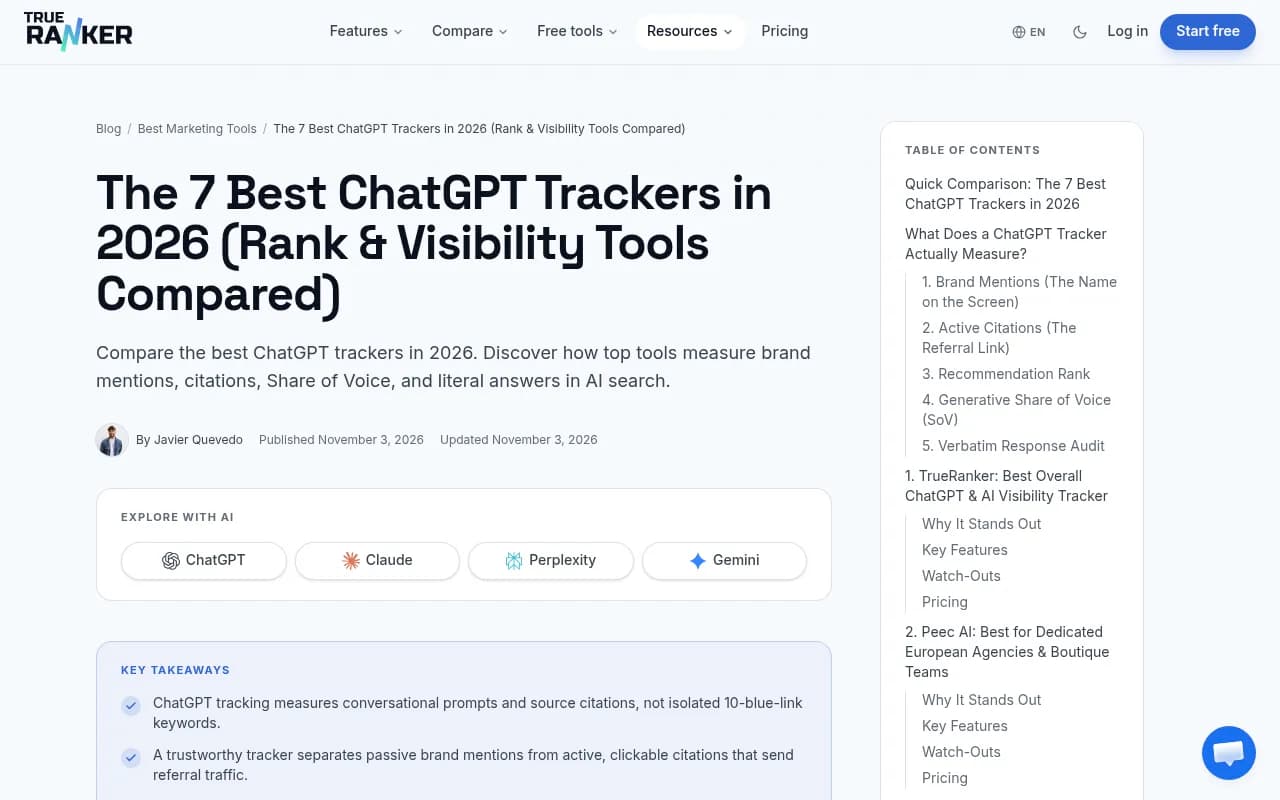
The second problem is that ChatGPT tracking is new enough that people borrow Google habits. They ask for "our rank in ChatGPT". There isn't one. ChatGPT retrieves sources at query time, writes one synthesized answer, and names a handful of brands. As one tracker vendor, TrueRanker, puts it, position 4 doesn't exist in that final paragraph. You are named or you are not.
So the first job of your report is to replace "rank" with metrics that mean something, and to explain them in one sentence each.
Decide what "ranking" means in your report
Pick five metrics and define them once, on the first page or in a footnote. More than that and the reader gets lost.
| Metric | Plain-language definition | What a drop usually means |
|---|---|---|
| Mention rate | Share of tracked responses that name your brand | Coverage problem: you are not part of the answer |
| Citation rate | Share of responses that link to your own domain | Content or crawlability problem |
| Position in answer | Where your brand lands in the order of brands named | Prominence problem |
| Share of voice | Your slice of all brand mentions across the prompt set | Competitors are gaining |
| Sentiment | How the answer describes you | Reputation or messaging problem |
Keep mentions and citations separate. A brand can be named without a link (the model learned about you from somewhere else) or linked without being recommended. Those are different problems with different fixes, and a combined "visibility" number hides that.
If your tool produces a single composite score, such as a 0-100 visibility score, that is fine as the headline number. Just make sure the five underlying metrics sit underneath it so you can explain a move.
Build the prompt set before you build the report
A report is only as good as the prompts behind it. One prompt tells you almost nothing, because ChatGPT is non-deterministic and the same question can return a different citation set on a different day or from a different location.
The rankmonster workflow suggests starting with 10 to 15 high-priority prompts. That is a reasonable pilot, but I would grow it to 50 or more before showing trends to leadership, since small sets swing wildly.
Segment by intent
Promptwatch's data on ChatGPT citations (Sep 28 to Oct 4, 2026) shows why you should split prompts into groups:
| Content type | All prompts | Commercial prompts | Branded prompts |
|---|---|---|---|
| Product pages | 22.4% | 26.0% | 23.3% |
| Landing pages | 16.8% | 20.6% | 22.8% |
| Listicles | 13.6% | 15.0% | not highlighted |
| Reviews | 1.7% | not highlighted | 5.6% |
Source: Promptwatch's ChatGPT citation share by content type report. On commercial prompts, product pages, landing pages, listicles and comparisons add up to almost 70% of citations. On branded prompts, reviews and social posts matter more. If you blend everything into one number, you cannot tell your boss which kind of page to invest in.
A simple structure that works: three prompt groups (commercial, informational, branded), 15 to 20 prompts each, tagged by product line or market if you have several.
Expect crowded answers
This next point changes how you read competitor data. In the same period, Promptwatch's data on unique domains per response found that 47.6% of ChatGPT responses cite 10 or more different domains, and only 6% cite three or fewer. For organic prompts where no brand is named, 52.5% cite 10 or more. For brand-specific prompts, five domains is the most common count.
What this means for the report: being cited is not rare, so "we were cited" is a weak win. Where you appear in the response and how ChatGPT describes you matter more. Also check which third-party domains show up for prompts about your own brand, because those are the pages shaping your story.
The one-page structure
Here is the layout I would use. It fits on one screen or one slide.
Top row: three numbers
Show current visibility score (or mention rate), change versus last period, and your rank among 3 to 5 named competitors. Big numbers, no decoration.
Middle: one trend chart, one competitor chart
A line chart of mention rate over the last 90 days, with annotations for model changes. Next to it, a simple bar chart of share of voice versus competitors. Resist adding a third chart.
Bottom: what changed and what we need
Three sentences. What moved. Why we think it moved. What we are asking for (budget, a developer, approval to publish, a product page rewrite). If there is no ask, say "no action needed this month". That sentence alone will make people trust the rest.
Appendix
Prompt-level tables, raw response excerpts, citation lists, methodology. Link it, don't paste it.
Annotate model changes or get blindsided
The fastest way to lose a boss's trust is a chart that drops 30% with no explanation. ChatGPT behaviour changes abruptly, and your report needs a timeline of those events.
Examples from Promptwatch Data in 2026:
- Average citations per response dropped across GPT-5.3, GPT-5.4 and GPT-5-Mini around the GPT-5.3 rollout on March 4, 2026.
- ChatGPT Search began using the site: operator at scale on August 8, 2026, jumping from about 0.4% to about 17% of fanout queries overnight, per Promptwatch's site: operator report.
- reddit.com's share of ChatGPT citations fell from roughly 4% to 0.5% on August 14, 2026, according to Promptwatch's Reddit citations data.
If your brand relied on Reddit threads for citations, that last one would have wiped out a chunk of your visibility overnight, and it would have had nothing to do with your content. A small vertical line labeled "Reddit citations collapse, Aug 14" saves a painful meeting.
Also keep an eye on content type decay. Promptwatch's content half-life study found that landing pages and docs stay cited longest, while news loses half its pages within 36 days. If your visibility is built on news-style posts, expect a treadmill and say so.
Be honest about noise
One vendor claim I would not repeat: a comparison post claims roughly 60% of organic traffic now comes from AI responses. It is unsourced and looks implausible. Executives remember big numbers, and if one turns out to be wrong, your whole report takes the hit. Use your own analytics instead.
Also be upfront about variance. A good methodology note, two lines long, says how many prompts you ran, how often, from which country, and that LLM answers vary run to run. Use weekly averages rather than single-day readings. A fanout note is worth adding too: Promptwatch's data shows average searches per response moved between about 2.15 and 1.0 over a few months, so query behaviour itself drifts and rankings can follow.
Connect visibility to something your boss cares about
Visibility alone is a vanity metric to many executives. Add one line that ties it to traffic or revenue: AI-referred sessions, conversions from those sessions, or branded search lift. Be careful here. ChatGPT stopped sending a referrer on October 8, 2026, so referral reports undercount unless you tag links with UTM parameters. Say that in the methodology note rather than letting the number look smaller than reality.
If you can't attribute traffic yet, report that as a gap and put "set up AI traffic attribution" in your ask. That's more credible than guessing.
Choose a tool that feeds the report
Checking ChatGPT by hand is a waste of time. You need automation, and you need export or scheduling so the report builds itself. Vendor comparison posts list starting prices in a wide band, roughly $20 to $99 per month for basic trackers, but those figures come from vendor-written lists and may be stale. Check official pricing pages.
Here is how I would sort the options for report building.
| Need | Tools worth a look | Why |
|---|---|---|
| Tracking plus action and measurement | Promptwatch | Monitors, traces citations, writes content, measures traffic |
| Cheap, light monitoring | Otterly.AI, Rankscale | Low starting price, simple outputs |
| Agency or multi-client | Peec AI, Scrunch AI | Clean UI, client-oriented |
| Enterprise narrative control | Profound | Many models, enterprise features |
| Hybrid SEO and AI tracking | Nightwatch, SE Ranking | Add AI tracking to an existing rank tracker |
| Beginner friendly | Morningscore, KIME | Simple setup for smaller teams |
Promptwatch
Promptwatch is the option I would pick if the report needs to end in an action, not just a number. It tracks ChatGPT and other AI engines from the real interfaces, shows visibility score, share of voice, position and sentiment, and traces which pages get cited. Scheduled PDF reports and custom dashboards go to any inbox, which means the one-page summary can build itself each week. Its Action Board turns gaps into a to-do list, which gives you a ready-made "ask" for the bottom of your report. See pricing for current plans, or run the free AI visibility report first.

Otterly.AI
Otterly.AI is a lightweight monitor that vendor lists place around $29 per month. Good for a pilot when you just want a first baseline.

Profound
Profound targets larger brands that want enterprise-scale monitoring across many models. Expect a higher price than basic trackers once you leave the entry tier.

Peec AI
Peec AI has a clean interface and suits agencies that need to show tidy numbers to clients.

Nightwatch
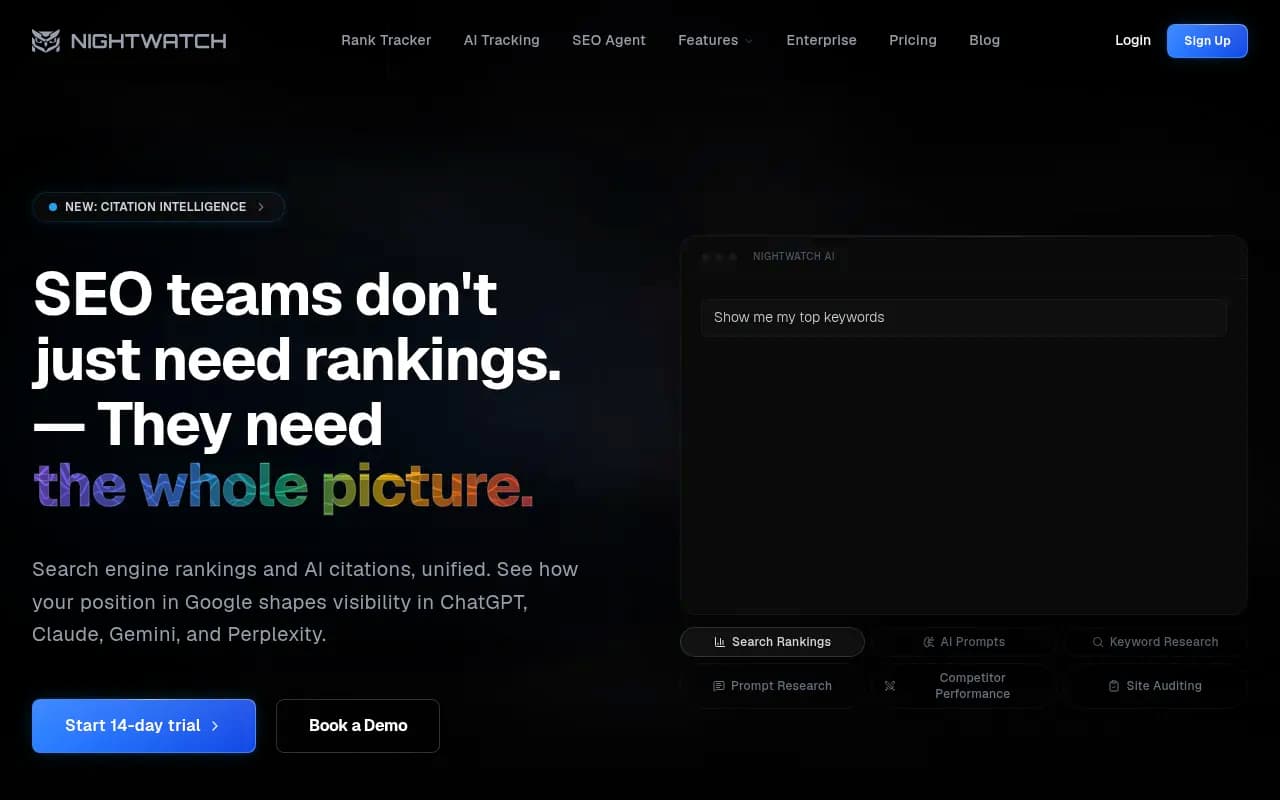
Nightwatch extends classic rank tracking into AI search, so teams already living in rank tracking can keep one workflow.
KIME
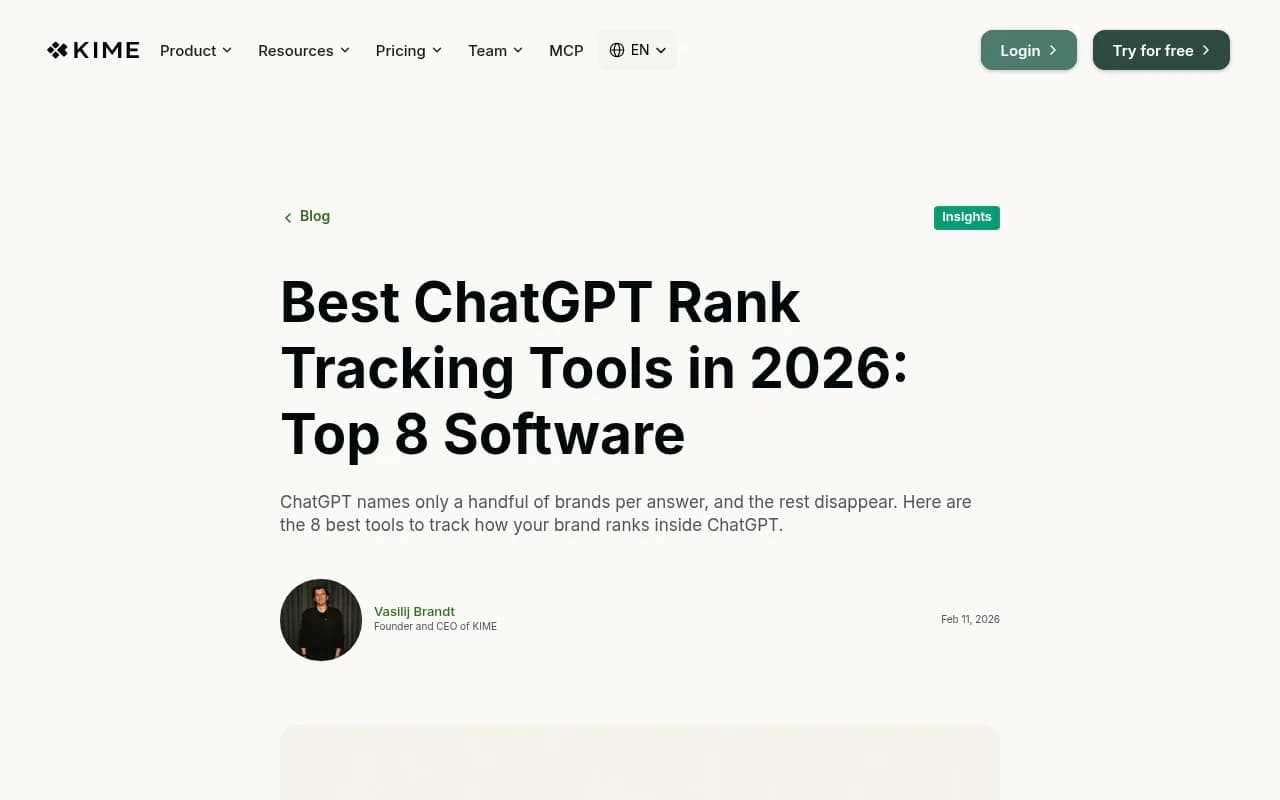
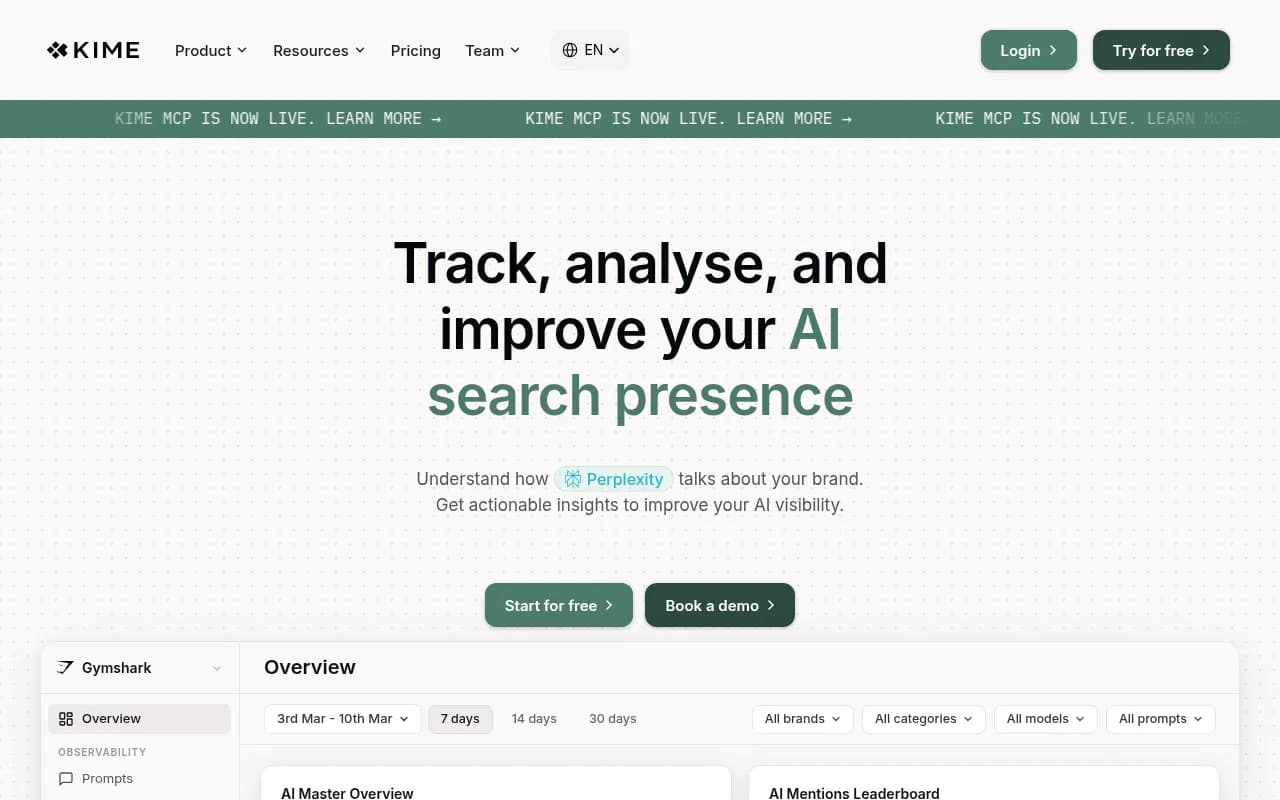
KIME markets itself as an end-to-end ChatGPT and AI visibility tracker with an action centre. Its own comparison post ranks itself first, so treat that ranking with the usual skepticism.
More options are listed in the GEO software directory at bestgeosoftware.com and the AI rank tracking directory at ai-rank-tools.com.
What to check before you buy
- Does it collect from the real ChatGPT interface or only from the API? Answers can differ.
- Does it separate mentions from citations?
- Can you see the full text of responses, not just a score?
- Can it export or schedule PDF reports?
- Can it track by country, since location changes answers?
- Can it show crawler and traffic data so you can tell access problems from content problems?
A weekly and monthly rhythm
Don't send the same report every week. Split it.
Weekly: a five-line note. Visibility score, change, biggest movers, any model change event. Send it by email, not a meeting invite. An automated scheduled report works here.
Monthly: the one-page report with the ask. This is the document your boss reads.
Quarterly: a strategy review. Which prompt groups grew, which content types earned citations, what the competitors did, and what you plan to change. This is where you present the appendix.
Template you can copy
Paste this into a slide or doc and fill it in:
ChatGPT visibility report: [Month 2026]

Headline
- Mention rate: __% (change vs last month: __ pts)
- Share of voice: __% vs [Competitor A] __%, [Competitor B] __%
- Sentiment: __/100

What changed
- [One sentence on the biggest movement]
- Model events this period: [date, event]

By intent
- Commercial prompts: __% mention rate
- Informational prompts: __%
- Branded prompts: __%

Why we think it moved
- [Content published, page changed, competitor action, model change]

Ask
- [Specific request with owner and deadline] or "No action needed"

Methodology
- __ prompts, run daily from [country], averaged weekly. LLM answers vary by run.
Common mistakes
Reporting one prompt as proof. A screenshot of one answer is an anecdote.
Reporting position like Google. "We rank 3rd" in ChatGPT means little when almost half of responses cite 10 or more domains.
Hiding bad news. If a competitor is pulling ahead, put it on page one. You will get budget faster than if you bury it.
Skipping the ask. A report with no request is a status update, and status updates get skimmed.
Tracking once and never re-checking prompts. Prompt sets need a refresh every quarter as products and buyer language change. Writing headings that read like short search queries also helps, since fanout queries have been getting shorter.
Final checklist
- One page on top, appendix below
- Five defined metrics, mentions and citations kept separate
- 50 or more prompts grouped by intent
- Model-change annotations on every trend chart
- A competitor comparison with named brands
- One line connecting visibility to traffic or revenue
- A specific ask, or an explicit "no action needed"
- Automated scheduling so the report builds itself
Build that once, and the monthly report becomes a 20-minute job instead of a two-day scramble. More to the point, your boss will open it.