Key takeaways
- AI shopping recommendations now happen inside synthesized answers, not on search results pages -- your brand needs to be in the sources AI models trust, not just ranking on Google.
- A "web of consensus" across third-party review sites, editorial mentions, Reddit, and YouTube is what signals credibility to AI models.
- Structured product data, schema markup, and clean on-site content are table stakes -- but off-site authority is what actually moves the needle.
- ChatGPT's Shopping Research feature pulls from Shopify and Etsy product feeds directly, so e-commerce brands have a fast path to visibility if they optimize their product listings.
- Tracking which prompts trigger recommendations -- and which don't -- is the only way to know if your strategy is working.
When someone opens ChatGPT and types "best standing desk for a home office," they don't get ten blue links. They get one answer. Maybe two or three products, a brief explanation of why each one was chosen, and a link to buy. That's it.
Your brand either shows up in that answer or it doesn't. And if it doesn't, the shopper probably never knows you exist.
According to G2's 2025 Buyer Behavior Report, generative AI chatbots are now the #1 influence over vendor shortlists -- ahead of review sites, analyst reports, and peer recommendations. That shift is already baked into how consumers shop. The question is whether your brand is positioned to benefit from it.
This guide covers exactly what you need to do.
How AI shopping recommendations actually work
Before you can influence AI recommendations, you need to understand what drives them. It's not a single ranking signal -- it's a combination of factors that AI models weigh when deciding which brands to surface.
AI models like ChatGPT, Perplexity, and Google's AI Mode are trained on massive datasets and then updated with real-time web browsing. When a user asks a shopping question, the model:
- Retrieves relevant web content (product pages, reviews, editorial lists, forums)
- Synthesizes that content into a recommendation
- Cites the sources it found most credible
The brands that get recommended are the ones that appear consistently across multiple trusted sources. One glowing product page on your own site isn't enough. AI models are looking for consensus -- the same brand name appearing in review roundups, Reddit threads, YouTube comparisons, and third-party editorial content.
This is sometimes called a "web of consensus," and it's the single most important concept in AI shopping visibility.
Step 1: Get your on-site fundamentals right
This is table stakes, but it's worth being explicit because a lot of brands skip it.
Product page content
AI models crawl your product pages. If the content is thin, keyword-stuffed, or structured for old-school SEO, it won't help you. Write product descriptions that actually answer the questions shoppers ask: What problem does this solve? Who is it for? How does it compare to alternatives?
Be specific. "High-quality standing desk" tells an AI model nothing. "Electric height-adjustable desk with a 355-lb weight capacity and dual-motor lift system, suited for users who switch between sitting and standing multiple times a day" gives it something to work with.
Schema markup
Use Product schema, Review schema, and FAQ schema where relevant. These help AI crawlers understand what your page is about without having to infer it from prose. Include:
- Product name, description, and category
- Price and availability
- Aggregate review rating and review count
- Brand entity markup
If you're on Shopify, most of this is handled automatically. If you're on a custom stack, check your implementation.
Site speed and crawlability
AI crawlers behave similarly to Googlebot -- they need to be able to access your pages quickly and without errors. Check your robots.txt isn't accidentally blocking AI crawlers (some brands block all bots and then wonder why they're invisible). Make sure your sitemap is current and submitted.
Step 2: Build your off-site authority
This is where most brands underinvest, and it's where AI visibility is actually won or lost.
Get into editorial review roundups
When ChatGPT answers "best ergonomic office chairs under $500," it's pulling from editorial lists on sites like Wirecutter, Tom's Guide, Good Housekeeping, and similar publications. If your brand isn't in those roundups, you're not in the answer.
Prioritize outreach to:
- Category-specific review publications
- Major consumer publications with product testing sections
- Industry trade publications relevant to your category
The goal isn't just a backlink. It's a citation in a "best of" list that AI models treat as authoritative. A mention in a Wirecutter roundup is worth more for AI visibility than dozens of generic blog posts.
Activate Reddit and YouTube
AI models cite Reddit and YouTube more than most marketers realize. Perplexity in particular pulls heavily from Reddit discussions. If your brand is being discussed positively in relevant subreddits, that feeds directly into AI recommendations.
You can't fake this -- astroturfing Reddit gets noticed fast. But you can:
- Engage authentically in communities where your customers hang out
- Seed products with genuine community members who will share honest reviews
- Create YouTube content (or work with creators) that answers the specific questions your customers ask
A YouTube video titled "I tested 5 standing desks for 6 months -- here's what I actually use" is exactly the kind of content AI models surface when someone asks for a recommendation.
Build a review base on third-party platforms
G2, Trustpilot, Amazon, Google Reviews -- wherever your category lives, you need volume and recency. AI models check review platforms as part of their synthesis. A brand with 12 reviews from 2022 looks less credible than one with 400 reviews from the past year.
Make review collection a systematic part of your post-purchase flow. Send follow-up emails. Make it easy. Don't incentivize reviews in ways that violate platform terms, but do ask.
Step 3: Optimize for ChatGPT Shopping specifically
ChatGPT's Shopping Research feature is a direct path to product recommendations for e-commerce brands, and it works differently from general AI recommendations.
For Shopify and Etsy brands, ChatGPT can pull product data directly from your store feed -- including product images, prices, and buy links. This means:
- Your product titles and descriptions need to be written for how shoppers search, not just for SEO keywords
- Product images matter (ChatGPT Shopping shows visual cards)
- Price accuracy and inventory status affect whether your products get surfaced
If you're on Shopify, make sure your store is connected to the Shopify-ChatGPT integration. Check that your product feed is clean and up to date. Treat your Shopify product listings with the same care you'd give a Google Shopping feed.
For brands not on Shopify or Etsy, the path is longer -- you're relying on AI models finding your products through web crawling rather than a direct feed. That makes the editorial and review strategy in Step 2 even more important.
Step 4: Create content that answers shopping questions directly
AI models are answer machines. They look for content that directly answers the question a user asked. If your site has content that says "here's exactly why [your product] is the best choice for [specific use case]," that content can get cited.
This isn't about writing blog posts that mention your product. It's about creating genuinely useful comparison content, buying guides, and use-case-specific pages that happen to feature your product as the answer.
Examples of content that gets cited in AI shopping recommendations:
- "Best [product category] for [specific use case]" -- where your product wins
- Comparison pages: "[Your product] vs [Competitor]" with honest, detailed analysis
- FAQ pages that answer the exact questions shoppers ask before buying
- Use-case pages: "How [your product] works for [specific customer type]"
The key is specificity. "Best standing desk for programmers who work 10+ hours a day" is more likely to get cited than "best standing desk." AI models are trying to match a specific user query, and the more precisely your content matches that query, the better.
Step 5: Get cited on partner and affiliate sites
Impact.com's research makes a point worth taking seriously: the path to purchase is now moving inside the AI answer itself. That means your partnership ecosystem -- affiliates, media partners, influencers -- needs to be evaluated for AI citation potential, not just traffic.
When you work with a publisher or affiliate, ask: does their content get cited by AI models? A partner with strong AI visibility in your category is more valuable than one with high traffic but no AI presence.
Practically, this means:
- Prioritizing partnerships with editorial publishers over pure traffic-play affiliates
- Ensuring your partners are creating content that AI models can crawl and cite (not just paywalled or JavaScript-heavy pages)
- Briefing partners on the specific questions your customers ask, so they create content that matches those queries
Step 6: Track what's actually happening
None of this matters if you can't measure it. The challenge with AI shopping recommendations is that standard analytics tools don't capture them -- a user who gets your brand recommended in ChatGPT and then visits your site looks like direct traffic in GA4.
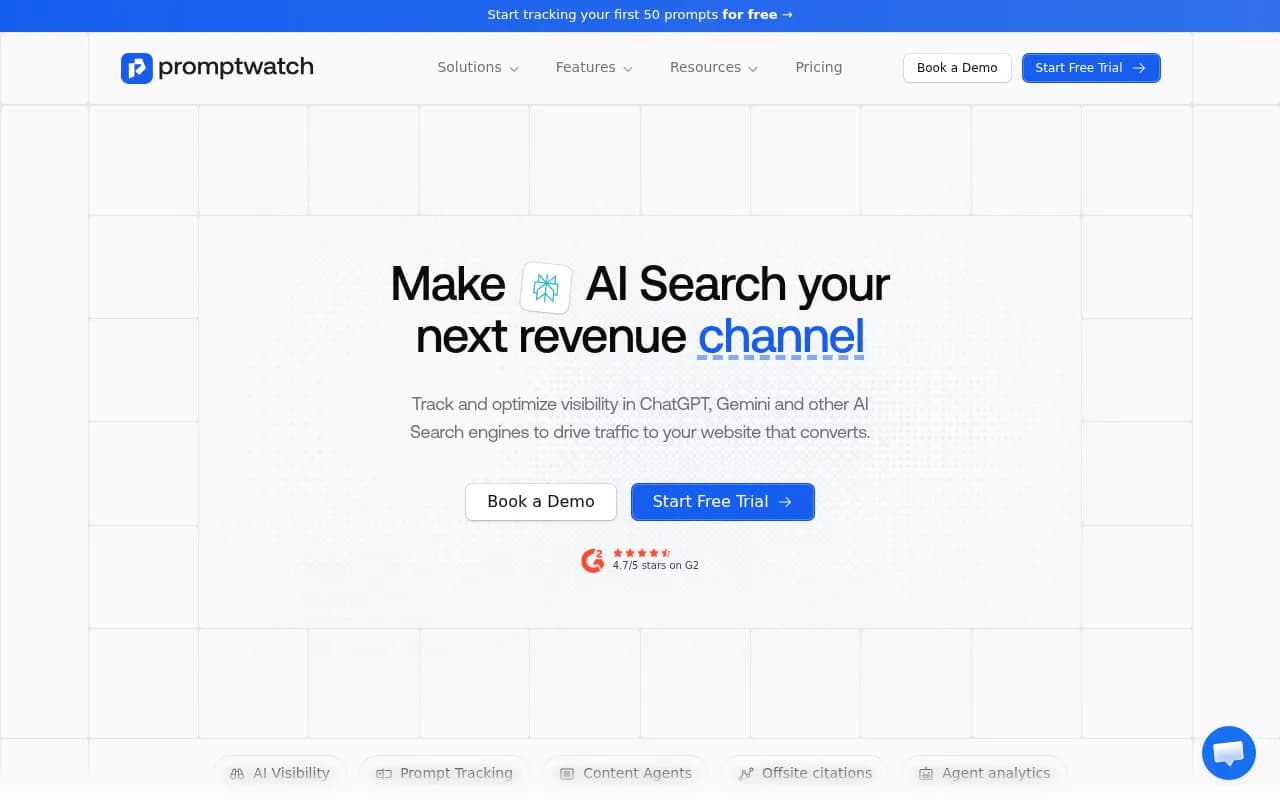
You need purpose-built tracking. Promptwatch is one of the more complete options here -- it monitors how your brand appears across ChatGPT, Perplexity, Google AI Mode, Gemini, and other models, including specifically tracking ChatGPT Shopping recommendations and entity mentions. It shows you which prompts are surfacing your competitors but not you, so you know exactly where the gaps are.
Beyond dedicated GEO platforms, there are a few other approaches worth knowing about:
- Monitor referral traffic from AI sources (Perplexity, ChatGPT, etc.) in GA4 -- it won't capture everything, but it shows the tip of the iceberg
- Set up brand mention alerts across Reddit, review platforms, and editorial sites
- Run manual prompt tests regularly -- search for your category in ChatGPT, Perplexity, and Google AI Mode and see what comes up
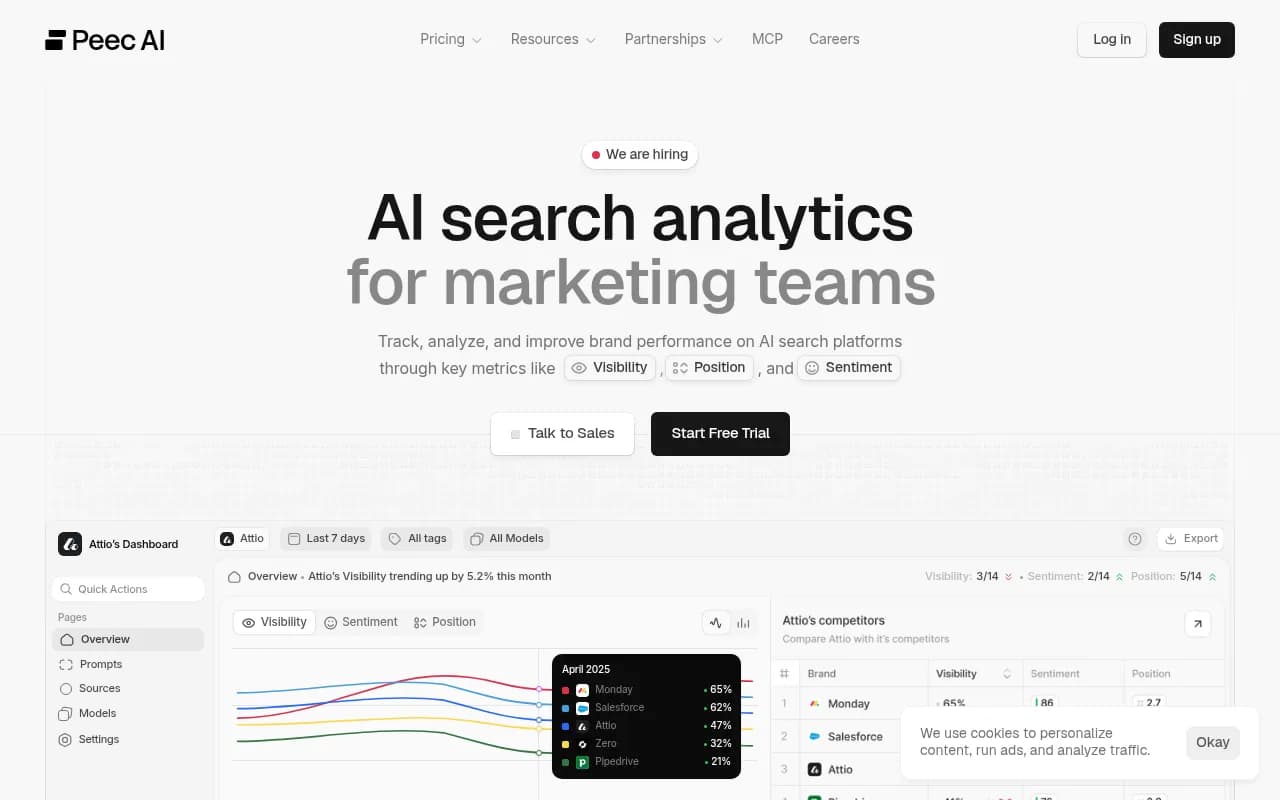
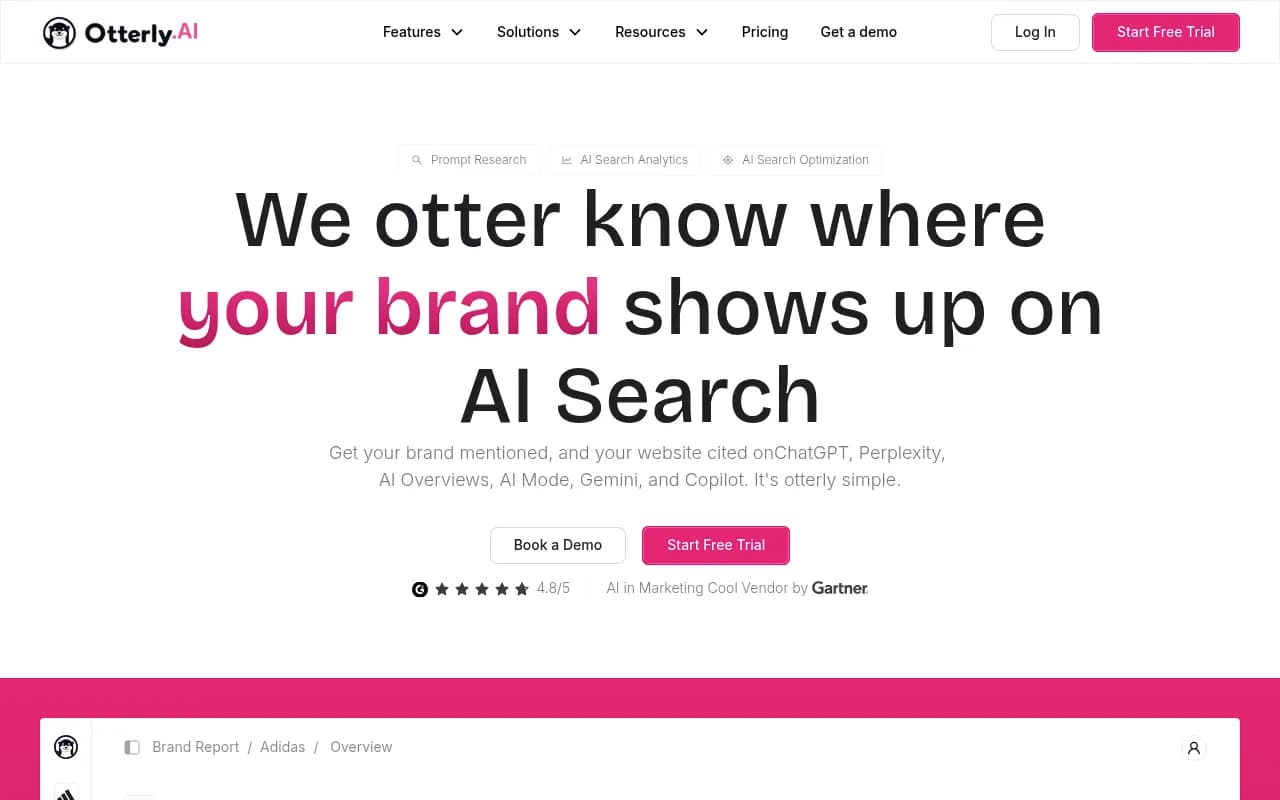
For brands that want broader tracking options, tools like Peec AI and Otterly.AI offer entry-level AI visibility monitoring:
How the major AI platforms differ for shopping
Not all AI models handle shopping recommendations the same way. Here's a quick breakdown:
| Platform | Shopping feature | Data source | Best for |
|---|---|---|---|
| ChatGPT | Shopping Research (with visual cards) | Shopify/Etsy feeds + web crawl | E-commerce brands on Shopify/Etsy |
| Perplexity | Product cards in answers | Web crawl + affiliate partnerships | Brands with strong editorial coverage |
| Google AI Mode | Shopping integration | Google Merchant Center + web | Brands already on Google Shopping |
| Google AI Overviews | Inline product mentions | Google Shopping + web | Brands with Google Shopping presence |
| Gemini | Product mentions in answers | Web crawl | Brands with strong review presence |
| Claude | Text recommendations only | Web crawl | Brands with strong editorial content |
The practical implication: if you're an e-commerce brand, Google Merchant Center and Shopify feed optimization give you the most direct path to AI shopping visibility. If you're a brand that sells through retailers or doesn't have a direct e-commerce presence, editorial coverage and review volume matter more.
Common mistakes brands make
A few patterns come up repeatedly when brands struggle with AI shopping visibility:
Treating it like traditional SEO. Keyword density and backlink counts don't translate directly to AI visibility. What matters is whether your brand appears in the sources AI models trust -- which is a different problem.
Focusing only on their own site. Your product pages matter, but AI models are synthesizing from dozens of sources. If you're only optimizing your own content, you're ignoring most of the battle.
Ignoring Reddit and YouTube. These platforms have outsized influence on AI recommendations relative to their perceived importance in traditional SEO. Brands that dismiss them are leaving real visibility on the table.
Not tracking by prompt. "AI visibility" isn't one number. Your brand might be getting recommended for "best standing desk under $500" but completely absent from "best standing desk for back pain." You need prompt-level tracking to know where you're winning and where you're not.
Waiting for the strategy to mature. AI shopping recommendations are already driving purchase decisions at scale. According to impact.com's research, AI-driven traffic to top retailers grew significantly through 2025. Brands that start building their AI visibility now have a compounding advantage over those that wait.
A practical starting point
If you're starting from zero, here's a prioritized sequence:
- Fix your on-site fundamentals: schema markup, clean product descriptions, crawlability
- Audit your review presence: volume, recency, and platform coverage
- Identify 5-10 editorial publications in your category and start outreach for roundup inclusion
- Set up prompt tracking so you have a baseline before you start making changes
- Create one piece of genuinely useful comparison or buying guide content per month
- If you're on Shopify, connect your store to ChatGPT Shopping
None of this is fast. Building the web of consensus that AI models rely on takes months, not weeks. But the brands that are doing this work now are the ones that will own AI shopping recommendations in their categories a year from now.
The search results page is no longer the storefront. The AI answer is. Getting your brand into that answer is the most important visibility challenge of 2026.