Key takeaways
- ChatGPT cites roughly 5 sources per web-search response while Google AI Overviews cites closer to 10, and the two systems pull from different indexes (Bing-based retrieval vs. Google's own index), so overlap between what they cite is often shockingly low.
- ChatGPT leans on Reddit, niche forums, and product pages; AI Overviews increasingly cites Google's own properties (YouTube, google.com) plus listicles and how-tos. Ranking well for one doesn't transfer to the other.
- Blocking an AI crawler in robots.txt rarely stops citation. One study found sites blocking OpenAI's search bot still got cited in 82.4% of cases, so "invisibility" is usually a content or authority problem, not a technical block.
- Google Search Console now has separate reporting for AI Mode and is rolling out AI Overview performance data, but it undercounts heavily. ChatGPT has no equivalent dashboard at all, which is why most brands are flying blind on at least one engine.
- Proper monitoring means tracking presence, citation source, and sentiment separately across both engines, on a fixed prompt list, over time, not a one-off spot check.
If you've ever typed your brand's category into ChatGPT and felt good about the answer, then ran the same question through Google and got a completely different AI Overview with different sources and maybe no mention of you at all, you're not imagining it. This isn't a bug. It's two systems built on different infrastructure, trained on different priorities, and increasingly diverging in what they consider a trustworthy source.
I want to walk through why this happens mechanically, not just wave at "AI is different now," and then get into how to actually monitor both without kidding yourself about what you're measuring.
The mechanical reason: different indexes, different citation budgets
Start with something simple: how many sources each engine actually cites per answer. According to Promptwatch's data on average sources per response, ChatGPT typically cites around 4.7 to 5 sources in a web-search-enabled answer. That's down from about 6.4 before the GPT-5.3 rollout in March 2026, a drop that hit every ChatGPT model at once, not just one variant, according to Promptwatch's separate citation drop analysis. Google AI Overviews, by contrast, cites close to 10 sources per answer and has stayed fairly steady. Perplexity sits at almost exactly 10 as well.
That gap matters more than it sounds. If ChatGPT only has five slots to fill and AI Overviews has ten, ChatGPT's citation list is simply more contested. You can be "good enough" to make Google's longer list and still lose the fight for one of ChatGPT's five.
Then there's the deeper issue: these systems aren't drawing from the same pool of pages to begin with. ChatGPT's web search has historically run on top of Bing's index plus direct page fetching, while Google AI Overviews queries Google's own index. Ahrefs found that only about 12% of URLs cited by assistants like ChatGPT, Gemini, and Copilot also rank in Google's top 10 for the matching query, and ChatGPT specifically overlaps with Google's top 10 only 6-8% of the time. AI Overviews is the outlier here precisely because it's built on Google's own search results, not a separate retrieval layer, so its citation overlap with top-10 rankings is far higher, reportedly climbing from roughly 32% to 54% over sixteen months per BrightEdge.
That's the core mechanical answer to "why do I rank well on Google and appear in AI Overviews, but ChatGPT has never heard of me": ChatGPT isn't grading your Google rankings. It's running its own search behind the scenes, against a different corpus, with a different, smaller shortlist of winners.
What each engine actually likes to cite
The divergence goes past index architecture into taste. Promptwatch's June 2026 citation share data shows ChatGPT Search citations dominated by Reddit at 3.71% of all citations, more than six times the next domain, Wikipedia, at 0.56% (see ChatGPT Citation Share, June 2026). No single domain clears 4%. It's a long tail, and forums and niche sites do well in it.
Google AI Overviews looks almost nothing like that. In the same month, YouTube led at 4.16%, Reddit sat at 2.72%, and google.com itself was cited 2.30% of the time, per Google AI Overview Citation Share, June 2026. Between YouTube and google.com alone, Google cites its own properties nearly 6.5% of the time in its own AI answers. Google AI Mode goes even further: google.com alone reached 7.31% of citations in June, more than YouTube and Reddit combined, according to Google AI Mode Citation Share, June 2026. There's no equivalent self-citation behavior on ChatGPT's side, because ChatGPT doesn't own the properties it's citing.
Content format preferences diverge too. Promptwatch's July 2026 breakdown shows product pages as the single most-cited format on ChatGPT at nearly 33% of citations, almost double their March share, while how-to content barely registers at 4.1% (ChatGPT Citation Types Over Time, July 2026). AI Overviews, in the same month, cited how-to content at 15.1%, nearly four times ChatGPT's rate, while listicles led its monthly average at 18% before product pages overtook them late in the month (AI Overviews Citation Types Over Time, July 2026). If your content strategy is built around long-form how-to guides, you're optimizing for AI Overviews' taste, not ChatGPT's.
Even query behavior is different. ChatGPT fans a single prompt out into multiple web searches, but those fanout queries have compressed from roughly 117 characters down to about 53 characters per Promptwatch's ChatGPT query fanout data, meaning it's now searching in short, keyword-style bursts rather than full sentences. And on August 8, 2026, ChatGPT started using the site: operator at scale, jumping from 0.4% to 17% of fanout queries almost overnight (ChatGPT Site Operator Fanouts). That's a ChatGPT-specific retrieval quirk with no Google AI Overviews parallel, and it means your H2s need to match short keyword phrasing if you want ChatGPT's fanout searches to land on your page at all.
"But I checked robots.txt, I'm not blocking anyone"
A lot of people assume invisibility is a technical block. It's usually not. OpenAI runs three separate bots: GPTBot for training, OAI-SearchBot which actually powers ChatGPT search citations, and ChatGPT-User for real-time page fetches when a user asks ChatGPT to read a specific URL. Blocking GPTBot, which is the one most "AI blocker" plugins target, does nothing to your ChatGPT search visibility.
And blocking even does surprisingly little on its own. A study covering roughly 4 million AI citations across 3,600 prompts found sites blocking OAI-SearchBot were still cited in 82.4% of cases, and sites blocking Google-Extended still showed up in 92.3% of cases. CNBC blocks all three OpenAI bots and still appeared 1,298 times in the citation dataset. If a major publisher can block everything and still get cited constantly, your absence isn't a robots.txt problem. It's a content, structure, or authority problem, which is a much less satisfying answer but the true one.
How to monitor Google AI Overviews (and where it lies to you)
Google Search Console folds AI Overview citations into the standard Performance report as position #1 within the "Web" search type, but the impression only fires once a user actually scrolls the citation into view, similar to how carousel features get tracked. Since mid-2025, GSC has offered a separate AI Mode filter under Search Appearance, and Google introduced dedicated Search Generative AI performance reporting around June 2026.
The catch: a citation with zero clicks is completely invisible in GSC. You can be a primary AI Overview source for hundreds of queries and see nothing in your dashboard, because GSC only reports what got clicked, not what got shown. A rough workaround is filtering your Query report for six-plus-word conversational phrases, since those are the queries most likely to trigger an AI Overview, and watching for "position anomalies" where a keyword suddenly jumps to position 1 with no content change on your end.
GA4 makes this worse in a different way: Google AI Overview clicks show up as plain organic Google traffic in GA4, with no separate referral tag. If you build a custom "AI Search" channel group to isolate AI referral traffic, it'll catch ChatGPT and Perplexity referrals fine, but it won't isolate Google's own AI surfaces at all.
How to monitor ChatGPT (there's no dashboard at all)
OpenAI publishes nothing about which brands or pages its answers cite. Everything you know about your ChatGPT visibility comes from asking it and writing down what happens, which means the process has to be disciplined or the data is worthless.
A few rules that actually matter here, based on how people who do this seriously operate: freeze your prompt list. If you change your test questions every month, you're not tracking visibility, you're generating anecdotes. Run each prompt at least twice per check, because web-grounded answers vary between runs and a single check tells you close to nothing. Always test logged out or in a fresh session, because an account that has discussed your company for months gives the model context that inflates your apparent visibility. And pay closer attention to the sources ChatGPT actually cites than to whether your brand name appears, because those cited pages are exactly where you'd need a presence to move the needle.
Doing this by hand in a spreadsheet for a month is genuinely a reasonable starting point. It forces you to understand what you're measuring before you pay for a tool to automate it.
Tools that track one or both, and where they gate coverage
Here's the part almost nobody mentions upfront: most AI visibility tools gate engine coverage by pricing tier, and the cheapest plan usually tracks only one or two engines, commonly ChatGPT alone, with AI Overviews, AI Mode, Gemini, or Claude locked behind higher tiers or sold as paid add-ons. If you assumed your $29/month plan was watching "Google AI" broadly, check the fine print. It might mean AI Overviews only, or it might not include AI Mode as a separate tracked surface at all.
| Tool | Entry price | Engines on entry tier | Notable gap |
|---|---|---|---|
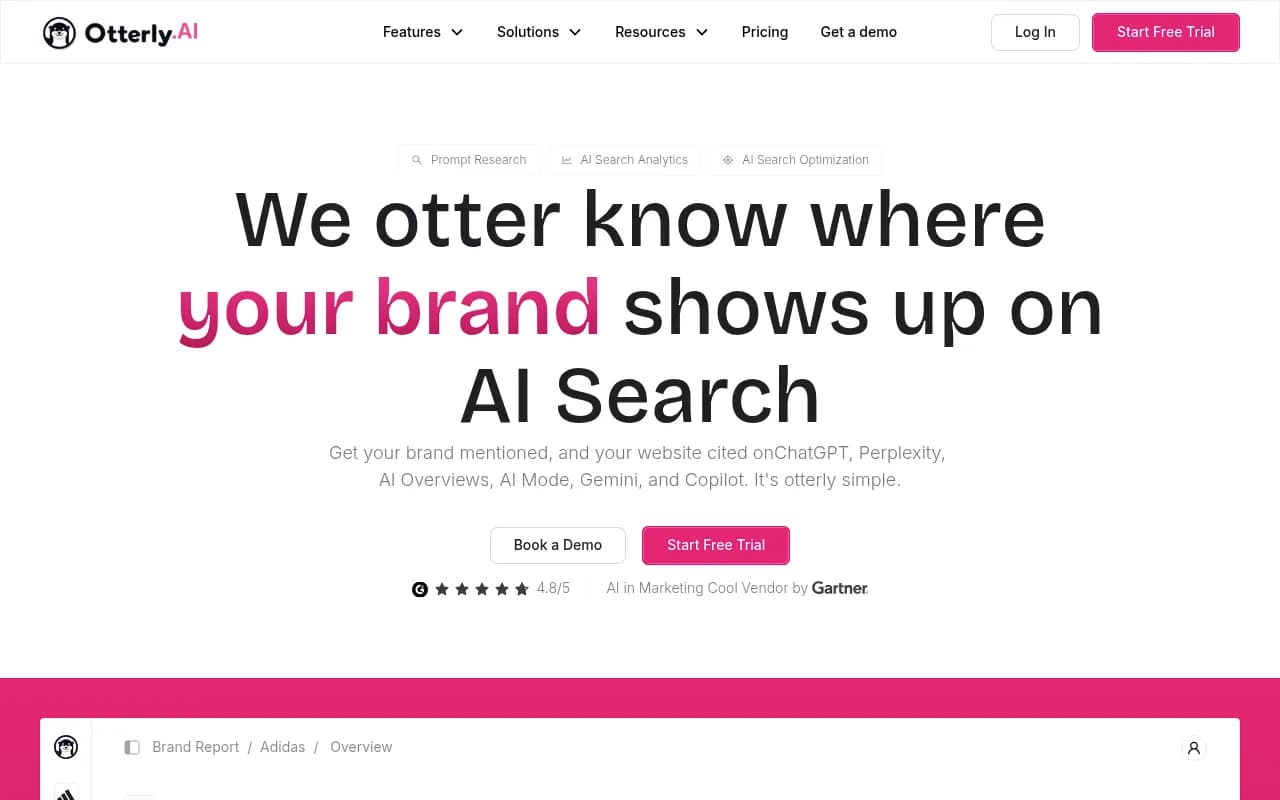
| Otterly.ai | $29/mo | ChatGPT, AI Overviews, Perplexity, Copilot | AI Mode, Gemini, Claude are paid add-ons |
| Profound | $99/mo (annual) | ChatGPT only | AI Overviews and Perplexity require the $399/mo tier |
| Semrush AI Toolkit | ~$99-165/mo | ChatGPT, Google AI, Gemini, Perplexity | Extra domains and prompt packs cost extra |
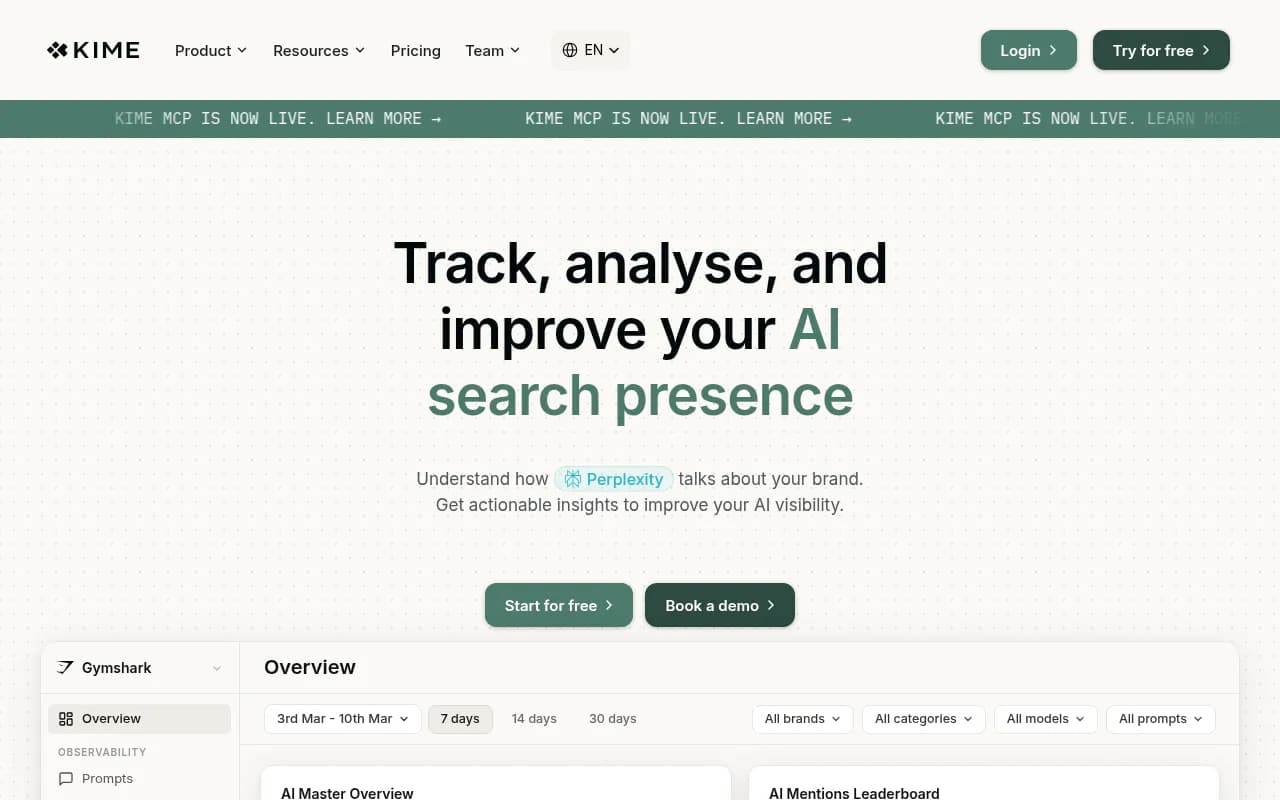
| KIME | €99/mo | 2 engines, 50 prompts | Full 9-engine coverage is Enterprise-only |
| SE Ranking AI Visibility | ~$89/mo add-on | ChatGPT, AI Overviews, Perplexity, Gemini, Claude | Sold as an add-on to a base SEO plan |
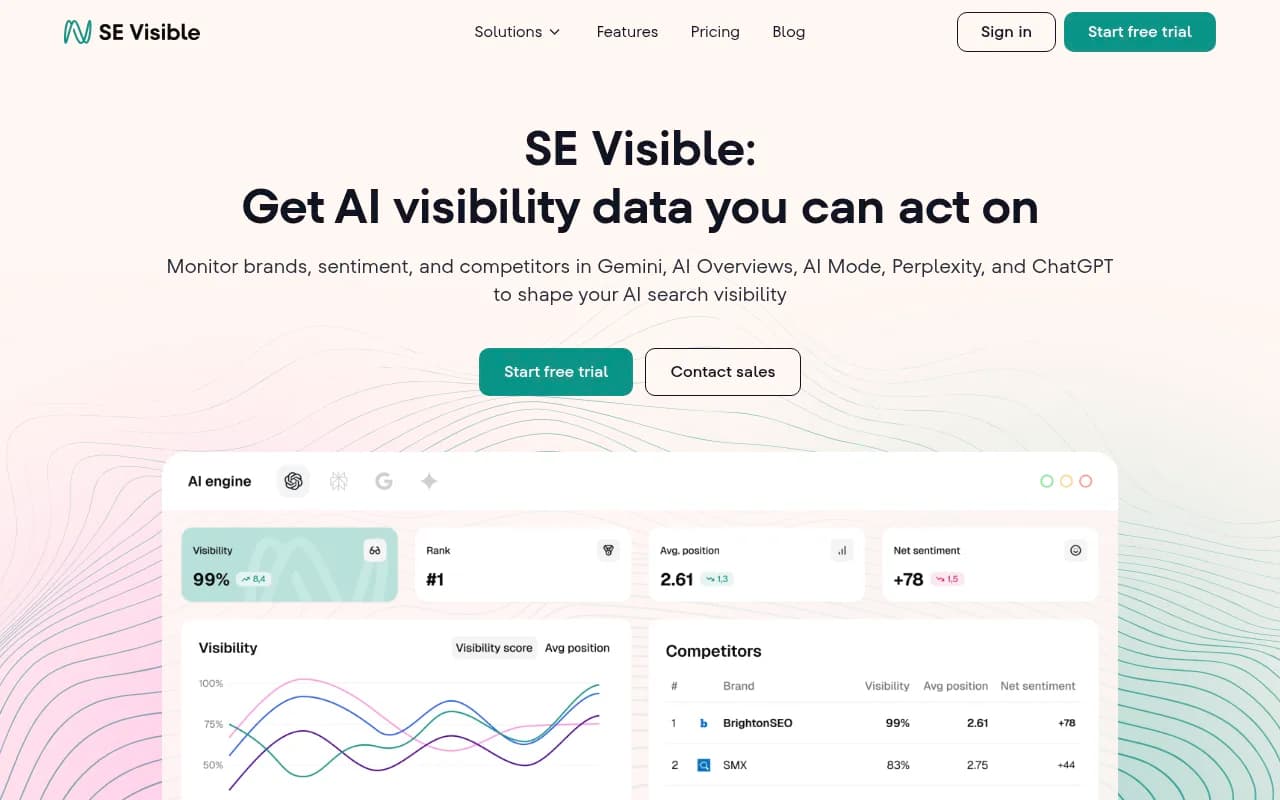
A handful of tools worth knowing by name if you're shopping this category:
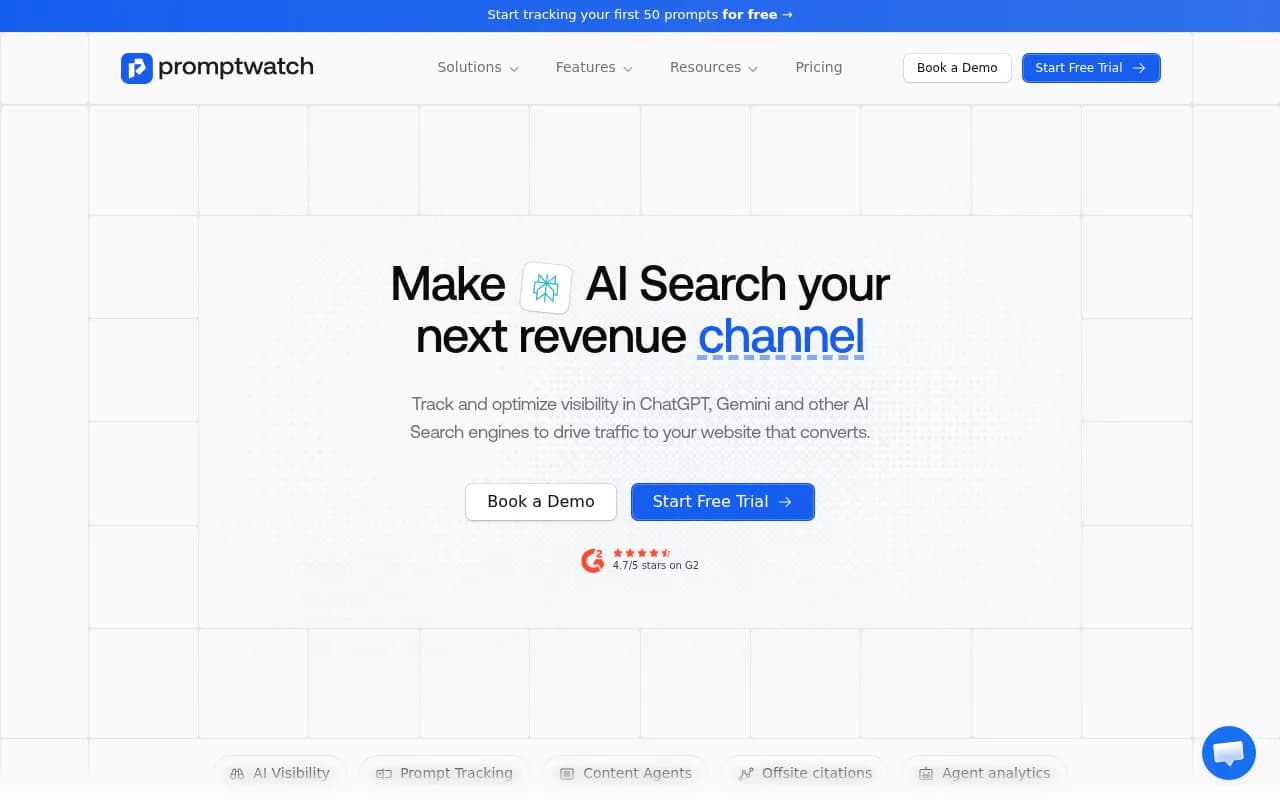
For a platform built to close the gap between monitoring and actually fixing it, Promptwatch tracks ChatGPT, Gemini, Claude, Perplexity, Grok, DeepSeek, Copilot, Mistral, Meta Llama, Google AI Overviews, and Google AI Mode from the same dashboard, using real UI data rather than API outputs (which can differ from what users actually see). It's the piece most tools skip: crawler logs that show exactly when ChatGPT's or Google's bots visit your pages and whether they hit errors, which is often the missing link between "I published the content" and "why isn't it cited yet." It also tracks Reddit and YouTube citations specifically, both of which matter a lot given how differently ChatGPT and AI Overviews weight those sources, plus content gap analysis that maps your existing pages against what AI is actually citing for your prompts.
If you want to see the wider field before picking anything, the GEO software directory at bestgeosoftware.com has a broader rundown, and ai-rank-tools.com focuses specifically on rank-tracking style tools if that's the narrower job you need done.
A monitoring process that won't lie to you
Pull this together into something repeatable rather than a one-time audit:
- Write down 15-20 fixed prompts covering your brand name, your category, and your top three competitors. Don't touch this list for at least a quarter.
- Run each prompt on ChatGPT and on Google (logged out, fixed location, incognito) at least twice per check, and record three separate columns: whether you appeared, which sources were cited, and what the answer actually said about you. Don't collapse these into one "visibility score" too early. A brand can be mentioned constantly while being described from a two-year-old complaint thread, and a single score hides that.
- Cross-reference the cited sources against your own site's server logs or CDN logs to see if the relevant AI crawlers (OAI-SearchBot, Google-Extended, ClaudeBot, PerplexityBot) are actually reaching those pages. If a crawler is prominent industry-wide but near-zero in your logs, you may be effectively unreachable for that specific engine even if robots.txt looks fine.
- Separately check Google Search Console's AI Mode filter and scan for position anomalies in your Performance report, understanding that this will undercount AI Overview citations that get zero clicks.
- Repeat monthly, using the exact same prompts and conditions, and only then start comparing month over month.
The uncomfortable truth in all of this is that there's no single dashboard that tells you the full story, and anyone promising a unified "AI visibility score" across every engine is compressing a lot of genuinely different behavior into one number. ChatGPT and AI Overviews are not the same test with different scoring. They're different tests. Once you monitor them that way, the fact that you show up in one and not the other stops being confusing and starts being a useful signal about exactly where your content and authority gaps actually are.