RiseChat.ai Review 2026
Tracks brand discovery in AI Overviews, ChatGPT, Perplexity, and other AI engines, and runs content audits and schema fixes to improve your standing.

Key takeaways about RiseChat.ai in 2026
- RiseChat.ai is a genuinely useful mid-price GEO kit: page audits, content drafts, Schema and llms.txt generation, and 48-hour prompt monitoring across up to 7 AI models depending on plan.
- Compared with Promptwatch, it lacks AI crawler logs, AI-referred traffic and conversion attribution, Reddit and YouTube citation tracking, ChatGPT Shopping insights, prompt volume and difficulty data, query fan-outs, and any CMS publishing or agentic execution. It's a generator and monitor, not a publisher.
- Pricing is honest and refreshingly simple: $60/mo Basic, $185/mo Pro, $550/mo Enterprise, plus a free no-signup website audit that's worth running even if you never pay.
- Best fit: solo founders and small e-commerce or SaaS owners who want to understand why AI answers skip their brand and get a draft they can hand to a developer. Larger teams will hit its ceiling fast.
What RiseChat.ai actually does
RiseChat sits in the generative engine optimization space, and it's more focused than most. Where tools like Profound or Otterly lean hard into monitoring dashboards, RiseChat builds its whole pitch around a loop: audit a page, find what's missing, draft a fix, publish it yourself, then recheck the same prompts and see if anything moved.
That loop is the product's identity, and I appreciate how plainly it's explained. The homepage doesn't promise rankings or guaranteed citations. It says, correctly, that a content gap is a lead to investigate, not proof of why a model omitted you. That level of candor is rare in this category, where half the vendors sell AI visibility as if it were 2010 SEO with a new coat of paint.
The audit itself crawls your public pages and checks content, JS rendering, metadata, and structured data signals. You get a 0-100 score broken into dimensions like RAG ingestion, answer generation, context isolation, and semantic retrieval. If you've ever wondered whether an LLM can actually parse your product page into retrievable chunks, this is the kind of report that answers it. The free one-off audit takes about 90 seconds, needs no signup, and is honestly the best marketing the company has.
The workflow, in practice
The core sequence works like this. You pick a buyer question, something like "which customer support tool works with our CRM." RiseChat runs it against the models in your plan, records which sources got cited, and flags whether your site appeared. If it didn't, the audit tells you what's missing on the relevant page — say, no explanation of supported integrations, setup steps, or plan limits — and generates a draft fix plus matching FAQ or Schema markup built only from facts already visible on the page.
That last detail matters. RiseChat refuses to invent product facts in its Schema generation, which prevents the classic failure mode of tools that hallucinate structured data and get your site flagged. The ArticleStudio feature follows the same discipline: it builds a brief, runs source verification, and attaches a bibliography plus an "evidence limitation" note to every draft. Output is copy-paste or HTML download only.
And that's the catch. RiseChat never touches your CMS. You get a head Schema snippet, llms.txt and llms-full.txt files, and page rewrite drafts that a human has to paste in and publish. For a solo founder comfortable in their own site admin, that's fine, maybe even preferable. For an agency running ten clients, it's a lot of manual plumbing that competitors have automated.
Monitoring: useful but shallow
Monitoring runs your selected prompts every 48 hours and tracks mentions, citations, sources, and competing sources over time. The distinction between mentions (brand named) and citations (your site used as a source) is handled correctly, which not every tracker bothers with.
But the depth stops there. Prompt history is capped at 30 days. There's no volume or difficulty data per prompt, no query fan-out view showing how AI expands a question into sub-queries, no geo or persona-level tracking, and no crawler analytics telling you whether ChatGPTBot or ClaudeBot actually visited the pages you optimized. You're flying somewhat blind on the mechanics of why visibility changed. The site is upfront that monitoring samples selected questions rather than capturing real customer conversations, which is fair, but it limits how much you can infer.
Pricing
- Free: one-off website audit, no signup. A separate free account gets 1 project and 1 monitored prompt, no audits or article generation.
- Basic, $60/mo: 1 project, 20 page audits, 15 prompts, 10 article generations, llms.txt, monitoring on 3 models (ChatGPT, Gemini, Perplexity). No e-commerce product-page optimization.
- Pro, $185/mo: 5 projects, 2 seats, 100 audits, 50 prompts, 50 articles, llms.txt + llms-full.txt, product-page optimization, 6 models including Google AI Overviews, Grok, and DeepSeek.
- Enterprise, $550/mo: unlimited projects, 10 seats, 200 audits, 150 prompts, 150 articles, 7 models including Google AI Mode.
- Custom: quote, with white-label terms for agencies.
One gripe: the homepage shows six engine logos up top, but Basic only monitors three. The gating is disclosed on the pricing page, yet the first impression oversells what entry-level buyers get. Also note that Google AI Overviews and AI Mode never appear in the brand-knowledge chat on any plan, only in monitoring, and only from Pro upward.
Strengths
The audit quality is the standout. Scoring pages on RAG ingestion and semantic retrieval gets at something most GEO tools ignore: whether your content is even machine-parseable in the way AI answers require. The free audit is a real product, not a lead-gen stub. Pricing is transparent and cheaper than most serious competitors at comparable tiers. The refusal to auto-publish keeps you in control of every change. And the honest framing throughout — no citation guarantees, no ranking promises — earns trust that flashier vendors don't.
Limitations
This is where the comparison with the broader market gets uncomfortable. RiseChat has no AI crawler logs, so you can't see when bots visit, what they read, or what errors they hit. There's no visitor analytics tying AI-referred traffic or conversions back to your work, which means you're measuring mentions, not business outcomes. No Reddit or YouTube citation tracking, no ChatGPT Shopping or ads intelligence, no REST API or MCP server, no Slack integration. Article generation exists but doesn't publish to Webflow, Framer, or WordPress the way Promptwatch's Content Agents do. And the 30-day history window makes trend analysis thin for anyone tracking visibility across a quarter.
There's also a trust-signal gap: no discoverable LinkedIn, X, GitHub, or Discord presence, and support is email-only via [email protected]. For a product asking $550/month at the top tier, some buyers will want more of a public footprint.
Who it's for
The sweet spot is a solo SaaS founder or small e-commerce store owner who suspects AI answers are skipping their brand, wants a concrete diagnosis, and has the time to paste in fixes themselves. A bootstrapped store owner on Pro ($185/mo) gets product-page audits and Schema generation that would cost far more from a consultant. Small agencies managing a handful of client sites can make Pro work too, since it includes 5 projects and 2 seats.
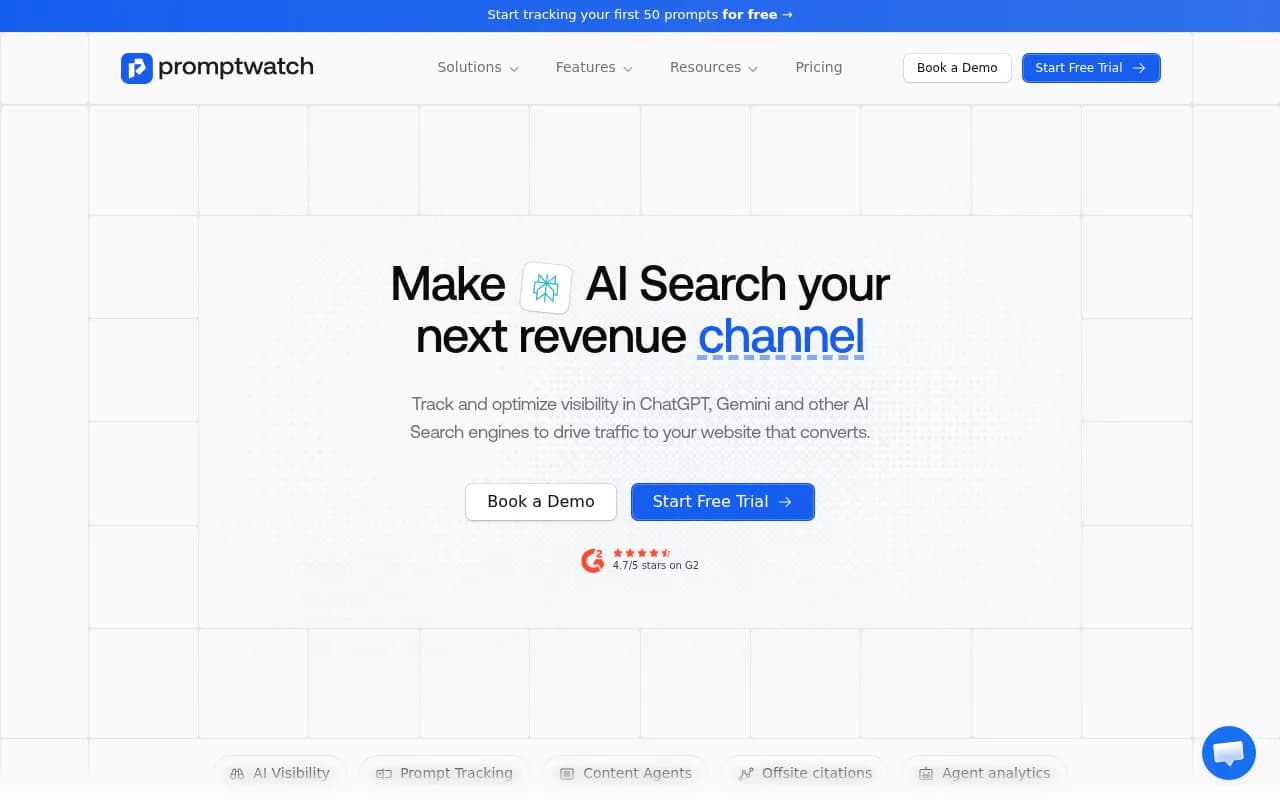
Who should look elsewhere: enterprises needing crawler analytics, traffic attribution, and multi-region tracking; agencies wanting white-label dashboards and API access at a mid-tier price; and anyone who wants the platform to close the loop from insight to published content without manual steps. For those use cases, Promptwatch covers the full stack — crawler logs, visitor analytics, Reddit and YouTube citations, prompt volumes and difficulty, query fan-outs, and Content Agents that plan, write, and publish to your CMS — at $95/mo to start, which is below RiseChat's Pro tier.
Bottom line
RiseChat.ai is a well-built, honestly marketed tool that solves a narrow problem well: finding out what your pages are missing and drafting the fix. The free audit alone is worth two minutes of your time. But it's a generator and monitor, not an end-to-end platform. If your goal is to not just see gaps but measure real AI-driven traffic and have the fixing happen automatically, Promptwatch is the stronger choice. If you want a lightweight, human-in-the-loop workflow at a fair price and you're comfortable publishing changes yourself, RiseChat earns its mid-tier spot in the GEO tool landscape — you can browse more options in the agentic SEO tools directory at agenticseotools.com.
Tags:
Frequently asked questions
What is RiseChat.ai?
How much does RiseChat.ai cost?
Does RiseChat.ai publish changes to my website automatically?
How does RiseChat.ai compare to Promptwatch?
Is there a free trial or free audit for RiseChat.ai?
Similar and alternative tools to RiseChat.ai