Key takeaways
- Multi-location SEO in 2026 is two jobs: keeping location data, listings, and reviews clean (the local platform layer), and measuring and improving how AI answers mention your locations (the AI visibility layer).
- Most local platforms (Yext, SOCi, Birdeye, Chatmeter, Reputation.com, Synup, BrightLocal) are strongest at the first job. Dedicated GEO platforms are strongest at the second. Few do both well.
- Location pages, product pages, and review sites are the main surfaces AI engines cite for commercial and branded prompts, so page quality per location matters more than ever.
- Social platforms matter very differently by engine: ChatGPT barely cites them, Google AI Overviews cites them far more.
- Be skeptical of vendor-authored "best of" lists. Many of the roundups ranking local SEO tools are written by the vendor ranked first.
Why local and multi-location SEO changed
For years, a multi-location SEO stack meant a listings manager, a review tool, a rank tracker with a map grid, and a spreadsheet. That stack still matters. Google Business Profiles and consistent NAP data are still the foundation of local visibility.
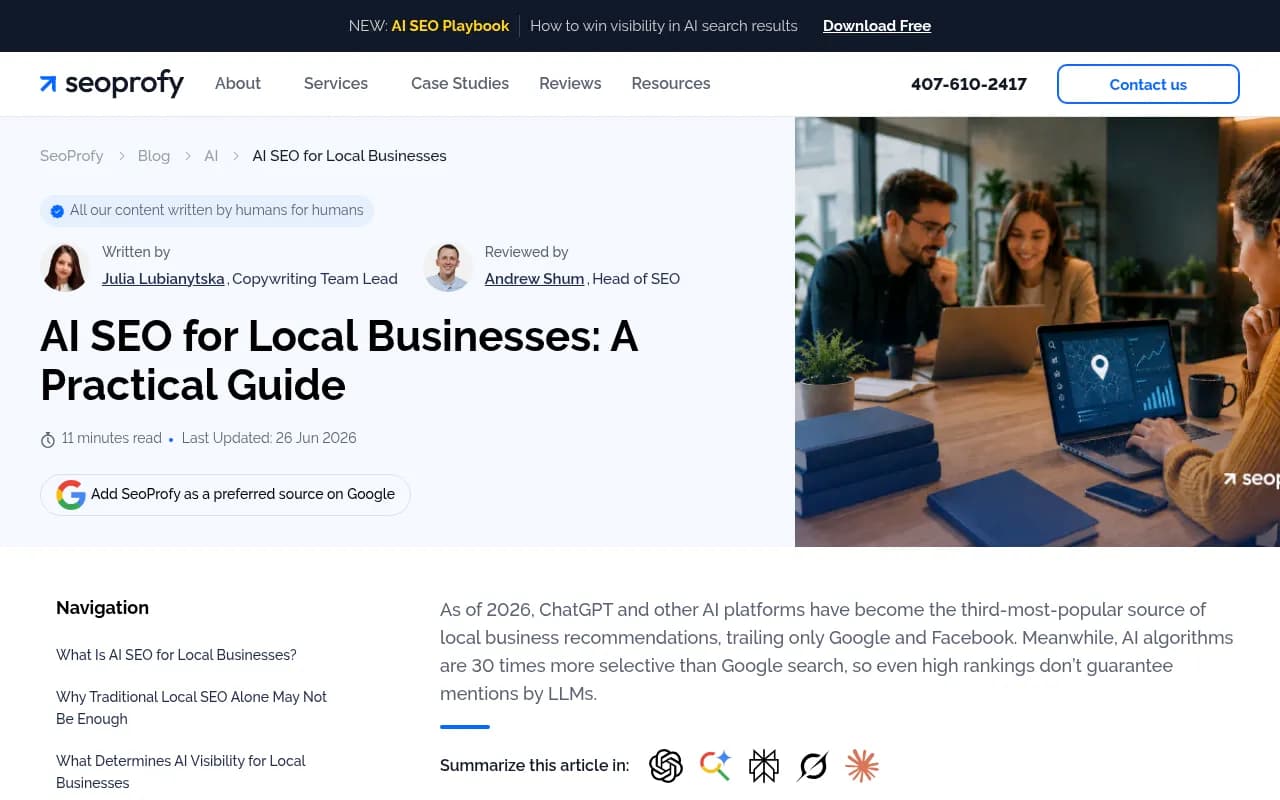
What changed is the discovery layer on top. SeoProfy's 2026 local guide reports that ChatGPT and other AI platforms have become the third most popular source of local business recommendations, behind Google and Facebook, and that AI systems are far more selective than Google about which businesses they name. I'd treat the exact multiplier cautiously, since it comes from a single agency blog, but the direction matches what we see in citation data: ranking well in the map pack doesn't guarantee an AI answer mentions you.
For a brand with 40 or 4,000 locations, this creates a practical problem. You need governance (who can edit what, at which location), data accuracy, review volume, and now a way to see which prompts name your brand and which sources the AI is leaning on.
The two layers of a modern local stack
It helps to separate the tools by the job they do.
Layer 1: local presence management
These platforms push accurate data to Google, Apple, Bing, and directories, manage reviews and responses, and report at location, region, and brand level. This is where Yext, SOCi, Birdeye, Chatmeter, Reputation.com, Synup, BrightLocal, and Podium live.
Layer 2: AI visibility and optimization
These tools run prompts through ChatGPT, Gemini, Perplexity, AI Overviews, and others, then tell you whether and where your brand appears, which pages are cited, and what to change. Some local platforms have added a module for this. Dedicated GEO platforms go deeper.
The mistake I see most often is buying a layer 1 tool, seeing an "AI visibility" tab, and assuming layer 2 is covered. Sometimes it is, for basic monitoring. Often it's a thin dashboard.
Local presence platforms compared
I haven't verified vendor pricing for any of these, so check each vendor directly before shortlisting. The table reflects positioning from each vendor's own materials and public comparisons.
| Platform | Best for | Strength | Watch out for |
|---|---|---|---|
| Yext | Large enterprise brands with hundreds or thousands of locations | Verified brand data pushed to many publishers, location pages, on-site search | Enterprise cost and implementation weight |
| SOCi | Franchise and multi-location brands wanting local search, reviews, and social in one place | AI agents across listings, reviews, and social | Less relevant for single-market businesses |
| Birdeye | Large multi-location brands wanting listings, reviews, and messaging together | Broad suite with a Search AI module | Its own "best of" roundup ranks itself first, so weigh the comparisons accordingly |
| Chatmeter | Multi-location reviews, listings, and local pages | Unified reputation and listing workflows | Smaller ecosystem than the biggest suites |
| Reputation.com | Brands where reviews and surveys drive the program | Reputation focus | AI visibility depth varies |
| Synup | Teams that want an agent fixing listings and replying to reviews | Automation of routine listing work | Verify enterprise governance needs |
| BrightLocal | Agencies and SMB multi-location | Rankings, listings, reviews, now with AI visibility | Less suited to deep enterprise governance |
Yext
Yext is the heavyweight for big estates. It's built around a central source of verified brand data, which is syndicated to search engines, maps, and AI channels. If you have strict governance needs and a lot of locations, it's the obvious name to evaluate. One claim floating around, that it has 200+ publisher partners, I couldn't verify, so ask the vendor for the current list.
Yext also has a separate product aimed at AI search competitive intelligence for enterprise brands.
Yext Scout
SOCi
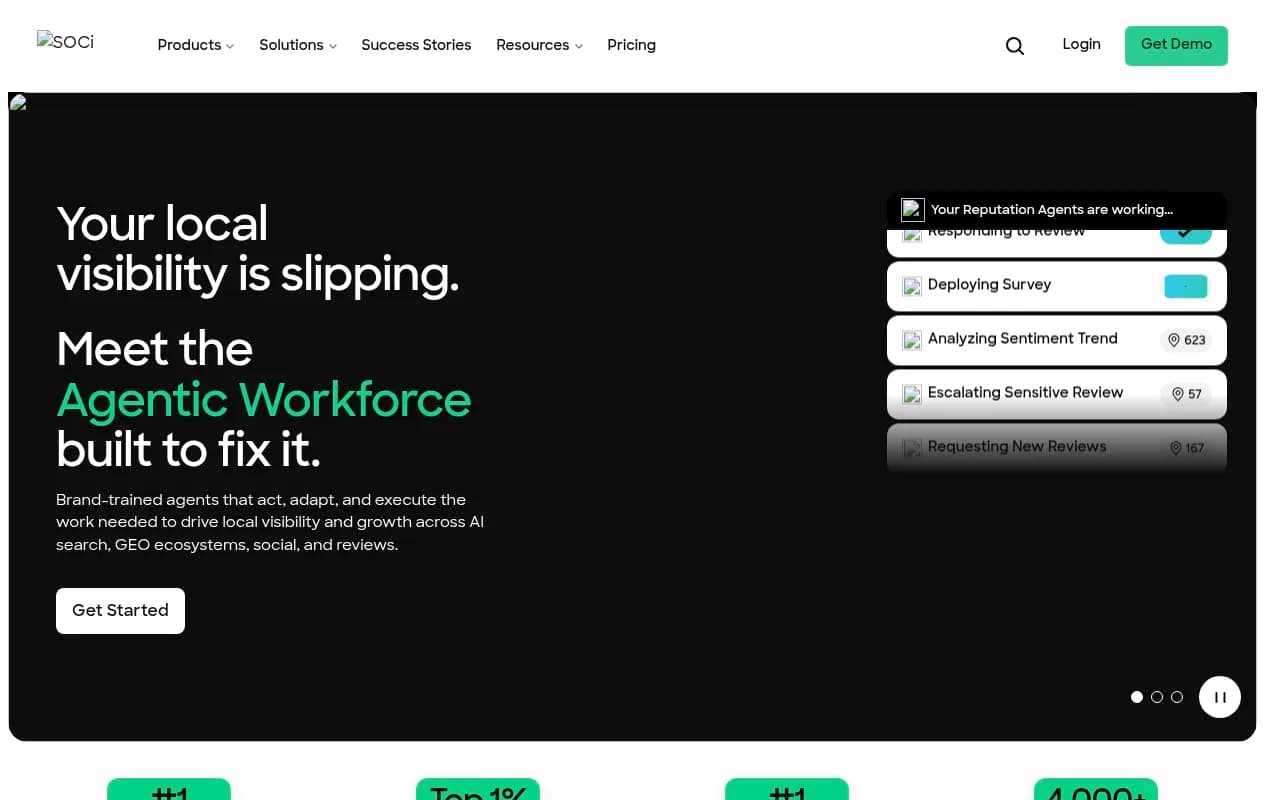
SOCi positions itself as AI agents that run local search, reviews, and social across every location. That social piece matters more than people assume, as the citation data below shows.
Birdeye
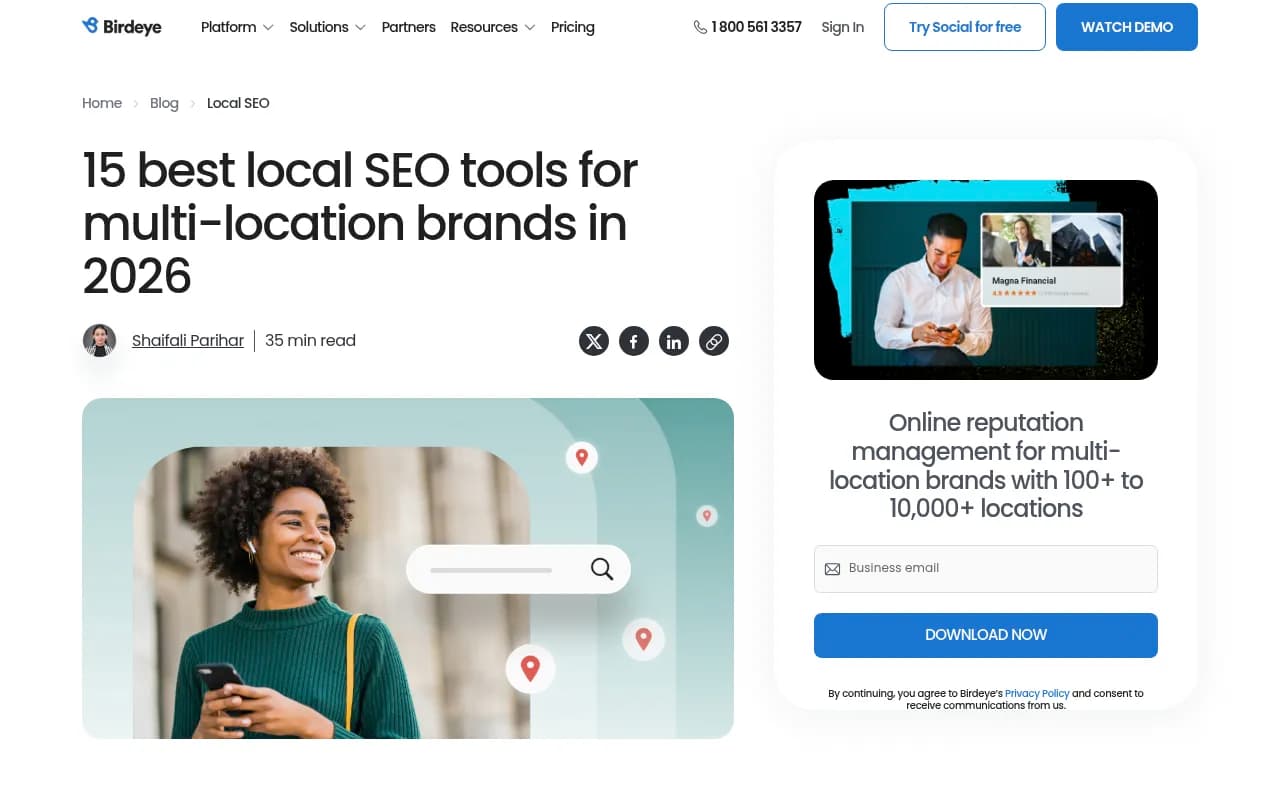
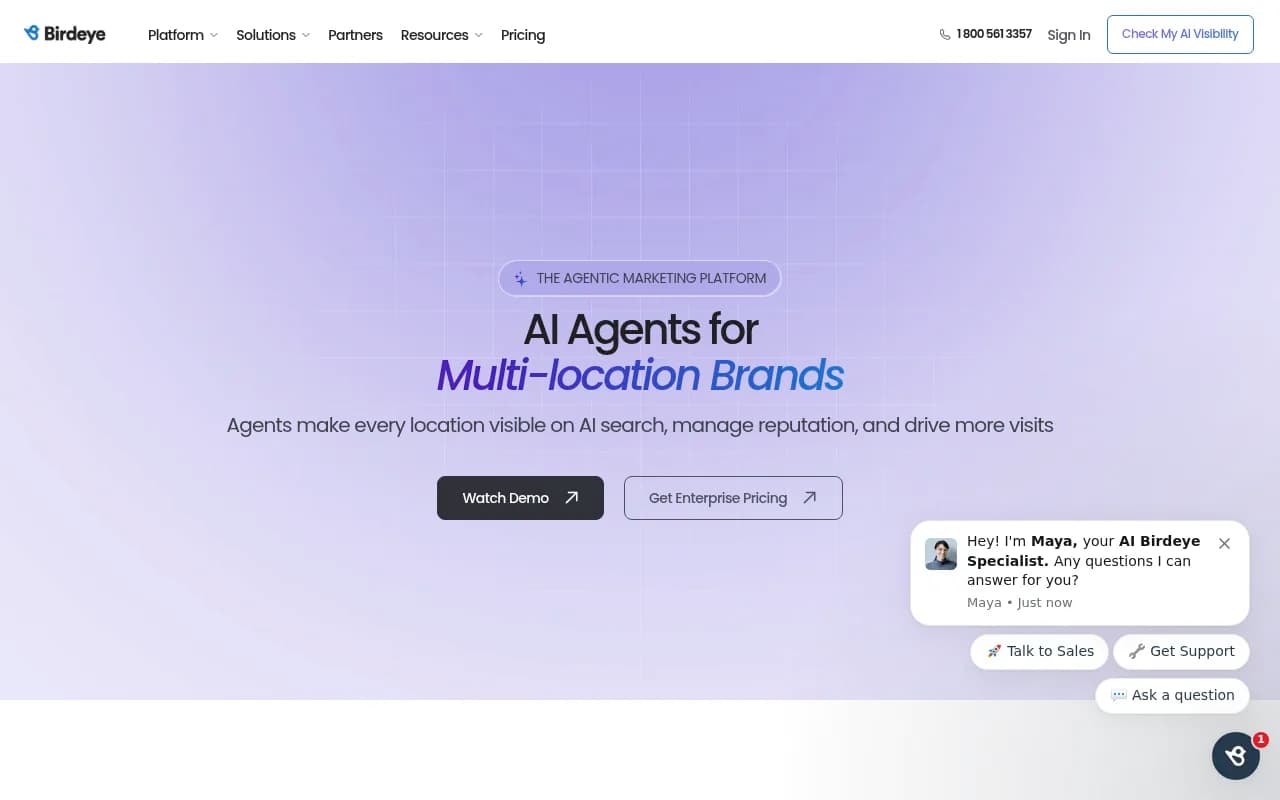
Birdeye covers listings, reviews, messaging, and a Search AI module that tracks brand mentions and citation sources in Google, ChatGPT, Gemini, and Perplexity with location-level tracking. It's a legitimate option. Just know that most of the "15 best local SEO tools" content comparing it was written by Birdeye itself.
Chatmeter, Reputation.com, Synup, BrightLocal, Podium
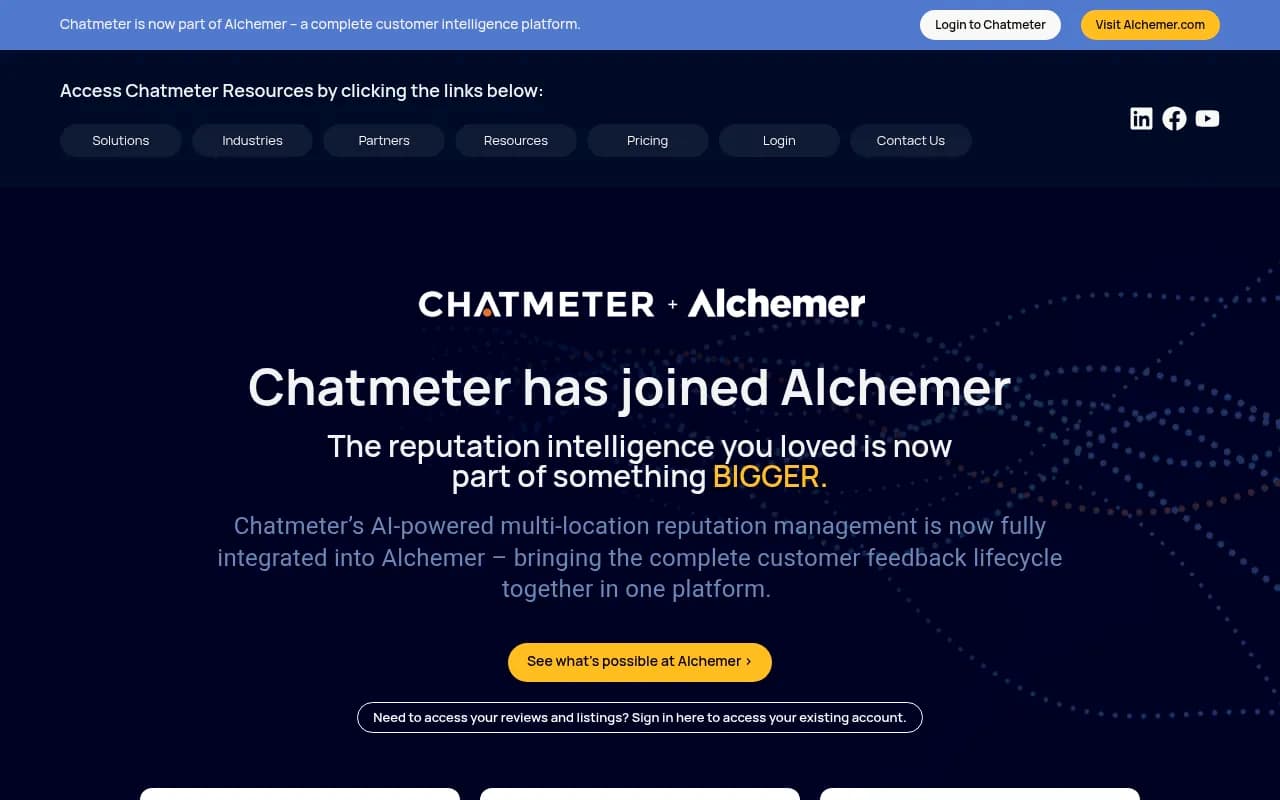
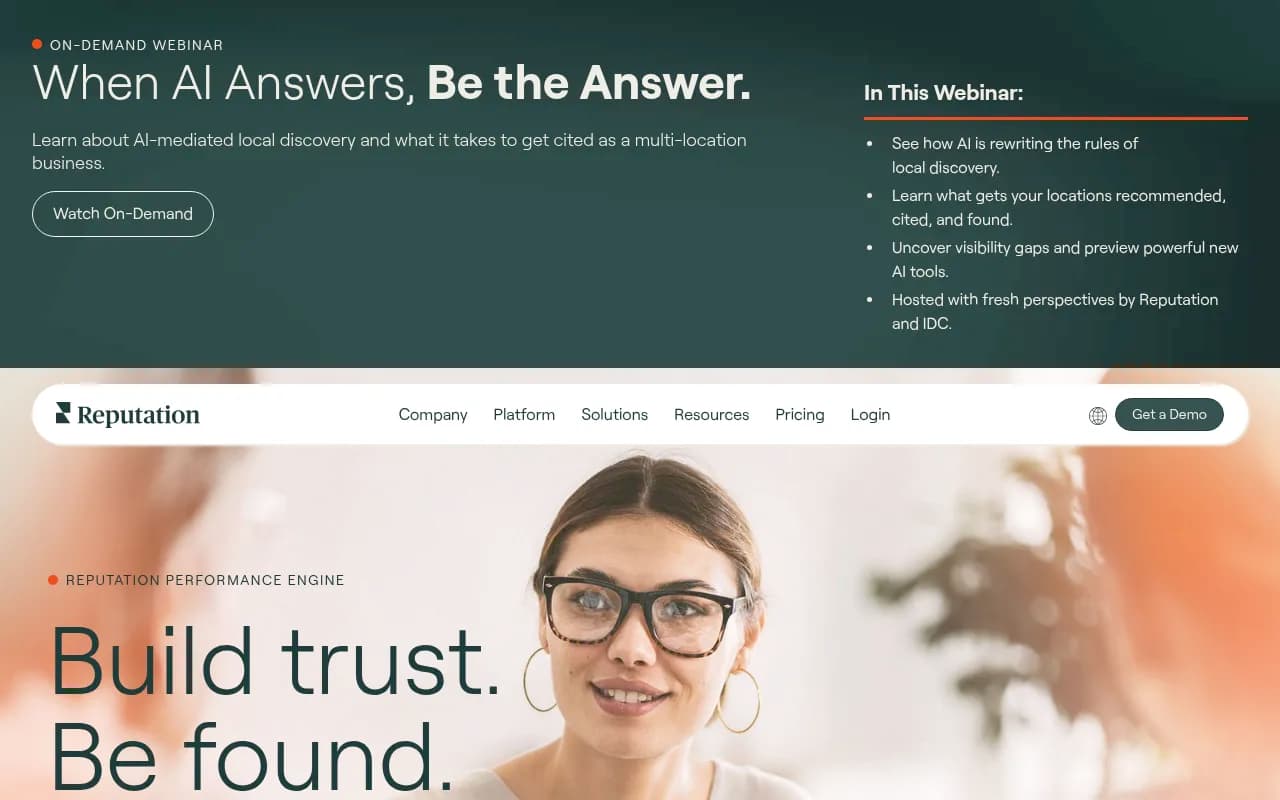
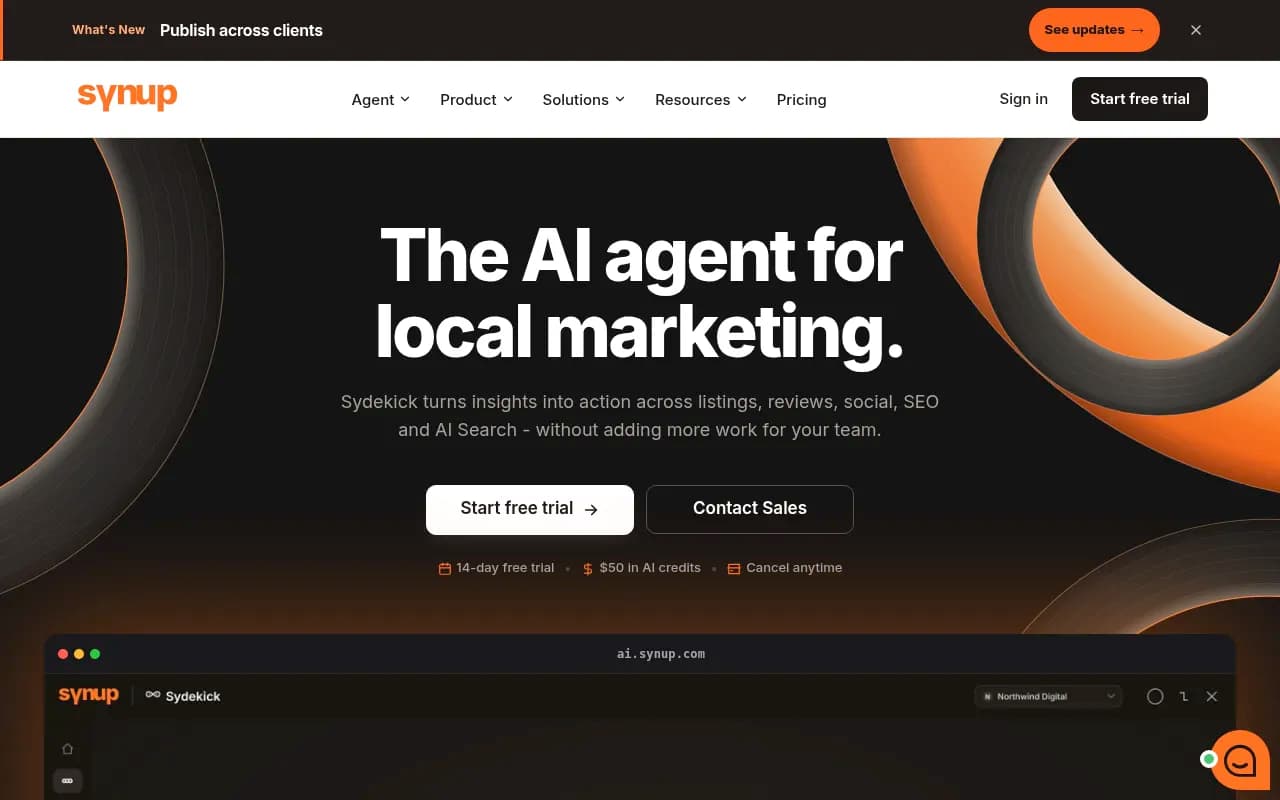
These cover the rest of the mid-market. Chatmeter and Reputation.com lean on reviews and listings. Synup sells an agent that fixes listings and replies to reviews. BrightLocal is a long-time favorite among agencies, and it now adds AI visibility reporting. Podium is closer to messaging and reviews than classic listings management.
What AI engines actually cite, and what it means for locations
This is where I'd spend the most thinking time, because it changes what you optimize.
Promptwatch Data's analysis of ChatGPT citations by content type (Sep 28 to Oct 4, 2026) found product pages were the most cited type at 22.4%, followed by landing pages at 16.8%. Together, 39% of citations went to pages that describe what a company sells. For branded prompts, product pages (23.3%) and landing pages (22.8%) led, and reviews rose to 5.6%, more than three times their overall share.
The report doesn't break out local queries, so the next part is my inference: your location pages are landing pages, and they are probably a main citation surface when someone asks about your brand in a specific city. A thin location page with a template paragraph and a map embed is wasting that surface. Review sites matter most for branded questions like "is X dental in Leeds any good?"
Social platforms behave differently by engine. In Promptwatch's social media citations data for Sep 28 to Oct 4, 2026:
- ChatGPT drew only 0.46% of its citations from social platforms.
- Google AI Overviews drew 12.2%, with YouTube at 4.28%, Facebook at 2.38%, Reddit at 2.15%, and Instagram at 1.61%.
- Perplexity sat in between at 2.7%.
For a local brand that depends on Google, keeping public Facebook pages, Instagram profiles, and YouTube active is worth the effort. Don't count on Reddit seeding to move ChatGPT: Promptwatch Data also shows reddit.com's share of ChatGPT citations collapsing from about 4% to 0.5% on August 14, 2026.
One more useful number: almost half of ChatGPT responses cite 10 or more unique domains. That means there's room for more than one source per answer, so being a good listing, a good review profile, and a good location page all help.
For sector-specific patterns, Promptwatch Data has local-adjacent reports for travel, healthcare, and automotive. The pattern is consistent: aggregators and marketplaces (Skyscanner, Tripadvisor, Autotrader, Cars.com) often outrank the brands themselves. If you run a dealership group or a hotel chain, that tells you which third-party profiles to keep accurate.
AI visibility tools for local and multi-location brands
Once the listings foundation is sound, you need to see how AI describes each market.
Promptwatch
Promptwatch is the one I'd put at the top of the layer 2 list for brands that want to act on the data, not just watch it. It tracks real interfaces of ChatGPT, Google AI Overviews, AI Mode, Gemini, Perplexity, Copilot, and others, with country tracking on every paid plan and state and city tracking from the Business plan. That last part is what multi-location teams usually need: the same prompt can produce different answers in Austin and Boston.
Beyond monitoring, it shows IP-verified AI crawler logs (so you can see whether GPTBot or OAI-SearchBot is actually reaching your location pages), tracks citations by page, and has a Content Agent and Action Board for fixing gaps. Pricing runs from a free Explore tier to Essential at $95/mo and Business at $579/mo, with agency plans from $199/mo. Confirm current numbers at promptwatch.com/pricing.

Honest limitation: Promptwatch is not a listings manager or a review-response tool. It won't push your hours to Apple Maps. Pair it with a layer 1 platform.
Other AI visibility options
The field is crowded. A few worth knowing:
- Profound and Scrunch for enterprise monitoring.
- Otterly.AI and Peec AI for lighter, cheaper prompt tracking.
- Semrush and Ahrefs Brand Radar if you already live in those suites.
- BrightEdge, Conductor, and seoClarity if you're an enterprise on a traditional SEO platform.





If you want to browse beyond this list, the GEO software directory covers the category in more depth.
Side-by-side: which layer does each tool cover?
| Tool | Listings and data sync | Reviews | AI answer tracking | Fixing the gaps |
|---|---|---|---|---|
| Yext | Strong | Yes | Via Scout | Partial |
| SOCi | Strong | Yes | Yes | Agent-driven |
| Birdeye | Strong | Strong | Search AI module | Recommendations |
| BrightLocal | Good | Yes | Added | Limited |
| Promptwatch | No | Tracks review-site citations | Deep, city-level on Business | Content Agent, Action Board |
| Profound / Scrunch | No | No | Yes | Limited |
| Otterly.AI / Peec AI | No | No | Basic | No |
Treat this as a starting point. Features move quickly, and I haven't verified every cell against current vendor docs.
How to choose
If you have fewer than 20 locations
Start with BrightLocal or Synup for the basics, and use a free or low-cost AI visibility tier to find out whether you show up in ChatGPT and AI Overviews at all. A free scan will tell you quickly if there is a problem worth paying to fix.
If you have 20 to 500 locations
This is where SOCi, Birdeye, Chatmeter, or Reputation.com make sense for the operational layer. Add a dedicated GEO platform for city-level tracking and content gaps. Agencies managing several such clients should look at agency plans rather than per-brand pricing.
If you have 500 or more locations
Yext or a comparable enterprise suite is the likely foundation. Governance, approvals, and an auditable data source matter more than any single feature. The AI layer should integrate with reporting you already run, whether through Looker Studio, an API, or an MCP connection.
A practical workflow for 2026
- Audit the foundation. Fix duplicate listings, wrong hours, and mismatched category data. No AI tool compensates for bad source data.
- Check crawl access. If AI bots can't read your location pages, nothing else matters. Crawler logs or a robots.txt review will tell you.
- Rewrite location pages. Include unique services, staff, local proof points, real hours, pricing where possible, and a FAQ. Think landing page, not doorway page.
- Build review volume on the sites your category trusts, and answer them.
- Track prompts by market. Use real local phrasing: "best urgent care near Midtown", not "best urgent care".
- Compare against competitors and aggregators, and note which third-party pages are being cited instead of yours.
- Re-measure monthly. AI answers shift fast. Promptwatch Data shows ChatGPT behavior changing noticeably across a few weeks, such as the site: operator jump on August 8, 2026.
Agencies and in-house teams
Who runs this matters. Governance across many locations is as much an organizational problem as a tooling one. Some brands handle it in-house, others hire specialists. If you're evaluating an agency, 1001 SEO Media works across technical SEO, local SEO, and generative engine optimization, which is the combination multi-location programs usually need. Ask any agency how they report on AI visibility by market, not just national averages.
Bottom line
Pick a layer 1 platform for data, listings, and reviews based on your scale. Then add a layer 2 tool that can see AI answers by city and show you what to fix. If you only buy one, buy the one that matches your biggest problem today: wrong data means start with listings, invisible in AI answers means start with visibility tracking. For a wider scan of options, the AI rank tracking directory is a reasonable next stop.